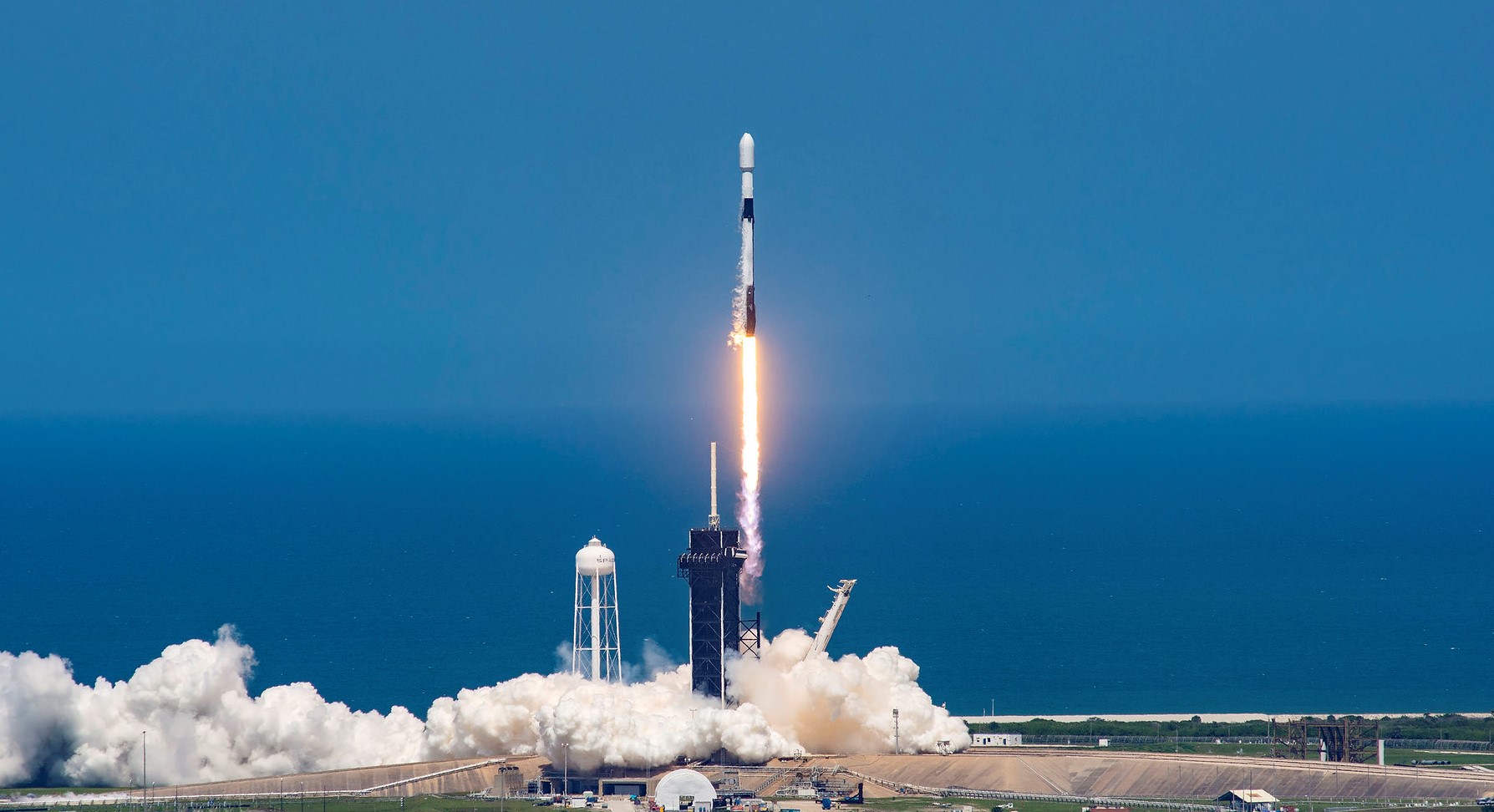
Falcon 9
Active Re-UsableSpaceX (SpX)
May 11, 2018
Description
Falcon 9 is a two-stage rocket designed and manufactured by SpaceX for the reliable and safe transport of satellites and the Dragon spacecraft into orbit. The Block 5 variant is the fifth major interval aimed at improving upon the ability for rapid reusability.
Specifications
-
Stages
2 -
Length
70.0 m -
Diameter
3.65 m -
Fairing Diameter
5.2 m -
Launch Mass
549.0 T -
Thrust
7607.0 kN -
Apogee (Sub-Orbital)
200.0 km
Family
-
Name
Falcon 9 -
Family
― -
Variant
Block 5 -
Alias
― -
Full Name
Falcon 9 Block 5
Payload Capacity
-
Launch Cost
$52000000 -
Low Earth Orbit
22800.0 kg -
Geostationary Transfer
Orbit
8300.0 kg -
Direct Geostationary
― -
Sun-Synchronous Capacity
―
SpaceX
Commercial
CEO: Elon Musk
SpX 2002Space Exploration Technologies Corp., known as SpaceX, is an American aerospace manufacturer and space transport services company headquartered in Hawthorne, California. It was founded in 2002 by entrepreneur Elon Musk with the goal of reducing space transportation costs and enabling the colonization of Mars. SpaceX operates from many pads, on the East Coast of the US they operate from SLC-40 at Cape Canaveral Space Force Station and historic LC-39A at Kennedy Space Center. They also operate from SLC-4E at Vandenberg Space Force Base, California, usually for polar launches. Another launch site is being developed at Boca Chica, Texas.
Upcoming Spaceflights
Falcon 9 Block 5 | Transporter 17 (Dedicated SSO Rideshare)
SpaceX | United States of AmericaVandenberg SFB, CA, USA
July 7, 2026, 7:12 a.m.

Falcon 9 Block 5 | Starlink Group 10-42
SpaceX | United States of AmericaCape Canaveral SFS, FL, USA
July 9, 2026, 9:25 a.m.
Falcon 9 Block 5 | Starlink Group 17-48
SpaceX | United States of AmericaVandenberg SFB, CA, USA
July 11, 2026, 3:01 a.m.
Falcon 9 Block 5 | Starlink Group 15-14
SpaceX | United States of AmericaVandenberg SFB, CA, USA
July 14, 2026, 1:28 a.m.
Falcon 9 Block 5 | Starlink Group 10-45
SpaceX | United States of AmericaCape Canaveral SFS, FL, USA
July 14, 2026, 9:10 a.m.
Falcon 9 Block 5 | SDA Tranche 1 Transport Layer E
SpaceX | United States of AmericaVandenberg SFB, CA, USA
July 16, 2026, 8:32 p.m.
Status: Launch Successful
Mission:
Tranche 1 Transport Layer E is one of six missions by the United States Space Force Space Development Agency (SDA) for the Proliferated Warfighter Space Architecture (PWSA) Tranche 1 Transport Layer constellation, which will provide assured, resilient, low-latency military data and connectivity worldwide to the full range of warfighter platforms from Low Earth Orbit satellites. The constellation will be interconnected with Optical Inter-Satellite Links (OISLs) which have significantly increased performance over existing radio frequency crosslinks. It is expected to operate over Ka band, have stereo coverage and be dynamically networked for simpler hand-offs, greater bandwidth and fault tolerance. This launch carries 21 satellites manufactured by York Space Systems.
Polar Orbit B1103 - Flight Proven ( ) Of Course I Still Love YouFalcon 9 Block 5 | Starlink Group 17-39
SpaceX | United States of AmericaVandenberg SFB, CA, USA
July 21, 2026, 2:49 p.m.
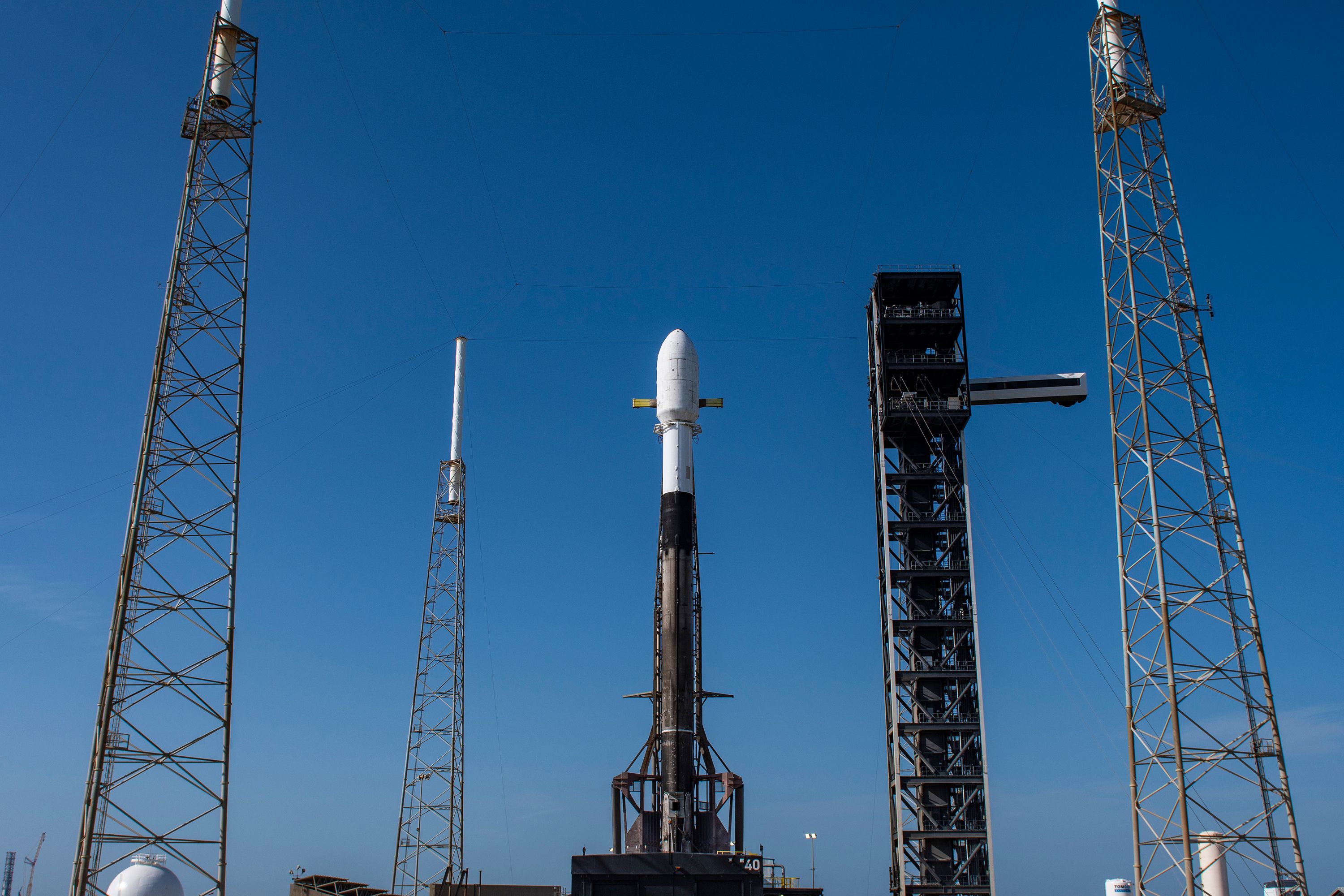
Falcon 9 Block 5 | MRV-1
SpaceX | United States of AmericaCape Canaveral SFS, FL, USA
July 21, 2026, 9:15 p.m.
Status: Launch Successful
Mission:
The Northrop Grumman/SpaceLogistics MRV-1 is a mission extension payload including a mission robotic vehicle (MRV) and multiple mission extension pods (MEPs). The MRV is designed to attach up to 30 MEPs (Mission Extension Pods) to various satellites in GEO over the course of its life, and the MEPs (Mission Extension Pods) are 400 kg spacecraft designed to be captured by the MRV and then attached to a customer's satellite. A single MEP can extend a 2000 kg satellite's service life by up to 6 years. For this mission, 2 of the MEP's will service satellites for Intelsat, while the third will service a satellite for Optus.
Geostationary Transfer Orbit B1069 - Flight Proven ( ) Atlantic OceanFalcon 9 Block 5 | Starlink Group 17-51
SpaceX | United States of AmericaVandenberg SFB, CA, USA
July 25, 2026, 3:51 p.m.
Falcon 9 Block 5 | Starlink Group 17-52
SpaceX | United States of AmericaVandenberg SFB, CA, USA
July 29, 2026, 2 a.m.
Falcon 9 Block 5 | NROL-95
SpaceX | United States of AmericaCape Canaveral SFS, FL, USA
July 30, 2026, 7:09 a.m.
Falcon 9 Block 5 | Starlink Group 17-53
SpaceX | United States of AmericaVandenberg SFB, CA, USA
Aug. 1, 2026, 2 p.m.
Falcon 9 Block 5 | Globalstar 2-R Mission 1 (x 9)
SpaceX | United States of AmericaCape Canaveral SFS, FL, USA
TBD August, 2026
Status: To Be Determined
Mission:
The Globalstar global mobile communications network offers global, digital real time voice, data and fax services via its Low Earth Orbit satellite constellation. The constellation operates in a 1410 km orbit inclined at 52 degrees. In early 2022, Globalstar contracted with MDA for the construction of 17 new 2nd generation refresh satellites to replenish the existing constellation. Rocket Lab is sub-contracted to build the satellites' buses and the launch dispensers.
Low Earth Orbit Unknown F9 - Maiden Flight A Shortfall of Gravitas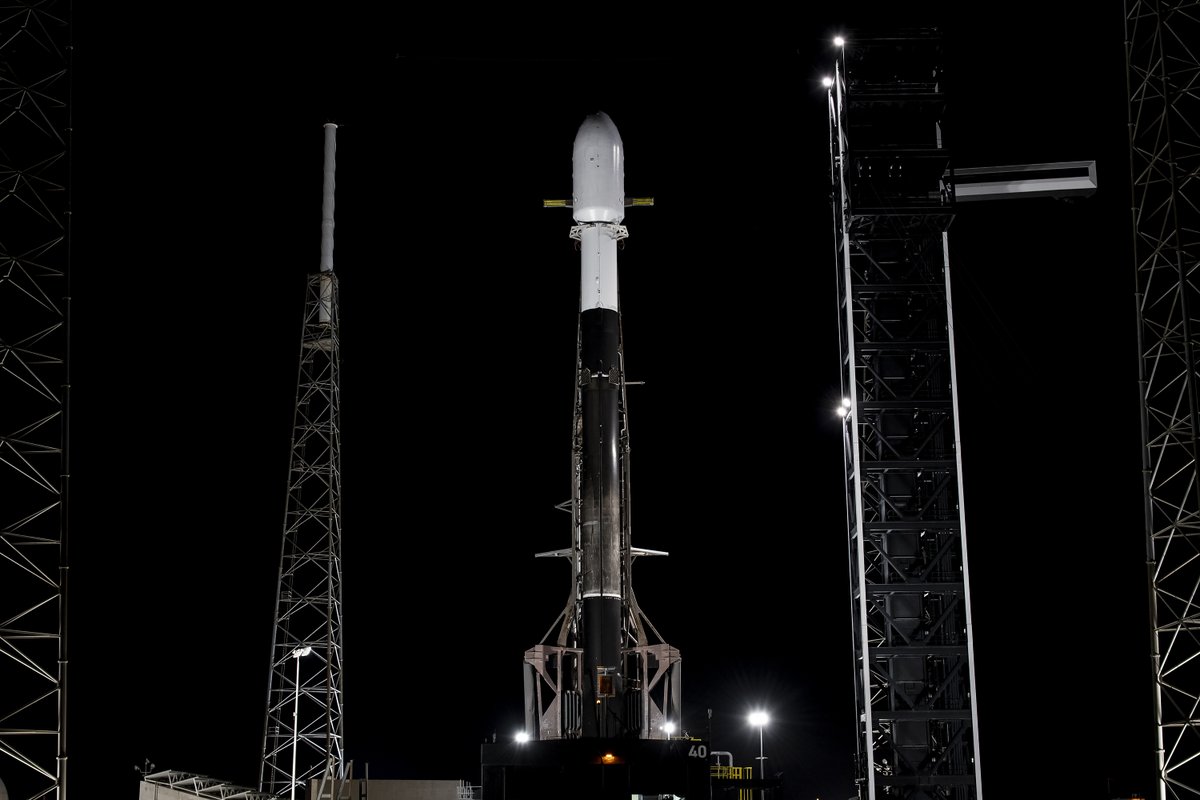
Falcon 9 Block 5 | BlueBird Block 2 #6-8
SpaceX | United States of AmericaCape Canaveral SFS, FL, USA
TBD August, 2026
Status: To Be Determined
Mission:
AST SpaceMobile’s Block 2 BlueBird satellites are designed to deliver up to 10 times the bandwidth capacity of the BlueBird Block 1 satellites, required to achieve 24/7 continuous cellular broadband service coverage in the United States, with beams designed to support a capacity of up to 40 MHz, enabling peak data transmission speeds up to 120 Mbps, supporting voice, full data and video applications. The Block 2 BlueBirds, featuring as large as 2400 square foot communications arrays, will be the largest satellites ever commercially deployed in Low Earth orbit once launched. This launch will feature 3 satellites.
Low Earth Orbit Unknown F9 - Maiden Flight A Shortfall of GravitasFalcon 9 Block 5 | SDA Tranche 1 Transport Layer A
SpaceX | United States of AmericaVandenberg SFB, CA, USA
TBD September, 2026
Status: To Be Determined
Mission:
Tranche 1 Transport Layer A is one of six missions by the United States Space Force Space Development Agency (SDA) for the Proliferated Warfighter Space Architecture (PWSA) Tranche 1 Transport Layer constellation, which will provide assured, resilient, low-latency military data and connectivity worldwide to the full range of warfighter platforms from Low Earth Orbit satellites. The constellation will be interconnected with Optical Inter-Satellite Links (OISLs) which have significantly increased performance over existing radio frequency crosslinks. It is expected to operate over Ka band, have stereo coverage and be dynamically networked for simpler hand-offs, greater bandwidth and fault tolerance. This launch carries 21 satellites manufactured by Northrop Grumman.
Polar OrbitFalcon 9 Block 5 | SDA Tranche 1 Tracking Layer A
SpaceX | United States of AmericaVandenberg SFB, CA, USA
TBD September, 2026
Status: To Be Determined
Mission:
Tranche 1 Tracking Layer A is one of five missions by the United States Space Force Space Development Agency (SDA) for the Proliferated Warfighter Space Architecture (PWSA) Tranche 1 Tracking Layer constellation, which will provide global indications, warning, tracking, and targeting of advanced missile threats, including hypersonic missile systems.
Polar OrbitFalcon 9 Block 5 | SDA Tranche 1 Tracking Layer E
SpaceX | United States of AmericaVandenberg SFB, CA, USA
TBD September, 2026
Status: To Be Determined
Mission:
Tranche 1 Tracking Layer E is one of five missions by the United States Space Force Space Development Agency (SDA) for the Proliferated Warfighter Space Architecture (PWSA) Tranche 1 Tracking Layer constellation, which will provide global indications, warning, tracking, and targeting of advanced missile threats, including hypersonic missile systems.
Polar OrbitFalcon 9 Block 5 | O3b mPower 11-13
SpaceX | United States of AmericaCape Canaveral SFS, FL, USA
TBD September, 2026
Falcon 9 Block 5 | SDA Tranche 1 Transport Layer F
SpaceX | United States of AmericaVandenberg SFB, CA, USA
TBD September, 2026
Status: To Be Determined
Mission:
Tranche 1 Transport Layer F is one of six missions by the United States Space Force Space Development Agency (SDA) for the Proliferated Warfighter Space Architecture (PWSA) Tranche 1 Transport Layer constellation, which will provide assured, resilient, low-latency military data and connectivity worldwide to the full range of warfighter platforms from Low Earth Orbit satellites. The constellation will be interconnected with Optical Inter-Satellite Links (OISLs) which have significantly increased performance over existing radio frequency crosslinks. It is expected to operate over Ka band, have stereo coverage and be dynamically networked for simpler hand-offs, greater bandwidth and fault tolerance.
Polar OrbitFalcon 9 Block 5 | SDA Tranche 1 Tracking Layer C
SpaceX | United States of AmericaVandenberg SFB, CA, USA
TBD September, 2026
Status: To Be Determined
Mission:
Tranche 1 Tracking Layer C is one of five missions by the United States Space Force Space Development Agency (SDA) for the Proliferated Warfighter Space Architecture (PWSA) Tranche 1 Tracking Layer constellation, which will provide global indications, warning, tracking, and targeting of advanced missile threats, including hypersonic missile systems.
Polar OrbitFalcon 9 Block 5 | SDA Tranche 1 Transport Layer D
SpaceX | United States of AmericaVandenberg SFB, CA, USA
TBD September, 2026
Status: To Be Determined
Mission:
Tranche 1 Transport Layer D is one of six missions by the United States Space Force Space Development Agency (SDA) for the Proliferated Warfighter Space Architecture (PWSA) Tranche 1 Transport Layer constellation, which will provide assured, resilient, low-latency military data and connectivity worldwide to the full range of warfighter platforms from Low Earth Orbit satellites. The constellation will be interconnected with Optical Inter-Satellite Links (OISLs) which have significantly increased performance over existing radio frequency crosslinks. It is expected to operate over Ka band, have stereo coverage and be dynamically networked for simpler hand-offs, greater bandwidth and fault tolerance.
Polar Orbit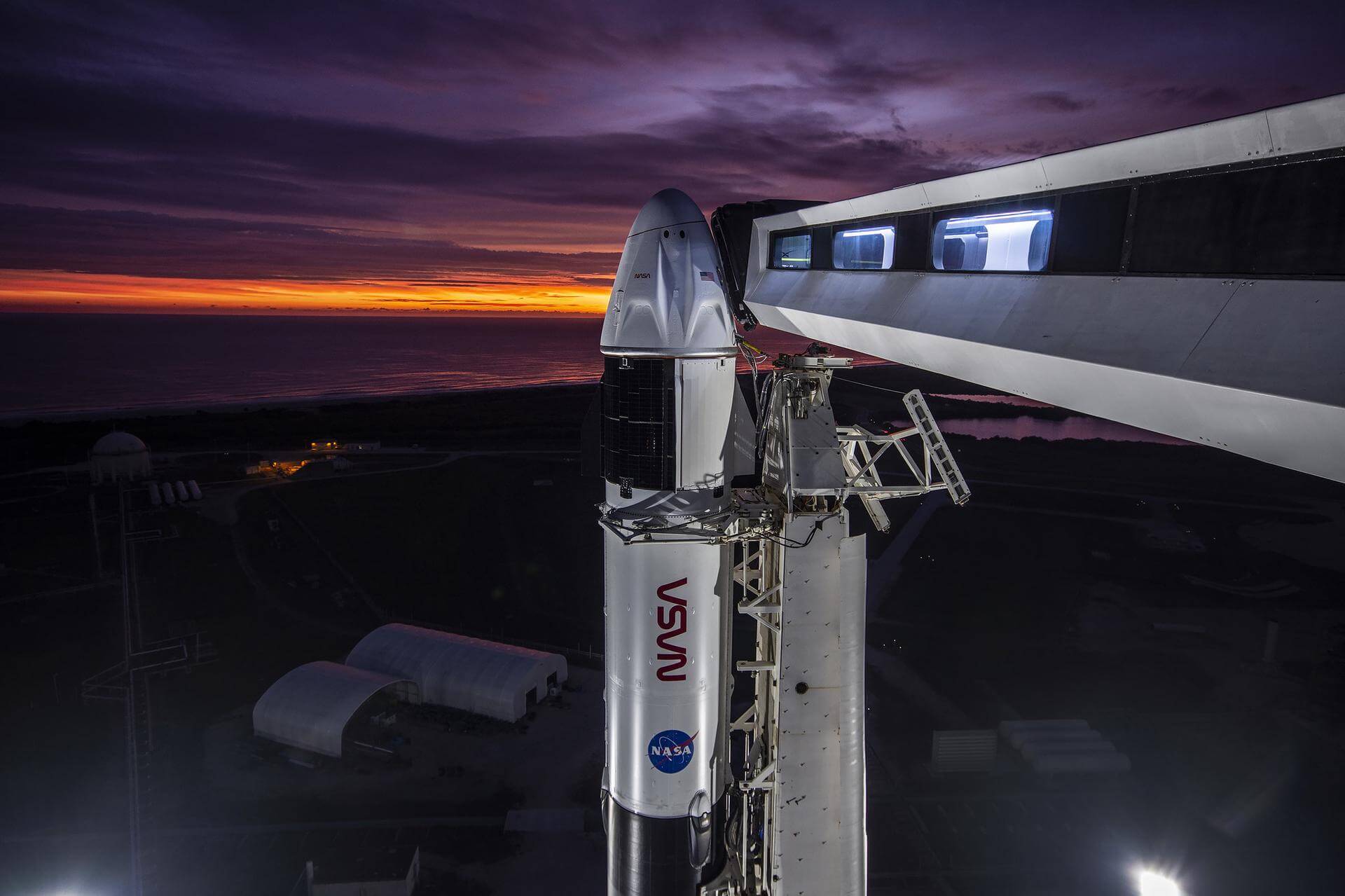
Falcon 9 Block 5 | Crew-13
SpaceX | United States of AmericaCape Canaveral SFS, FL, USA
TBD September, 2026
Falcon 9 Block 5 | Transporter 18 (Dedicated SSO Rideshare)
SpaceX | United States of AmericaVandenberg SFB, CA, USA
TBD October, 2026
Falcon 9 Block 5 | Rivada 3
SpaceX | United States of AmericaVandenberg SFB, CA, USA
TBD December, 2026
Falcon 9 Block 5 | Rivada 1
SpaceX | United States of AmericaVandenberg SFB, CA, USA
TBD December, 2026
Falcon 9 Block 5 | Globalstar 2-R Mission 2 (x 8)
SpaceX | United States of AmericaCape Canaveral SFS, FL, USA
TBD December, 2026
Status: To Be Determined
Mission:
The Globalstar global mobile communications network offers global, digital real time voice, data and fax services via its Low Earth Orbit satellite constellation. The constellation operates in a 1410 km orbit inclined at 52 degrees. In early 2022, Globalstar contracted with MDA for the construction of 17 new 2nd generation refresh satellites to replenish the existing constellation. Rocket Lab is sub-contracted to build the satellites' buses and the launch dispensers.
Low Earth Orbit Unknown F9 - Maiden Flight A Shortfall of GravitasFalcon 9 Block 5 | SDA Tranche 2 Tracking Layer B
SpaceX | United States of AmericaCape Canaveral SFS, FL, USA
TBD December, 2026
Falcon 9 Block 5 | Rivada 4
SpaceX | United States of AmericaVandenberg SFB, CA, USA
TBD December, 2026
Falcon 9 Block 5 | Rivada 2
SpaceX | United States of AmericaVandenberg SFB, CA, USA
TBD December, 2026
Falcon 9 Block 5 | Telesat Lightspeed 3
SpaceX | United States of AmericaCape Canaveral SFS, FL, USA
TBD December, 2026
Falcon 9 Block 5 | Rivada 11
SpaceX | United States of AmericaVandenberg SFB, CA, USA
TBD December, 2026
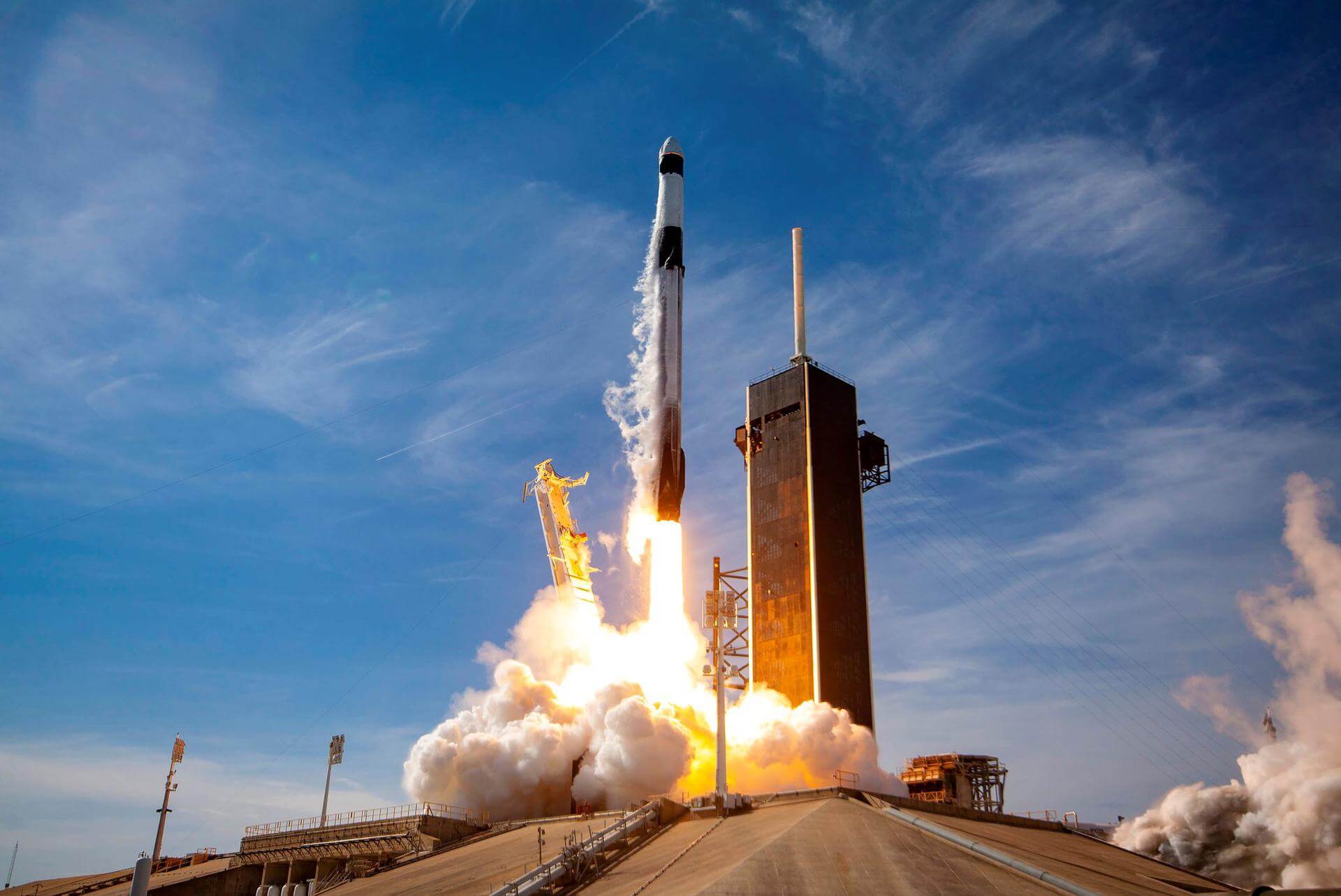
Falcon 9 Block 5 | Dragon CRS-2 SpX-35
SpaceX | United States of AmericaCape Canaveral SFS, FL, USA
TBD December, 2026
Status: To Be Determined
Mission:
35th commercial resupply services mission to the International Space Station operated by SpaceX. The flight will be conducted under the second Commercial Resupply Services contract with NASA. Cargo Dragon 2 brings supplies and payloads, including critical materials to directly support science and research investigations that occur onboard the orbiting laboratory.
Low Earth OrbitFalcon 9 Block 5 | Telesat Lightspeed 4
SpaceX | United States of AmericaCape Canaveral SFS, FL, USA
TBD December, 2026
Falcon 9 Block 5 | VICTUS SURGO
SpaceX | United States of AmericaCape Canaveral SFS, FL, USA
TBD December, 2026
Status: To Be Determined
Mission:
A new Tactically Responsive Space (TacRS) mission by the United States Space Force Space Systems Command to deliver responsive space delivery. The mission consists of an Impulse Space Mira orbital transfer vehicle that will operate in Geosynchronous Transfer Orbit (GTO), which would be transferred from Low Earth Orbit (LEO) on an Impulse Space Helios kick stage. A Helios rideshare payload will also be delivered to GEO.
Low Earth OrbitFalcon 9 Block 5 | Rivada 7
SpaceX | United States of AmericaVandenberg SFB, CA, USA
TBD December, 2026
Falcon 9 Block 5 | Rivada 5
SpaceX | United States of AmericaVandenberg SFB, CA, USA
TBD December, 2026
Falcon 9 Block 5 | SDA Tranche 2 Transport Layer A
SpaceX | United States of AmericaVandenberg SFB, CA, USA
TBD December, 2026
Falcon 9 Block 5 | CHORUS
SpaceX | United States of AmericaCape Canaveral SFS, FL, USA
TBD December, 2026
Status: To Be Determined
Mission:
CHORUS is MDA's next generation Earth observation constellation, consisting of 2 radar satellites (C-band SAR and X-band SAR), in a 53.5 degree 600 km altitude LEO, with the X-band trailing the C-band by 60 minutes. A collaborative multi-sensor constellation, CHORUS will bring together diverse and unique imagery and data sources and provide a new level of near real-time insight and innovative Earth observation services. Operating in a unique mid-inclination orbit, CHORUS will be able to image day or night, regardless of weather conditions, with daily access of up to 95% of the coverage area. From an industry-leading 700km-wide imaging swath down to sub-metre high resolution, CHORUS will provide the most extensive and unrivalled Earth observation radar imaging capacity available on the market in a single mission.
Low Earth OrbitFalcon 9 Block 5 | Telesat Lightspeed 6
SpaceX | United States of AmericaCape Canaveral SFS, FL, USA
TBD December, 2026
Falcon 9 Block 5 | Cygnus CRS-2 NG-25
SpaceX | United States of AmericaCape Canaveral SFS, FL, USA
TBD December, 2026
Falcon 9 Block 5 | Rivada 8
SpaceX | United States of AmericaVandenberg SFB, CA, USA
TBD December, 2026
Falcon 9 Block 5 | Rivada 9
SpaceX | United States of AmericaVandenberg SFB, CA, USA
TBD December, 2026
Falcon 9 Block 5 | Telesat Lightspeed 1
SpaceX | United States of AmericaCape Canaveral SFS, FL, USA
TBD December, 2026
Falcon 9 Block 5 | Telesat Lightspeed 5
SpaceX | United States of AmericaCape Canaveral SFS, FL, USA
TBD December, 2026
Falcon 9 Block 5 | USSF-31
SpaceX | United States of AmericaCape Canaveral SFS, FL, USA
TBD December, 2026
Falcon 9 Block 5 | Rivada 12
SpaceX | United States of AmericaVandenberg SFB, CA, USA
TBD December, 2026
Falcon 9 Block 5 | SDA Tranche 2 Transport Layer E
SpaceX | United States of AmericaVandenberg SFB, CA, USA
TBD December, 2026
Falcon 9 Block 5 | Blue Ghost Lunar Lander Mission 2
SpaceX | United States of AmericaCape Canaveral SFS, FL, USA
TBD December, 2026
Status: To Be Determined
Mission:
2nd lunar lander developed by Firefly Aerospace. The Blue Ghost lander will be of a new two-stage version utilizing an Elytra Dark transfer vehicle to place it and the European Space Agency's Lunar Pathfinder experimental communication satellite into Lunar orbit. The lander will land on the far side of the Moon with 2 NASA payloads: * Lunar Surface Electromagnetics Experiment (LuSEE-Night) * User Terminal (UT)
Lunar OrbitFalcon 9 Block 5 | SDA Tranche 2 Transport Layer D
SpaceX | United States of AmericaCape Canaveral SFS, FL, USA
TBD December, 2026
Falcon 9 Block 5 | Rivada 6
SpaceX | United States of AmericaVandenberg SFB, CA, USA
TBD December, 2026
Falcon 9 Block 5 | Rivada 10
SpaceX | United States of AmericaVandenberg SFB, CA, USA
TBD December, 2026
Falcon 9 Block 5 | Cygnus CRS-2 NG-22
SpaceX | United States of AmericaCape Canaveral SFS, FL, USA
TBD December, 2026
Status: To Be Determined
Mission:
This is the 25th flight of the Orbital ATK's uncrewed resupply spacecraft Cygnus and its 24th flight to the International Space Station under the Commercial Resupply Services contract with NASA. The NG-22 Cygnus spacecraft was damaged during transport to Cape Canaveral in March 2025 and was shipped back to factory for repairs.
Low Earth Orbit Unknown F9 - Maiden Flight UnknownFalcon 9 Block 5 | Telesat Lightspeed 2
SpaceX | United States of AmericaCape Canaveral SFS, FL, USA
TBD December, 2026
Falcon 9 Block 5 | Telesat Lightspeed 7
SpaceX | United States of AmericaCape Canaveral SFS, FL, USA
TBD December, 2026
Falcon 9 Block 5 | SDA Tranche 2 Tracking Layer A
SpaceX | United States of AmericaCape Canaveral SFS, FL, USA
TBD December, 2026
Falcon 9 Block 5 | Nova-C IM-3
SpaceX | United States of AmericaCape Canaveral SFS, FL, USA
TBD December, 2026
Status: To Be Determined
Mission:
This is the third mission to the Moon for Intuitive Machines with its Nova-C lunar lander. It is to deliver 130 kg of payloads to the lunar surface. This mission also includes a rideshare possibility due to available excess capacity on the launch vehicle.
Lunar OrbitFalcon 9 Block 5 | Inmarsat-7 F1 (GX-7)
SpaceX | United States of AmericaCape Canaveral SFS, FL, USA
TBD December, 2026
Status: To Be Determined
Mission:
Inmarsat-7 is the seventh generation of satellites for the London-based global mobile satellite communications operator Inmarsat. The three satellites of the series - GX-7, 8 & 9 - will have an improved fully reconfigurable Ka-band payload for Inmarsat's Global Xpress services. They are optimized for real-time mobility and feature thousands of dynamically-formed beams that direct capacity with laser-like precision over high-demand areas, to provide HTS (High Throughput) broadband connectivity for the mobility market. The satellites will be based on Airbus’ new standard and fully reconfigurable satellite product line OneSat. Fully reconfigurable and featuring on board processing and active antennas, the three Ka-band spacecraft will be able to adjust their coverage, capacity and frequency.
Geostationary Transfer Orbit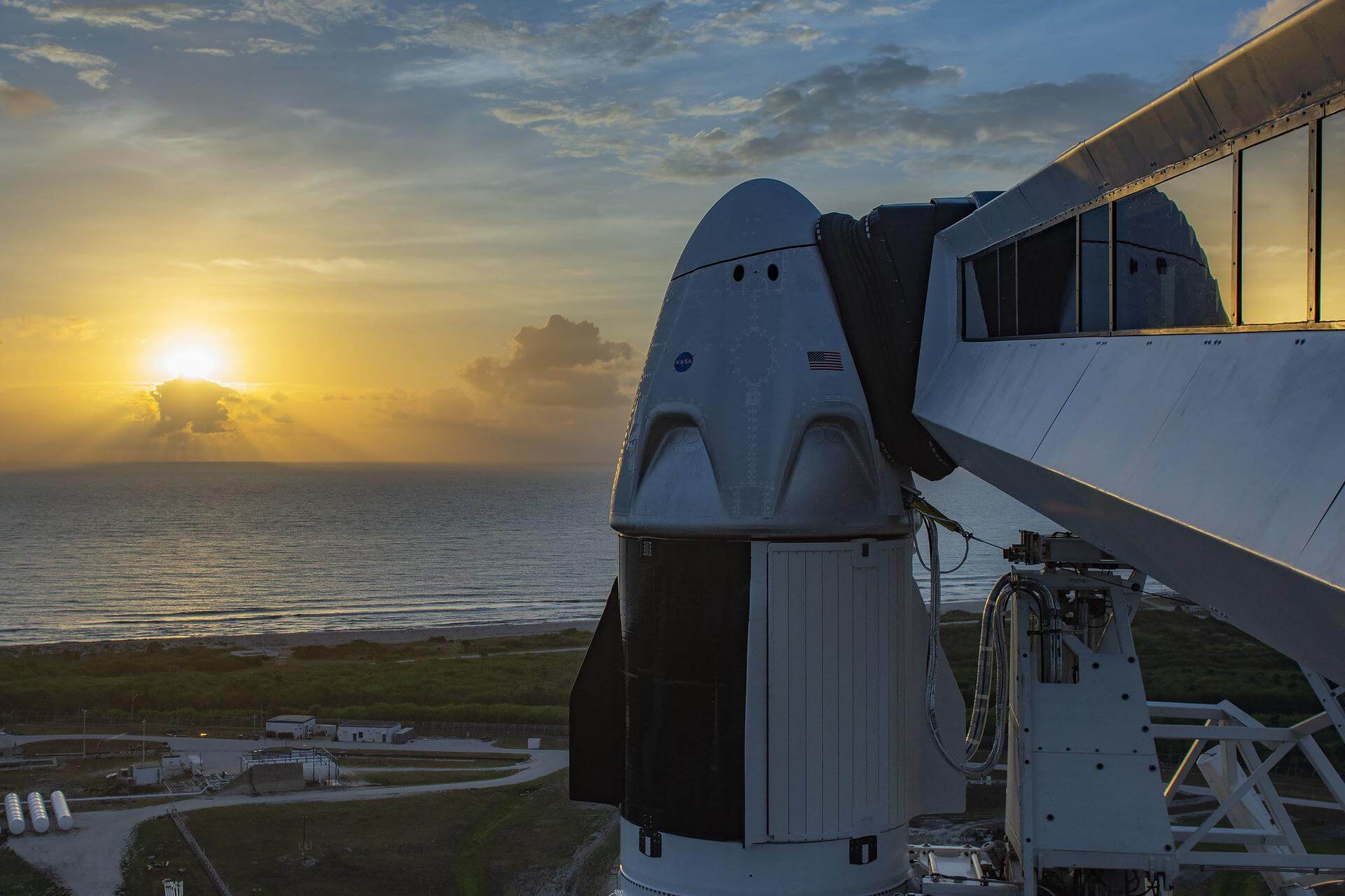
Falcon 9 Block 5 | Axiom Space Mission 5
SpaceX | United States of AmericaCape Canaveral SFS, FL, USA
TBD January, 2027
Status: To Be Determined
Mission:
This is a Crew Dragon flight for a private company Axiom Space. The mission will carry a professionally trained commander alongside three private astronauts to and from the International Space Station for a month.
Low Earth Orbit Unknown F9 - Maiden Flight Landing Zone 40Falcon 9 Block 5 | SDA Tranche 2 Transport Layer F
SpaceX | United States of AmericaVandenberg SFB, CA, USA
TBD January, 2027
Falcon 9 Block 5 | SDA Tranche 2 Transport Layer C
SpaceX | United States of AmericaCape Canaveral SFS, FL, USA
TBD January, 2027
Falcon 9 Block 5 | SICRAL 3A
SpaceX | United States of AmericaCape Canaveral SFS, FL, USA
TBD February, 2027
Status: To Be Determined
Mission:
SICRAL 3A and 3B are next generation communication satellites for the Italian Ministry of Defence, providing UHF and SHF communications services in replacement of SICRAL 2 and adding Ka-band capacities. One of the satellites will provide UHF and SHF band communications, while the other carries a Ka-band payload. These 2 geostationary satellites will provide confidential strategic and tactical communications, to support defense missions both in Italy and abroad, as well as supporting security, public rescue and civil protection services. The new SICRAL 3 system is designed to meet Italian defense communications and interoperability requirements.
Geostationary Transfer OrbitFalcon 9 Block 5 | SDA Tranche 2 Transport Layer G
SpaceX | United States of AmericaVandenberg SFB, CA, USA
TBD February, 2027
Falcon 9 Block 5 | Trinity
SpaceX | United States of AmericaCape Canaveral SFS, FL, USA
TBD February, 2027
Status: To Be Determined
Mission:
Trinity is a three-spacecraft mission from US satellite manufacturer K2 Space, with each satellite deploying to a different orbital regime to prove out K2 Space’s multi-orbit satellite platform. 2 satellites will be dropped off in LEO, 1 remaining in LEO for a period before raising itself to MEO, while the other will immediately begin climbing to MEO and will aim to complete orbit raising within 90 days. The 3rd satellite will be launched directly into a geostationary transfer orbit.
Geostationary Transfer Orbit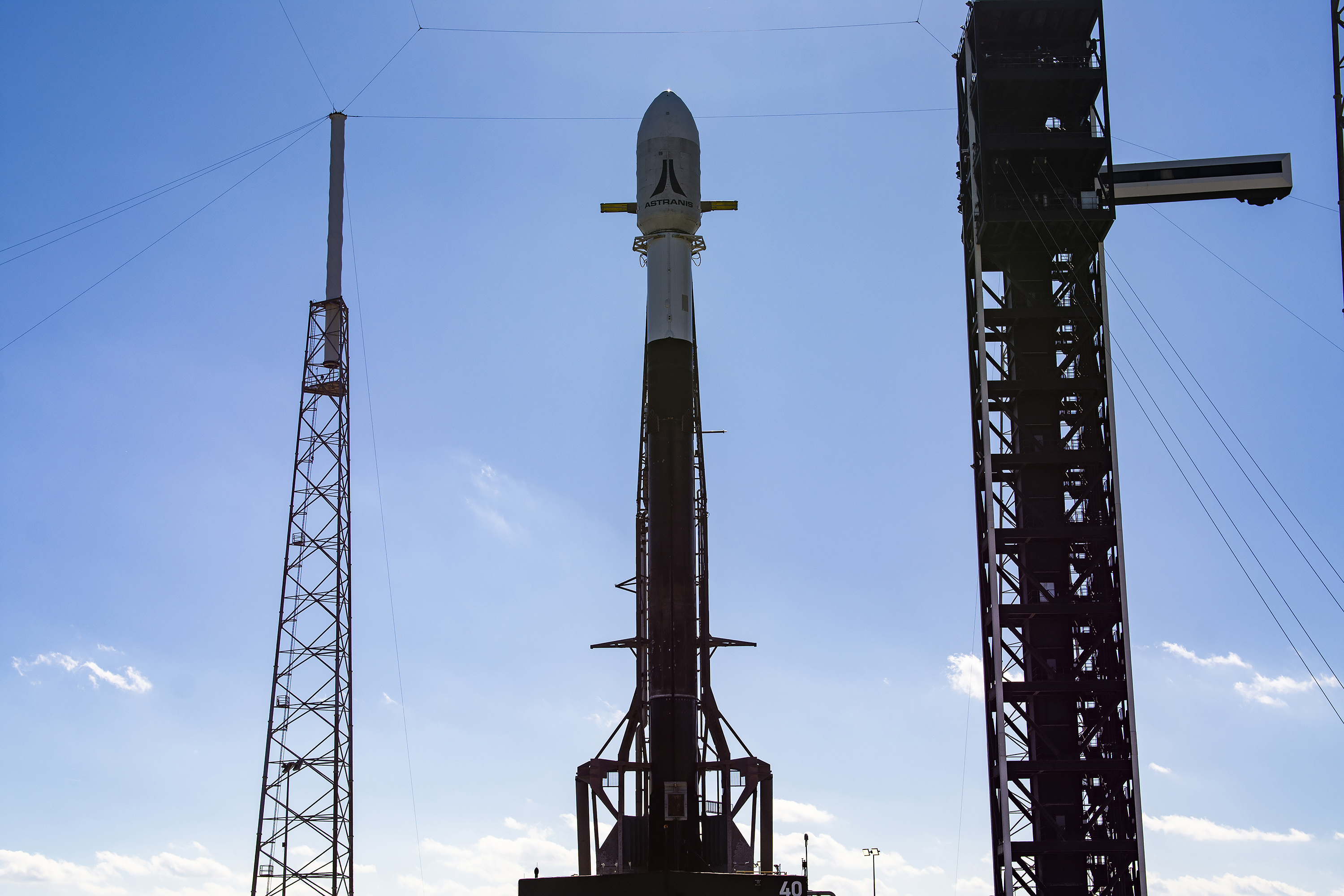
Falcon 9 Block 5 | 5x Astranis MicroGEO
SpaceX | United States of AmericaCape Canaveral SFS, FL, USA
TBD March, 2027
Status: To Be Determined
Mission:
Five Astranis MicroGEO communications satellite to be inserted in a custom geostationary orbit, from where they conduct on-orbit maneuvers to reach their individual slots. The 5 satellites include: * Apco 1 & Apco 2 (Mexico) * Thaicom-9 (Thailand) * 1x for Chunghwa Telecom (Taiwan) * 1x for MB Group (Oman)
Geostationary Transfer OrbitFalcon 9 Block 5 | SDA Tranche 2 Transport Layer H
SpaceX | United States of AmericaVandenberg SFB, CA, USA
TBD March, 2027
Falcon 9 Block 5 | Haven-1
SpaceX | United States of AmericaCape Canaveral SFS, FL, USA
TBD March, 2027
Falcon 9 Block 5 | SDA Tranche 2 Transport Layer I
SpaceX | United States of AmericaCape Canaveral SFS, FL, USA
TBD May, 2027
Falcon 9 Block 5 | SDA Tranche 2 Tracking Layer C
SpaceX | United States of AmericaCape Canaveral SFS, FL, USA
TBD June, 2027
Falcon 9 Block 5 | SDA Tranche 2 Transport Layer J
SpaceX | United States of AmericaCape Canaveral SFS, FL, USA
TBD June, 2027
Falcon 9 Block 5 | SDA Tranche 2 Tracking Layer D
SpaceX | United States of AmericaCape Canaveral SFS, FL, USA
TBD June, 2027
Falcon 9 Block 5 | USSF-149
SpaceX | United States of AmericaCape Canaveral SFS, FL, USA
TBD June, 2027
Falcon 9 Block 5 | KOMPSAT-7A
SpaceX | United States of AmericaCape Canaveral SFS, FL, USA
TBD June, 2027
Falcon 9 Block 5 | Vast-1
SpaceX | United States of AmericaCape Canaveral SFS, FL, USA
TBD July, 2027
Status: To Be Determined
Mission:
First crewed mission of VAST Space's future commercial space station Haven-1. The crew of four will remain in orbit for 10 days. The crew will include ESA/CNES astronaut Arnaud Prost, as well as potentially ESA/UKSA astronaut John McFall.
Low Earth Orbit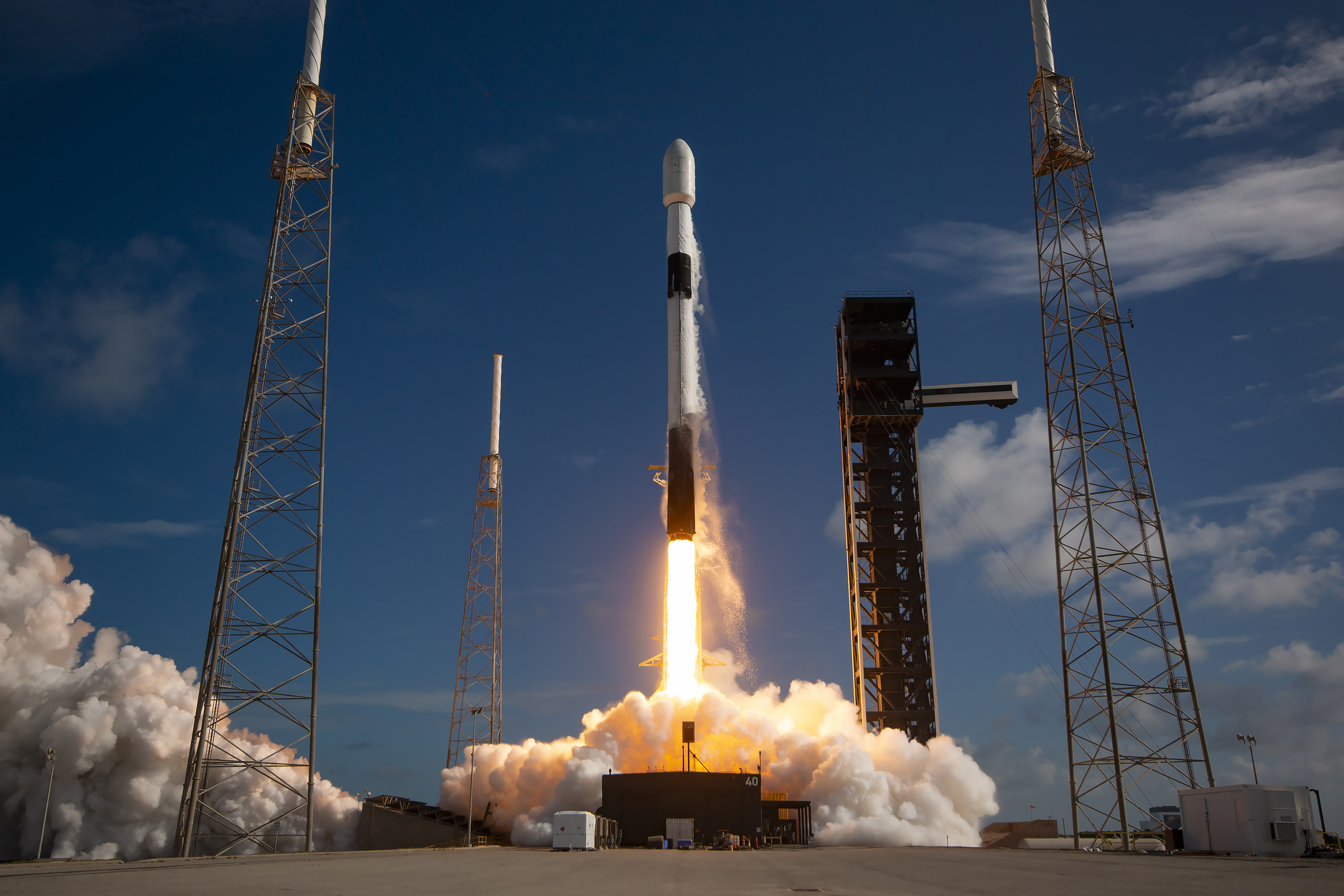
Falcon 9 Block 5 | COSI (Compton Spectrometer and Imager)
SpaceX | United States of AmericaCape Canaveral SFS, FL, USA
TBD August, 2027
Status: To Be Determined
Mission:
Wide-field gamma-ray telescope designed to study energetic phenomena in the Milky Way and beyond, including the creation and destruction of matter and antimatter and the final stages of the lives of stars. The mission is a collaboration between the University of California, Berkeley’s Space Sciences Laboratory, the University of California, San Diego, the Naval Research Laboratory, NASA’s Goddard Space Flight Center, and Northrop Grumman.
Low Earth OrbitFalcon 9 Block 5 | PAM-6 (Vast ISS Mission 1)
SpaceX | United States of AmericaCape Canaveral SFS, FL, USA
TBD September, 2027
Status: To Be Determined
Mission:
Vast’s first private crew rotation to the International Space Station aboard a SpaceX Crew Dragon spacecraft, and NASA's 6th Private Astronaut Mission to the ISS. The crew includes ESA/CNES astronaut Thomas Pesquet, who will serve as Commander for the mission, and Czech astronaut Aleš Svoboda. The mission will carry 4 astronauts to and from the International Space Station for up to 2 weeks. Note: Official mission name to be confirmed.
Low Earth Orbit Unknown F9 - Maiden Flight Landing Zone 40Falcon 9 Block 5 | Arabsat 7A
SpaceX | United States of AmericaCape Canaveral SFS, FL, USA
TBD October, 2027
Falcon 9 Block 5 | SICRAL 3B
SpaceX | United States of AmericaCape Canaveral SFS, FL, USA
TBD November, 2027
Status: To Be Determined
Mission:
SICRAL 3A and 3B are next generation communication satellites for the Italian Ministry of Defence, providing UHF and SHF communications services in replacement of SICRAL 2 and adding Ka-band capacities. One of the satellites will provide UHF and SHF band communications, while the other carries a Ka-band payload. These 2 geostationary satellites will provide confidential strategic and tactical communications, to support defense missions both in Italy and abroad, as well as supporting security, public rescue and civil protection services. The new SICRAL 3 system is designed to meet Italian defense communications and interoperability requirements.
Geostationary Transfer OrbitFalcon 9 Block 5 | Al Yah 4
SpaceX | United States of AmericaCape Canaveral SFS, FL, USA
TBD December, 2027
Falcon 9 Block 5 | Telesat Lightspeed 8
SpaceX | United States of AmericaCape Canaveral SFS, FL, USA
TBD December, 2027
Falcon 9 Block 5 | JPSS 4 (Joint Polar Satellite System spacecraft No. 4)
SpaceX | United States of AmericaVandenberg SFB, CA, USA
TBD December, 2027
Status: To Be Determined
Mission:
The JPSS constellation of satellites collects global multi-spectral radiometry and other specialized meteorologic, oceanographic, and solar-geophysical data via remote sensing of land, sea, and atmospheric properties. These data support NOAA’s mission for continuous observation of Earth’s environment to understand and predict changes in weather, climate, oceans, and coasts to support the nation’s economy and protect lives and property. NASA uses the instruments aboard the JPSS satellites to continue decades of Earth science research for the betterment of humanity. JPSS-4 carries the NASA Earth Venture mission Libera, an instrument to improve our understanding of trends in Earth’s energy imbalance and our changing climate.
Sun-Synchronous OrbitFalcon 9 Block 5 | Telesat Lightspeed 9
SpaceX | United States of AmericaCape Canaveral SFS, FL, USA
TBD December, 2027
Falcon 9 Block 5 | Telesat Lightspeed 11
SpaceX | United States of AmericaCape Canaveral SFS, FL, USA
TBD December, 2027
Falcon 9 Block 5 | Thaicom 10
SpaceX | United States of AmericaCape Canaveral SFS, FL, USA
TBD December, 2027
Status: To Be Determined
Mission:
Thaicom 10, built by Airbus Defence and Space, will provide over 120 gigabits per second (Gbps) of capacity, with flexibility and instant configuration to adapt dynamically to the customers’ needs. The satellite will provide extended connectivity over the region for Thaicom’s customers and partners across the Asia Pacific.
Geostationary Transfer OrbitFalcon 9 Block 5 | Thor 8
SpaceX | United States of AmericaCape Canaveral SFS, FL, USA
TBD December, 2027
Status: To Be Determined
Mission:
Thor 8 is a multi-purpose communications satellite for Space Norway. The satellite will both replace older satellites being phased out in the coming years and provide increased capacity and service offerings that offers capacity for both data services and broadcasting, such as high power direct-to-home (DTH) television services, from the 1° West orbital position. It carries two dedicated payloads for broadcasting in Europe and the Nordics, as well as payloads for data services to commercial and governmental customers. With a launch mass of 4 metric tons, the satellite will be built on Thales Alenia Space’s Spacebus-4000B2 platform and will operate in the Ka and Ku frequency bands.
Geostationary Transfer OrbitFalcon 9 Block 5 | Telesat Lightspeed 13
SpaceX | United States of AmericaCape Canaveral SFS, FL, USA
TBD December, 2027
Falcon 9 Block 5 | Chinggis Sat
SpaceX | United States of AmericaCape Canaveral SFS, FL, USA
TBD December, 2027
Status: To Be Determined
Mission:
Chinggis Sat is a Mongolian national geostationary orbit telecommunications satellite for the Mongolia Ministry of Digital Development and Communications. Thales Alenia Space will be responsible for construction of the high-performance Ku-Band satellite. Once launched, the satellite will make high-speed internet available throughout Mongolia, including to those in rural areas and under-served nomadic communities, enabling easier and wider access to services such as tele-medicine, e-learning, e-government services and supporting the growth of high value add sectors of the economy. It will be positioned at the 113.6° E orbital slot and will be based on the space-proven, cutting-edge SpaceBus 4000 satellite bus.
Geostationary Transfer OrbitFalcon 9 Block 5 | Telesat Lightspeed 10
SpaceX | United States of AmericaCape Canaveral SFS, FL, USA
TBD December, 2027
Falcon 9 Block 5 | GEO-KOMPSAT-3
SpaceX | United States of AmericaCape Canaveral SFS, FL, USA
TBD December, 2027
Status: To Be Determined
Mission:
3.7-ton South Korean geostationary communications satellite also known as Chollian-3. Designed to replace GEO-Kompsat-1 launched in 2010, it features advanced payloads for communications, disaster prevention, maritime safety and the safe flight of aircraft
Geostationary Transfer OrbitFalcon 9 Block 5 | Telesat Lightspeed 14
SpaceX | United States of AmericaCape Canaveral SFS, FL, USA
TBD December, 2027
Falcon 9 Block 5 | JSAT-32
SpaceX | United States of AmericaCape Canaveral SFS, FL, USA
TBD December, 2027
Status: To Be Determined
Mission:
JSAT-32 is a geostationary communication satellite for SKY Perfect JSAT. Operating in the Ku and Ka frequency bands, JSAT-32 will provide coverage over Japan and its surrounding seas, with newly added spot beams for mobility applications. JSAT-32 will serve as a future replacement for existing SKY Perfect JSAT satellites that provide communication and distribution services in Japan.
Geostationary Transfer OrbitFalcon 9 Block 5 | Skynet 6A
SpaceX | United States of AmericaCape Canaveral SFS, FL, USA
TBD December, 2027
Status: To Be Determined
Mission:
The Skynet 6A gap-filler military communications satellite built by Airbus Defence and Space to cover the gap between the Britisch Skynet-5 network and its successor. Skynet 6A was solesourced from Airbus Defence and Space in 2017, but was not fully funded until July 2020. Aibus will build the Skynet-6A satellite in the United Kingdom and arrange a 2025 launch. RAL Space, a U.K. national laboratory, will test the all-electric satellite at its facility in Harwell. Skynet-6A, based on the Eurostar-Neo platform, is expected to provide communications services for the British military until at least 2040.
Geostationary Transfer OrbitFalcon 9 Block 5 | Telesat Lightspeed 12
SpaceX | United States of AmericaCape Canaveral SFS, FL, USA
TBD December, 2027
Falcon 9 Block 5 | Exolaunch Exo-1
SpaceX | United States of AmericaVandenberg SFB, CA, USA
TBD December, 2027
Falcon 9 Block 5 | 6x Astranis MicroGEO
SpaceX | United States of AmericaCape Canaveral SFS, FL, USA
TBD December, 2027
Status: To Be Determined
Mission:
Six Astranis MicroGEO communications satellite to be inserted into Low Earth orbit by the Falcon 9, from where the Helios upper stage provided by Impulse Space will carry the satellites to geostationary orbit within 24 hours of launch.
Geostationary OrbitFalcon 9 Block 5 | FOO Fighter (F2)
SpaceX | United States of AmericaCape Canaveral SFS, FL, USA
TBD December, 2027
Falcon 9 Block 5 | Nova-C IM-4 & 2 Lunar Data Relay Satellites
SpaceX | United States of AmericaCape Canaveral SFS, FL, USA
TBD December, 2027
Falcon 9 Block 5 | NEO Surveyor
SpaceX | United States of AmericaCape Canaveral SFS, FL, USA
TBD June, 2028
Status: To Be Determined
Mission:
NASA's Near-Earth Object (NEO) Surveyor mission is designed to help advance planetary defense efforts to discover and characterize most of the potentially hazardous asteroids and comets that come within 30 million miles of Earth’s orbit. These are collectively known as near-earth objects, or NEOs. NEO Surveyor consists of a single scientific instrument: a 50 centimeter (nearly 20 inch) diameter telescope that operates in two heat-sensing infrared wavelengths. It will be capable of detecting both bright and dark asteroids, which are the most difficult type to find.
Heliocentric L1Falcon 9 Block 5 | SEOPS Waymaker-1
SpaceX | United States of AmericaVandenberg SFB, CA, USA
TBD September, 2028
Falcon 9 Block 5 | EchoStar 26
SpaceX | United States of AmericaCape Canaveral SFS, FL, USA
TBD December, 2028
Status: To Be Determined
Mission:
EchoStar 26 is a direct broadcast satellite, built on the proven Maxar 1300 series platform, which will deliver content across DISH TV customers across all 50 U.S. states & Puerto Rico. It will be equipped with a high-power, multi-spot beam payload, allowing DISH to provide high-quality content to its customers.
Geostationary Transfer OrbitFalcon 9 Block 5 | Al Yah 5
SpaceX | United States of AmericaCape Canaveral SFS, FL, USA
TBD December, 2028
Falcon 9 Block 5 | WSF-M2 & BLAZE-2 (USSF-178)
SpaceX | United States of AmericaVandenberg SFB, CA, USA
TBD December, 2028
Status: To Be Determined
Mission:
Second Weather System Follow-on (WSF) satellite. WSF-M (Weather System Follow-on - Microwave) is the next-generation operational environmental satellite system for the Department of Defense (DoD), to replace the microwave wavelength weather forecasting capabilities of the DMSP satellites. Ball Aerospace has been selected in late November 2017 to be the prime contractor for 2 Low Earth Orbit (LEO) weather satellites with a passive microwave imaging radiometer instrument and hosted Government furnished energetic charged particle (ECP) sensor space weather payload developed by the Air Force Research Laboratory. The radiometer leverages the Ball-built Global Precipitation Measurement (GPM) Microwave Imager (GMI) instrument. This mission will improve weather forecasting over maritime regions by taking global measurements of the atmosphere and ocean surface. The launch will also include BLAZE-2, a launch opportunity for operational, research, development, and prototype small satellites from across the DoD.
Polar OrbitFalcon 9 Block 5 | SEOPS Darkstar-1
SpaceX | United States of AmericaCape Canaveral SFS, FL, USA
TBD December, 2028
Falcon 9 Block 5 | Exolaunch Exo-2
SpaceX | United States of AmericaVandenberg SFB, CA, USA
TBD December, 2028
Falcon 9 Block 5 | KPS-1
SpaceX | United States of AmericaCape Canaveral SFS, FL, USA
TBD September, 2029
Status: To Be Determined
Mission:
KPS-1 is South Korea's first navigation satellite, the 1st of 8 satellites planned for the Korean Positioning System (KPS). This will be one of 5 satellites to be deployed into an Inclined Geosynchronous Orbit (IGSO), with the other 3 in geostationary orbits. The KPS is scheduled to be completed by 2035.
Geosynchronous Transfer OrbitFalcon 9 Block 5 | Amazon Leo (LF-09)
SpaceX | United States of AmericaCape Canaveral SFS, FL, USA
TBD December, 2029
Status: To Be Determined
Mission:
Amazon Leo, formerly known as Project Kuiper, is a mega constellation of satellites in Low Earth Orbit designed to offer broadband internet access managed by Kuiper Systems LLC, a subsidiary of Amazon. This constellation is planned to be composed of 3,276 satellites. The satellites are projected to be placed in 98 orbital planes in three orbital layers, one at 590 km, 610 km and 630 km altitude.
Low Earth OrbitFalcon 9 Block 5 | Amazon Leo (LF-04)
SpaceX | United States of AmericaCape Canaveral SFS, FL, USA
TBD December, 2029
Status: To Be Determined
Mission:
Amazon Leo, formerly known as Project Kuiper, is a mega constellation of satellites in Low Earth Orbit designed to offer broadband internet access managed by Kuiper Systems LLC, a subsidiary of Amazon. This constellation is planned to be composed of 3,276 satellites. The satellites are projected to be placed in 98 orbital planes in three orbital layers, one at 590 km, 610 km and 630 km altitude.
Low Earth OrbitFalcon 9 Block 5 | NROL-157
SpaceX | United States of AmericaVandenberg SFB, CA, USA
TBD December, 2029
Falcon 9 Block 5 | Amazon Leo (LF-10)
SpaceX | United States of AmericaCape Canaveral SFS, FL, USA
TBD December, 2029
Status: To Be Determined
Mission:
Amazon Leo, formerly known as Project Kuiper, is a mega constellation of satellites in Low Earth Orbit designed to offer broadband internet access managed by Kuiper Systems LLC, a subsidiary of Amazon. This constellation is planned to be composed of 3,276 satellites. The satellites are projected to be placed in 98 orbital planes in three orbital layers, one at 590 km, 610 km and 630 km altitude.
Low Earth OrbitFalcon 9 Block 5 | Amazon Leo (LF-11)
SpaceX | United States of AmericaCape Canaveral SFS, FL, USA
TBD December, 2029
Status: To Be Determined
Mission:
Amazon Leo, formerly known as Project Kuiper, is a mega constellation of satellites in Low Earth Orbit designed to offer broadband internet access managed by Kuiper Systems LLC, a subsidiary of Amazon. This constellation is planned to be composed of 3,276 satellites. The satellites are projected to be placed in 98 orbital planes in three orbital layers, one at 590 km, 610 km and 630 km altitude.
Low Earth OrbitFalcon 9 Block 5 | JSAT-31
SpaceX | United States of AmericaCape Canaveral SFS, FL, USA
TBD December, 2029
Status: To Be Determined
Mission:
JSAT-31 is a geostationary communication satellite for SKY Perfect JSAT. Operating both in Ka and Ku frequency bands, the JSAT-31 High Throughput Satellite will offer high speed broadband services over Japan, South-East Asia, Australia, New Zealand and Pacific islands. JSAT-31 will have the largest capacity in the history of SKY Perfect JSAT satellites. It will rely on Space INSPIRE, a highly flexible and fully software-defined solution that offers instant in-orbit adjustment to broadband connectivity demand, while maximizing the effective use of the satellite resources. SKY Perfect JSAT will leverage the satellite’s extreme flexibility to offer enhanced communications services all along JSAT-31’s lifespan in orbit.
Geostationary Transfer OrbitFalcon 9 Block 5 | Amazon Leo (LF-07)
SpaceX | United States of AmericaCape Canaveral SFS, FL, USA
TBD December, 2029
Status: To Be Determined
Mission:
Amazon Leo, formerly known as Project Kuiper, is a mega constellation of satellites in Low Earth Orbit designed to offer broadband internet access managed by Kuiper Systems LLC, a subsidiary of Amazon. This constellation is planned to be composed of 3,276 satellites. The satellites are projected to be placed in 98 orbital planes in three orbital layers, one at 590 km, 610 km and 630 km altitude.
Low Earth OrbitFalcon 9 Block 5 | Amazon Leo (LF-06)
SpaceX | United States of AmericaCape Canaveral SFS, FL, USA
TBD December, 2029
Status: To Be Determined
Mission:
Amazon Leo, formerly known as Project Kuiper, is a mega constellation of satellites in Low Earth Orbit designed to offer broadband internet access managed by Kuiper Systems LLC, a subsidiary of Amazon. This constellation is planned to be composed of 3,276 satellites. The satellites are projected to be placed in 98 orbital planes in three orbital layers, one at 590 km, 610 km and 630 km altitude.
Low Earth OrbitFalcon 9 Block 5 | Amazon Leo (LF-05)
SpaceX | United States of AmericaCape Canaveral SFS, FL, USA
TBD December, 2029
Status: To Be Determined
Mission:
Amazon Leo, formerly known as Project Kuiper, is a mega constellation of satellites in Low Earth Orbit designed to offer broadband internet access managed by Kuiper Systems LLC, a subsidiary of Amazon. This constellation is planned to be composed of 3,276 satellites. The satellites are projected to be placed in 98 orbital planes in three orbital layers, one at 590 km, 610 km and 630 km altitude.
Low Earth OrbitFalcon 9 Block 5 | Amazon Leo (LF-13)
SpaceX | United States of AmericaCape Canaveral SFS, FL, USA
TBD December, 2029
Status: To Be Determined
Mission:
Amazon Leo, formerly known as Project Kuiper, is a mega constellation of satellites in Low Earth Orbit designed to offer broadband internet access managed by Kuiper Systems LLC, a subsidiary of Amazon. This constellation is planned to be composed of 3,276 satellites. The satellites are projected to be placed in 98 orbital planes in three orbital layers, one at 590 km, 610 km and 630 km altitude.
Low Earth OrbitFalcon 9 Block 5 | USSF-234
SpaceX | United States of AmericaCape Canaveral SFS, FL, USA
TBD December, 2029
Falcon 9 Block 5 | NROL-96
SpaceX | United States of AmericaVandenberg SFB, CA, USA
TBD December, 2029
Falcon 9 Block 5 | Amazon Leo (LF-08)
SpaceX | United States of AmericaCape Canaveral SFS, FL, USA
TBD December, 2029
Status: To Be Determined
Mission:
Amazon Leo, formerly known as Project Kuiper, is a mega constellation of satellites in Low Earth Orbit designed to offer broadband internet access managed by Kuiper Systems LLC, a subsidiary of Amazon. This constellation is planned to be composed of 3,276 satellites. The satellites are projected to be placed in 98 orbital planes in three orbital layers, one at 590 km, 610 km and 630 km altitude.
Low Earth OrbitFalcon 9 Block 5 | Amazon Leo (LF-12)
SpaceX | United States of AmericaCape Canaveral SFS, FL, USA
TBD December, 2029
Status: To Be Determined
Mission:
Amazon Leo, formerly known as Project Kuiper, is a mega constellation of satellites in Low Earth Orbit designed to offer broadband internet access managed by Kuiper Systems LLC, a subsidiary of Amazon. This constellation is planned to be composed of 3,276 satellites. The satellites are projected to be placed in 98 orbital planes in three orbital layers, one at 590 km, 610 km and 630 km altitude.
Low Earth OrbitFalcon 9 Block 5 | Crew-14
SpaceX | United States of AmericaCape Canaveral SFS, FL, USA
TBD March, 2031
Falcon 9 Block 5 | Starlink Group 10-50
SpaceX | United States of AmericaCape Canaveral SFS, FL, USA
July 5, 2026, 10:50 a.m.
Status: Launch Successful
Mission:
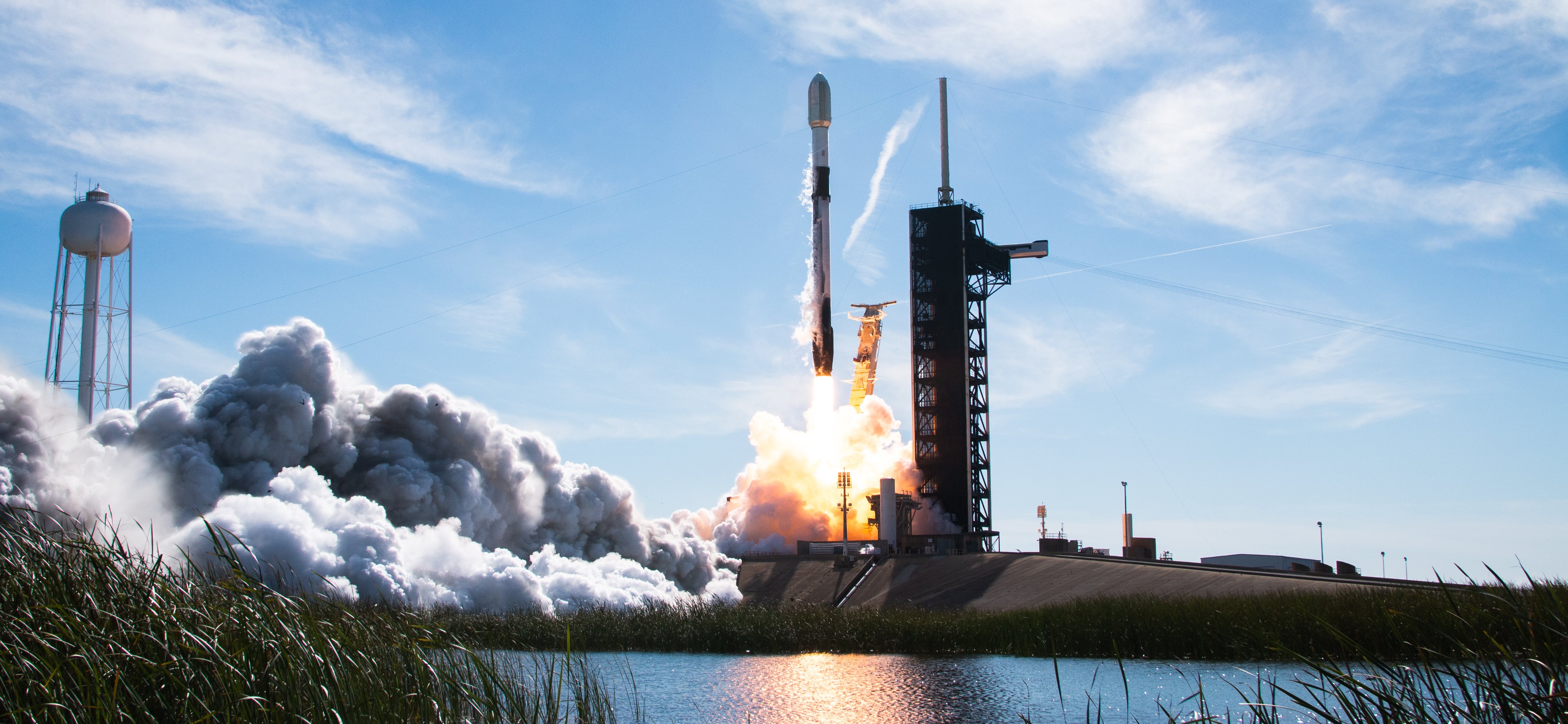
A batch of 29 satellites for the Starlink mega-constellation - SpaceX's project for space-based Internet communication system. The Falcon 9 1st stage carries 2 customer payload from Besxar Space Industries for testing their Fabships pilot reusable semiconductor wafers manufacturing pods in launch and re-entry environments.
Low Earth Orbit B1090 - Flight Proven ( ) A Shortfall of GravitasFalcon 9 Block 5 | Starlink Group 17-46
SpaceX | United States of AmericaVandenberg SFB, CA, USA
July 2, 2026, 2:58 a.m.
Falcon 9 Block 5 | Sirius SXM-11
SpaceX | United States of AmericaCape Canaveral SFS, FL, USA
June 29, 2026, 2:25 a.m.
Status: Launch Successful
Mission:
SXM-11 is the 12th high-powered, digital, audio radio satellite built by Lanteris Space (ex-Maxar, Space System/Loral) for SiriusXM. The SXM-11 satellite will be based on the proven IM-1300 (ex-LS-1300)-class platform and built at the company’s manufacturing facility in Palo Alto, California. SXM-11 has a large, mesh, unfurlable reflector almost 10 meters in diameter that allows SiriusXM programming to reach its radios, including those in moving vehicles.
Geostationary Transfer Orbit B1085 - Flight Proven ( ) A Shortfall of GravitasFalcon 9 Block 5 | Starlink Group 17-40
SpaceX | United States of AmericaVandenberg SFB, CA, USA
June 28, 2026, 4:09 p.m.
Falcon 9 Block 5 | Starlink Group 17-45
SpaceX | United States of AmericaVandenberg SFB, CA, USA
June 25, 2026, 3:30 a.m.
Falcon 9 Block 5 | Project Starfall Demonstration Mission
SpaceX | United States of AmericaCape Canaveral SFS, FL, USA
June 23, 2026, 10:53 a.m.
Status: Launch Successful
Mission:
Note: Mission profile and payload details are TBD. Demonstration mission for SpaceX’s Project Starfall, which aims to mass-produce reentry capsules designed to autonomously transport valuable customer experiments and other payloads safely back from space to Earth, including for in-orbit manufacturing. Starfall is a cylindrical shaped capsule approximately 0.75 meters tall with a diameter of 3.1 meters, weighing approximately 2100 kilograms, and capable of carrying 1000 kilograms of payload. It is designed to be carried on Starship flights.
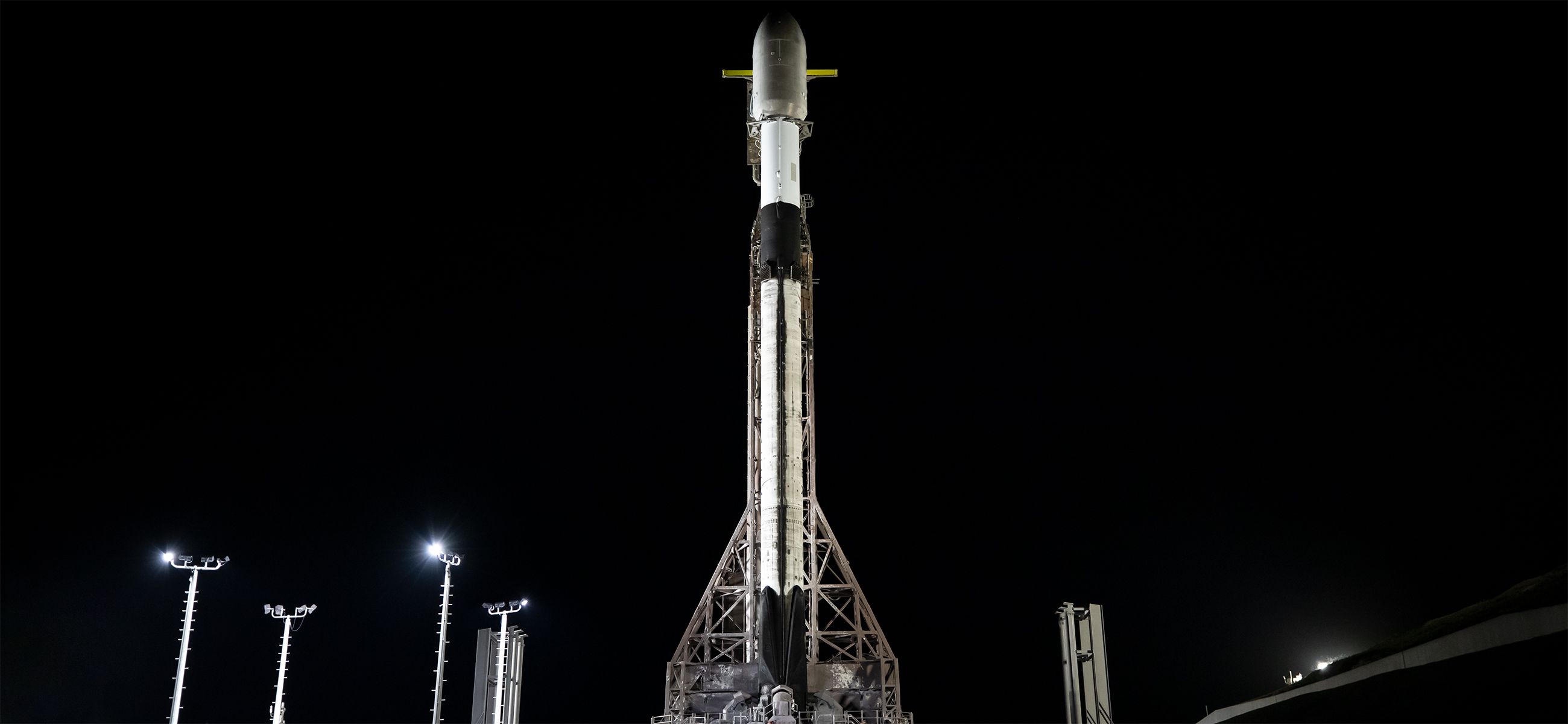
Low Earth Orbit B1078 - Flight Proven ( ) A Shortfall of GravitasFalcon 9 Block 5 | Starlink Group 17-28
SpaceX | United States of AmericaVandenberg SFB, CA, USA
June 21, 2026, 4:39 p.m.
Falcon 9 Block 5 | NROL-179
SpaceX | United States of AmericaVandenberg SFB, CA, USA
June 19, 2026, 8:50 a.m.
Status: Launch Successful
Mission:
Fourteenth batch of satellites for a reconnaissance satellite constellation built by SpaceX and Northrop Grumman for the National Reconnaissance Office to provide imaging and other reconnaissance capabilities.
Unknown B1103 - Flight Proven ( ) Landing Zone 4Falcon 9 Block 5 | BlueBird Block 2 #3-5
SpaceX | United States of AmericaCape Canaveral SFS, FL, USA
June 17, 2026, 6:39 a.m.
Status: Launch Successful
Mission:
AST SpaceMobile’s Block 2 BlueBird satellites are designed to deliver up to 10 times the bandwidth capacity of the BlueBird Block 1 satellites, required to achieve 24/7 continuous cellular broadband service coverage in the United States, with beams designed to support a capacity of up to 40 MHz, enabling peak data transmission speeds up to 120 Mbps, supporting voice, full data and video applications. The Block 2 BlueBirds, featuring as large as 2400 square foot communications arrays, will be the largest satellites ever commercially deployed in Low Earth orbit once launched. This launch will feature 3 satellites.
Low Earth Orbit B1077 - Flight Proven ( ) A Shortfall of GravitasFalcon 9 Block 5 | Starlink Group 17-54
SpaceX | United States of AmericaVandenberg SFB, CA, USA
June 15, 2026, 3:34 p.m.
Falcon 9 Block 5 | Starlink Group 10-54
SpaceX | United States of AmericaCape Canaveral SFS, FL, USA
June 12, 2026, 12:37 p.m.
Falcon 9 Block 5 | Starlink Group 17-44
SpaceX | United States of AmericaVandenberg SFB, CA, USA
June 11, 2026, 3:05 p.m.
Falcon 9 Block 5 | Starlink Group 10-35
SpaceX | United States of AmericaCape Canaveral SFS, FL, USA
June 8, 2026, 10:13 a.m.
Falcon 9 Block 5 | Starlink Group 17-43
SpaceX | United States of AmericaVandenberg SFB, CA, USA
June 7, 2026, 4:24 a.m.
Falcon 9 Block 5 | Starlink Group 10-43
SpaceX | United States of AmericaCape Canaveral SFS, FL, USA
June 4, 2026, 10:26 a.m.
Falcon 9 Block 5 | Starlink Group 17-47
SpaceX | United States of AmericaVandenberg SFB, CA, USA
June 3, 2026, 3:40 p.m.
Falcon 9 Block 5 | Starlink Group 17-41
SpaceX | United States of AmericaVandenberg SFB, CA, USA
May 30, 2026, 3:25 p.m.
Falcon 9 Block 5 | Starlink Group 10-53
SpaceX | United States of AmericaCape Canaveral SFS, FL, USA
May 29, 2026, 12:57 p.m.
Falcon 9 Block 5 | Starlink Group 17-37
SpaceX | United States of AmericaVandenberg SFB, CA, USA
May 26, 2026, 2:50 p.m.
Falcon 9 Block 5 | Starlink Group 10-47
SpaceX | United States of AmericaCape Canaveral SFS, FL, USA
May 25, 2026, 11:48 a.m.
Falcon 9 Block 5 | Starlink Group 10-31
SpaceX | United States of AmericaCape Canaveral SFS, FL, USA
May 21, 2026, 10:04 a.m.
Falcon 9 Block 5 | Starlink Group 17-42
SpaceX | United States of AmericaVandenberg SFB, CA, USA
May 20, 2026, 2:46 a.m.
Falcon 9 Block 5 | Dragon CRS-2 SpX-34
SpaceX | United States of AmericaCape Canaveral SFS, FL, USA
May 15, 2026, 10:05 p.m.
Status: Launch Successful
Mission:
34th commercial resupply services mission to the International Space Station operated by SpaceX. The flight will be conducted under the second Commercial Resupply Services contract with NASA. Cargo Dragon 2 brings supplies and payloads, including critical materials to directly support science and research investigations that occur onboard the orbiting laboratory.
Low Earth Orbit B1096 - Flight Proven ( ) Landing Zone 40Falcon 9 Block 5 | NROL-172
SpaceX | United States of AmericaVandenberg SFB, CA, USA
May 12, 2026, 2:13 a.m.
Status: Launch Successful
Mission:
Thirteenth batch of satellites for a reconnaissance satellite constellation built by SpaceX and Northrop Grumman for the National Reconnaissance Office to provide imaging and other reconnaissance capabilities.
Unknown B1097 - Flight Proven ( ) Of Course I Still Love YouFalcon 9 Block 5 | Starlink Group 17-29
SpaceX | United States of AmericaVandenberg SFB, CA, USA
May 6, 2026, 3:59 a.m.
Falcon 9 Block 5 | CAS500-2 & Others
SpaceX | United States of AmericaVandenberg SFB, CA, USA
May 3, 2026, 7 a.m.
Status: Launch Successful
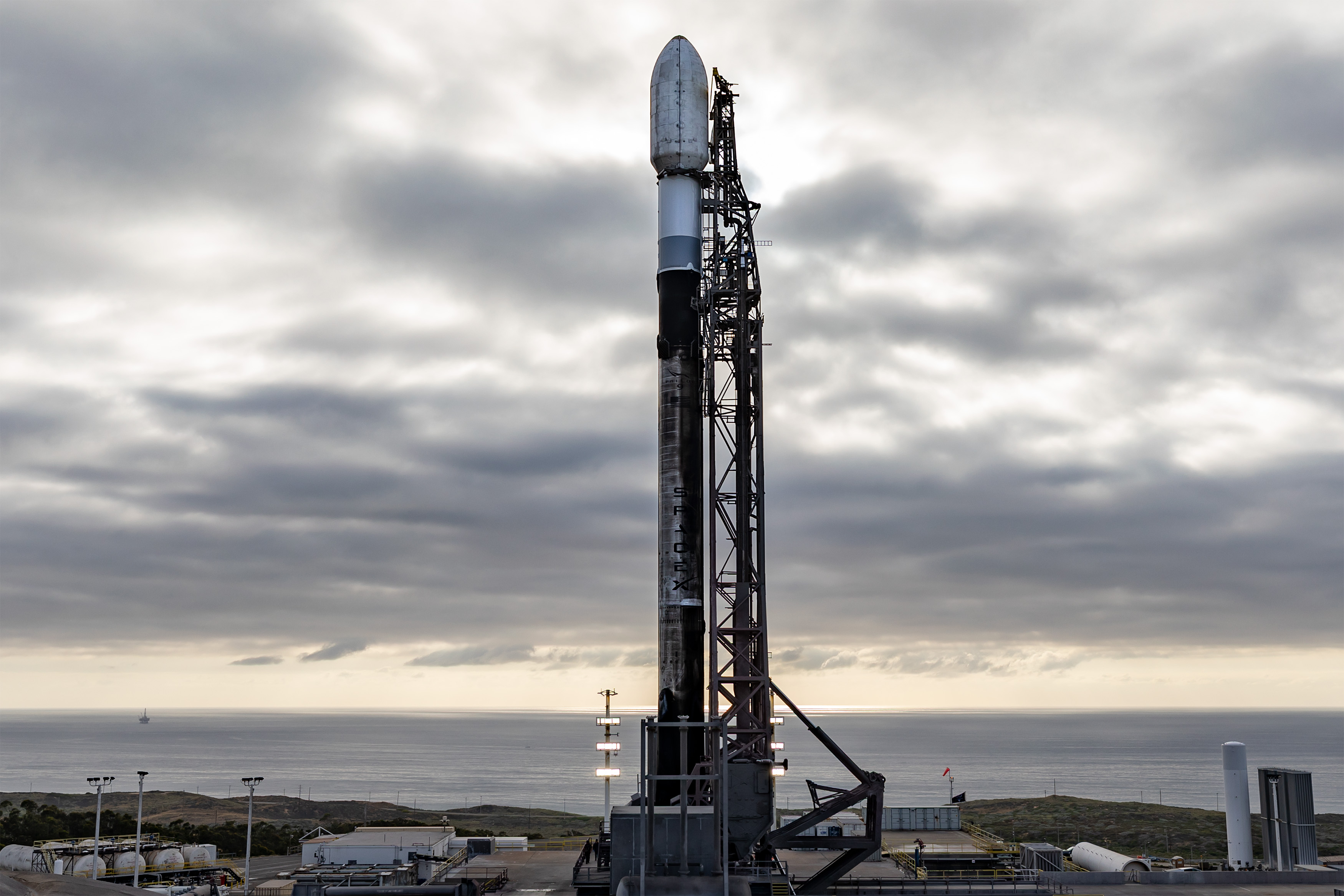
Mission:
Ride-share of 45 satellites including: * CAS500-2 (KASA, South Korea) The South Korean CAS500-1 and -2 satellites will image the Earth in pan-chromatic and multi-spectral modes using the AEISS-C (Advanced Earth Imaging Sensor System) payload, with a ground resolution of 0.5 m in panchromatic mode and 2 m in color mode. * Pelican-7, 8 & 9 (Planet Labs) Pelican is a constellation of very high resolution imaging satellites, designed and manufactured by Planet Labs. The commercial constellation will consist of 32 SmallSats with potential for further expansion, and aims to provide improved spatial resolution and response times over Planet’s existing SkySat and Dove constellations.
Sun-Synchronous Orbit B1071 - Flight Proven ( ) Landing Zone 4Falcon 9 Block 5 | Starlink Group 10-38
SpaceX | United States of AmericaCape Canaveral SFS, FL, USA
May 1, 2026, 6:06 p.m.
Falcon 9 Block 5 | Starlink Group 17-36
SpaceX | United States of AmericaVandenberg SFB, CA, USA
April 30, 2026, 2:42 a.m.
Falcon 9 Block 5 | Starlink Group 17-16
SpaceX | United States of AmericaVandenberg SFB, CA, USA
April 26, 2026, 2:37 p.m.
Falcon 9 Block 5 | Starlink Group 17-14
SpaceX | United States of AmericaVandenberg SFB, CA, USA
April 23, 2026, 3:23 a.m.
Falcon 9 Block 5 | GPS III SV10
SpaceX | United States of AmericaCape Canaveral SFS, FL, USA
April 21, 2026, 6:53 a.m.
Falcon 9 Block 5 | Starlink Group 17-22
SpaceX | United States of AmericaVandenberg SFB, CA, USA
April 19, 2026, 4:03 p.m.
Falcon 9 Block 5 | Starlink Group 17-27
SpaceX | United States of AmericaVandenberg SFB, CA, USA
April 15, 2026, 4:29 a.m.
Falcon 9 Block 5 | Starlink Group 10-24
SpaceX | United States of AmericaCape Canaveral SFS, FL, USA
April 14, 2026, 9:33 a.m.
Falcon 9 Block 5 | Cygnus CRS-2 NG-24 (S.S. Steven R. Nagel)
SpaceX | United States of AmericaCape Canaveral SFS, FL, USA
April 11, 2026, 11:41 a.m.
Status: Launch Successful
Mission:
This is the 24th flight of the Orbital ATK's uncrewed resupply spacecraft Cygnus and its 23rd flight to the International Space Station under the Commercial Resupply Services contract with NASA.
Low Earth Orbit B1094 - Flight Proven ( ) Landing Zone 40Falcon 9 Block 5 | Starlink Group 17-21
SpaceX | United States of AmericaVandenberg SFB, CA, USA
April 11, 2026, 5:04 a.m.
Falcon 9 Block 5 | Starlink Group 17-35
SpaceX | United States of AmericaVandenberg SFB, CA, USA
April 7, 2026, 2:50 a.m.
Falcon 9 Block 5 | Starlink Group 10-58
SpaceX | United States of AmericaCape Canaveral SFS, FL, USA
April 2, 2026, 11:55 a.m.
Falcon 9 Block 5 | Starlink Group 10-44
SpaceX | United States of AmericaCape Canaveral SFS, FL, USA
March 30, 2026, 9:15 p.m.
Falcon 9 Block 5 | Transporter 16 (Dedicated SSO Rideshare)
SpaceX | United States of AmericaVandenberg SFB, CA, USA
March 30, 2026, 11:02 a.m.
Falcon 9 Block 5 | Starlink Group 17-17
SpaceX | United States of AmericaVandenberg SFB, CA, USA
March 26, 2026, 11:03 p.m.
Falcon 9 Block 5 | Starlink Group 10-62
SpaceX | United States of AmericaCape Canaveral SFS, FL, USA
March 22, 2026, 2:47 p.m.
Falcon 9 Block 5 | Starlink Group 17-15
SpaceX | United States of AmericaVandenberg SFB, CA, USA
March 20, 2026, 9:51 p.m.
Falcon 9 Block 5 | Starlink Group 10-33
SpaceX | United States of AmericaCape Canaveral SFS, FL, USA
March 19, 2026, 2:20 p.m.
Falcon 9 Block 5 | Starlink Group 10-46
SpaceX | United States of AmericaCape Canaveral SFS, FL, USA
March 17, 2026, 1:27 p.m.
Falcon 9 Block 5 | Starlink Group 17-24
SpaceX | United States of AmericaVandenberg SFB, CA, USA
March 17, 2026, 5:19 a.m.
Falcon 9 Block 5 | Starlink Group 10-48
SpaceX | United States of AmericaCape Canaveral SFS, FL, USA
March 14, 2026, 12:37 p.m.
Falcon 9 Block 5 | Starlink Group 17-31
SpaceX | United States of AmericaVandenberg SFB, CA, USA
March 13, 2026, 2:57 p.m.
Falcon 9 Block 5 | EchoStar 25
SpaceX | United States of AmericaCape Canaveral SFS, FL, USA
March 10, 2026, 4:19 a.m.
Status: Launch Successful
Mission:
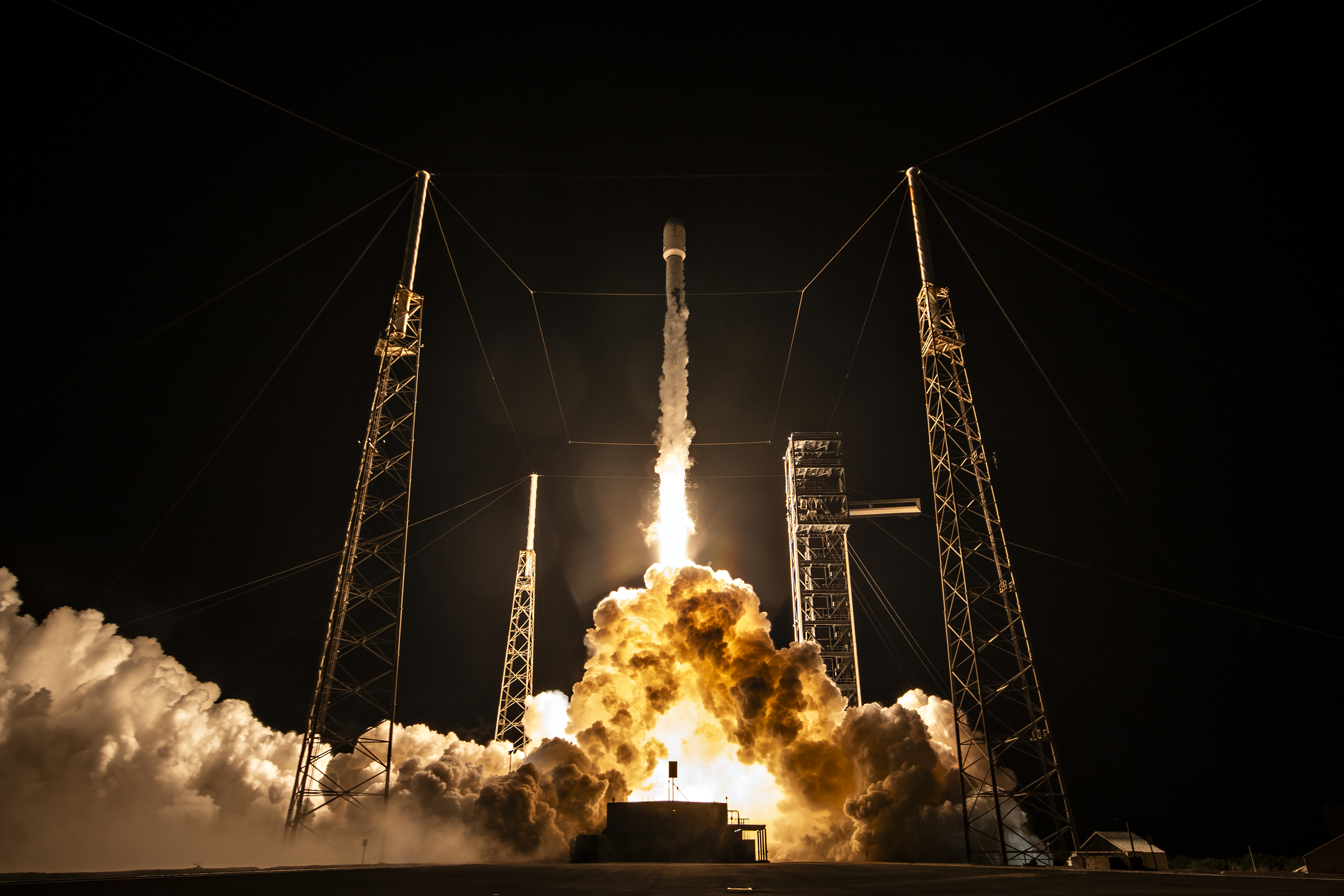
EchoStar 25 is a direct broadcast satellite, built on the proven Maxar 1300 series platform, which will deliver content across North America. It will be equipped with a high-power, multi-spot beam payload, allowing DISH to provide high-quality content to its customers.
Geostationary Transfer Orbit B1085 - Flight Proven ( ) A Shortfall of GravitasFalcon 9 Block 5 | Starlink Group 17-18
SpaceX | United States of AmericaVandenberg SFB, CA, USA
March 8, 2026, 11 a.m.
Falcon 9 Block 5 | Starlink Group 10-40
SpaceX | United States of AmericaCape Canaveral SFS, FL, USA
March 4, 2026, 10:52 a.m.
Falcon 9 Block 5 | Starlink Group 10-41
SpaceX | United States of AmericaCape Canaveral SFS, FL, USA
March 2, 2026, 2:56 a.m.
Falcon 9 Block 5 | Starlink Group 17-23
SpaceX | United States of AmericaVandenberg SFB, CA, USA
March 1, 2026, 10:10 a.m.
Falcon 9 Block 5 | Starlink Group 6-108
SpaceX | United States of AmericaCape Canaveral SFS, FL, USA
Feb. 27, 2026, 12:16 p.m.
Falcon 9 Block 5 | Starlink Group 17-26
SpaceX | United States of AmericaVandenberg SFB, CA, USA
Feb. 25, 2026, 2:17 p.m.
Falcon 9 Block 5 | Starlink Group 6-110
SpaceX | United States of AmericaCape Canaveral SFS, FL, USA
Feb. 24, 2026, 11:04 p.m.
Falcon 9 Block 5 | Starlink Group 6-104
SpaceX | United States of AmericaCape Canaveral SFS, FL, USA
Feb. 22, 2026, 3:47 a.m.
Falcon 9 Block 5 | Starlink Group 17-25
SpaceX | United States of AmericaVandenberg SFB, CA, USA
Feb. 21, 2026, 9:04 a.m.
Falcon 9 Block 5 | Starlink Group 10-36
SpaceX | United States of AmericaCape Canaveral SFS, FL, USA
Feb. 20, 2026, 1:41 a.m.
Status: Launch Successful
Mission:
A batch of 29 satellites for the Starlink mega-constellation - SpaceX's project for space-based Internet communication system. First Starlink launch to feature a Falcon 9 booster landing within The Bahamas waters operationally, after the trajectory was tested during launch of Starlink Group 10-12 in February 2025.
Low Earth Orbit B1077 - Flight Proven ( ) Just Read the InstructionsFalcon 9 Block 5 | Starlink Group 6-103
SpaceX | United States of AmericaCape Canaveral SFS, FL, USA
Feb. 16, 2026, 7:59 a.m.
Falcon 9 Block 5 | Starlink Group 17-13
SpaceX | United States of AmericaVandenberg SFB, CA, USA
Feb. 15, 2026, 1:59 a.m.
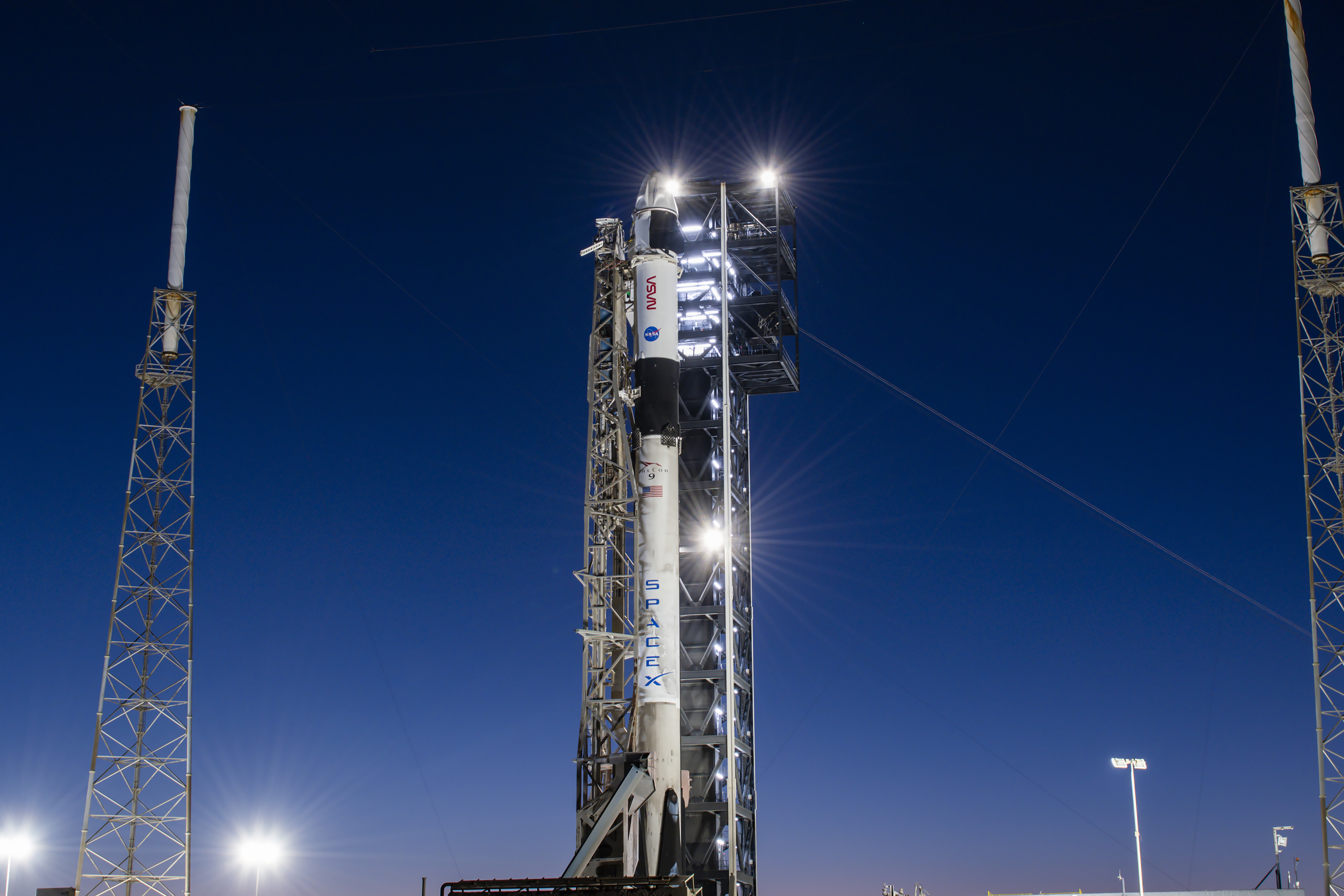
Falcon 9 Block 5 | Crew-12
SpaceX | United States of AmericaCape Canaveral SFS, FL, USA
Feb. 13, 2026, 10:15 a.m.
Falcon 9 Block 5 | Starlink Group 17-34
SpaceX | United States of AmericaVandenberg SFB, CA, USA
Feb. 11, 2026, 5:11 p.m.
Falcon 9 Block 5 | Starlink Group 17-33
SpaceX | United States of AmericaVandenberg SFB, CA, USA
Feb. 7, 2026, 8:58 p.m.
Falcon 9 Block 5 | Starlink Group 17-32
SpaceX | United States of AmericaVandenberg SFB, CA, USA
Feb. 2, 2026, 3:47 p.m.
Falcon 9 Block 5 | Starlink Group 6-101
SpaceX | United States of AmericaCape Canaveral SFS, FL, USA
Jan. 30, 2026, 7:22 a.m.
Falcon 9 Block 5 | Starlink Group 17-19
SpaceX | United States of AmericaVandenberg SFB, CA, USA
Jan. 29, 2026, 5:53 p.m.
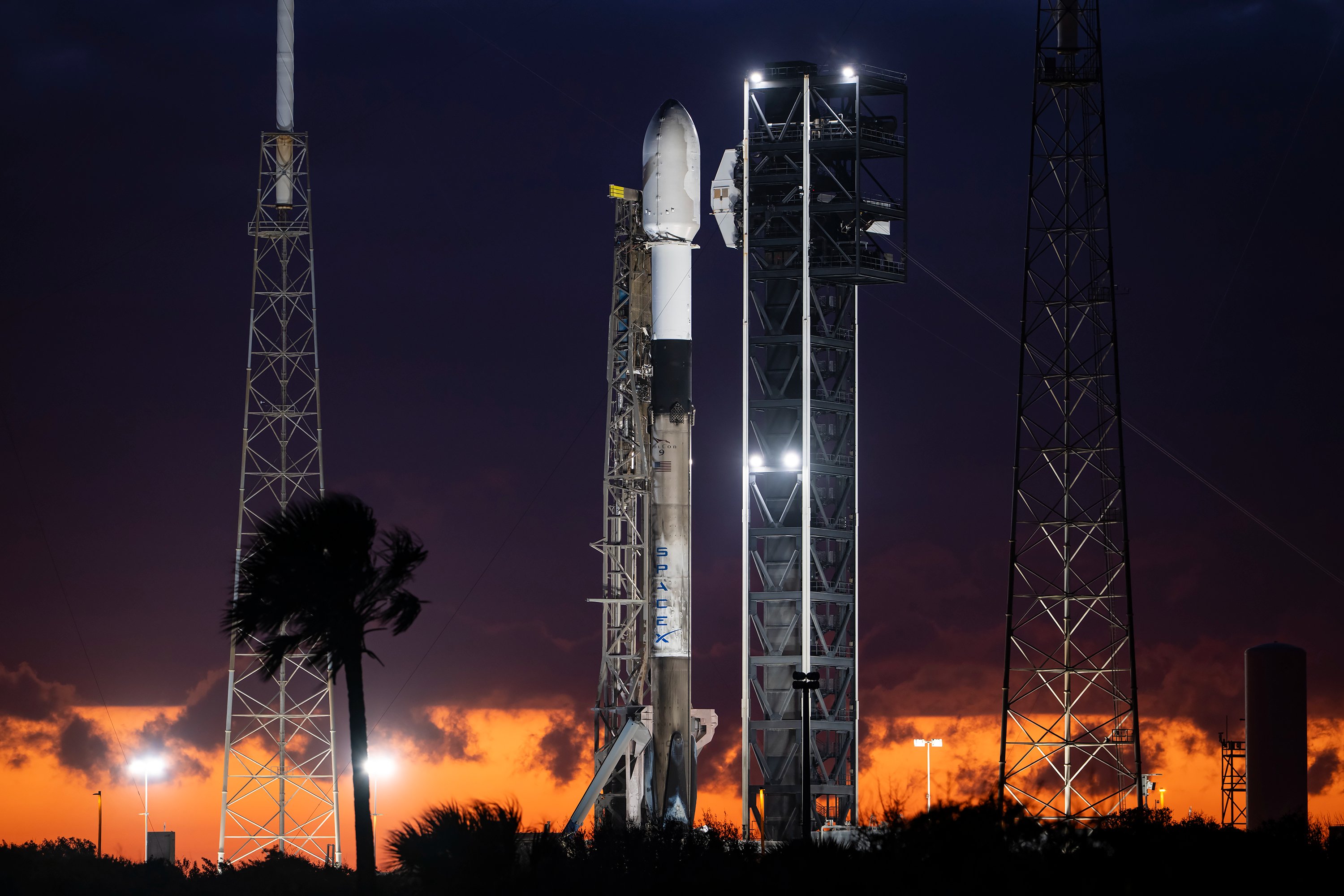
Falcon 9 Block 5 | GPS III SV09
SpaceX | United States of AmericaCape Canaveral SFS, FL, USA
Jan. 28, 2026, 4:53 a.m.
Falcon 9 Block 5 | Starlink Group 17-20
SpaceX | United States of AmericaVandenberg SFB, CA, USA
Jan. 25, 2026, 5:30 p.m.
Falcon 9 Block 5 | Starlink Group 17-30
SpaceX | United States of AmericaVandenberg SFB, CA, USA
Jan. 22, 2026, 5:47 a.m.
Falcon 9 Block 5 | Starlink Group 6-100
SpaceX | United States of AmericaCape Canaveral SFS, FL, USA
Jan. 18, 2026, 11:31 p.m.
Falcon 9 Block 5 | NROL-105
SpaceX | United States of AmericaVandenberg SFB, CA, USA
Jan. 17, 2026, 4:39 a.m.
Status: Launch Successful
Mission:
Twelfth batch of satellites for a reconnaissance satellite constellation built by SpaceX and Northrop Grumman for the National Reconnaissance Office to provide imaging and other reconnaissance capabilities.
Unknown B1100 - Flight Proven ( ) Landing Zone 4Falcon 9 Block 5 | Starlink Group 6-98
SpaceX | United States of AmericaCape Canaveral SFS, FL, USA
Jan. 14, 2026, 6:08 p.m.
Falcon 9 Block 5 | Starlink Group 6-97
SpaceX | United States of AmericaCape Canaveral SFS, FL, USA
Jan. 12, 2026, 9:08 p.m.
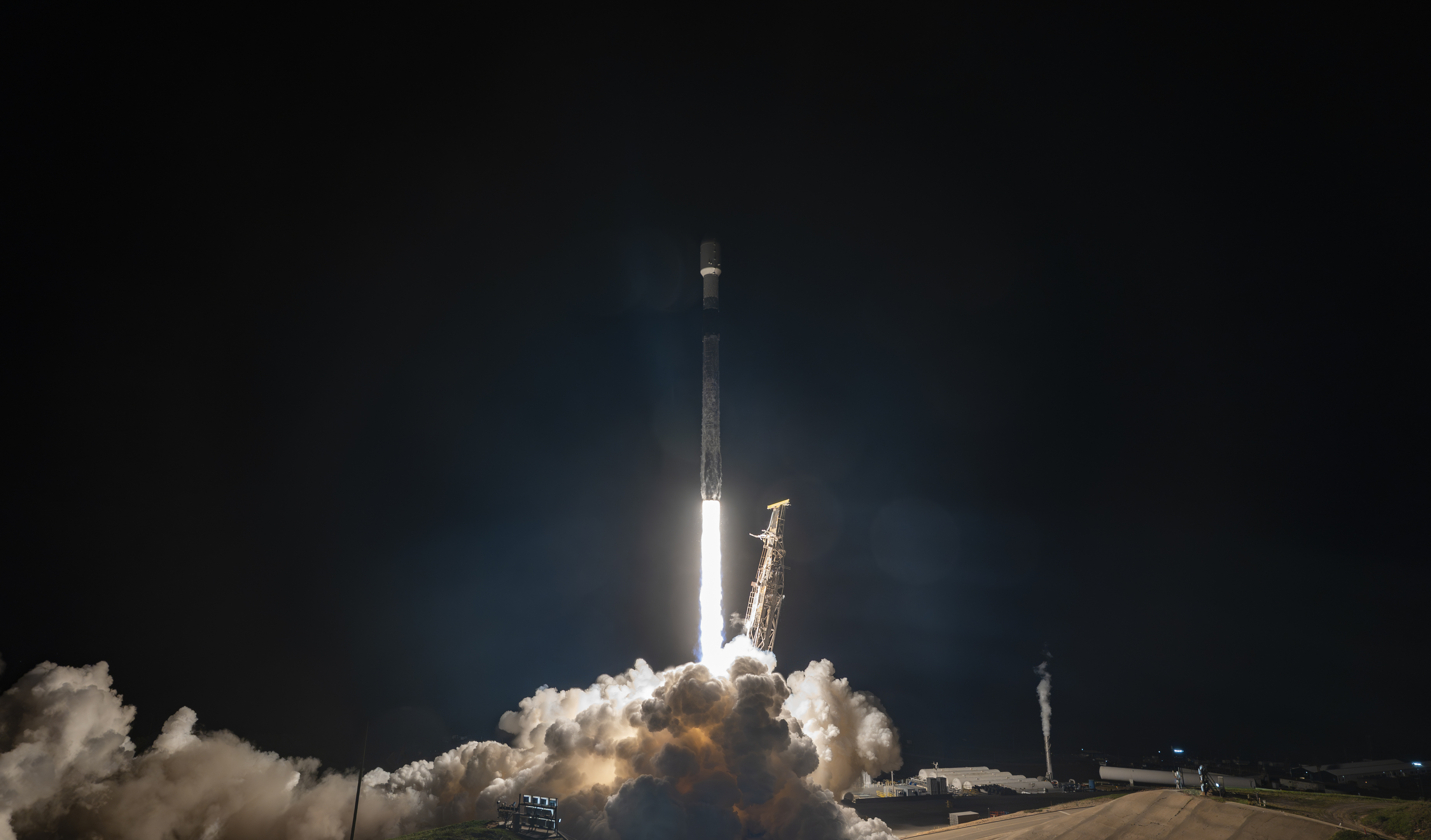
Falcon 9 Block 5 | Pandora / Twilight rideshare mission
SpaceX | United States of AmericaVandenberg SFB, CA, USA
Jan. 11, 2026, 1:44 p.m.
Status: Launch Successful
Mission:
The Pandora small satellite was selected in 2021 as an inaugural mission in NASA’s Astrophysics Pioneers Program. It includes a 0.45-meter telescope that will improve our understanding of exoplanet atmospheres by disentangling exoplanet signals from their host stars, as well as studying host star variability with long-duration observations of 20 unique planets through visible-light photometry and near-infrared spectroscopy. Also launching on this launch are 39 other ride-share payloads under the "Falcon 9 Twilight mission" manifested by Exolaunch, including satellites from Spire Global and Kepler Communications.
Sun-Synchronous Orbit B1097 - Flight Proven ( ) Landing Zone 4Falcon 9 Block 5 | Starlink Group 6-96
SpaceX | United States of AmericaCape Canaveral SFS, FL, USA
Jan. 9, 2026, 9:41 p.m.
Falcon 9 Block 5 | Starlink Group 6-88
SpaceX | United States of AmericaCape Canaveral SFS, FL, USA
Jan. 4, 2026, 6:48 a.m.
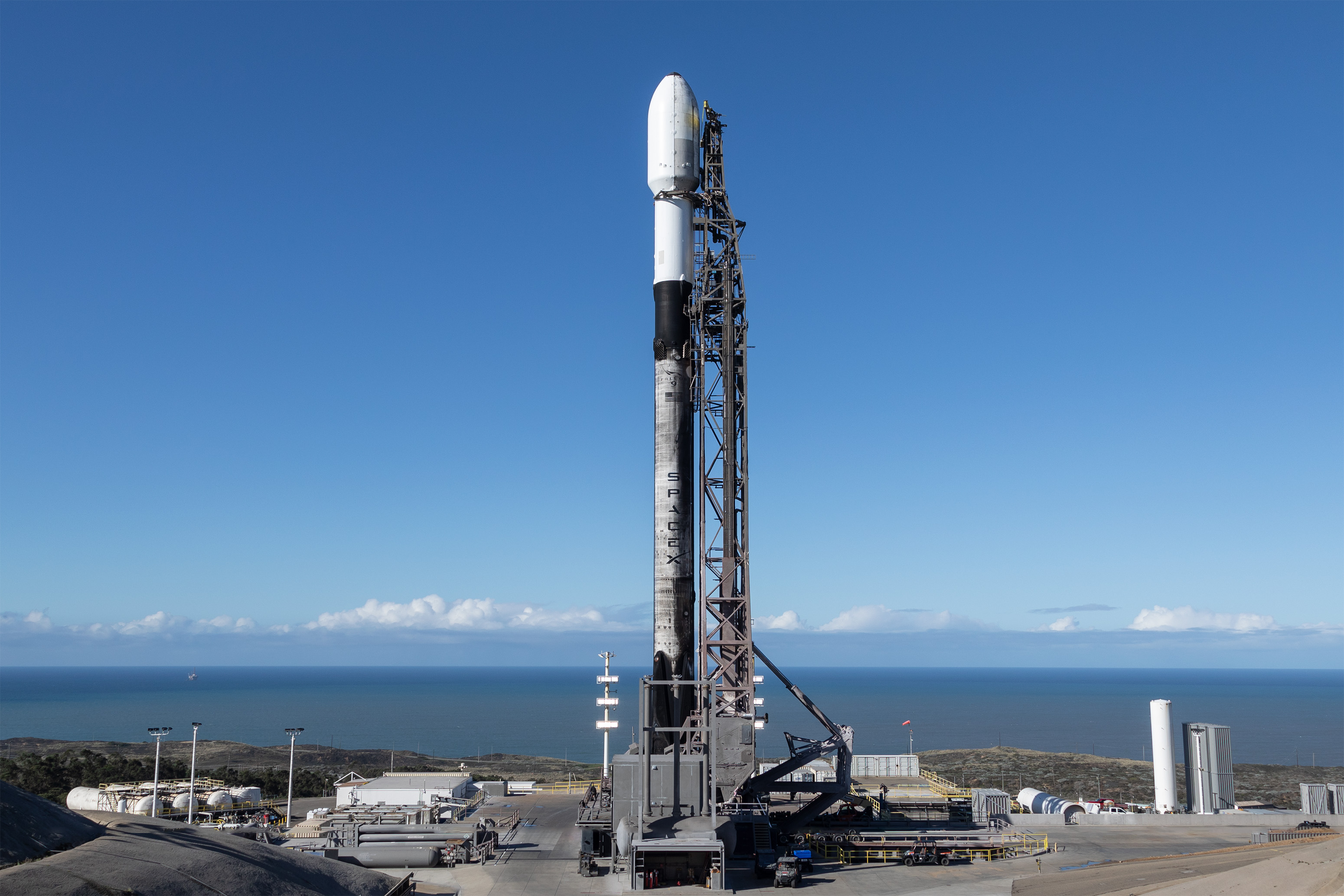
Falcon 9 Block 5 | CSG-3
SpaceX | United States of AmericaVandenberg SFB, CA, USA
Jan. 3, 2026, 2:09 a.m.
Falcon 9 Block 5 | Starlink Group 15-13
SpaceX | United States of AmericaVandenberg SFB, CA, USA
Dec. 17, 2025, 3:27 p.m.
Falcon 9 Block 5 | Starlink Group 6-99
SpaceX | United States of AmericaKennedy Space Center, FL, USA
Dec. 17, 2025, 1:42 p.m.
Falcon 9 Block 5 | Starlink Group 6-82
SpaceX | United States of AmericaCape Canaveral SFS, FL, USA
Dec. 15, 2025, 5:25 a.m.
Falcon 9 Block 5 | Starlink Group 15-12
SpaceX | United States of AmericaVandenberg SFB, CA, USA
Dec. 14, 2025, 5:49 a.m.
Falcon 9 Block 5 | Starlink Group 6-90
SpaceX | United States of AmericaCape Canaveral SFS, FL, USA
Dec. 11, 2025, 10:01 p.m.
Falcon 9 Block 5 | Starlink Group 15-11
SpaceX | United States of AmericaVandenberg SFB, CA, USA
Dec. 10, 2025, 11:40 a.m.
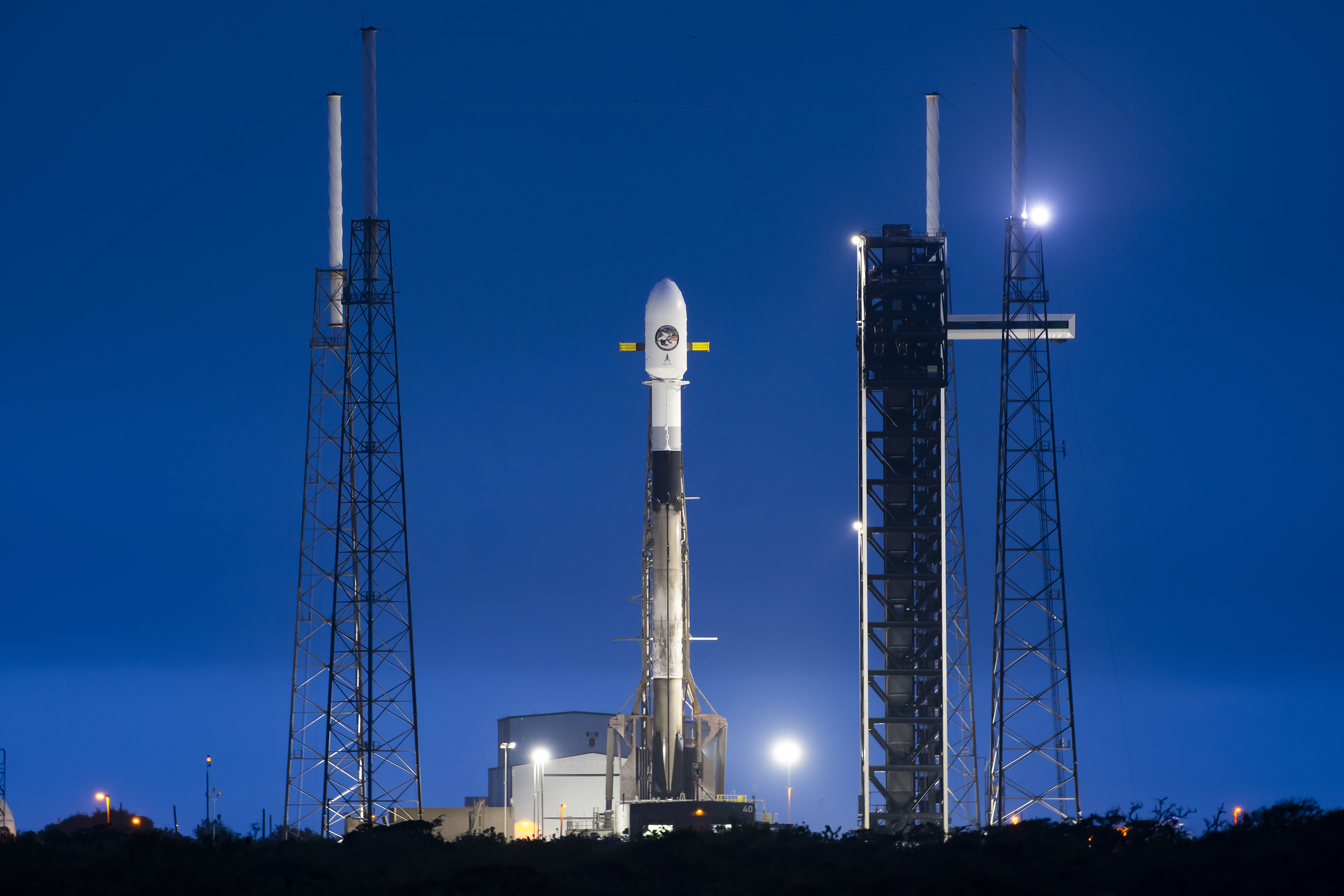
Falcon 9 Block 5 | NROL-77
SpaceX | United States of AmericaCape Canaveral SFS, FL, USA
Dec. 9, 2025, 7:16 p.m.
Falcon 9 Block 5 | Starlink Group 6-92
SpaceX | United States of AmericaKennedy Space Center, FL, USA
Dec. 8, 2025, 10:26 p.m.
Falcon 9 Block 5 | Starlink Group 11-15
SpaceX | United States of AmericaVandenberg SFB, CA, USA
Dec. 7, 2025, 5:58 p.m.
Falcon 9 Block 5 | Starlink Group 11-25
SpaceX | United States of AmericaVandenberg SFB, CA, USA
Dec. 4, 2025, 8:42 p.m.
Falcon 9 Block 5 | Starlink Group 6-95
SpaceX | United States of AmericaCape Canaveral SFS, FL, USA
Dec. 2, 2025, 10:18 p.m.
Falcon 9 Block 5 | Starlink Group 15-10
SpaceX | United States of AmericaVandenberg SFB, CA, USA
Dec. 2, 2025, 5:28 a.m.
Falcon 9 Block 5 | Starlink Group 6-86
SpaceX | United States of AmericaKennedy Space Center, FL, USA
Dec. 1, 2025, 7:44 a.m.

Falcon 9 Block 5 | Transporter 15 (Dedicated SSO Rideshare)
SpaceX | United States of AmericaVandenberg SFB, CA, USA
Nov. 28, 2025, 6:44 p.m.
Falcon 9 Block 5 | Starlink Group 11-30
SpaceX | United States of AmericaVandenberg SFB, CA, USA
Nov. 23, 2025, 8:48 a.m.
Falcon 9 Block 5 | Starlink Group 6-79
SpaceX | United States of AmericaCape Canaveral SFS, FL, USA
Nov. 22, 2025, 7:53 a.m.
Falcon 9 Block 5 | Starlink Group 6-78
SpaceX | United States of AmericaKennedy Space Center, FL, USA
Nov. 21, 2025, 3:39 a.m.
Falcon 9 Block 5 | Starlink Group 6-94
SpaceX | United States of AmericaCape Canaveral SFS, FL, USA
Nov. 19, 2025, 12:12 a.m.

Falcon 9 Block 5 | Sentinel-6B
SpaceX | United States of AmericaVandenberg SFB, CA, USA
Nov. 17, 2025, 5:21 a.m.
Status: Launch Successful
Mission:
The Sentinel-6 Michael Freilich (launched November 2020) and Sentinel-6B make up the Sentinel-6 mission, also known as Jason Continuity of Service (Jason-CS), which is a partnership between NASA, NOAA, ESA, and EUMETSAT. This mission continues the long-term global sea surface height data record begun by first Jason satellites in 1992.
Low Earth Orbit B1097 - Flight Proven ( ) Landing Zone 4Falcon 9 Block 5 | Starlink Group 6-85
SpaceX | United States of AmericaCape Canaveral SFS, FL, USA
Nov. 15, 2025, 6:44 a.m.
Falcon 9 Block 5 | Starlink Group 6-89
SpaceX | United States of AmericaKennedy Space Center, FL, USA
Nov. 15, 2025, 3:08 a.m.
Falcon 9 Block 5 | Starlink Group 6-87
SpaceX | United States of AmericaCape Canaveral SFS, FL, USA
Nov. 11, 2025, 3:21 a.m.
Falcon 9 Block 5 | Starlink Group 10-51
SpaceX | United States of AmericaKennedy Space Center, FL, USA
Nov. 9, 2025, 8:10 a.m.
Falcon 9 Block 5 | Starlink Group 11-14
SpaceX | United States of AmericaVandenberg SFB, CA, USA
Nov. 6, 2025, 9:13 p.m.
Falcon 9 Block 5 | Starlink Group 6-81
SpaceX | United States of AmericaCape Canaveral SFS, FL, USA
Nov. 6, 2025, 1:31 a.m.
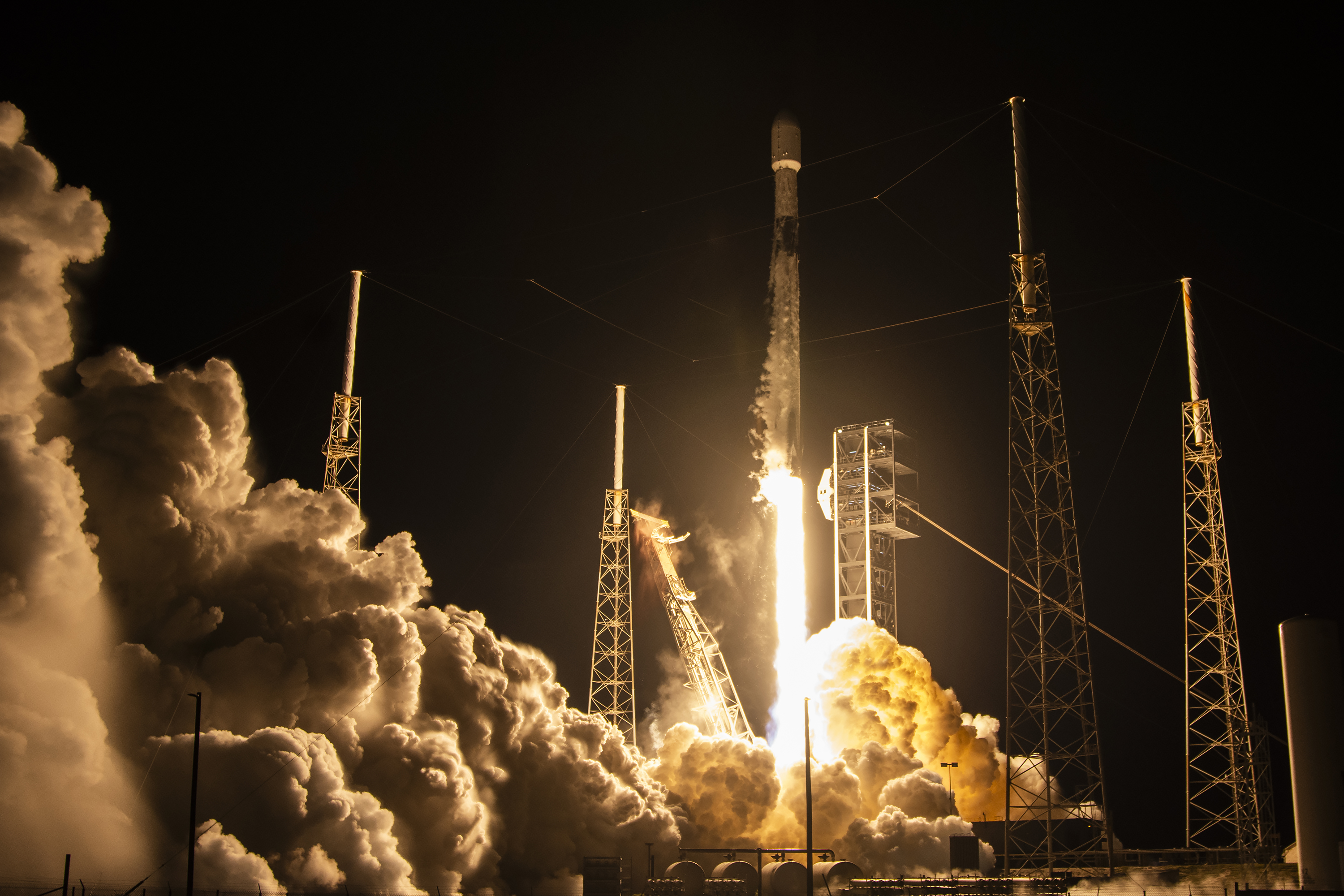
Falcon 9 Block 5 | Bandwagon 4 (Dedicated Mid-Inclination Rideshare)
SpaceX | United States of AmericaCape Canaveral SFS, FL, USA
Nov. 2, 2025, 5:09 a.m.
Falcon 9 Block 5 | Starlink Group 11-23
SpaceX | United States of AmericaVandenberg SFB, CA, USA
Oct. 31, 2025, 8:41 p.m.
Falcon 9 Block 5 | Starlink Group 10-37
SpaceX | United States of AmericaCape Canaveral SFS, FL, USA
Oct. 29, 2025, 4:35 p.m.
Falcon 9 Block 5 | Starlink Group 11-21
SpaceX | United States of AmericaVandenberg SFB, CA, USA
Oct. 28, 2025, 12:43 a.m.
Falcon 9 Block 5 | Starlink Group 10-21
SpaceX | United States of AmericaCape Canaveral SFS, FL, USA
Oct. 26, 2025, 3 p.m.
Falcon 9 Block 5 | Starlink Group 11-12
SpaceX | United States of AmericaVandenberg SFB, CA, USA
Oct. 25, 2025, 2:20 p.m.
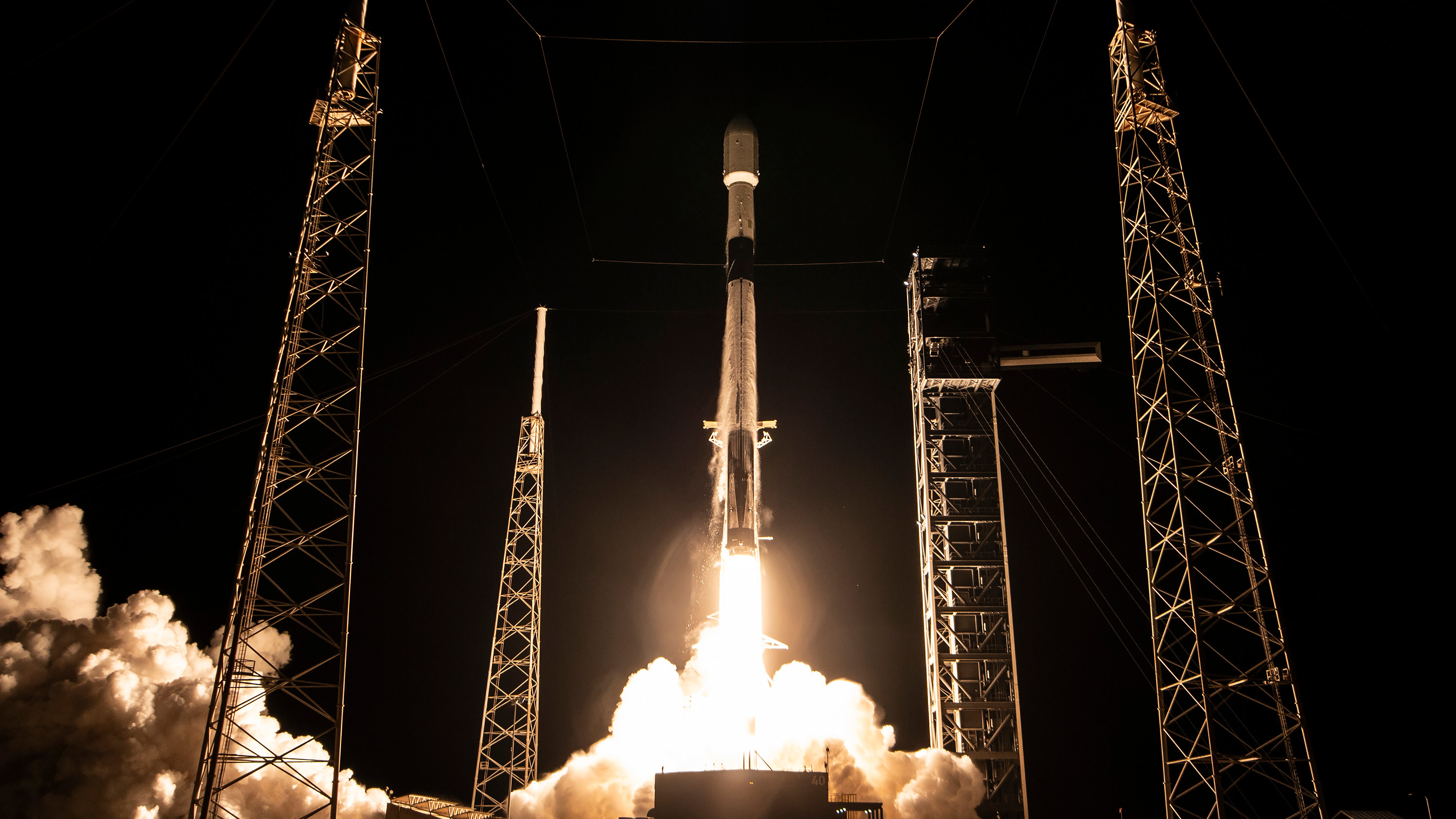
Falcon 9 Block 5 | SpainSat NG II
SpaceX | United States of AmericaCape Canaveral SFS, FL, USA
Oct. 24, 2025, 1:30 a.m.
Falcon 9 Block 5 | Starlink Group 11-5
SpaceX | United States of AmericaVandenberg SFB, CA, USA
Oct. 22, 2025, 2:16 p.m.
Falcon 9 Block 5 | Starlink Group 11-19
SpaceX | United States of AmericaVandenberg SFB, CA, USA
Oct. 19, 2025, 7:24 p.m.
Falcon 9 Block 5 | Starlink Group 10-17
SpaceX | United States of AmericaCape Canaveral SFS, FL, USA
Oct. 19, 2025, 5:39 p.m.
Falcon 9 Block 5 | Starlink Group 10-52
SpaceX | United States of AmericaCape Canaveral SFS, FL, USA
Oct. 16, 2025, 9:27 a.m.
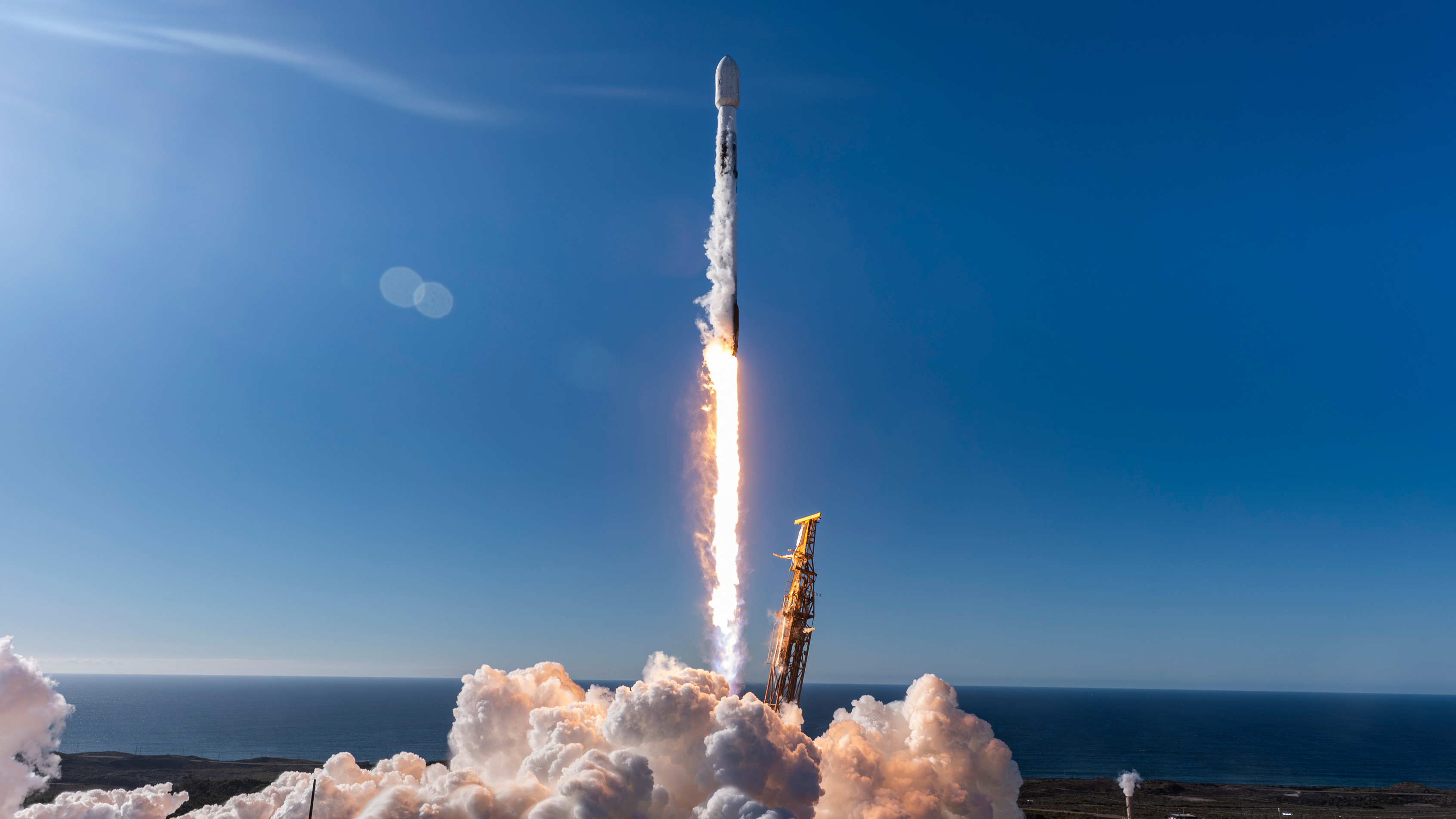
Falcon 9 Block 5 | SDA Tranche 1 Transport Layer C
SpaceX | United States of AmericaVandenberg SFB, CA, USA
Oct. 15, 2025, 11:06 p.m.
Status: Launch Successful
Mission:
Tranche 1 Transport Layer C is one of six missions by the United States Space Force Space Development Agency (SDA) for the Proliferated Warfighter Space Architecture (PWSA) Tranche 1 Transport Layer constellation, which will provide assured, resilient, low-latency military data and connectivity worldwide to the full range of warfighter platforms from Low Earth Orbit satellites. The constellation will be interconnected with Optical Inter-Satellite Links (OISLs) which have significantly increased performance over existing radio frequency crosslinks. It is expected to operate over Ka band, have stereo coverage and be dynamically networked for simpler hand-offs, greater bandwidth and fault tolerance. This launch carries 21 satellites manufactured by Lockheed Martin.
Polar Orbit B1093 - Flight Proven ( ) Of Course I Still Love You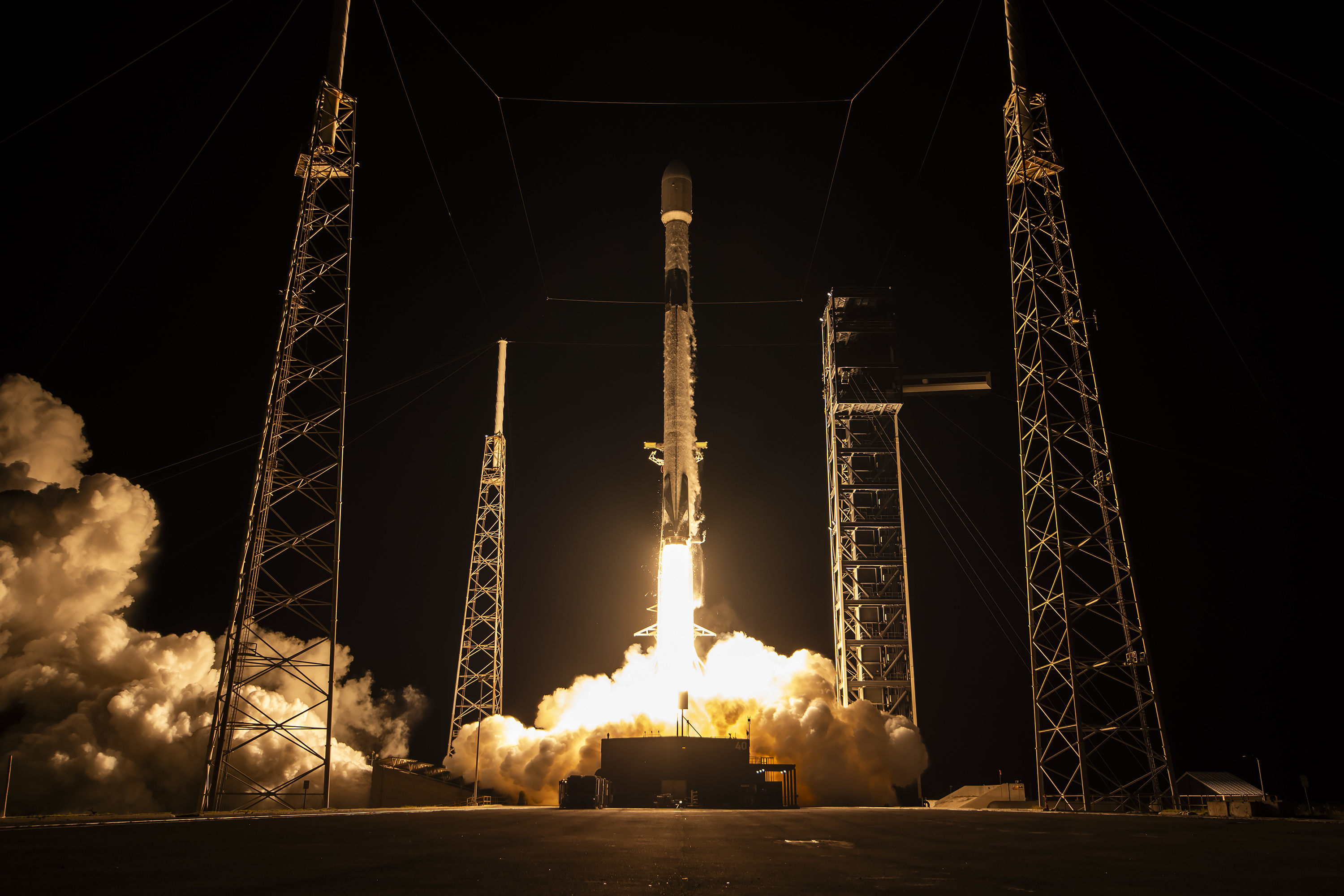
Falcon 9 Block 5 | Amazon Leo (KF-03)
SpaceX | United States of AmericaCape Canaveral SFS, FL, USA
Oct. 14, 2025, 1:58 a.m.
Status: Launch Successful
Mission:
Third of a three launches contract for Amazon's Kuiper low Earth orbit satellite internet constellation, with 24 satellites on board. Amazon Leo, formerly known as Project Kuiper, is a mega constellation of satellites in Low Earth Orbit that will offer broadband internet access, this constellation will be managed by Kuiper Systems LLC, a subsidiary of Amazon. This constellation is planned to be composed of 3,276 satellites. The satellites are projected to be placed in 98 orbital planes in three orbital layers, one at 590 km, 610 km and 630 km altitude.
Low Earth Orbit B1091 - Flight Proven ( ) A Shortfall of GravitasFalcon 9 Block 5 | Starlink Group 11-17
SpaceX | United States of AmericaVandenberg SFB, CA, USA
Oct. 8, 2025, 3:54 a.m.
Falcon 9 Block 5 | Starlink Group 10-59
SpaceX | United States of AmericaCape Canaveral SFS, FL, USA
Oct. 7, 2025, 6:46 a.m.
Falcon 9 Block 5 | Starlink Group 11-39
SpaceX | United States of AmericaVandenberg SFB, CA, USA
Oct. 3, 2025, 2:06 p.m.
Falcon 9 Block 5 | Starlink Group 11-20
SpaceX | United States of AmericaVandenberg SFB, CA, USA
Sept. 29, 2025, 2:04 a.m.
Falcon 9 Block 5 | Starlink Group 17-11
SpaceX | United States of AmericaVandenberg SFB, CA, USA
Sept. 26, 2025, 4:26 a.m.
Falcon 9 Block 5 | Starlink Group 10-15
SpaceX | United States of AmericaCape Canaveral SFS, FL, USA
Sept. 25, 2025, 8:39 a.m.
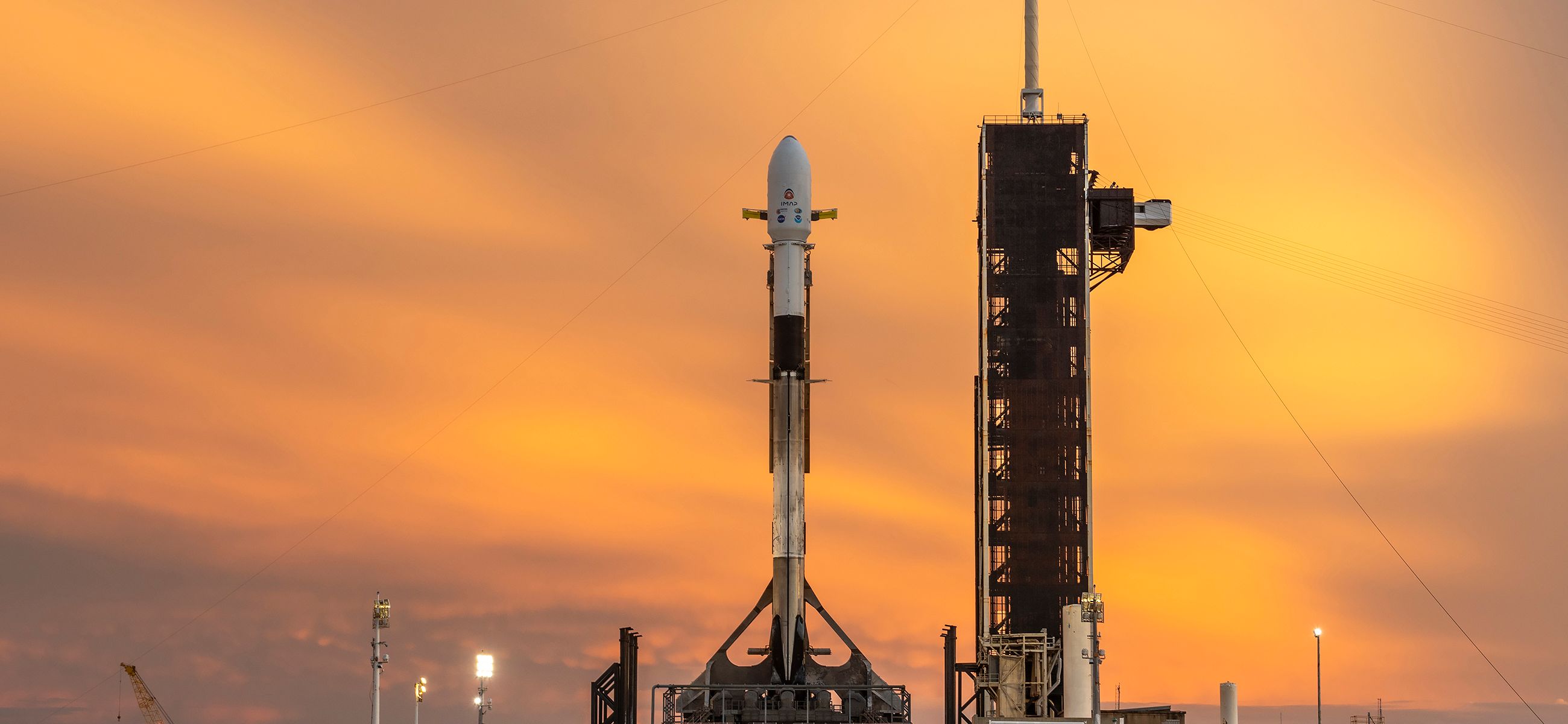
Falcon 9 Block 5 | IMAP & others
SpaceX | United States of AmericaKennedy Space Center, FL, USA
Sept. 24, 2025, 11:30 a.m.
Status: Launch Successful
Mission:
IMAP (Interstellar Mapping and Acceleration Probe) is a NASA mission to study interactions between solar wind and the local interstellar medium. Carrying a suite of 10 scientific instruments, IMAP is able to investigate how particles are accelerated, determine their composition, as well as help to advance space weather forecasting models. The IMAP launch also includes the space weather satellite SWFO-L1 (Space Weather Follow-On - L1) for NOAA and the GLIDE (Global Lyman-alpha Imagers of the Dynamic Exosphere/Carruthers Geocorona Observatory) mission to study far ultraviolet emission in the Earth's exosphere.
Heliocentric L1 B1096 - Flight Proven ( ) Just Read the InstructionsFalcon 9 Block 5 | NROL-48
SpaceX | United States of AmericaVandenberg SFB, CA, USA
Sept. 22, 2025, 5:38 p.m.
Status: Launch Successful
Mission:
Eleventh batch of satellites for a reconnaissance satellite constellation built by SpaceX and Northrop Grumman for the National Reconnaissance Office to provide imaging and other reconnaissance capabilities.
Unknown B1081 - Flight Proven ( ) Landing Zone 4Falcon 9 Block 5 | Starlink Group 10-27
SpaceX | United States of AmericaCape Canaveral SFS, FL, USA
Sept. 21, 2025, 10:53 a.m.
Falcon 9 Block 5 | Starlink Group 17-12
SpaceX | United States of AmericaVandenberg SFB, CA, USA
Sept. 19, 2025, 4:31 p.m.
Falcon 9 Block 5 | Starlink Group 10-61
SpaceX | United States of AmericaCape Canaveral SFS, FL, USA
Sept. 18, 2025, 9:30 a.m.
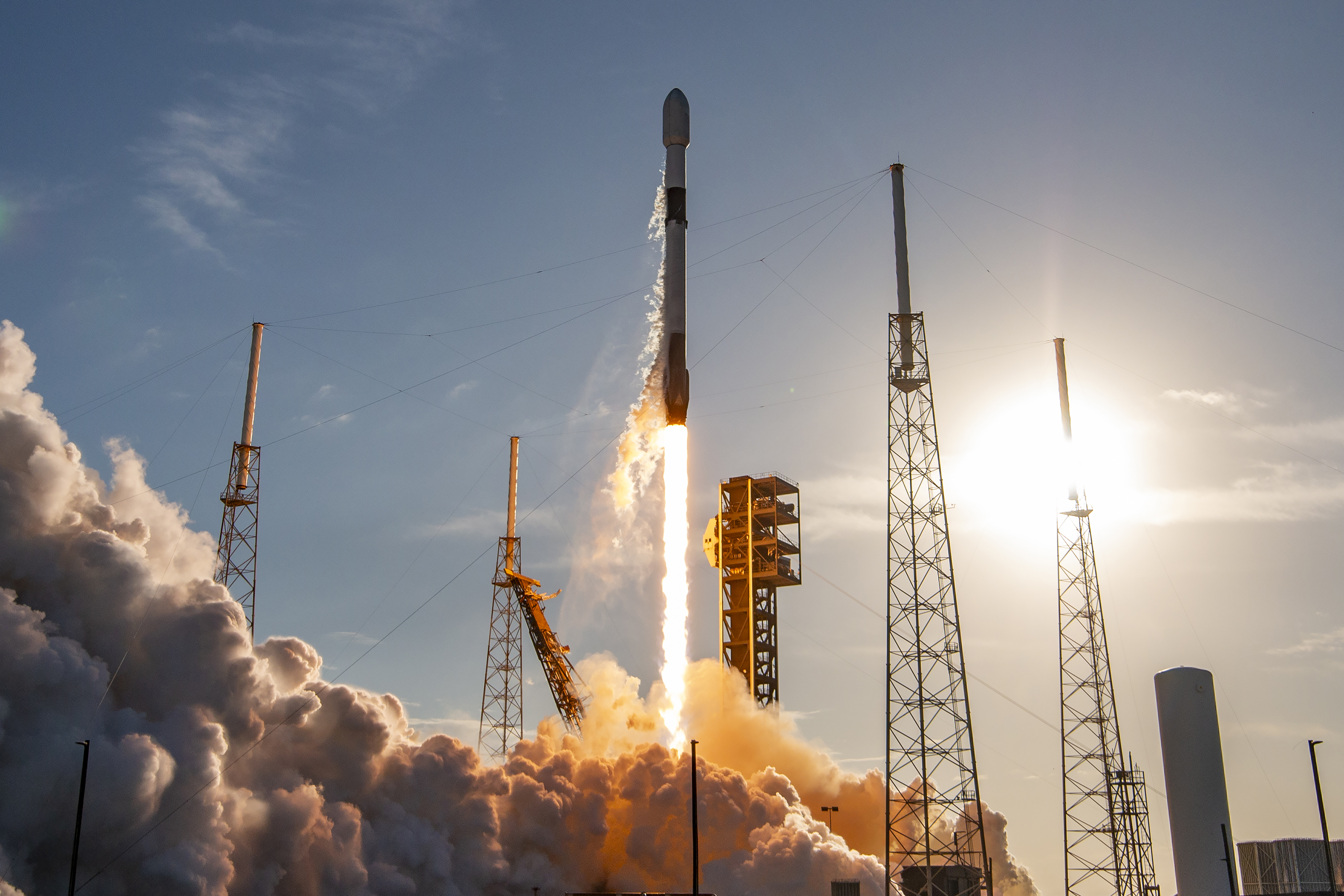
Falcon 9 Block 5 | Cygnus CRS-2 NG-23 (S.S. William “Willie” C. McCool)
SpaceX | United States of AmericaCape Canaveral SFS, FL, USA
Sept. 14, 2025, 10:11 p.m.
Status: Launch Successful
Mission:
This is the 23rd flight of the Northrop Grumman's uncrewed resupply spacecraft Cygnus and its 22nd flight to the International Space Station under the Commercial Resupply Services contract with NASA.
Low Earth Orbit B1094 - Flight Proven ( ) Landing Zone 2Falcon 9 Block 5 | Starlink Group 17-10
SpaceX | United States of AmericaVandenberg SFB, CA, USA
Sept. 13, 2025, 5:55 p.m.
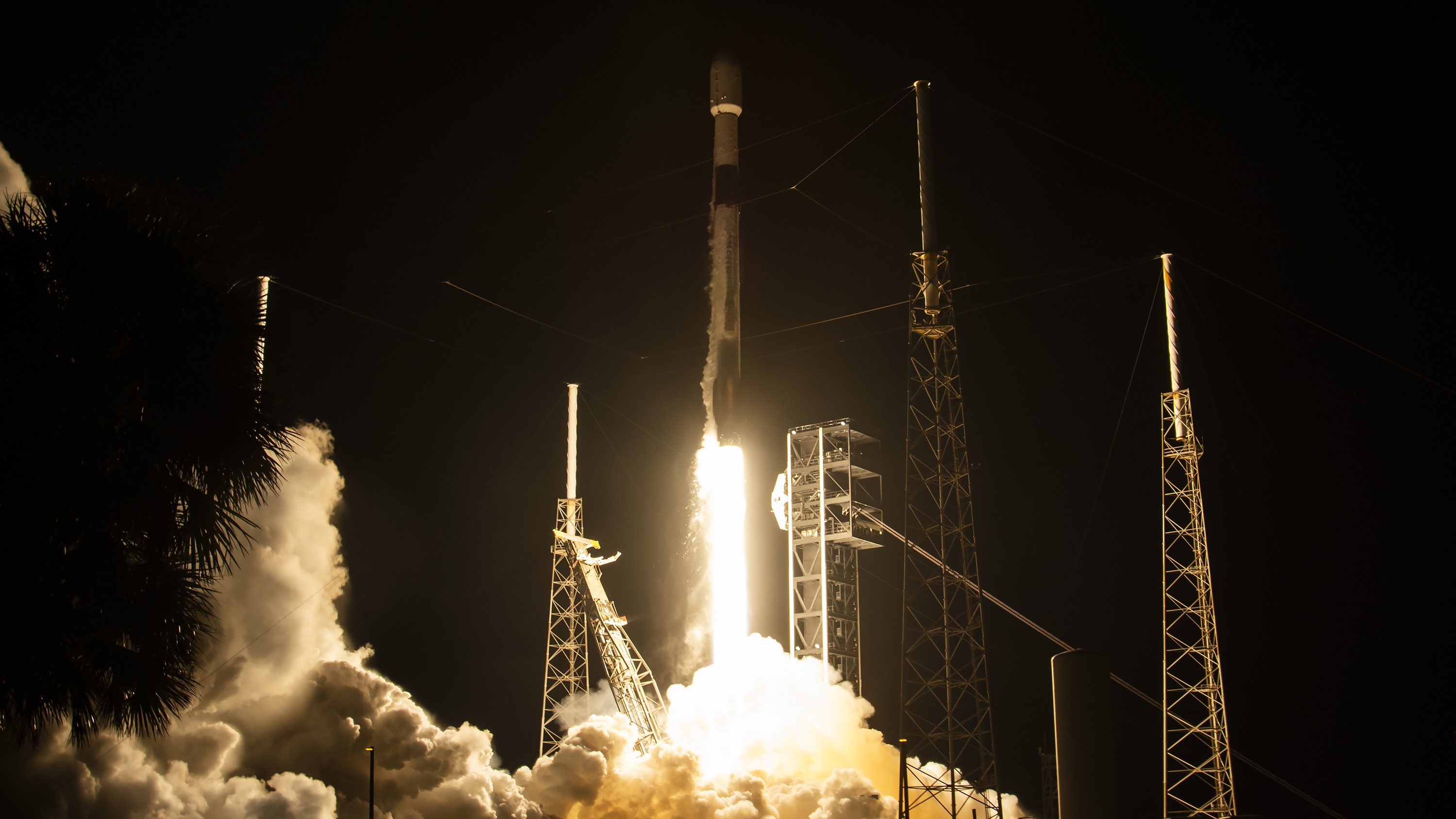
Falcon 9 Block 5 | Nusantara Lima
SpaceX | United States of AmericaCape Canaveral SFS, FL, USA
Sept. 12, 2025, 1:56 a.m.

Falcon 9 Block 5 | SDA Tranche 1 Transport Layer B
SpaceX | United States of AmericaVandenberg SFB, CA, USA
Sept. 10, 2025, 2:12 p.m.
Status: Launch Successful
Mission:
Tranche 1 Transport Layer B is one of six missions by the United States Space Force Space Development Agency (SDA) for the Proliferated Warfighter Space Architecture (PWSA) Tranche 1 Transport Layer constellation, which will provide assured, resilient, low-latency military data and connectivity worldwide to the full range of warfighter platforms from Low Earth Orbit satellites. The constellation will be interconnected with Optical Inter-Satellite Links (OISLs) which have significantly increased performance over existing radio frequency crosslinks. It is expected to operate over Ka band, have stereo coverage and be dynamically networked for simpler hand-offs, greater bandwidth and fault tolerance. This launch carries 21 satellites manufactured by York Space Systems.
Polar Orbit B1093 - Flight Proven ( ) Of Course I Still Love YouFalcon 9 Block 5 | Starlink Group 17-9
SpaceX | United States of AmericaVandenberg SFB, CA, USA
Sept. 6, 2025, 6:06 p.m.
Falcon 9 Block 5 | Starlink Group 10-57
SpaceX | United States of AmericaKennedy Space Center, FL, USA
Sept. 5, 2025, 12:32 p.m.
Falcon 9 Block 5 | Starlink Group 10-22
SpaceX | United States of AmericaCape Canaveral SFS, FL, USA
Sept. 3, 2025, 11:56 a.m.
Falcon 9 Block 5 | Starlink Group 17-8
SpaceX | United States of AmericaVandenberg SFB, CA, USA
Sept. 3, 2025, 3:51 a.m.
Falcon 9 Block 5 | Starlink Group 10-14
SpaceX | United States of AmericaCape Canaveral SFS, FL, USA
Aug. 31, 2025, 11:49 a.m.
Falcon 9 Block 5 | Starlink Group 17-7
SpaceX | United States of AmericaVandenberg SFB, CA, USA
Aug. 30, 2025, 4:59 a.m.
Falcon 9 Block 5 | Starlink Group 10-11
SpaceX | United States of AmericaKennedy Space Center, FL, USA
Aug. 28, 2025, 8:12 a.m.
Falcon 9 Block 5 | Starlink Group 10-56
SpaceX | United States of AmericaCape Canaveral SFS, FL, USA
Aug. 27, 2025, 11:10 a.m.
Falcon 9 Block 5 | NAOS
SpaceX | United States of AmericaVandenberg SFB, CA, USA
Aug. 26, 2025, 6:53 p.m.
Status: Launch Successful
Mission:
NAOS (National Advanced Optical System) is the space component of Luxembourg's governmental dual-use observation satellite system LUXEOSys (Luxembourg Earth Observation System). Its purpose is to provide high resolution images to national and international governmental and military organizations such as NATO. The 800 kg satellite is built by OHB Italia and is equipped with a very high-resolution optical camera with a ground reolution of 50 cm in an around 450 km high sun-synchronous orbit. It will have a operational life time of 7 years. Also on board the launch is Dhruva Space's LEAP-1; Planet's Pelican-3 and Pelican-4; and Exolaunch’s Acadia-6, FFLY-1, FFLY-2, and FFLY-3.
Sun-Synchronous Orbit B1063 - Flight Proven ( ) Landing Zone 4Falcon 9 Block 5 | Dragon CRS-2 SpX-33
SpaceX | United States of AmericaCape Canaveral SFS, FL, USA
Aug. 24, 2025, 6:45 a.m.
Status: Launch Successful
Mission:
33rd commercial resupply services mission to the International Space Station operated by SpaceX. The flight will be conducted under the second Commercial Resupply Services contract with NASA. Cargo Dragon 2 brings supplies and payloads, including critical materials to directly support science and research investigations that occur onboard the orbiting laboratory. The CRS SpX-33 Mission will be the first mission including a boost module inside the dragons trunk for ISS orbit raising.
Low Earth Orbit B1090 - Flight Proven ( ) A Shortfall of GravitasFalcon 9 Block 5 | Starlink Group 17-6
SpaceX | United States of AmericaVandenberg SFB, CA, USA
Aug. 22, 2025, 5:04 p.m.
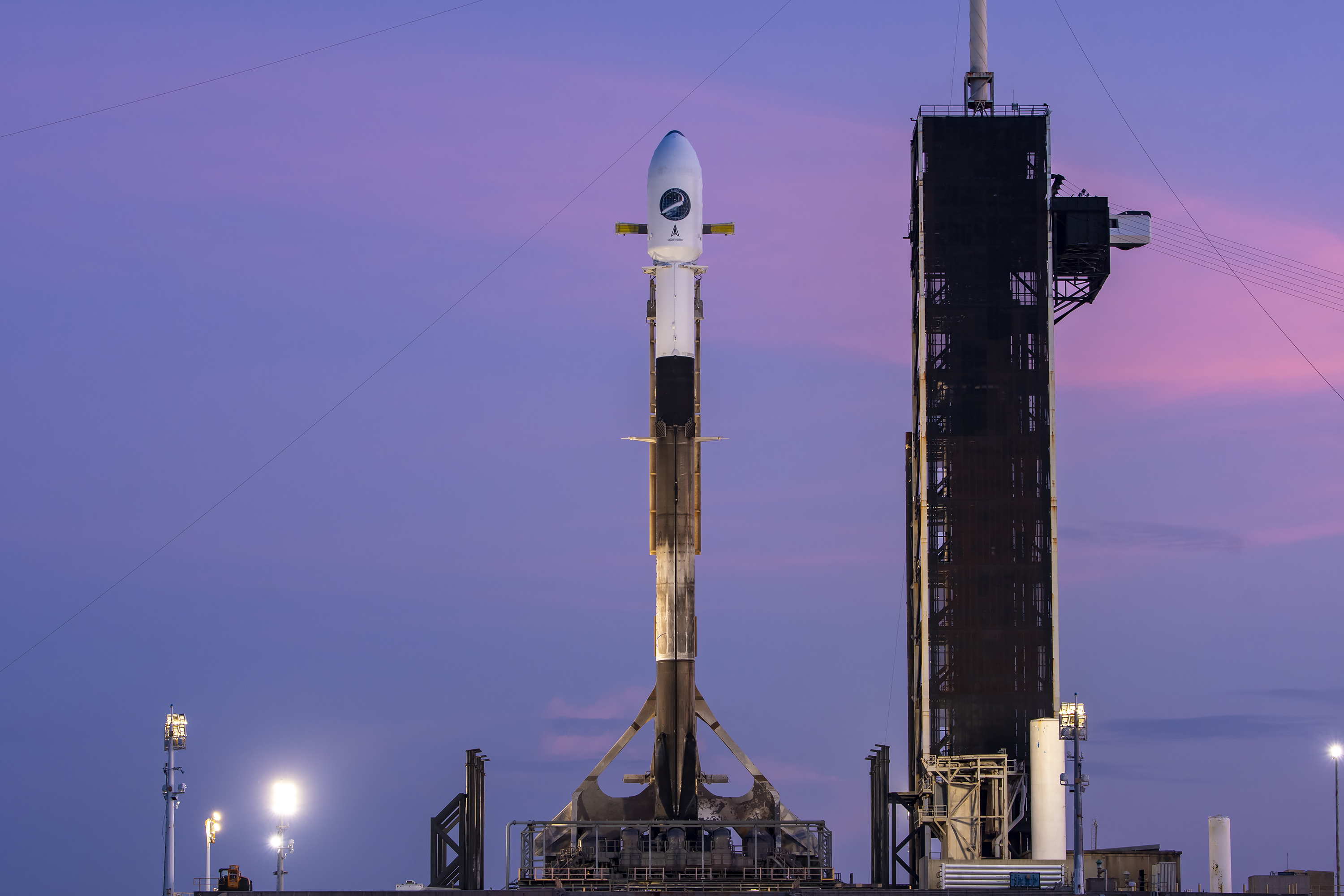
Falcon 9 Block 5 | OTV-8 (X-37B) (USSF-36)
SpaceX | United States of AmericaKennedy Space Center, FL, USA
Aug. 22, 2025, 3:50 a.m.
Status: Launch Successful
Mission:
Eighth flight of the X-37B program. The X-37B is a dynamic and responsive spacecraft responsible for conducting a range of tests and experiments that expedite the development of critical next-generation technologies and operational concepts for reusable space capabilities. The OTV-8 mission in Low Earth Orbit includes operational demonstrations and experiments of next-generation technologies, including laser communications and the highest performing strategic grade quantum inertial sensor ever tested in space. Mission partners include the Air Force Research Lab and the Defense Innovation Unit, respectively.
Low Earth Orbit B1092 - Flight Proven ( ) Landing Zone 2Falcon 9 Block 5 | Starlink Group 17-5
SpaceX | United States of AmericaVandenberg SFB, CA, USA
Aug. 18, 2025, 4:26 p.m.
Falcon 9 Block 5 | Starlink Group 10-20
SpaceX | United States of AmericaCape Canaveral SFS, FL, USA
Aug. 14, 2025, 12:29 p.m.
Falcon 9 Block 5 | Starlink Group 17-4
SpaceX | United States of AmericaVandenberg SFB, CA, USA
Aug. 14, 2025, 5:05 a.m.
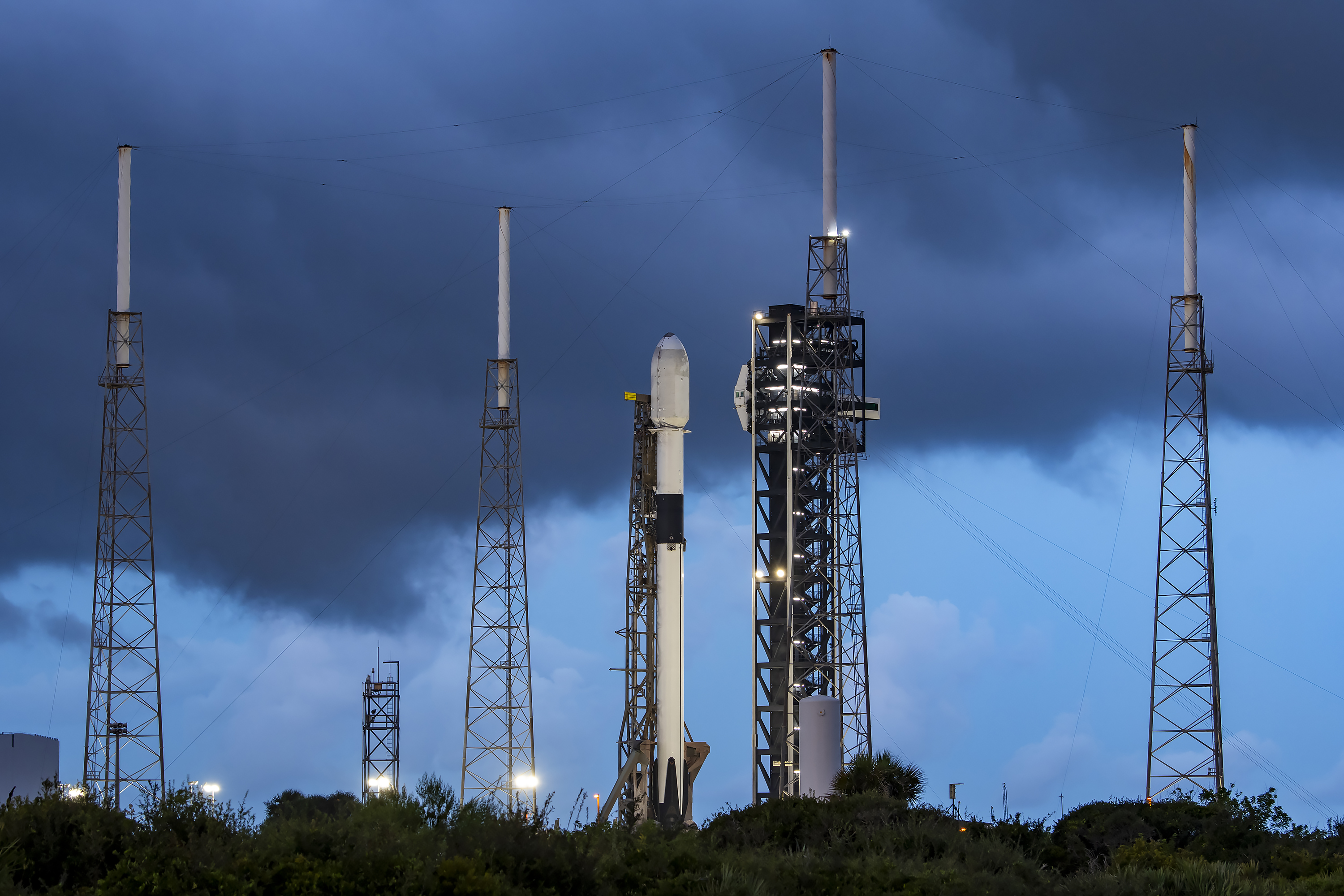
Falcon 9 Block 5 | Amazon Leo (KF-02)
SpaceX | United States of AmericaCape Canaveral SFS, FL, USA
Aug. 11, 2025, 12:35 p.m.
Status: Launch Successful
Mission:
Second of a three launches contract for Amazon's Kuiper low Earth orbit satellite internet constellation, with 24 satellites on board. Amazon Leo, formerly known as Project Kuiper, is a mega constellation of satellites in Low Earth Orbit that will offer broadband internet access, this constellation will be managed by Kuiper Systems LLC, a subsidiary of Amazon. This constellation is planned to be composed of 3,276 satellites. The satellites are projected to be placed in 98 orbital planes in three orbital layers, one at 590 km, 610 km and 630 km altitude.
Low Earth Orbit B1091 - Maiden Flight A Shortfall of GravitasFalcon 9 Block 5 | Starlink Group 10-30
SpaceX | United States of AmericaCape Canaveral SFS, FL, USA
Aug. 4, 2025, 7:57 a.m.
Falcon 9 Block 5 | Crew-11
SpaceX | United States of AmericaKennedy Space Center, FL, USA
Aug. 1, 2025, 3:43 p.m.
Falcon 9 Block 5 | Starlink Group 13-4
SpaceX | United States of AmericaVandenberg SFB, CA, USA
July 31, 2025, 6:35 p.m.
Falcon 9 Block 5 | Starlink Group 10-29
SpaceX | United States of AmericaCape Canaveral SFS, FL, USA
July 30, 2025, 3:37 a.m.
Falcon 9 Block 5 | Starlink Group 17-2
SpaceX | United States of AmericaVandenberg SFB, CA, USA
July 27, 2025, 4:31 a.m.
Falcon 9 Block 5 | Starlink Group 10-26
SpaceX | United States of AmericaCape Canaveral SFS, FL, USA
July 26, 2025, 9:01 a.m.
Falcon 9 Block 5 | TRACERS
SpaceX | United States of AmericaVandenberg SFB, CA, USA
July 23, 2025, 6:13 p.m.
Status: Launch Successful
Mission:
NASA's Tandem Reconnection and Cusp Electrodynamics Reconnaissance Satellites (TRACERS) mission, consisting of two identical satellites that will orbit Earth in tandem (one following the other), will help understand magnetic re-connection and its effects in Earth’s atmosphere. Magnetic re-connection occurs when activity from the Sun interacts with Earth’s magnetic field. By understanding this process, scientists will be able to better understand and prepare for impacts of solar activity on Earth. Hitchhiking small satellites: * Athena EPIC (Economical Payload Integration Cost) * Polylingual Experimental Terminal (PExT) * Relativistic Electron Atmospheric Loss (REAL)
Sun-Synchronous Orbit B1081 - Flight Proven ( ) Landing Zone 4Falcon 9 Block 5 | O3b mPower 9-10
SpaceX | United States of AmericaCape Canaveral SFS, FL, USA
July 22, 2025, 9:12 p.m.
Falcon 9 Block 5 | Starlink Group 17-3
SpaceX | United States of AmericaVandenberg SFB, CA, USA
July 19, 2025, 3:52 a.m.
Falcon 9 Block 5 | Amazon Leo (KF-01)
SpaceX | United States of AmericaCape Canaveral SFS, FL, USA
July 16, 2025, 6:30 a.m.
Status: Launch Successful
Mission:
First of a three launches contract for Amazon's Kuiper low Earth orbit satellite internet constellation, with 24 satellites on board. Amazon Leo, formerly known as Project Kuiper, is a mega constellation of satellites in Low Earth Orbit that will offer broadband internet access, this constellation will be managed by Kuiper Systems LLC, a subsidiary of Amazon. This constellation is planned to be composed of 3,276 satellites. The satellites are projected to be placed in 98 orbital planes in three orbital layers, one at 590 km, 610 km and 630 km altitude.
Low Earth Orbit B1096 - Maiden Flight A Shortfall of GravitasFalcon 9 Block 5 | Starlink Group 15-2
SpaceX | United States of AmericaVandenberg SFB, CA, USA
July 16, 2025, 2:05 a.m.
Falcon 9 Block 5 | Dror-1
SpaceX | United States of AmericaCape Canaveral SFS, FL, USA
July 13, 2025, 5:04 a.m.
Status: Launch Successful
Mission:
Note: SpaceX identifies the mission as "Commercial GTO 1". Dror-1 is a geostationary communication satellite built and developed by Israel Aerospace Industries (IAI). It is intended to meet the satellite communication needs of Israel for the next 15 years. Dror-1 is comprised primarily of local Israeli technologies developed at IAI, including an advanced digital communication payload and “smartphone in space” capabilities, to provide communication agility throughout the satellite’s lifetime in space.
Geostationary Transfer Orbit B1083 - Flight Proven ( ) Just Read the InstructionsFalcon 9 Block 5 | Starlink Group 10-28
SpaceX | United States of AmericaCape Canaveral SFS, FL, USA
July 8, 2025, 8:21 a.m.
Falcon 9 Block 5 | Starlink Group 10-25
SpaceX | United States of AmericaCape Canaveral SFS, FL, USA
July 2, 2025, 6:28 a.m.
Falcon 9 Block 5 | MTG-S1
SpaceX | United States of AmericaKennedy Space Center, FL, USA
July 1, 2025, 9:04 p.m.
Falcon 9 Block 5 | Starlink Group 15-7
SpaceX | United States of AmericaVandenberg SFB, CA, USA
June 28, 2025, 5:13 p.m.
Falcon 9 Block 5 | Starlink Group 10-34
SpaceX | United States of AmericaCape Canaveral SFS, FL, USA
June 28, 2025, 4:26 a.m.
Falcon 9 Block 5 | Starlink Group 10-16
SpaceX | United States of AmericaCape Canaveral SFS, FL, USA
June 25, 2025, 7:54 p.m.
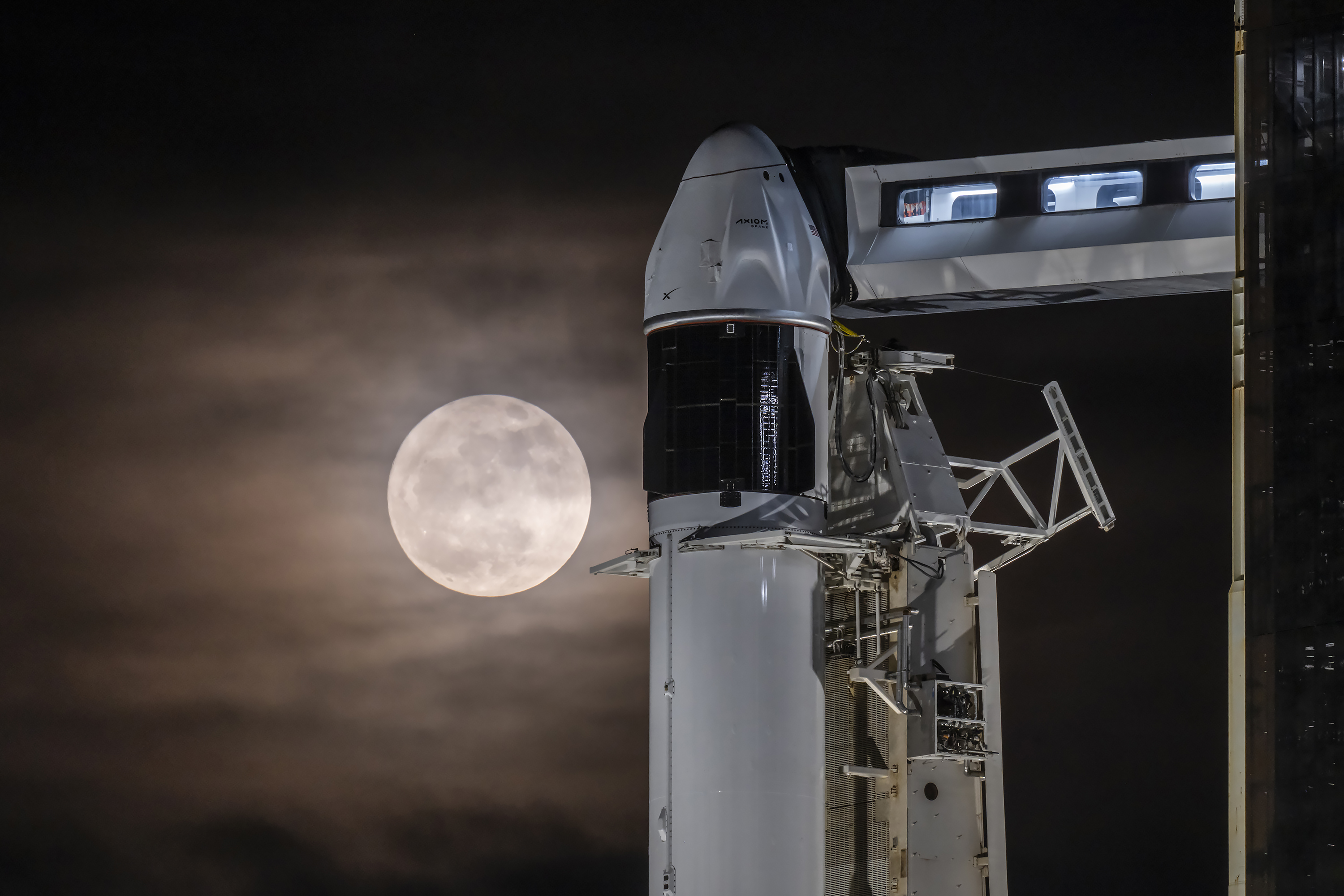
Falcon 9 Block 5 | Axiom Space Mission 4
SpaceX | United States of AmericaKennedy Space Center, FL, USA
June 25, 2025, 6:31 a.m.
Status: Launch Successful
Mission:
This is a Crew Dragon flight for a private company Axiom Space. The mission will carry a professionally trained commander alongside three private astronauts to and from the International Space Station. This crew will stay aboard space station for at least eight days.
Low Earth Orbit B1094 - Flight Proven ( ) Landing Zone 1Falcon 9 Block 5 | Transporter 14 (Dedicated SSO Rideshare)
SpaceX | United States of AmericaVandenberg SFB, CA, USA
June 23, 2025, 9:25 p.m.
Falcon 9 Block 5 | Starlink Group 10-23
SpaceX | United States of AmericaCape Canaveral SFS, FL, USA
June 23, 2025, 5:58 a.m.
Falcon 9 Block 5 | Starlink Group 10-18
SpaceX | United States of AmericaCape Canaveral SFS, FL, USA
June 18, 2025, 5:55 a.m.
Falcon 9 Block 5 | Starlink Group 15-9
SpaceX | United States of AmericaVandenberg SFB, CA, USA
June 17, 2025, 3:36 a.m.
Falcon 9 Block 5 | Starlink Group 12-26
SpaceX | United States of AmericaCape Canaveral SFS, FL, USA
June 13, 2025, 3:29 p.m.
Falcon 9 Block 5 | Starlink Group 15-6
SpaceX | United States of AmericaVandenberg SFB, CA, USA
June 13, 2025, 1:54 a.m.
Falcon 9 Block 5 | Starlink Group 12-24
SpaceX | United States of AmericaCape Canaveral SFS, FL, USA
June 10, 2025, 1:05 p.m.
Falcon 9 Block 5 | Starlink Group 15-8
SpaceX | United States of AmericaVandenberg SFB, CA, USA
June 8, 2025, 2:20 p.m.
Falcon 9 Block 5 | Sirius SXM-10
SpaceX | United States of AmericaCape Canaveral SFS, FL, USA
June 7, 2025, 4:54 a.m.
Status: Launch Successful
Mission:
SXM-10 is the 11th high-powered, digital, audio radio satellite built by Maxar (SSL) for SiriusXM. The SXM-10 satellite will be based on Maxar’s proven 1300-class platform and built at the company’s manufacturing facility in Palo Alto, California. SXM-10 has a large, mesh, unfurlable reflector almost 10 meters in diameter that allows SiriusXM programming to reach its radios, including those in moving vehicles.
Geostationary Transfer Orbit B1085 - Flight Proven ( ) A Shortfall of GravitasFalcon 9 Block 5 | Starlink Group 11-22
SpaceX | United States of AmericaVandenberg SFB, CA, USA
June 4, 2025, 11:40 p.m.
Falcon 9 Block 5 | Starlink Group 12-19
SpaceX | United States of AmericaCape Canaveral SFS, FL, USA
June 3, 2025, 4:43 a.m.
Falcon 9 Block 5 | Starlink Group 11-18
SpaceX | United States of AmericaVandenberg SFB, CA, USA
May 31, 2025, 8:10 p.m.
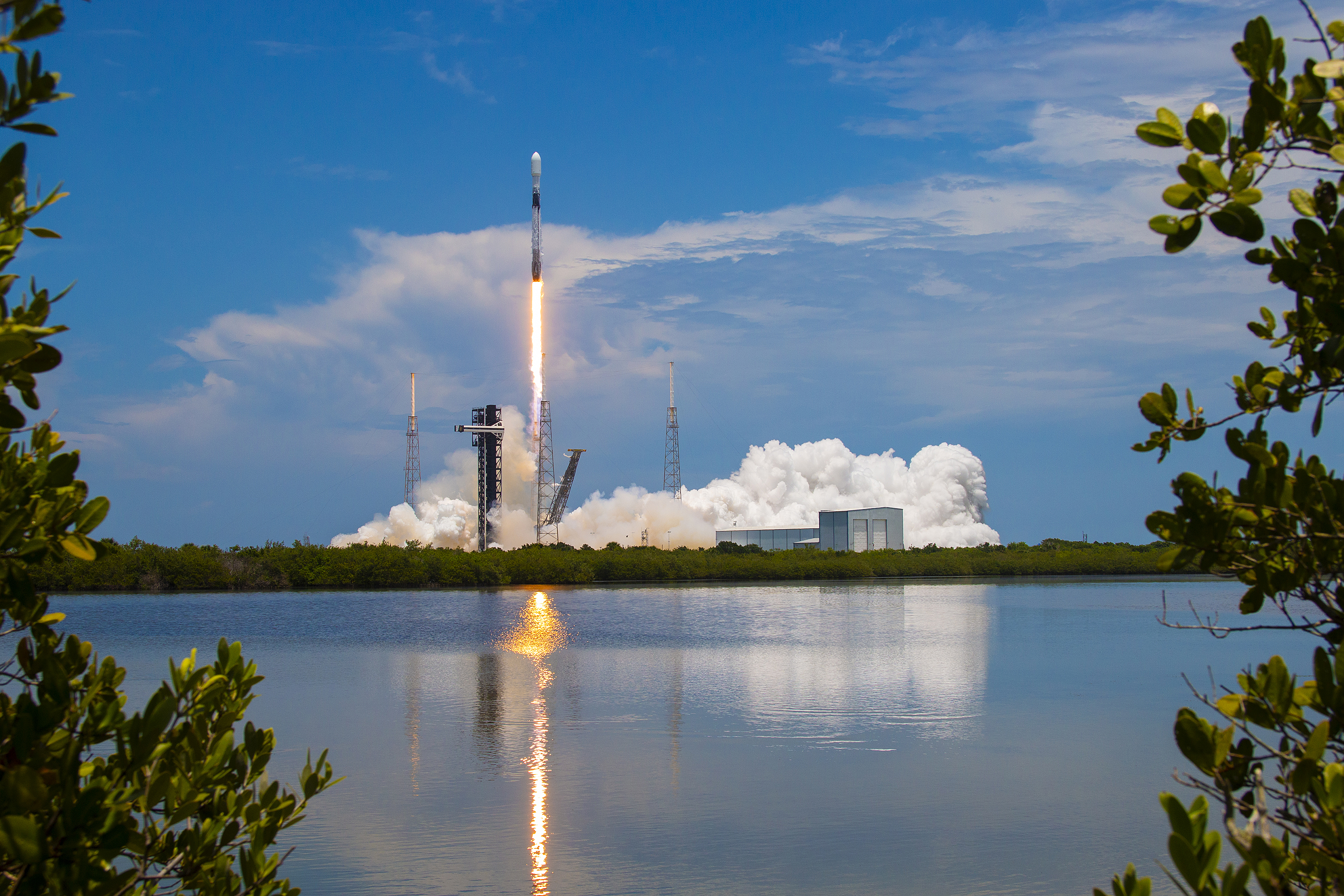
Falcon 9 Block 5 | GPS III SV08
SpaceX | United States of AmericaCape Canaveral SFS, FL, USA
May 30, 2025, 5:37 p.m.
Falcon 9 Block 5 | Starlink Group 10-32
SpaceX | United States of AmericaKennedy Space Center, FL, USA
May 28, 2025, 1:30 p.m.
Falcon 9 Block 5 | Starlink Group 17-1
SpaceX | United States of AmericaVandenberg SFB, CA, USA
May 27, 2025, 4:57 p.m.
Falcon 9 Block 5 | Starlink Group 12-22
SpaceX | United States of AmericaCape Canaveral SFS, FL, USA
May 24, 2025, 5:19 p.m.
Falcon 9 Block 5 | Starlink Group 11-16
SpaceX | United States of AmericaVandenberg SFB, CA, USA
May 23, 2025, 10:32 p.m.
Falcon 9 Block 5 | Starlink Group 12-15
SpaceX | United States of AmericaCape Canaveral SFS, FL, USA
May 21, 2025, 3:19 a.m.
Falcon 9 Block 5 | Starlink Group 15-5
SpaceX | United States of AmericaVandenberg SFB, CA, USA
May 16, 2025, 1:43 p.m.
Falcon 9 Block 5 | Starlink Group 6-67
SpaceX | United States of AmericaCape Canaveral SFS, FL, USA
May 14, 2025, 4:38 p.m.
Falcon 9 Block 5 | Starlink Group 6-83
SpaceX | United States of AmericaKennedy Space Center, FL, USA
May 13, 2025, 5:02 a.m.
Falcon 9 Block 5 | Starlink Group 15-4
SpaceX | United States of AmericaVandenberg SFB, CA, USA
May 13, 2025, 1:15 a.m.
Falcon 9 Block 5 | Starlink Group 6-91
SpaceX | United States of AmericaCape Canaveral SFS, FL, USA
May 10, 2025, 6:28 a.m.
Falcon 9 Block 5 | Starlink Group 15-3
SpaceX | United States of AmericaVandenberg SFB, CA, USA
May 10, 2025, 12:19 a.m.
Falcon 9 Block 5 | Starlink Group 6-93
SpaceX | United States of AmericaCape Canaveral SFS, FL, USA
May 7, 2025, 1:17 a.m.
Falcon 9 Block 5 | Starlink Group 6-84
SpaceX | United States of AmericaKennedy Space Center, FL, USA
May 4, 2025, 8:54 a.m.
Falcon 9 Block 5 | Starlink Group 6-75
SpaceX | United States of AmericaCape Canaveral SFS, FL, USA
May 2, 2025, 1:51 a.m.
Falcon 9 Block 5 | Starlink Group 12-10
SpaceX | United States of AmericaKennedy Space Center, FL, USA
April 29, 2025, 2:34 a.m.
Falcon 9 Block 5 | Starlink Group 11-9
SpaceX | United States of AmericaVandenberg SFB, CA, USA
April 28, 2025, 8:42 p.m.
Falcon 9 Block 5 | Starlink Group 12-23
SpaceX | United States of AmericaCape Canaveral SFS, FL, USA
April 28, 2025, 2:09 a.m.
Falcon 9 Block 5 | Starlink Group 6-74
SpaceX | United States of AmericaCape Canaveral SFS, FL, USA
April 25, 2025, 1:52 a.m.

Falcon 9 Block 5 | Bandwagon 3 (Dedicated Mid-Inclination Rideshare)
SpaceX | United States of AmericaCape Canaveral SFS, FL, USA
April 22, 2025, 12:48 a.m.
Falcon 9 Block 5 | Dragon CRS-2 SpX-32
SpaceX | United States of AmericaKennedy Space Center, FL, USA
April 21, 2025, 8:15 a.m.
Status: Launch Successful
Mission:
32nd commercial resupply services mission to the International Space Station operated by SpaceX. The flight will be conducted under the second Commercial Resupply Services contract with NASA. Cargo Dragon 2 brings supplies and payloads, including critical materials to directly support science and research investigations that occur onboard the orbiting laboratory.
Low Earth Orbit B1092 - Flight Proven ( ) Landing Zone 1Falcon 9 Block 5 | NROL-145
SpaceX | United States of AmericaVandenberg SFB, CA, USA
April 20, 2025, 12:29 p.m.
Status: Launch Successful
Mission:
Tenth batch of satellites for a reconnaissance satellite constellation built by SpaceX and Northrop Grumman for the National Reconnaissance Office to provide imaging and other reconnaissance capabilities.
Unknown B1082 - Flight Proven ( ) Of Course I Still Love YouFalcon 9 Block 5 | Starlink Group 6-73
SpaceX | United States of AmericaCape Canaveral SFS, FL, USA
April 14, 2025, 4 a.m.
Falcon 9 Block 5 | Starlink Group 12-17
SpaceX | United States of AmericaKennedy Space Center, FL, USA
April 13, 2025, 12:53 a.m.
Falcon 9 Block 5 | NROL-192
SpaceX | United States of AmericaVandenberg SFB, CA, USA
April 12, 2025, 12:25 p.m.
Status: Launch Successful
Mission:
Ninth batch of satellites for a reconnaissance satellite constellation built by SpaceX and Northrop Grumman for the National Reconnaissance Office to provide imaging and other reconnaissance capabilities.
Unknown B1071 - Flight Proven ( ) Of Course I Still Love YouFalcon 9 Block 5 | Starlink Group 11-11
SpaceX | United States of AmericaVandenberg SFB, CA, USA
April 7, 2025, 11:06 p.m.
Falcon 9 Block 5 | Starlink Group 6-72
SpaceX | United States of AmericaCape Canaveral SFS, FL, USA
April 6, 2025, 3:07 a.m.
Falcon 9 Block 5 | Starlink Group 11-13
SpaceX | United States of AmericaVandenberg SFB, CA, USA
April 4, 2025, 1:02 a.m.
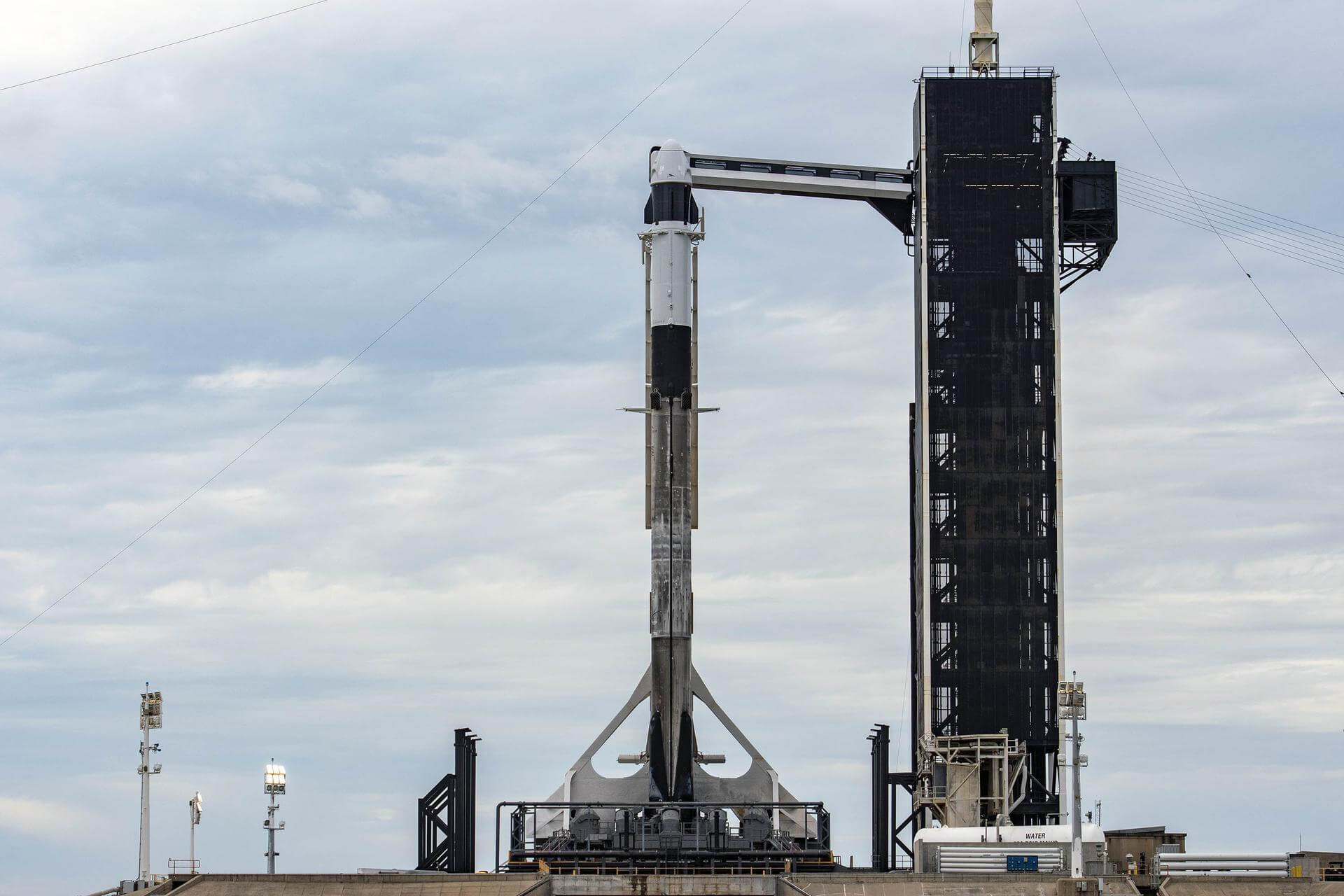
Falcon 9 Block 5 | Fram2
SpaceX | United States of AmericaKennedy Space Center, FL, USA
April 1, 2025, 1:46 a.m.
Status: Launch Successful
Mission:
Fram2 is the world’s first astronaut mission to polar orbit. Named after the Norwegian polar research ship Fram, the Crew Dragon spacecraft will launch into a 90° circular orbit from Florida, making it the first human spaceflight to fly over Earth’s polar regions from low-Earth orbit. A cupola will be installed on the Dragon spacecraft to allow for Earth observation from at an altitude of 425 – 450 km. During the 3-to-5-day mission, the crew will study green fragments and mauve ribbons of continuous emissions comparable to the phenomenon known as STEVE (Strong Thermal Emission Velocity Enhancement), persistently measured at an altitude of approximately 400 - 500 km above Earth’s atmosphere, among other studies. The crew will also work with SpaceX to conduct a variety of research to better understand the effects of spaceflight on the human body, which includes capturing the first human x-ray images in space, Just-in-Time training tools, and studying the effects of spaceflight on behavioural health. Chun Wang, an entrepreneur and explorer who co-founded f2pool and stakefish, serves as the mission commander. The vehicle commander will be Jannicke Mikkelsen, a film director, and cinematographer. The vehicle pilot will be Eric Philips, a professional polar adventurer and guide who has completed ski expeditions to the North and South Poles. The final crew member will be mission specialist Rabea Rogge, a robotics researcher from Berlin, currently pursuing her PhD in Norway.
Polar Orbit B1085 - Flight Proven ( ) A Shortfall of GravitasFalcon 9 Block 5 | Starlink Group 6-80
SpaceX | United States of AmericaCape Canaveral SFS, FL, USA
March 31, 2025, 7:52 p.m.
Falcon 9 Block 5 | Starlink Group 11-7
SpaceX | United States of AmericaVandenberg SFB, CA, USA
March 26, 2025, 10:11 p.m.
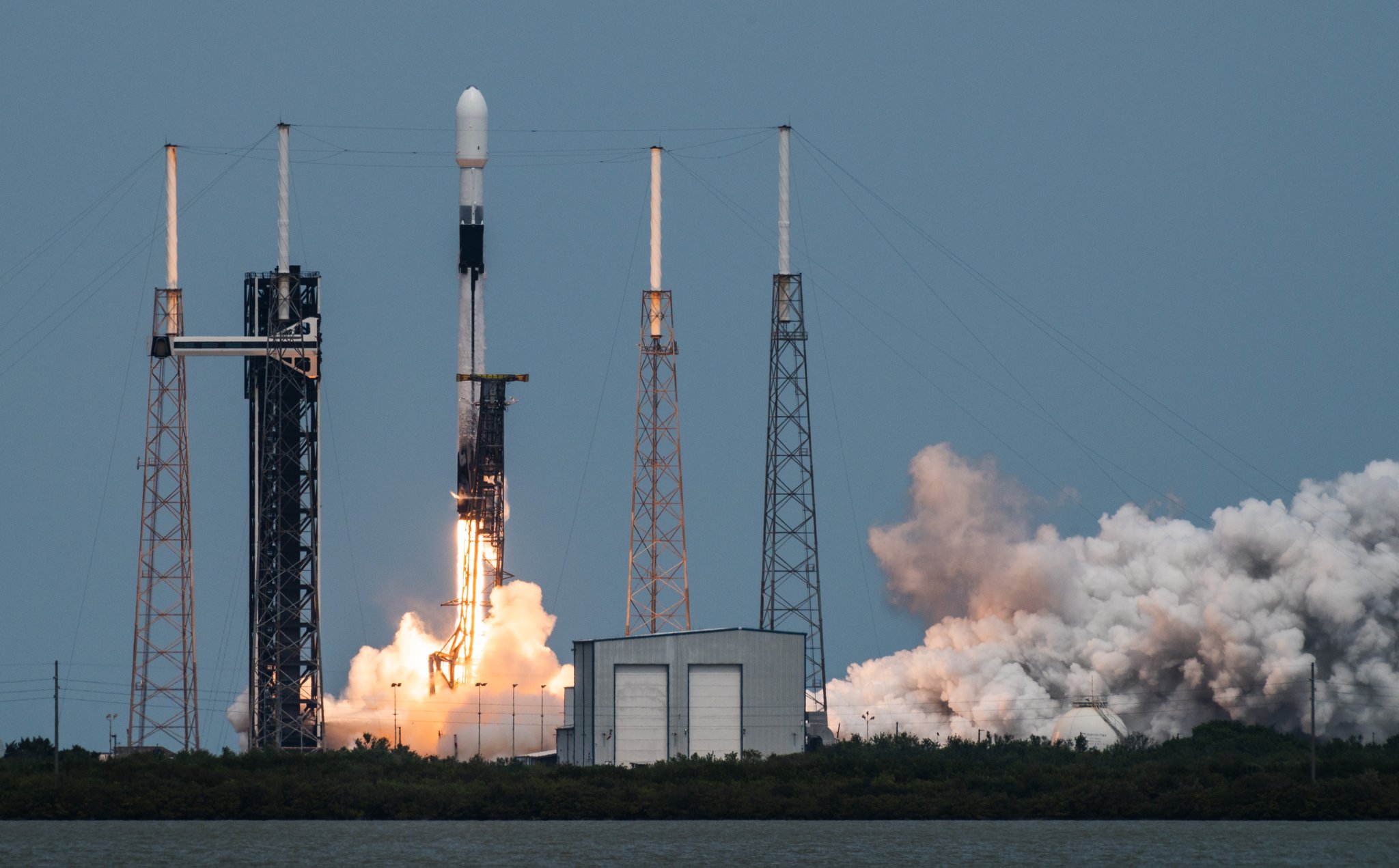
Falcon 9 Block 5 | NROL-69
SpaceX | United States of AmericaCape Canaveral SFS, FL, USA
March 24, 2025, 5:48 p.m.
Falcon 9 Block 5 | NROL-57
SpaceX | United States of AmericaVandenberg SFB, CA, USA
March 21, 2025, 6:49 a.m.
Status: Launch Successful
Mission:
Eighth batch of satellites for a reconnaissance satellite constellation built by SpaceX and Northrop Grumman for the National Reconnaissance Office to provide imaging and other reconnaissance capabilities.
Unknown B1088 - Flight Proven ( ) Landing Zone 4Falcon 9 Block 5 | Starlink Group 12-25
SpaceX | United States of AmericaCape Canaveral SFS, FL, USA
March 18, 2025, 7:57 p.m.
Falcon 9 Block 5 | Starlink Group 12-16
SpaceX | United States of AmericaCape Canaveral SFS, FL, USA
March 15, 2025, 11:35 a.m.
Falcon 9 Block 5 | Transporter 13 (Dedicated SSO Rideshare)
SpaceX | United States of AmericaVandenberg SFB, CA, USA
March 15, 2025, 6:43 a.m.
Falcon 9 Block 5 | Crew-10
SpaceX | United States of AmericaKennedy Space Center, FL, USA
March 14, 2025, 11:03 p.m.
Falcon 9 Block 5 | Starlink Group 12-21
SpaceX | United States of AmericaCape Canaveral SFS, FL, USA
March 13, 2025, 2:35 a.m.
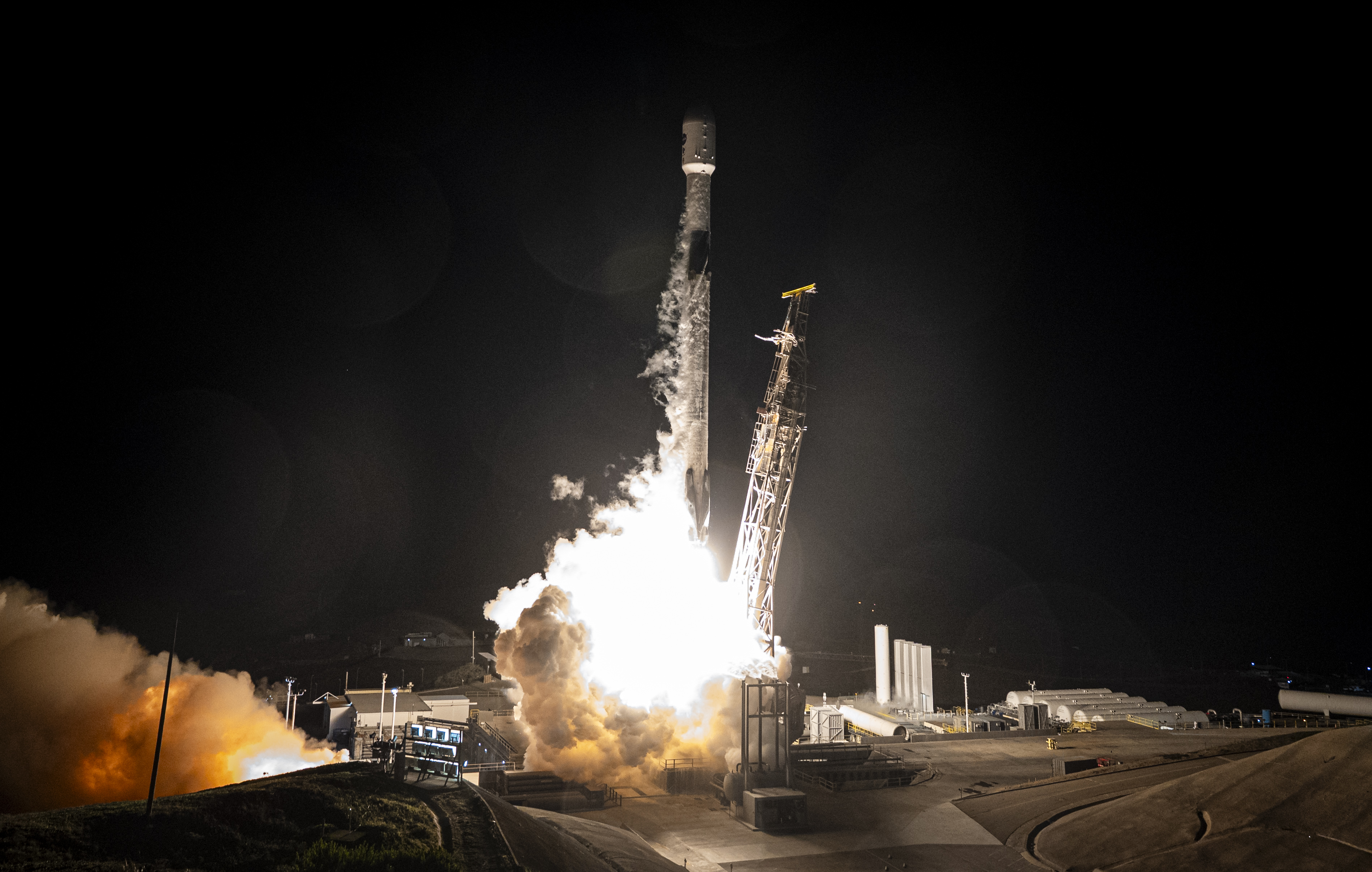
Falcon 9 Block 5 | SPHEREx & PUNCH
SpaceX | United States of AmericaVandenberg SFB, CA, USA
March 12, 2025, 3:10 a.m.
Status: Launch Successful
Mission:
SPHEREx is a planned two-year astrophysics mission to survey the sky in the near-infrared light, which, though not visible to the human eye, serves as a powerful tool for answering cosmic questions involving the birth of the universe, and the subsequent development of galaxies. It also will search for water and organic molecules – essentials for life as we know it – in regions where stars are born from gas and dust, known as stellar nurseries, as well as disks around stars where new planets could be forming. Astronomers will use the mission to gather data on more than 300 million galaxies, as well as more than 100 million stars in our own Milky Way galaxy. NASA’s Polarimeter to Unify the Corona and Heliosphere (PUNCH) mission will share a ride to space with SPHEREx. It consists of four suitcase-sized satellites, which will focus on the Sun’s outer atmosphere (the corona) and how it generates the solar wind. The spacecraft also will track coronal mass ejections – large eruptions of solar material that can drive large space weather events near Earth – to better understand their evolution and develop new techniques for predicting such eruptions.
Sun-Synchronous Orbit B1088 - Flight Proven ( ) Landing Zone 4Falcon 9 Block 5 | Starlink Group 12-20
SpaceX | United States of AmericaCape Canaveral SFS, FL, USA
March 3, 2025, 2:24 a.m.
Falcon 9 Block 5 | Starlink Group 12-13
SpaceX | United States of AmericaCape Canaveral SFS, FL, USA
Feb. 27, 2025, 3:34 a.m.
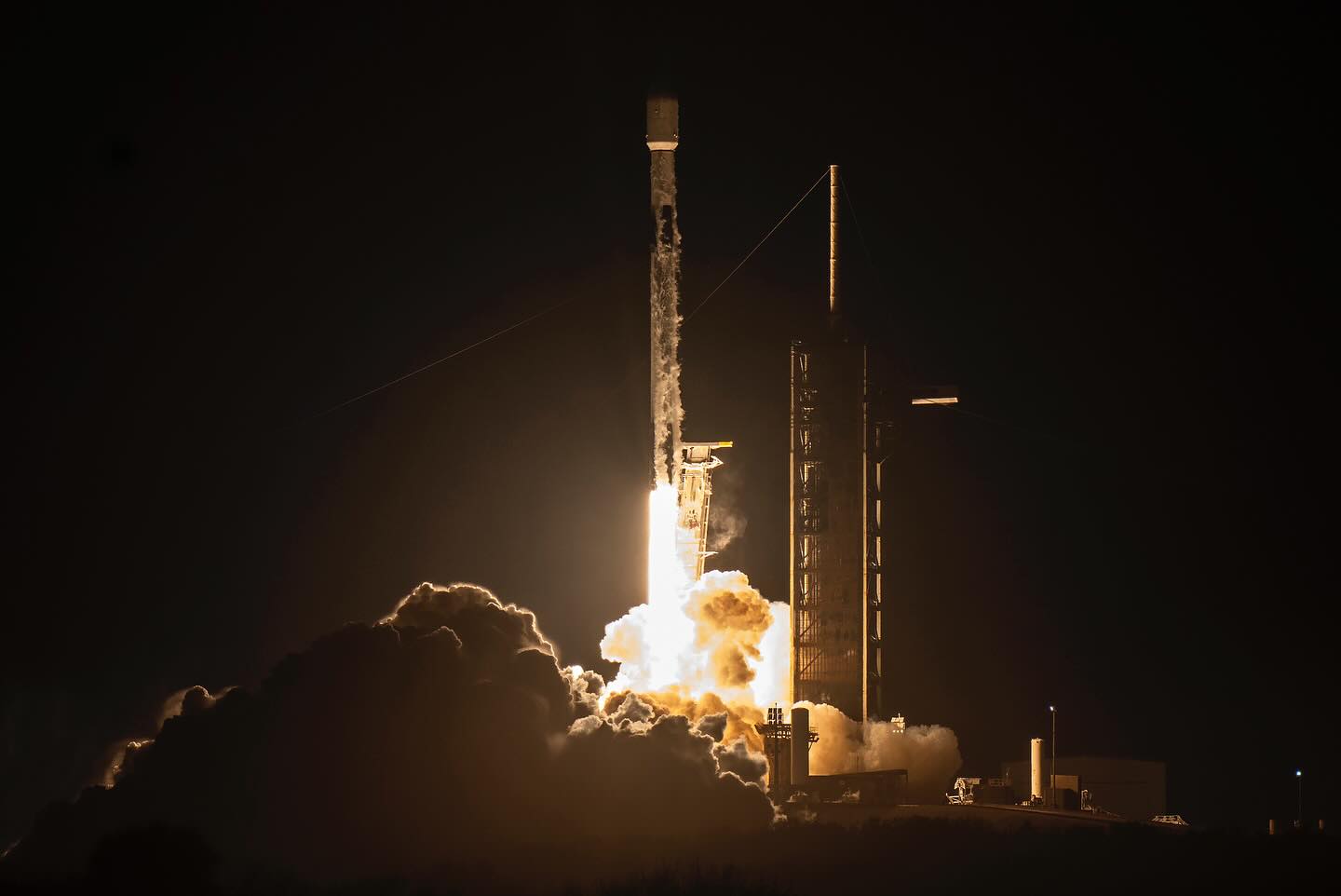
Falcon 9 Block 5 | Nova-C IM-2 & Others
SpaceX | United States of AmericaKennedy Space Center, FL, USA
Feb. 27, 2025, 12:16 a.m.
Status: Launch Successful
Mission:
This is the second mission of Nova-C lunar lander developed and built by Intuitive Machines. This time it carries a NASA payload called PRIME-1 (Polar Resources Ice Mining Experiment-1), which is to be the first demonstration of in-situ resource utilization on the Moon. PRIME-1 consists of two instruments: TRIDENT drill and Msolo mass spectrometer. Also on board are: * Lunar Trailblazer, a small (class D) lunar orbiter, part of NASA's SIMPLEx program, that will detect and map water on the lunar surface to determine how its form, abundance, and location relate to geology. Its mission is to aid in the understanding of lunar water and the Moon's water cycle. * Odin, a spacecraft for AstroForge, a company that plans to mine asteroid resources. Odin intends to head into deep space to observe near-Earth asteroid 2022 OB5 in preparation for their first retrieval mission. Odin will fly by the asteroid at a distance of about 1 kilometer, arriving 11 months after launch. * CHIMERA GEO 1, a transfer spacecraft by Epic Aerospace to a geostationary orbit, with the aim of covering an orbital position. For this launch, CHIMERA-GEO is carrying an unidentified 16U cubesat manifested by Exolaunch.
Lunar Orbit B1083 - Flight Proven ( ) A Shortfall of GravitasFalcon 9 Block 5 | Starlink Group 15-1
SpaceX | United States of AmericaVandenberg SFB, CA, USA
Feb. 23, 2025, 1:38 a.m.
Falcon 9 Block 5 | Starlink Group 12-14
SpaceX | United States of AmericaCape Canaveral SFS, FL, USA
Feb. 21, 2025, 3:19 p.m.
Falcon 9 Block 5 | Starlink Group 10-12
SpaceX | United States of AmericaCape Canaveral SFS, FL, USA
Feb. 18, 2025, 11:21 p.m.
Status: Launch Successful
Mission:
A batch of 23 satellites for the Starlink mega-constellation - SpaceX's project for space-based Internet communication system. First Starlink launch to feature a Falcon 9 booster landing within The Bahamas waters.
Low Earth Orbit B1080 - Flight Proven ( ) Just Read the InstructionsFalcon 9 Block 5 | Starlink Group 12-8
SpaceX | United States of AmericaCape Canaveral SFS, FL, USA
Feb. 15, 2025, 6:14 a.m.
Falcon 9 Block 5 | Starlink Group 12-18
SpaceX | United States of AmericaCape Canaveral SFS, FL, USA
Feb. 11, 2025, 6:53 p.m.
Falcon 9 Block 5 | Starlink Group 11-10
SpaceX | United States of AmericaVandenberg SFB, CA, USA
Feb. 11, 2025, 2:09 a.m.
Falcon 9 Block 5 | Starlink Group 12-9
SpaceX | United States of AmericaCape Canaveral SFS, FL, USA
Feb. 8, 2025, 7:18 p.m.
Falcon 9 Block 5 | WorldView Legion 5 & 6
SpaceX | United States of AmericaKennedy Space Center, FL, USA
Feb. 4, 2025, 11:13 p.m.
Status: Launch Successful
Mission:
WorldView Legion is a constellation of Earth observation satellites built and operated by Maxar. Constellation is planned to consist of 6 satellites in both polar and mid-inclination orbits, providing 30 cm-class resolution.
Low Earth Orbit B1086 - Flight Proven ( ) Landing Zone 1Falcon 9 Block 5 | Starlink Group 12-3
SpaceX | United States of AmericaCape Canaveral SFS, FL, USA
Feb. 4, 2025, 10:15 a.m.
Falcon 9 Block 5 | Starlink Group 11-4
SpaceX | United States of AmericaVandenberg SFB, CA, USA
Feb. 1, 2025, 11:02 p.m.
Falcon 9 Block 5 | SpainSat NG I
SpaceX | United States of AmericaKennedy Space Center, FL, USA
Jan. 30, 2025, 1:34 a.m.
Falcon 9 Block 5 | Starlink Group 12-7
SpaceX | United States of AmericaCape Canaveral SFS, FL, USA
Jan. 27, 2025, 10:05 p.m.
Falcon 9 Block 5 | Starlink Group 11-6
SpaceX | United States of AmericaVandenberg SFB, CA, USA
Jan. 24, 2025, 2:07 p.m.
Falcon 9 Block 5 | Starlink Group 11-8
SpaceX | United States of AmericaVandenberg SFB, CA, USA
Jan. 21, 2025, 3:45 p.m.
Falcon 9 Block 5 | Starlink Group 13-1
SpaceX | United States of AmericaKennedy Space Center, FL, USA
Jan. 21, 2025, 5:24 a.m.
Falcon 9 Block 5 | Blue Ghost Lunar Lander Mission 1 & Hakuto-R M2 “Resilience”
SpaceX | United States of AmericaKennedy Space Center, FL, USA
Jan. 15, 2025, 6:11 a.m.
Status: Launch Successful
Mission:
Blue Ghost is a commercial lunar lander developed by Firefly Aerospace for NASA’s CLPS program. Blue Ghost is designed to bring up to 155kg of payload to the lunar surface. It will land at Mare Crisium in the Crisium Basin and is designed to last 14 days before freezing in the lunar night. Resilience is the second mission of the Hakuto-R commercial lunar lander developed by private Japanese company ispace. The lander will carry a small rover developed by ispace to perform studies on the moon's surface. The rover is also expected to collect lunar regolith as part of a contract with NASA signed in 2020, in which companies will collect materials on the moon and then transfer ownership "in situ" to the agency.
Lunar Orbit B1085 - Flight Proven ( ) Just Read the Instructions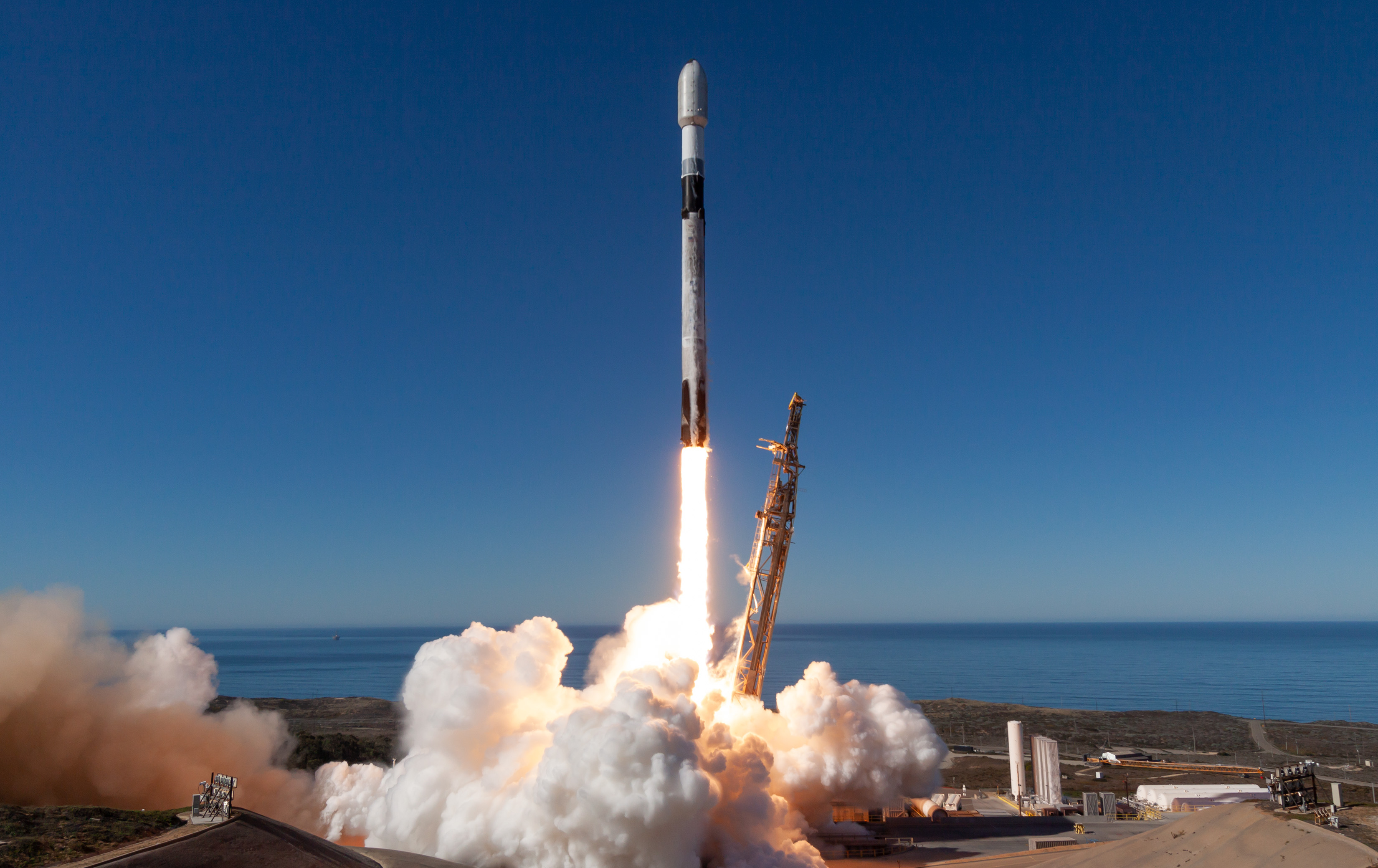
Falcon 9 Block 5 | Transporter 12 (Dedicated SSO Rideshare)
SpaceX | United States of AmericaVandenberg SFB, CA, USA
Jan. 14, 2025, 7:09 p.m.
Falcon 9 Block 5 | Starlink Group 12-4
SpaceX | United States of AmericaCape Canaveral SFS, FL, USA
Jan. 13, 2025, 4:47 p.m.
Falcon 9 Block 5 | Starlink Group 12-12
SpaceX | United States of AmericaCape Canaveral SFS, FL, USA
Jan. 10, 2025, 7:11 p.m.
Falcon 9 Block 5 | NROL-153
SpaceX | United States of AmericaVandenberg SFB, CA, USA
Jan. 10, 2025, 3:53 a.m.
Status: Launch Successful
Mission:
Seventh batch of satellites for a reconnaissance satellite constellation built by SpaceX and Northrop Grumman for the National Reconnaissance Office to provide imaging and other reconnaissance capabilities.
Unknown B1071 - Flight Proven ( ) Of Course I Still Love YouFalcon 9 Block 5 | Starlink Group 12-11
SpaceX | United States of AmericaKennedy Space Center, FL, USA
Jan. 8, 2025, 3:27 p.m.
Falcon 9 Block 5 | Starlink Group 6-71
SpaceX | United States of AmericaCape Canaveral SFS, FL, USA
Jan. 6, 2025, 8:43 p.m.
Falcon 9 Block 5 | Thuraya 4-NGS
SpaceX | United States of AmericaCape Canaveral SFS, FL, USA
Jan. 4, 2025, 1:27 a.m.
Status: Launch Successful
Mission:
Thuraya 4-NGS is a communication satellite being built by Airbus Defense and Space for the UAE based Yahsat. Based on the all-electric Airbus Eurostar-Neo Platform, Thuraya 4-NGS will incorporate a large 12-meter L-band antenna and a payload with on-board processing providing advanced routing flexibility of up to 3200 channels with dynamic power allocation over a large number of spot beams.
Geostationary Transfer Orbit B1073 - Flight Proven ( ) A Shortfall of GravitasFalcon 9 Block 5 | Starlink Group 12-6
SpaceX | United States of AmericaKennedy Space Center, FL, USA
Dec. 31, 2024, 5:39 a.m.
Falcon 9 Block 5 | Astranis: From One to Many (4x Astranis MicroGEO)
SpaceX | United States of AmericaCape Canaveral SFS, FL, USA
Dec. 29, 2024, 5 a.m.
Falcon 9 Block 5 | Starlink Group 11-3
SpaceX | United States of AmericaVandenberg SFB, CA, USA
Dec. 29, 2024, 1:58 a.m.
Falcon 9 Block 5 | Starlink Group 12-2
SpaceX | United States of AmericaKennedy Space Center, FL, USA
Dec. 23, 2024, 5:35 a.m.
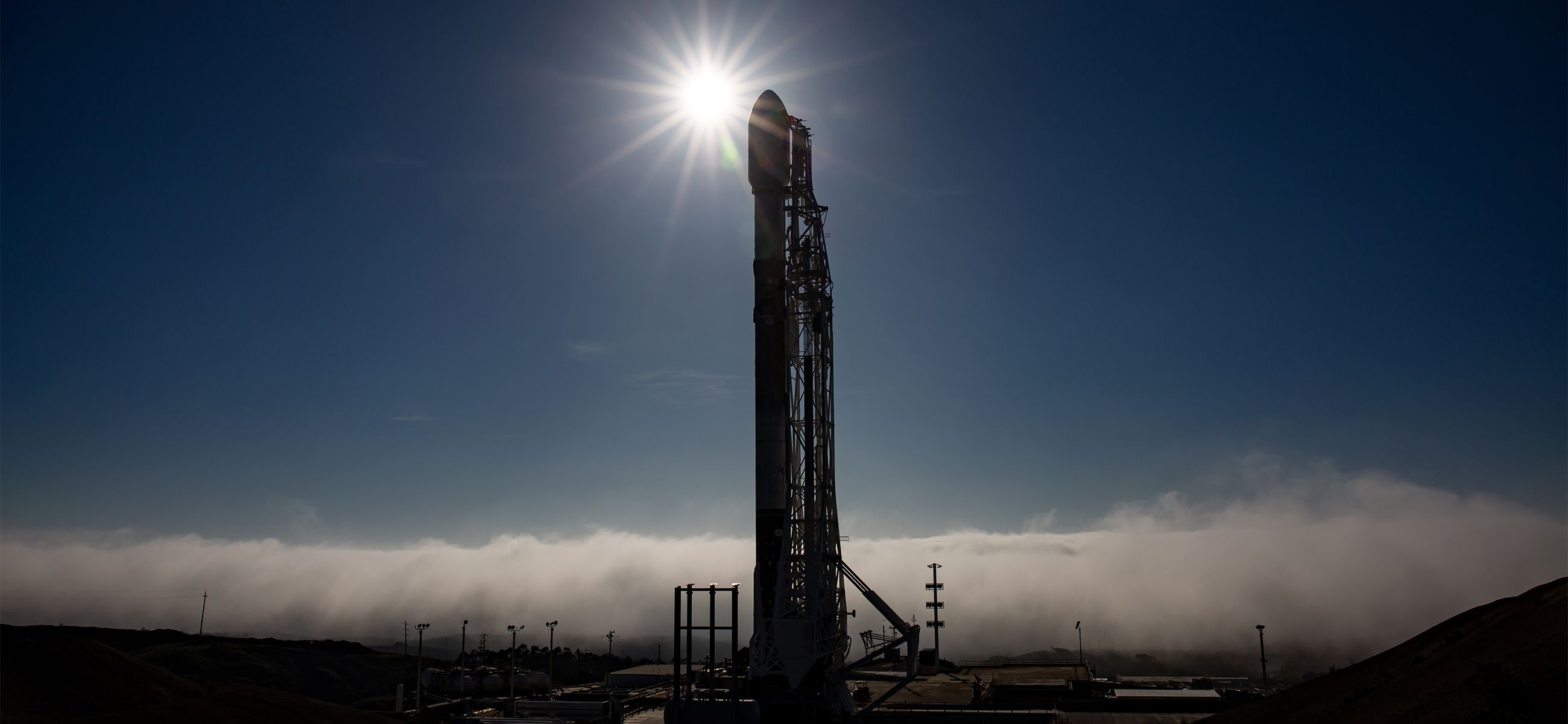
Falcon 9 Block 5 | Bandwagon 2 (Dedicated Mid-Inclination Rideshare)
SpaceX | United States of AmericaVandenberg SFB, CA, USA
Dec. 21, 2024, 11:34 a.m.
Status: Launch Successful
Mission:
Dedicated rideshare flight to a mid-inclination orbit with dozens of small microsatellites and nanosatellites for commercial and government customers. Payloads include the South Korean government's 425 Project Flight 3.
Low Earth Orbit B1071 - Flight Proven ( ) Landing Zone 4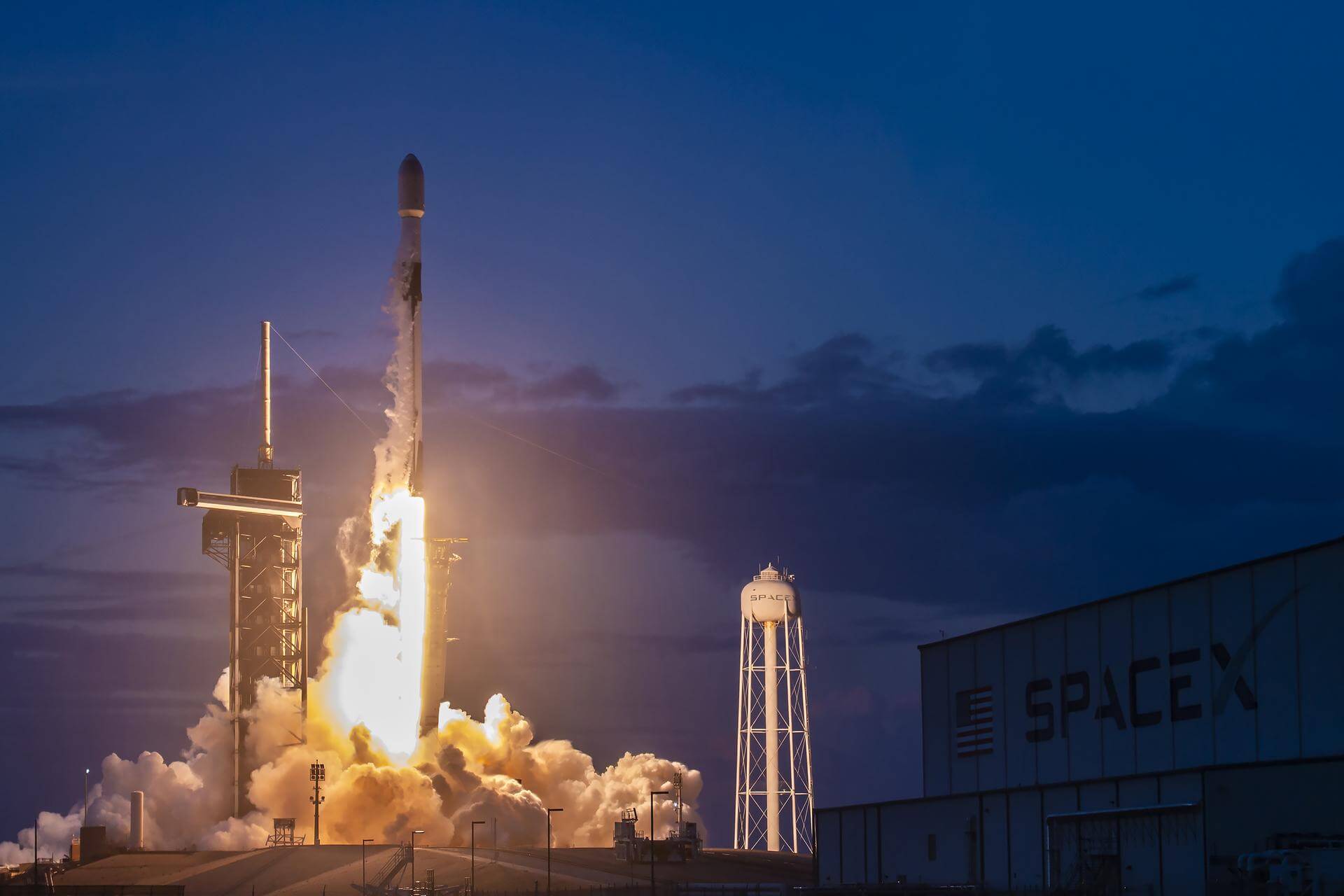
Falcon 9 Block 5 | O3b mPower 7 & 8
SpaceX | United States of AmericaKennedy Space Center, FL, USA
Dec. 17, 2024, 10:26 p.m.
Falcon 9 Block 5 | NROL-149
SpaceX | United States of AmericaVandenberg SFB, CA, USA
Dec. 17, 2024, 1:19 p.m.
Status: Launch Successful
Mission:
Sixth batch of satellites for a reconnaissance satellite constellation built by SpaceX and Northrop Grumman for the National Reconnaissance Office to provide imaging and other reconnaissance capabilities.
Low Earth Orbit B1063 - Flight Proven ( ) Of Course I Still Love You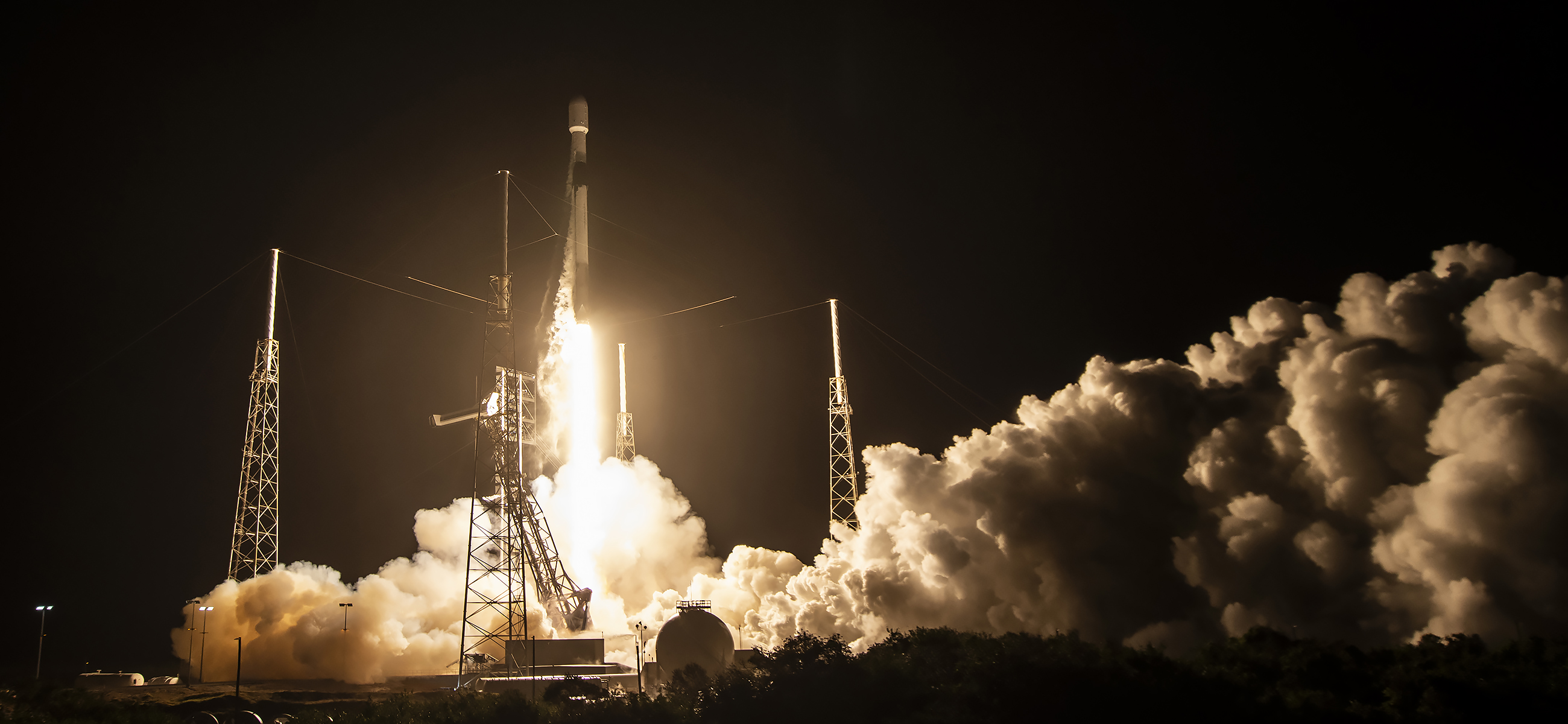
Falcon 9 Block 5 | GPS III SV07 (RRT-1)
SpaceX | United States of AmericaCape Canaveral SFS, FL, USA
Dec. 17, 2024, 12:52 a.m.
Status: Launch Successful
Mission:
GPS-III (Global Positioning System) is the first evolution stage of the third generation of the GPS satellites. It consists of the first ten (known as "tranche") of GPS III satellites. This spacecraft was original contracted to launch on United Launch Alliance's Vulcan rocket, and was reassigned to Falcon 9 following uncertainties in Vulcan's readiness to launch. As a result it was re-manifested within 6 months of launch under the name Rapid Response Trailblazer-1 (RRT-1). GPS III SV10, originally planned to launch on Falcon 9, will now launch on Vulcan instead.
Medium Earth Orbit B1085 - Flight Proven ( ) A Shortfall of GravitasFalcon 9 Block 5 | Starlink Group 11-2
SpaceX | United States of AmericaVandenberg SFB, CA, USA
Dec. 13, 2024, 9:55 p.m.
Falcon 9 Block 5 | Starlink Group 12-5
SpaceX | United States of AmericaCape Canaveral SFS, FL, USA
Dec. 8, 2024, 5:12 a.m.
Falcon 9 Block 5 | Sirius SXM-9
SpaceX | United States of AmericaKennedy Space Center, FL, USA
Dec. 5, 2024, 4:10 p.m.
Status: Launch Successful
Mission:
SXM-9 is the 10th high-powered, digital, audio radio satellite built by Maxar (SSL) for SiriusXM. The SXM-9 satellite will be based on Maxar’s proven 1300-class platform and built at the company’s manufacturing facility in Palo Alto, California. It is expected that SXM-9 will launch in 2024. SXM-9 has a large, mesh, unfurlable reflector almost 10 meters in diameter that allows SiriusXM programming to reach its radios, including those in moving vehicles.
Geostationary Transfer Orbit B1076 - Flight Proven ( ) Just Read the InstructionsFalcon 9 Block 5 | Starlink Group 9-14
SpaceX | United States of AmericaVandenberg SFB, CA, USA
Dec. 5, 2024, 3:05 a.m.
Falcon 9 Block 5 | Starlink Group 6-70
SpaceX | United States of AmericaCape Canaveral SFS, FL, USA
Dec. 4, 2024, 10:13 a.m.
Falcon 9 Block 5 | NROL-126
SpaceX | United States of AmericaVandenberg SFB, CA, USA
Nov. 30, 2024, 8:10 a.m.
Status: Launch Successful
Mission:
Fifth batch of satellites for a reconnaissance satellite constellation built by SpaceX and Northrop Grumman for the National Reconnaissance Office to provide imaging and other reconnaissance capabilities. 20 of the 22 satellites launched are actually civilian use Starlink satellites.
Low Earth Orbit B1088 - Maiden Flight Of Course I Still Love YouFalcon 9 Block 5 | Starlink Group 6-65
SpaceX | United States of AmericaCape Canaveral SFS, FL, USA
Nov. 30, 2024, 5 a.m.
Falcon 9 Block 5 | Starlink Group 6-76
SpaceX | United States of AmericaKennedy Space Center, FL, USA
Nov. 27, 2024, 4:41 a.m.
Falcon 9 Block 5 | Starlink Group 12-1
SpaceX | United States of AmericaCape Canaveral SFS, FL, USA
Nov. 25, 2024, 10:02 a.m.
Falcon 9 Block 5 | Starlink Group 9-13
SpaceX | United States of AmericaVandenberg SFB, CA, USA
Nov. 24, 2024, 5:25 a.m.
Falcon 9 Block 5 | Starlink Group 6-66
SpaceX | United States of AmericaCape Canaveral SFS, FL, USA
Nov. 21, 2024, 4:07 p.m.
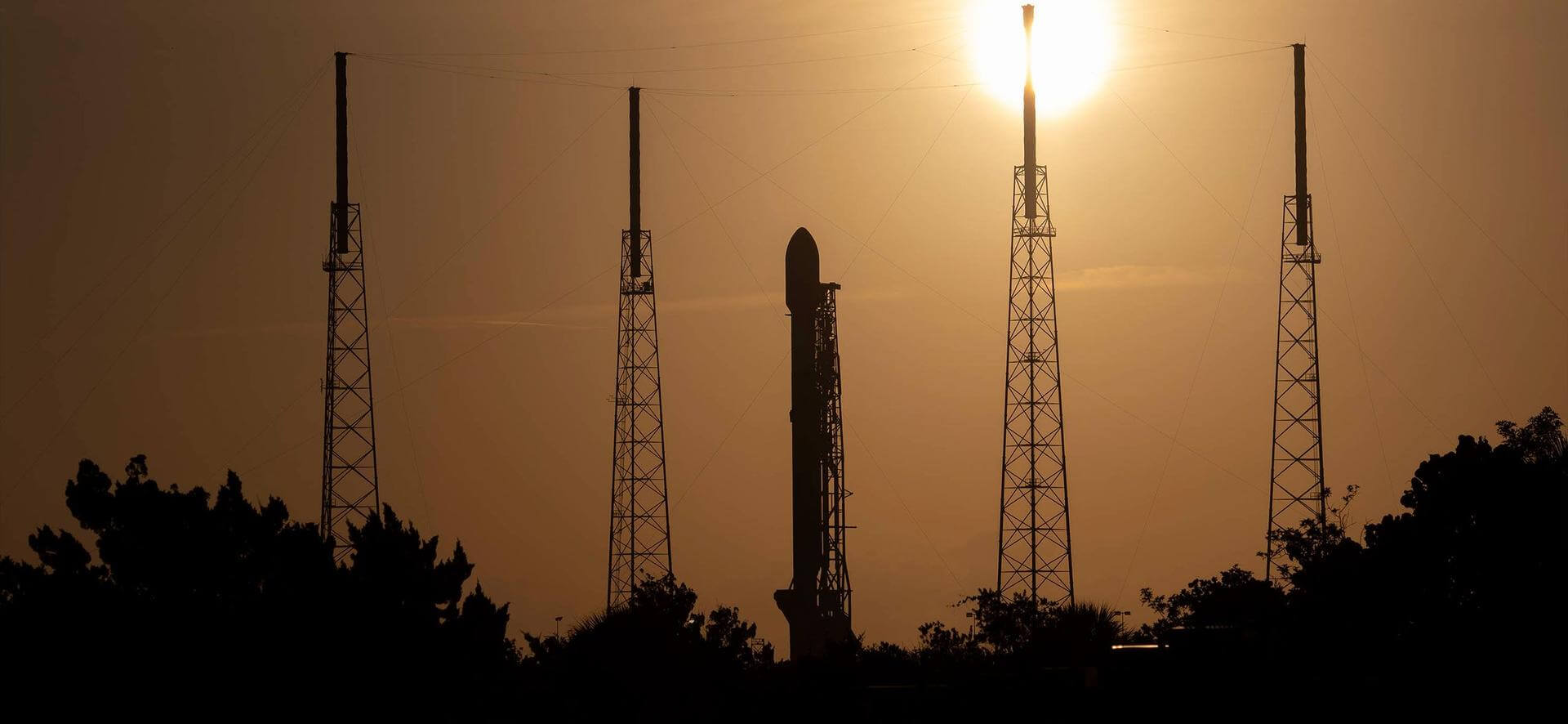
Falcon 9 Block 5 | GSAT-20 (GSAT-N2)
SpaceX | United States of AmericaCape Canaveral SFS, FL, USA
Nov. 18, 2024, 6:31 p.m.
Status: Launch Successful
Mission:
GSAT-20 is an Indian geostationary Ka-band high-throughput communications satellite. GSAT 20 is reportedly built on the I-6K unified modular bus and features a Ka-band high-throughput communications payload with 70 Gbps throughput utilizing multiple spot beams providing broadband services across the Indian region. It will be the first fully Electric Propulsion/EP enabled satellite which can be five to six times more efficient than chemical-based propulsion. It will be the first ISRO made satellite to move from Geostationary transfer orbit to Geosynchronous orbit using Electric Propulsion.
Geostationary Transfer Orbit B1073 - Flight Proven ( ) Just Read the InstructionsFalcon 9 Block 5 | Starlink Group 9-12
SpaceX | United States of AmericaVandenberg SFB, CA, USA
Nov. 18, 2024, 5:53 a.m.
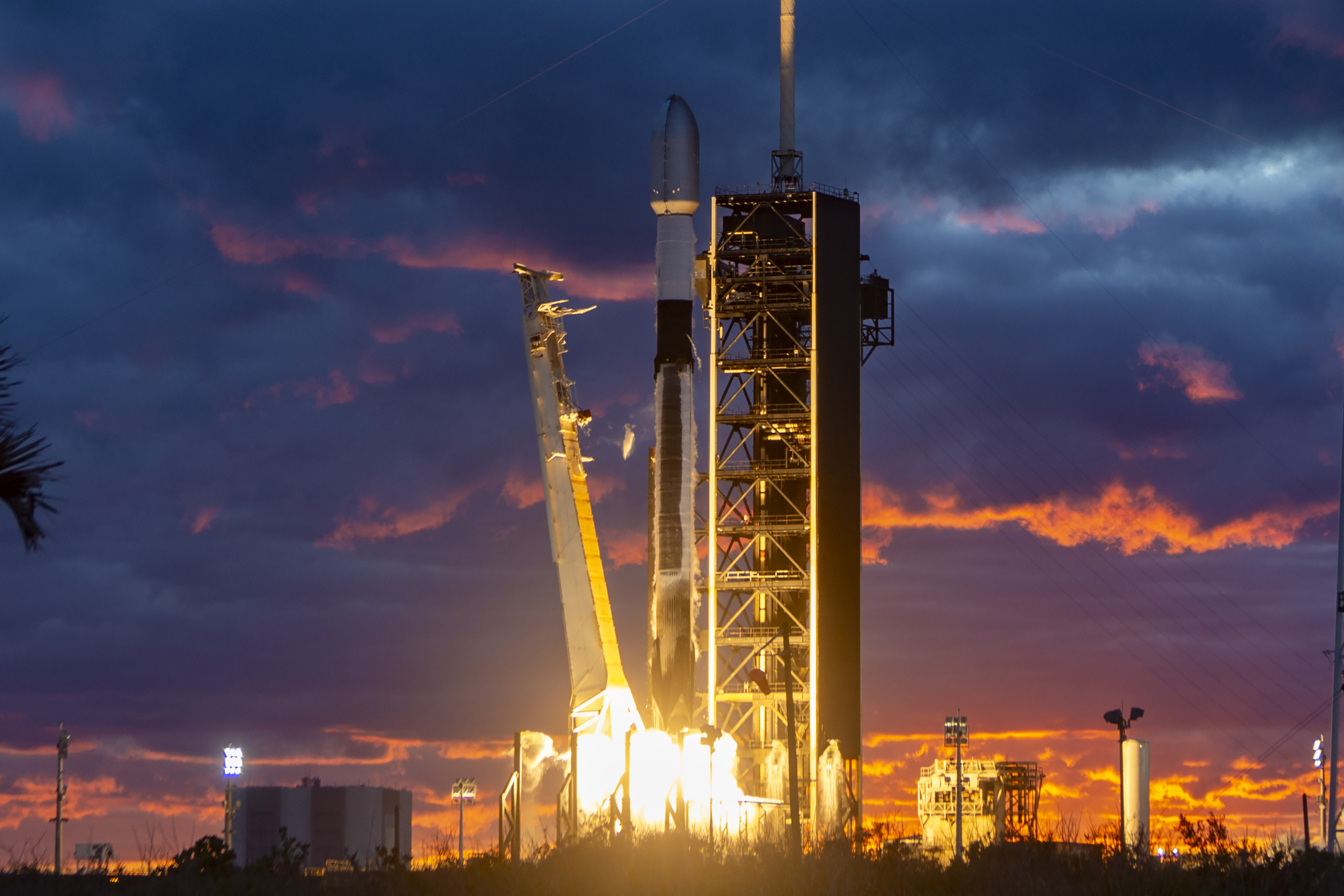
Falcon 9 Block 5 | Optus-X/TD7
SpaceX | United States of AmericaKennedy Space Center, FL, USA
Nov. 17, 2024, 10:28 p.m.
Falcon 9 Block 5 | Starlink Group 6-68
SpaceX | United States of AmericaCape Canaveral SFS, FL, USA
Nov. 14, 2024, 1:21 p.m.
Falcon 9 Block 5 | Starlink Group 9-11
SpaceX | United States of AmericaVandenberg SFB, CA, USA
Nov. 14, 2024, 5:23 a.m.
Falcon 9 Block 5 | Starlink Group 6-69
SpaceX | United States of AmericaCape Canaveral SFS, FL, USA
Nov. 11, 2024, 9:28 p.m.
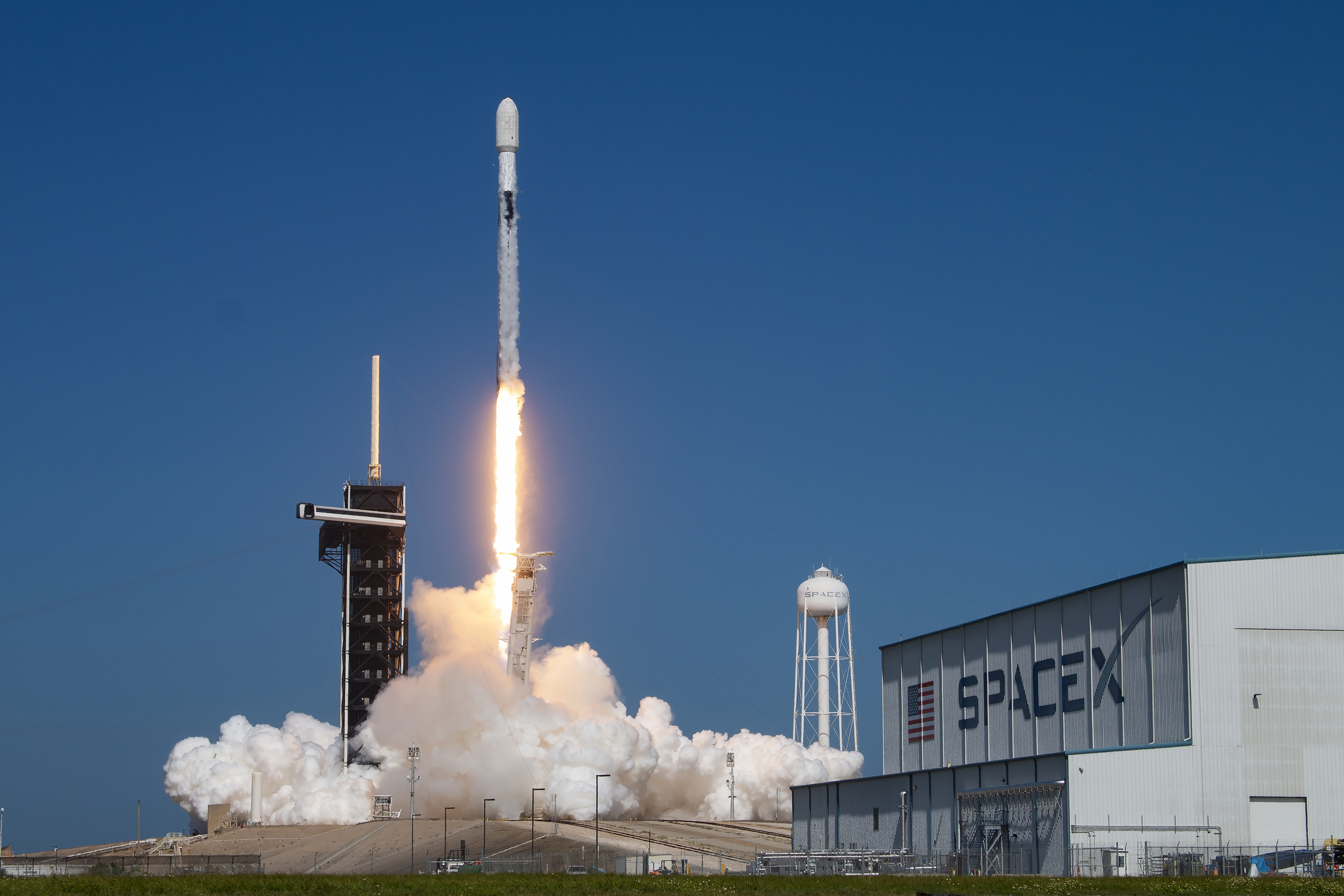
Falcon 9 Block 5 | Koreasat 6A
SpaceX | United States of AmericaKennedy Space Center, FL, USA
Nov. 11, 2024, 5:22 p.m.
Status: Launch Successful
Mission:
The Koreasat 6A spacecraft, built by Thales Alenia Space, will have 20 transponders for fixed satellite services and six for TV broadcasting to replace the Koreasat 6 launched in 2010. Koreasat 6A will be based on the manufacturer’s Spacebus 4000B2 platform and is expected to weigh about 3.5 metric tons at launch. It will be designed to operate for at least 15 years.
Geostationary Transfer Orbit B1067 - Flight Proven ( ) Landing Zone 1Falcon 9 Block 5 | Starlink Group 9-10
SpaceX | United States of AmericaVandenberg SFB, CA, USA
Nov. 9, 2024, 6:14 a.m.
Falcon 9 Block 5 | Starlink Group 6-77
SpaceX | United States of AmericaCape Canaveral SFS, FL, USA
Nov. 7, 2024, 8:19 p.m.
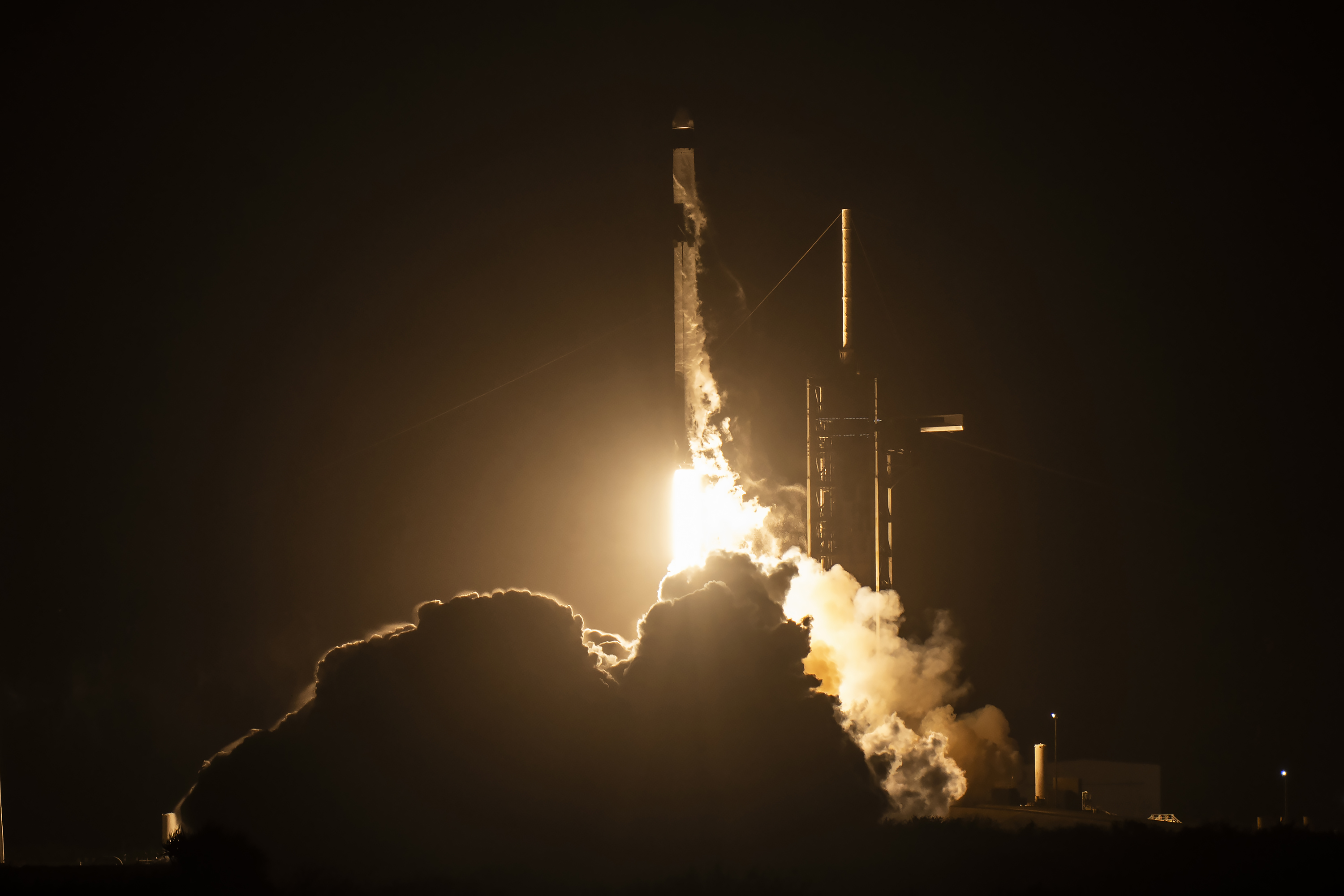
Falcon 9 Block 5 | Dragon CRS-2 SpX-31
SpaceX | United States of AmericaKennedy Space Center, FL, USA
Nov. 5, 2024, 2:29 a.m.
Status: Launch Successful
Mission:
31st commercial resupply services mission to the International Space Station operated by SpaceX. The flight will be conducted under the second Commercial Resupply Services contract with NASA. Cargo Dragon 2 brings supplies and payloads, including critical materials to directly support science and research investigations that occur onboard the orbiting laboratory.
Low Earth Orbit B1083 - Flight Proven ( ) Landing Zone 1Falcon 9 Block 5 | Starlink Group 10-13
SpaceX | United States of AmericaCape Canaveral SFS, FL, USA
Oct. 30, 2024, 9:10 p.m.
Falcon 9 Block 5 | Starlink Group 9-9
SpaceX | United States of AmericaVandenberg SFB, CA, USA
Oct. 30, 2024, 12:07 p.m.
Falcon 9 Block 5 | Starlink Group 10-8
SpaceX | United States of AmericaCape Canaveral SFS, FL, USA
Oct. 26, 2024, 9:47 p.m.
Falcon 9 Block 5 | NROL-167
SpaceX | United States of AmericaVandenberg SFB, CA, USA
Oct. 24, 2024, 5:14 p.m.
Status: Launch Successful
Mission:
Fourth batch of satellites for a reconnaissance satellite constellation built by SpaceX and Northrop Grumman for the National Reconnaissance Office to provide imaging and other reconnaissance capabilities.
Low Earth Orbit B1063 - Flight Proven ( ) Of Course I Still Love YouFalcon 9 Block 5 | Starlink Group 6-61
SpaceX | United States of AmericaCape Canaveral SFS, FL, USA
Oct. 23, 2024, 9:47 p.m.
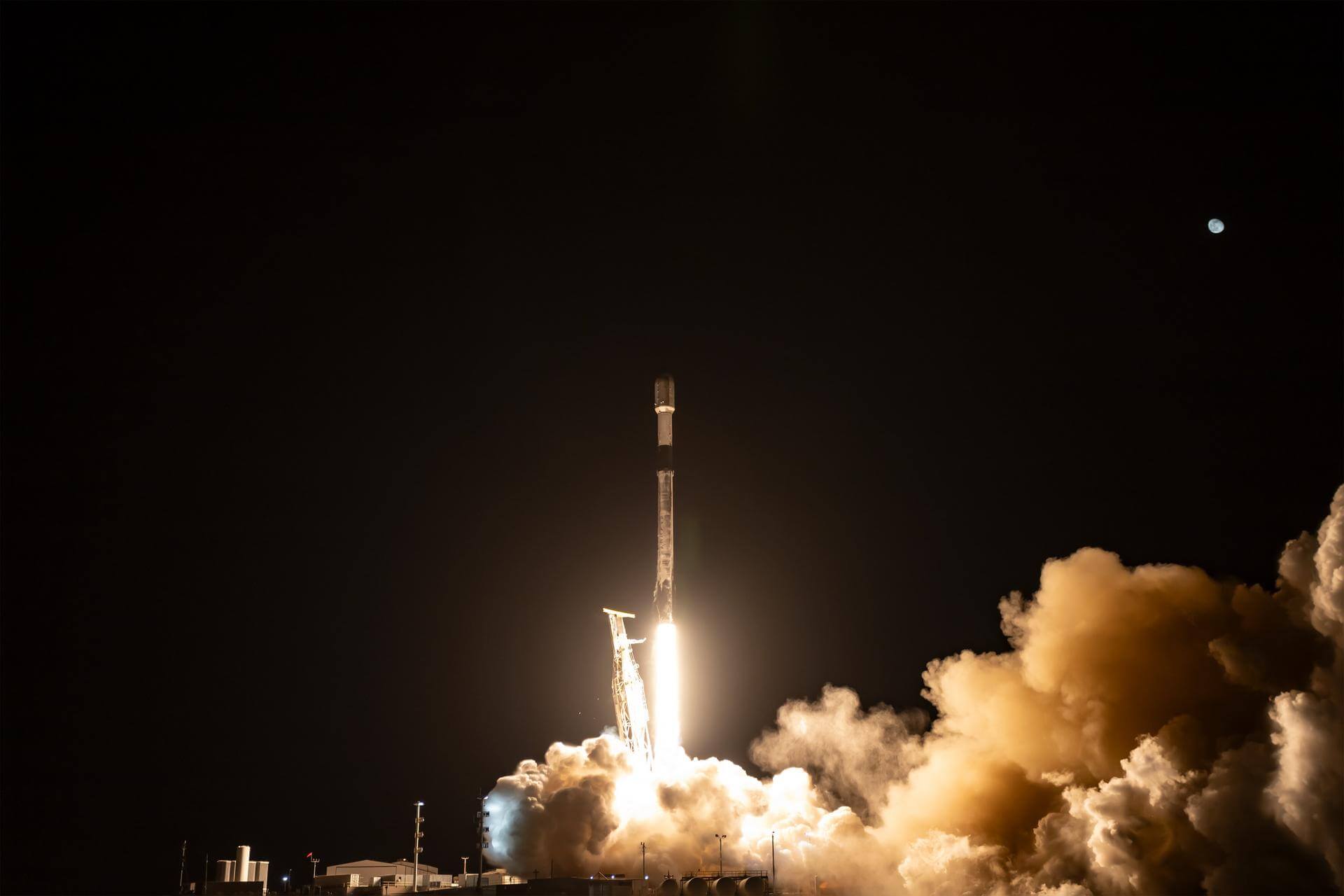
Falcon 9 Block 5 | OneWeb 20
SpaceX | United States of AmericaVandenberg SFB, CA, USA
Oct. 20, 2024, 5:13 a.m.
Status: Launch Successful
Mission:
A batch of 20 satellites for the OneWeb satellite constellation, which is intended to provide global Internet broadband service for individual consumers. The constellation is planned to have around 648 microsatellites (of which 60 are spares), around 150 kg each, operating in Ku-band from low Earth orbit.
Polar Orbit B1082 - Flight Proven ( ) Landing Zone 4Falcon 9 Block 5 | Starlink Group 8-19
SpaceX | United States of AmericaCape Canaveral SFS, FL, USA
Oct. 18, 2024, 11:31 p.m.
Falcon 9 Block 5 | Starlink Group 9-7
SpaceX | United States of AmericaVandenberg SFB, CA, USA
Oct. 15, 2024, 8:21 a.m.
Falcon 9 Block 5 | Starlink Group 10-10
SpaceX | United States of AmericaCape Canaveral SFS, FL, USA
Oct. 15, 2024, 6:10 a.m.
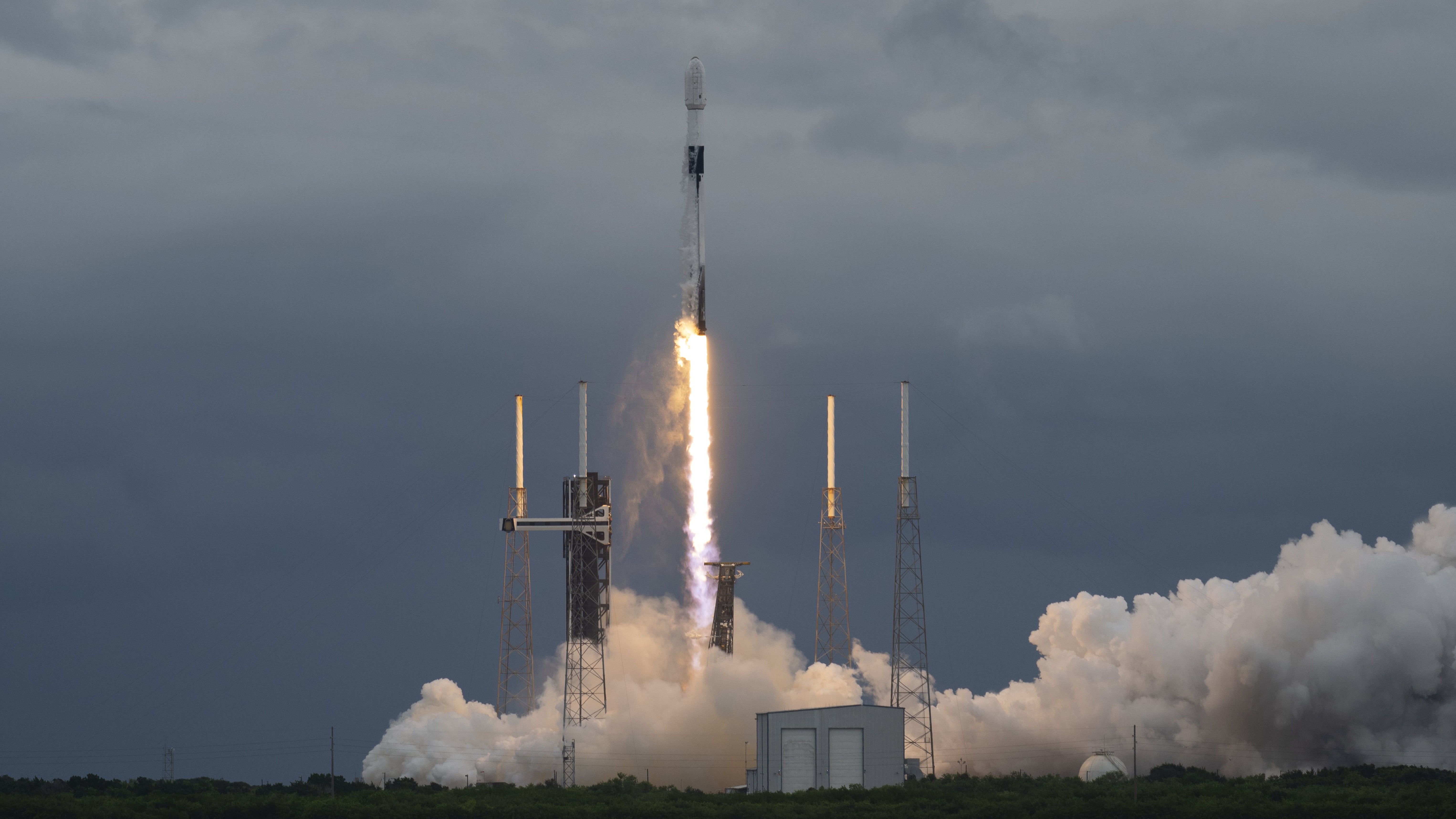
Falcon 9 Block 5 | Hera
SpaceX | United States of AmericaCape Canaveral SFS, FL, USA
Oct. 7, 2024, 2:52 p.m.
Status: Launch Successful
Mission:
Hera is a space mission in development at the European Space Agency in its Space Safety program. Its primary objective is to study the Didymos binary asteroid system that was impacted by DART and contribute to validation of the kinetic impact method to deviate a near-Earth asteroid in a colliding trajectory with Earth. It will measure the size and the morphology of the crater created by and momentum transferred by an artificial projectile impacting an asteroid, which will allow measuring the efficiency of the deflection produced by the impact. It will also analyze the expanding debris cloud caused by the impact.
Asteroid B1061 - Flight Proven ( ) Atlantic OceanFalcon 9 Block 5 | Crew-9
SpaceX | United States of AmericaCape Canaveral SFS, FL, USA
Sept. 28, 2024, 5:17 p.m.
Falcon 9 Block 5 | Starlink Group 9-8
SpaceX | United States of AmericaVandenberg SFB, CA, USA
Sept. 25, 2024, 4:01 a.m.
Falcon 9 Block 5 | Starlink Group 9-17
SpaceX | United States of AmericaVandenberg SFB, CA, USA
Sept. 20, 2024, 1:50 p.m.
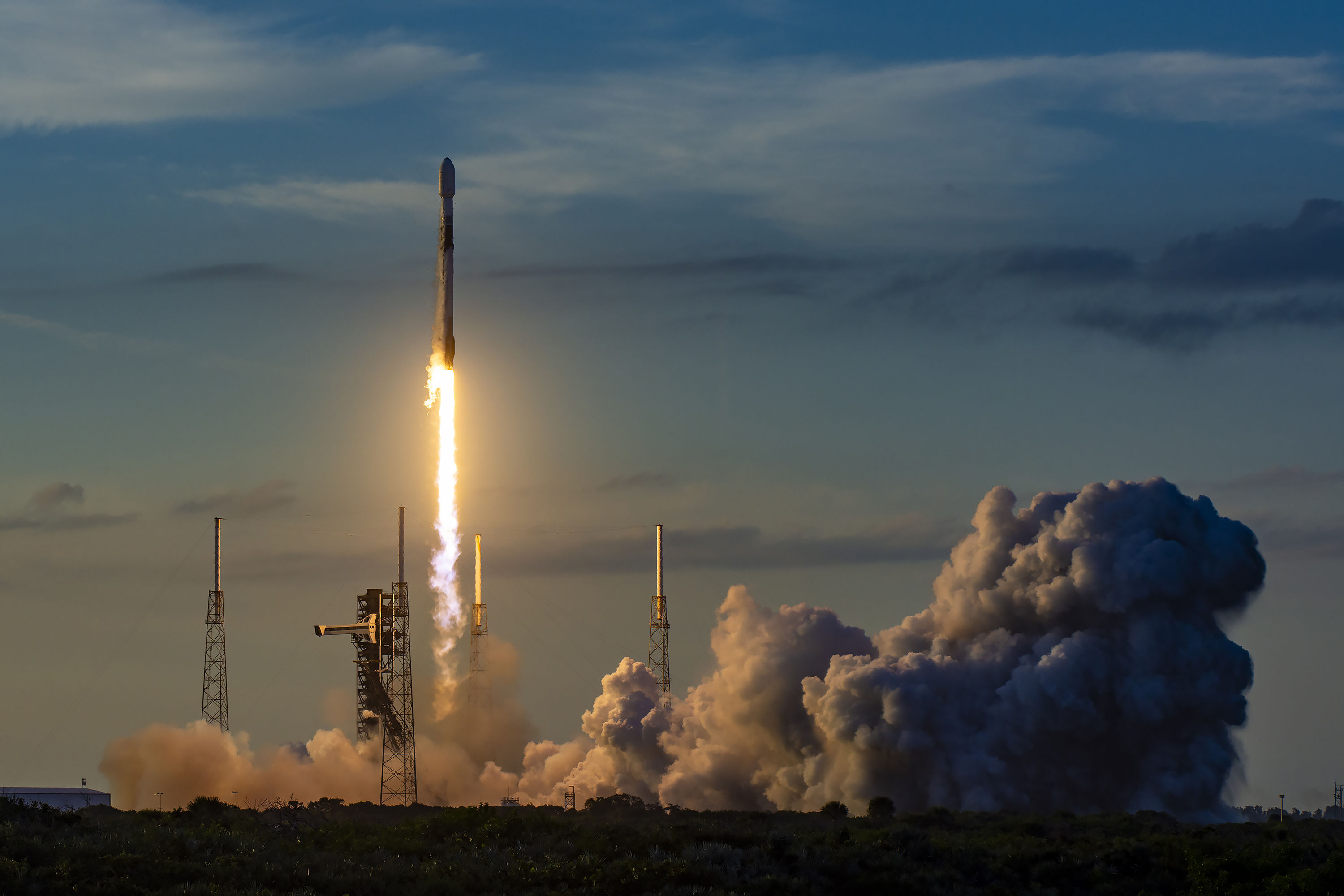
Falcon 9 Block 5 | Galileo L13 (FOC FM26 & FM32)
SpaceX | United States of AmericaCape Canaveral SFS, FL, USA
Sept. 17, 2024, 10:50 p.m.
Status: Launch Successful
Mission:
Two satellites for Europe's Galileo navigation system. Originally planned for launch on Soyuz-ST and then Ariane 6 but both were unavailable. Galileo provides Europe with an alternative to the American GPS and Russian GLONASS constellations, but will be interoperable with both systems.
Medium Earth Orbit B1067 - Flight Proven ( ) Just Read the InstructionsFalcon 9 Block 5 | Starlink Group 9-6
SpaceX | United States of AmericaVandenberg SFB, CA, USA
Sept. 13, 2024, 1:45 a.m.
Falcon 9 Block 5 | BlueBird Block 1
SpaceX | United States of AmericaCape Canaveral SFS, FL, USA
Sept. 12, 2024, 8:52 a.m.
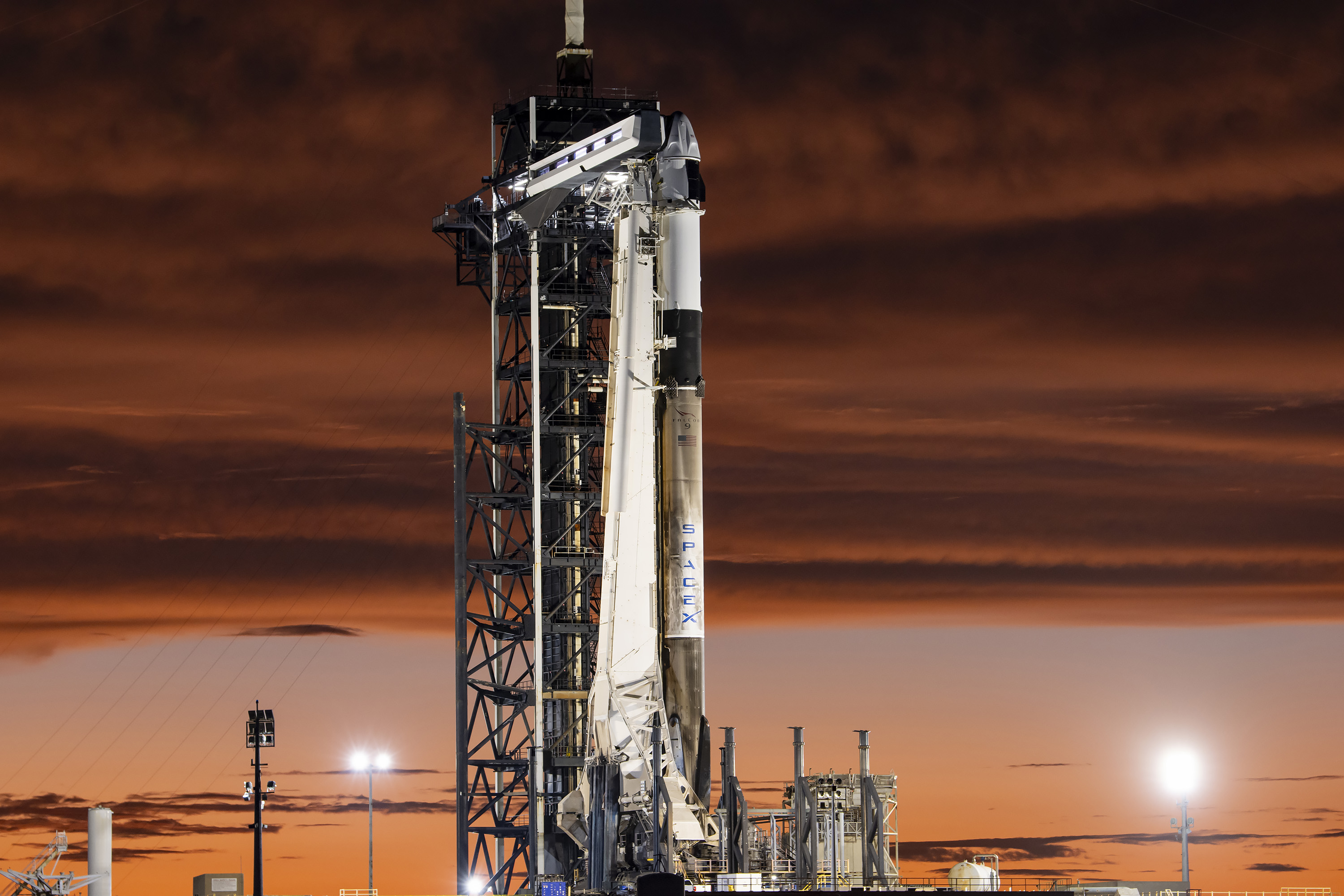
Falcon 9 Block 5 | Polaris Dawn
SpaceX | United States of AmericaKennedy Space Center, FL, USA
Sept. 10, 2024, 9:23 a.m.
Status: Launch Successful
Mission:
First mission of the privately funded Polaris program. The goal of this mission, lasting up to five days in orbit, is to fly higher than previous Dragon missions, perform the first-ever commercial EVA with SpaceX-designed spacesuits, orbit through portions of the Van Allen radiation belt, conduct medical research, and test laser-based Starlink communications in space.
Low Earth Orbit B1083 - Flight Proven ( ) Just Read the Instructions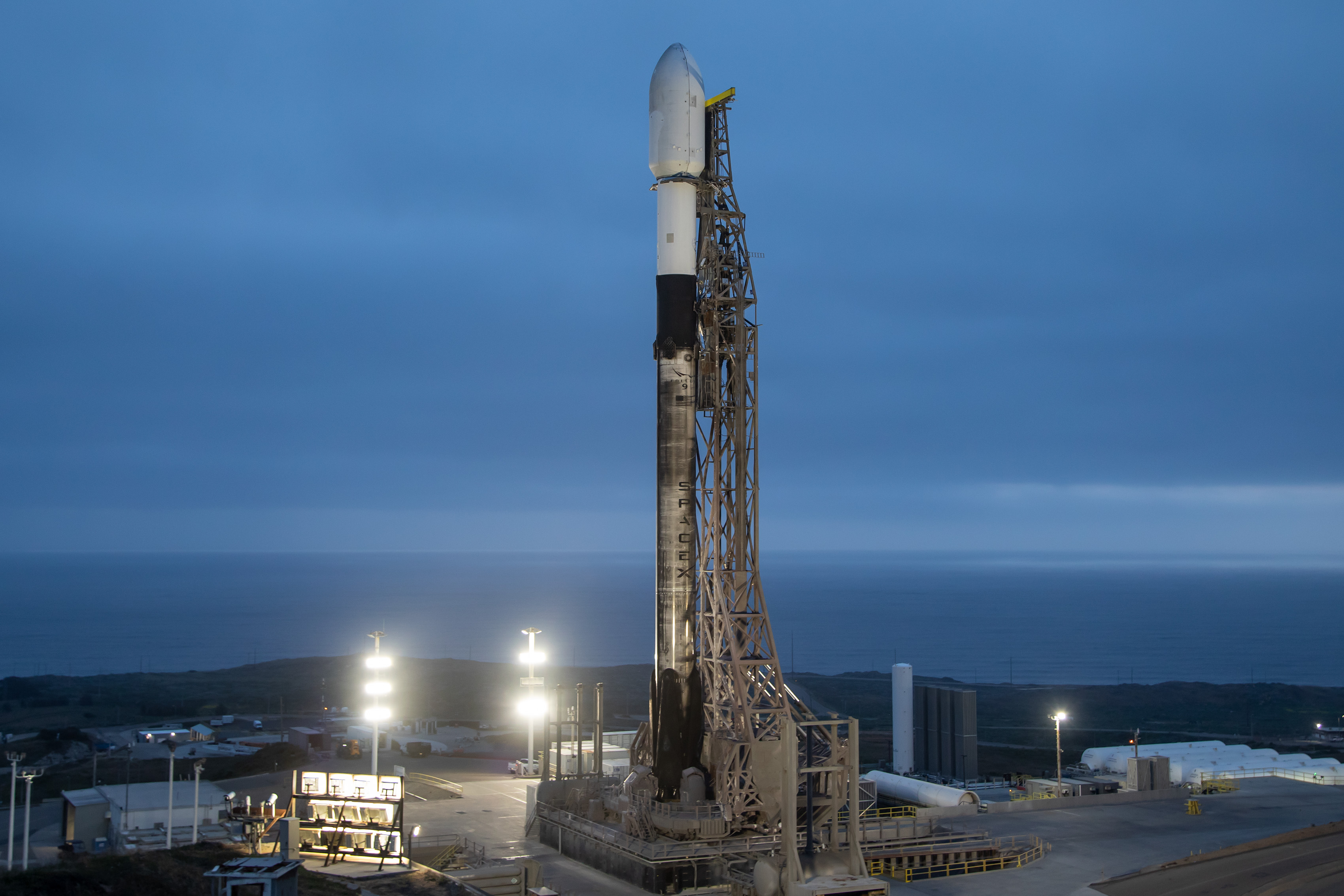
Falcon 9 Block 5 | NROL-113
SpaceX | United States of AmericaVandenberg SFB, CA, USA
Sept. 6, 2024, 3:20 a.m.
Status: Launch Successful
Mission:
Third batch of satellites for a reconnaissance satellite constellation built by SpaceX and Northrop Grumman for the National Reconnaissance Office to provide imaging and other reconnaissance capabilities.
Low Earth Orbit B1063 - Flight Proven ( ) Of Course I Still Love YouFalcon 9 Block 5 | Starlink Group 8-11
SpaceX | United States of AmericaCape Canaveral SFS, FL, USA
Sept. 5, 2024, 3:33 p.m.
Falcon 9 Block 5 | Starlink Group 9-5
SpaceX | United States of AmericaVandenberg SFB, CA, USA
Aug. 31, 2024, 8:48 a.m.
Falcon 9 Block 5 | Starlink Group 8-10
SpaceX | United States of AmericaCape Canaveral SFS, FL, USA
Aug. 31, 2024, 7:43 a.m.
Falcon 9 Block 5 | Starlink Group 8-6
SpaceX | United States of AmericaCape Canaveral SFS, FL, USA
Aug. 28, 2024, 7:48 a.m.
Falcon 9 Block 5 | Starlink Group 10-5
SpaceX | United States of AmericaCape Canaveral SFS, FL, USA
Aug. 20, 2024, 1:20 p.m.
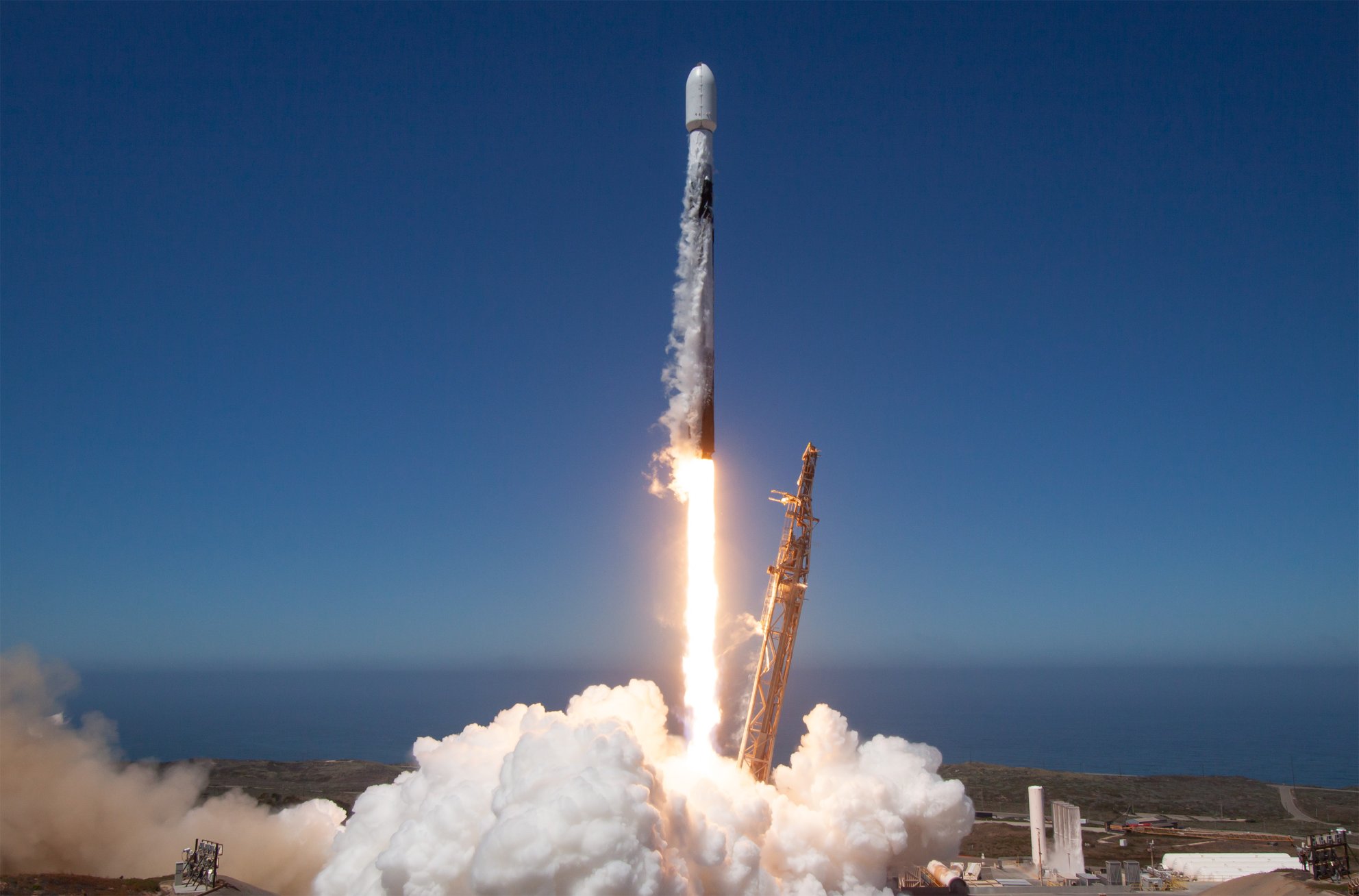
Falcon 9 Block 5 | Transporter 11 (Dedicated SSO Rideshare)
SpaceX | United States of AmericaVandenberg SFB, CA, USA
Aug. 16, 2024, 6:56 p.m.
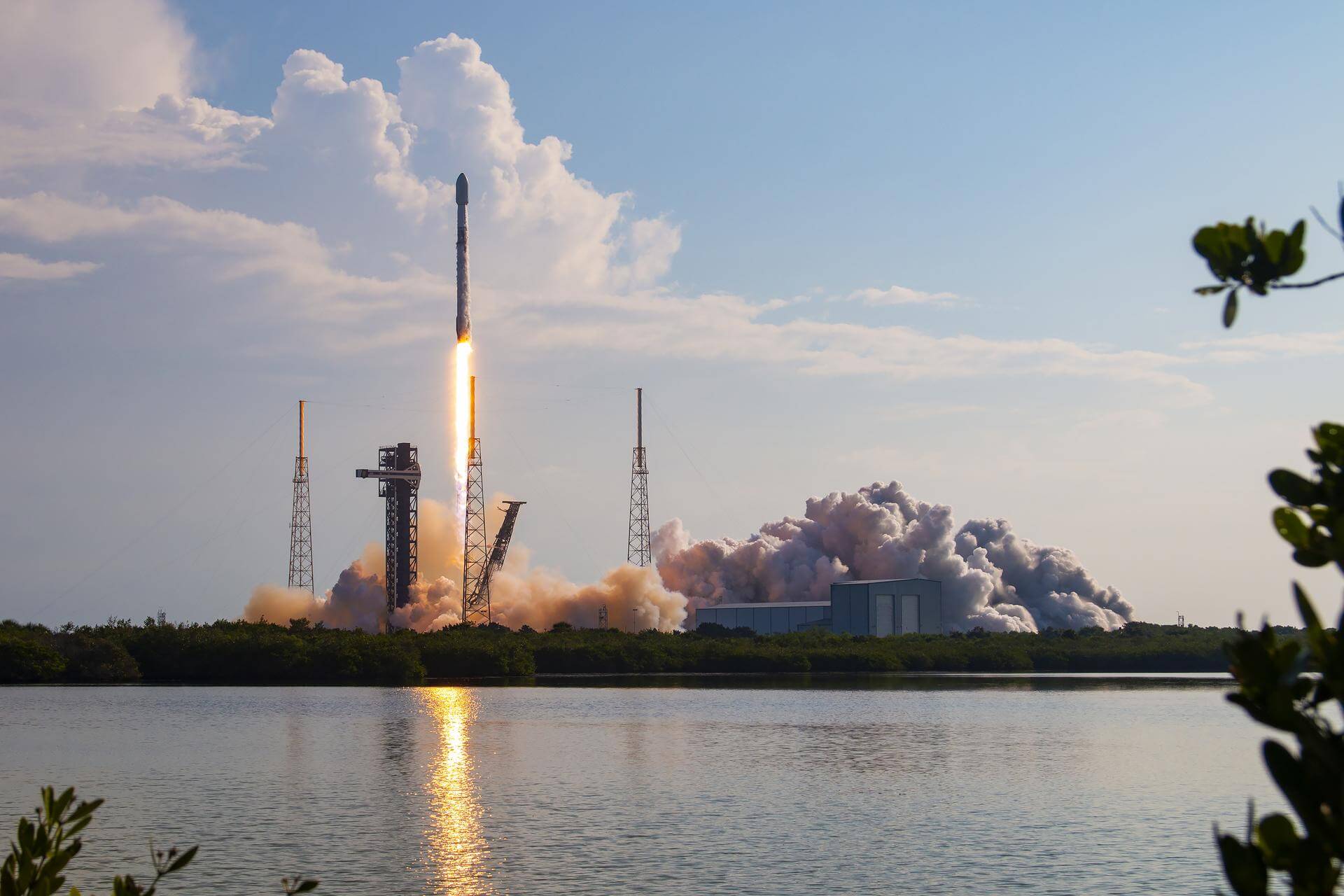
Falcon 9 Block 5 | WorldView Legion 3 & 4
SpaceX | United States of AmericaCape Canaveral SFS, FL, USA
Aug. 15, 2024, 1 p.m.
Status: Launch Successful
Mission:
WorldView Legion is a constellation of Earth observation satellites built and operated by Maxar. Constellation is planned to consist of 6 satellites in both polar and mid-inclination orbits, providing 30 cm-class resolution.
Low Earth Orbit B1076 - Flight Proven ( ) Landing Zone 1Falcon 9 Block 5 | Starlink Group 10-7
SpaceX | United States of AmericaKennedy Space Center, FL, USA
Aug. 12, 2024, 10:37 a.m.
Falcon 9 Block 5 | Arctic Satellite Broadband Mission (ASBM)
SpaceX | United States of AmericaVandenberg SFB, CA, USA
Aug. 12, 2024, 2:02 a.m.
Status: Launch Successful
Mission:
ASBM (Arctic Satellite Broadband Mission) 1 & 2 are two twin satellites built by Northrop Grumman for Space Norway, in cooperation with Inmarsat and the Norwegian Ministry of Defence. They are designed to bring mobile broadband coverage in the Arctic for both civilians and military. The US Air Force provides the Extremely High Frequency eXtended Data Rate payloads on ASBM satellites as part of the Enhanced Polar System Recapitalization (EPS-R) program.
Elliptical Orbit B1061 - Flight Proven ( ) Of Course I Still Love YouFalcon 9 Block 5 | Starlink Group 8-3
SpaceX | United States of AmericaCape Canaveral SFS, FL, USA
Aug. 10, 2024, 12:50 p.m.
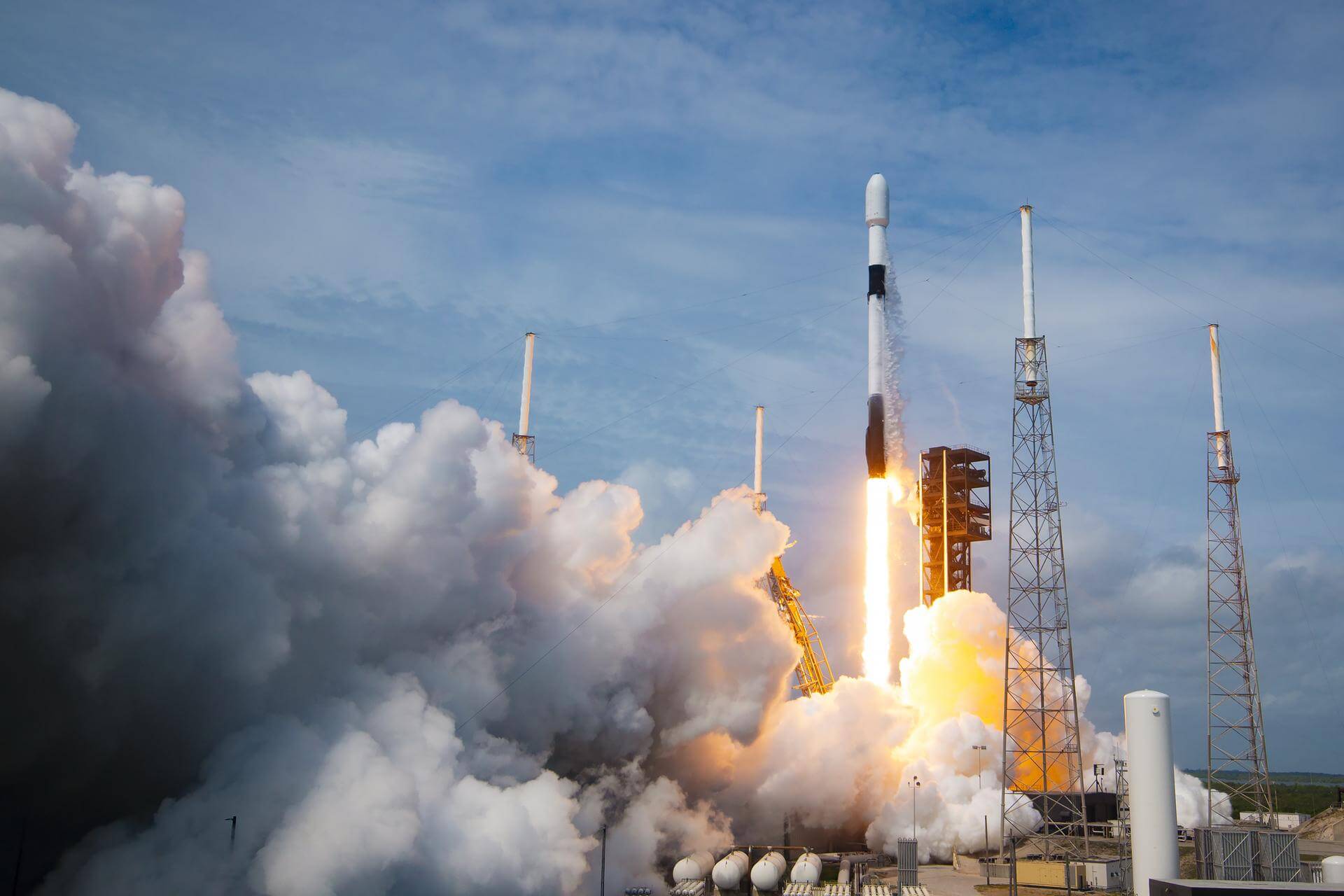
Falcon 9 Block 5 | Cygnus CRS-2 NG-21 (S.S. Francis R. “Dick” Scobee)
SpaceX | United States of AmericaCape Canaveral SFS, FL, USA
Aug. 4, 2024, 3:02 p.m.
Status: Launch Successful
Mission:
This is the 21st flight of the Orbital ATK's uncrewed resupply spacecraft Cygnus and its 20th flight to the International Space Station under the Commercial Resupply Services contract with NASA.
Low Earth Orbit B1080 - Flight Proven ( ) Landing Zone 1Falcon 9 Block 5 | Starlink Group 11-1
SpaceX | United States of AmericaVandenberg SFB, CA, USA
Aug. 4, 2024, 7:24 a.m.
Falcon 9 Block 5 | Starlink Group 10-6
SpaceX | United States of AmericaKennedy Space Center, FL, USA
Aug. 2, 2024, 5:01 a.m.
Falcon 9 Block 5 | Starlink Group 9-4
SpaceX | United States of AmericaVandenberg SFB, CA, USA
July 28, 2024, 9:22 a.m.
Falcon 9 Block 5 | Starlink Group 10-4
SpaceX | United States of AmericaCape Canaveral SFS, FL, USA
July 28, 2024, 5:09 a.m.
Falcon 9 Block 5 | Starlink Group 10-9
SpaceX | United States of AmericaKennedy Space Center, FL, USA
July 27, 2024, 5:45 a.m.
Falcon 9 Block 5 | Starlink Group 9-3
SpaceX | United States of AmericaVandenberg SFB, CA, USA
July 12, 2024, 2:35 a.m.
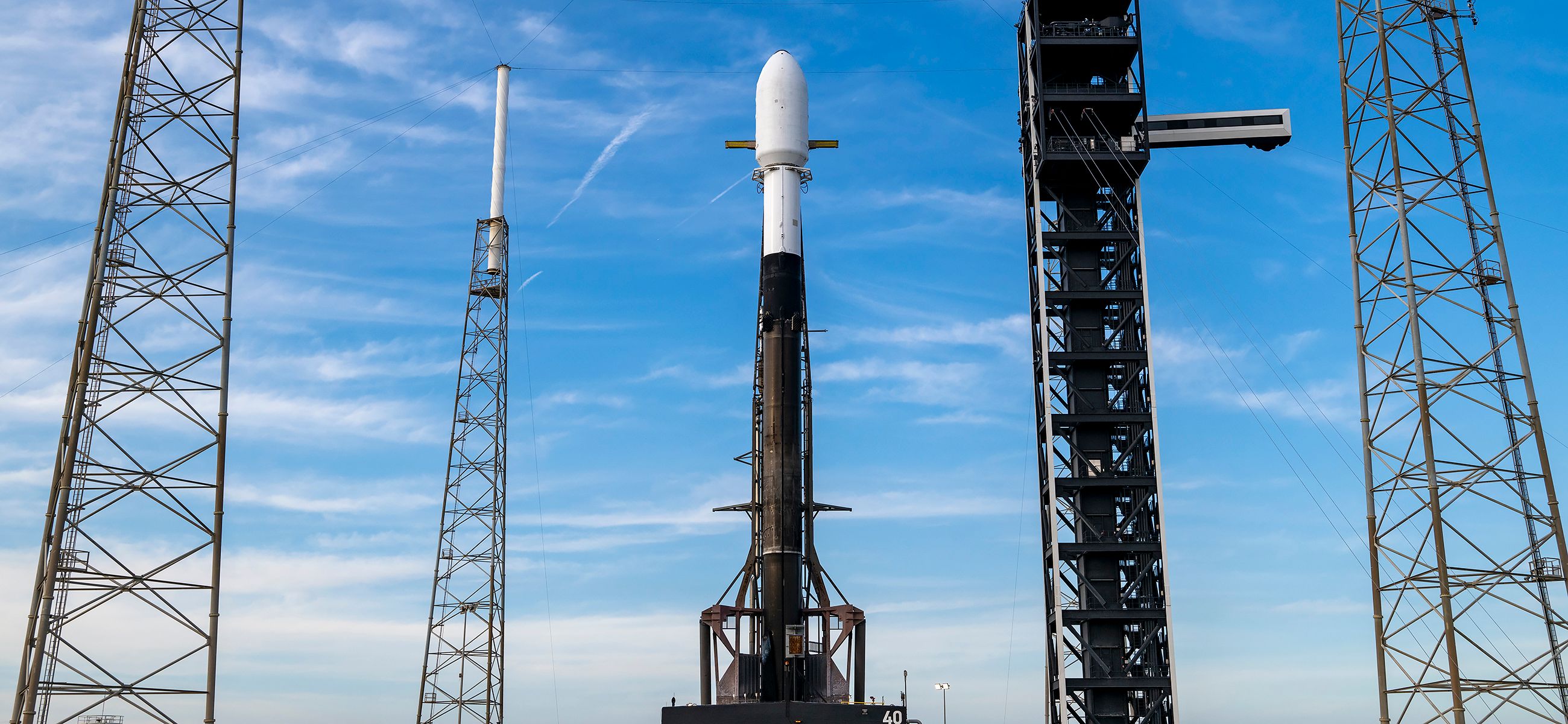
Falcon 9 Block 5 | Türksat 6A
SpaceX | United States of AmericaCape Canaveral SFS, FL, USA
July 8, 2024, 11:30 p.m.
Status: Launch Successful
Mission:
Türksat 6A is Turkey's first domestically manufactured geostationary communications satellite. It is to reside in 42° East orbital slot, providing services to customers in Turkey, as well as in Europe, Northern coast of Africa, Middle East, India and Indonesia.
Geostationary Transfer Orbit B1076 - Flight Proven ( ) Just Read the InstructionsFalcon 9 Block 5 | Starlink Group 8-9
SpaceX | United States of AmericaCape Canaveral SFS, FL, USA
July 3, 2024, 8:55 a.m.
Falcon 9 Block 5 | NROL-186
SpaceX | United States of AmericaVandenberg SFB, CA, USA
June 29, 2024, 3:14 a.m.
Status: Launch Successful
Mission:
Second batch of satellites for a reconnaissance satellite constellation built by SpaceX and Northrop Grumman for the National Reconnaissance Office to provide imaging and other reconnaissance capabilities.
Low Earth Orbit B1081 - Flight Proven ( ) Of Course I Still Love YouFalcon 9 Block 5 | Starlink Group 10-3
SpaceX | United States of AmericaCape Canaveral SFS, FL, USA
June 27, 2024, 11:14 a.m.
Falcon 9 Block 5 | Starlink Group 9-2
SpaceX | United States of AmericaVandenberg SFB, CA, USA
June 24, 2024, 3:47 a.m.
Falcon 9 Block 5 | Starlink Group 10-2
SpaceX | United States of AmericaCape Canaveral SFS, FL, USA
June 23, 2024, 5:15 p.m.
Falcon 9 Block 5 | Astra 1P/SES-24
SpaceX | United States of AmericaCape Canaveral SFS, FL, USA
June 20, 2024, 9:35 p.m.
Status: Launch Successful
Mission:
ASTRA 1P, a classic wide-beam satellite, will support SES’s prime TV neighbourhood and enable content owners, private and public broadcasters across Germany, France and Spain to continue broadcasting satellite TV channels in the highest-picture quality in the most cost-efficient manner. It will be based on the full electric and powerful Spacebus NEO platform developed by Thales Alenia Space and already flight proven in orbit.
Geostationary Transfer Orbit B1080 - Flight Proven ( ) Just Read the InstructionsFalcon 9 Block 5 | Starlink Group 9-1
SpaceX | United States of AmericaVandenberg SFB, CA, USA
June 19, 2024, 3:40 a.m.
Falcon 9 Block 5 | Starlink Group 8-8
SpaceX | United States of AmericaVandenberg SFB, CA, USA
June 8, 2024, 12:58 p.m.
Falcon 9 Block 5 | Starlink Group 10-1
SpaceX | United States of AmericaCape Canaveral SFS, FL, USA
June 8, 2024, 1:56 a.m.
Falcon 9 Block 5 | Starlink Group 8-5
SpaceX | United States of AmericaCape Canaveral SFS, FL, USA
June 5, 2024, 2:16 a.m.
Falcon 9 Block 5 | Starlink Group 6-64
SpaceX | United States of AmericaCape Canaveral SFS, FL, USA
June 1, 2024, 2:37 a.m.
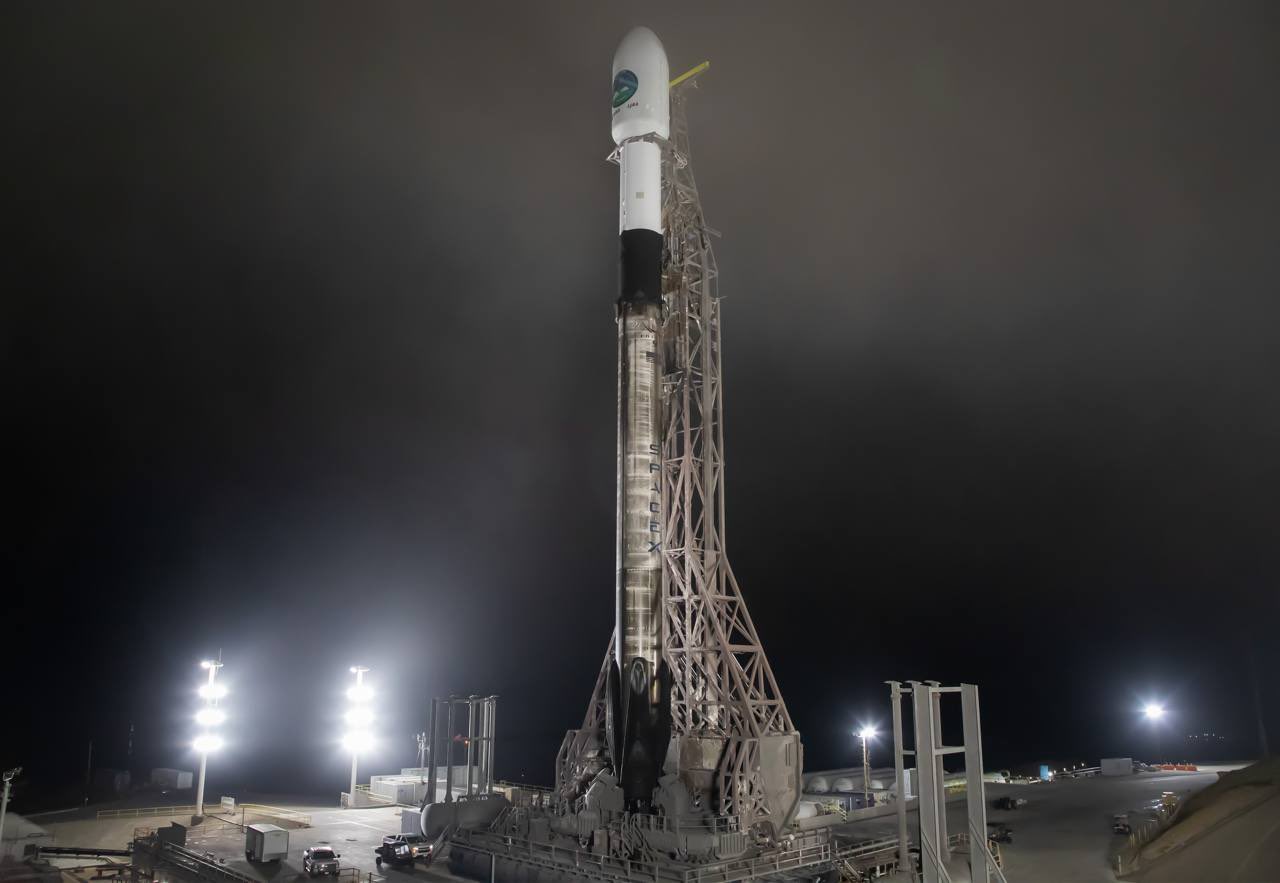
Falcon 9 Block 5 | EarthCARE
SpaceX | United States of AmericaVandenberg SFB, CA, USA
May 28, 2024, 10:20 p.m.
Status: Launch Successful
Mission:
EarthCARE (Earth Cloud Aerosol and Radiation Explorer) is a joint mission of ESA and JAXA. The main goal of the mission is the observation and characterization of clouds and aerosols as well as measuring the reflected solar radiation and the infrared radiation emitted from Earth's surface and atmosphere.
Sun-Synchronous Orbit B1081 - Flight Proven ( ) Landing Zone 4Falcon 9 Block 5 | Starlink Group 6-60
SpaceX | United States of AmericaCape Canaveral SFS, FL, USA
May 28, 2024, 2:24 p.m.
Falcon 9 Block 5 | Starlink Group 6-63
SpaceX | United States of AmericaKennedy Space Center, FL, USA
May 24, 2024, 2:45 a.m.
Falcon 9 Block 5 | Starlink Group 6-62
SpaceX | United States of AmericaCape Canaveral SFS, FL, USA
May 23, 2024, 2:35 a.m.
Falcon 9 Block 5 | NROL-146
SpaceX | United States of AmericaVandenberg SFB, CA, USA
May 22, 2024, 8 a.m.
Status: Launch Successful
Mission:
First batch of satellites for a reconnaissance satellite constellation built by SpaceX and Northrop Grumman for the National Reconnaissance Office to provide imaging and other reconnaissance capabilities.
Low Earth Orbit B1071 - Flight Proven ( ) Of Course I Still Love YouFalcon 9 Block 5 | Starlink Group 6-59
SpaceX | United States of AmericaCape Canaveral SFS, FL, USA
May 18, 2024, 12:32 a.m.
Falcon 9 Block 5 | Starlink Group 8-7
SpaceX | United States of AmericaVandenberg SFB, CA, USA
May 14, 2024, 6:39 p.m.
Falcon 9 Block 5 | Starlink Group 6-58
SpaceX | United States of AmericaCape Canaveral SFS, FL, USA
May 13, 2024, 12:53 a.m.
Falcon 9 Block 5 | Starlink Group 8-2
SpaceX | United States of AmericaVandenberg SFB, CA, USA
May 10, 2024, 4:30 a.m.
Falcon 9 Block 5 | Starlink Group 6-56
SpaceX | United States of AmericaKennedy Space Center, FL, USA
May 8, 2024, 6:42 p.m.
Falcon 9 Block 5 | Starlink Group 6-57
SpaceX | United States of AmericaCape Canaveral SFS, FL, USA
May 6, 2024, 6:14 p.m.
Falcon 9 Block 5 | Starlink Group 6-55
SpaceX | United States of AmericaCape Canaveral SFS, FL, USA
May 3, 2024, 2:37 a.m.
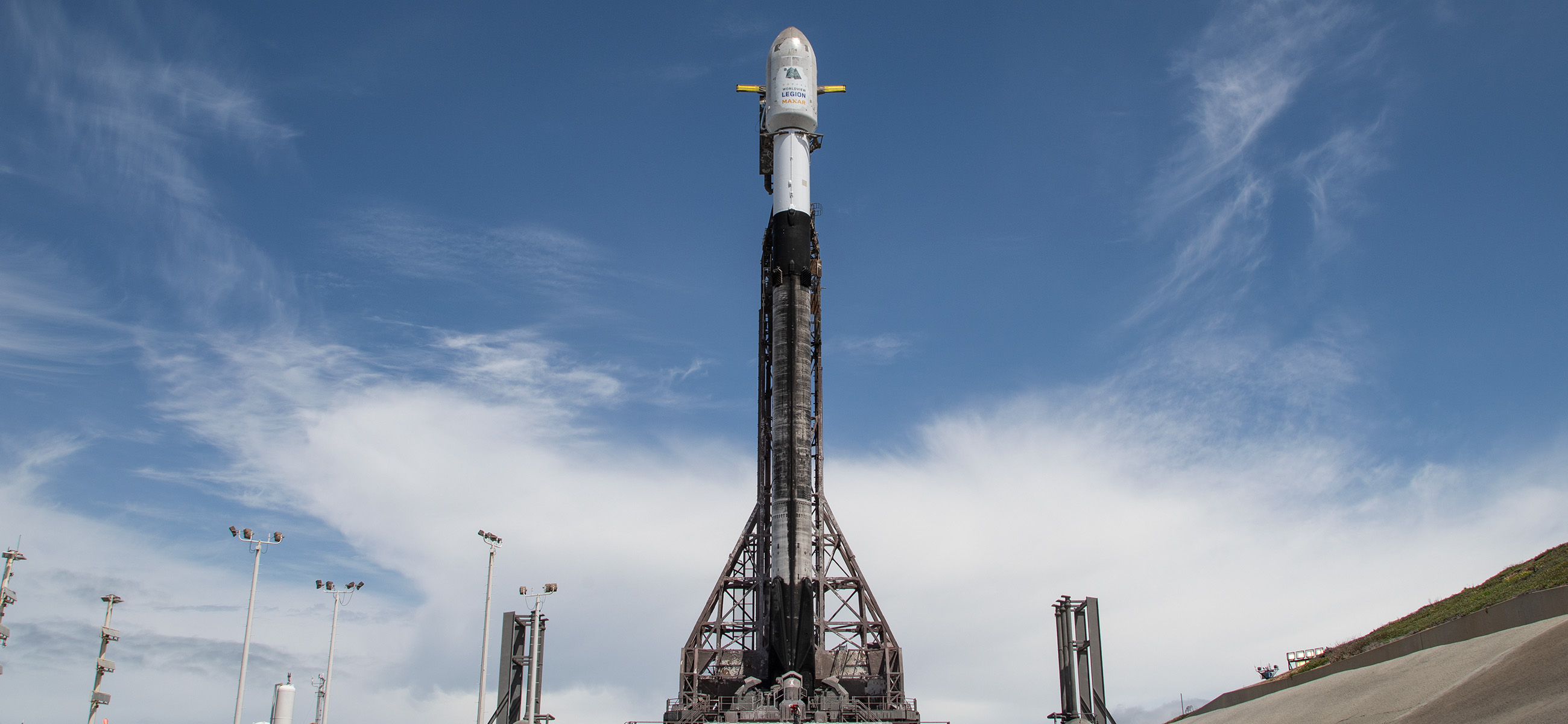
Falcon 9 Block 5 | WorldView Legion 1 & 2
SpaceX | United States of AmericaVandenberg SFB, CA, USA
May 2, 2024, 6:36 p.m.
Status: Launch Successful
Mission:
WorldView Legion is a constellation of Earth observation satellites built and operated by Maxar. Constellation is planned to consist of 6 satellites in both polar and mid-inclination orbits, providing 30 cm-class resolution.
Sun-Synchronous Orbit B1061 - Flight Proven ( ) Landing Zone 4Falcon 9 Block 5 | Starlink Group 6-54
SpaceX | United States of AmericaCape Canaveral SFS, FL, USA
April 28, 2024, 10:08 p.m.
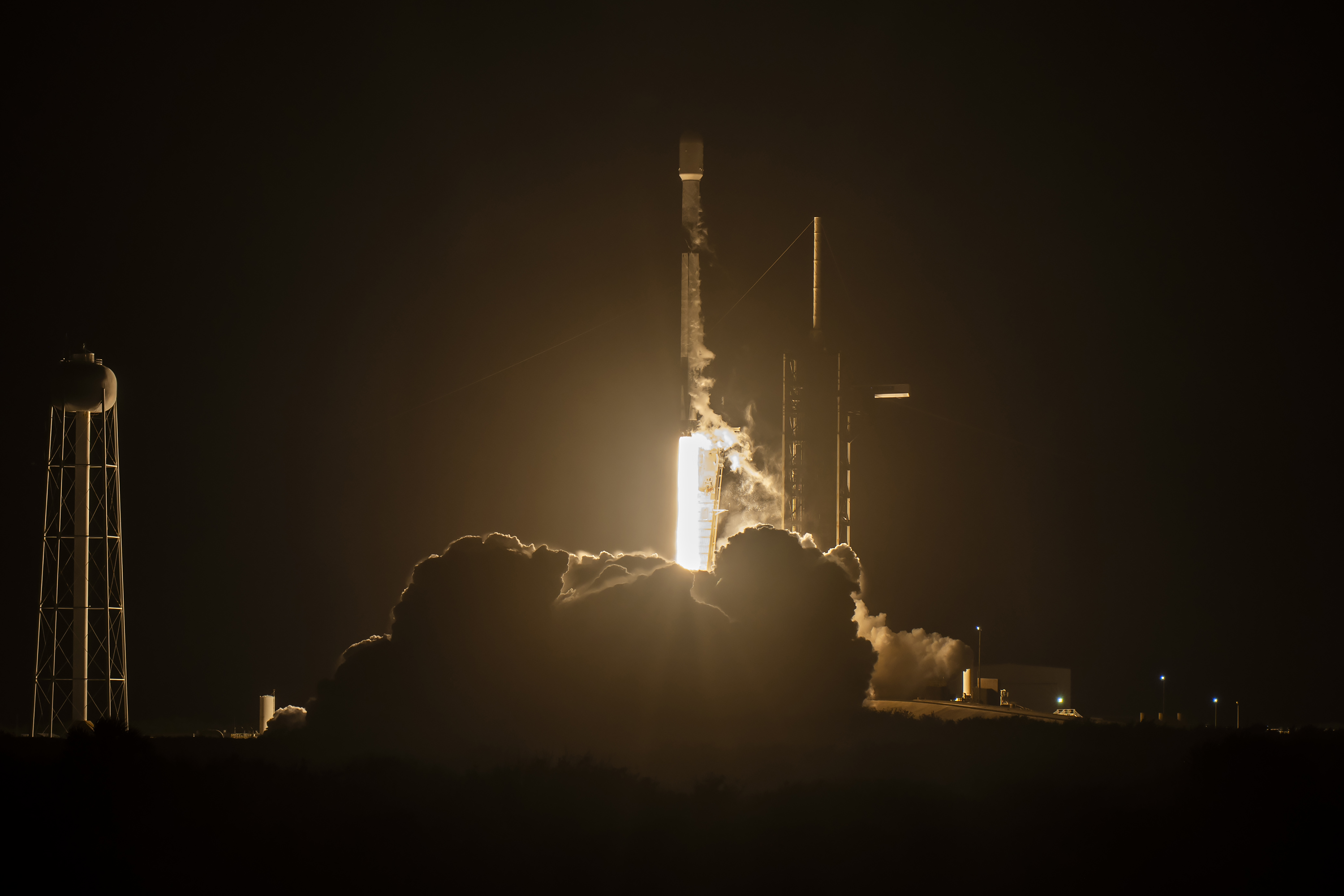
Falcon 9 Block 5 | Galileo L12 (FOC FM25 & FM27)
SpaceX | United States of AmericaKennedy Space Center, FL, USA
April 28, 2024, 12:34 a.m.
Status: Launch Successful
Mission:
Two satellites for Europe's Galileo navigation system. Originally planned for launch on Soyuz-ST and then Ariane 6 but both were unavailable. Galileo provides Europe with an alternative to the American GPS and Russian GLONASS constellations, but will be interoperable with both systems.
Medium Earth Orbit B1060 - Flight Proven ( ) Atlantic OceanFalcon 9 Block 5 | Starlink Group 6-53
SpaceX | United States of AmericaCape Canaveral SFS, FL, USA
April 23, 2024, 10:17 p.m.
Falcon 9 Block 5 | Starlink Group 6-52
SpaceX | United States of AmericaCape Canaveral SFS, FL, USA
April 18, 2024, 10:40 p.m.
Falcon 9 Block 5 | Starlink Group 6-51
SpaceX | United States of AmericaKennedy Space Center, FL, USA
April 17, 2024, 9:26 p.m.
Falcon 9 Block 5 | Starlink Group 6-49
SpaceX | United States of AmericaCape Canaveral SFS, FL, USA
April 13, 2024, 1:40 a.m.
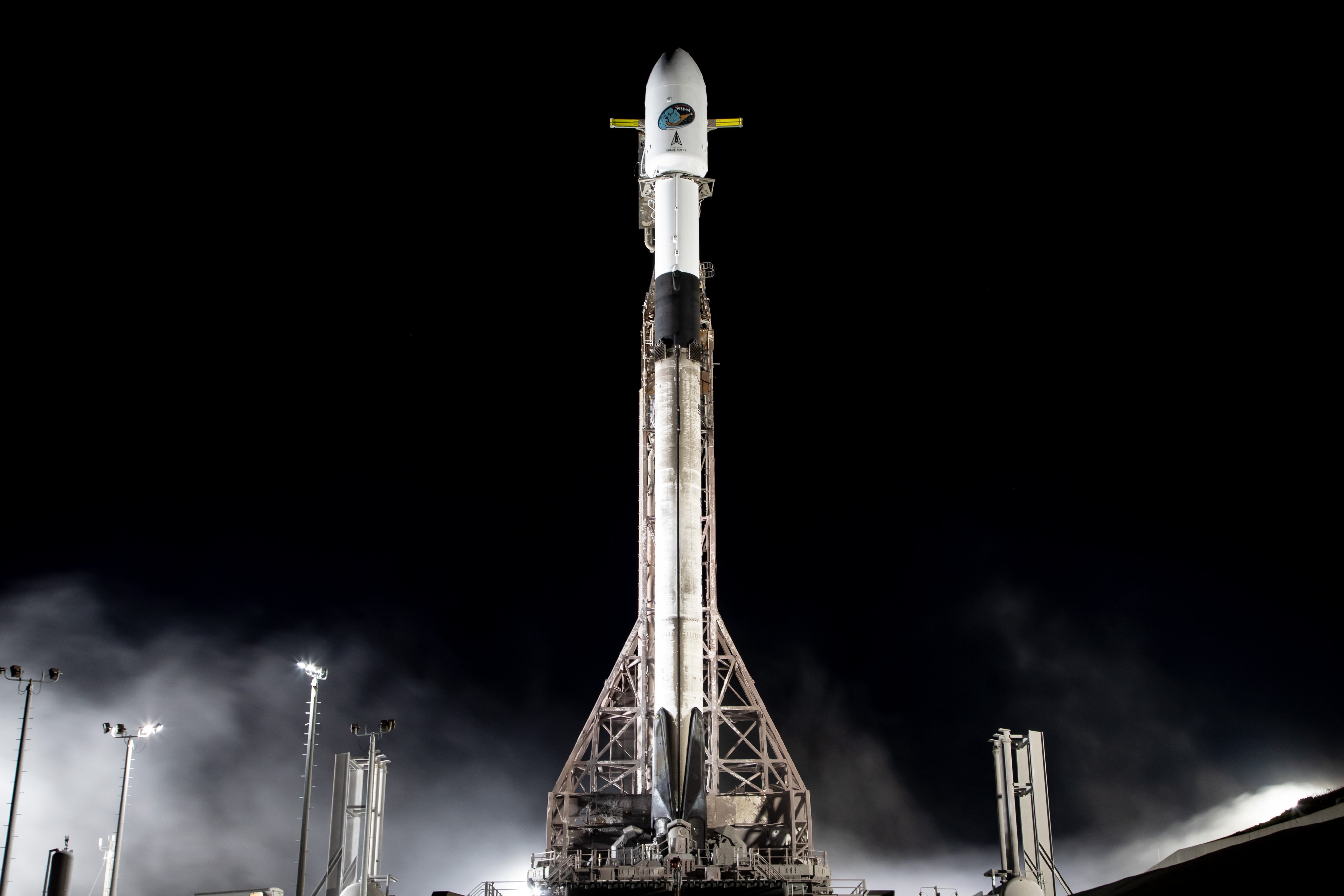
Falcon 9 Block 5 | USSF-62
SpaceX | United States of AmericaVandenberg SFB, CA, USA
April 11, 2024, 2:25 p.m.
Status: Launch Successful
Mission:
First Weather System Follow-on (WSF) satellite. WSF-M (Weather System Follow-on - Microwave) is the next-generation operational environmental satellite system for the Department of Defense (DoD), to replace the microwave wavelength weather forecasting capabilities of the DMSP satellites. Ball Aerospace has been selected in late November 2017 to be the prime contractor for 2 Low Earth Orbit (LEO) weather satellites with a passive microwave imaging radiometer instrument and hosted Government furnished energetic charged particle (ECP) sensor space weather payload developed by the Air Force Research Laboratory. The radiometer leverages the Ball-built Global Precipitation Measurement (GPM) Microwave Imager (GMI) instrument. This mission will improve weather forecasting over maritime regions by taking global measurements of the atmosphere and ocean surface.
Polar Orbit B1082 - Flight Proven ( ) Landing Zone 4Falcon 9 Block 5 | Starlink Group 6-48
SpaceX | United States of AmericaCape Canaveral SFS, FL, USA
April 10, 2024, 5:40 a.m.
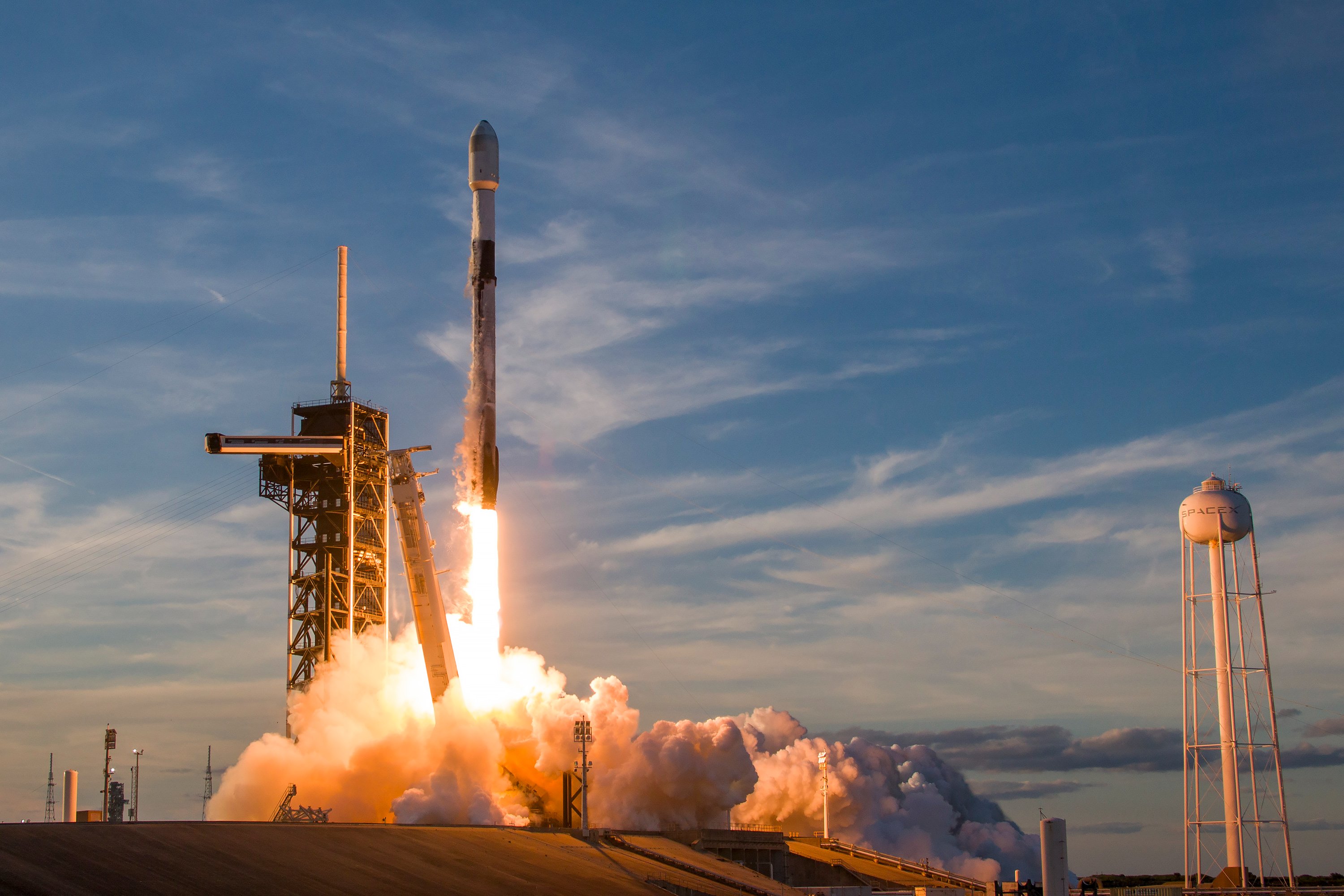
Falcon 9 Block 5 | Bandwagon 1 (Dedicated Mid-Inclination Rideshare)
SpaceX | United States of AmericaKennedy Space Center, FL, USA
April 7, 2024, 11:16 p.m.
Status: Launch Successful
Mission:
Dedicated rideshare flight to a mid-inclination orbit with dozens of small microsatellites and nanosatellites for commercial and government customers. Payloads include Capella Space's Acadia-4 and the South Korean government's 425 Project Flight 2.
Low Earth Orbit B1073 - Flight Proven ( ) Landing Zone 1Falcon 9 Block 5 | Starlink Group 8-1
SpaceX | United States of AmericaVandenberg SFB, CA, USA
April 7, 2024, 2:25 a.m.
Falcon 9 Block 5 | Starlink Group 6-47
SpaceX | United States of AmericaCape Canaveral SFS, FL, USA
April 5, 2024, 9:12 a.m.
Falcon 9 Block 5 | Starlink Group 7-18
SpaceX | United States of AmericaVandenberg SFB, CA, USA
April 2, 2024, 2:30 a.m.
Falcon 9 Block 5 | Starlink Group 6-45
SpaceX | United States of AmericaCape Canaveral SFS, FL, USA
March 31, 2024, 1:30 a.m.
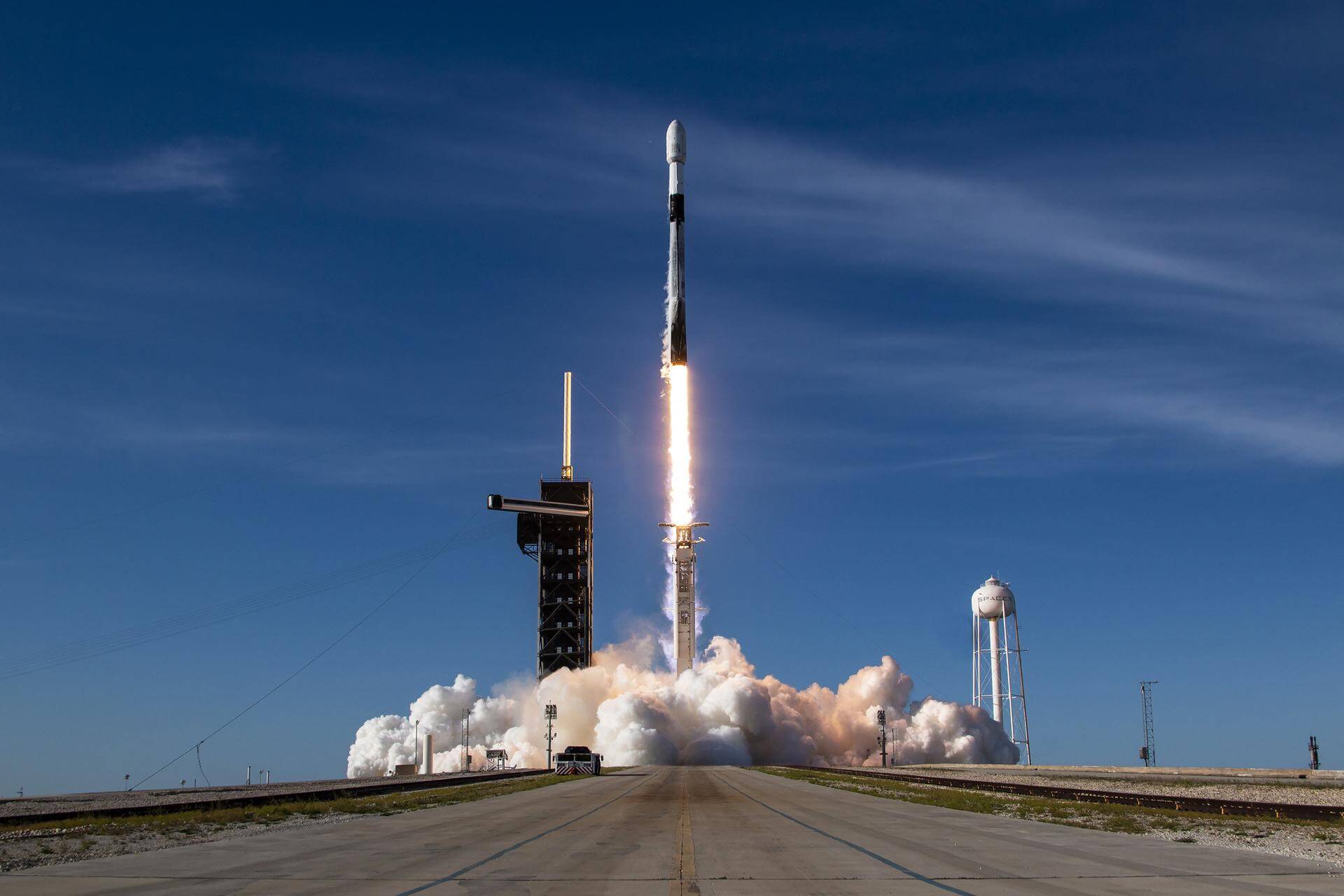
Falcon 9 Block 5 | Eutelsat 36D
SpaceX | United States of AmericaKennedy Space Center, FL, USA
March 30, 2024, 9:52 p.m.
Status: Launch Successful
Mission:
Eutelsat 36D is a planned new generation multi-mission geostationary telecommunications satellite for Eutelsat, replacing and enhance capacity at 36° East, a key orbital slot for Eutelsat for TV broadcasting (DTH) and government services over Africa, Russia, and Europe. It is based on the Airbus Eurostar-Neo platform, with electric power generation capability of 18 kW, EOR (Electric Orbit Raising) capability, and a launch mass of 5 tons. With 70 Ku-band transponders over five downlink beams and a steerable antenna, Eutelsat 36D provides flexibility and performance optimisation to deliver service in Africa, Russia and Europe for an operational lifetime of more than 15 years.
Geostationary Transfer Orbit B1076 - Flight Proven ( ) Just Read the InstructionsFalcon 9 Block 5 | Starlink Group 6-46
SpaceX | United States of AmericaCape Canaveral SFS, FL, USA
March 25, 2024, 11:42 p.m.
Falcon 9 Block 5 | Starlink Group 6-42
SpaceX | United States of AmericaKennedy Space Center, FL, USA
March 24, 2024, 3:09 a.m.
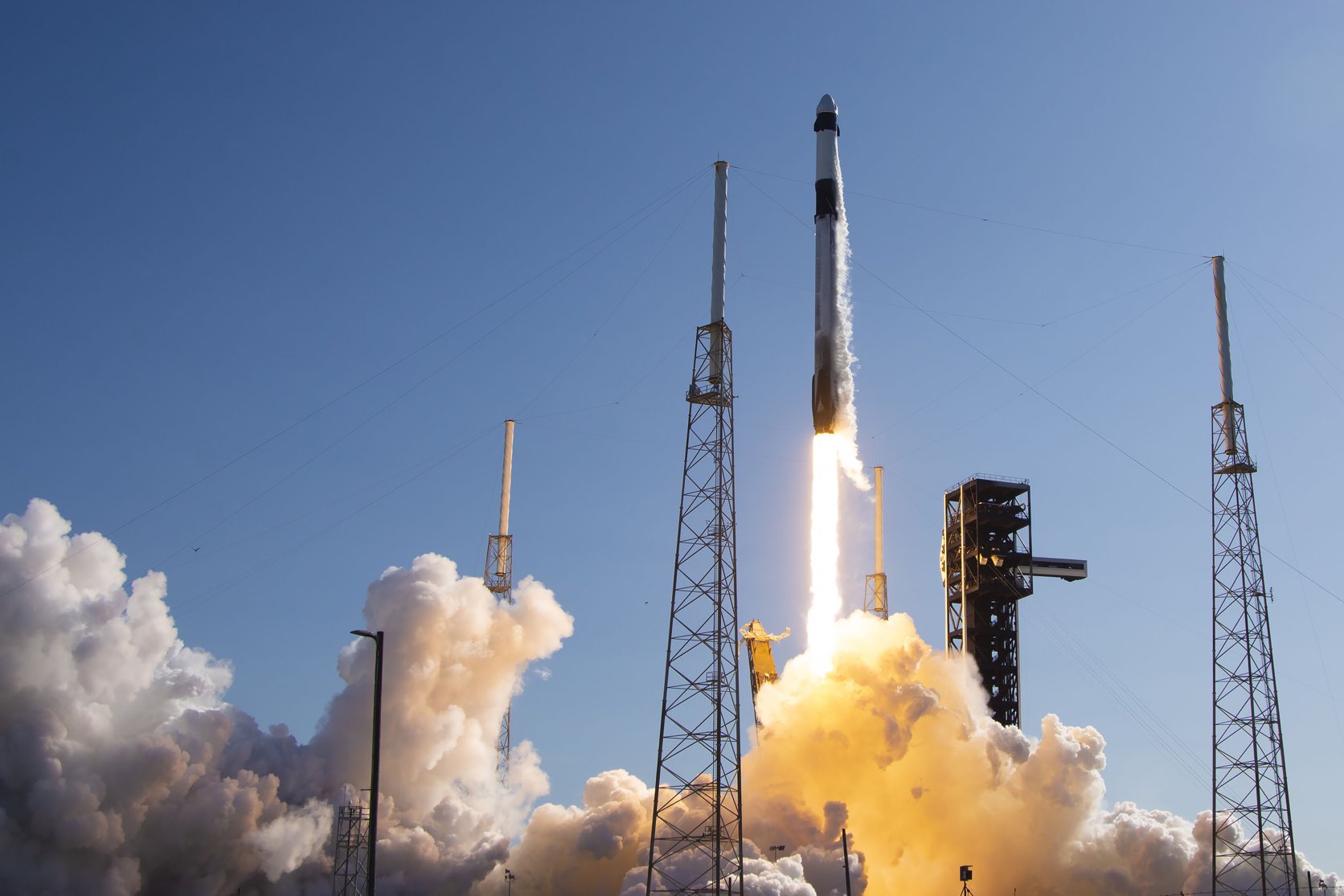
Falcon 9 Block 5 | Dragon CRS-2 SpX-30
SpaceX | United States of AmericaCape Canaveral SFS, FL, USA
March 21, 2024, 8:55 p.m.
Status: Launch Successful
Mission:
30th commercial resupply services mission to the International Space Station operated by SpaceX. The flight will be conducted under the second Commercial Resupply Services contract with NASA. Cargo Dragon 2 brings supplies and payloads, including critical materials to directly support science and research investigations that occur onboard the orbiting laboratory.
Low Earth Orbit B1080 - Flight Proven ( ) Landing Zone 1Falcon 9 Block 5 | Starlink Group 7-16
SpaceX | United States of AmericaVandenberg SFB, CA, USA
March 19, 2024, 2:28 a.m.
Falcon 9 Block 5 | Starlink Group 6-44
SpaceX | United States of AmericaKennedy Space Center, FL, USA
March 16, 2024, 12:21 a.m.
Falcon 9 Block 5 | Starlink Group 7-17
SpaceX | United States of AmericaVandenberg SFB, CA, USA
March 11, 2024, 4:09 a.m.
Falcon 9 Block 5 | Starlink Group 6-43
SpaceX | United States of AmericaCape Canaveral SFS, FL, USA
March 10, 2024, 11:05 p.m.
Falcon 9 Block 5 | Starlink Group 6-41
SpaceX | United States of AmericaCape Canaveral SFS, FL, USA
March 4, 2024, 11:56 p.m.
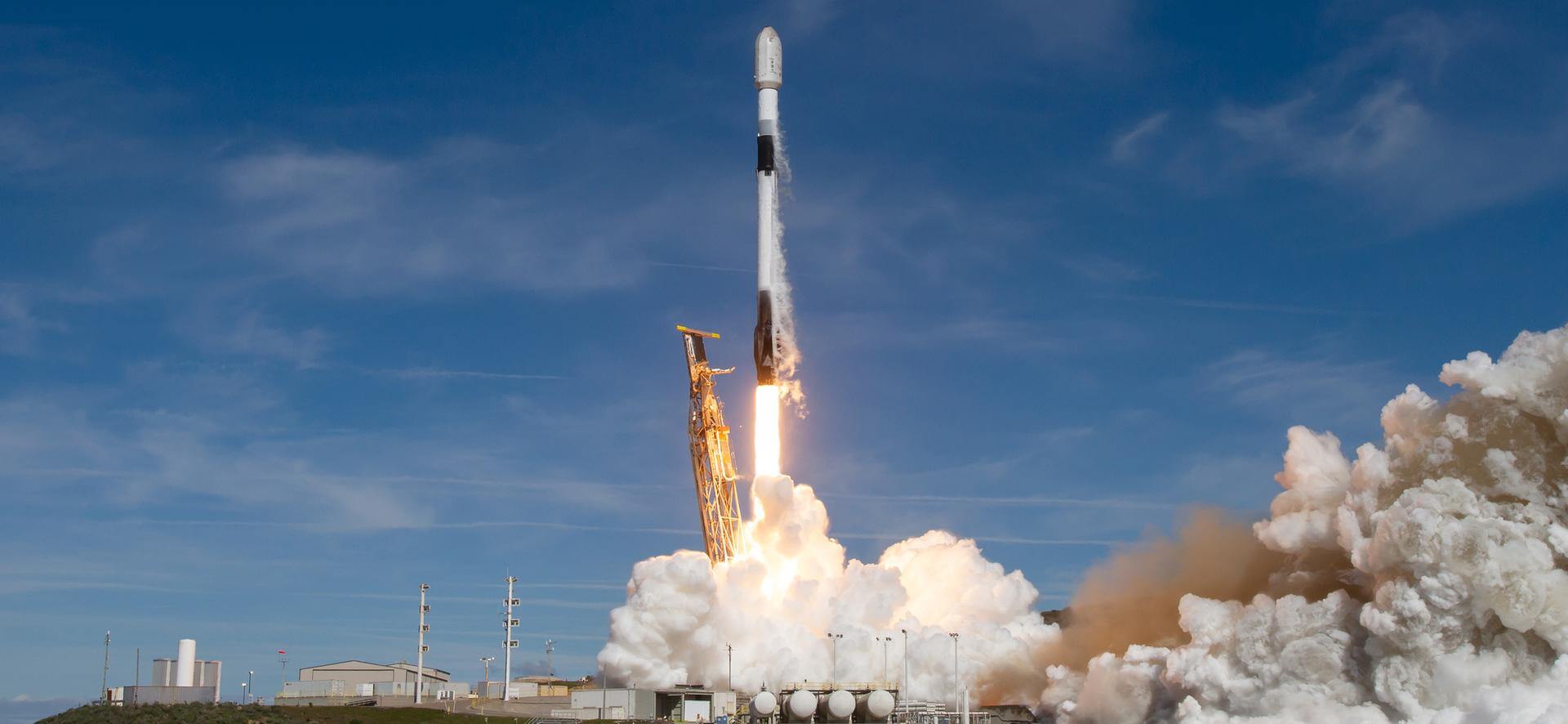
Falcon 9 Block 5 | Transporter 10 (Dedicated SSO Rideshare)
SpaceX | United States of AmericaVandenberg SFB, CA, USA
March 4, 2024, 10:05 p.m.
Status: Launch Successful
Mission:
Transporter 10 mission is a dedicated rideshare flight to a sun-synchronous orbit with dozens of small microsatellites and nanosatellites for commercial and government customers. There will be 53 payloads on this flight, including CubeSats, MicroSats, and a hosted payload.
Sun-Synchronous Orbit B1081 - Flight Proven ( ) Landing Zone 4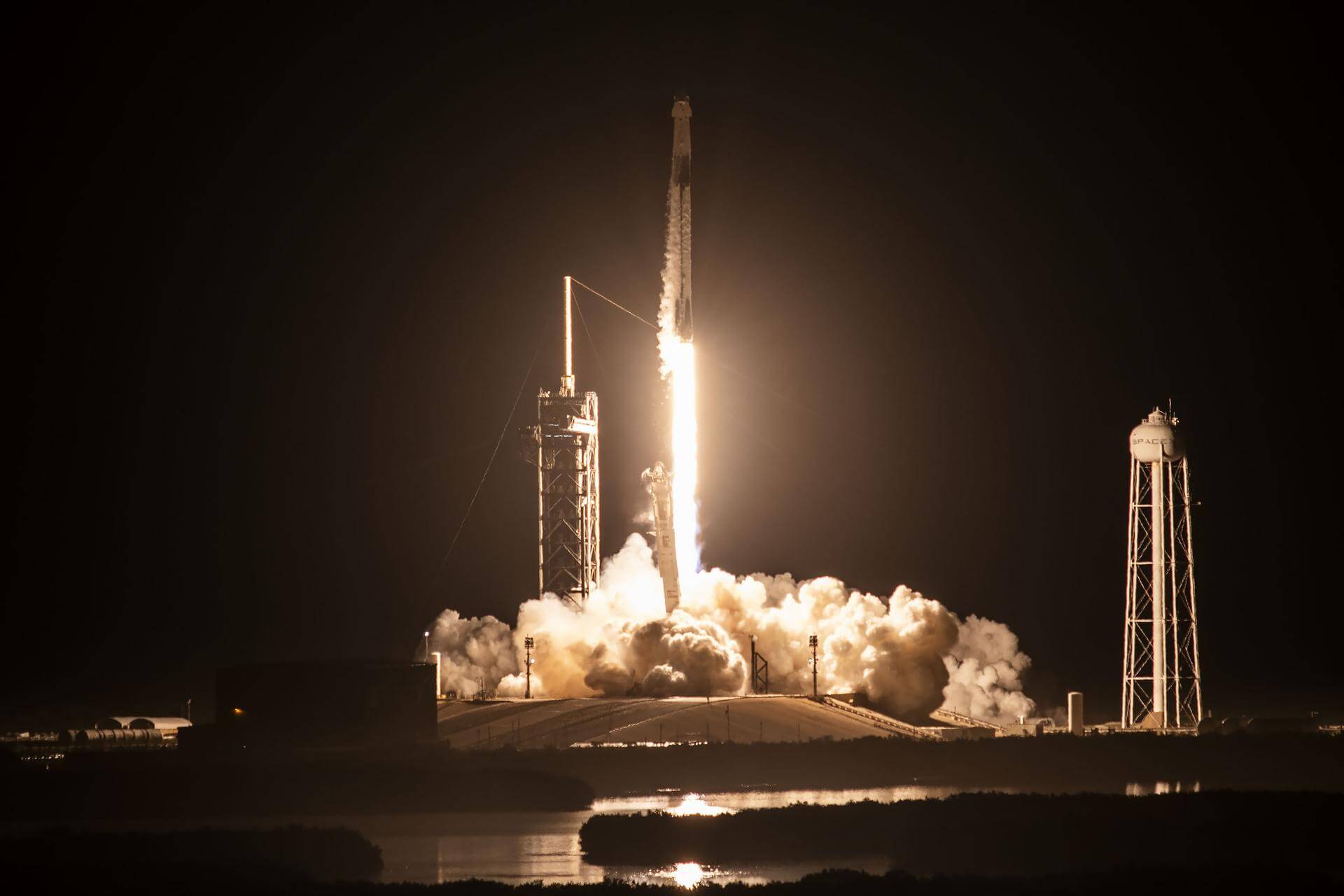
Falcon 9 Block 5 | Crew-8
SpaceX | United States of AmericaKennedy Space Center, FL, USA
March 4, 2024, 3:53 a.m.
Falcon 9 Block 5 | Starlink Group 6-40
SpaceX | United States of AmericaCape Canaveral SFS, FL, USA
Feb. 29, 2024, 3:30 p.m.
Falcon 9 Block 5 | Starlink Group 6-39
SpaceX | United States of AmericaCape Canaveral SFS, FL, USA
Feb. 25, 2024, 10:06 p.m.
Falcon 9 Block 5 | Starlink Group 7-15
SpaceX | United States of AmericaVandenberg SFB, CA, USA
Feb. 23, 2024, 4:11 a.m.
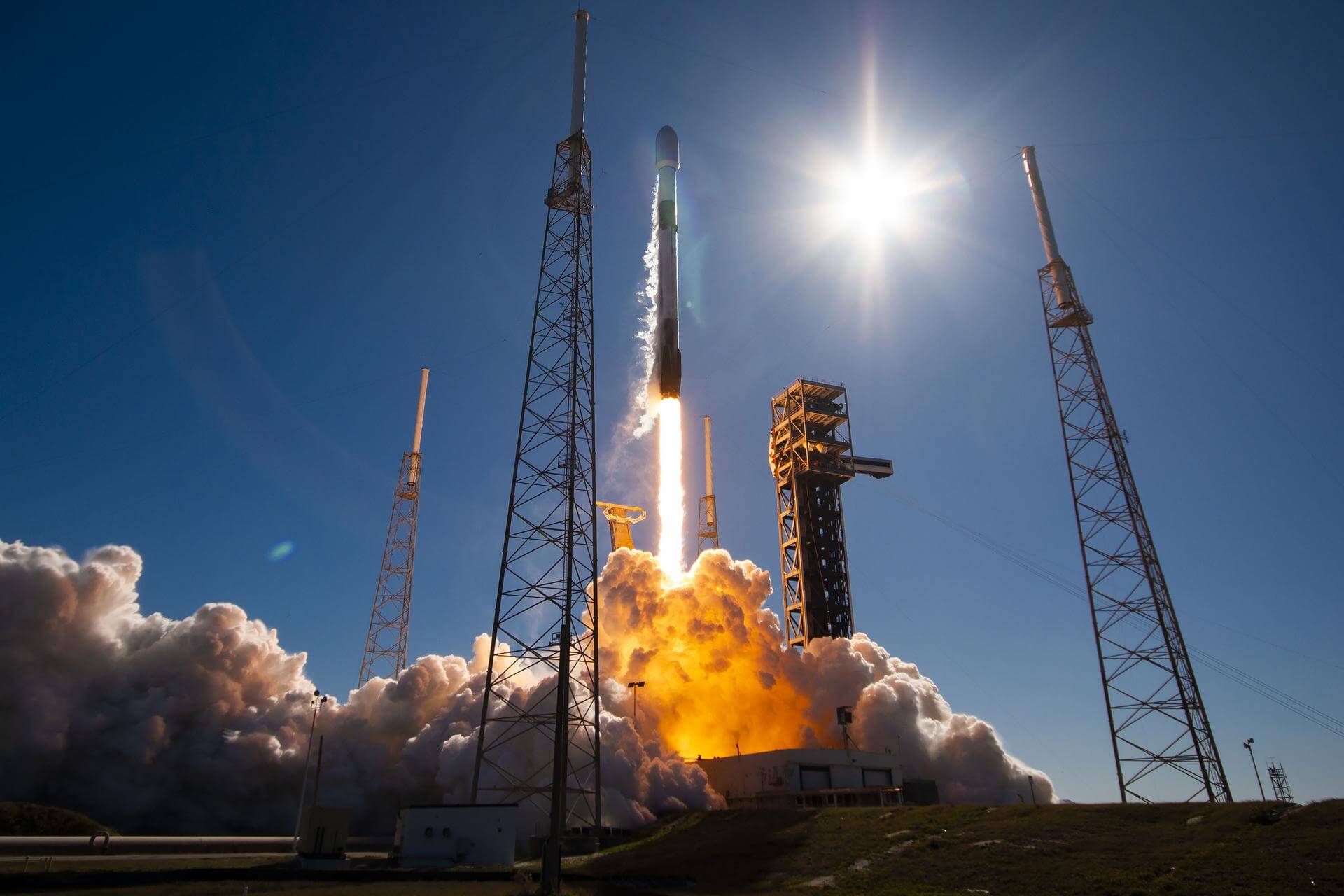
Falcon 9 Block 5 | HTS-113BT (Merah Putih 2)
SpaceX | United States of AmericaCape Canaveral SFS, FL, USA
Feb. 20, 2024, 8:11 p.m.
Status: Launch Successful
Mission:
HTS-113BT is a new High Throughput Satellite telecommunications satellite in C-band/Ku-Band for PT Telkom Satelit Indonesia (Telkomsat) , a state-owned digital telecommunication company in Indonesia, for its orbital position at 113° East. Built on Thales Alenia Space's historical Spacebus 4000B2 platform, HTS 113BT will provide more than 32 Gbps capacity over Indonesia. The satellite will weigh about 4 metric tons at launch and will be delivered early 2024 for a 15-year expected lifetime.
Geostationary Transfer Orbit B1067 - Flight Proven ( ) Just Read the InstructionsFalcon 9 Block 5 | Starlink Group 7-14
SpaceX | United States of AmericaVandenberg SFB, CA, USA
Feb. 15, 2024, 9:34 p.m.
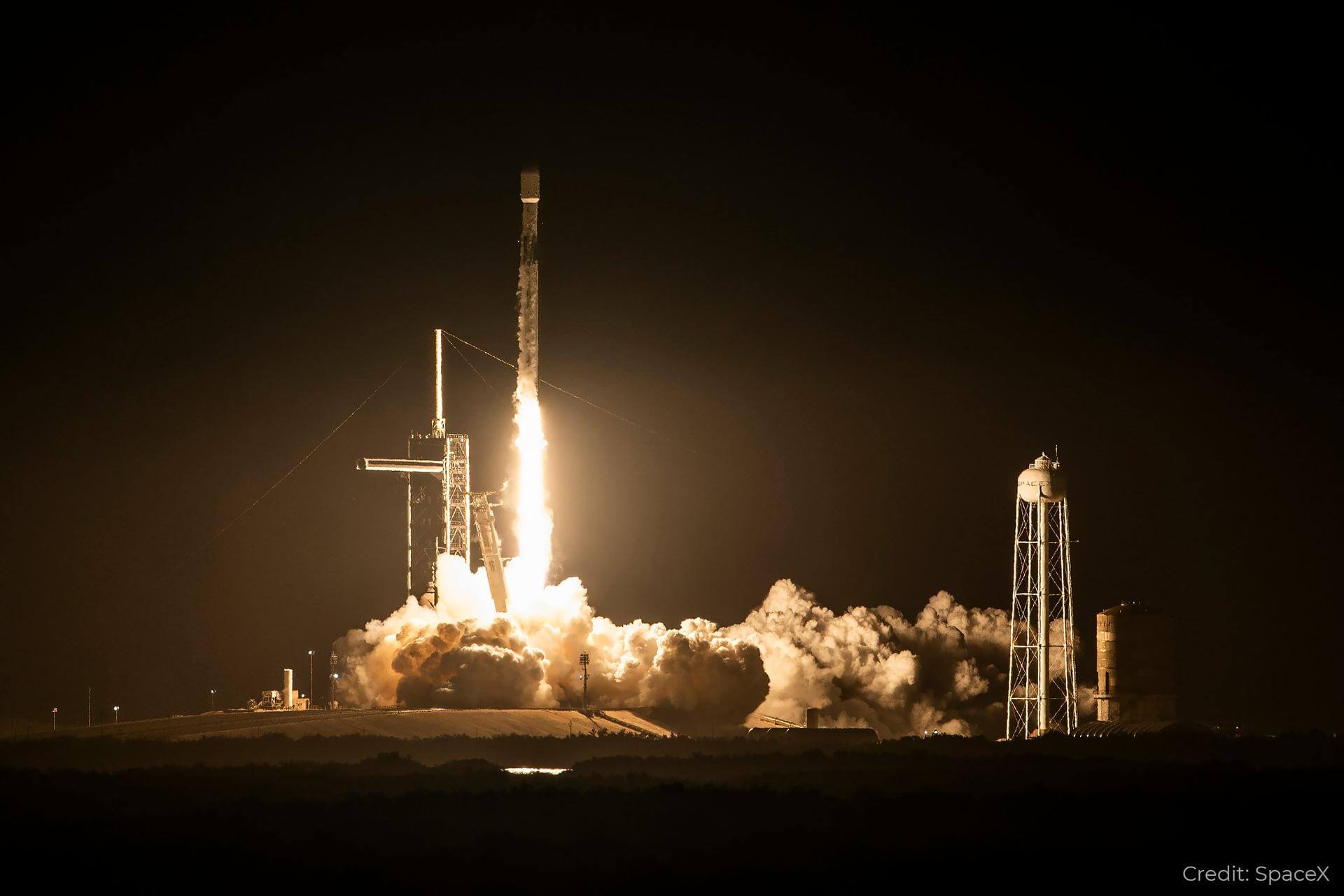
Falcon 9 Block 5 | Nova-C IM-1
SpaceX | United States of AmericaKennedy Space Center, FL, USA
Feb. 15, 2024, 6:05 a.m.
Status: Launch Successful
Mission:
This is the first flight of Nova-C lander which was developed by Intuitive Machines. This mission is a part of CLPS program and carries various NASA payloads in support of Artemis lunar program, as well as multiple commercial payloads.
Lunar Orbit B1060 - Flight Proven ( ) Landing Zone 1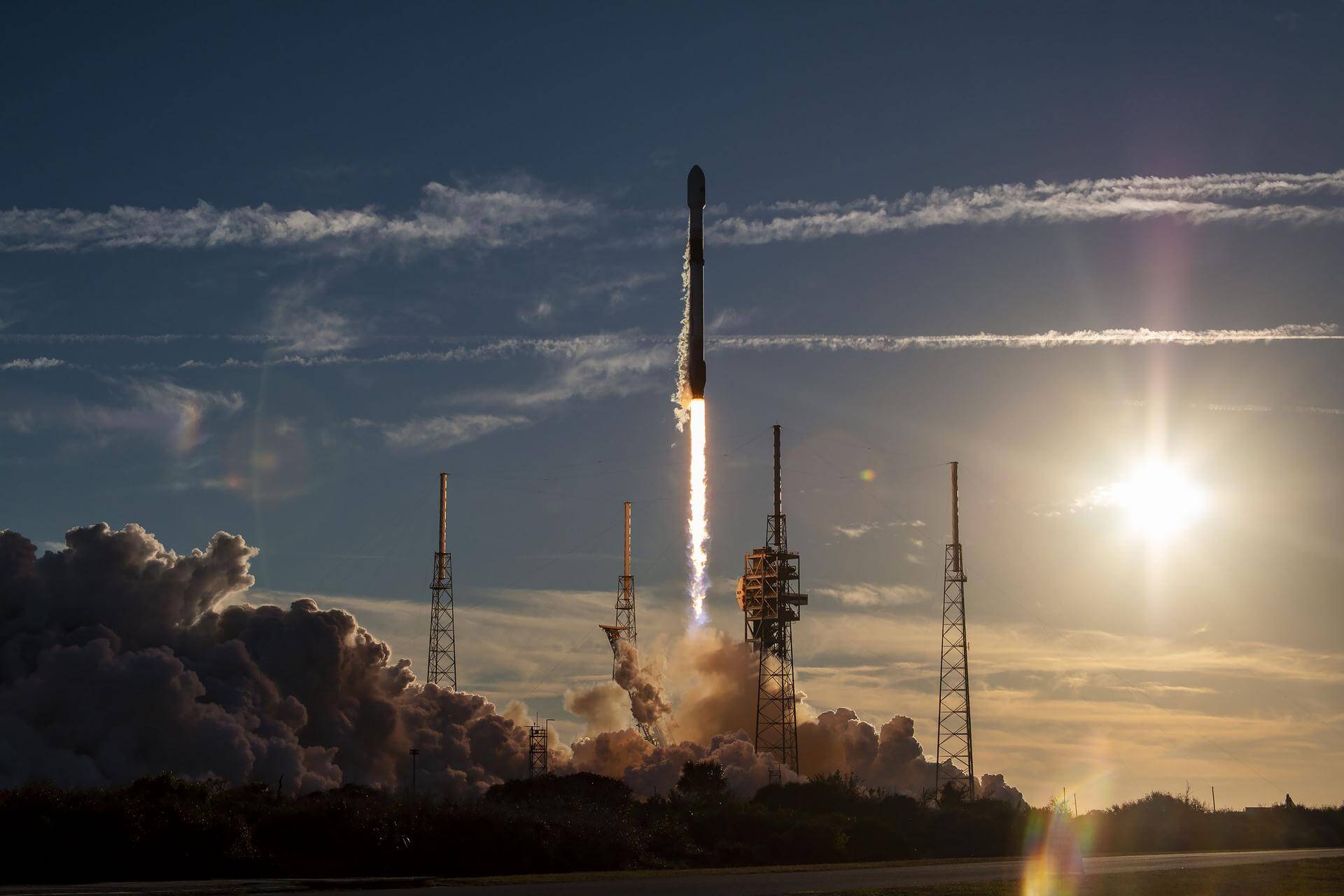
Falcon 9 Block 5 | USSF-124
SpaceX | United States of AmericaCape Canaveral SFS, FL, USA
Feb. 14, 2024, 10:30 p.m.
Status: Launch Successful
Mission:
2 satellites, one by L3Harris and the other by Northrop Grumman, will be launched as the Hypersonic and Ballistic Tracking Space Sensor (HBTSS) mission for the US Missile Defense Agency. These satellites have improved sensitivity to detect and track hypersonic missiles with fainter signatures. 4 SDA Tranche 0 Tracking Layer missile warning satellites by L3Harris will also be on board.
Low Earth Orbit B1078 - Flight Proven ( ) Landing Zone 2Falcon 9 Block 5 | Starlink Group 7-13
SpaceX | United States of AmericaVandenberg SFB, CA, USA
Feb. 10, 2024, 12:34 a.m.
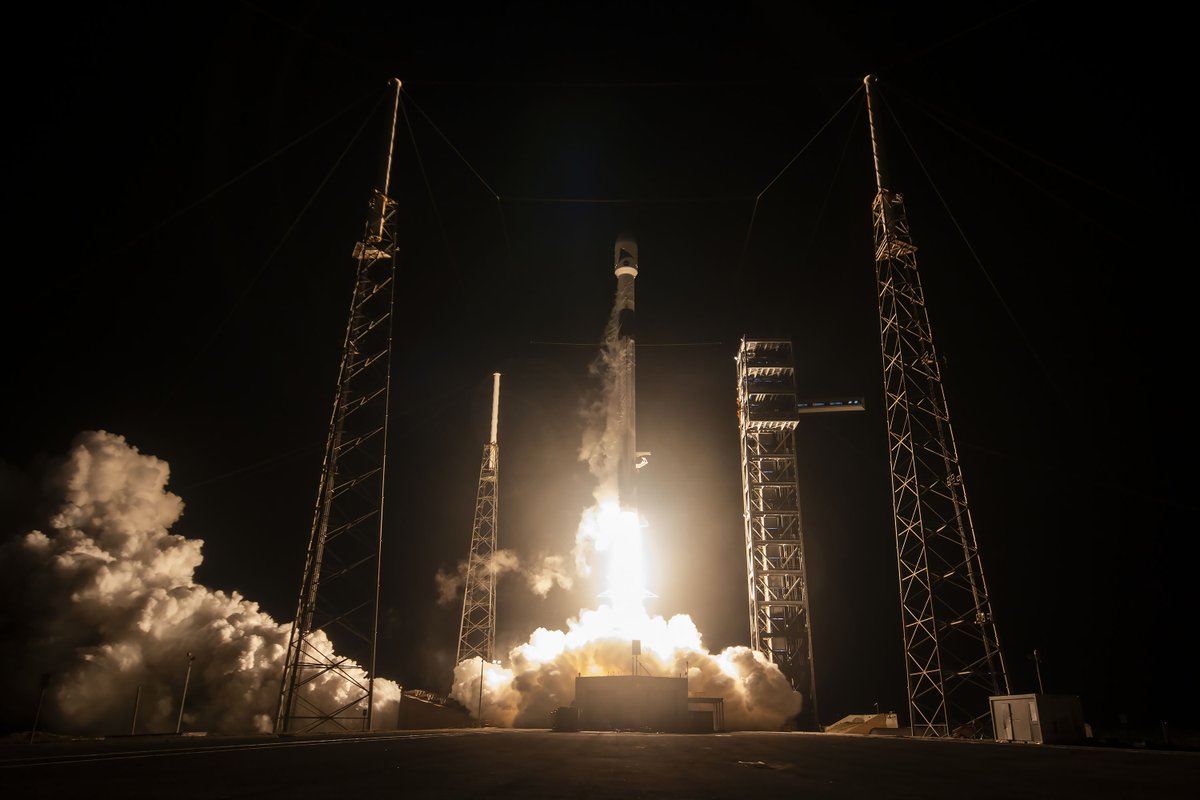
Falcon 9 Block 5 | PACE (Plankton, Aerosol, Cloud, ocean Ecosystem)
SpaceX | United States of AmericaCape Canaveral SFS, FL, USA
Feb. 8, 2024, 6:33 a.m.
Status: Launch Successful
Mission:
PACE (Plankton, Aerosol, Cloud, ocean Ecosystem) is a NASA Earth observation satellite mission. It will make global ocean color measurements to provide extended data records on ocean ecology and global biogeochemistry (e.g., carbon cycle) along with polarimetry measurements to provide extended data records on clouds and aerosols.
Sun-Synchronous Orbit B1081 - Flight Proven ( ) Landing Zone 1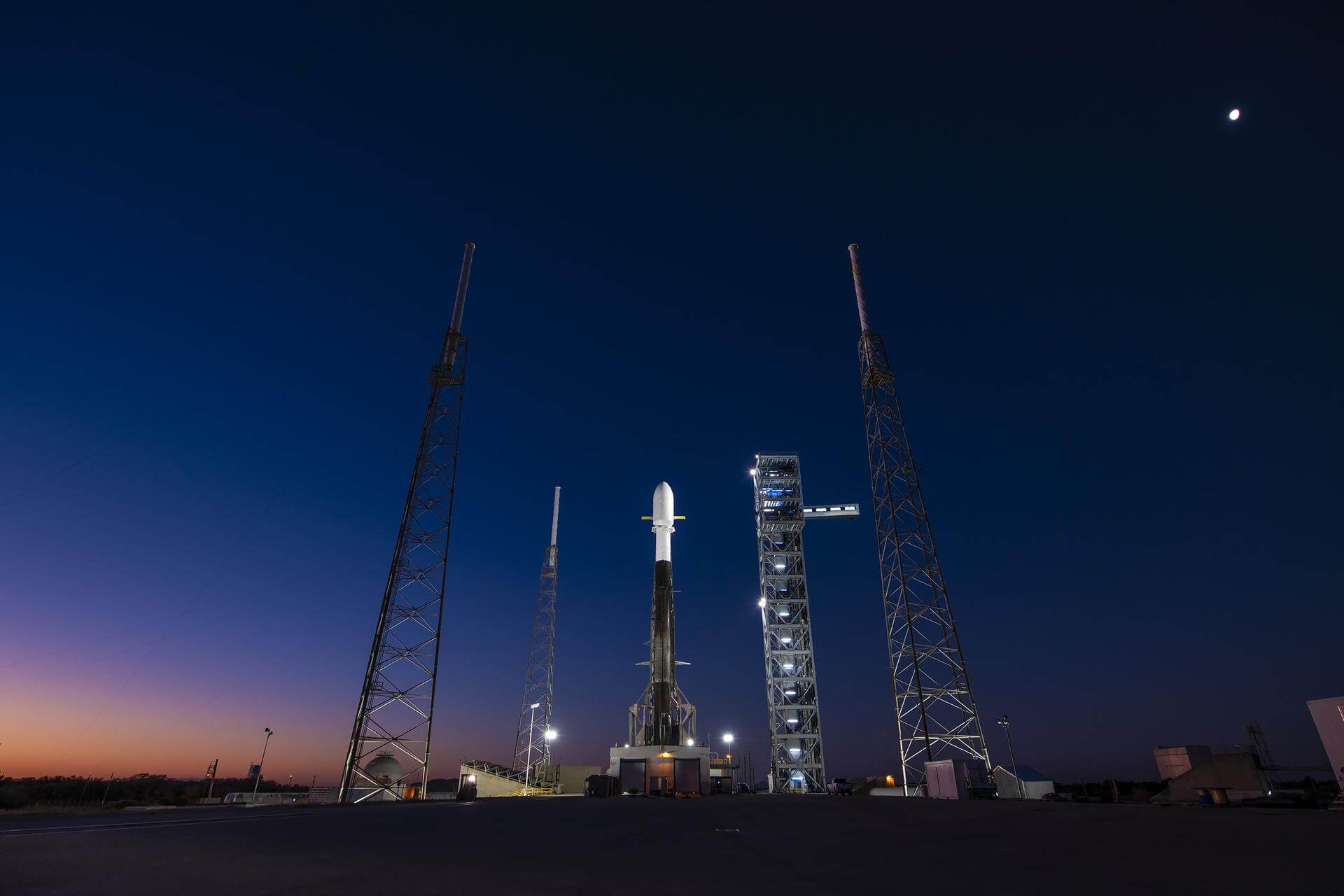
Falcon 9 Block 5 | Cygnus CRS-2 NG-20 (S.S. Patricia “Patty” Hilliard Robertson)
SpaceX | United States of AmericaCape Canaveral SFS, FL, USA
Jan. 30, 2024, 5:07 p.m.
Status: Launch Successful
Mission:
This is the 20th flight of the Orbital ATK's uncrewed resupply spacecraft Cygnus and its 19th flight to the International Space Station under the Commercial Resupply Services contract with NASA.
Low Earth Orbit B1077 - Flight Proven ( ) Landing Zone 1Falcon 9 Block 5 | Starlink Group 7-12
SpaceX | United States of AmericaVandenberg SFB, CA, USA
Jan. 29, 2024, 5:57 a.m.
Falcon 9 Block 5 | Starlink Group 6-38
SpaceX | United States of AmericaKennedy Space Center, FL, USA
Jan. 29, 2024, 1:10 a.m.
Falcon 9 Block 5 | Starlink Group 7-11
SpaceX | United States of AmericaVandenberg SFB, CA, USA
Jan. 24, 2024, 12:35 a.m.
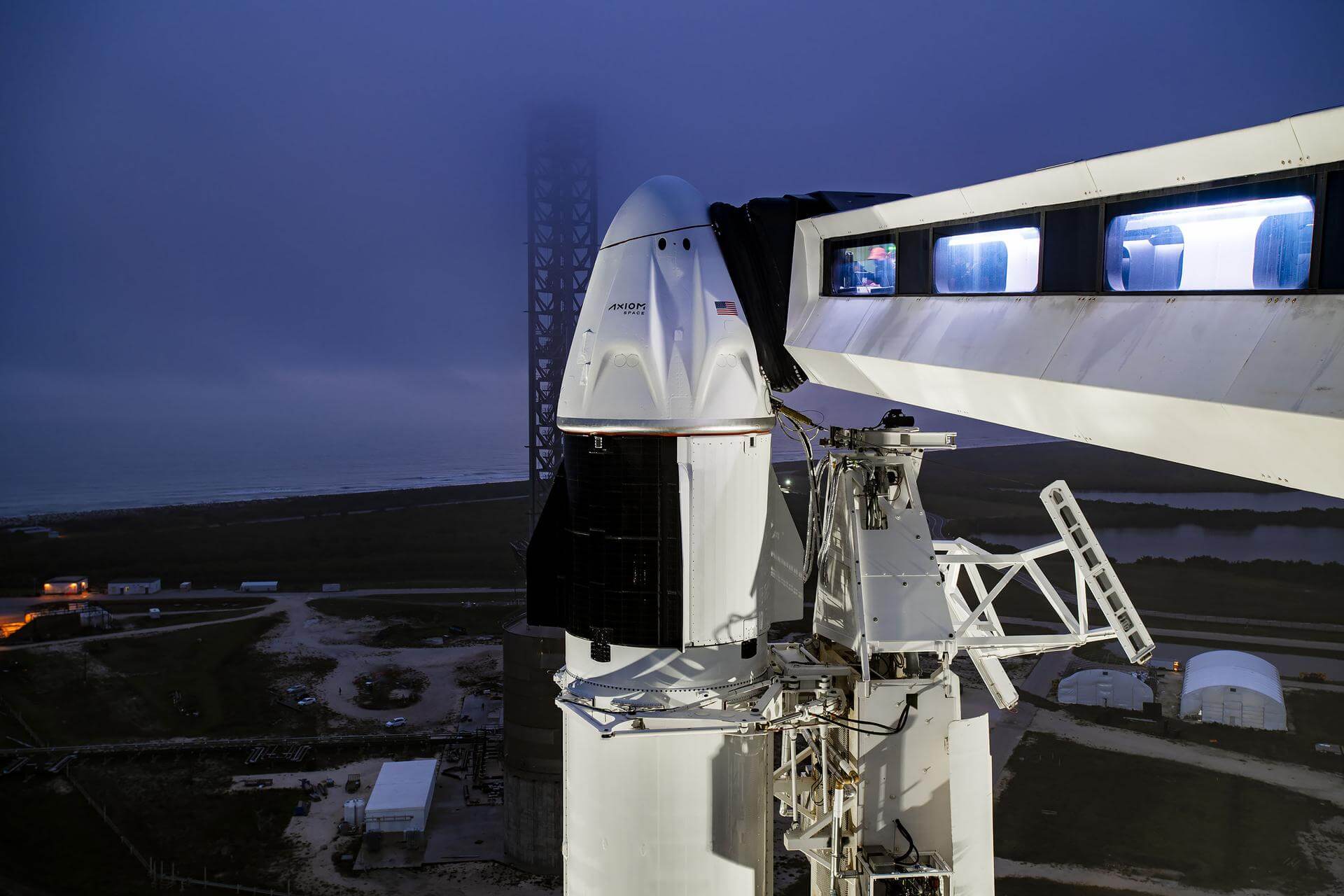
Falcon 9 Block 5 | Axiom Space Mission 3
SpaceX | United States of AmericaKennedy Space Center, FL, USA
Jan. 18, 2024, 9:49 p.m.
Status: Launch Successful
Mission:
This is a Crew Dragon flight for a private company Axiom Space. The mission will carry a professionally trained commander alongside three private astronauts to and from the International Space Station. This crew will stay aboard space station for at least eight days.
Low Earth Orbit B1080 - Flight Proven ( ) Landing Zone 1Falcon 9 Block 5 | Starlink Group 6-37
SpaceX | United States of AmericaCape Canaveral SFS, FL, USA
Jan. 15, 2024, 1:52 a.m.
Falcon 9 Block 5 | Starlink Group 7-10
SpaceX | United States of AmericaVandenberg SFB, CA, USA
Jan. 14, 2024, 8:59 a.m.
Falcon 9 Block 5 | Starlink Group 6-35
SpaceX | United States of AmericaCape Canaveral SFS, FL, USA
Jan. 7, 2024, 10:35 p.m.
Falcon 9 Block 5 | Ovzon-3
SpaceX | United States of AmericaCape Canaveral SFS, FL, USA
Jan. 3, 2024, 11:04 p.m.
Status: Launch Successful
Mission:
Ovzon 3 is a planned small communications satellite of the Swedish / US company Ovzon . The satellite was ordered in December 2018 from Maxar Technologies to meet the demand for increased mobile broadband connectivity in under-served regions. Ovzon selected the new mid-size SSL-500 (Legion class) platform for its first satellite. The satellite will be equipped with a third party built central on-board processor (OBP) attached to high-performance steerable Ku-band beams.
Geostationary Transfer Orbit B1076 - Flight Proven ( ) Landing Zone 1Falcon 9 Block 5 | Starlink Group 7-9
SpaceX | United States of AmericaVandenberg SFB, CA, USA
Jan. 3, 2024, 3:44 a.m.
Falcon 9 Block 5 | Starlink Group 6-36
SpaceX | United States of AmericaCape Canaveral SFS, FL, USA
Dec. 29, 2023, 4:01 a.m.
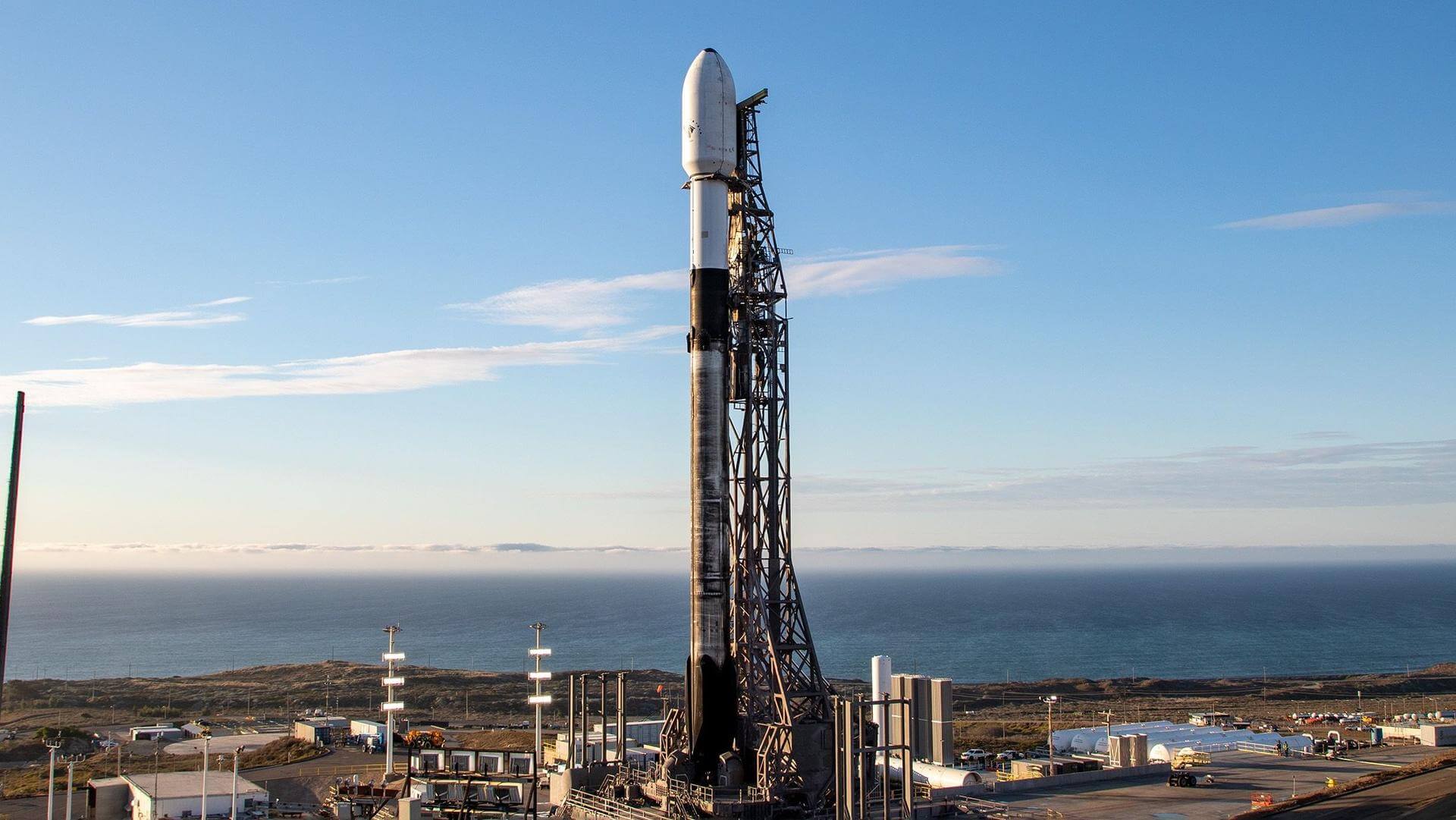
Falcon 9 Block 5 | SARah 2 & 3
SpaceX | United States of AmericaVandenberg SFB, CA, USA
Dec. 24, 2023, 1:11 p.m.
Status: Launch Successful
Mission:
SARah 2 & 3 are two passive reflector antenna radar satellites built by OHB-System, based on the reflector-antenna technology of SAR-Lupe. They are part of the three satellite constellation being built for the German government as a follow-up to the SAR-Lupe radar sat constellation.
Polar Orbit B1075 - Flight Proven ( ) Landing Zone 4Falcon 9 Block 5 | Starlink Group 6-32
SpaceX | United States of AmericaCape Canaveral SFS, FL, USA
Dec. 23, 2023, 5:33 a.m.
Falcon 9 Block 5 | Starlink Group 6-34
SpaceX | United States of AmericaCape Canaveral SFS, FL, USA
Dec. 19, 2023, 4:01 a.m.
Falcon 9 Block 5 | Starlink Group 7-8
SpaceX | United States of AmericaVandenberg SFB, CA, USA
Dec. 8, 2023, 8:03 a.m.
Falcon 9 Block 5 | Starlink Group 6-33
SpaceX | United States of AmericaCape Canaveral SFS, FL, USA
Dec. 7, 2023, 5:07 a.m.
Falcon 9 Block 5 | Starlink Group 6-31
SpaceX | United States of AmericaCape Canaveral SFS, FL, USA
Dec. 3, 2023, 4 a.m.
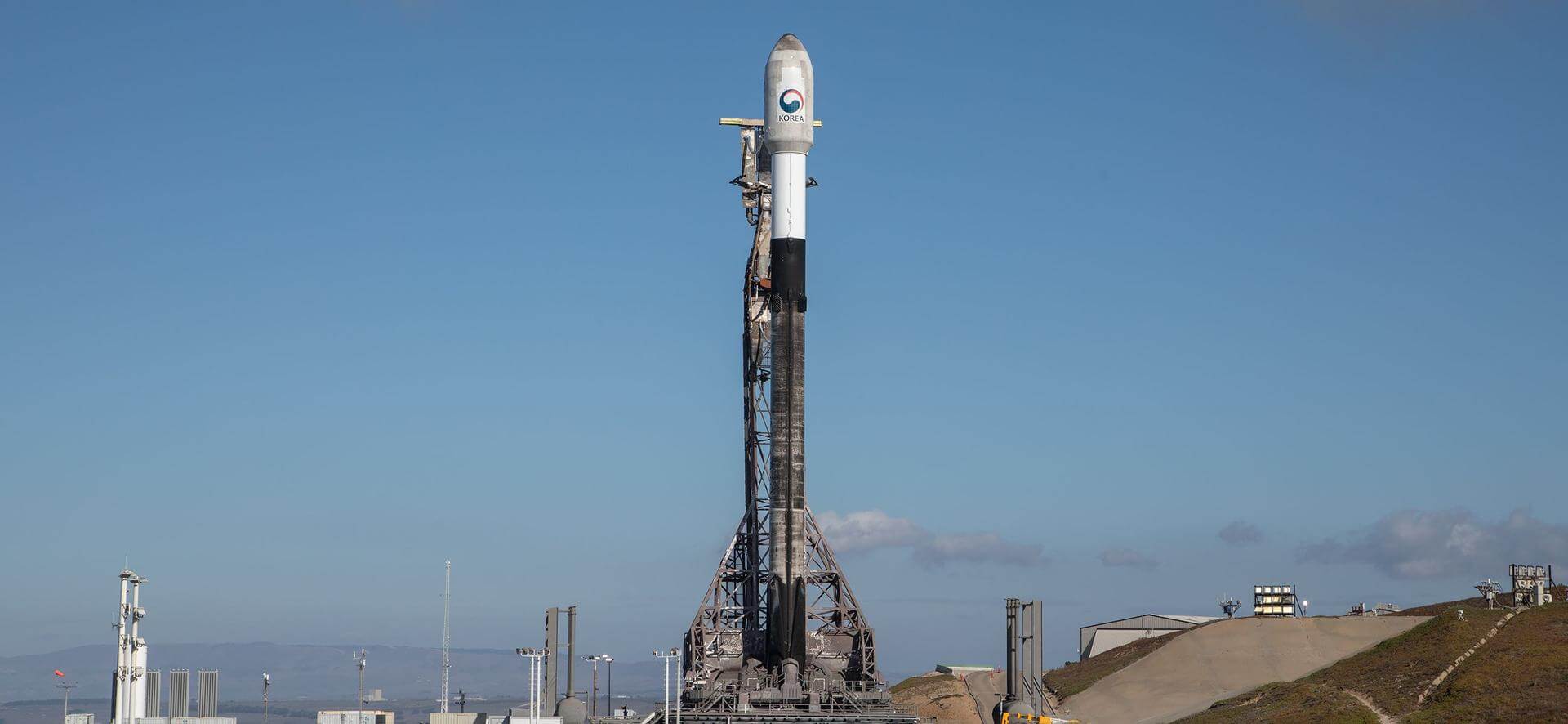
Falcon 9 Block 5 | 425 Project Flight 1 & rideshare
SpaceX | United States of AmericaVandenberg SFB, CA, USA
Dec. 1, 2023, 6:19 p.m.
Status: Launch Successful
Mission:
Note: Name of payload is provisional. First launch of an ultimately 5 reconnaissance satellites for the South Korean Defense Acquisition Program Administration (DAPA), with 1 satellite featuring an electro-optical infrared (EO/IR) telescope. The other 4 synthetic aperture radar (SAR) satellites are to be launched at a later date. They will be launched to low Earth orbit between 600 and 700 km by 2025, enabling South Korea’s military to observe the nuclear-armed neighbor’s key military facilities every two hours with 30-50 centimeters resolution imagery, according to a 2019 report produced by the Korea Institute of S&T Evaluation and Planning. The project is lead by the Korean Agency for Defense Development (ADD) and Korea Aerospace Research Institute (KARI), with input from Korea Aerospace Industries (KAI), Hanwha Systems and Thales Alenia Space. ESA's EIRSAT-1 is also onboard as a rideshare passenger. This 2U cubesat carries three experiments, including a novel gamma ray detector to study some of the most luminous explosions in the universe.
Sun-Synchronous Orbit B1061 - Flight Proven ( ) Landing Zone 4Falcon 9 Block 5 | Starlink Group 6-30
SpaceX | United States of AmericaCape Canaveral SFS, FL, USA
Nov. 28, 2023, 4:20 a.m.
Falcon 9 Block 5 | Starlink Group 6-29
SpaceX | United States of AmericaCape Canaveral SFS, FL, USA
Nov. 22, 2023, 7:47 a.m.
Falcon 9 Block 5 | Starlink Group 7-7
SpaceX | United States of AmericaVandenberg SFB, CA, USA
Nov. 20, 2023, 10:30 a.m.
Falcon 9 Block 5 | Starlink Group 6-28
SpaceX | United States of AmericaCape Canaveral SFS, FL, USA
Nov. 18, 2023, 5:05 a.m.
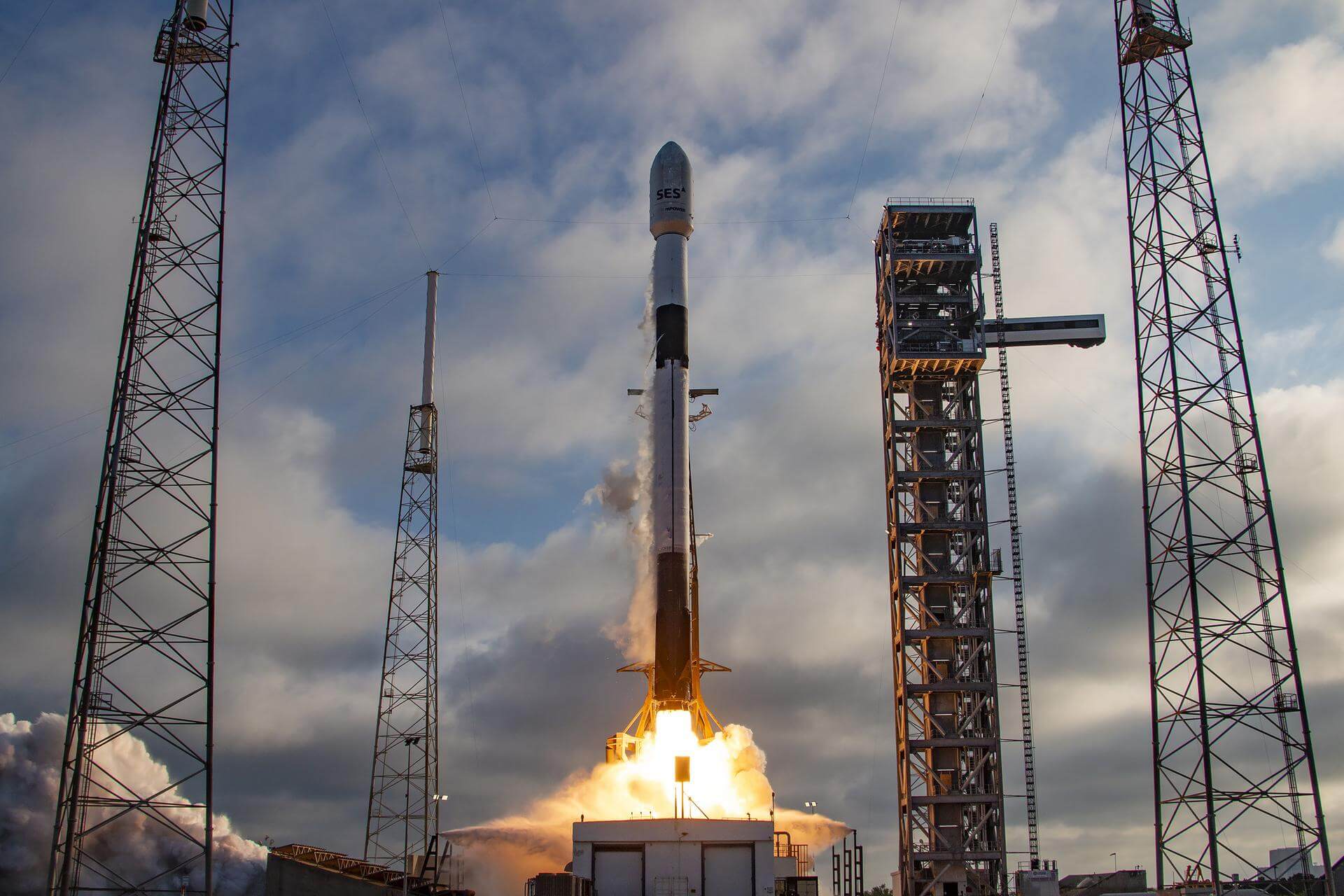
Falcon 9 Block 5 | O3b mPower 5 & 6
SpaceX | United States of AmericaCape Canaveral SFS, FL, USA
Nov. 12, 2023, 9:08 p.m.
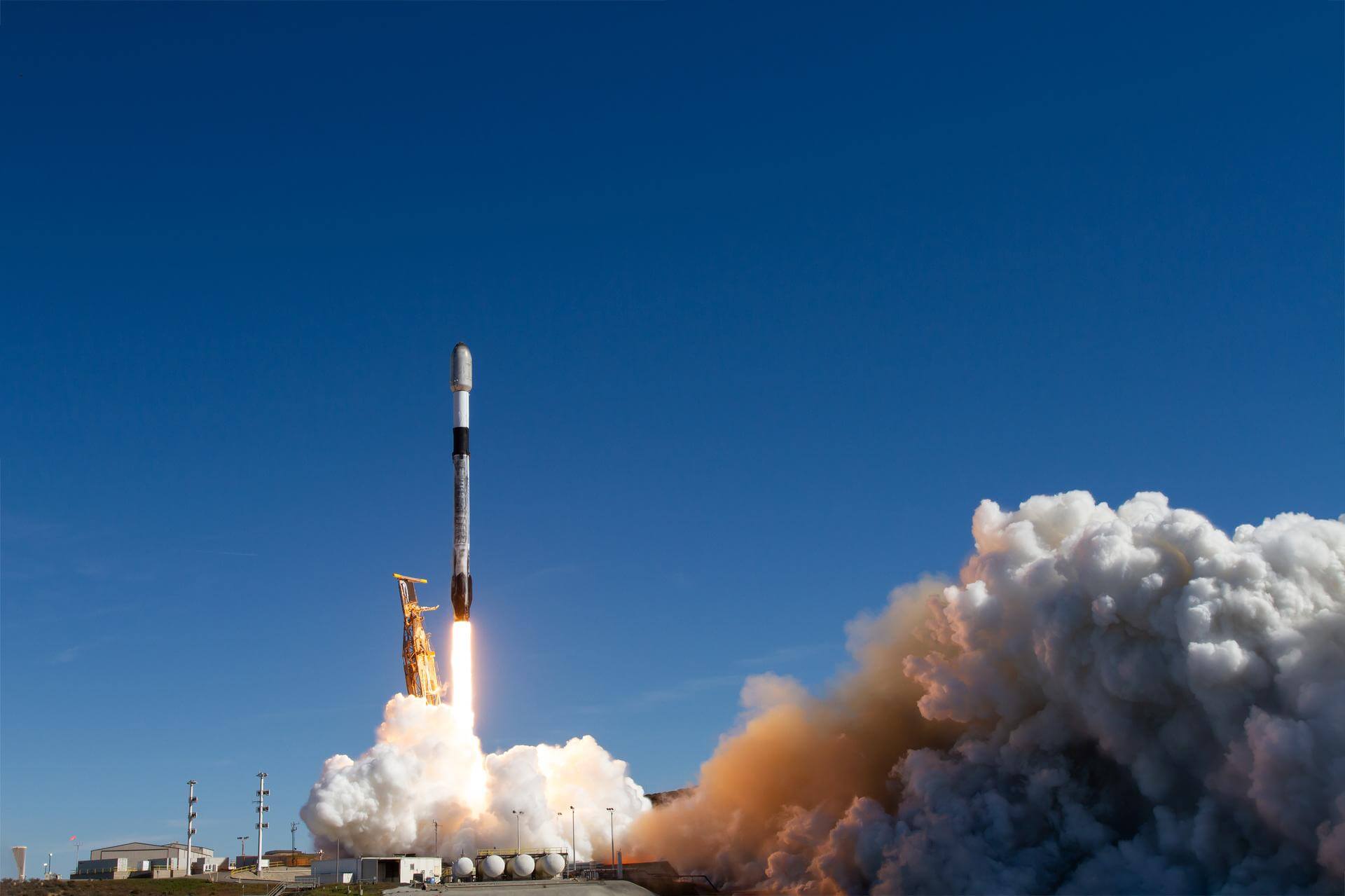
Falcon 9 Block 5 | Transporter 9 (Dedicated SSO Rideshare)
SpaceX | United States of AmericaVandenberg SFB, CA, USA
Nov. 11, 2023, 6:49 p.m.
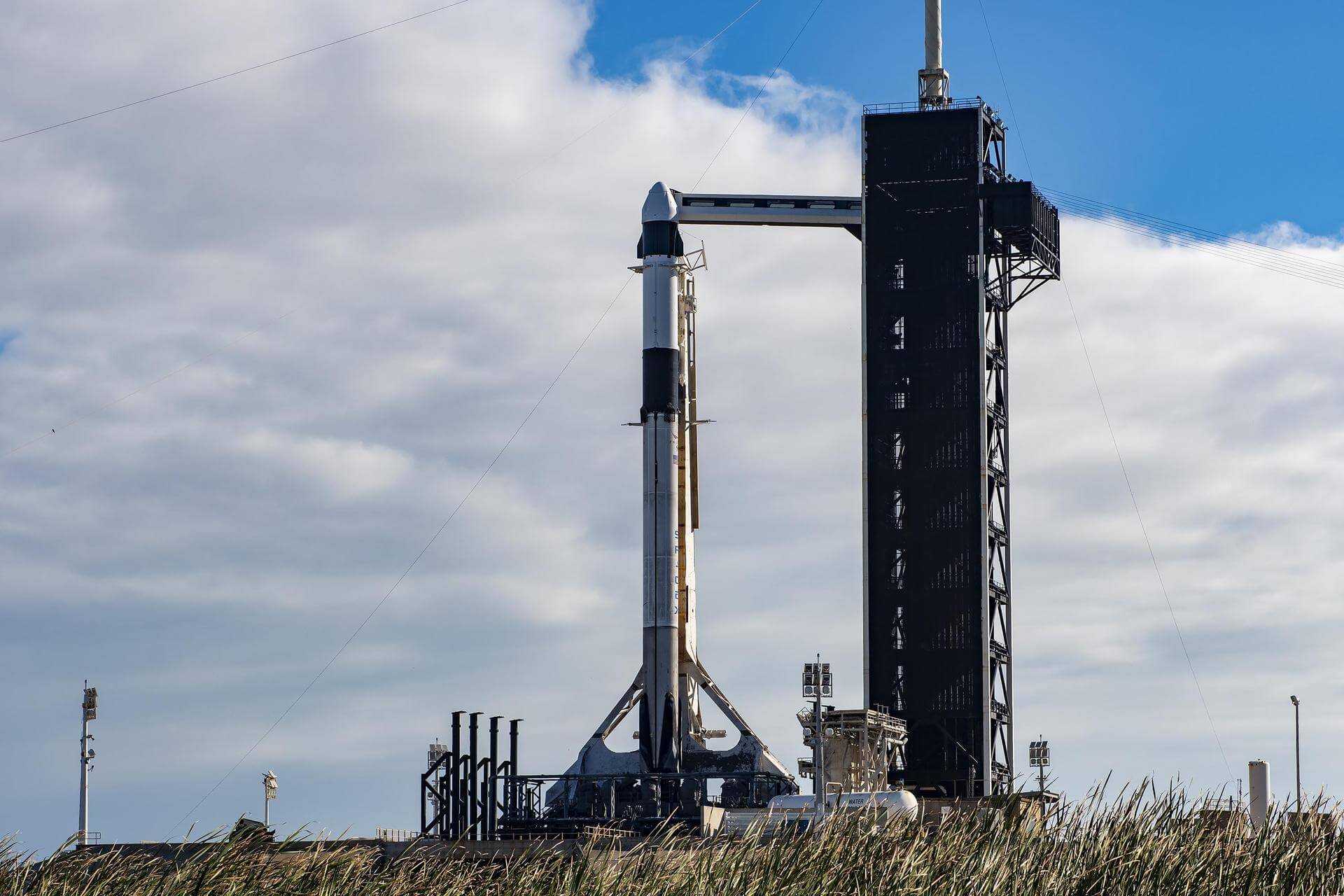
Falcon 9 Block 5 | Dragon CRS-2 SpX-29
SpaceX | United States of AmericaKennedy Space Center, FL, USA
Nov. 10, 2023, 1:28 a.m.
Status: Launch Successful
Mission:
29th commercial resupply services mission to the International Space Station operated by SpaceX. The flight will be conducted under the second Commercial Resupply Services contract with NASA. Cargo Dragon 2 brings supplies and payloads, including critical materials to directly support science and research investigations that occur onboard the orbiting laboratory.
Low Earth Orbit B1081 - Flight Proven ( ) Landing Zone 1Falcon 9 Block 5 | Starlink Group 6-27
SpaceX | United States of AmericaCape Canaveral SFS, FL, USA
Nov. 8, 2023, 5:05 a.m.
Falcon 9 Block 5 | Starlink Group 6-26
SpaceX | United States of AmericaCape Canaveral SFS, FL, USA
Nov. 4, 2023, 12:37 a.m.
Falcon 9 Block 5 | Starlink Group 6-25
SpaceX | United States of AmericaCape Canaveral SFS, FL, USA
Oct. 30, 2023, 11:20 p.m.
Falcon 9 Block 5 | Starlink Group 7-6
SpaceX | United States of AmericaVandenberg SFB, CA, USA
Oct. 29, 2023, 9 a.m.
Falcon 9 Block 5 | Starlink Group 6-24
SpaceX | United States of AmericaCape Canaveral SFS, FL, USA
Oct. 22, 2023, 2:17 a.m.
Falcon 9 Block 5 | Starlink Group 7-5
SpaceX | United States of AmericaVandenberg SFB, CA, USA
Oct. 21, 2023, 8:23 a.m.
Falcon 9 Block 5 | Starlink Group 6-23
SpaceX | United States of AmericaCape Canaveral SFS, FL, USA
Oct. 18, 2023, 12:39 a.m.
Falcon 9 Block 5 | Starlink Group 6-22
SpaceX | United States of AmericaCape Canaveral SFS, FL, USA
Oct. 13, 2023, 11:01 p.m.
Falcon 9 Block 5 | Starlink Group 7-4
SpaceX | United States of AmericaVandenberg SFB, CA, USA
Oct. 9, 2023, 7:43 a.m.
Falcon 9 Block 5 | Starlink Group 6-21
SpaceX | United States of AmericaCape Canaveral SFS, FL, USA
Oct. 5, 2023, 5:36 a.m.
Falcon 9 Block 5 | Starlink Group 6-19
SpaceX | United States of AmericaCape Canaveral SFS, FL, USA
Sept. 30, 2023, 2 a.m.
Falcon 9 Block 5 | Starlink Group 7-3
SpaceX | United States of AmericaVandenberg SFB, CA, USA
Sept. 25, 2023, 8:48 a.m.
Falcon 9 Block 5 | Starlink Group 6-18
SpaceX | United States of AmericaCape Canaveral SFS, FL, USA
Sept. 24, 2023, 3:38 a.m.
Falcon 9 Block 5 | Starlink Group 6-17
SpaceX | United States of AmericaCape Canaveral SFS, FL, USA
Sept. 20, 2023, 3:38 a.m.
Falcon 9 Block 5 | Starlink Group 6-16
SpaceX | United States of AmericaCape Canaveral SFS, FL, USA
Sept. 16, 2023, 3:38 a.m.
Falcon 9 Block 5 | Starlink Group 7-2
SpaceX | United States of AmericaVandenberg SFB, CA, USA
Sept. 12, 2023, 6:57 a.m.
Falcon 9 Block 5 | Starlink Group 6-14
SpaceX | United States of AmericaCape Canaveral SFS, FL, USA
Sept. 9, 2023, 3:12 a.m.
Falcon 9 Block 5 | Starlink Group 6-12
SpaceX | United States of AmericaKennedy Space Center, FL, USA
Sept. 4, 2023, 2:47 a.m.
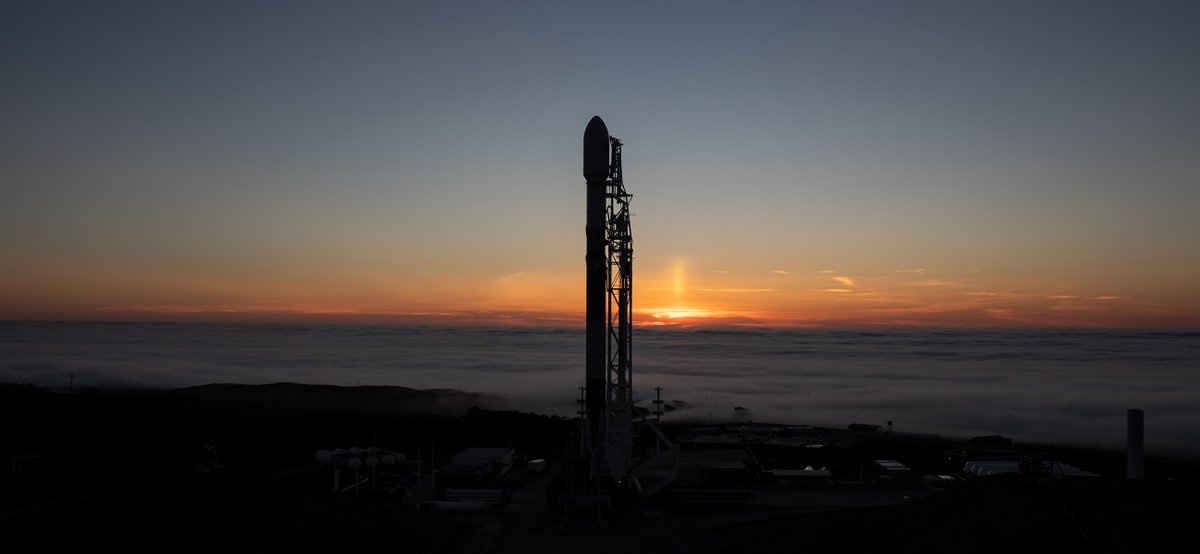
Falcon 9 Block 5 | SDA Tranche 0B
SpaceX | United States of AmericaVandenberg SFB, CA, USA
Sept. 2, 2023, 2:25 p.m.
Falcon 9 Block 5 | Starlink Group 6-13
SpaceX | United States of AmericaCape Canaveral SFS, FL, USA
Sept. 1, 2023, 2:21 a.m.
Falcon 9 Block 5 | Starlink Group 6-11
SpaceX | United States of AmericaCape Canaveral SFS, FL, USA
Aug. 27, 2023, 1:05 a.m.
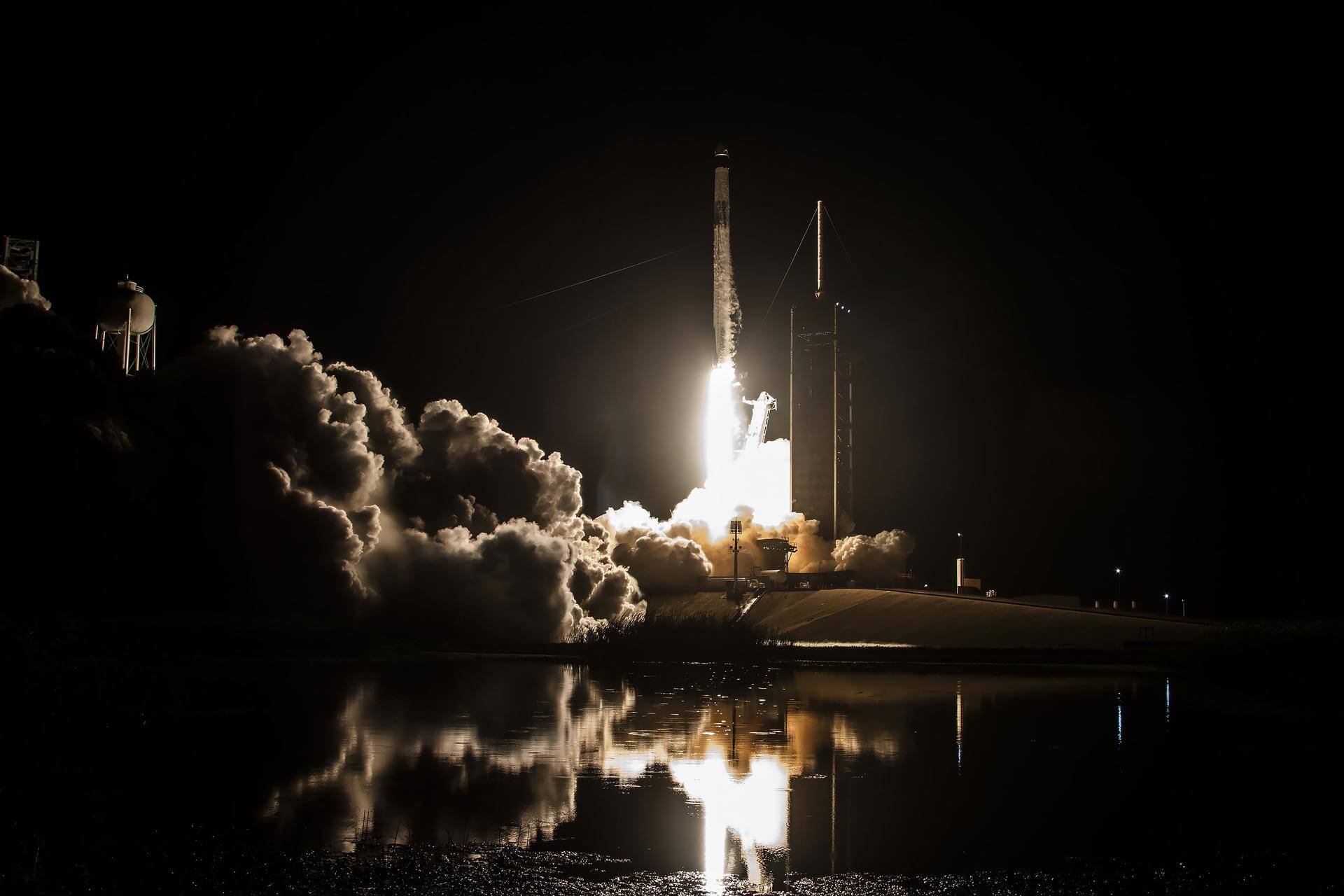
Falcon 9 Block 5 | Crew-7
SpaceX | United States of AmericaKennedy Space Center, FL, USA
Aug. 26, 2023, 7:27 a.m.
Falcon 9 Block 5 | Starlink Group 7-1
SpaceX | United States of AmericaVandenberg SFB, CA, USA
Aug. 22, 2023, 9:37 a.m.
Falcon 9 Block 5 | Starlink Group 6-10
SpaceX | United States of AmericaCape Canaveral SFS, FL, USA
Aug. 17, 2023, 3:36 a.m.
Falcon 9 Block 5 | Starlink Group 6-9
SpaceX | United States of AmericaCape Canaveral SFS, FL, USA
Aug. 11, 2023, 5:17 a.m.
Falcon 9 Block 5 | Starlink Group 6-20
SpaceX | United States of AmericaVandenberg SFB, CA, USA
Aug. 8, 2023, 3:57 a.m.
Falcon 9 Block 5 | Starlink Group 6-8
SpaceX | United States of AmericaCape Canaveral SFS, FL, USA
Aug. 7, 2023, 2:41 a.m.
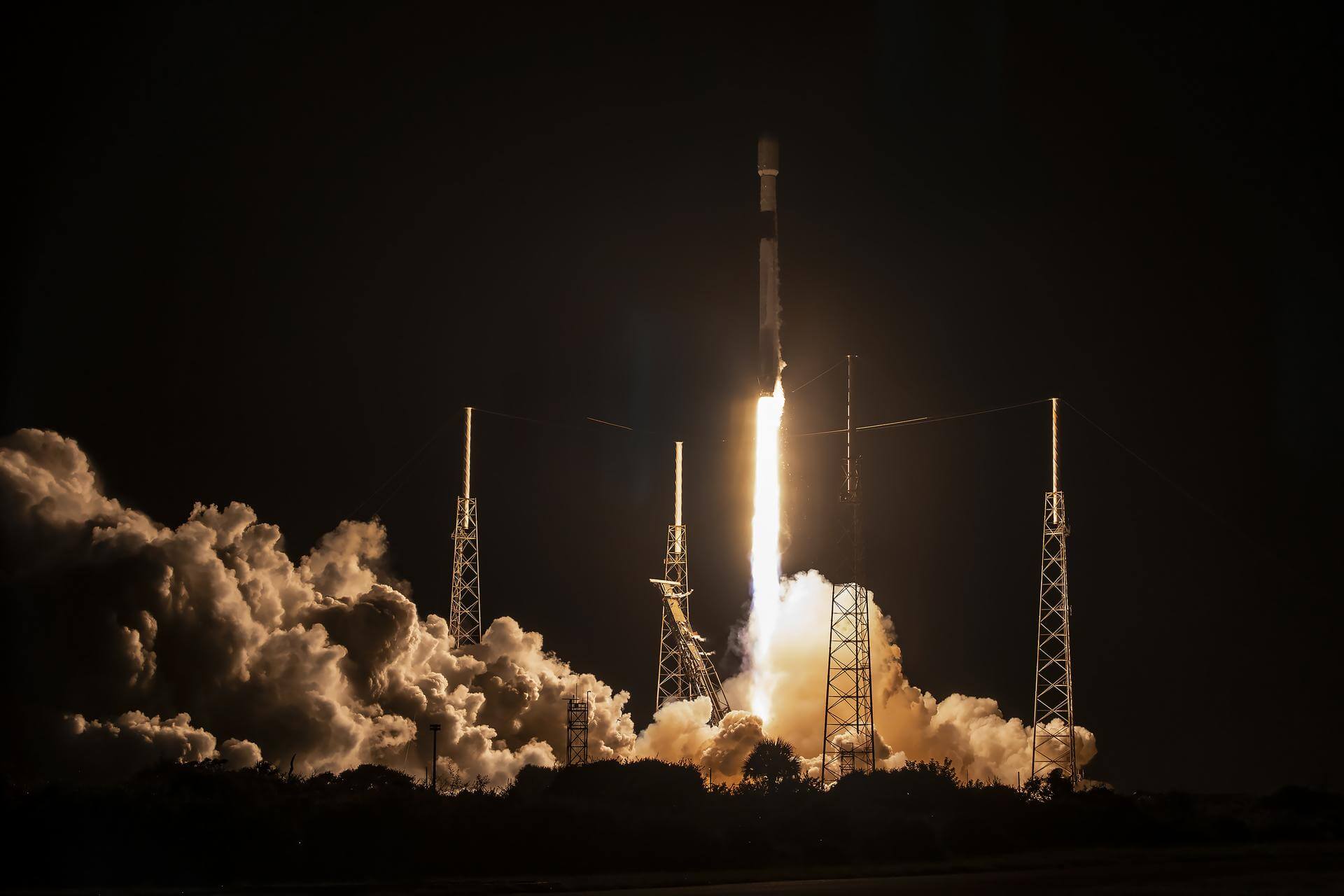
Falcon 9 Block 5 | Galaxy 37
SpaceX | United States of AmericaCape Canaveral SFS, FL, USA
Aug. 3, 2023, 5 a.m.
Falcon 9 Block 5 | Starlink Group 6-7
SpaceX | United States of AmericaCape Canaveral SFS, FL, USA
July 28, 2023, 4:01 a.m.
Falcon 9 Block 5 | Starlink Group 6-6
SpaceX | United States of AmericaCape Canaveral SFS, FL, USA
July 24, 2023, 12:50 a.m.
Falcon 9 Block 5 | Starlink Group 6-15
SpaceX | United States of AmericaVandenberg SFB, CA, USA
July 20, 2023, 4:09 a.m.
Falcon 9 Block 5 | Starlink Group 5-15
SpaceX | United States of AmericaCape Canaveral SFS, FL, USA
July 16, 2023, 3:50 a.m.
Falcon 9 Block 5 | Starlink Group 6-5
SpaceX | United States of AmericaCape Canaveral SFS, FL, USA
July 10, 2023, 3:58 a.m.
Falcon 9 Block 5 | Starlink Group 5-13
SpaceX | United States of AmericaVandenberg SFB, CA, USA
July 7, 2023, 7:29 p.m.
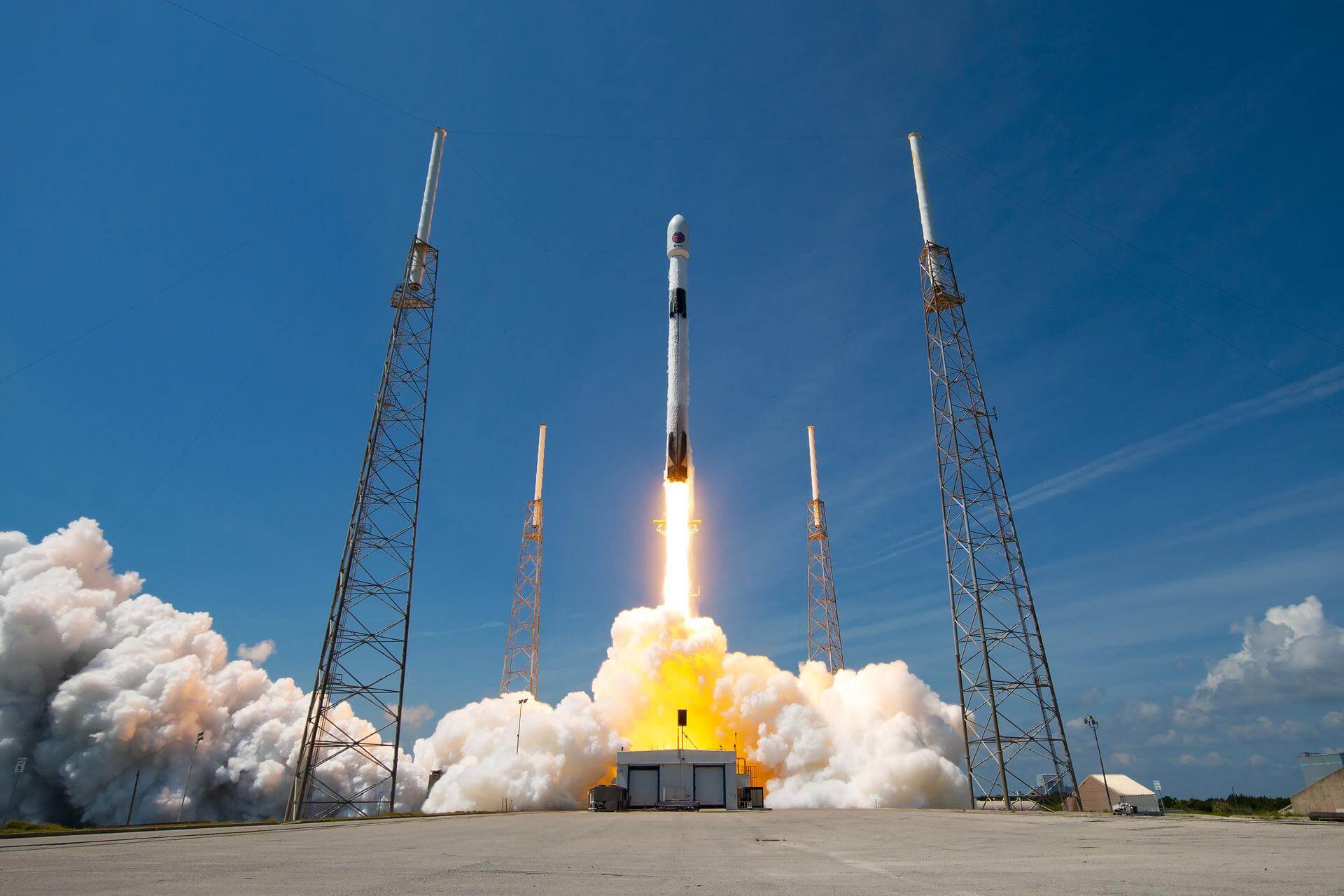
Falcon 9 Block 5 | Euclid
SpaceX | United States of AmericaCape Canaveral SFS, FL, USA
July 1, 2023, 3:12 p.m.
Status: Launch Successful
Mission:
European Space Agency telescope designed to explore the evolution of the dark Universe. It will make a 3D-map of the Universe (with time as the third dimension) by observing billions of galaxies out to 10 billion light-years, across more than a third of the sky.
Sun-Earth L2 B1080 - Flight Proven ( ) A Shortfall of GravitasFalcon 9 Block 5 | Starlink Group 5-12
SpaceX | United States of AmericaCape Canaveral SFS, FL, USA
June 23, 2023, 3:35 p.m.
Falcon 9 Block 5 | Starlink Group 5-7
SpaceX | United States of AmericaVandenberg SFB, CA, USA
June 22, 2023, 7:19 a.m.
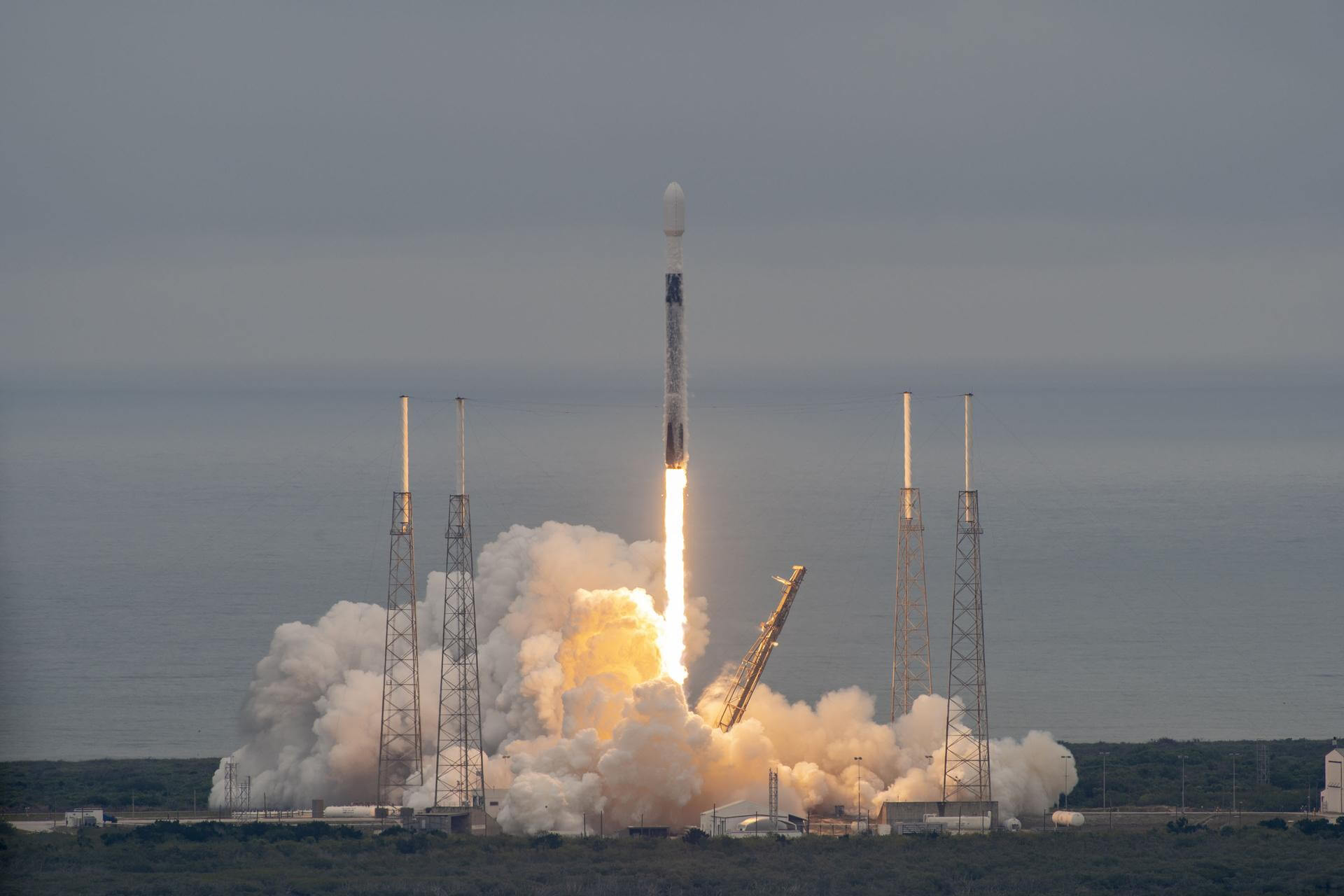
Falcon 9 Block 5 | Satria-1
SpaceX | United States of AmericaCape Canaveral SFS, FL, USA
June 18, 2023, 10:21 p.m.
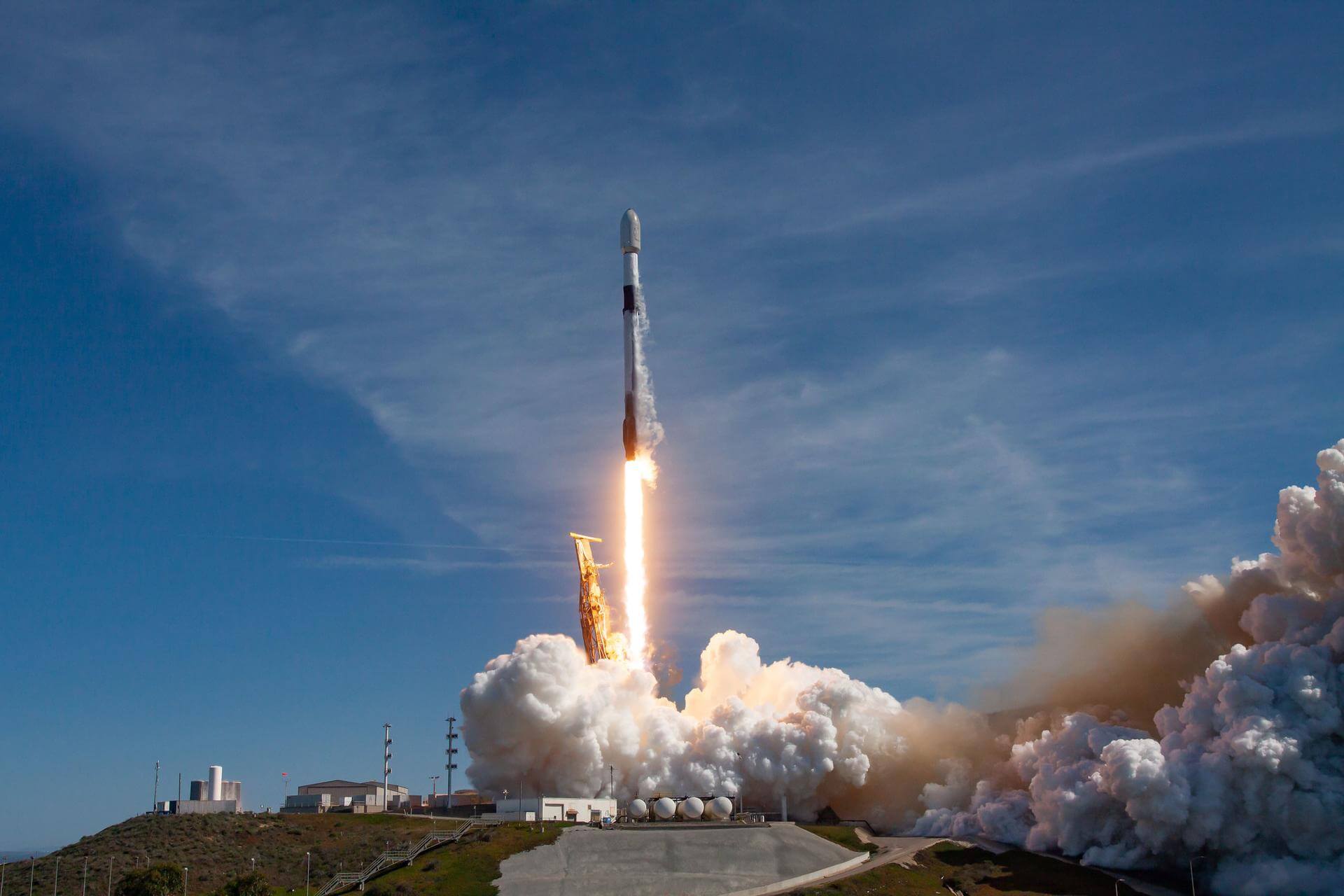
Falcon 9 Block 5 | Transporter 8 (Dedicated SSO Rideshare)
SpaceX | United States of AmericaVandenberg SFB, CA, USA
June 12, 2023, 9:35 p.m.
Falcon 9 Block 5 | Starlink Group 5-11
SpaceX | United States of AmericaCape Canaveral SFS, FL, USA
June 12, 2023, 7:10 a.m.
Falcon 9 Block 5 | Dragon CRS-2 SpX-28
SpaceX | United States of AmericaKennedy Space Center, FL, USA
June 5, 2023, 3:47 p.m.
Status: Launch Successful
Mission:
28th commercial resupply services mission to the International Space Station operated by SpaceX. The flight will be conducted under the second Commercial Resupply Services contract with NASA. Cargo Dragon 2 brings supplies and payloads, including critical materials to directly support science and research investigations that occur onboard the orbiting laboratory.
Low Earth Orbit B1077 - Flight Proven ( ) A Shortfall of GravitasFalcon 9 Block 5 | Starlink Group 6-4
SpaceX | United States of AmericaCape Canaveral SFS, FL, USA
June 4, 2023, 12:20 p.m.
Falcon 9 Block 5 | Starlink Group 2-10
SpaceX | United States of AmericaVandenberg SFB, CA, USA
May 31, 2023, 6:02 a.m.
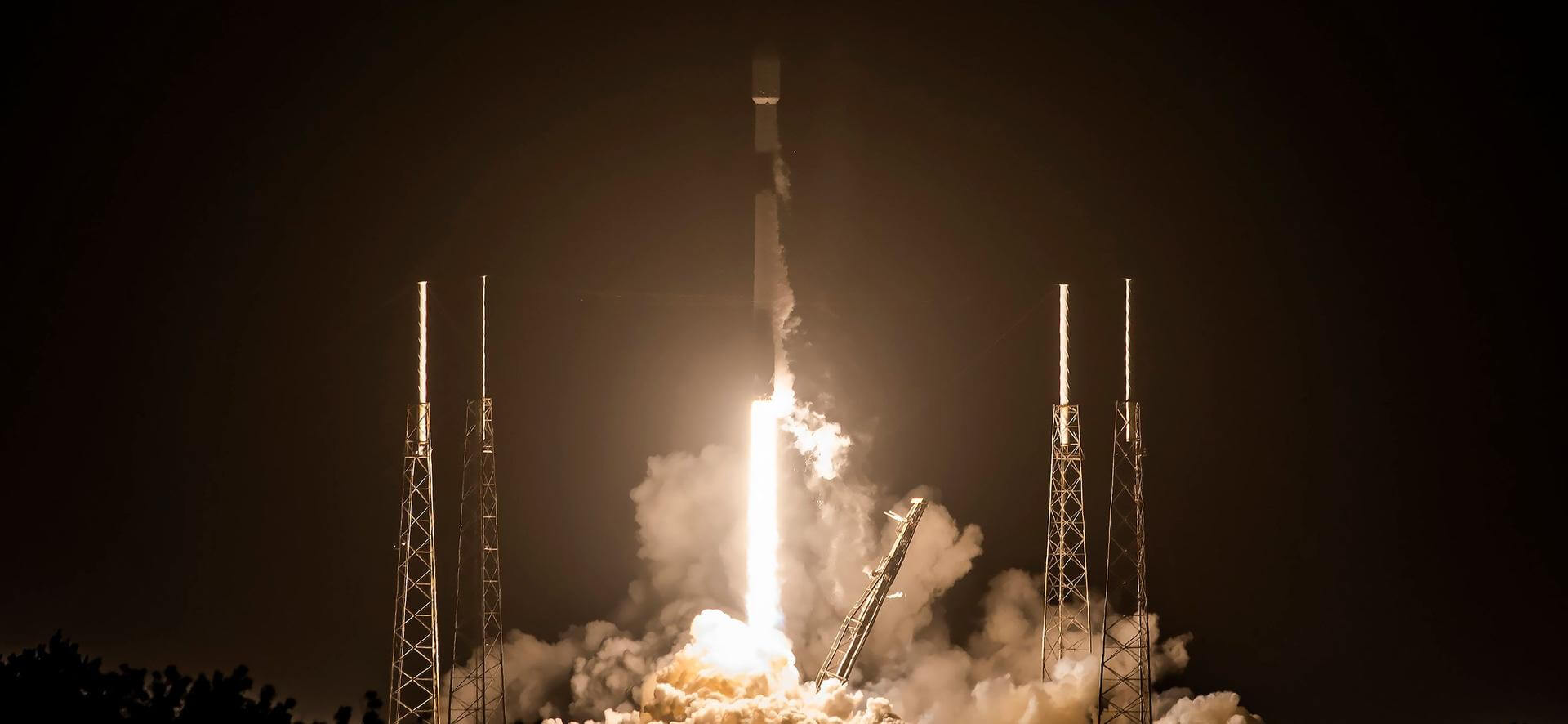
Falcon 9 Block 5 | BADR-8
SpaceX | United States of AmericaCape Canaveral SFS, FL, USA
May 27, 2023, 4:30 a.m.
Falcon 9 Block 5 | Axiom Space Mission 2
SpaceX | United States of AmericaKennedy Space Center, FL, USA
May 21, 2023, 9:37 p.m.
Status: Launch Successful
Mission:
This is a Crew Dragon flight for a private company Axiom Space. The mission will carry a professionally trained commander alongside three private astronauts to and from the International Space Station. This crew will stay aboard space station for at least eight days.
Low Earth Orbit B1080 - Maiden Flight Landing Zone 1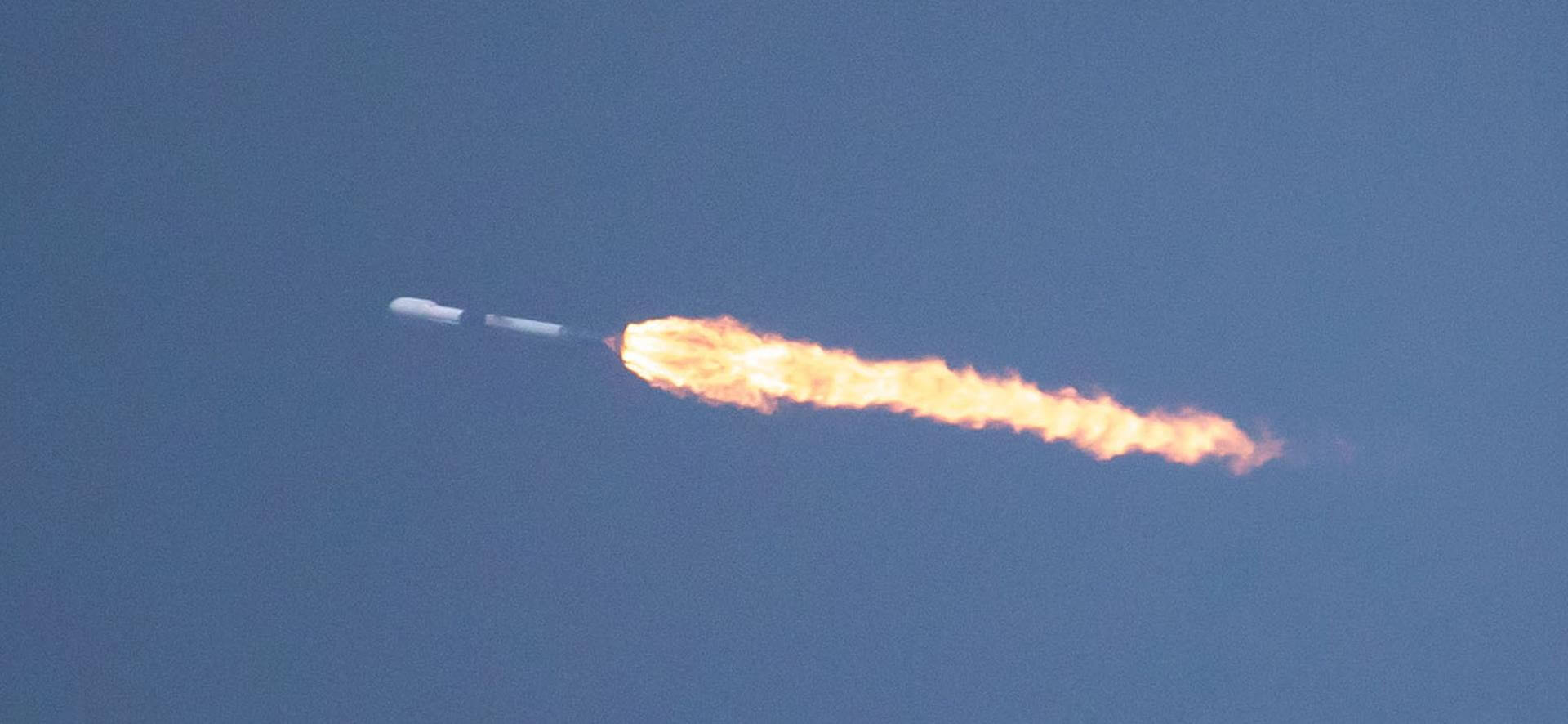
Falcon 9 Block 5 | Iridium-9 & OneWeb 19
SpaceX | United States of AmericaVandenberg SFB, CA, USA
May 20, 2023, 1:16 p.m.
Status: Launch Successful
Mission:
5 spare satellites for the Iridium NEXT constellation and 16 satellites for the OneWeb constellation (15 of current generation and 1 demonstration satellite for the next generation) on a share-ride.
Polar Orbit B1063 - Flight Proven ( ) Of Course I Still Love YouFalcon 9 Block 5 | Starlink Group 6-3
SpaceX | United States of AmericaCape Canaveral SFS, FL, USA
May 19, 2023, 6:19 a.m.
Falcon 9 Block 5 | Starlink Group 5-9
SpaceX | United States of AmericaCape Canaveral SFS, FL, USA
May 14, 2023, 5:03 a.m.
Falcon 9 Block 5 | Starlink Group 2-9
SpaceX | United States of AmericaVandenberg SFB, CA, USA
May 10, 2023, 8:09 p.m.
Falcon 9 Block 5 | Starlink Group 5-6
SpaceX | United States of AmericaCape Canaveral SFS, FL, USA
May 4, 2023, 7:31 a.m.
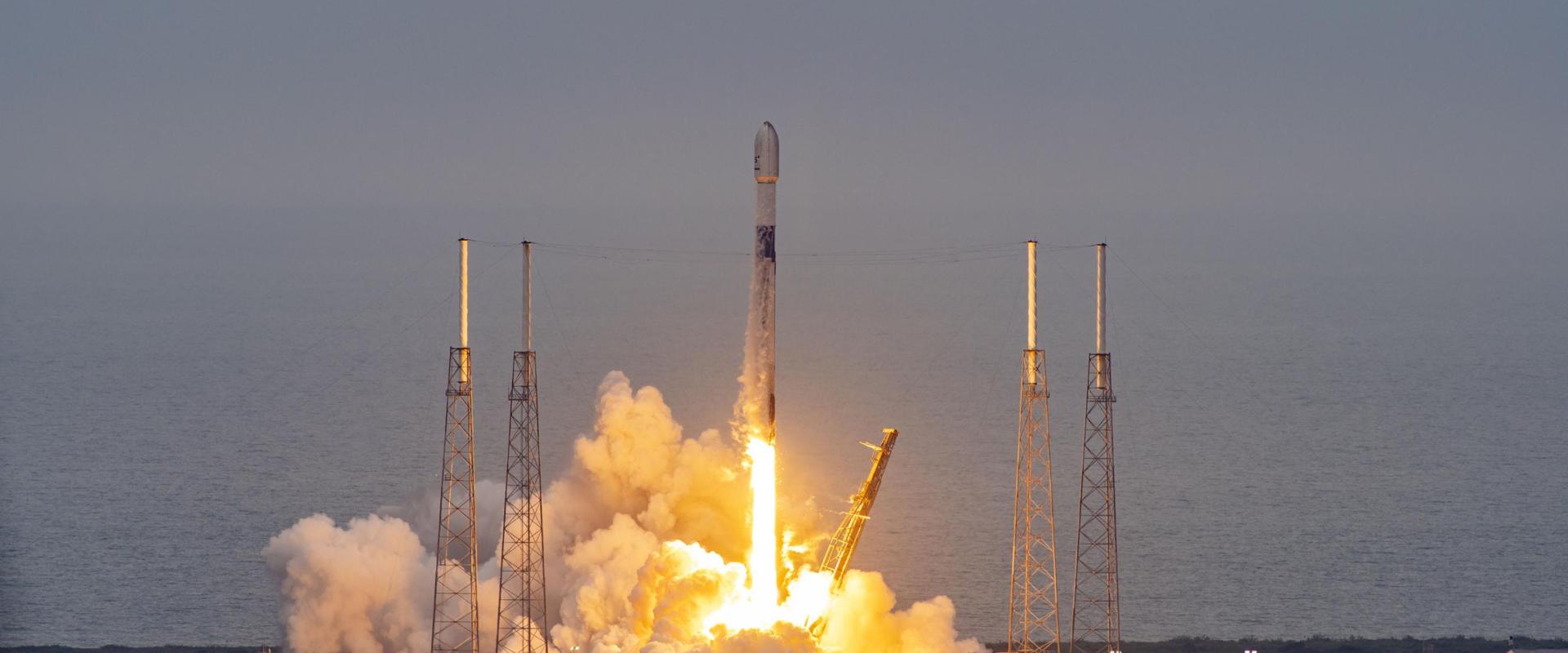
Falcon 9 Block 5 | O3b mPower 3 & 4
SpaceX | United States of AmericaCape Canaveral SFS, FL, USA
April 28, 2023, 10:12 p.m.
Falcon 9 Block 5 | Starlink Group 3-5
SpaceX | United States of AmericaVandenberg SFB, CA, USA
April 27, 2023, 1:40 p.m.
Falcon 9 Block 5 | Starlink Group 6-2
SpaceX | United States of AmericaCape Canaveral SFS, FL, USA
April 19, 2023, 2:31 p.m.
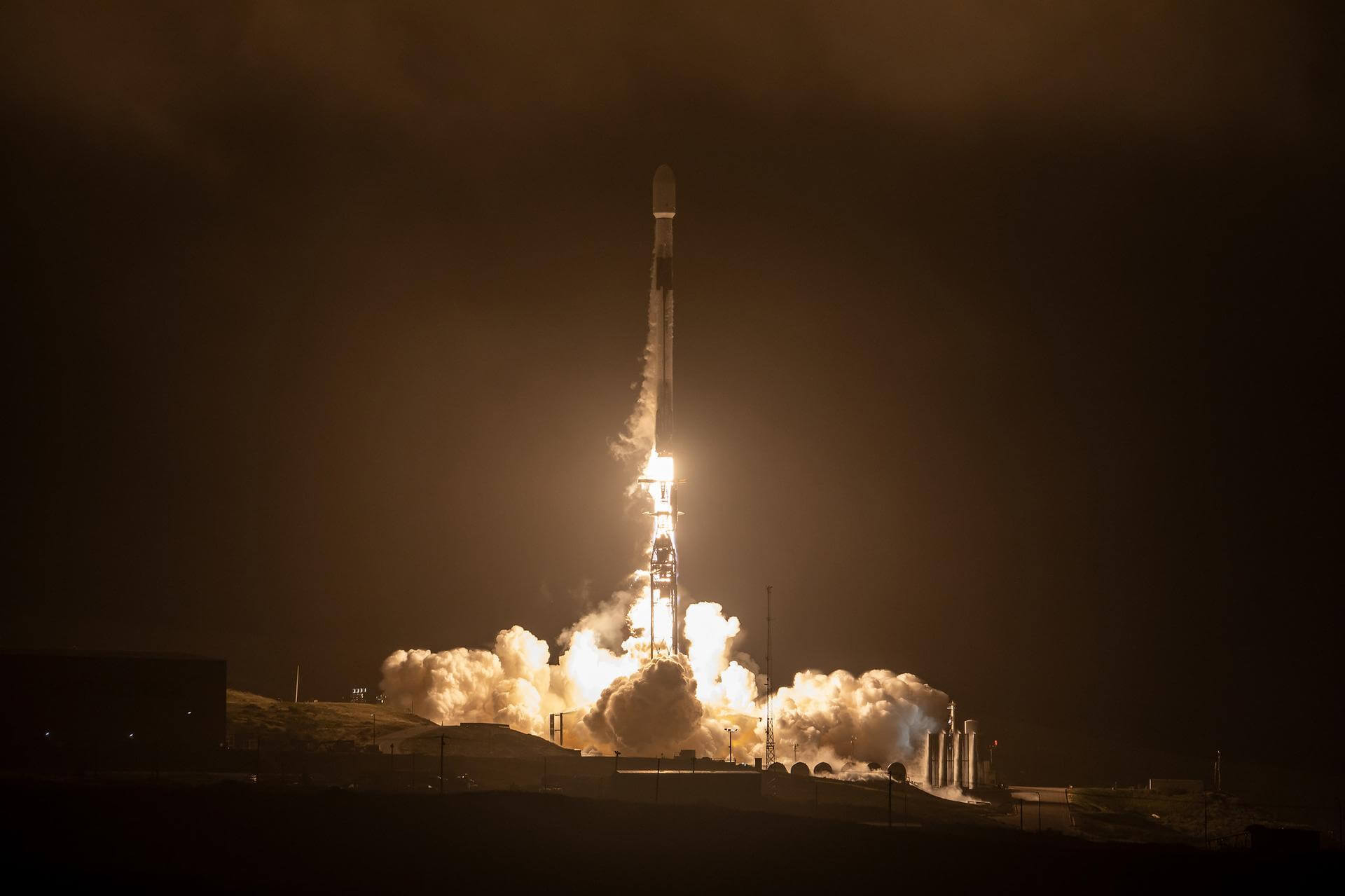
Falcon 9 Block 5 | Transporter 7 (Dedicated SSO Rideshare)
SpaceX | United States of AmericaVandenberg SFB, CA, USA
April 15, 2023, 6:47 a.m.
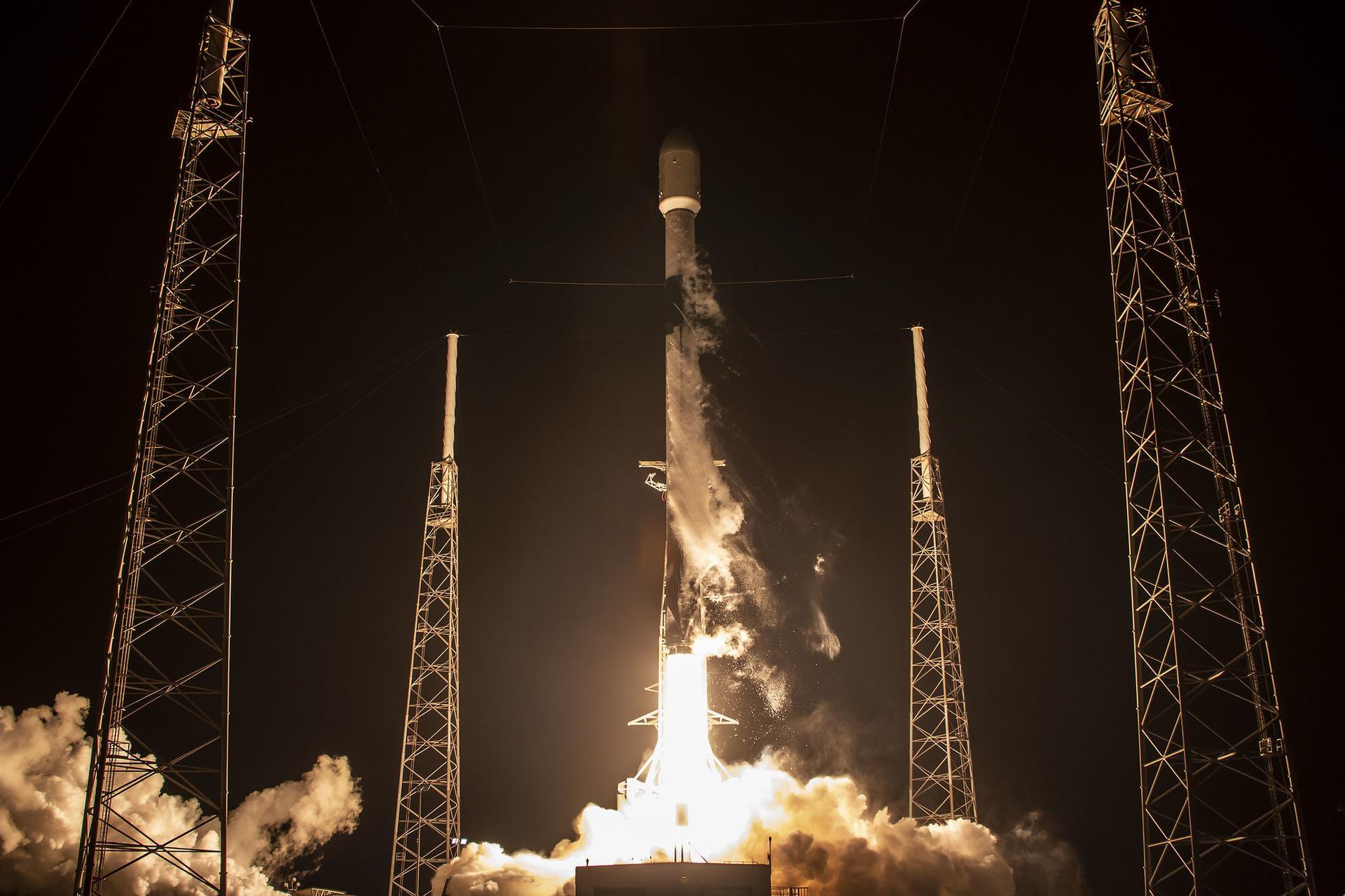
Falcon 9 Block 5 | Intelsat 40e
SpaceX | United States of AmericaCape Canaveral SFS, FL, USA
April 7, 2023, 4:30 a.m.
Status: Launch Successful
Mission:
Intelsat 40e is an advanced geostationary satellite that will provide Intelsat’s government and enterprise customers across North and Central America with high-throughput, “coast-to-coast” services. The satellite’s capabilities will support the growing number of customers that depend on Intelsat’s managed services and solutions to easily integrate satellite into their overall networking and communications strategies. Hosted on the Intelsat 40e satellite is NASA’s Tropospheric Emissions: Monitoring of Pollution (TEMPO), an Earth science instrument that will observe air pollution over North America in unprecedented detail.
Geostationary Transfer Orbit B1076 - Flight Proven ( ) A Shortfall of Gravitas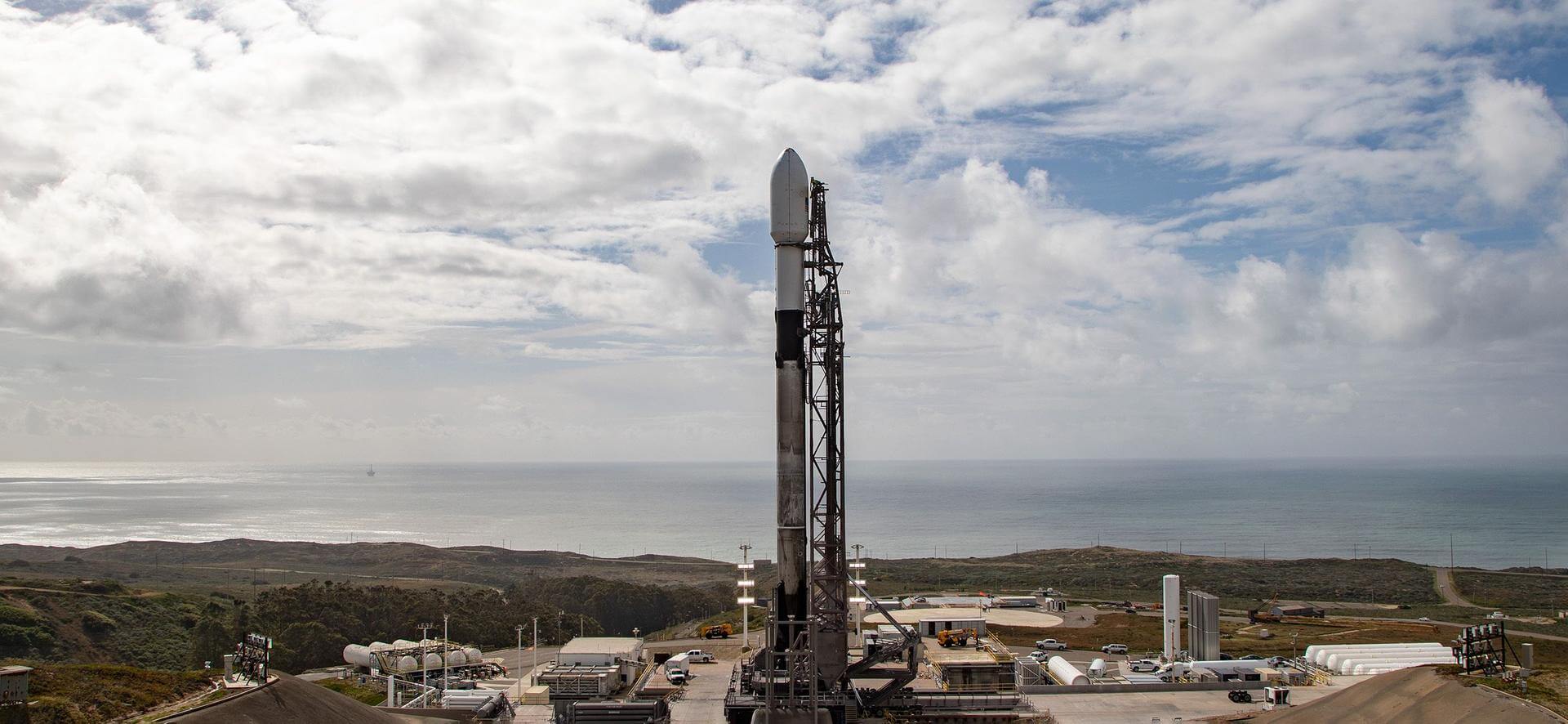
Falcon 9 Block 5 | SDA Tranche 0A
SpaceX | United States of AmericaVandenberg SFB, CA, USA
April 2, 2023, 2:29 p.m.
Falcon 9 Block 5 | Starlink Group 5-10
SpaceX | United States of AmericaCape Canaveral SFS, FL, USA
March 29, 2023, 8:01 p.m.
Falcon 9 Block 5 | Starlink Group 5-5
SpaceX | United States of AmericaCape Canaveral SFS, FL, USA
March 24, 2023, 3:43 p.m.
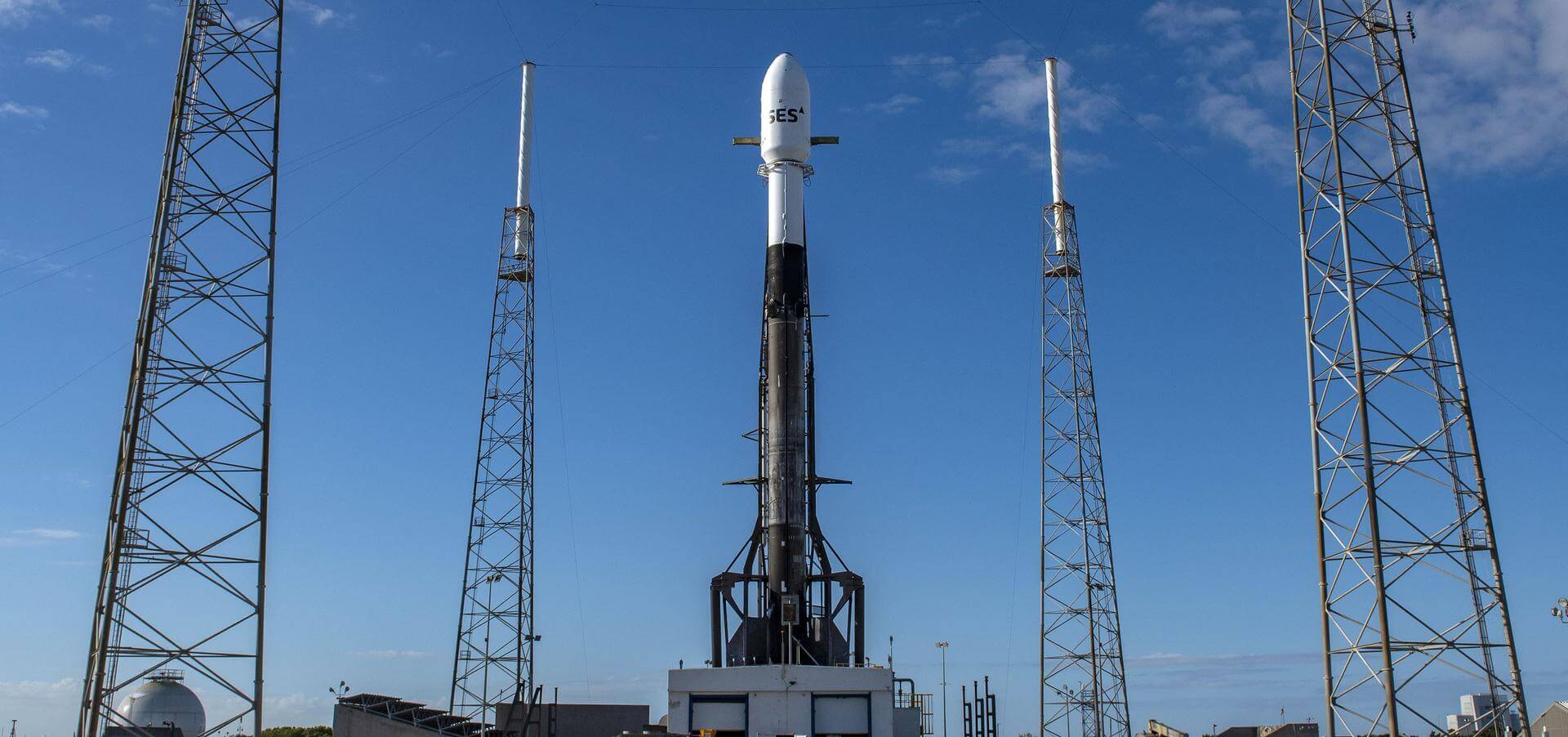
Falcon 9 Block 5 | SES-18 & SES-19
SpaceX | United States of AmericaCape Canaveral SFS, FL, USA
March 17, 2023, 11:38 p.m.
Falcon 9 Block 5 | Starlink Group 2-8
SpaceX | United States of AmericaVandenberg SFB, CA, USA
March 17, 2023, 7:26 p.m.
Falcon 9 Block 5 | Dragon CRS-2 SpX-27
SpaceX | United States of AmericaKennedy Space Center, FL, USA
March 15, 2023, 12:30 a.m.
Status: Launch Successful
Mission:
27th commercial resupply services mission to the International Space Station operated by SpaceX. The flight will be conducted under the second Commercial Resupply Services contract with NASA. Cargo Dragon 2 brings supplies and payloads, including critical materials to directly support science and research investigations that occur onboard the orbiting laboratory.
Low Earth Orbit B1073 - Flight Proven ( ) A Shortfall of Gravitas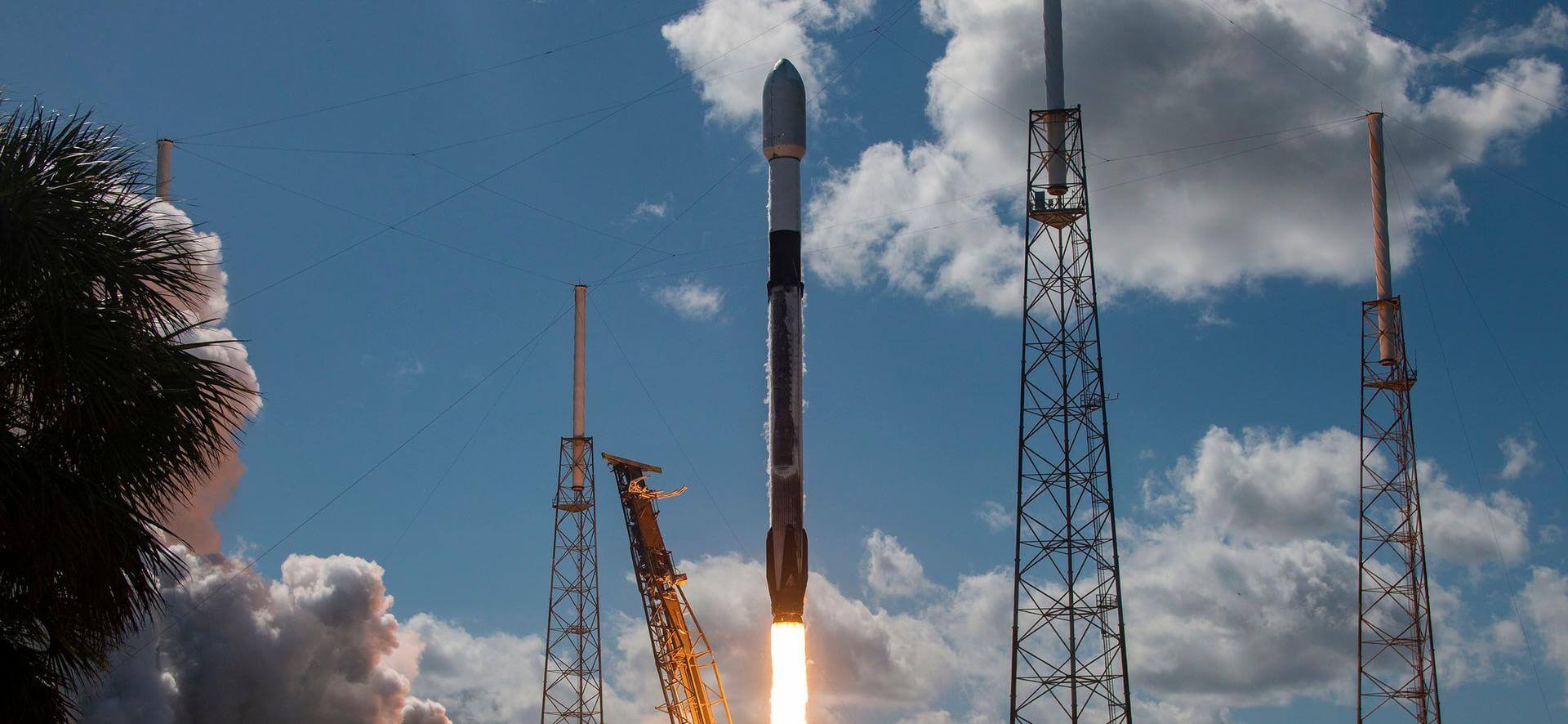
Falcon 9 Block 5 | OneWeb 17
SpaceX | United States of AmericaCape Canaveral SFS, FL, USA
March 9, 2023, 7:13 p.m.
Status: Launch Successful
Mission:
A batch of 40 satellites for the OneWeb satellite constellation, which is intended to provide global Internet broadband service for individual consumers. The constellation is planned to have around 648 microsatellites (of which 60 are spares), around 150 kg each, operating in Ku-band from low Earth orbit.
Polar Orbit B1062 - Flight Proven ( ) Landing Zone 1Falcon 9 Block 5 | Starlink Group 2-7
SpaceX | United States of AmericaVandenberg SFB, CA, USA
March 3, 2023, 6:38 p.m.
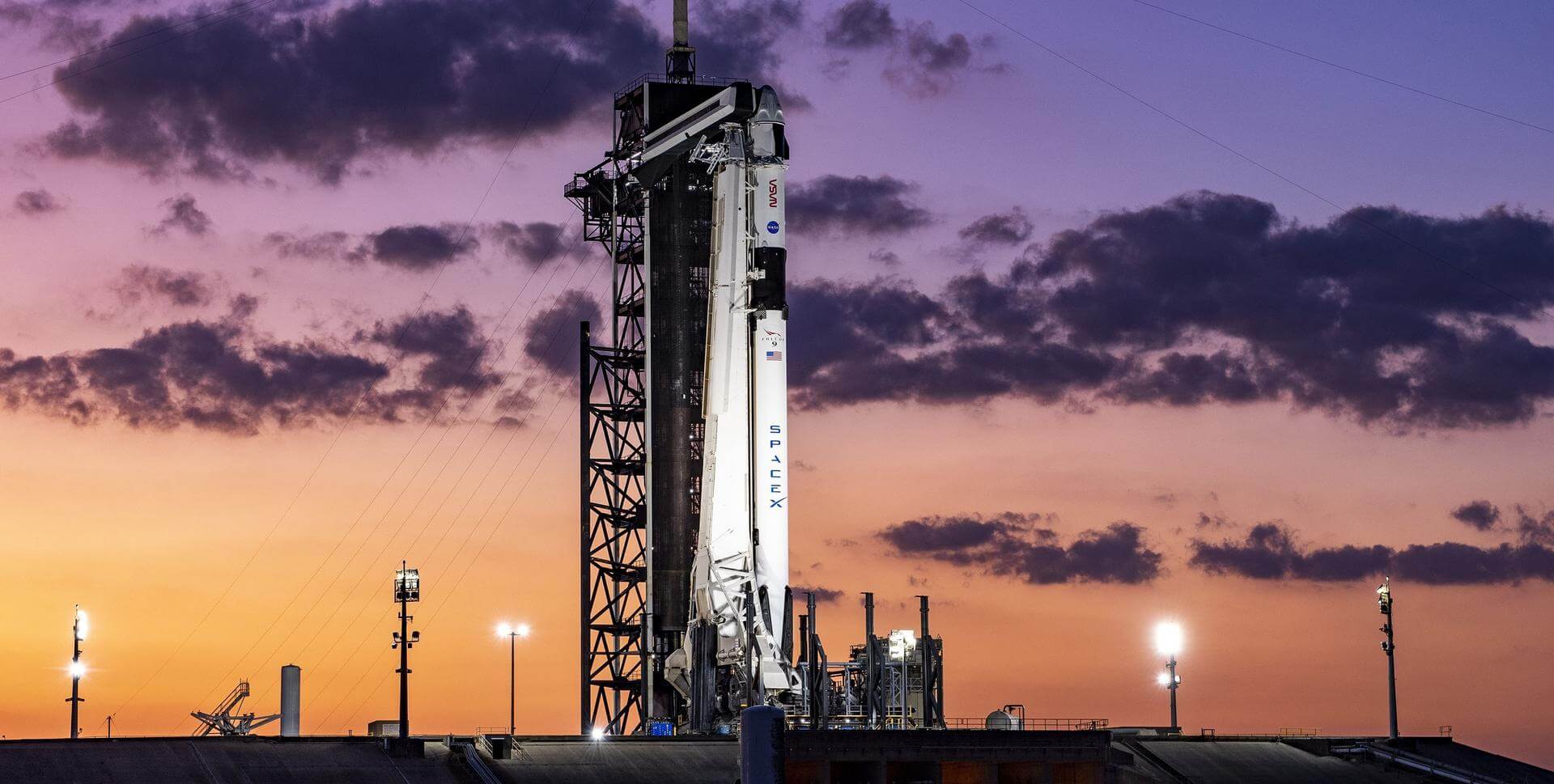
Falcon 9 Block 5 | Crew-6
SpaceX | United States of AmericaKennedy Space Center, FL, USA
March 2, 2023, 5:34 a.m.
Falcon 9 Block 5 | Starlink Group 6-1
SpaceX | United States of AmericaCape Canaveral SFS, FL, USA
Feb. 27, 2023, 11:13 p.m.
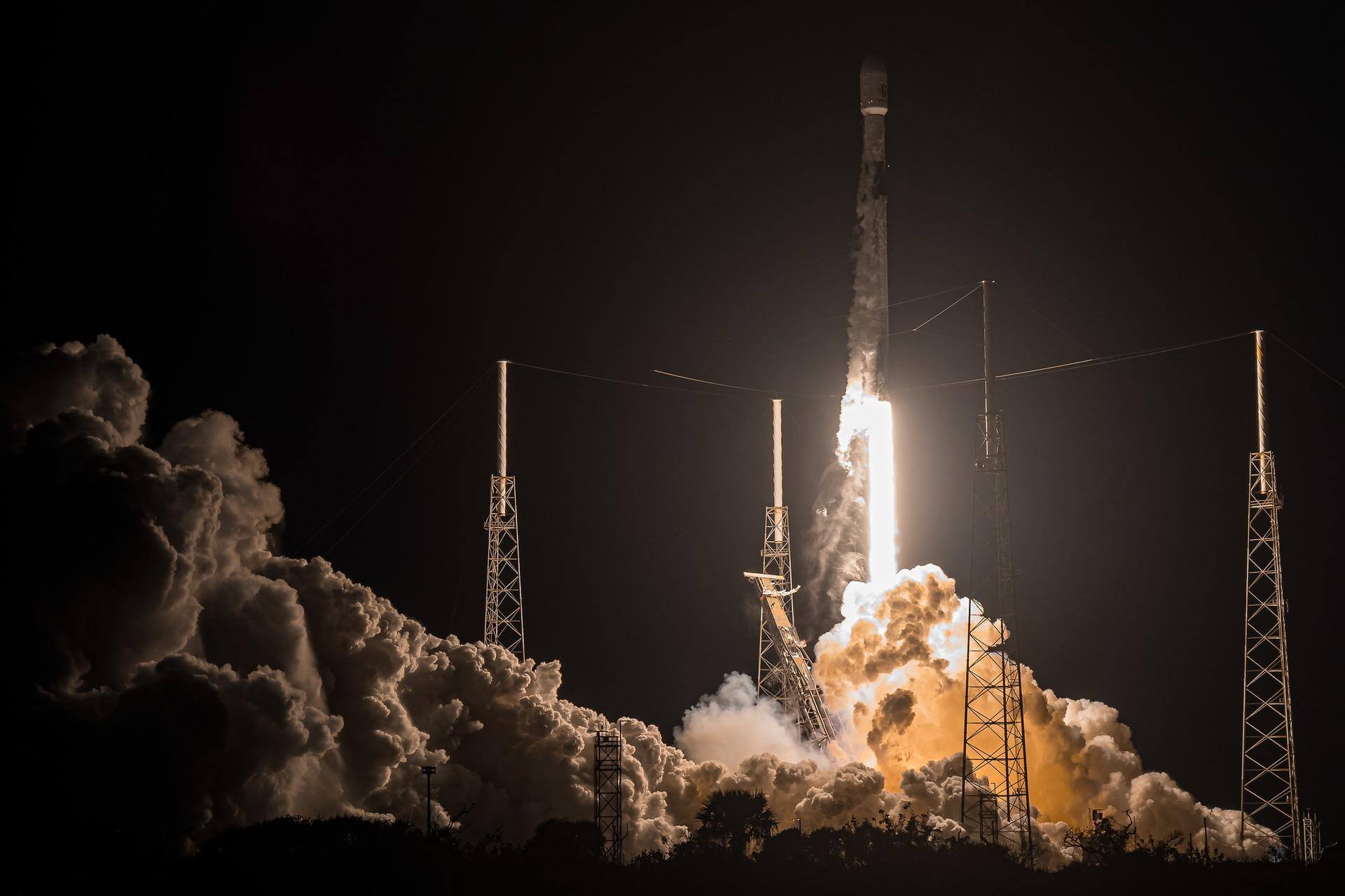
Falcon 9 Block 5 | Inmarsat-6 F2
SpaceX | United States of AmericaCape Canaveral SFS, FL, USA
Feb. 18, 2023, 3:59 a.m.
Status: Launch Successful
Mission:
Inmarsat-6 is the sixth generation of satellites for the London-based global mobile satellite communications operator Inmarsat. It consists of a dual mission to augment both L-band and Ka-band Global Xpress services. Airbus Defence and Space has been awarded a contract by Inmarsat to design and develop the first two Inmarsat-6 (I-6) mobile communications satellites, creating the most versatile mobile services satellites in its fleet. The two I-6 satellites are based on Airbus Defence and Space's Eurostar platform in its E3000e variant, which exclusively uses electric propulsion for orbit raising. The satellites take advantage of the reduction in mass that this electric propulsion technology enables for a dual payload mission, with an exceptionally large next generation digitally processed payload. I-6 F1 and F2 both carry a large 9 m aperture L-band antenna and nine multibeam Ka-band antennas, and feature a high level of flexibility and connectivity. A new generation modular digital processor provides full routing flexibility over up to 8000 channels and dynamic power allocation to over 200 spot beams in L-band. Ka-band spot beams are steerable over the full Earth disk, with flexible channel to beam allocation.
Geostationary Transfer Orbit B1077 - Flight Proven ( ) Just Read the InstructionsFalcon 9 Block 5 | Starlink Group 2-5
SpaceX | United States of AmericaVandenberg SFB, CA, USA
Feb. 17, 2023, 7:12 p.m.
Falcon 9 Block 5 | Starlink Group 5-4
SpaceX | United States of AmericaCape Canaveral SFS, FL, USA
Feb. 12, 2023, 5:10 a.m.
Falcon 9 Block 5 | Amazonas Nexus
SpaceX | United States of AmericaCape Canaveral SFS, FL, USA
Feb. 7, 2023, 1:32 a.m.
Falcon 9 Block 5 | Starlink Group 5-3
SpaceX | United States of AmericaKennedy Space Center, FL, USA
Feb. 2, 2023, 7:58 a.m.
Falcon 9 Block 5 | Starlink Group 2-6 & ION SCV009
SpaceX | United States of AmericaVandenberg SFB, CA, USA
Jan. 31, 2023, 4:15 p.m.
Status: Launch Successful
Mission:
A batch of 49 satellites for the Starlink mega-constellation - SpaceX's project for space-based Internet communication system. This launch carries D-Orbit’s ION SCV009 Eclectic Elena as a rideshare payload.
Low Earth Orbit B1071 - Flight Proven ( ) Of Course I Still Love YouFalcon 9 Block 5 | Starlink Group 5-2
SpaceX | United States of AmericaCape Canaveral SFS, FL, USA
Jan. 26, 2023, 9:32 a.m.
Falcon 9 Block 5 | Starlink Group 2-4
SpaceX | United States of AmericaVandenberg SFB, CA, USA
Jan. 19, 2023, 3:43 p.m.
Falcon 9 Block 5 | GPS III SV06
SpaceX | United States of AmericaCape Canaveral SFS, FL, USA
Jan. 18, 2023, 12:24 p.m.
Status: Launch Successful
Mission:
GPS-IIIA (Global Positioning System) is the first evolution stage of the third generation of the GPS satellites. It consists of the first ten (known as "tranche") of GPS III satellites.
Medium Earth Orbit B1077 - Flight Proven ( ) A Shortfall of GravitasFalcon 9 Block 5 | OneWeb 16
SpaceX | United States of AmericaCape Canaveral SFS, FL, USA
Jan. 10, 2023, 4:50 a.m.
Status: Launch Successful
Mission:
A batch of 48 satellites for the OneWeb satellite constellation, which is intended to provide global Internet broadband service for individual consumers. The constellation is planned to have around 648 microsatellites (of which 60 are spares), around 150 kg each, operating in Ku-band from low Earth orbit.
Polar Orbit B1076 - Flight Proven ( ) Landing Zone 1Falcon 9 Block 5 | Transporter 6 (Dedicated SSO Rideshare)
SpaceX | United States of AmericaCape Canaveral SFS, FL, USA
Jan. 3, 2023, 2:55 p.m.
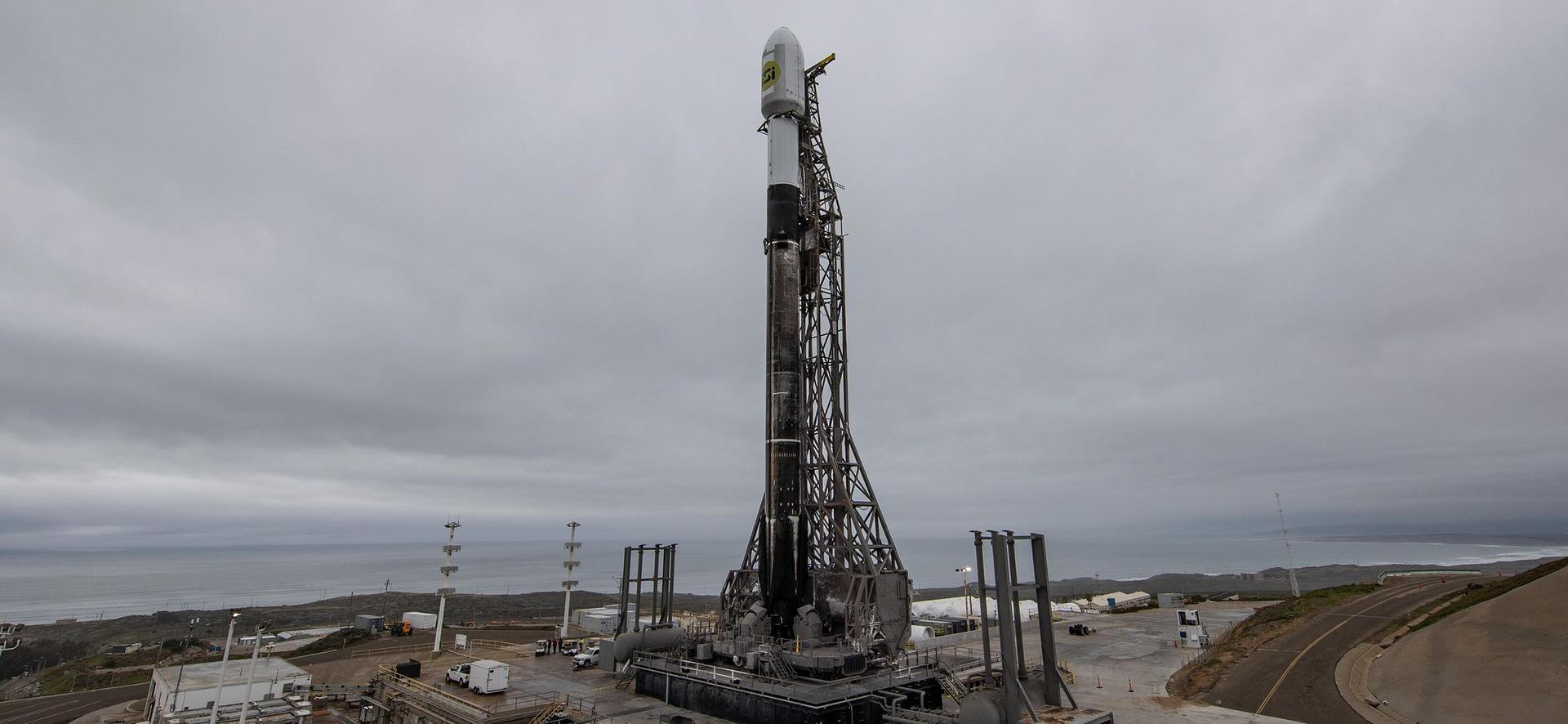
Falcon 9 Block 5 | EROS-C3
SpaceX | United States of AmericaVandenberg SFB, CA, USA
Dec. 30, 2022, 7:38 a.m.
Status: Launch Successful
Mission:
Israeli Earth Observation satellite with 38 cm resolution in panchromatic mode and 76 cm resolution in multi-spectral mode, covering a swath of ~12.5 km. The satellite is similar to OPTSAT-3000 built by Israel Aerospace Industries (IAI) for the Italian Defense Ministry.
Low Earth Orbit B1061 - Flight Proven ( ) Landing Zone 4Falcon 9 Block 5 | Starlink Group 5-1
SpaceX | United States of AmericaCape Canaveral SFS, FL, USA
Dec. 28, 2022, 9:34 a.m.
Falcon 9 Block 5 | Starlink Group 4-37
SpaceX | United States of AmericaKennedy Space Center, FL, USA
Dec. 17, 2022, 9:32 p.m.
Falcon 9 Block 5 | O3b mPower 1 & 2
SpaceX | United States of AmericaCape Canaveral SFS, FL, USA
Dec. 16, 2022, 10:48 p.m.
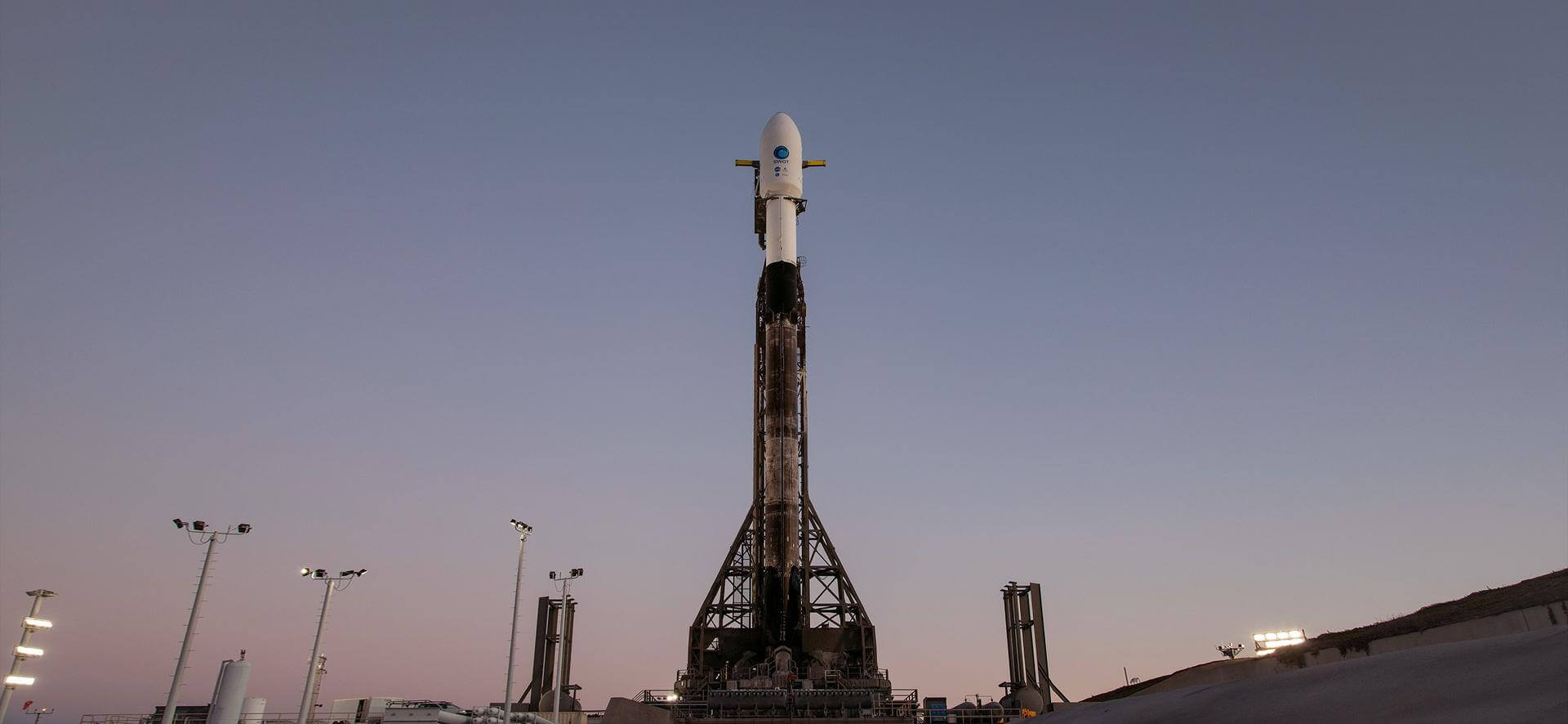
Falcon 9 Block 5 | SWOT (Surface Water and Ocean Topography)
SpaceX | United States of AmericaVandenberg SFB, CA, USA
Dec. 16, 2022, 11:46 a.m.
Status: Launch Successful
Mission:
Satellite altimeter jointly developed by NASA and CNES, the French space agency, in partnership with the Canadian Space Agency (CSA) and UK Space Agency (UKSA) designed to make the first global survey of the Earth's surface water, to observe the fine details of the ocean surface topography, and to measure how terrestrial surface water bodies change over time.
Low Earth Orbit B1071 - Flight Proven ( ) Landing Zone 4Falcon 9 Block 5 | Hakuto-R M1 & Lunar Flashlight
SpaceX | United States of AmericaCape Canaveral SFS, FL, USA
Dec. 11, 2022, 7:38 a.m.
Status: Launch Successful
Mission:
First mission of the Hakuto-R commercial lunar lander developed by private Japanese company ispace. Rideshare includes Lunar Flashlight, NASA's cubesat that will search for water ice at the Moon’s South Pole.
Lunar Orbit B1073 - Flight Proven ( ) Landing Zone 2Falcon 9 Block 5 | OneWeb 15
SpaceX | United States of AmericaKennedy Space Center, FL, USA
Dec. 8, 2022, 10:27 p.m.
Status: Launch Successful
Mission:
A batch of 40 satellites for the OneWeb satellite constellation, which is intended to provide global Internet broadband service for individual consumers. The constellation is planned to have around 648 microsatellites (of which 60 are spares), around 150 kg each, operating in Ku-band from low Earth orbit.
Polar Orbit B1069 - Flight Proven ( ) Landing Zone 1Falcon 9 Block 5 | Dragon CRS-2 SpX-26
SpaceX | United States of AmericaKennedy Space Center, FL, USA
Nov. 26, 2022, 7:20 p.m.
Status: Launch Successful
Mission:
26th commercial resupply services mission to the International Space Station operated by SpaceX. The flight will be conducted under the second Commercial Resupply Services contract with NASA. Cargo Dragon 2 brings supplies and payloads, including critical materials to directly support science and research investigations that occur onboard the orbiting laboratory.
Low Earth Orbit B1076 - Maiden Flight Just Read the InstructionsFalcon 9 Block 5 | Eutelsat 10B
SpaceX | United States of AmericaCape Canaveral SFS, FL, USA
Nov. 23, 2022, 2:57 a.m.
Falcon 9 Block 5 | Galaxy 31 & 32
SpaceX | United States of AmericaCape Canaveral SFS, FL, USA
Nov. 12, 2022, 4:06 p.m.
Falcon 9 Block 5 | Hotbird 13G
SpaceX | United States of AmericaCape Canaveral SFS, FL, USA
Nov. 3, 2022, 5:22 a.m.
Status: Launch Successful
Mission:
Hotbird 13G is a communications satellite built by Airbus Defense and Space which will provide television broadcast services over Europe, the Middle East, and North Africa for Eutelsat.
Geostationary Transfer Orbit B1067 - Flight Proven ( ) Just Read the InstructionsFalcon 9 Block 5 | Starlink Group 4-31
SpaceX | United States of AmericaVandenberg SFB, CA, USA
Oct. 28, 2022, 1:14 a.m.
Falcon 9 Block 5 | Starlink Group 4-36
SpaceX | United States of AmericaCape Canaveral SFS, FL, USA
Oct. 20, 2022, 2:50 p.m.
Falcon 9 Block 5 | Hotbird 13F
SpaceX | United States of AmericaCape Canaveral SFS, FL, USA
Oct. 15, 2022, 5:22 a.m.
Falcon 9 Block 5 | Galaxy 33 & 34
SpaceX | United States of AmericaCape Canaveral SFS, FL, USA
Oct. 8, 2022, 11:05 p.m.
Falcon 9 Block 5 | Starlink Group 4-29
SpaceX | United States of AmericaVandenberg SFB, CA, USA
Oct. 5, 2022, 11:10 p.m.
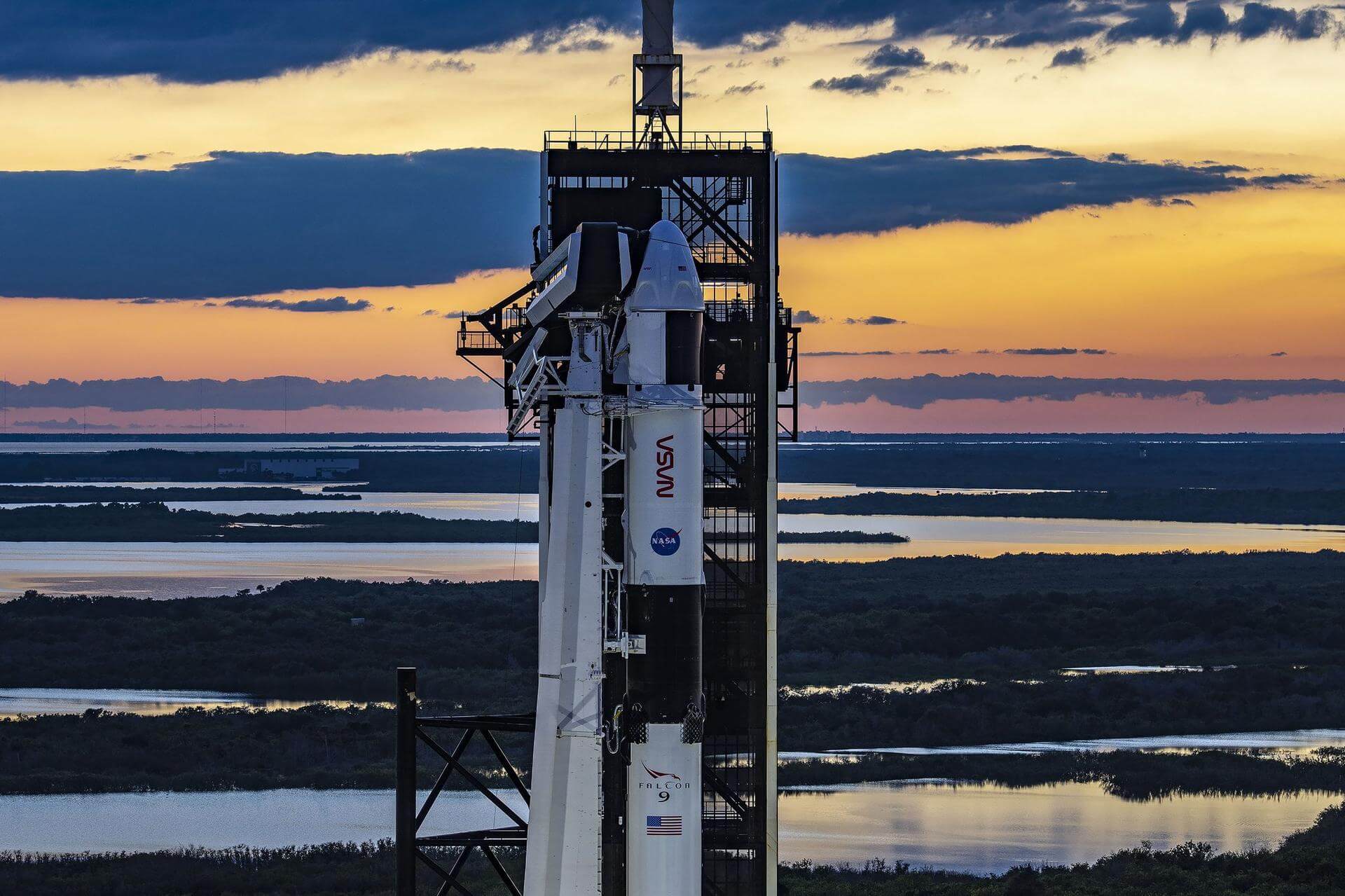
Falcon 9 Block 5 | Crew-5
SpaceX | United States of AmericaKennedy Space Center, FL, USA
Oct. 5, 2022, 4 p.m.
Falcon 9 Block 5 | Starlink Group 4-35
SpaceX | United States of AmericaCape Canaveral SFS, FL, USA
Sept. 24, 2022, 11:32 p.m.
Falcon 9 Block 5 | Starlink Group 4-34
SpaceX | United States of AmericaCape Canaveral SFS, FL, USA
Sept. 19, 2022, 12:18 a.m.
Falcon 9 Block 5 | Starlink Group 4-2 & BlueWalker 3
SpaceX | United States of AmericaKennedy Space Center, FL, USA
Sept. 11, 2022, 1:20 a.m.
Status: Launch Successful
Mission:
A batch of 34 satellites for Starlink mega-constellation - SpaceX's project for space-based Internet communication system. BlueWalker 3 is a rideshare test satellite for AST SpaceMobile’s planned space-based cellular broadband network.
Low Earth Orbit B1058 - Flight Proven ( ) A Shortfall of GravitasFalcon 9 Block 5 | Starlink Group 4-20 & Varuna-TDM
SpaceX | United States of AmericaCape Canaveral SFS, FL, USA
Sept. 5, 2022, 2:09 a.m.
Status: Launch Successful
Mission:
A batch of 51 satellites for Starlink mega-constellation - SpaceX's project for space-based Internet communication system. Spaceflight's propulsive Sherpa-LTC2 space tug is also onboard as a rideshare to deploy into Boeing’s Varuna Technology Demonstration Mission in a higher orbit.
Low Earth Orbit B1052 - Flight Proven ( ) Just Read the InstructionsFalcon 9 Block 5 | Starlink Group 3-4
SpaceX | United States of AmericaVandenberg SFB, CA, USA
Aug. 31, 2022, 5:40 a.m.
Falcon 9 Block 5 | Starlink Group 4-23
SpaceX | United States of AmericaCape Canaveral SFS, FL, USA
Aug. 28, 2022, 3:41 a.m.
Falcon 9 Block 5 | Starlink Group 4-27
SpaceX | United States of AmericaCape Canaveral SFS, FL, USA
Aug. 19, 2022, 7:21 p.m.
Falcon 9 Block 5 | Starlink Group 3-3
SpaceX | United States of AmericaVandenberg SFB, CA, USA
Aug. 12, 2022, 9:40 p.m.
Falcon 9 Block 5 | Starlink Group 4-26
SpaceX | United States of AmericaKennedy Space Center, FL, USA
Aug. 10, 2022, 2:14 a.m.
Falcon 9 Block 5 | Danuri (KPLO - Korean Pathfinder Lunar Orbiter)
SpaceX | United States of AmericaCape Canaveral SFS, FL, USA
Aug. 4, 2022, 11:08 p.m.
Falcon 9 Block 5 | Starlink Group 4-25
SpaceX | United States of AmericaKennedy Space Center, FL, USA
July 24, 2022, 1:38 p.m.
Falcon 9 Block 5 | Starlink Group 3-2
SpaceX | United States of AmericaVandenberg SFB, CA, USA
July 22, 2022, 5:39 p.m.
Falcon 9 Block 5 | Starlink Group 4-22
SpaceX | United States of AmericaCape Canaveral SFS, FL, USA
July 17, 2022, 2:20 p.m.
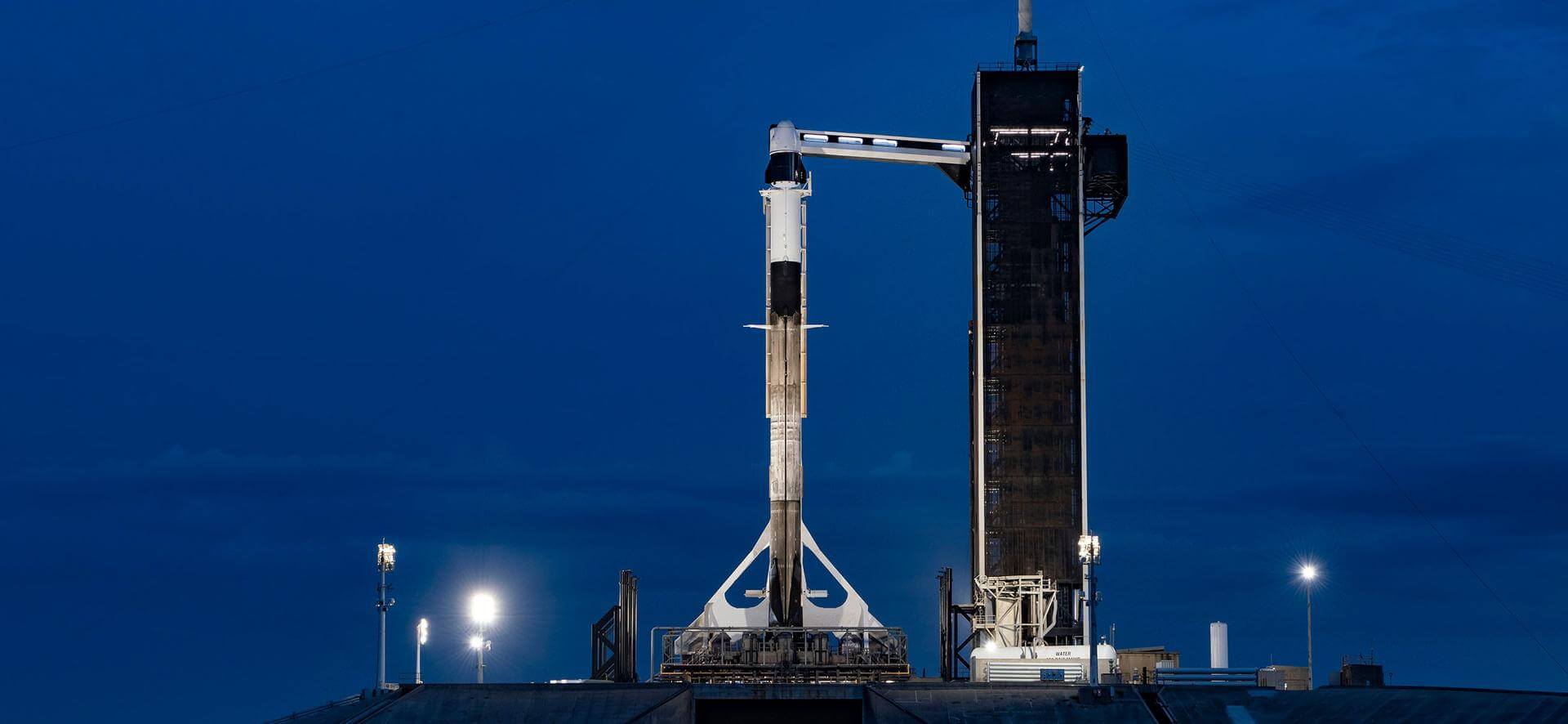
Falcon 9 Block 5 | Dragon CRS-2 SpX-25
SpaceX | United States of AmericaKennedy Space Center, FL, USA
July 15, 2022, 12:44 a.m.
Status: Launch Successful
Mission:
25th commercial resupply services mission to the International Space Station operated by SpaceX. The flight will be conducted under the second Commercial Resupply Services contract with NASA. Cargo Dragon 2 brings supplies and payloads, including critical materials to directly support science and research investigations that occur onboard the orbiting laboratory.
Low Earth Orbit B1067 - Flight Proven ( ) A Shortfall of GravitasFalcon 9 Block 5 | Starlink Group 3-1
SpaceX | United States of AmericaVandenberg SFB, CA, USA
July 11, 2022, 1:39 a.m.
Falcon 9 Block 5 | Starlink Group 4-21
SpaceX | United States of AmericaCape Canaveral SFS, FL, USA
July 7, 2022, 1:11 p.m.
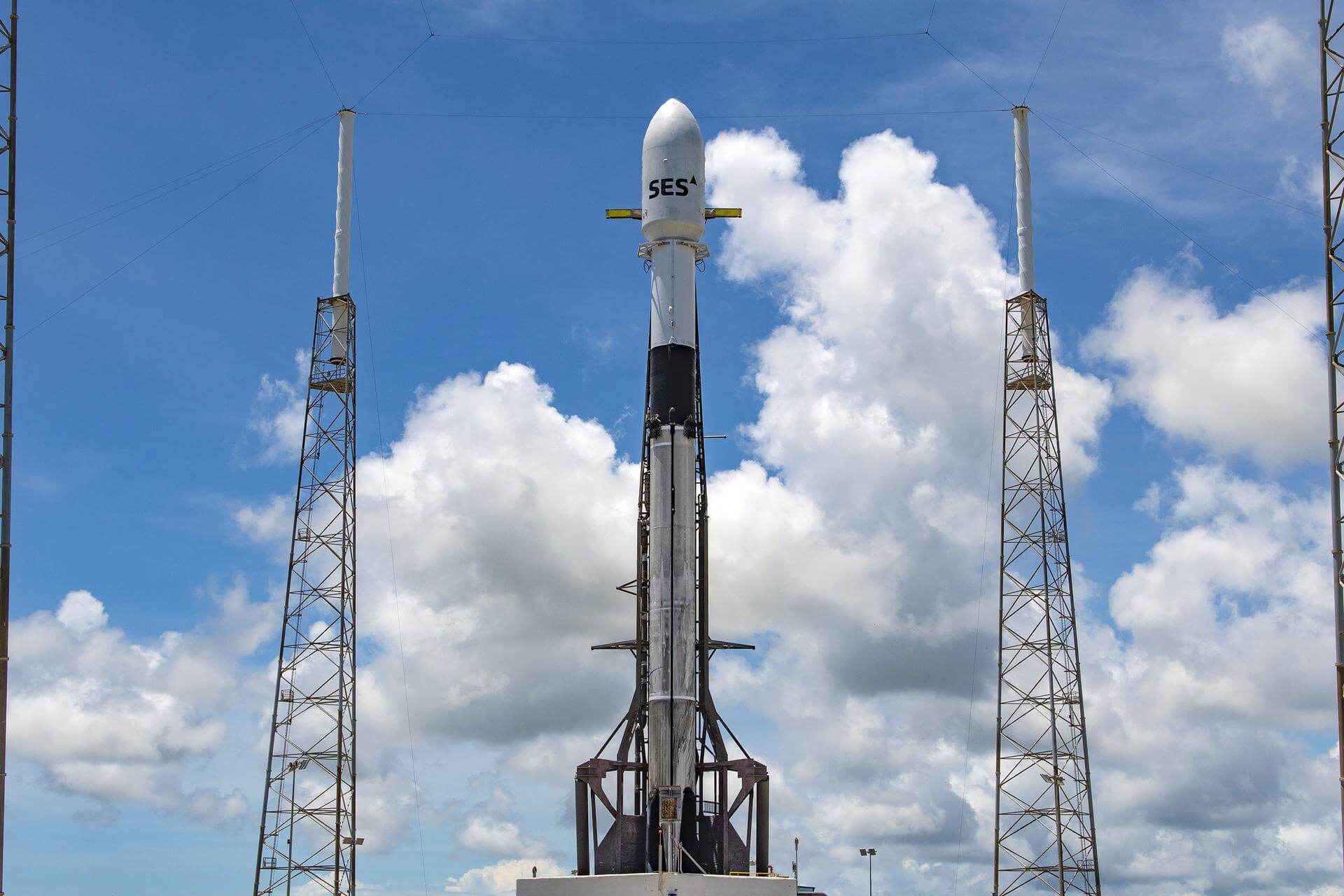
Falcon 9 Block 5 | SES-22
SpaceX | United States of AmericaCape Canaveral SFS, FL, USA
June 29, 2022, 9:04 p.m.
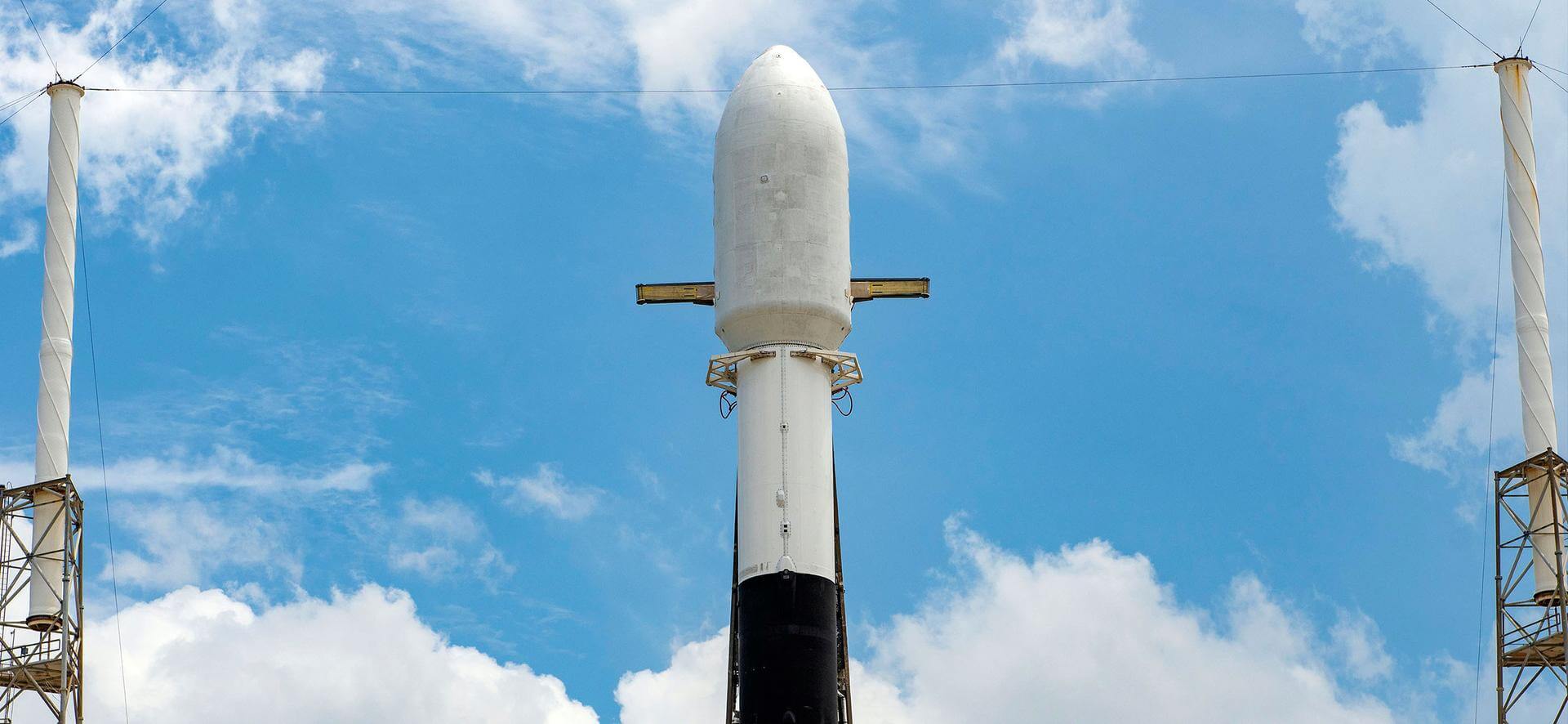
Falcon 9 Block 5 | Globalstar-2 FM15 & USA 328-331
SpaceX | United States of AmericaCape Canaveral SFS, FL, USA
June 19, 2022, 4:27 a.m.
Status: Launch Successful
Mission:
Launch carrying a spare Globalstar-2 satellite. Four other payloads were detected after deployment, after an additional payload adapter was spotted on top of the 2nd stage and unconfirmed reports of unannounced secret payload for the US government circulated.
Low Earth Orbit B1061 - Flight Proven ( ) Just Read the Instructions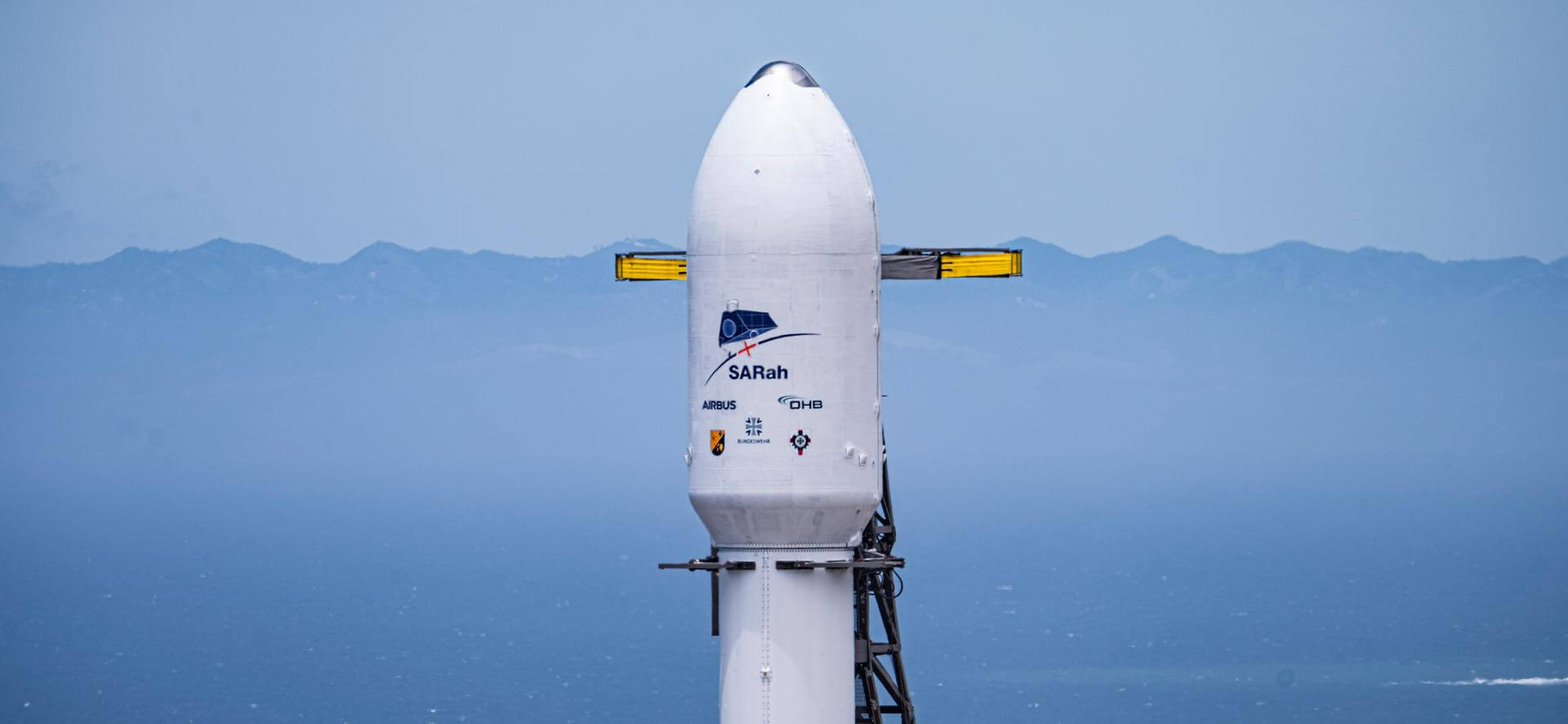
Falcon 9 Block 5 | SARah 1
SpaceX | United States of AmericaVandenberg SFB, CA, USA
June 18, 2022, 2:19 p.m.
Falcon 9 Block 5 | Starlink Group 4-19
SpaceX | United States of AmericaKennedy Space Center, FL, USA
June 17, 2022, 4:08 p.m.
Falcon 9 Block 5 | Nilesat-301
SpaceX | United States of AmericaCape Canaveral SFS, FL, USA
June 8, 2022, 9:04 p.m.
Status: Launch Successful
Mission:
Nilesat 301, to be launched into Nilesat's 7 ° West slot, is built by Thales Alenia Space on the Spacebus-4000B2 platform and is expected to weigh 4100 kilograms at launch. It will provide digital broadband and internet connectivity services for the Egyptian operator Nilesat.
Geostationary Transfer Orbit B1062 - Flight Proven ( ) Just Read the InstructionsFalcon 9 Block 5 | Transporter 5 (Dedicated SSO Rideshare)
SpaceX | United States of AmericaCape Canaveral SFS, FL, USA
May 25, 2022, 6:35 p.m.
Status: Launch Successful
Mission:
Transporter 5 mission is a dedicated rideshare flight to a sun-synchronous orbit with 59 cubeSats, microsats, non-deploying hosted payloads, and orbital transfer vehicles for commercial and government customers.
Sun-Synchronous Orbit B1061 - Flight Proven ( ) Landing Zone 1Falcon 9 Block 5 | Starlink Group 4-18
SpaceX | United States of AmericaKennedy Space Center, FL, USA
May 18, 2022, 10:59 a.m.
Falcon 9 Block 5 | Starlink Group 4-15
SpaceX | United States of AmericaCape Canaveral SFS, FL, USA
May 14, 2022, 8:40 p.m.
Falcon 9 Block 5 | Starlink Group 4-13
SpaceX | United States of AmericaVandenberg SFB, CA, USA
May 13, 2022, 10:07 p.m.
Falcon 9 Block 5 | Starlink Group 4-17
SpaceX | United States of AmericaKennedy Space Center, FL, USA
May 6, 2022, 9:42 a.m.
Falcon 9 Block 5 | Starlink Group 4-16
SpaceX | United States of AmericaCape Canaveral SFS, FL, USA
April 29, 2022, 9:27 p.m.
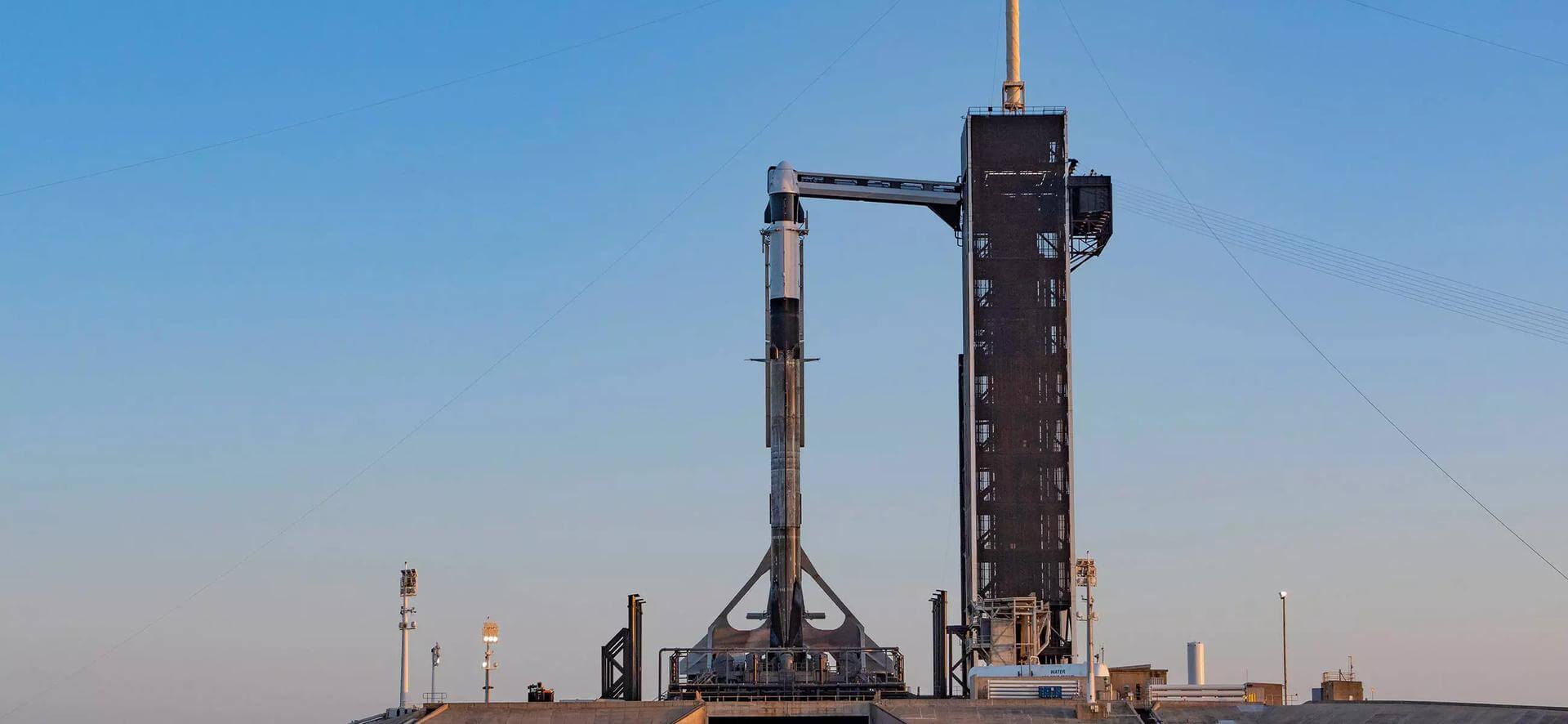
Falcon 9 Block 5 | Crew-4
SpaceX | United States of AmericaKennedy Space Center, FL, USA
April 27, 2022, 7:52 a.m.
Falcon 9 Block 5 | Starlink Group 4-14
SpaceX | United States of AmericaCape Canaveral SFS, FL, USA
April 21, 2022, 5:51 p.m.
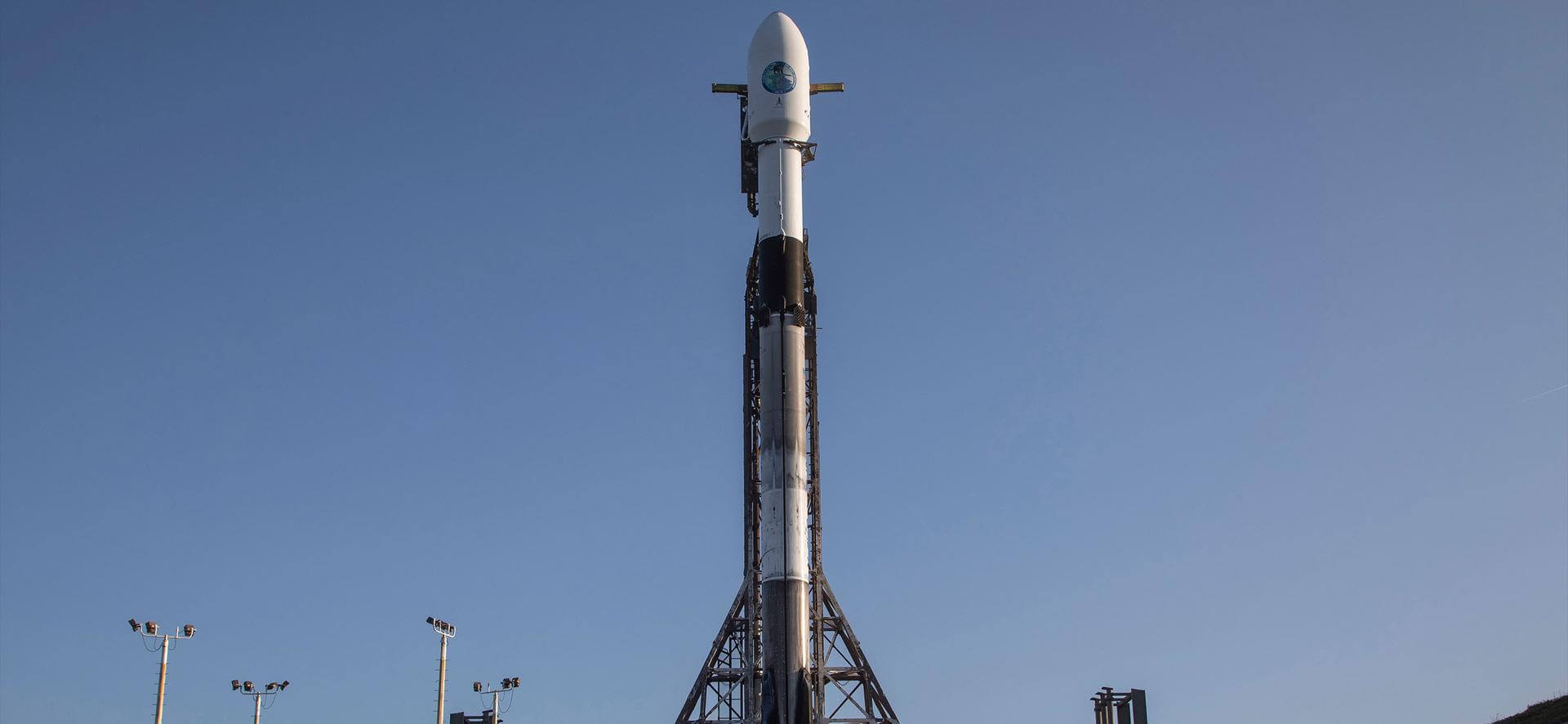
Falcon 9 Block 5 | NROL-85
SpaceX | United States of AmericaVandenberg SFB, CA, USA
April 17, 2022, 1:13 p.m.
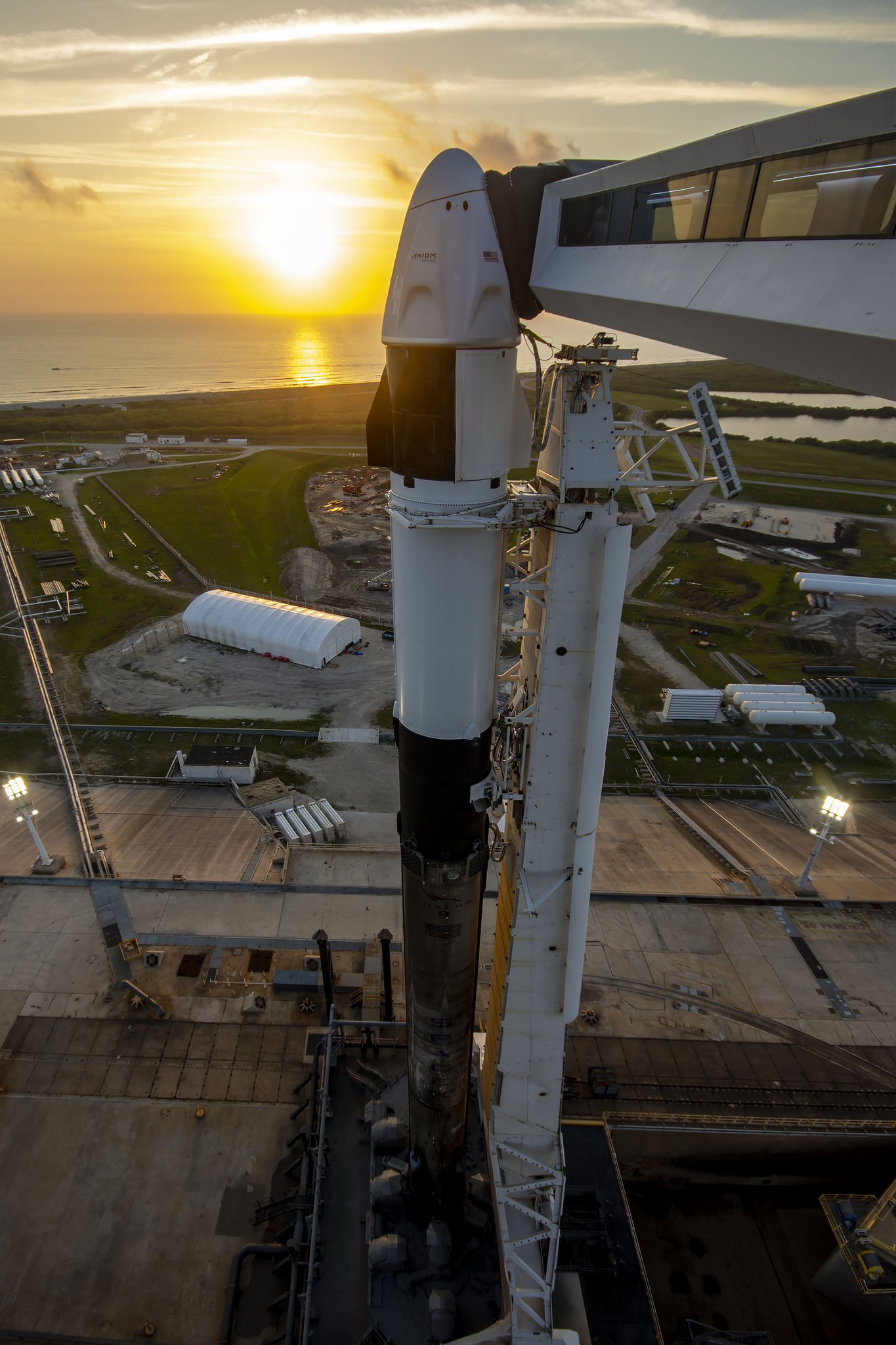
Falcon 9 Block 5 | Axiom Space Mission 1
SpaceX | United States of AmericaKennedy Space Center, FL, USA
April 8, 2022, 3:17 p.m.
Status: Launch Successful
Mission:
This is a Crew Dragon flight for a private company Axiom Space. The mission will carry a commander professionally trained by Axiom alongside three private astronauts to and from the International Space Station. This crew will stay aboard space station for at least eight days.
Low Earth Orbit #AX1 B1062 - Flight Proven ( ) A Shortfall of Gravitas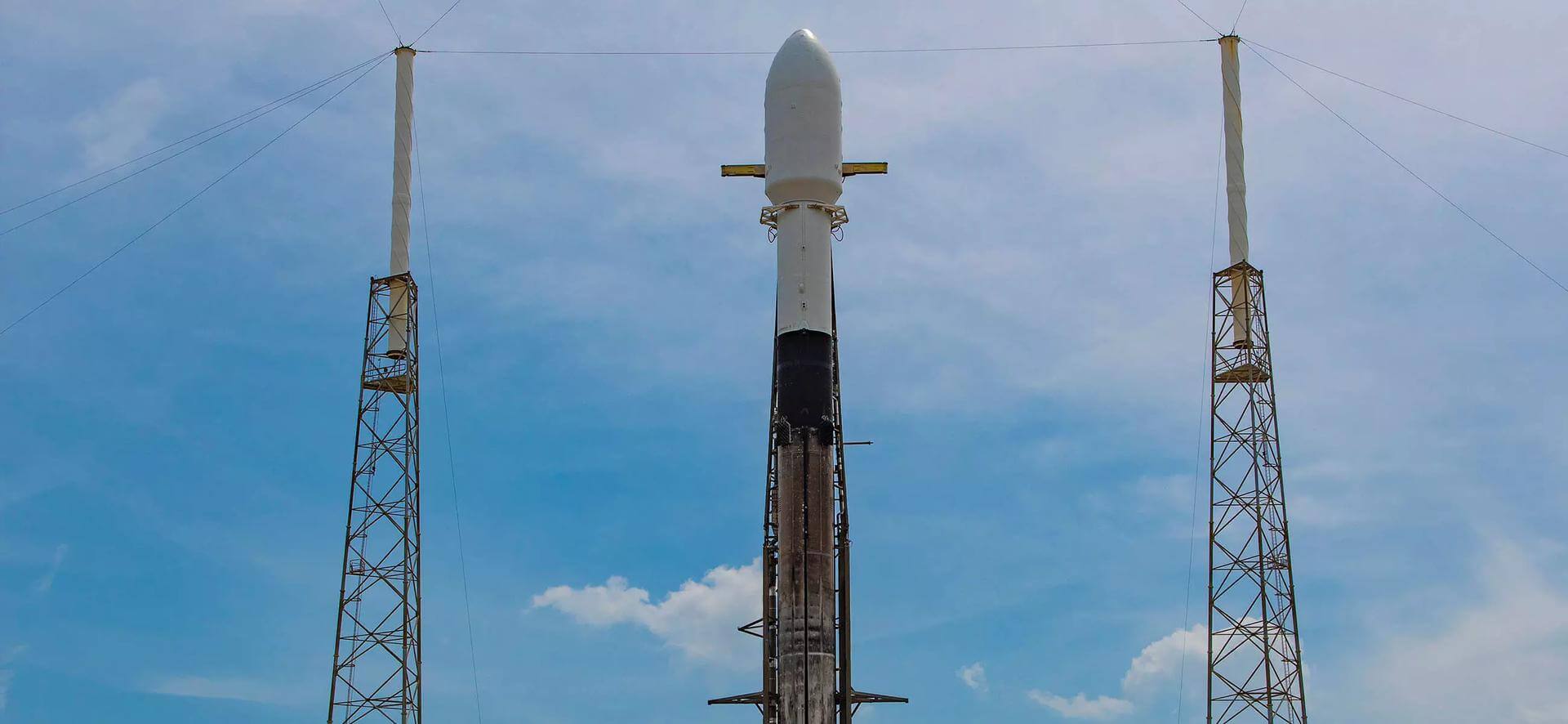
Falcon 9 Block 5 | Transporter 4 (Dedicated SSO Rideshare)
SpaceX | United States of AmericaCape Canaveral SFS, FL, USA
April 1, 2022, 4:24 p.m.
Status: Launch Successful
Mission:
Transporter 4 mission is a dedicated rideshare flight to a sun-synchronous orbit with dozens of small microsatellites and nanosatellites for commercial and government customers.
Sun-Synchronous Orbit B1061 - Flight Proven ( ) Just Read the InstructionsFalcon 9 Block 5 | Starlink Group 4-12
SpaceX | United States of AmericaCape Canaveral SFS, FL, USA
March 19, 2022, 4:42 a.m.
Falcon 9 Block 5 | Starlink Group 4-10
SpaceX | United States of AmericaCape Canaveral SFS, FL, USA
March 9, 2022, 1:45 p.m.
Falcon 9 Block 5 | Starlink Group 4-9
SpaceX | United States of AmericaKennedy Space Center, FL, USA
March 3, 2022, 2:25 p.m.
Falcon 9 Block 5 | Starlink Group 4-11
SpaceX | United States of AmericaVandenberg SFB, CA, USA
Feb. 25, 2022, 5:12 p.m.
Falcon 9 Block 5 | Starlink Group 4-8
SpaceX | United States of AmericaCape Canaveral SFS, FL, USA
Feb. 21, 2022, 2:44 p.m.
Falcon 9 Block 5 | Starlink Group 4-7
SpaceX | United States of AmericaKennedy Space Center, FL, USA
Feb. 3, 2022, 6:13 p.m.
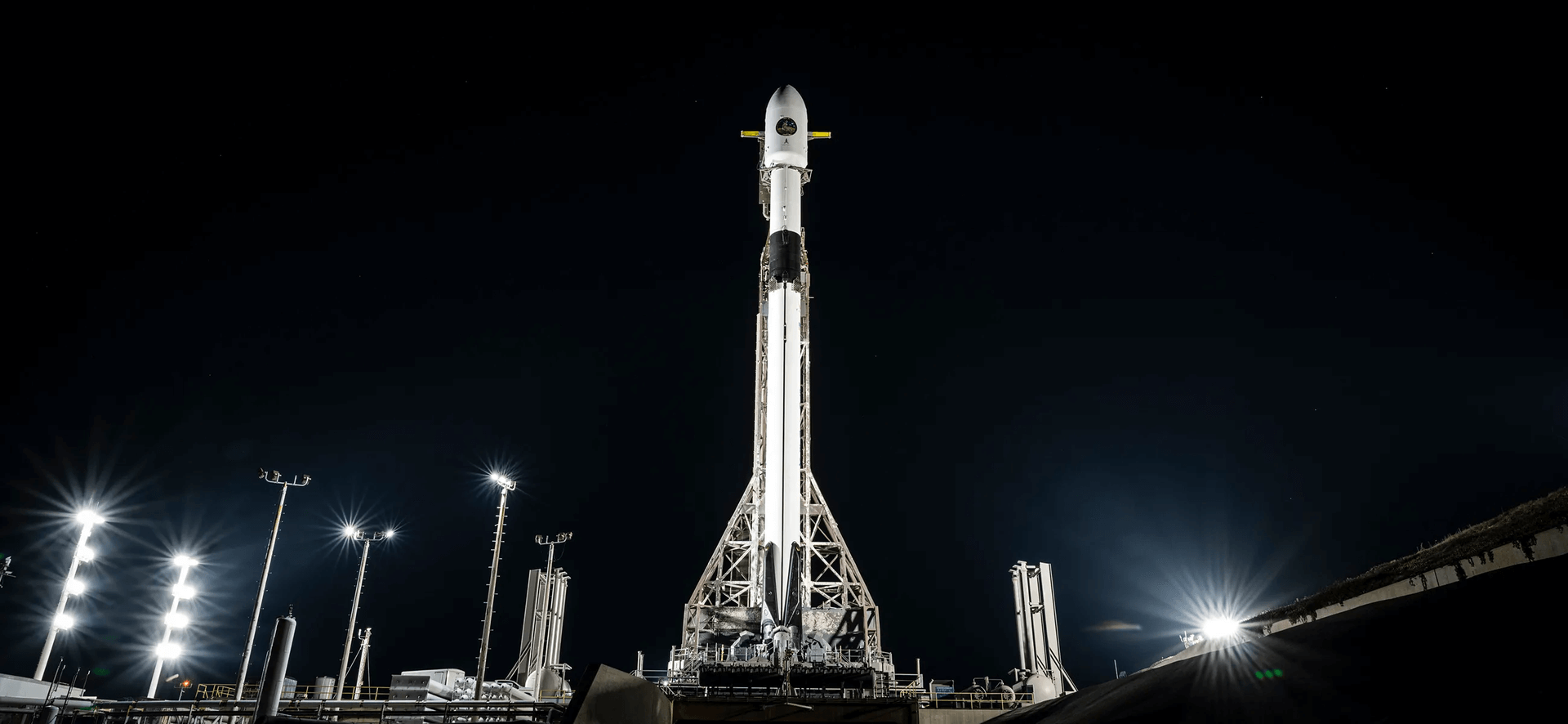
Falcon 9 Block 5 | NROL-87
SpaceX | United States of AmericaVandenberg SFB, CA, USA
Feb. 2, 2022, 8:27 p.m.
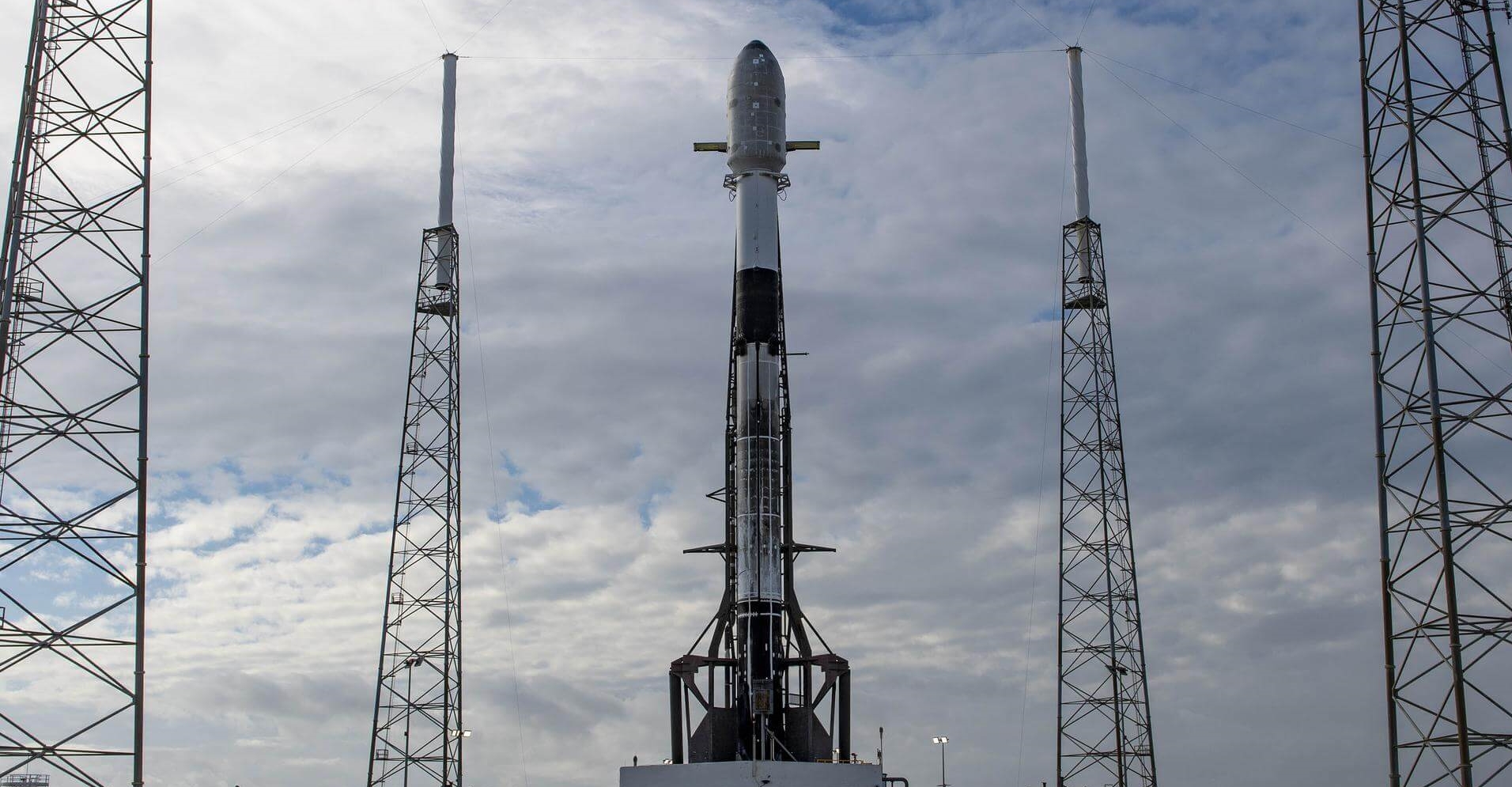
Falcon 9 Block 5 | CSG-2
SpaceX | United States of AmericaCape Canaveral SFS, FL, USA
Jan. 31, 2022, 11:11 p.m.
Falcon 9 Block 5 | Starlink Group 4-6
SpaceX | United States of AmericaKennedy Space Center, FL, USA
Jan. 19, 2022, 2:02 a.m.
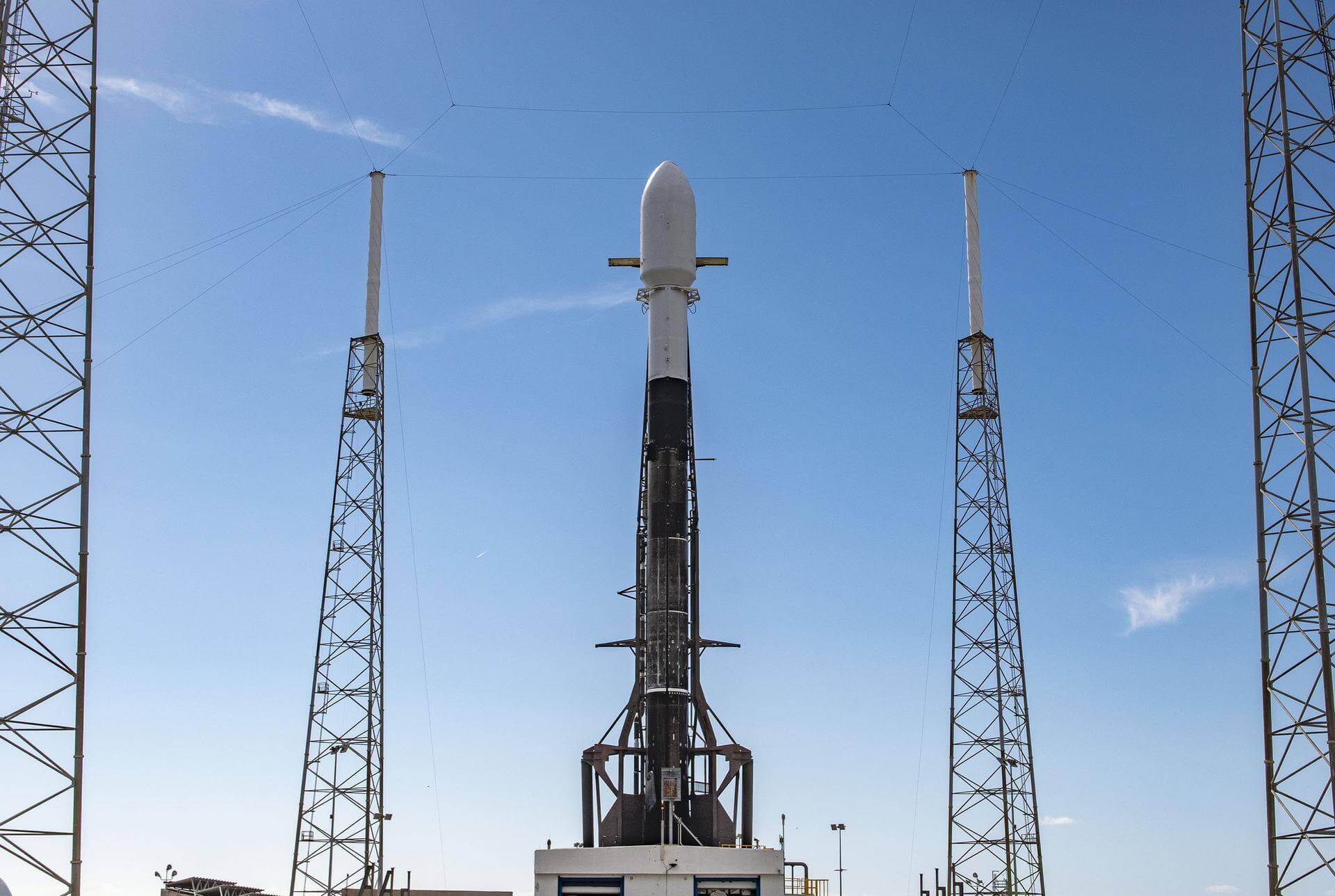
Falcon 9 Block 5 | Transporter 3 (Dedicated SSO Rideshare)
SpaceX | United States of AmericaCape Canaveral SFS, FL, USA
Jan. 13, 2022, 3:25 p.m.
Falcon 9 Block 5 | Starlink Group 4-5
SpaceX | United States of AmericaKennedy Space Center, FL, USA
Jan. 6, 2022, 9:49 p.m.
Falcon 9 Block 5 | Dragon CRS-2 SpX-24
SpaceX | United States of AmericaKennedy Space Center, FL, USA
Dec. 21, 2021, 10:07 a.m.
Status: Launch Successful
Mission:
24th commercial resupply services mission to the International Space Station operated by SpaceX. The flight will be conducted under the second Commercial Resupply Services contract with NASA. Cargo Dragon 2 brings supplies and payloads, including critical materials to directly support science and research investigations that occur onboard the orbiting laboratory.
Low Earth Orbit B1069 - Maiden Flight Just Read the Instructions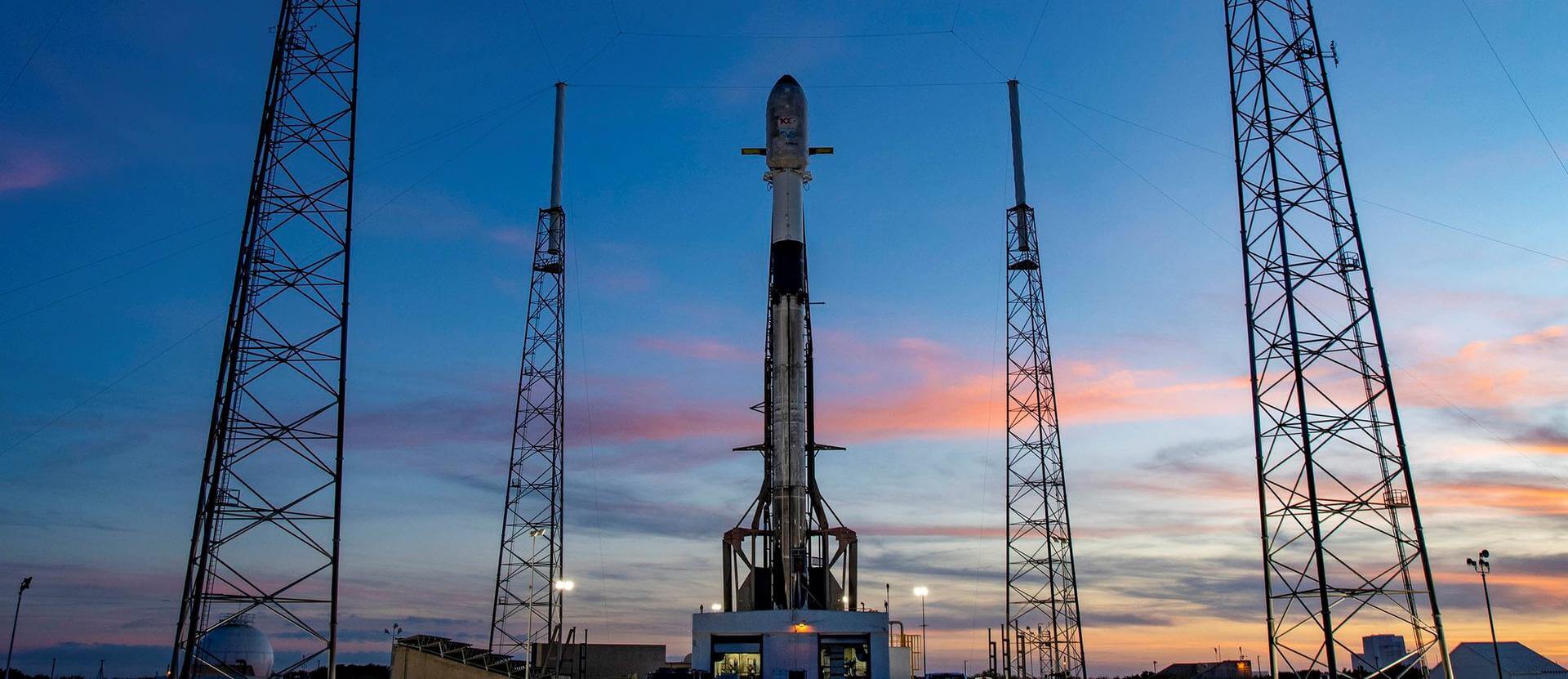
Falcon 9 Block 5 | Türksat 5B
SpaceX | United States of AmericaCape Canaveral SFS, FL, USA
Dec. 19, 2021, 3:58 a.m.
Status: Launch Successful
Mission:
Türksat 5B is a geostationary communications satellite. It is tasked with providing broadband telecommunication services to customers across Turkey, the Middle East and large regions of Africa.
Geostationary Transfer Orbit B1067 - Flight Proven ( ) A Shortfall of GravitasFalcon 9 Block 5 | Starlink Group 4-4
SpaceX | United States of AmericaVandenberg SFB, CA, USA
Dec. 18, 2021, 12:41 p.m.
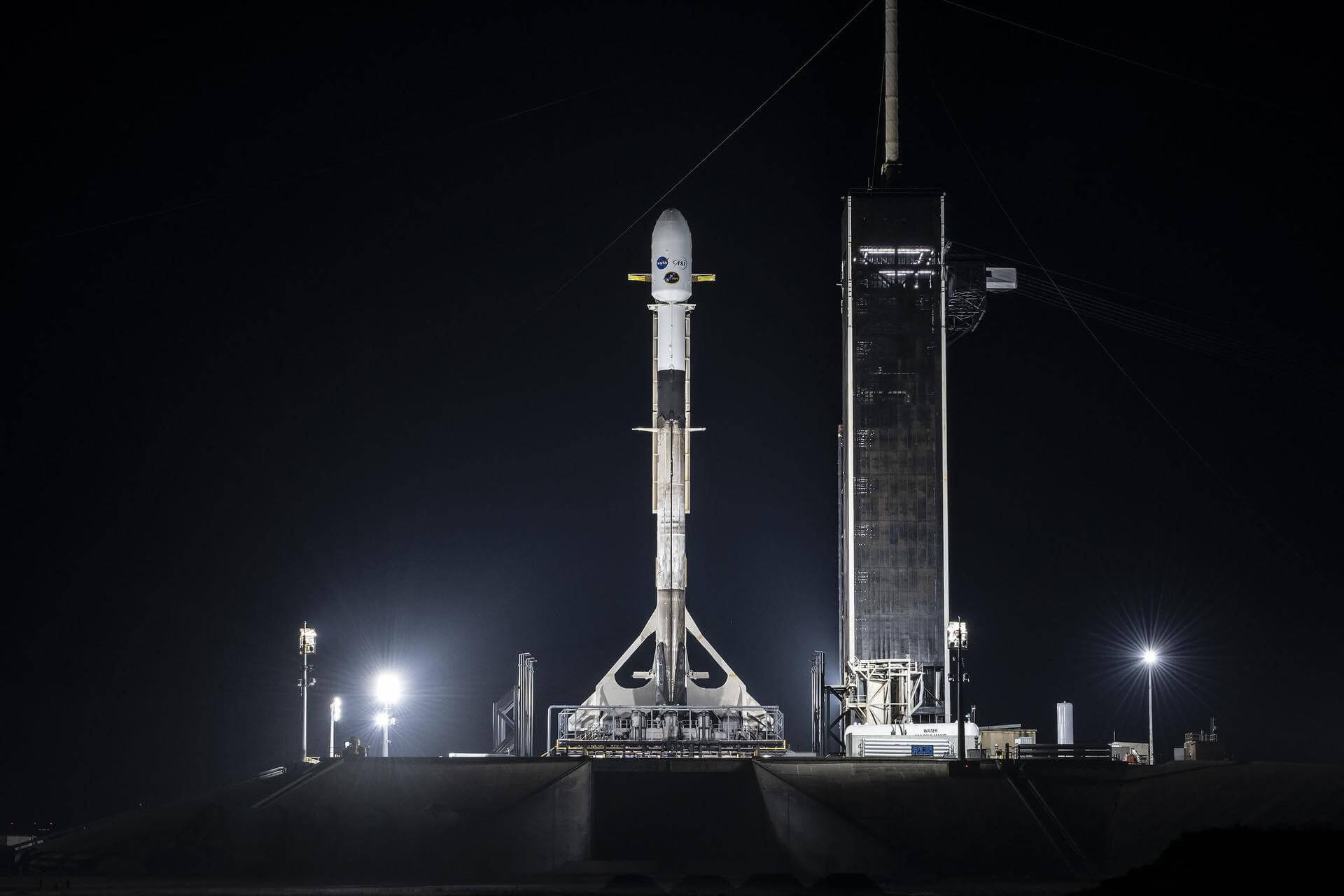
Falcon 9 Block 5 | X-Ray Polarimetry Explorer (IXPE)
SpaceX | United States of AmericaKennedy Space Center, FL, USA
Dec. 9, 2021, 6 a.m.
Status: Launch Successful
Mission:
Imaging X-ray Polarimetry Explorer (IXPE) is a space observatory tasked with measuring the polarization of cosmic X-rays. This data will help to learn more about objects that emit these X-rays, such as black holes and neutron stars.
Low Earth Orbit B1061 - Flight Proven ( ) Just Read the InstructionsFalcon 9 Block 5 | Starlink Group 4-3
SpaceX | United States of AmericaCape Canaveral SFS, FL, USA
Dec. 2, 2021, 11:12 p.m.
Status: Launch Successful
Mission:
A batch of 48 satellites for the Starlink mega-constellation - SpaceX's project for space-based Internet communication system - as well as 2 BlackSky Earth observation satellites as rideshare payloads.
Low Earth Orbit B1060 - Flight Proven ( ) A Shortfall of Gravitas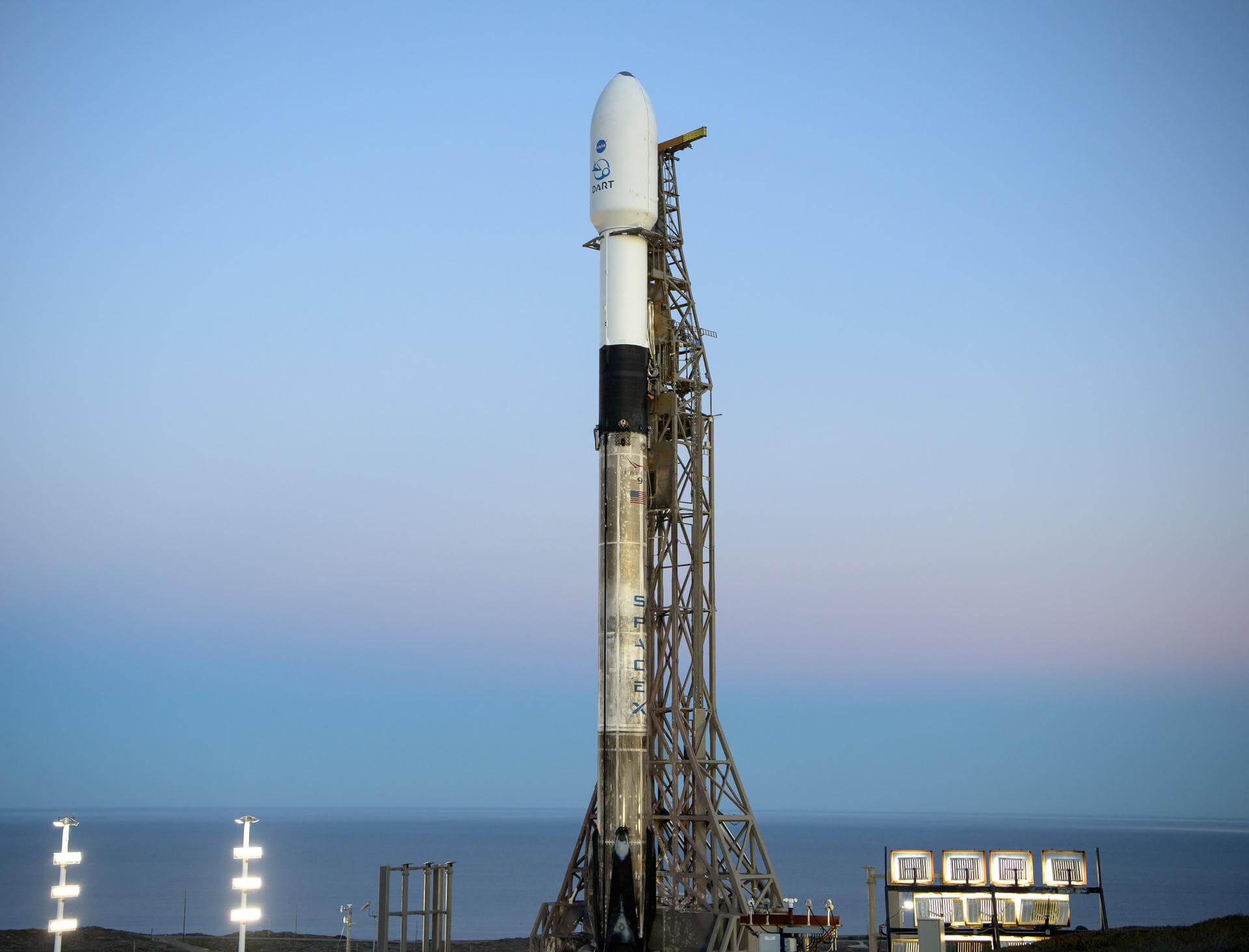
Falcon 9 Block 5 | Double Asteroid Redirection Test (DART)
SpaceX | United States of AmericaVandenberg SFB, CA, USA
Nov. 24, 2021, 6:21 a.m.
Status: Launch Successful
Mission:
Double Asteroid Redirection Test (DART) mission is the first-ever mission to demonstrate the capability to deflect an asteroid by colliding a spacecraft with it at high speed, a technique known as a kinetic impactor. DART is a planetary defense-driven test of one of the technologies for preventing the Earth impact of a hazardous asteroid: the kinetic impactor. DART's primary objective is to demonstrate a kinetic impact on a small asteroid. The binary near-Earth asteroid (65803) Didymos is the target for DART. While Didymos' primary body is approximately 800 meters across, its secondary body has a 150-meter size, which is more typical of the size of asteroids that could pose a more common hazard to Earth. The DART spacecraft will achieve the kinetic impact by deliberately crashing itself into the moonlet at a speed of approximately 6 km/s, with the aid of an onboard camera and sophisticated autonomous navigation software. The collision will change the speed of the moonlet in its orbit around the main body by a fraction of one percent, enough to be measured using telescopes on Earth.
Heliocentric N/A B1063 - Flight Proven ( ) Of Course I Still Love YouFalcon 9 Block 5 | Starlink Group 4-1
SpaceX | United States of AmericaCape Canaveral SFS, FL, USA
Nov. 13, 2021, 12:18 p.m.
Falcon 9 Block 5 | Crew-3
SpaceX | United States of AmericaKennedy Space Center, FL, USA
Nov. 11, 2021, 2:03 a.m.
Falcon 9 Block 5 | Inspiration4
SpaceX | United States of AmericaKennedy Space Center, FL, USA
Sept. 16, 2021, 12:02 a.m.
Status: Launch Successful
Mission:
Inspiration4 is the world’s first all-commercial astronaut mission to orbit. Jared Isaacman, founder and CEO of Shift4 Payments, is donating the three seats alongside him aboard Dragon to individuals from the general public - Medical Officer Hayley Arceneaux, a physician assistant at St. Jude Children’s Research Hospital and pediatric cancer survivor; Mission Specialist Chris Sembroski, an Air Force veteran and aerospace data engineer; and Mission Pilot Dr. Sian Proctor, a geoscientist, entrepreneur, and trained pilot. The Inspiration4 crew received commercial astronaut training by SpaceX on the Falcon 9 launch vehicle and Dragon spacecraft, orbital mechanics, operating in microgravity, zero gravity, and other forms of stress testing. They will go through emergency preparedness training, spacesuit and spacecraft ingress and egress exercises, as well as partial and full mission simulations. The Crew Dragon spacecraft will remain in a 575 km high orbit for three days before reentering Earth's atmosphere for a soft water landing off the coast of Florida. During their multi-day journey in orbit, the Inspiration4 crew will conduct scientific research designed to advance human health on Earth and during future long-duration spaceflights. For this mission, Crew Dragon is configured to feature an observation dome in place of docking port to provide views to the crew.
Low Earth Orbit Inspiration4 B1062 - Flight Proven ( ) Just Read the InstructionsFalcon 9 Block 5 | Starlink Group 2-1
SpaceX | United States of AmericaVandenberg SFB, CA, USA
Sept. 14, 2021, 3:55 a.m.
Falcon 9 Block 5 | Dragon CRS-2 SpX-23
SpaceX | United States of AmericaKennedy Space Center, FL, USA
Aug. 29, 2021, 7:14 a.m.
Status: Launch Successful
Mission:
SpaceX will launch the cargo variant of its Dragon 2 spacecraft on their 23rd commercial resupply services mission to the International Space Station. The flight will be conducted under the second Commercial Resupply Services contract with NASA. Dragon will be filled with supplies and payloads, including critical materials to directly support science and research investigations that occur onboard the orbiting laboratory.
Low Earth Orbit B1061 - Flight Proven ( ) A Shortfall of Gravitas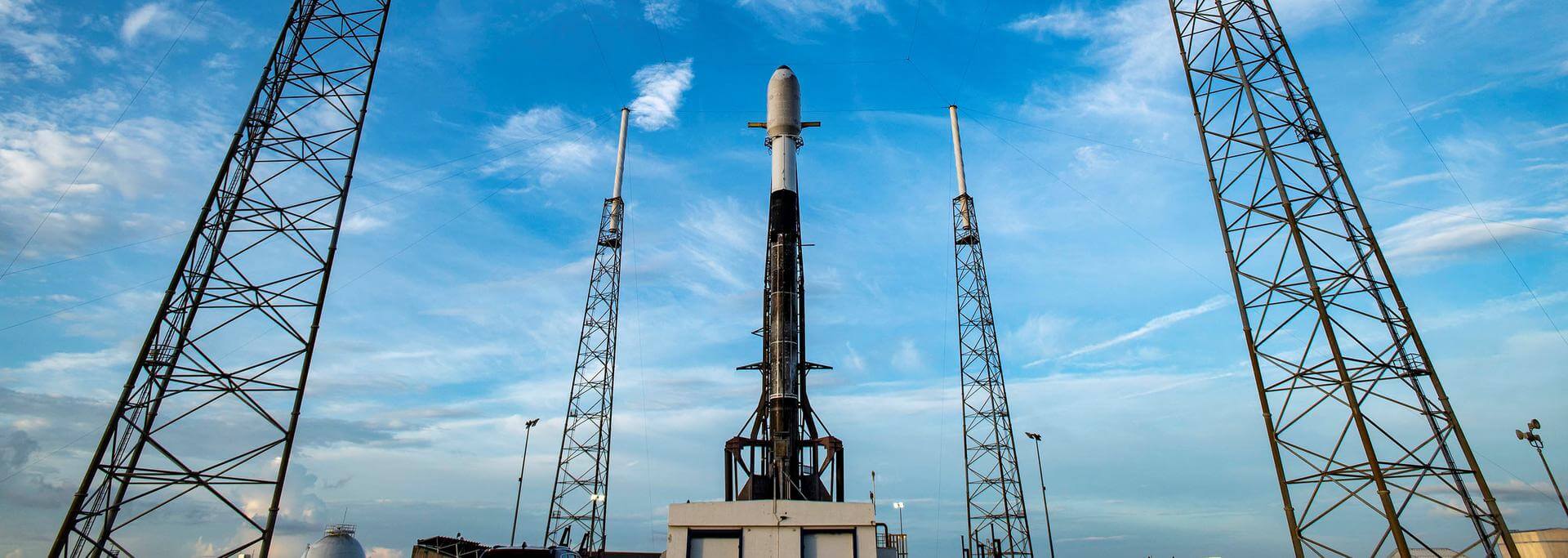
Falcon 9 Block 5 | Transporter 2 (Dedicated SSO Rideshare)
SpaceX | United States of AmericaCape Canaveral SFS, FL, USA
June 30, 2021, 7:31 p.m.
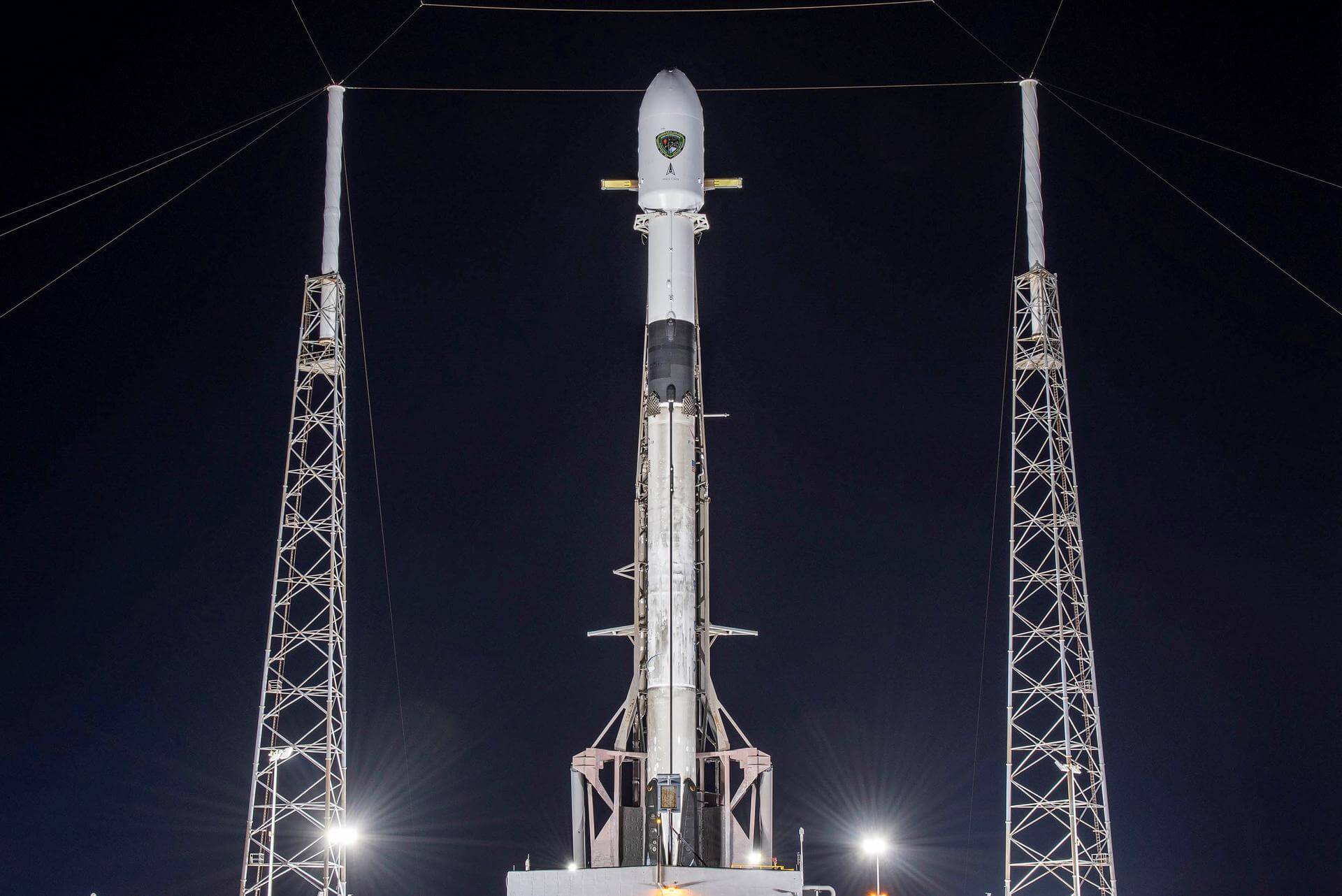
Falcon 9 Block 5 | GPS III SV05
SpaceX | United States of AmericaCape Canaveral SFS, FL, USA
June 17, 2021, 4:09 p.m.
Status: Launch Successful
Mission:
GPS-IIIA (Global Positioning System) is the first evolution stage of the third generation of the GPS satellites. It consists of the first ten (known as "tranche") of GPS III satellites.
Medium Earth Orbit B1062 - Flight Proven ( ) Just Read the Instructions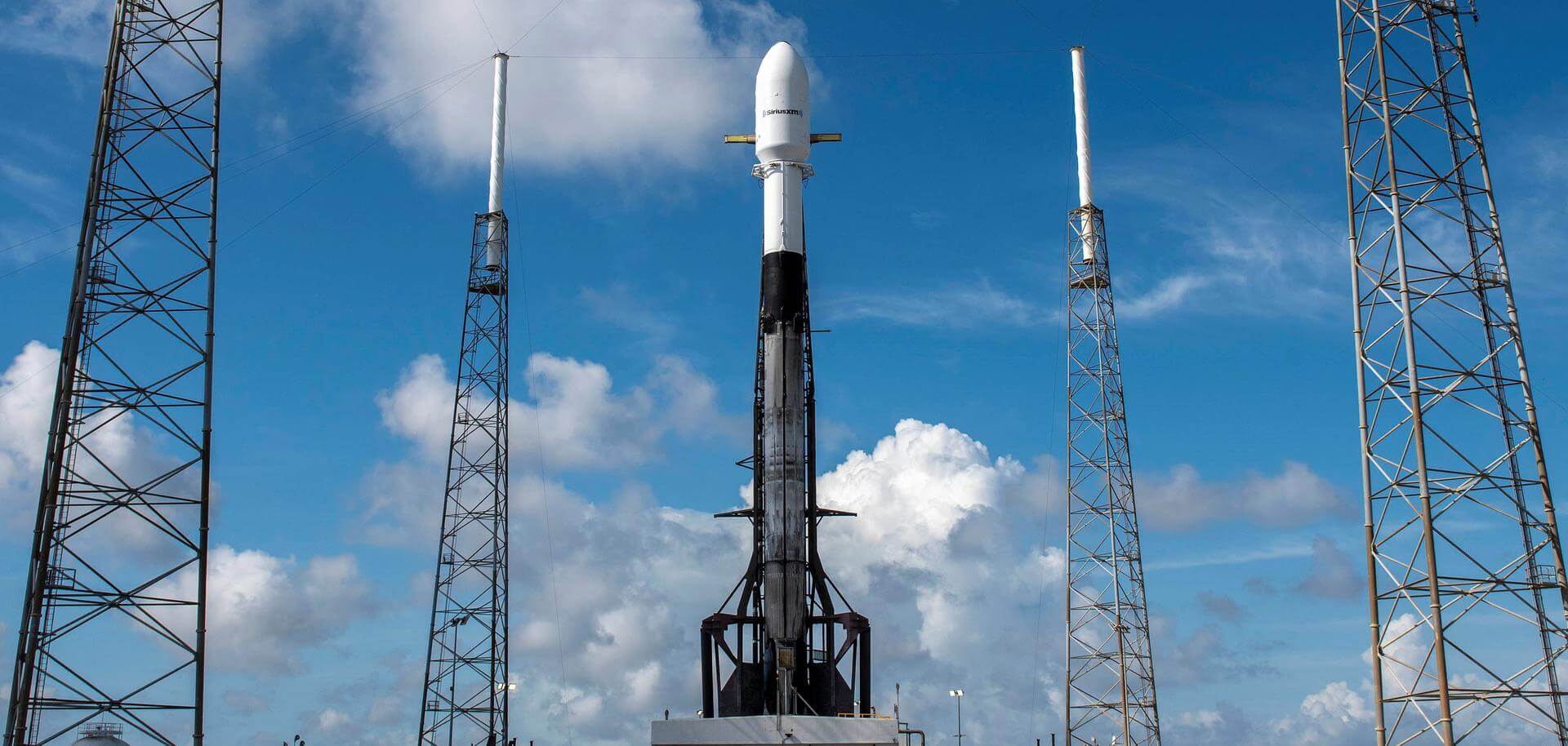
Falcon 9 Block 5 | Sirius SXM-8
SpaceX | United States of AmericaCape Canaveral SFS, FL, USA
June 6, 2021, 4:26 a.m.
Status: Launch Successful
Mission:
SXM-8 is a large high power broadcasting satellite for SiriusXM's digital audio radio service (DARS). Space Systems/Loral (SS/L) got in July 2016 the contract to build the two satellites based on their SSL-1300 bus - SXM-7 and SXM-8. Satellite design operates in the S-band spectrum. Each satellite will generate more than 20-kW of power and will have a large unfurlable antenna reflector, which enables broadcast to radios without the need for large dish-type antennas on the ground. SXM-8 is meant to replace the XM-4 satellite. SXM-7 was meant to replace the XM-3, but suffered a failure in orbit 6 weeks after its launch.
Geostationary Transfer Orbit B1061 - Flight Proven ( ) Just Read the InstructionsFalcon 9 Block 5 | Dragon CRS-2 SpX-22
SpaceX | United States of AmericaKennedy Space Center, FL, USA
June 3, 2021, 5:29 p.m.
Status: Launch Successful
Mission:
SpaceX will launch the second cargo variant of its Dragon 2 spacecraft on their 22nd commercial resupply services mission to the International Space Station. The flight will be conducted under the second Commercial Resupply Services contract with NASA. Dragon will be filled with supplies and payloads, including critical materials to directly support science and research investigations that occur onboard the orbiting laboratory.
Low Earth Orbit B1067 - Maiden Flight Of Course I Still Love YouFalcon 9 Block 5 | Starlink 28
SpaceX | United States of AmericaCape Canaveral SFS, FL, USA
May 26, 2021, 6:59 p.m.
Falcon 9 Block 5 | Starlink 26
SpaceX | United States of AmericaKennedy Space Center, FL, USA
May 15, 2021, 10:56 p.m.
Status: Launch Successful
Mission:
A batch of 52 satellites for Starlink mega-constellation - SpaceX's project for space-based Internet communication system. Two rideshare satellites are also on this flight: a Capella radar observation spacecraft and a small payload from the California-based smallsat manufacturer Tyvak.
Low Earth Orbit B1058 - Flight Proven ( ) Of Course I Still Love YouFalcon 9 Block 5 | Starlink 27
SpaceX | United States of AmericaCape Canaveral SFS, FL, USA
May 9, 2021, 6:42 a.m.
Falcon 9 Block 5 | Starlink 25
SpaceX | United States of AmericaKennedy Space Center, FL, USA
May 4, 2021, 7:01 p.m.
Falcon 9 Block 5 | Starlink 24
SpaceX | United States of AmericaCape Canaveral SFS, FL, USA
April 29, 2021, 3:44 a.m.
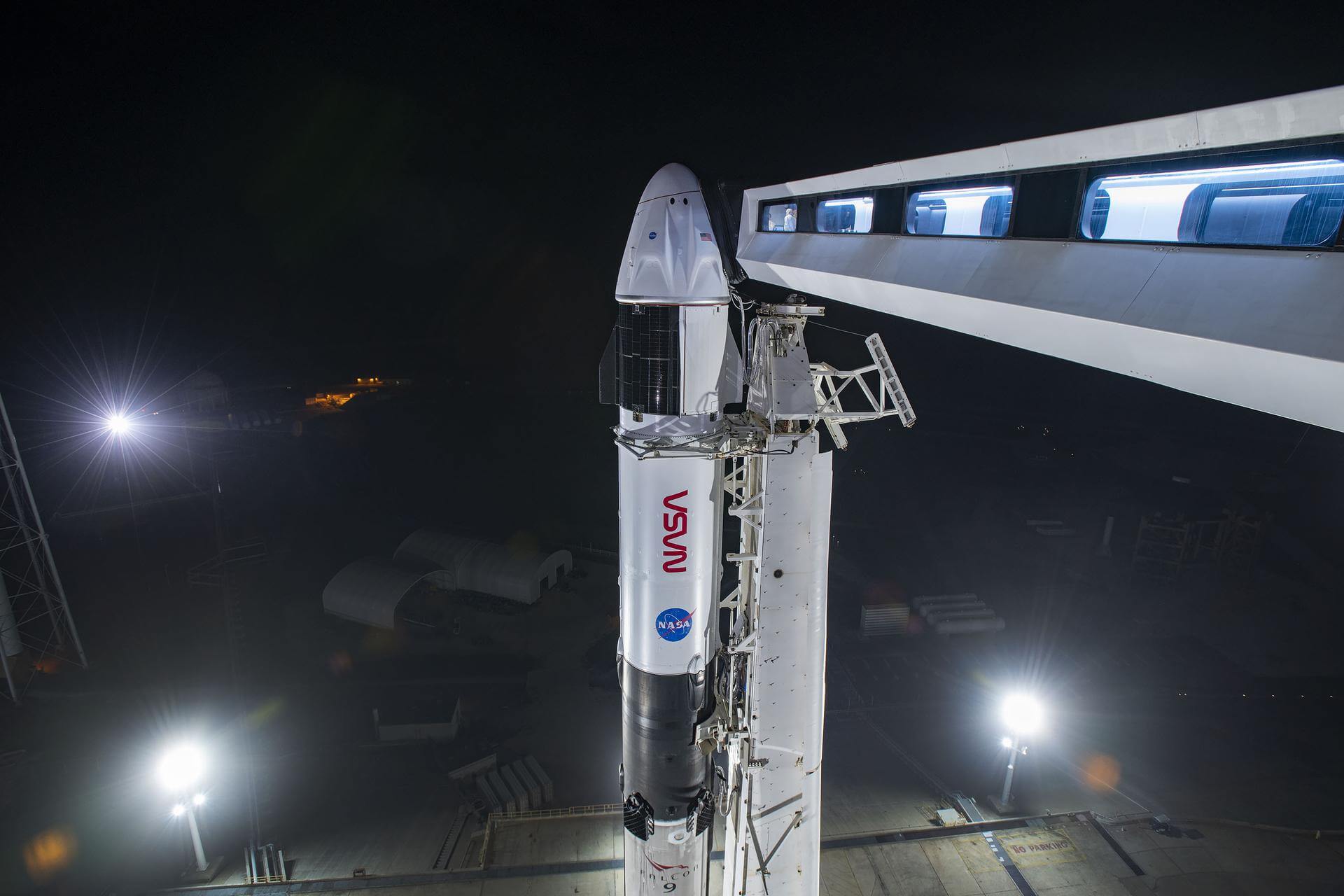
Falcon 9 Block 5 | Crew-2
SpaceX | United States of AmericaKennedy Space Center, FL, USA
April 23, 2021, 9:49 a.m.
Status: Launch Successful
Mission:
SpaceX Crew-2 is the second crewed operational flight of a Crew Dragon spacecraft to the International Space Station as part of NASA's Commercial Crew Program. It used the same Falcon 9 first stage as the Crew-1 mission and the same Crew Dragon capsule as the Demo-2 mission (Endeavour).
Low Earth Orbit B1061 - Flight Proven ( ) Of Course I Still Love YouFalcon 9 Block 5 | Starlink 23
SpaceX | United States of AmericaCape Canaveral SFS, FL, USA
April 7, 2021, 4:34 p.m.
Falcon 9 Block 5 | Starlink 22
SpaceX | United States of AmericaCape Canaveral SFS, FL, USA
March 24, 2021, 8:28 a.m.
Falcon 9 Block 5 | Starlink 21
SpaceX | United States of AmericaKennedy Space Center, FL, USA
March 14, 2021, 10:01 a.m.
Falcon 9 Block 5 | Starlink 20
SpaceX | United States of AmericaCape Canaveral SFS, FL, USA
March 11, 2021, 8:13 a.m.
Falcon 9 Block 5 | Starlink 17
SpaceX | United States of AmericaKennedy Space Center, FL, USA
March 4, 2021, 8:24 a.m.
Falcon 9 Block 5 | Starlink 19
SpaceX | United States of AmericaCape Canaveral SFS, FL, USA
Feb. 16, 2021, 3:59 a.m.
Falcon 9 Block 5 | Starlink 18
SpaceX | United States of AmericaCape Canaveral SFS, FL, USA
Feb. 4, 2021, 6:19 a.m.
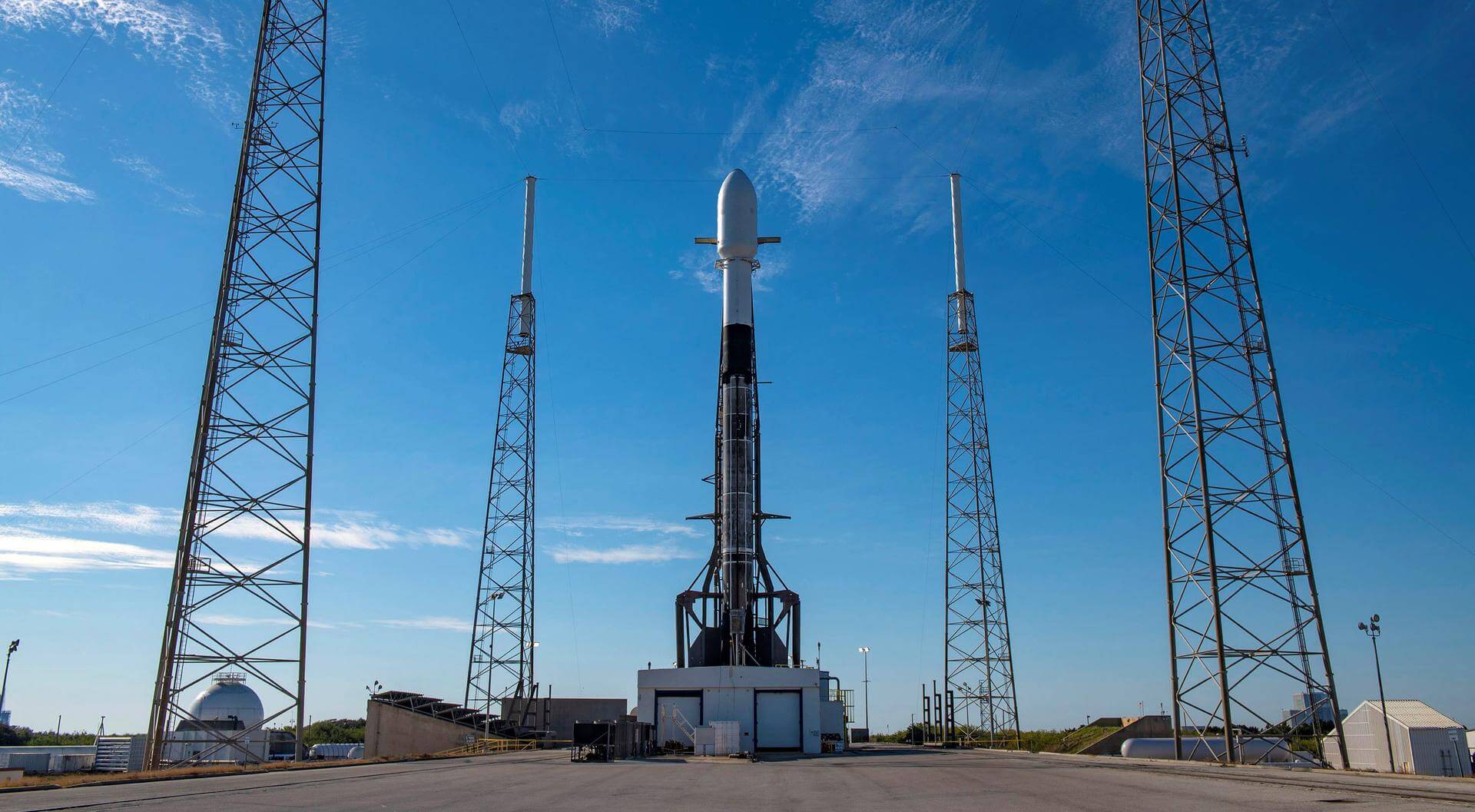
Falcon 9 Block 5 | Transporter 1 (Dedicated SSO Rideshare)
SpaceX | United States of AmericaCape Canaveral SFS, FL, USA
Jan. 24, 2021, 3 p.m.
Status: Launch Successful
Mission:
Transporter 1 mission is a dedicated rideshare flight to a sun-synchronous orbit with dozens of small microsatellites and nanosatellites for commercial and government customers.
Sun-Synchronous Orbit B1058 - Flight Proven ( ) Of Course I Still Love YouFalcon 9 Block 5 | Starlink 16
SpaceX | United States of AmericaKennedy Space Center, FL, USA
Jan. 20, 2021, 1:02 p.m.
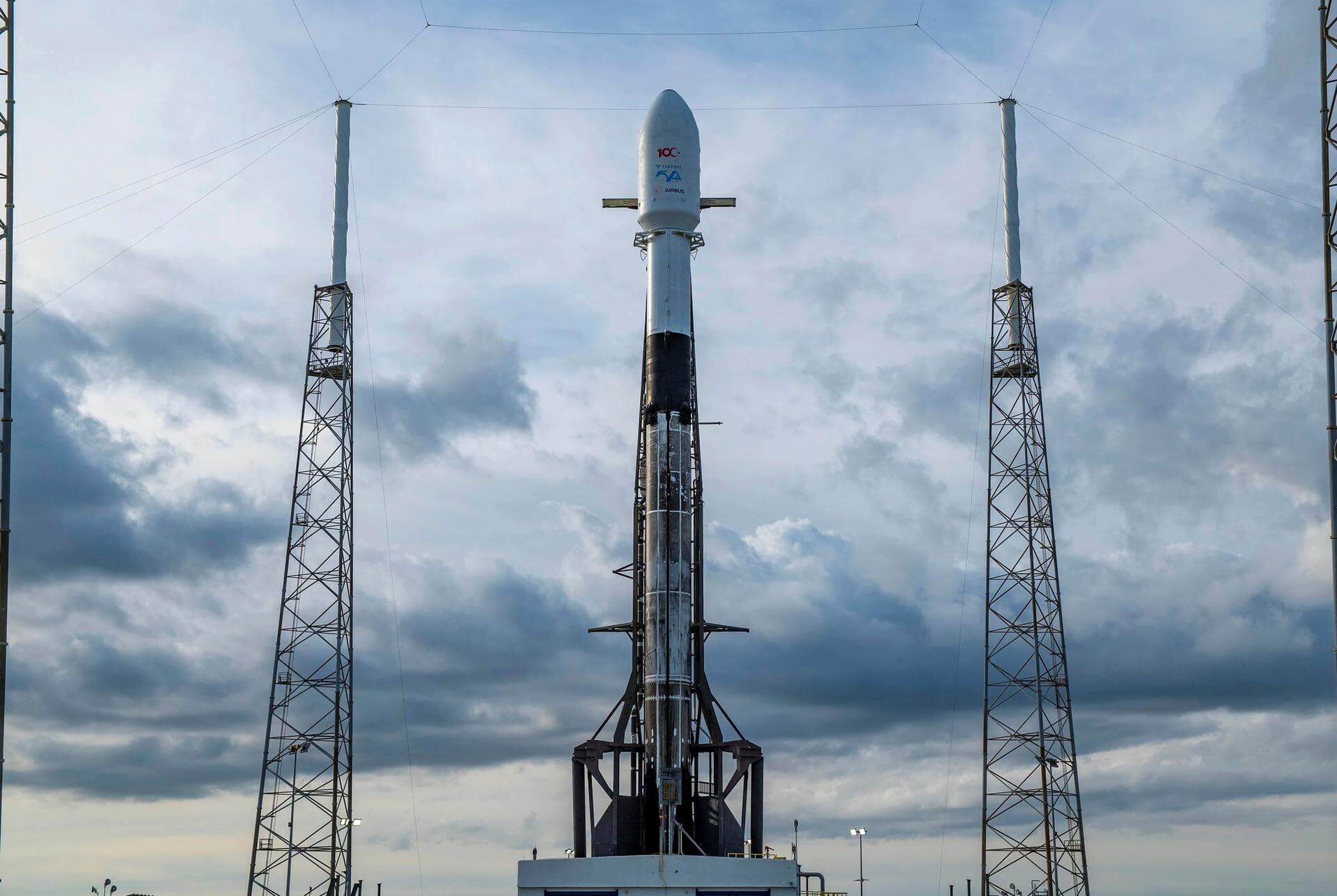
Falcon 9 Block 5 | Türksat 5A
SpaceX | United States of AmericaCape Canaveral SFS, FL, USA
Jan. 8, 2021, 2:15 a.m.
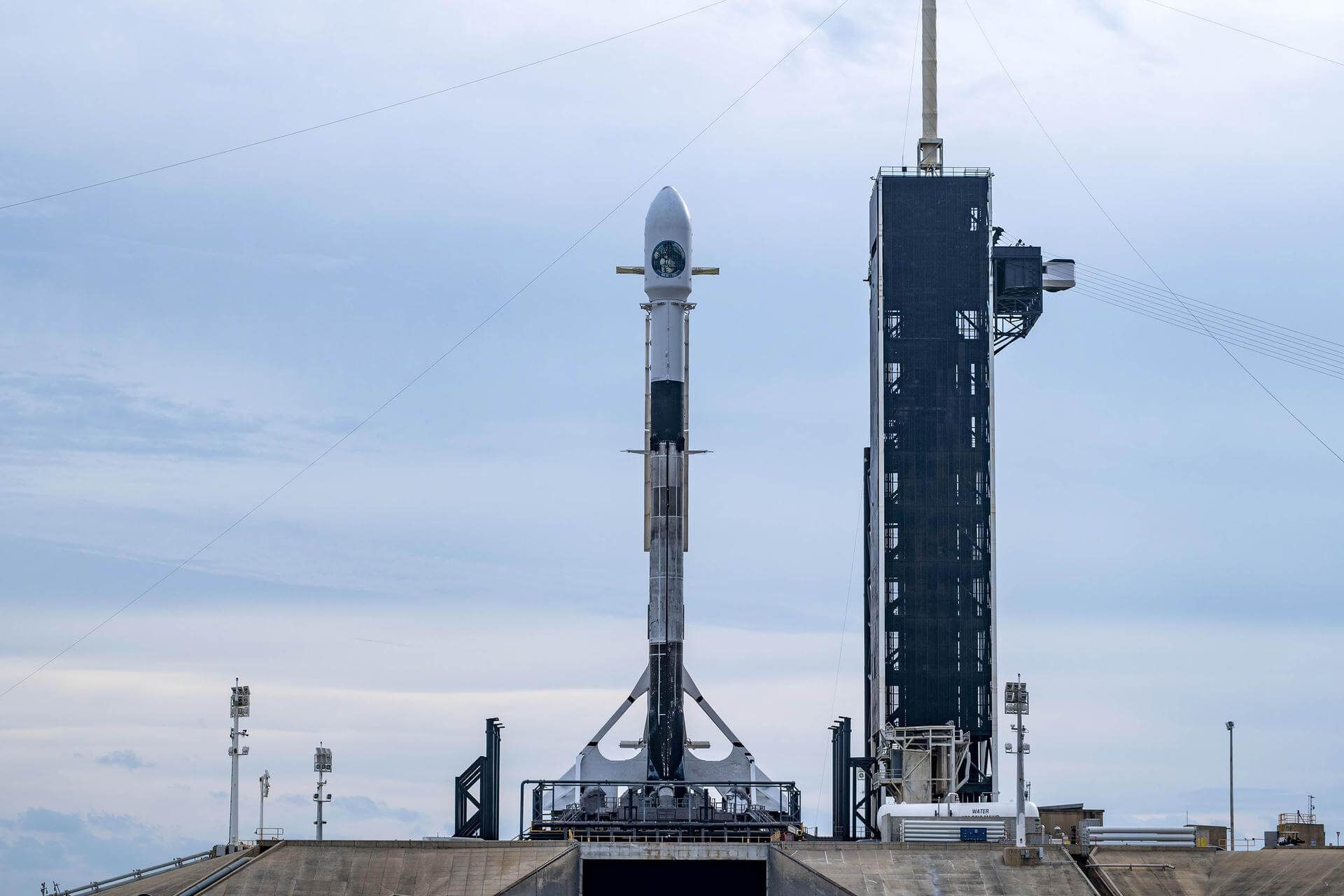
Falcon 9 Block 5 | NROL-108
SpaceX | United States of AmericaKennedy Space Center, FL, USA
Dec. 19, 2020, 2 p.m.
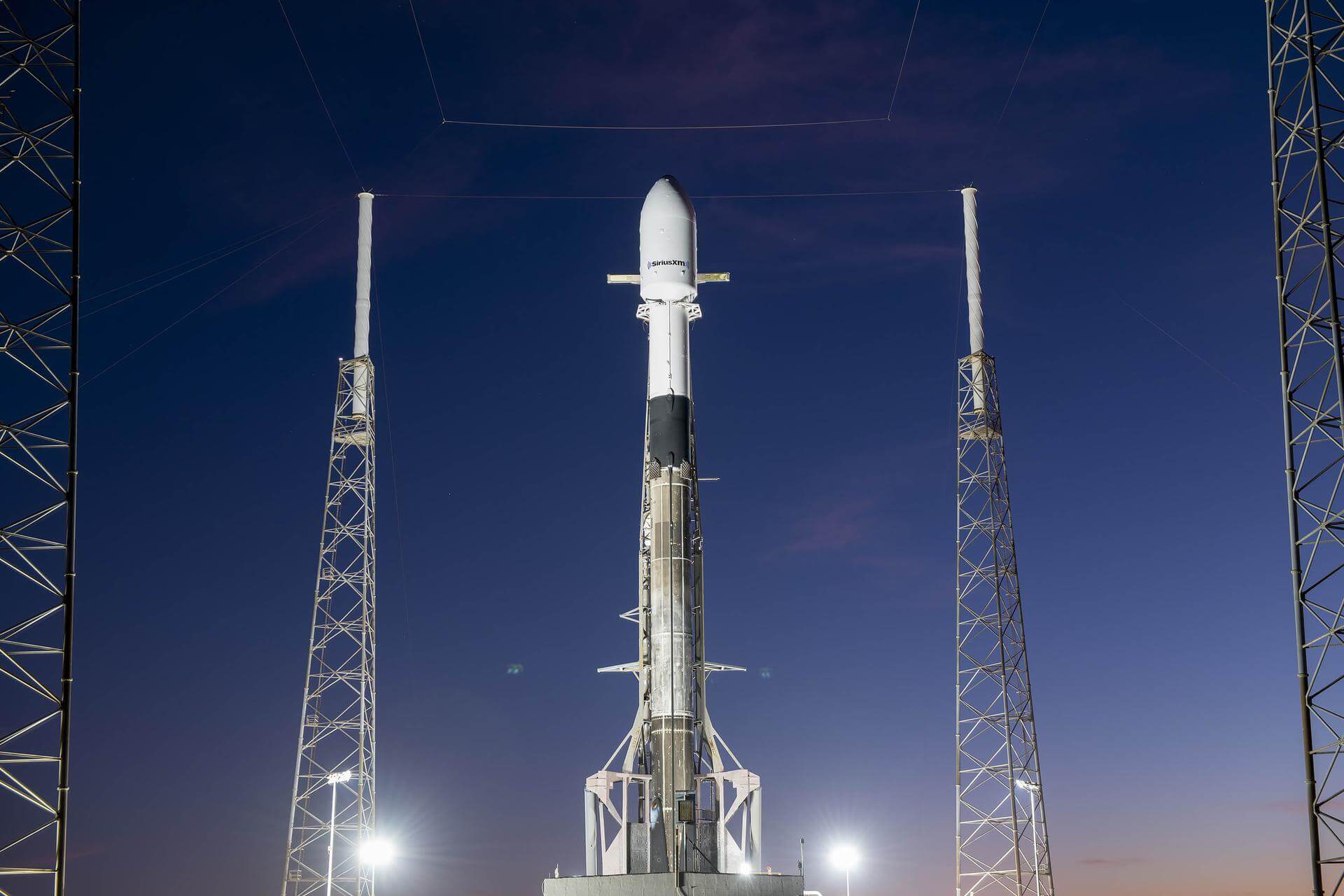
Falcon 9 Block 5 | Sirius SXM-7
SpaceX | United States of AmericaCape Canaveral SFS, FL, USA
Dec. 13, 2020, 5:30 p.m.
Status: Launch Successful
Mission:
SXM-7 is a large high power broadcasting satellite for SiriusXM's digital audio radio service (DARS). Space Systems/Loral (SS/L) got in July 2016 the contract to build the two satellites based on their SSL-1300 bus - SXM-7 and SXM-8. Both operate in the S-band spectrum. Each satellite will generate more than 20-kW of power and will have a large unfurlable antenna reflector, which enables broadcast to radios without the need for large dish-type antennas on the ground. SXM-7 is meant to replace the XM-3 satellite.
Geostationary Transfer Orbit B1051 - Flight Proven ( ) Just Read the InstructionsFalcon 9 Block 5 | Dragon CRS-2 SpX-21
SpaceX | United States of AmericaKennedy Space Center, FL, USA
Dec. 6, 2020, 4:17 p.m.
Status: Launch Successful
Mission:
SpaceX will launch the first cargo variant of its Dragon 2 spacecraft on their 21st commercial resupply services mission to the International Space Station. The flight will be conducted under the second Commercial Resupply Services contract with NASA. Dragon will be filled with supplies and payloads, including critical materials to directly support more than 250 science and research investigations that occur onboard the orbiting laboratory.
Low Earth Orbit B1058 - Flight Proven ( ) Of Course I Still Love YouFalcon 9 Block 5 | Starlink 15
SpaceX | United States of AmericaCape Canaveral SFS, FL, USA
Nov. 25, 2020, 2:13 a.m.
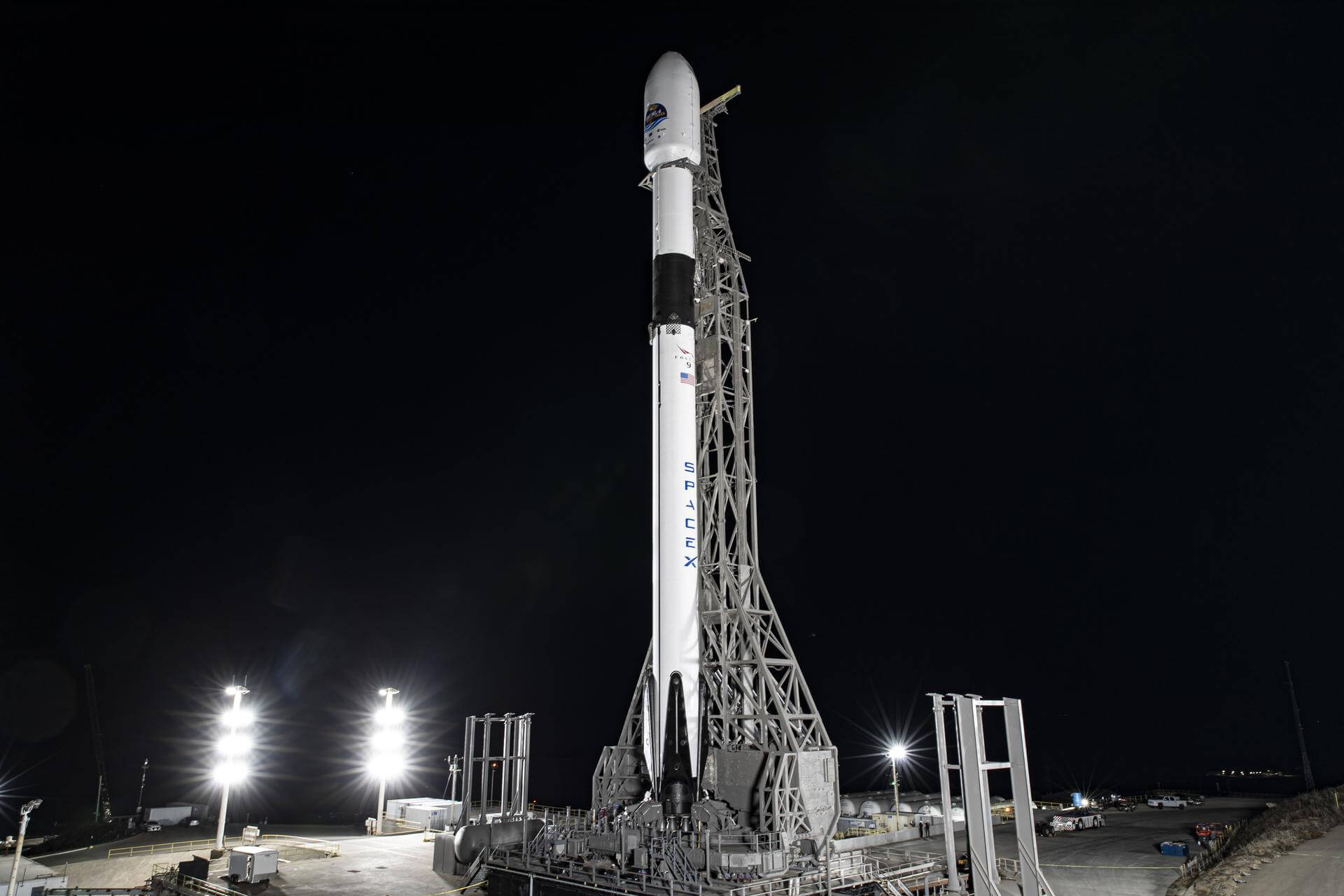
Falcon 9 Block 5 | Sentinel-6 Michael Freilich
SpaceX | United States of AmericaVandenberg SFB, CA, USA
Nov. 21, 2020, 5:17 p.m.
Status: Launch Successful
Mission:
The Sentinel-6 Michael Freilich and Sentinel-6B make up the Sentinel-6 mission, also known as Jason Continuity of Service (Jason-CS), which is a partnership between NASA, NOAA, ESA, and EUMETSAT. This mission continues the long-term global sea surface height data record begun by first Jason satellites in 1992. Named after former NASA Earth Science Division Director Michael Freilich, Sentinel-6 Michail Freilich will provide altimeter data necessary for ocean climate monitoring, ocean modelling and numerical ocean prediction, weather forecasting, marine meteorology, coastal altimetry and modelling. A secondary objective of the mission is to collect high-resolution vertical profiles of temperature, using the Global Navigation Satellite System (GNSS) Radio-Occultation sounding technique, to assess temperature changes in the troposphere and stratosphere and to support numerical weather prediction. Sentinel-6 Michael Freilich is to operate in a highly-inclined circular orbit at an altitude of 1336 km, with an operational mission lasting 5 years. Near-identical Sentinel-6B is planned to follow-up shortly after.
Low Earth Orbit #SeeingTheSeas B1063 - Maiden Flight Landing Zone 4Falcon 9 Block 5 | Crew-1
SpaceX | United States of AmericaKennedy Space Center, FL, USA
Nov. 16, 2020, 12:27 a.m.
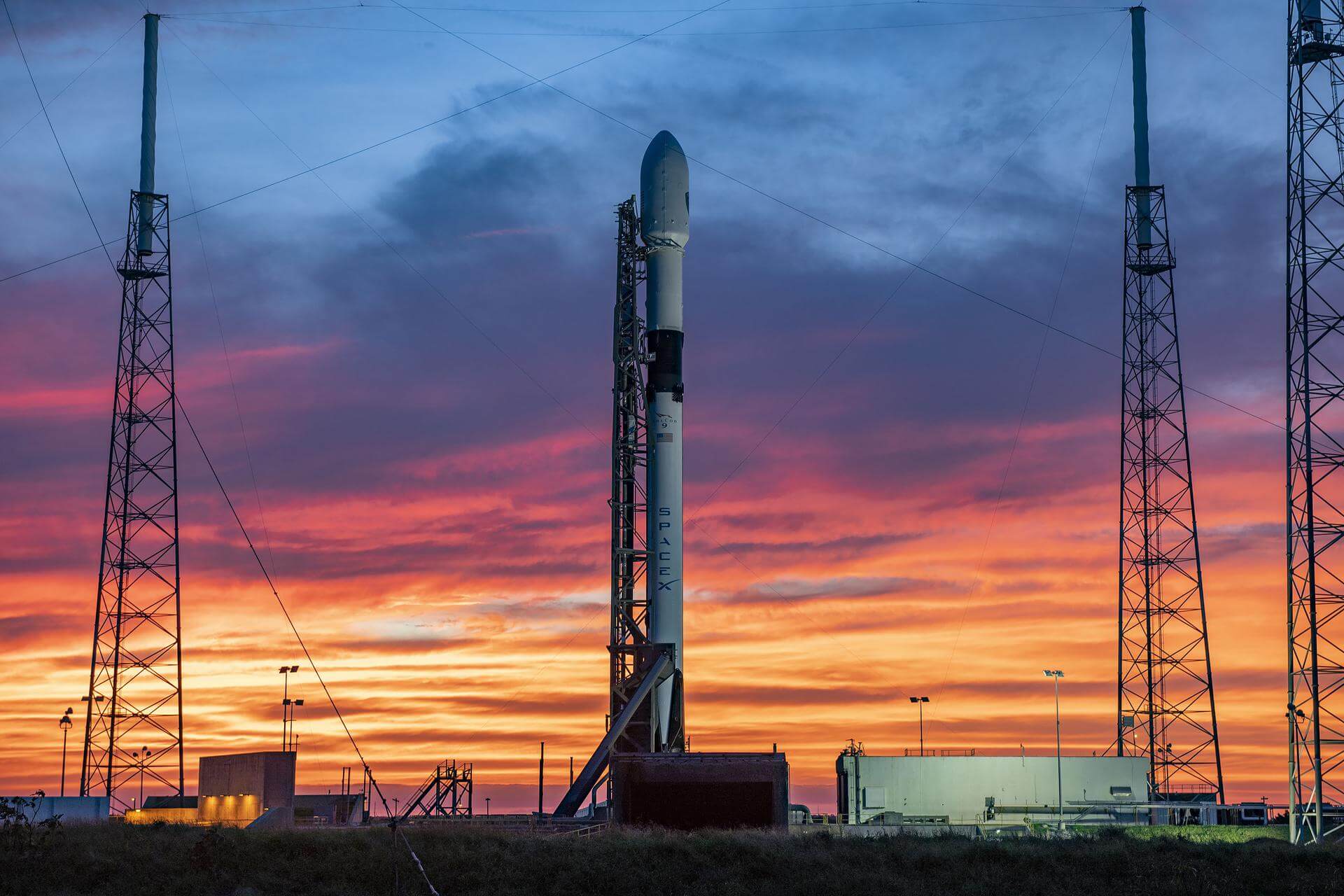
Falcon 9 Block 5 | GPS III SV04
SpaceX | United States of AmericaCape Canaveral SFS, FL, USA
Nov. 5, 2020, 11:24 p.m.
Status: Launch Successful
Mission:
GPS-IIIA (Global Positioning System) is the first evolution stage of the third generation of the GPS satellites. It consists of the first ten (known as "tranche") of GPS III satellites.
Medium Earth Orbit B1062 - Maiden Flight Of Course I Still Love YouFalcon 9 Block 5 | Starlink 14
SpaceX | United States of AmericaCape Canaveral SFS, FL, USA
Oct. 24, 2020, 3:31 p.m.
Falcon 9 Block 5 | Starlink 13
SpaceX | United States of AmericaKennedy Space Center, FL, USA
Oct. 18, 2020, 12:25 p.m.
Falcon 9 Block 5 | Starlink 12
SpaceX | United States of AmericaKennedy Space Center, FL, USA
Oct. 6, 2020, 11:29 a.m.
Falcon 9 Block 5 | Starlink 11
SpaceX | United States of AmericaKennedy Space Center, FL, USA
Sept. 3, 2020, 12:46 p.m.
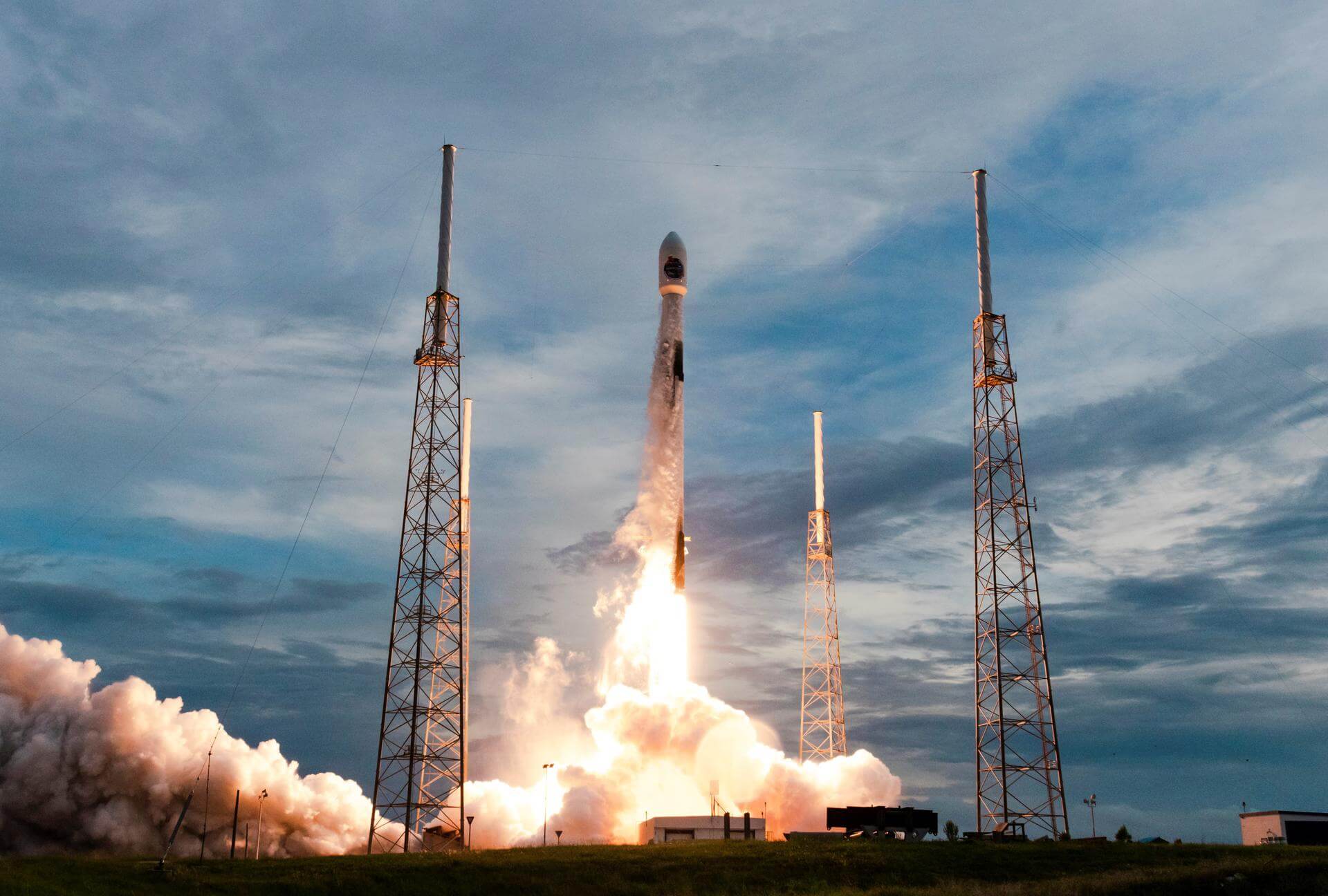
Falcon 9 Block 5 | SAOCOM 1B
SpaceX | United States of AmericaCape Canaveral SFS, FL, USA
Aug. 30, 2020, 11:18 p.m.
Status: Launch Successful
Mission:
The SAOCOM 1B spacecraft is the second of the two SAOCOM constellation satellites. It is tasked with hydrology and land observation, and will also operate jointly with the Italian COSMO-SkyMed constellation in X-band to provide frequent information relevant for emergency management. Two rideshare payloads are present - Tyvak-0172 and PlanetiQ’s GNOMES-1.
Sun-Synchronous Orbit B1059 - Flight Proven ( ) Landing Zone 1Falcon 9 Block 5 | Starlink 10
SpaceX | United States of AmericaCape Canaveral SFS, FL, USA
Aug. 18, 2020, 2:31 p.m.
Status: Launch Successful
Mission:
A batch of 58 satellites for Starlink mega-constellation - SpaceX's project for space-based Internet communication system. This launch will also carry 3 SkySat Earth-imaging satellites as a rideshare.
Low Earth Orbit B1049 - Flight Proven ( ) Of Course I Still Love YouFalcon 9 Block 5 | Starlink 9
SpaceX | United States of AmericaKennedy Space Center, FL, USA
Aug. 7, 2020, 5:12 a.m.
Status: Launch Successful
Mission:
A batch of 57 satellites for Starlink mega-constellation - SpaceX's project for space-based Internet communication system. This launch will also carry two BlackSky Earth-imaging satellites as a rideshare.
Low Earth Orbit B1051 - Flight Proven ( ) Of Course I Still Love YouFalcon 9 Block 5 | ANASIS-II
SpaceX | United States of AmericaCape Canaveral SFS, FL, USA
July 20, 2020, 9:30 p.m.
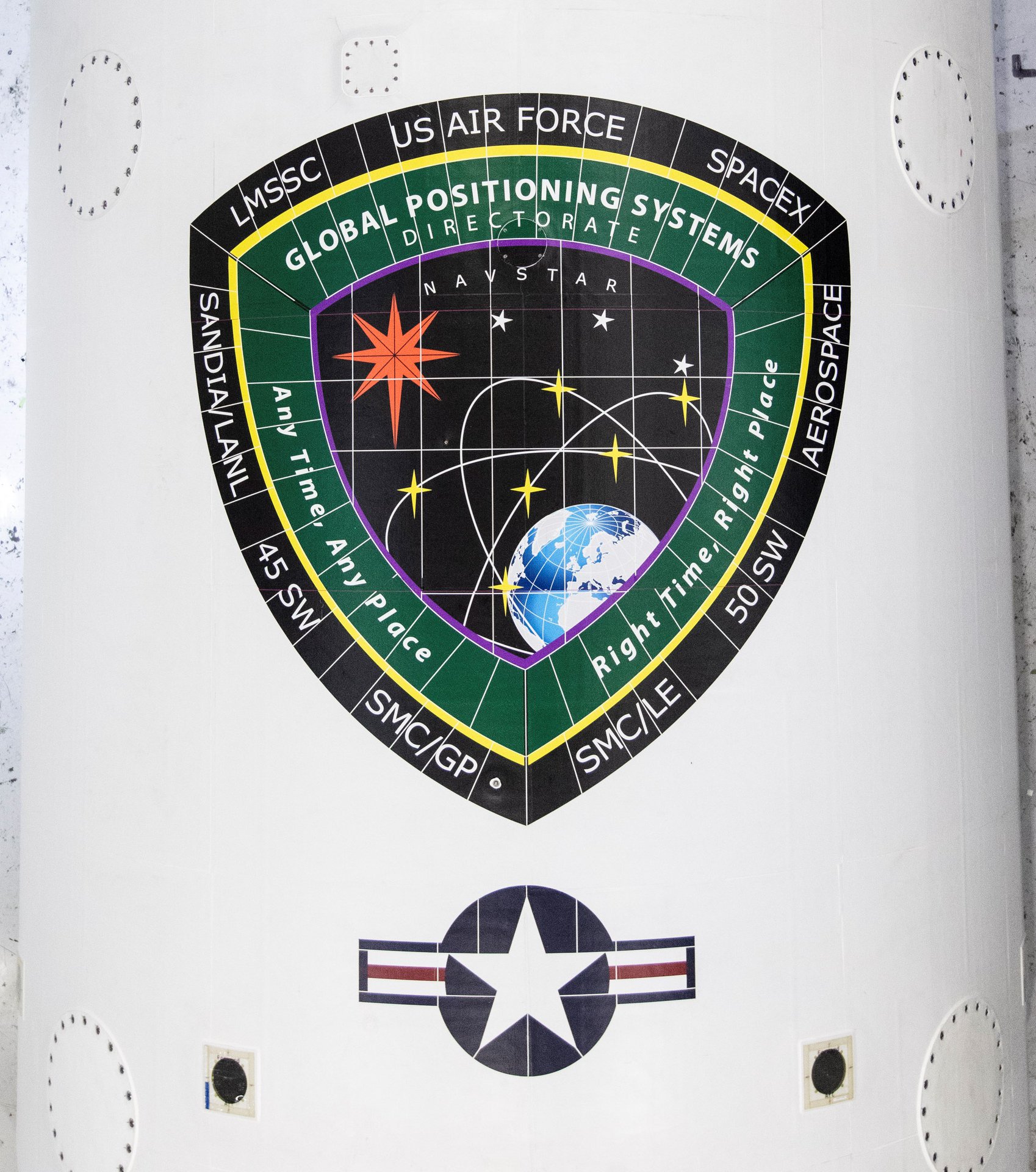
Falcon 9 Block 5 | GPS III SV03
SpaceX | United States of AmericaCape Canaveral SFS, FL, USA
June 30, 2020, 8:10 p.m.
Status: Launch Successful
Mission:
GPS-IIIA (Global Positioning System) is the first evolution stage of the third generation of the GPS satellites. It consists of the first ten (known as "tranche") of GPS III satellites.
Medium Earth Orbit B1060 - Maiden Flight Just Read the InstructionsFalcon 9 Block 5 | Starlink 8
SpaceX | United States of AmericaCape Canaveral SFS, FL, USA
June 13, 2020, 9:21 a.m.
Status: Launch Successful
Mission:
A batch of 58 satellites for Starlink mega-constellation - SpaceX's project for space-based Internet communication system. This launch will also carry three SkySat Earth-imaging satellites as a rideshare for Planet.
Low Earth Orbit B1059 - Flight Proven ( ) Of Course I Still Love YouFalcon 9 Block 5 | Starlink 7
SpaceX | United States of AmericaCape Canaveral SFS, FL, USA
June 4, 2020, 1:25 a.m.
Falcon 9 Block 5 | SpX-DM2 (Demonstration Mission 2)
SpaceX | United States of AmericaKennedy Space Center, FL, USA
May 30, 2020, 7:22 p.m.
Status: Launch Successful
Mission:
A new era of human spaceflight is set to begin as American astronauts once again launch on an American rocket from American soil. The Demo-2 mission is the second test flight of Crew Dragon, and the first flight with crew onboard. It will carry NASA astronauts Robert Behnken and Douglas Hurley to the International Space Station for an extended stay (the specific mission duration will be determined once on station based on the readiness of the next commercial crew launch). They will perform tests on Crew Dragon in addition to conducting research and other tasks with the space station crew. As the final flight test for SpaceX, this mission will validate the company’s crew transportation system, including the launch pad, rocket, spacecraft, and operational capabilities. This also will be the first time NASA astronauts will test the spacecraft systems in orbit. The Demo-2 mission will be the final major step before NASA’s Commercial Crew Program certifies Crew Dragon for operational, long-duration missions to the space station. Current Mission Status: After a successful ride to orbit and stay at the International Space Station, the Dragon Spacecraft successfully made its way back to Earth. Capsule successfully landed in the Gulf of Mexico waters on 3rd August 2020 at 18:48 UTC.
Low Earth Orbit #LaunchAmerica B1058 - Maiden Flight Of Course I Still Love YouFalcon 9 Block 5 | Starlink 6
SpaceX | United States of AmericaKennedy Space Center, FL, USA
April 22, 2020, 7:30 p.m.
Falcon 9 Block 5 | Starlink 5
SpaceX | United States of AmericaKennedy Space Center, FL, USA
March 18, 2020, 12:16 p.m.
Falcon 9 Block 5 | SpX CRS-20
SpaceX | United States of AmericaCape Canaveral SFS, FL, USA
March 7, 2020, 4:50 a.m.
Status: Launch Successful
Mission:
SpaceX launched the Dragon spacecraft on their 20th operational cargo delivery mission to the International Space Station. The flight was conducted under the Commercial Resupply Services contract with NASA.
Low Earth Orbit B1059 - Flight Proven ( ) Landing Zone 1Falcon 9 Block 5 | Starlink 4
SpaceX | United States of AmericaCape Canaveral SFS, FL, USA
Feb. 17, 2020, 3:05 p.m.
Falcon 9 Block 5 | Starlink 3
SpaceX | United States of AmericaCape Canaveral SFS, FL, USA
Jan. 29, 2020, 2:06 p.m.
Status: Launch Successful
Mission:
Second operational Starlink payload of 2020 and third overall. The Falcon 9 launch vehicle will carry a batch of 60 Starlink satellites that will be insterted in a Low Earth Orbit (LEO) at an altitude of 290 km (180 mi) and an inclination of 53°. They will then split into three orbital planes and raise their orbits to reach an operational altitude of 550 km (342 mi). The Starlink LEO constellation aims to provide worldwide affordable satellite internet access. 182 satellites (120 operational) have been deployed so far, the goal scheduled for the mid-2020s being 12,000 satellites in orbit, with a possible later extension to 42,000. The booster for this launch will be B1051, a Block 5 generation core which previously flew on SpaceX's Demonstration Mission 1 (first Crew Dragon test flight) and launched the Canadian Space Agency's RADARSAT Constellation.
Low Earth Orbit B1051 - Flight Proven ( ) Of Course I Still Love YouFalcon 9 Block 5 | Dragon In-Flight Abort Test
SpaceX | United States of AmericaKennedy Space Center, FL, USA
Jan. 19, 2020, 3:30 p.m.
Status: Launch Successful
Mission:
When the Falcon 9 Block 5 rocket reaches Max-Q (maximum dynamic forces), the launch abort system of the Crew Dragon spacecraft will be triggered. This will fire up its SuperDraco engines and propel the spacecraft and its theoretical passengers away from the launch vehicle before landing back safely in the Atlantic Ocean. The goal of this test is to demonstrate the capacity of the spacecraft to ensure a safe return to the ground for the astronauts in the event of a launch vehicle failure. The booster for this launch will be B1046, a thrice-flown core which was the first of the Block 5 generation. It will not attempt to land and is expected to be destroyed by the SuperDracos and aerodynamic loads.
Suborbital B1046 - Flight Proven ( ) Atlantic OceanFalcon 9 Block 5 | Starlink 2
SpaceX | United States of AmericaCape Canaveral SFS, FL, USA
Jan. 7, 2020, 2:19 a.m.
Falcon 9 Block 5 | JCSAT-18/KACIFIC-1
SpaceX | United States of AmericaCape Canaveral SFS, FL, USA
Dec. 17, 2019, 12:10 a.m.
Status: Launch Successful
Mission:
JCSAT-18/KACIFIC-1 is a joint high-throughput communications satellite for Sky Perfect JSAT Corp. of Japan and a Singapore telecommunications company Kacific Broadband Satellites. Satellite will provide mobile telephone, data and internet services throughout the Asia-Pacific region. The JCSAT-18 payload will provide Ku-band coverage and improve mobile and broadband services for SKY Perfect JSAT Corporation customers in the Asia-Pacific region, including the far eastern part of Russia. The satellite features technologies in the power subsystem to achieve highest efficiencies, and it also features command and data handling technologies to provide a more secure spacecraft. The KACIFIC-1 payload is designed to deliver uncontended broadband throughput via 56 Ka-band narrow beams, each having a capacity up to 1.25 Gbps, with the highest signal power ever achieved in the region. The beams are selectively tailored to cover precise pockets of demand in a geographically dispersed footprint of 20 Pacific and South East Asian nations.
B1056 - Flight Proven ( ) Of Course I Still Love YouFalcon 9 Block 5 | SpX CRS-19
SpaceX | United States of AmericaCape Canaveral SFS, FL, USA
Dec. 5, 2019, 5:29 p.m.
Status: Launch Successful
Mission:
SpaceX launched the Dragon spacecraft on their 19th operational cargo delivery mission to the International Space Station. The flight was conducted under the Commercial Resupply Services contract with NASA. Dragon was filled with approximately 5,700 pounds of supplies and payloads, including critical materials to directly support more than 250 science and research investigations that occur onboard the orbiting laboratory.
Low Earth Orbit B1059 - Maiden Flight Of Course I Still Love YouFalcon 9 Block 5 | Starlink 1
SpaceX | United States of AmericaCape Canaveral SFS, FL, USA
Nov. 11, 2019, 2:56 p.m.
Status: Launch Successful
Mission:
A batch of 60 satellites for Starlink mega-constellation - SpaceX's project for space-based Internet communication system. Since the demo launch of Starlink satellites, SpaceX has increased spectrum capacity for the end-user through upgrades in design that maximize the use of both Ka and Ku bands. Additionally, components of each satellite are 100% destructible and will quickly burn up in Earth’s atmosphere at the end of their life cycle.
Low Earth Orbit B1048 - Flight Proven ( ) Of Course I Still Love YouFalcon 9 Block 5 | Amos-17
SpaceX | United States of AmericaCape Canaveral SFS, FL, USA
Aug. 6, 2019, 11:23 p.m.
Status: Launch Successful
Mission:
Amos-17 is a multi-band high-throughput satellite which will operate from 17°E, offering Ka-band, Ku-band, and C-Band services to users in Africa, the Middle East and Europe.
Geostationary Transfer Orbit #AMOS17 B1047 - Flight Proven ( ) Atlantic Ocean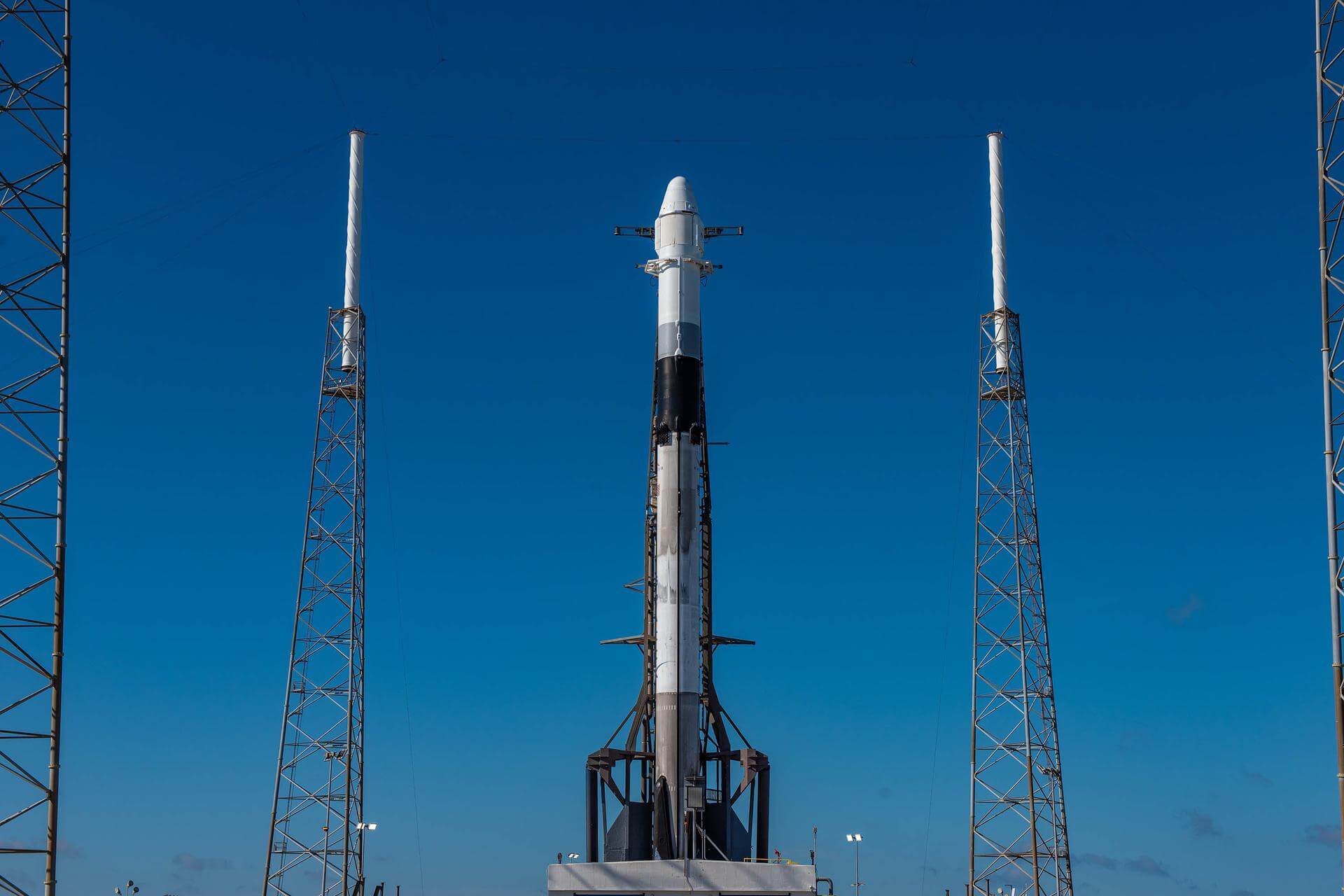
Falcon 9 Block 5 | SpX CRS-18
SpaceX | United States of AmericaCape Canaveral SFS, FL, USA
July 25, 2019, 10:01 p.m.
Status: Launch Successful
Mission:
SpaceX launched the Dragon spacecraft on their 18th operational cargo delivery mission to the International Space Station. The flight was conducted under the Commercial Resupply Services contract with NASA.
Low Earth Orbit #CRS18 B1056 - Flight Proven ( ) Landing Zone 1Falcon 9 Block 5 | RADARSAT Constellation
SpaceX | United States of AmericaVandenberg SFB, CA, USA
June 12, 2019, 2:17 p.m.
Status: Launch Successful
Mission:
The Radarsat Constellation Mission is a follow-on project to RADARSAT-2 currently developed by MDA. The constellation will consist of a fleet of three spacecraft, and be both complementary and a follow-on to the upcoming deployment of the RADARSAT-2 mission. The primary purpose of the RCM is to provide C-Band data continuity for RADARSAT-2 users, as well as adding a new series of applications enabled through the constellation approach. The main uses of RCM are expected to be in the areas of: maritime surveillance (ship detection, ice monitoring, and oil spill detection), disaster management, ecosystem monitoring. The primary areas of interest are the landmass of Canada and its surrounding Arctic, Pacific and Atlantic maritime areas. The images and derived information are required to be provided to Canadian government users at frequent area coverage rates. Contrary to the earlier RadarSat missions, the imagery will not be available commercially. The spacecraft Payload will consist of a Synthetic Aperture Radar (SAR) sensor integrated with an Automated Identification System (AIS). The SAR Payload concept is a 2-panel deployable SAR antenna of length approximately 7 meters.
Sun-Synchronous Orbit B1051 - Flight Proven ( ) Landing Zone 4Falcon 9 Block 5 | Starlink Demo (0.9)
SpaceX | United States of AmericaCape Canaveral SFS, FL, USA
May 24, 2019, 2:30 a.m.
Falcon 9 Block 5 | SpX CRS-17
SpaceX | United States of AmericaCape Canaveral SFS, FL, USA
May 4, 2019, 6:48 a.m.
Status: Launch Successful
Mission:
SpaceX launched the Dragon spacecraft on their 17th operational cargo delivery mission to the International Space Station. The flight was conducted under the Commercial Resupply Services contract with NASA.
Low Earth Orbit #CRS17 B1056 - Maiden Flight Of Course I Still Love YouFalcon 9 Block 5 | SpX-DM1 (Demonstration Mission 1)
SpaceX | United States of AmericaKennedy Space Center, FL, USA
March 2, 2019, 7:49 a.m.
Falcon 9 Block 5 | Nusantara Satu & GTO-1 (Beresheet, S5)
SpaceX | United States of AmericaCape Canaveral SFS, FL, USA
Feb. 22, 2019, 1:45 a.m.
Status: Launch Successful
Mission:
Spaceflight’s first mission beyond Lower Earth Orbit (LEO) and its first combined launch with SSL. Consists out lunar lander called Beresheet (Hebrew for in the beginning) and AFRL’s S5 satellite.
Lunar Orbit B1048 - Flight Proven ( ) Of Course I Still Love YouFalcon 9 Block 5 | Iridium-8
SpaceX | United States of AmericaVandenberg SFB, CA, USA
Jan. 11, 2019, 3:31 p.m.
Status: Launch Successful
Mission:
SpaceX's Falcon 9 rocket will deliver 10 satellites to low Earth orbit for Iridium, a global leader in mobile voice and data satellite communications. This is the eighth set of 10 satellites in a series of 75 total satellites that SpaceX will launch for Iridium's next generation global satellite constellation, Iridium NEXT.
Polar Orbit #Iridium8 B1049 - Flight Proven ( ) Just Read the InstructionsFalcon 9 Block 5 | GPS III SV01
SpaceX | United States of AmericaCape Canaveral SFS, FL, USA
Dec. 23, 2018, 1:51 p.m.
Status: Launch Successful
Mission:
GPS-IIIA (Global Positioning System) is the first evolution stage of the third generation of the GPS satellites. It consists of the first ten (known as "tranche") of GPS III satellites. This program will improve position, navigation, and timing services for the warfighter and civil users worldwide and provide advanced anti-jam capabilities yielding superior system security, accuracy and reliability.
Medium Earth Orbit B1054 - Maiden Flight Atlantic OceanFalcon 9 Block 5 | SpX CRS-16
SpaceX | United States of AmericaCape Canaveral SFS, FL, USA
Dec. 5, 2018, 6:16 p.m.
Status: Launch Successful
Mission:
SpaceX launched the Dragon spacecraft on their 16th operational cargo delivery mission to the International Space Station. The flight was conducted under the Commercial Resupply Services contract with NASA.
Low Earth Orbit B1050 - Maiden Flight Landing Zone 1Falcon 9 Block 5 | Spaceflight SSO-A
SpaceX | United States of AmericaVandenberg SFB, CA, USA
Dec. 3, 2018, 6:34 p.m.
Status: Launch Successful
Mission:
Dedicated rideshare launching payloads into sun-synchronous orbit. Payloads include ORS-6, EU:CROPIS, STPSat-5, BlackSky Global-1 to -4, HawkEye Pathfinder 1-3, Iceye, NEXTSat-1, 2 SkySats, Centauri II, and a Flock of Doves.
Sun-Synchronous Orbit B1046 - Flight Proven ( ) Just Read the InstructionsFalcon 9 Block 5 | Es'hail 2
SpaceX | United States of AmericaKennedy Space Center, FL, USA
Nov. 15, 2018, 8:46 p.m.
Status: Launch Successful
Mission:
Es'hail 2 is a communications satellite operated by a Quatar based company. The satellite will operate at 26 degrees East longitude along a geostationary orbit to provide direct-to-home television services in the Middle East and North Africa region.
Geostationary Transfer Orbit #EsHail2 B1047 - Flight Proven ( ) Of Course I Still Love YouFalcon 9 Block 5 | SAOCOM 1A
SpaceX | United States of AmericaVandenberg SFB, CA, USA
Oct. 8, 2018, 2:21 a.m.
Status: Launch Successful
Mission:
The SAOCOM 1A spacecraft is the first of the two SAOCOM constellation satellites. It is tasked with hydrology and land observaion, and will also operate jointly with the Italian COSMO-SkyMed constellation in X-band to provide frequent information relevant for emergency management.
Sun-Synchronous Orbit #SAOCOM1A B1048 - Flight Proven ( ) Landing Zone 4Falcon 9 Block 5 | Telstar 18 VANTAGE
SpaceX | United States of AmericaCape Canaveral SFS, FL, USA
Sept. 10, 2018, 4:45 a.m.
Status: Launch Successful
Mission:
Telstar 18 VANTAGE, or Telstar 18V, is a communications satellite built by Space Systems Loral for the canadian satellite operator Telesat. The satellite is to provide coverage to the Asia Pacific region.
Geostationary Transfer Orbit B1049 - Maiden Flight Of Course I Still Love YouFalcon 9 Block 5 | Merah Putih (Telkom-4)
SpaceX | United States of AmericaCape Canaveral SFS, FL, USA
Aug. 7, 2018, 5:18 a.m.
Falcon 9 Block 5 | Iridium-7
SpaceX | United States of AmericaVandenberg SFB, CA, USA
July 25, 2018, 11:39 a.m.
Status: Launch Successful
Mission:
SpaceX’s Falcon 9 rocket will deliver 10 satellites to low Earth orbit for Iridium, a global leader in mobile voice and data satellite communications. This is the seventh set of 10 satellites in a series of 75 total satellites that SpaceX will launch for Iridium’s next generation global satellite constellation, Iridium® NEXT.
Low Earth Orbit #Iridium7 B1048 - Maiden Flight Just Read the InstructionsFalcon 9 Block 5 | Telstar 19 VANTAGE
SpaceX | United States of AmericaCape Canaveral SFS, FL, USA
July 22, 2018, 5:50 a.m.
Status: Launch Successful
Mission:
Telstar 19 VANTAGE, or Telstar 19V, is a communications satellite built by Space Systems Loral for the canadian satellite operator Telesat. The satellite is to be placed into 63° West orbital slot, where it will provide coverage for North And South America.
Geostationary Transfer Orbit #Telstar19V B1047 - Maiden Flight Of Course I Still Love YouFalcon 9 Block 5 | Bangabandhu-1
SpaceX | United States of AmericaKennedy Space Center, FL, USA
May 11, 2018, 8:14 p.m.
Status: Launch Successful
Mission:
The Bangabandhu 1 (BD-1) satellite, the first geostationary communications satellite of Bangladesh. Satellite is to be located at 119.1° East longitude slot in geostationary orbit, where it will provide service to Bangladesh and neighbouring countries. Satellite is build by Thales Aleinia Space. It is based on Spacebus 4000B2 platform, weighs 3500 kg and is fitted with Ku-Band and C-Band transponders. The major applications of the spacecraft include DTH, very small aperture terminal communications, backhaul and trunking, network restoration, and disaster preparedness and relief.
Geostationary Transfer Orbit B1046 - Maiden Flight Of Course I Still Love YouLong March 8A
SpaceSail Polar Group #14
Commercial LC-1 - Wenchang Space Launch Site, People's Republic of China20 Low Earth Orbit communication satellites with Ku, Q and V band payloads for the G60 constellation operated by Shanghai Spacesail Technologies with…
Falcon 9
Starlink Group 10-50
Space Launch Complex 40 - Cape Canaveral SFS, FL, USAA batch of 29 satellites for the Starlink mega-constellation - SpaceX's project for space-based Internet communication system. The Falcon 9 1st st…
Long March 6A
SpaceSail Polar Group #13
Launch Complex 9A - Taiyuan Satellite Launch Center, People's Republic of China18 Low Earth Orbit communication satellites with Ku, Q and V band payloads for the G60 constellation operated by Shanghai Spacesail Technologies with…
Pegasus XL
Swift Boost Mission
Kwajalein Atoll - Air launch to orbitContracted by NASA under the Small Business Innovation Research Phase 3 contract, Katalyst Space Technologies' LINK servicing spacecraft will rendezv…
Atlas V 551
Amazon Leo (LA-08)
Space Launch Complex 41 - Cape Canaveral SFS, FL, USAAmazon Leo, formerly known as Project Kuiper, is a mega constellation of satellites in Low Earth Orbit that will offer broadband internet access, thi…

