Falcon 9 Block 5 | JPSS 4 (Joint Polar Satellite System spacecraft No. 4)
To Be Determined
L - -- : -- : -- : --


The JPSS constellation of satellites collects global multi-spectral radiometry and other specialized meteorologic, oceanographic, and solar-geophysical data via remote sensing of land, sea, and atmospheric properties. These data support NOAA’s mission for continuous observation of Earth’s environment to understand and predict changes in weather, climate, oceans, and coasts to support the nation’s economy and protect lives and property. NASA uses the instruments aboard the JPSS satellites to continue decades of Earth science research for the betterment of humanity. JPSS-4 carries the NASA Earth Venture mission Libera, an instrument to improve our understanding of trends in Earth’s energy imbalance and our changing climate.

Adding launch NET 2027
Falcon 9 is a two-stage rocket designed and manufactured by SpaceX for the reliable and safe transport of satellites and the Dragon spacecraft into orbit. The Block 5 variant is the fifth major interval aimed at improving upon the ability for rapid reusability.
See DetailsSpace Exploration Technologies Corp., known as SpaceX, is an American aerospace manufacturer and space transport services company headquartered in Hawthorne, California. It was founded in 2002 by entrepreneur Elon Musk with the goal of reducing space transportation costs and enabling the colonization of Mars. SpaceX operates from many pads, on the East Coast of the US they operate from SLC-40 at Cape Canaveral Space Force Station and historic LC-39A at Kennedy Space Center. They also operate from SLC-4E at Vandenberg Space Force Base, California, usually for polar launches. Another launch site is being developed at Boca Chica, Texas.
INFO WIKI
Los Angeles CA (SPX) Feb 02, 2026 NASA's Libera Earth energy instrument has completed a full campaign of environmental testing and is now ready for delivery to its host satellite, marking a major milestone for the agency's long term r…
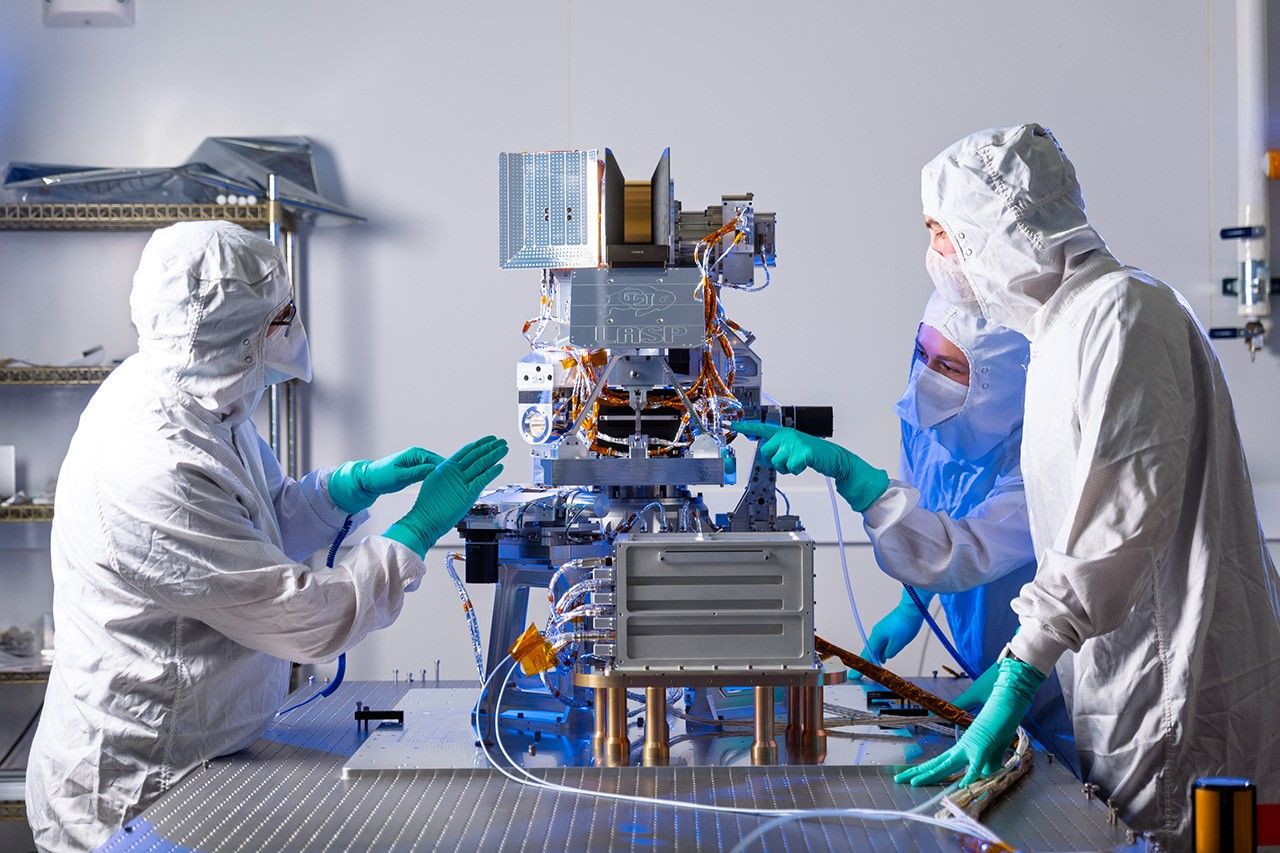
NASA’s Libera instrument, which is designed to maintain the global data record of Earth’s radiation budget, has successfully completed comprehensive environmental testing. This critical milestone included thermal vacuum tests that simulate…
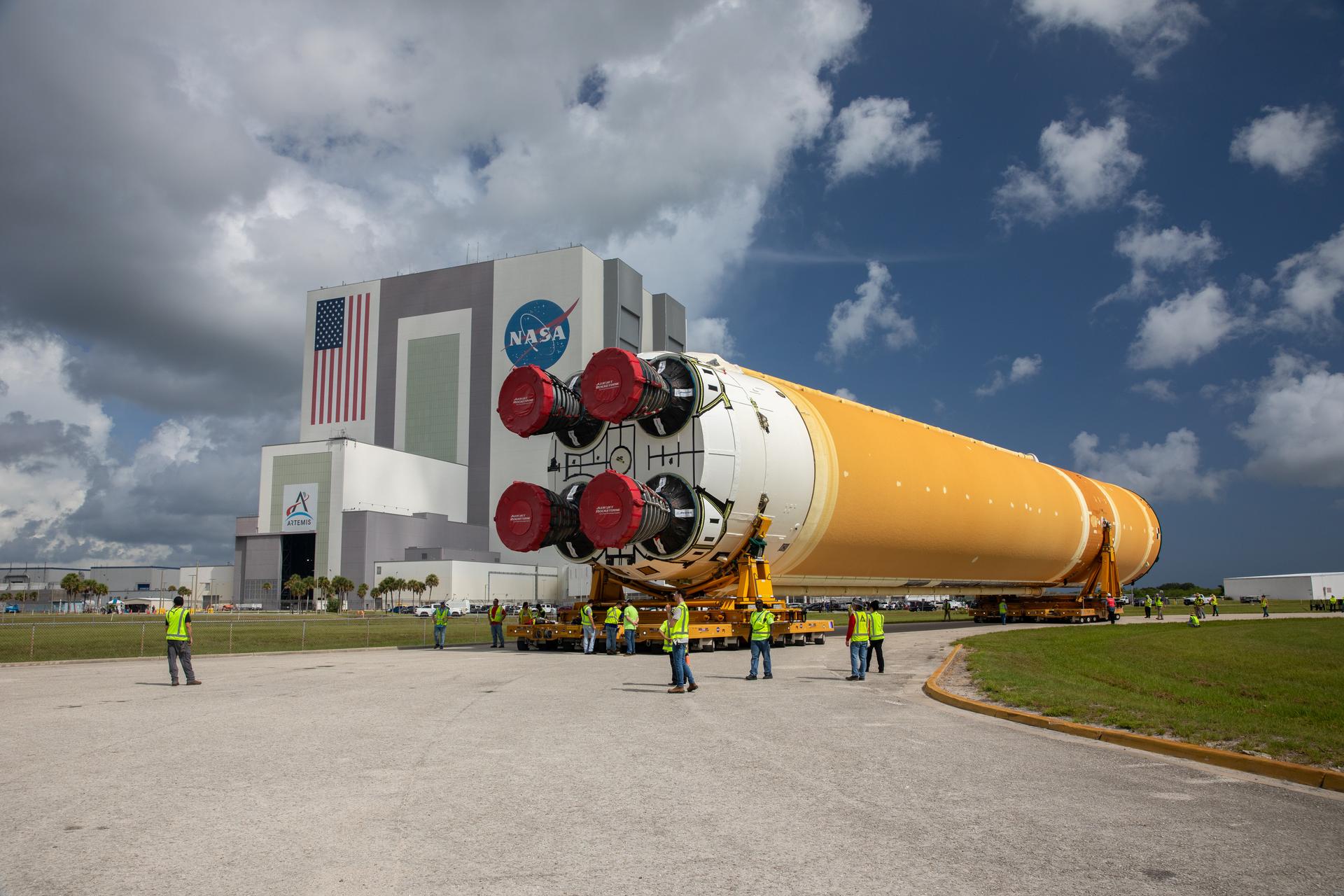
"The team is investigating root cause."

NASA, on behalf of the National Oceanic and Atmospheric Administration (NOAA), has selected SpaceX (Space Exploration Technologies Corporation) to provide launch services for NOAA’s JPSS-4 mission. The spacecraft is part of the multi-satel…

NASA wants a "robust" commercial space community. But it has a long way to go.
A batch of 24 satellites for the Starlink mega-constellation - SpaceX's project for space-based Internet communication system.
Classified payload for the US National Reconnaissance Office.
2 Chinese classified satellites claimed to be for communication technology test purposes. Actual mission not known.
Tianlian is a Chinese data tracking and relay communications geostationary satellite series. The TL-3 (Tian Lian 3) satellites are the 3rd generation…
A batch of 24 satellites for the Starlink mega-constellation - SpaceX's project for space-based Internet communication system.
13th test flight of the two-stage Starship launch vehicle. Second flight of Starship V3. For the first time, Starship will carry 20 V3 Starlink sa…
Share-ride of 5 commercial Earth observation and technology demonstration satellites to SSO, including SpaceTY's TY-48. Details TBD.
Tianlian is a Chinese data tracking and relay communications geostationary satellite series. The TL 2 (Tian Lian 2) satellites represent the second g…
Carried 9 satellites on a share-ride to sun-synchronous orbit. Details TBD.
The Northrop Grumman/SpaceLogistics MRV-1 is a mission extension payload including a mission robotic vehicle (MRV) and multiple mission extension pod…