Falcon 9 Block 5 | TRACERS
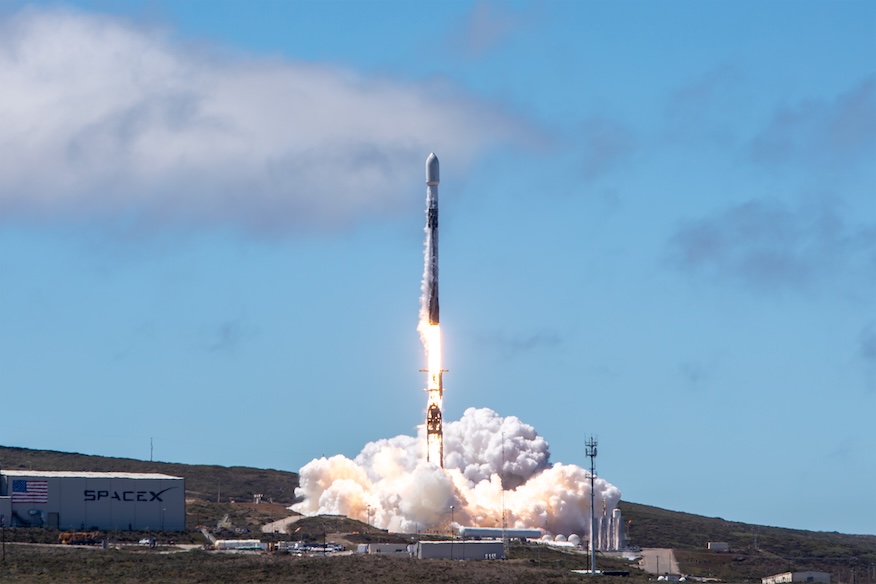
Launch Successful
L - -- : -- : -- : --
Launch Window
July 23, 2025, 6:13 p.m. - July 23, 2025, 7:10 p.m.


July 23, 2025, 6:13 p.m. - July 23, 2025, 7:10 p.m.

TRACERS is a satellite mission led by the University of Iowa, funded by NASA, to study the mysterious, powerful interactions between the magnetic fields of the Sun and Earth. This mission will help us better understand space weather and its impact on our planet. TRACERS is funded as a Small
NASA's Tandem Reconnection and Cusp Electrodynamics Reconnaissance Satellites (TRACERS) mission, consisting of two identical satellites that will orbit Earth in tandem (one following the other), will help understand magnetic re-connection and its effects in Earth’s atmosphere. Magnetic re-connection occurs when activity from the Sun interacts with Earth’s magnetic field. By understanding this process, scientists will be able to better understand and prepare for impacts of solar activity on Earth. Hitchhiking small satellites: * Athena EPIC (Economical Payload Integration Cost) * Polylingual Experimental Terminal (PExT) * Relativistic Electron Atmospheric Loss (REAL)
Launch trajectory and telemetry simulations provided by Flight Club - a rocket launch simulator and orbital trajectory visualiser for all things space!

Launch success
All payloads deployed

Unofficial Re-stream by SPACE AFFAIRS has started

Liftoff.
Official Webcast by SpaceX has started
Falcon 9 is a two-stage rocket designed and manufactured by SpaceX for the reliable and safe transport of satellites and the Dragon spacecraft into orbit. The Block 5 variant is the fifth major interval aimed at improving upon the ability for rapid reusability.
See DetailsThe Falcon 9 booster B1081 has returned to the launch site at LZ-4 after its 16th flight.
Result: Successful Return to Launch Site landing at Landing Zone 4.Space Exploration Technologies Corp., known as SpaceX, is an American aerospace manufacturer and space transport services company headquartered in Hawthorne, California. It was founded in 2002 by entrepreneur Elon Musk with the goal of reducing space transportation costs and enabling the colonization of Mars. SpaceX operates from many pads, on the East Coast of the US they operate from SLC-40 at Cape Canaveral Space Force Station and historic LC-39A at Kennedy Space Center. They also operate from SLC-4E at Vandenberg Space Force Base, California, usually for polar launches. Another launch site is being developed at Boca Chica, Texas.
INFO WIKI
Turin, Italy — Jan. 11, 2026 — The 12U CubeSat LIDE (LIve DEmonstration) has successfully completed its first months of on-orbit operations following its launch July 23, 2025, aboard a […] The post Tyvak International’s LIDE satellite com…

NASA has restored contact with one of a pair of space science satellites that ran into problems shortly after its July launch. The post NASA reestablishes contact with one of two TRACERS satellites appeared first on SpaceNews.

This week’s launches predominantly featured SpaceX’s Falcon 9, beginning with a Starlink mission from Vandenberg,… The post Space Traffic Report: Busy Week for Falcon 9: TRACERS, Starlink & O3b Satellites! appeared first on NASASpaceFligh…
SpaceX launched twin satellites for NASA Wednesday that will study how the electrically-charged solar wind interacts with Earth's magnetic field, creating constantly changing and occasionally dangerous "space weather" affecting satellites,…

NASA’s newest mission, TRACERS, soon will begin studying how Earth’s magnetic shield protects our planet from the effects of space weather. Short for Tandem Reconnection and Cusp Electrodynamics Reconnaissance Satellites, the twin TRACERS …
Synthetic aperture radar Earth observation satellite for Japanese Earth imaging company iQPS.
AST SpaceMobile’s Block 2 BlueBird satellites are designed to deliver up to 10 times the bandwidth capacity of the BlueBird Block 1 satellites, requi…
2 hyper-spectral Earth observation satellites from Chinese company STAR.VISION. Both satellites are built in corporation with foreign customers: *…
A batch of 24 satellites for the Starlink mega-constellation - SpaceX's project for space-based Internet communication system.
A batch of 9 Low Earth Orbit communication satellites for the Chinese state owned SatNet constellation operated by the China Satellite Network Group.…
A batch of 24 satellites for the Starlink mega-constellation - SpaceX's project for space-based Internet communication system.
Classified payload for the US National Reconnaissance Office.
2 Chinese classified satellites claimed to be for communication technology test purposes. Actual mission not known.
Tianlian is a Chinese data tracking and relay communications geostationary satellite series. The TL-3 (Tian Lian 3) satellites are the 3rd generation…
A batch of 24 satellites for the Starlink mega-constellation - SpaceX's project for space-based Internet communication system.


 View in Flightclub