Pegasus XL | Swift Boost Mission
Launch Successful
L - -- : -- : -- : --
Instantaneous launch window.
Launch Window
July 3, 2026, 8:36 a.m. - July 3, 2026, 8:36 a.m.


Instantaneous launch window.
July 3, 2026, 8:36 a.m. - July 3, 2026, 8:36 a.m.
Contracted by NASA under the Small Business Innovation Research Phase 3 contract, Katalyst Space Technologies' LINK servicing spacecraft will rendezvous and attach to NASA’s Neil Gehrels Swift Observatory to re-boost its orbit. This aims to demonstrate a key capability for the future of space exploration and extending the Swift mission’s science lifetime in gamma ray astronomy.

Launched and reached orbit.

Rescheduled for July 3.
Scrub due to launch vehicle issue.

Delayed again due to weather
Scrubbed due to weather
The Pegasus is an air-launched rocket developed by Orbital Sciences Corporation (now part of Northrop Grumman Innovation Systems). Capable of carrying small payloads of up to 443 kilograms (977 lb) into low Earth orbit, the vehicle consists of three solid propellant stages and an optional monopropellant fourth stage. Pegasus is released from its carrier aircraft at approximately 40,000 ft (12,000 m), and its first stage has a wing and a tail to provide lift and attitude control while in the atmosphere.
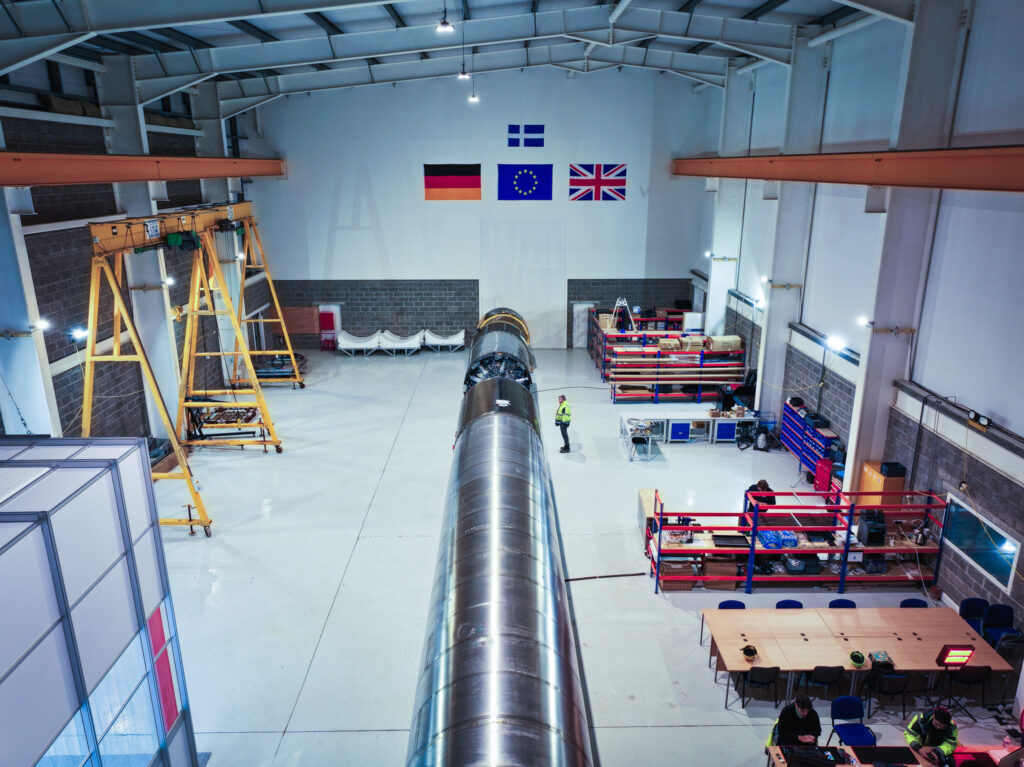
"We are delighted to actively help shape the ramp-up of the Ariane 6."

A Pegasus XL launched a mission to reboost a NASA astrophysics spacecraft on what may be the final flight of that rocket. The post Pegasus launches Swift reboost mission appeared first on SpaceNews.
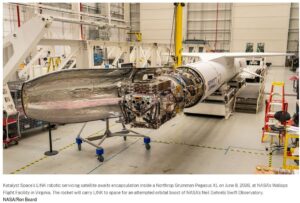
Katalyst Space’s LINK on-orbit servicing spacecraft is on its way to reboost NASA’s Swift observatory. Northrop Grumman’s Pegasus-XL rocket launched LINK this morning and contact has been successfully established, the […]

The LINK spacecraft aims to rendezvous, capture, and reboost NASA’s 21 year old Neil Gehrels Swift Observatory.
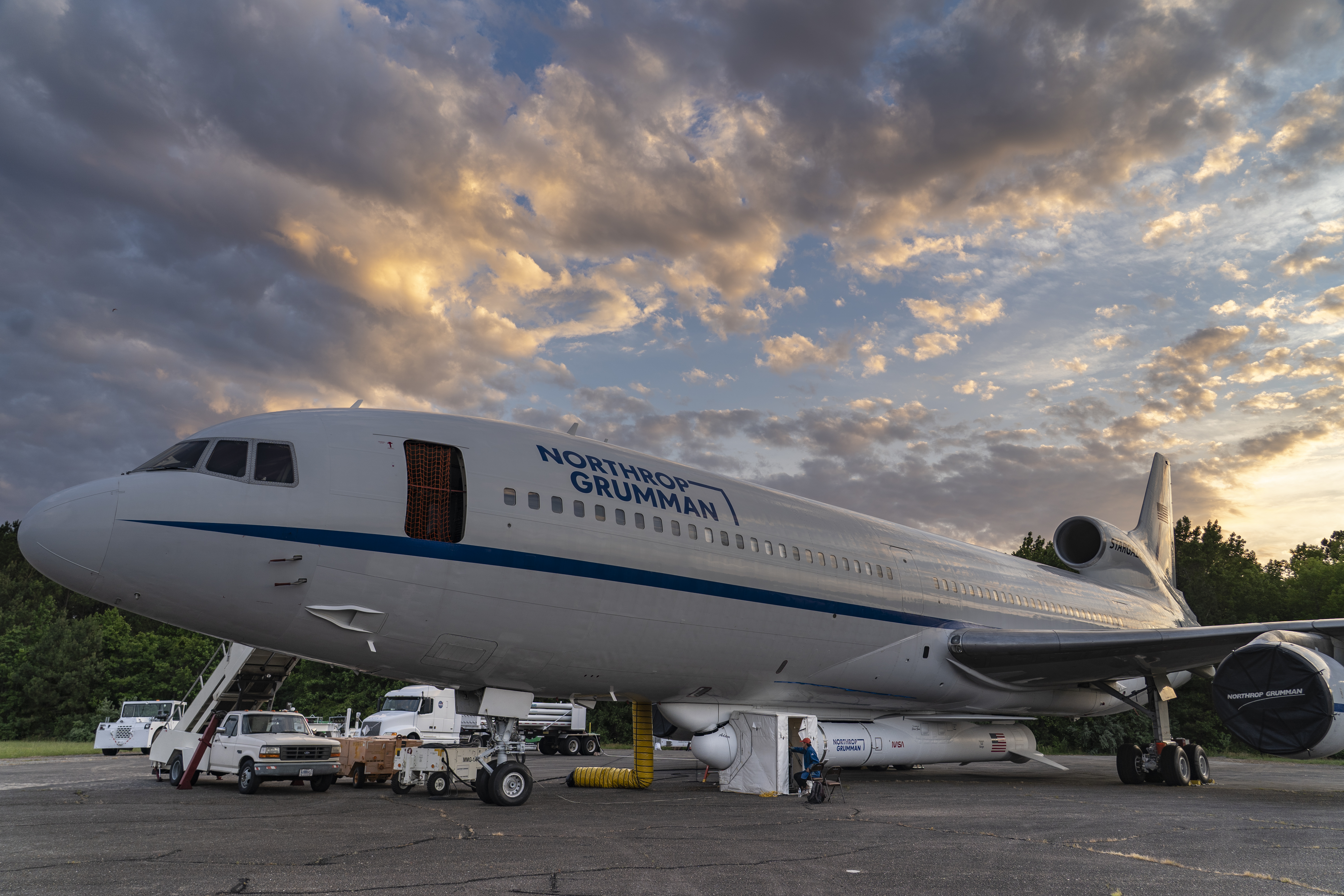
A first-of-its-kind mission to raise the orbit of NASA’s Neil Gehrels Swift Observatory is poised for launch no earlier than Thursday, July 2, 5:09 a.m. EDT (9:09 p.m. UTC+12), from Kwajalein Atoll, part of the Republic of the Marshall Isl…
Soyuz MS-29 will carry three cosmonauts and one astronaut to the International Space Station aboard the Soyuz spacecraft from the Baikonur Cosmodrome…
A batch of 29 satellites for the Starlink mega-constellation - SpaceX's project for space-based Internet communication system.
A batch of 27 satellites for the Starlink mega-constellation - SpaceX's project for space-based Internet communication system.
A batch of 24 satellites for the Starlink mega-constellation - SpaceX's project for space-based Internet communication system.
First launch of the Long March 10B rocket and first ever successful rocket booster recovery of a Chinese launch vehicle. Payloads on board is TBD.
A batch of 29 satellites for the Starlink mega-constellation - SpaceX's project for space-based Internet communication system.
Dedicated rideshare flight to a sun-synchronous orbit with dozens of small microsatellites and nanosatellites for commercial and government customers.
20 Low Earth Orbit communication satellites with Ku, Q and V band payloads for the G60 constellation operated by Shanghai Spacesail Technologies with…
A batch of 29 satellites for the Starlink mega-constellation - SpaceX's project for space-based Internet communication system. The Falcon 9 1st st…
18 Low Earth Orbit communication satellites with Ku, Q and V band payloads for the G60 constellation operated by Shanghai Spacesail Technologies with…