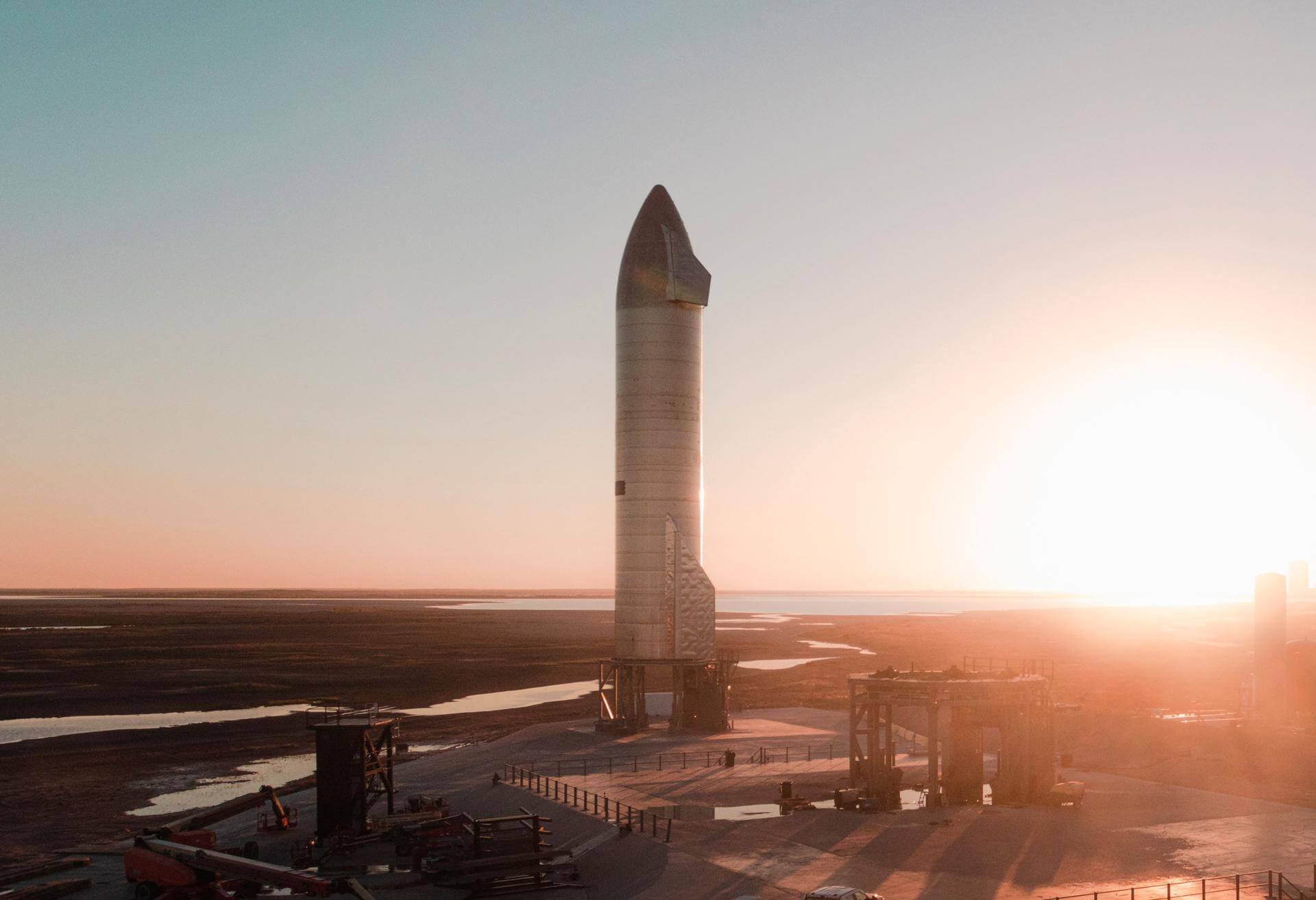
Starship Prototype - SN9
Details
Status - Destroyed
SN9 is the first starship prototype to be fully made of 304L stainless steel. It was destroyed on landing after its first flight.
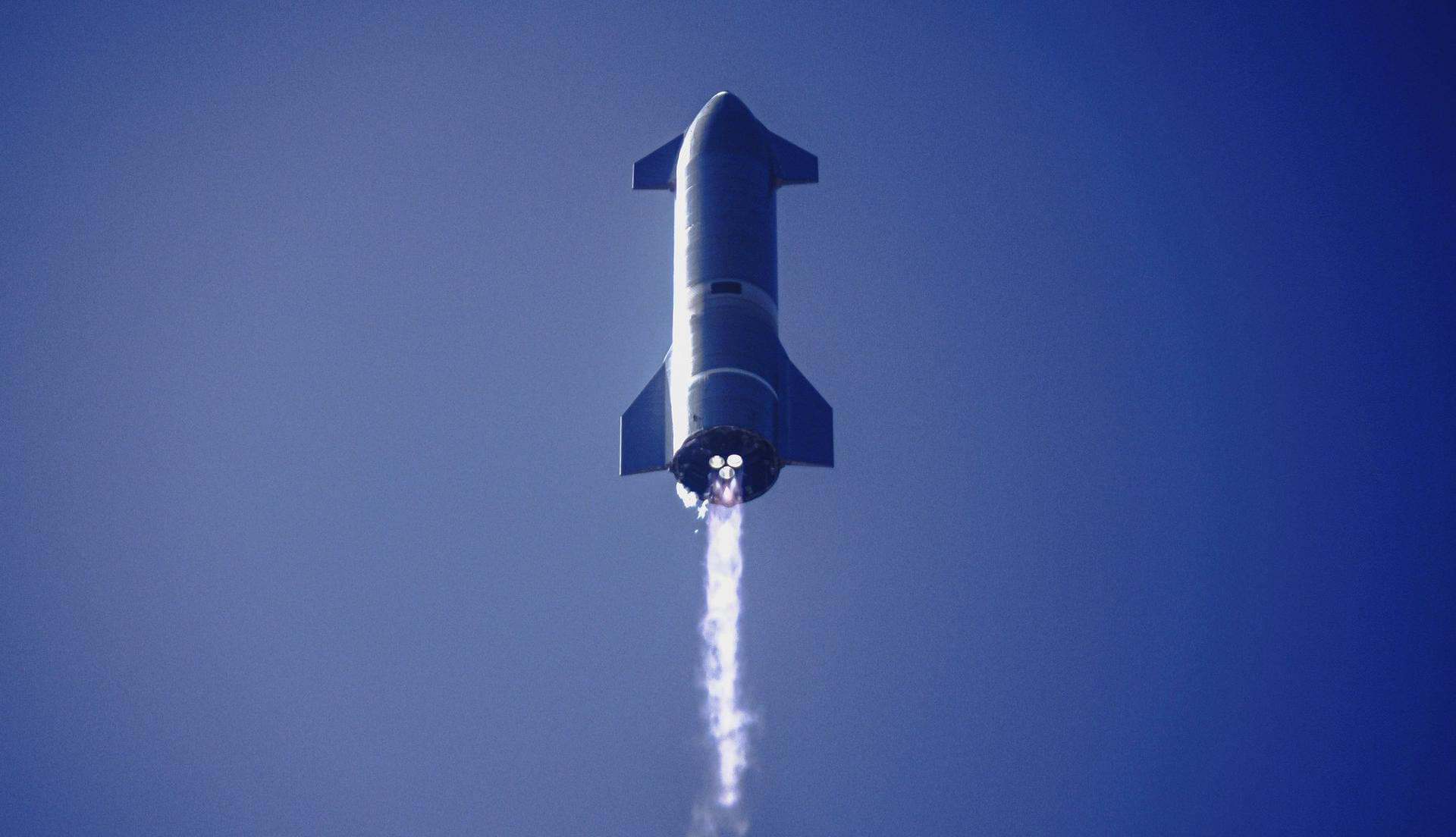
Starship SN9 | 10 km Flight
SpaceX | United States of AmericaSpaceX Starbase, TX, USA
Feb. 2, 2021, 8:25 p.m.
Status: Launch was a Partial Failure
Mission:
The SN9 Starship performed a first flight similar to the one of SN8. It launched up to an altitude of 10 km or 33,000 ft, did a belly flop maneuver and a controlled descent to the landing pad where the landing flip maneuver was unsuccessful and resulted in the destruction of the prototype on impact.
Suborbital SN9 - Maiden Flight SpaceX Starship Landing PadFalcon 9
BlueBird 11-13 (Block 2 #6-8)
Space Launch Complex 40 - Cape Canaveral SFS, FL, USAAST SpaceMobile’s Block 2 BlueBird satellites are designed to deliver up to 10 times the bandwidth capacity of the BlueBird Block 1 satellites, requi…
Smart Dragon 3
OSE HS-01 & 02
Haiyang offshore launch location - Haiyang Oriental Spaceport2 hyper-spectral Earth observation satellites from Chinese company STAR.VISION. Both satellites are built in corporation with foreign customers: *…
Falcon 9
Starlink Group 17-53
Space Launch Complex 4E - Vandenberg SFB, CA, USAA batch of 24 satellites for the Starlink mega-constellation - SpaceX's project for space-based Internet communication system.
Long March 8A
SatNet LEO Group 23
Commercial LC-1 - Wenchang Space Launch Site, People's Republic of ChinaA batch of 9 Low Earth Orbit communication satellites for the Chinese state owned SatNet constellation operated by the China Satellite Network Group.…
Falcon 9
Starlink Group 17-52
Space Launch Complex 4E - Vandenberg SFB, CA, USAA batch of 24 satellites for the Starlink mega-constellation - SpaceX's project for space-based Internet communication system.

