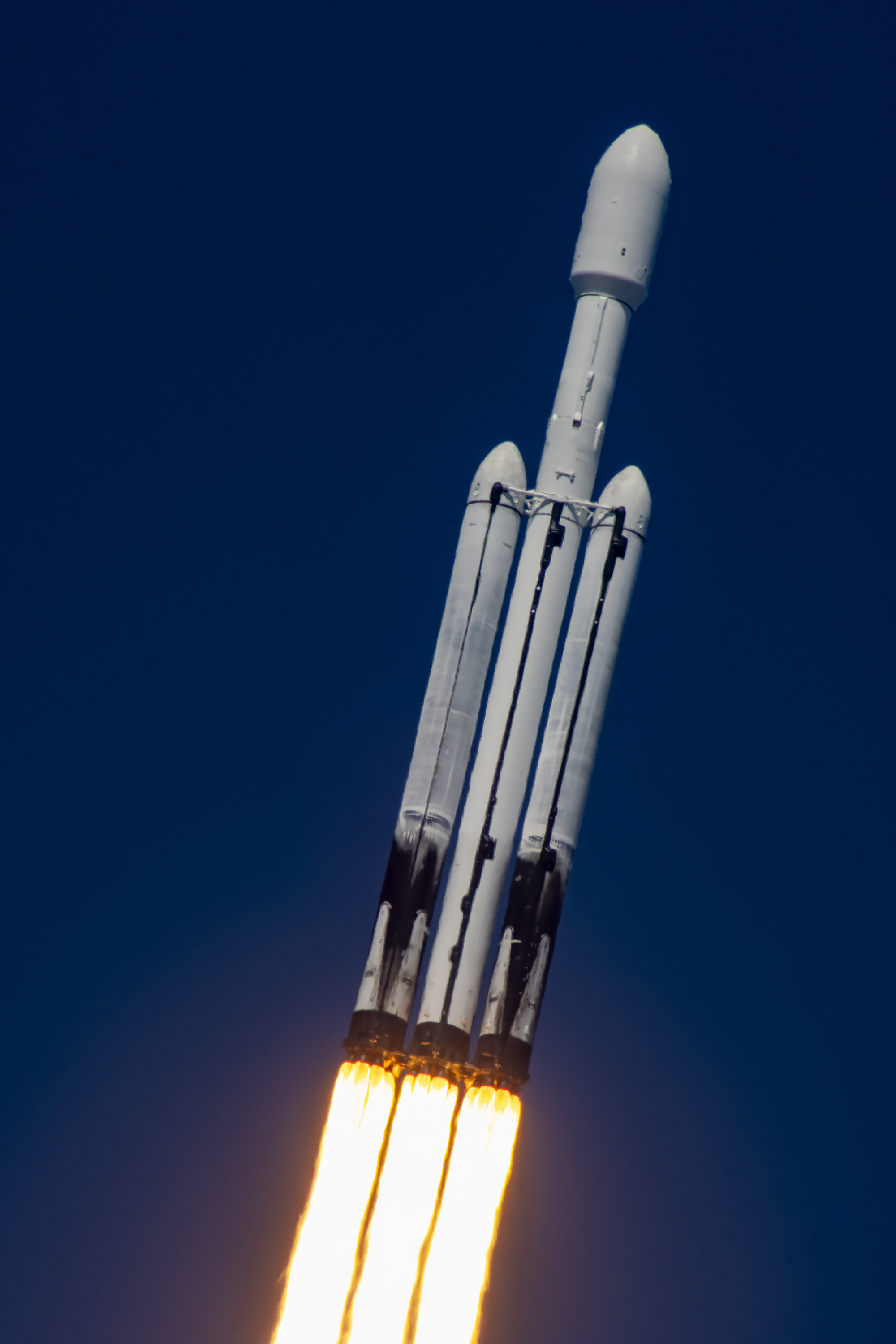
Falcon Heavy - B1089
Details
Status - Expended
Falcon Heavy core booster expended during the Europa Clipper mission.
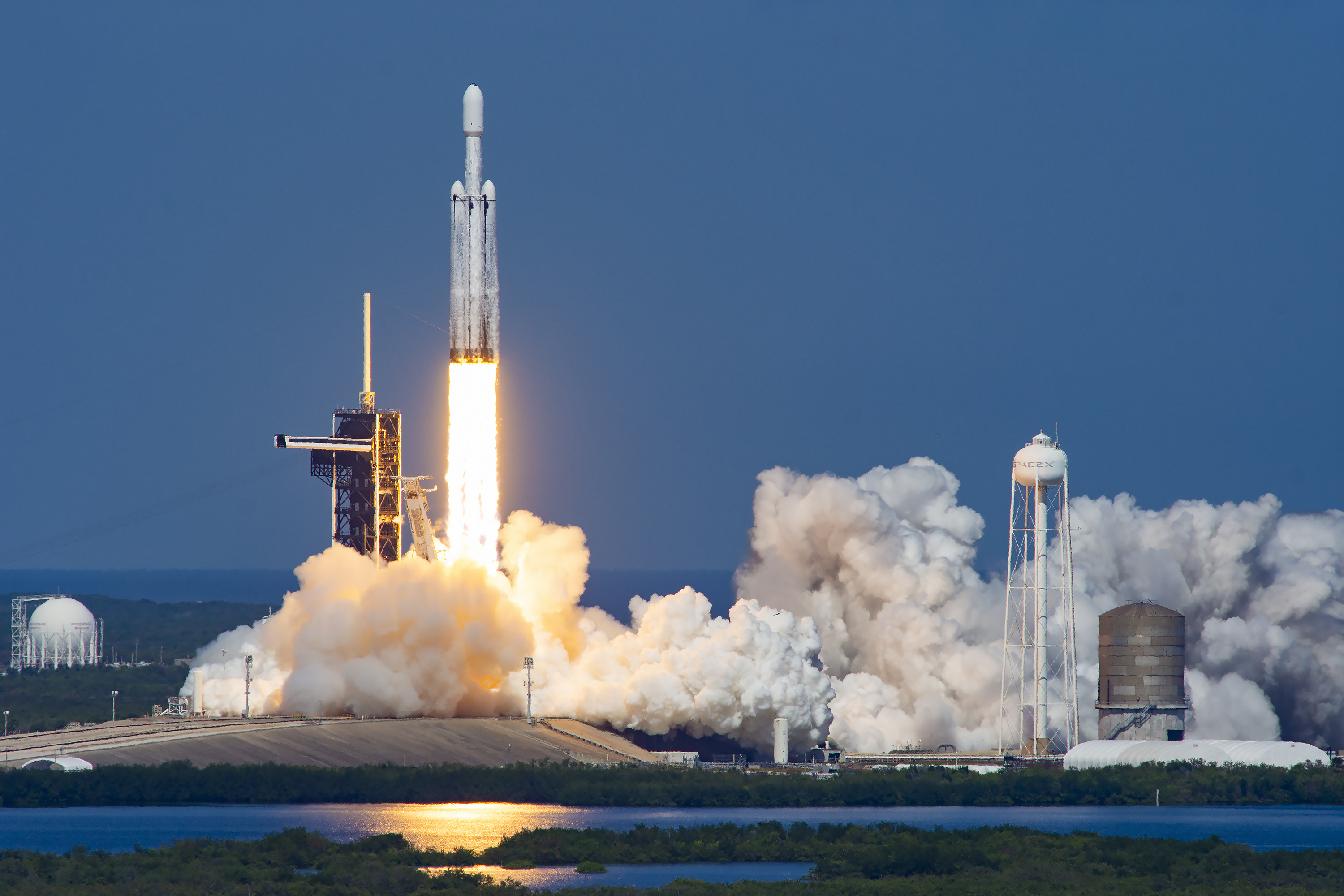
Falcon Heavy | Europa Clipper
SpaceX | United States of AmericaKennedy Space Center, FL, USA
Oct. 14, 2024, 4:06 p.m.
Status: Launch Successful
Mission:
Europa Clipper is the first dedicated mission to study Jupiter's moon Europa. Mission is developed by NASA and comprises of an orbiter spacecraft, which, while in orbit around Jupiter, will perform numerous flybys over Europa. Europa Clipper payload suit included high-resolution cameras and spectrometers for imaging Europa's surface and thin atmosphere, an ice-penetrating radar to search for subsurface water, and a magnetometer and gravity measurements to measure the moon's magnetic field and unlock clues about its ocean and deep interior.
Heliocentric N/A B1064 - Flight Proven ( ) Atlantic Ocean B1065 - Flight Proven ( ) Atlantic Ocean B1089 - Maiden Flight Atlantic OceanFalcon 9
SDA Tranche 1 Transport Layer E
Space Launch Complex 4E - Vandenberg SFB, CA, USATranche 1 Transport Layer E is one of six missions by the United States Space Force Space Development Agency (SDA) for the Proliferated Warfighter Sp…
Soyuz 2.1a
Soyuz MS-29
31/6 - Baikonur Cosmodrome, Republic of KazakhstanSoyuz MS-29 will carry three cosmonauts and one astronaut to the International Space Station aboard the Soyuz spacecraft from the Baikonur Cosmodrome…
Falcon 9
Starlink Group 10-45
Space Launch Complex 40 - Cape Canaveral SFS, FL, USAA batch of 29 satellites for the Starlink mega-constellation - SpaceX's project for space-based Internet communication system.
Falcon 9
Starlink Group 15-14
Space Launch Complex 4E - Vandenberg SFB, CA, USAA batch of 27 satellites for the Starlink mega-constellation - SpaceX's project for space-based Internet communication system.
Falcon 9
Starlink Group 17-48
Space Launch Complex 4E - Vandenberg SFB, CA, USAA batch of 24 satellites for the Starlink mega-constellation - SpaceX's project for space-based Internet communication system.

