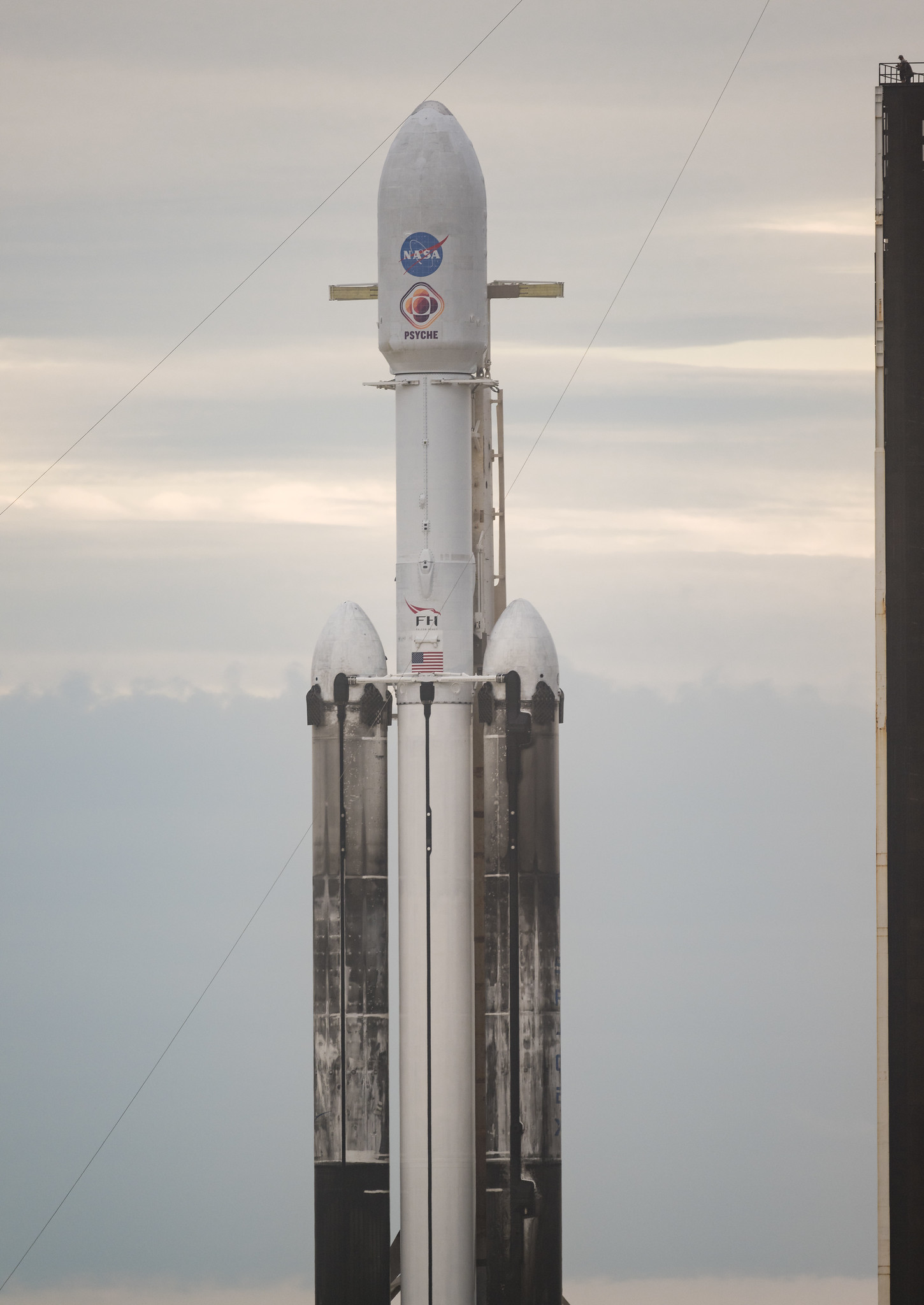
Falcon Heavy - B1079
Details
Status - Expended
Falcon Heavy core booster expended during the Psyche mission.
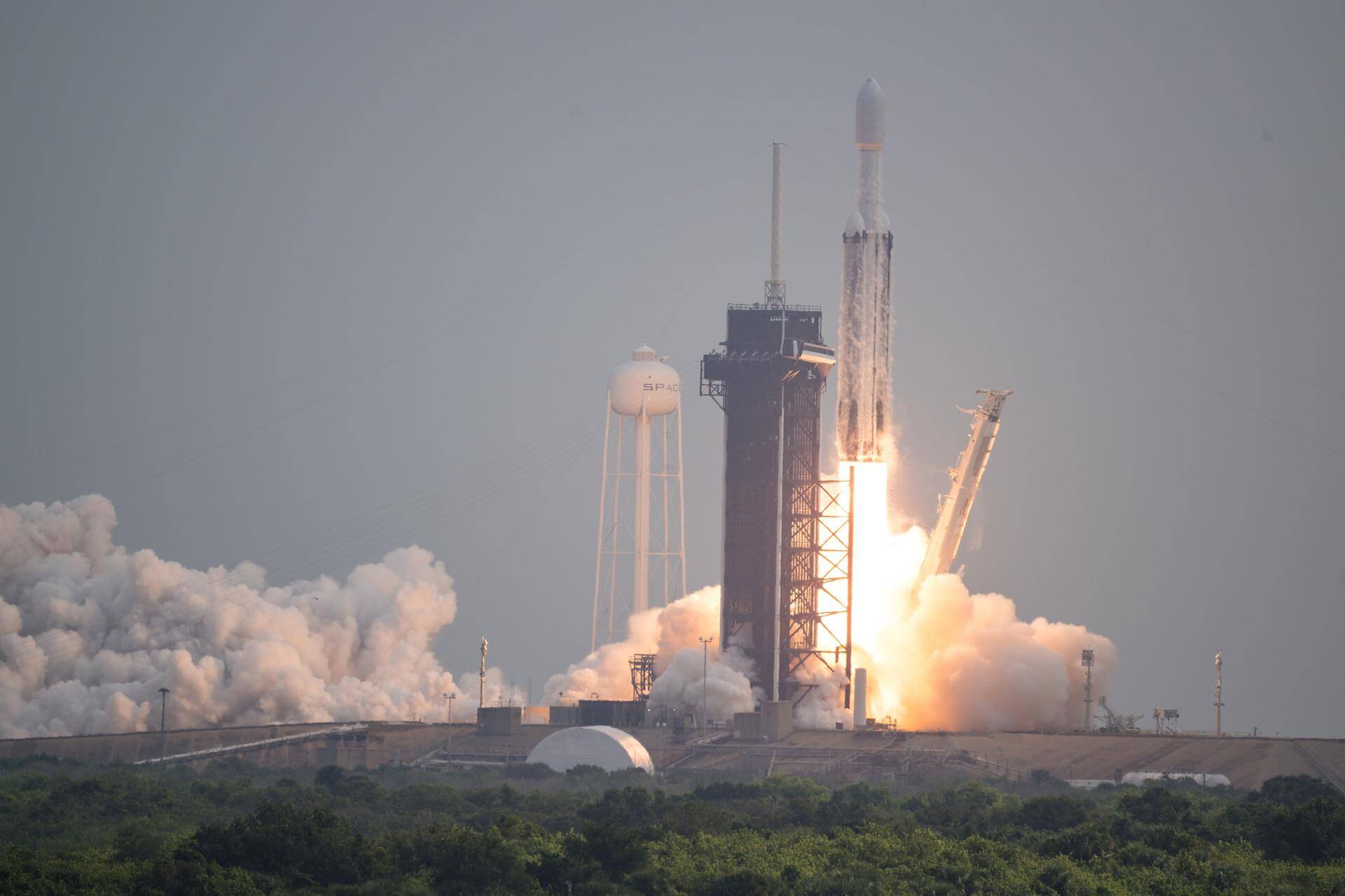
Falcon Heavy | Psyche
SpaceX | United States of AmericaKennedy Space Center, FL, USA
Oct. 13, 2023, 2:19 p.m.
Status: Launch Successful
Mission:
Psyche is a NASA interplanetary mission to visit the main belt asteroid of the same name, 16 Psyche. Spacecraft will take 4 years and one Mars flyby to reach the asteroid, which is of particular interest due to being comprised mostly of iron and nickel. Psyche is theorized to be a remnant of an early planet's core, and may offer insights into how solar system formed and evolved. The mission is led by Arizona State University, with NASA JPL being responsible for mission management and operations.
Heliocentric N/A B1079 - Maiden Flight Atlantic Ocean B1065 - Flight Proven ( ) Landing Zone 2 B1064 - Flight Proven ( ) Landing Zone 1Falcon 9
NROL-95
Space Launch Complex 40 - Cape Canaveral SFS, FL, USAClassified payload for the US National Reconnaissance Office.
Long March 6A
TJSW-27A & B
Launch Complex 9A - Taiyuan Satellite Launch Center, People's Republic of China2 Chinese classified satellites claimed to be for communication technology test purposes. Actual mission not known.
Long March 7A
Tianlian 3-01
201 - Wenchang Space Launch Site, People's Republic of ChinaTianlian is a Chinese data tracking and relay communications geostationary satellite series. The TL-3 (Tian Lian 3) satellites are the 3rd generation…
Falcon 9
Starlink Group 17-51
Space Launch Complex 4E - Vandenberg SFB, CA, USAA batch of 24 satellites for the Starlink mega-constellation - SpaceX's project for space-based Internet communication system.
Starship
Flight 13
Orbital Launch Pad 2 - SpaceX Starbase, TX, USA13th test flight of the two-stage Starship launch vehicle. Second flight of Starship V3. For the first time, Starship will carry 20 V3 Starlink sa…

