Upcoming Spaceflight Launches

Filter by Agency, Locations or Vehicles

Show All Launches
Full Launch History

View all launches available - including launches from the past and utilize powerful search filters.

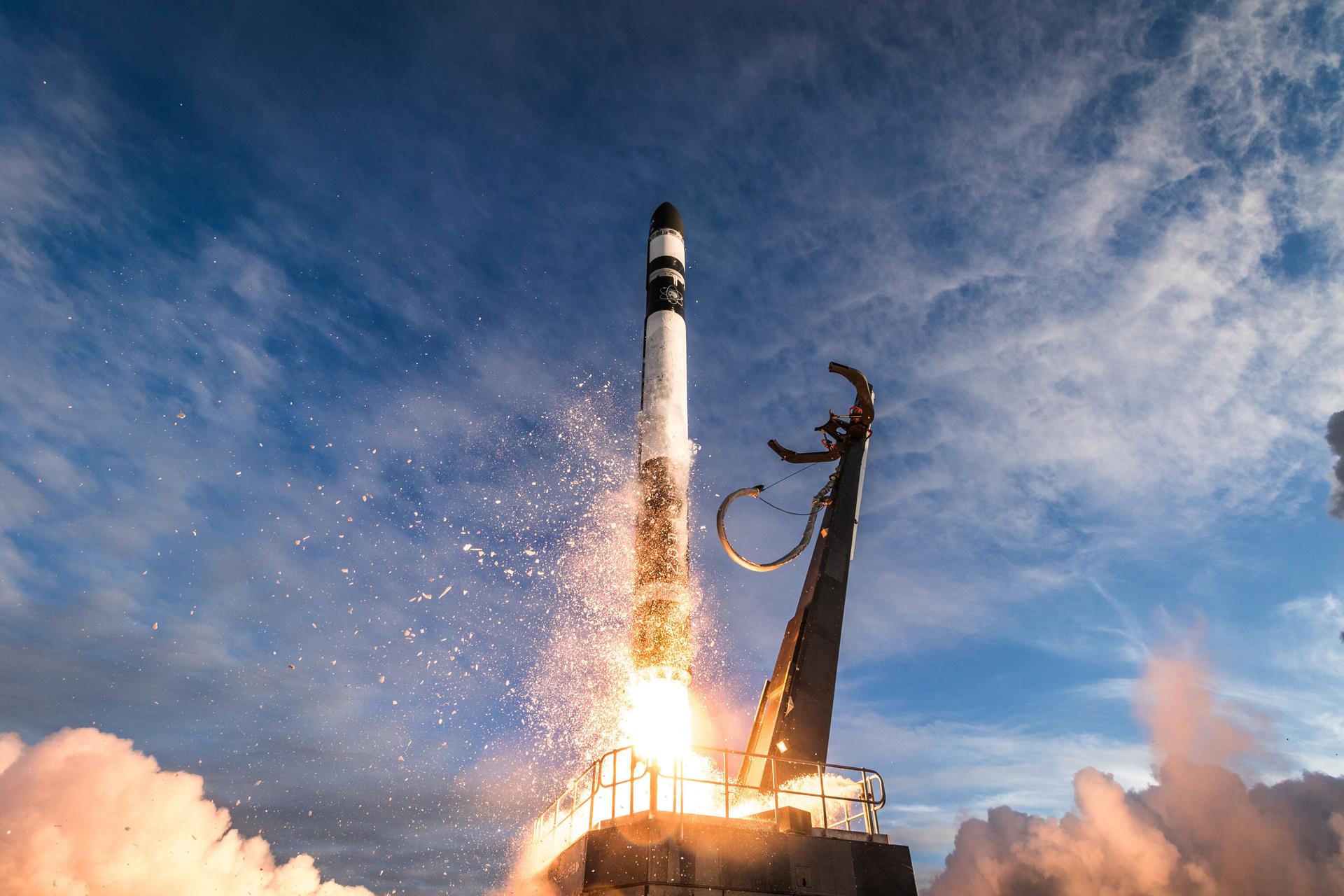
Electron | The Cosmos Will See You Now (Open Cosmos Constellation Launch 1)

Rocket Lab | United States of America
Rocket Lab Launch Complex 1, Mahia Peninsula, New Zealand
Jan. 20, 2026, 11:09 a.m.
Status: Go for Launch
Mission:

First 2 satellites of UK-based Open Cosmos' secure LEO broadband constellation designed to provide independent and resilient connectivity infrastructure for Europe and the world, using high-priority Ka-band spectrum filings by the Principality of Liechtenstein.

Polar Orbit
Explore Share

Electron | Bridging The Swarm (NeonSat-1A)

Rocket Lab | United States of America
Rocket Lab Launch Complex 1, Mahia Peninsula, New Zealand
TBD January, 2026
Status: To Be Determined
Mission:

The NeonSat-1A, carrying a high-resolution optical camera, is designed to test the constellation capabilities of the South Korean government's Earth observation micro-satellite constellation NeonSat (New-space Earth Observation Satellite), in particular technology improvements identified from operations of NeonSat-1 after its launch in April 2024. These technologies will in turn be incorporated into the next 10 NeonSat under construction, as well as providing more site re-visiting capabilities along with NeonSat-1. The NeonSat constellation is the first satellite system developed by the government using a mass-production approach for precise monitoring of the Korean Peninsula, lead by the Satellite Technology Research Center (SaTReC) at the Korea Advanced Institute of Science and Technology (KAIST), Korea’s leading university dedicated to science and technology. Designed to capture near-real time natural disaster monitoring for the Korean peninsula, KAIST’s NEONSAT constellation is a collaboration across multiple Korean academic, industry, and research institutions, including SaTReC, which is leading the program’s system design and engineering. The NEONSAT program is funded by the Korean government’s Ministry of Science and ICT (MSIT).

Sun-Synchronous Orbit
Explore Share

Electron | StriX Launch 8

Rocket Lab | United States of America
Rocket Lab Launch Complex 1, Mahia Peninsula, New Zealand
TBD March, 2026
Status: To Be Determined
Mission:

Synthetic aperture radar satellite for Japanese Earth imaging company Synspective.

Sun-Synchronous Orbit
Explore Share

Electron | LOXSAT 1

Rocket Lab | United States of America
Rocket Lab Launch Complex 1, Mahia Peninsula, New Zealand
TBD March, 2026
Status: To Be Determined
Mission:

LOXSAT 1 is a demonstration satellite of a complete cryogenic oxygen fluid management system in orbit, developed by Eta Space and sponsored by NASA's Tipping Point program. The system will be integrated on a Rocket Lab Photon-LEO satellite bus and collect critical cryogenic fluid management data in orbit for 9 months, demonstrating capabilities of in-space cryogenic storage and transferal. Eta Space plans to use technology developed for this mission to develop a truly commercial depot intended to serve multiple customers in the future.

Low Earth Orbit
Explore Share

Electron | Daughter Of The Stars (LEO-PNT Pathfinder A)

Rocket Lab | United States of America
Rocket Lab Launch Complex 1, Mahia Peninsula, New Zealand
TBD March, 2026
Status: To Be Determined
Mission:

The European Space Agency (ESA)'s LEO-PNT (Low Earth Orbit Positioning, Navigation and Timing) demonstrator mission will feature a 10-satellite constellation demonstration mission that will assess how a low Earth orbit fleet of satellites can work in combination with the Galileo and EGNOS constellations in higher orbits that provide Europe’s own global navigation system. This launch will lift 2 “Pathfinder A” satellites built by Thales Alenia Space and GMV to a 510 km altitude Low Earth Orbit.

Polar Orbit
Explore Share

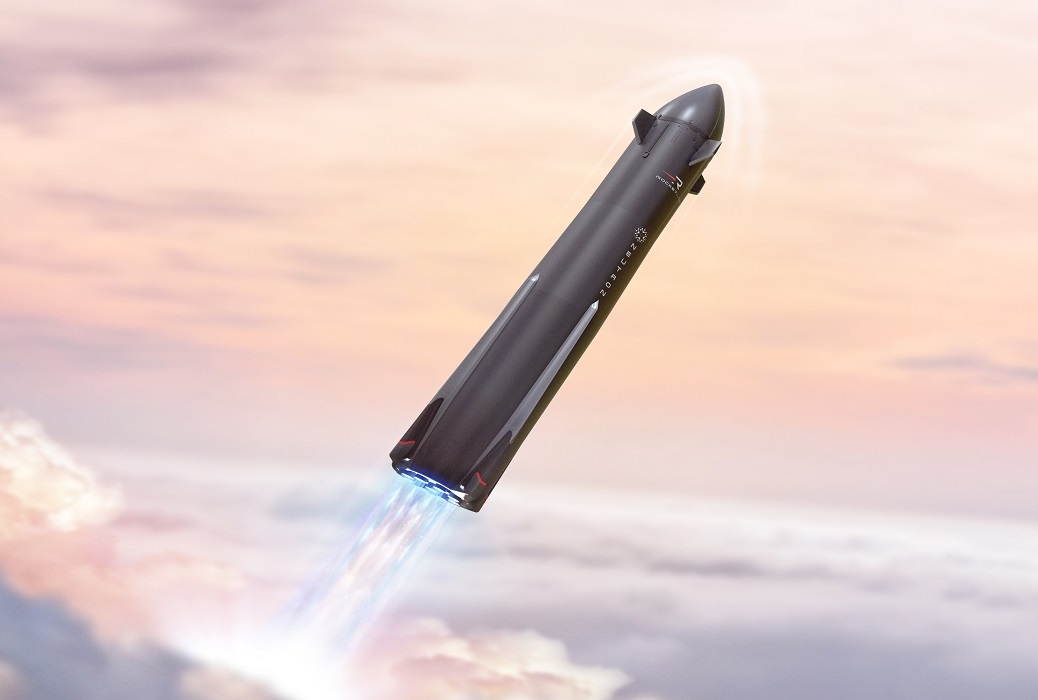
Neutron | Maiden Flight

Rocket Lab | United States of America
Wallops Flight Facility, Virginia, USA
TBD March, 2026
Status: To Be Determined
Mission:

Maiden flight of the Neutron launch vehicle.

Unknown
Explore Share

Electron | Kakushin Rising (JAXA Rideshare)

Rocket Lab | United States of America
Rocket Lab Launch Complex 1, Mahia Peninsula, New Zealand
TBD March, 2026
Status: To Be Determined
Mission:

JAXA-manifested rideshare of eight separate spacecraft that includes educational small sats, an ocean monitoring satellite, a demonstration satellite for ultra-small multispectral cameras, and a deployable antenna that can be packed tightly using origami folding techniques and unfurled to 25 times its size. The satellites were originally planned to launch with RAISE-4 on a Japanese Epsilon-S rocket, but the Epsilon-S was heavily delayed due to test firing failures. The 8 satellites are: * MAGNARO-II * KOSEN-2R * WASEDA-SAT-ZERO-II * FSI-SAT2 * OrigamiSat-2 * Mono-Nikko * ARICA-2 * PRELUDE

Sun-Synchronous Orbit
Explore Share

Electron | VICTUS HAZE

Rocket Lab | United States of America
Rocket Lab Launch Complex 1, Mahia Peninsula, New Zealand
TBD June, 2026
Status: To Be Determined
Mission:

VICTUS HAZE will see Rocket Lab design, build, launch, and operate a rendezvous proximity operation (RPO) capable spacecraft. U.S. Space Force Space Systems Command (SSC)’s Space Safari’s VICTUS HAZE mission will be an exercise of a realistic threat-response scenario and on-orbit space domain awareness (SDA) demonstration. Once the spacecraft build is complete, Rocket Lab will be entered into a Hot Standby Phase awaiting further direction. Once the exercise begins, Rocket Lab will be given notice to launch the spacecraft into a target orbit. After reaching orbit, the spacecraft will be rapidly commissioned and readied for operations. Rocket Lab will configure a Pioneer class spacecraft bus to meet the unique requirements of the VICTUS HAZE mission. The mission will improve Tactically Responsive Space (TacRS) processes and timelines, demonstrating the ability to respond to on-orbit threats on very short timelines and validating techniques for space domain awareness (SDA) and on-orbit characterization. Rocket Lab’s constellation-class production capability and discriminating technical capabilities in the areas of in-space propulsion, precision attitude control, low latency communications, and autonomous operations are key enablers for this mission.

Low Earth Orbit
Explore Share

Electron | Aspera

Rocket Lab | United States of America
Rocket Lab Launch Complex 1, Mahia Peninsula, New Zealand
TBD August, 2026
Status: To Be Determined
Mission:

Aspera houses an ultraviolet telescope and will examine hot gas in the intergalactic medium, thought to be contributing to the birth of stars and planets. Aspera will be the first NASA astrophysics mission to gather and map these ultraviolet light signatures, potentially unlocking a deeper understanding of the origins of stars, planets, and life in the universe.

Low Earth Orbit
Explore Share

HASTE | Leidos-4

Rocket Lab | United States of America
Wallops Flight Facility, Virginia, USA
TBD December, 2026
Status: To Be Determined
Unknown Mission

There are no mission or payload details available for this launch.


Explore Share

Long March 3B/E
Failure
14 hours, 35 minutes ago
Shijian 32
Launch Complex 2 (LC-2) - Xichang Satellite Launch Center, People's Republic of China

Chinese experimental spacecraft of unknown purposes.


Ceres-1S
Success
1 day, 11 hours ago
Tianqi 37-40
Rizhao offshore launch location - Haiyang Oriental Spaceport

4 small satellites for LEO Internet of Things (IoT) communication purposes.


Long March 2C
Success
2 days, 3 hours ago
AlSat 3A
Launch Area 94 (SLS-2 / 603) - Jiuquan Satellite Launch Center, People's Republic of China

Earth observation satellite built by China's CAST for the Algerian Space Agency.


Falcon 9
Success
2 days, 13 hours ago
Starlink Group 6-98
Space Launch Complex 40 - Cape Canaveral SFS, FL, USA

A batch of 29 satellites for the Starlink mega-constellation - SpaceX's project for space-based Internet communication system.


Long March 8A
Success
3 days, 16 hours ago
SatNet LEO Group 18
Commercial LC-1 - Wenchang Space Launch Site, People's Republic of China

A batch of 9 Low Earth Orbit communication satellites for the Chinese state owned SatNet constellation operated by the China Satellite Network Group.…


Long March 6A
Success
3 days, 17 hours ago
Yaogan 50-01
Launch Complex 9A - Taiyuan Satellite Launch Center, People's Republic of China

The Yaogan 50-01 is a Chinese military “remote sensing” satellite of unknown purposes.


Falcon 9
Success
4 days, 10 hours ago
Starlink Group 6-97
Space Launch Complex 40 - Cape Canaveral SFS, FL, USA

A batch of 29 satellites for the Starlink mega-constellation - SpaceX's project for space-based Internet communication system.


PSLV-DL
Failure
5 days, 2 hours ago
EOS-N1 and others
Satish Dhawan Space Centre First Launch Pad - Satish Dhawan Space Centre, India

Small Earth observation satellite from NewSpace India Limited (NSIL) for an "Indian strategic user", details TBD. This launch will also carry 18 o…


Falcon 9
Success
5 days, 17 hours ago
Pandora / Twilight rideshare mission
Space Launch Complex 4E - Vandenberg SFB, CA, USA

The Pandora small satellite was selected in 2021 as an inaugural mission in NASA’s Astrophysics Pioneers Program. It includes a 0.45-meter telescope …


Falcon 9
Success
1 week ago
Starlink Group 6-96
Space Launch Complex 40 - Cape Canaveral SFS, FL, USA

A batch of 29 satellites for the Starlink mega-constellation - SpaceX's project for space-based Internet communication system.