Soyuz 2.1a | Soyuz MS-17
Launch Successful
L - -- : -- : -- : --
Instantaneous launch window.
Launch Window
Oct. 14, 2020, 5:45 a.m. - Oct. 14, 2020, 5:45 a.m.


Instantaneous launch window.
Oct. 14, 2020, 5:45 a.m. - Oct. 14, 2020, 5:45 a.m.
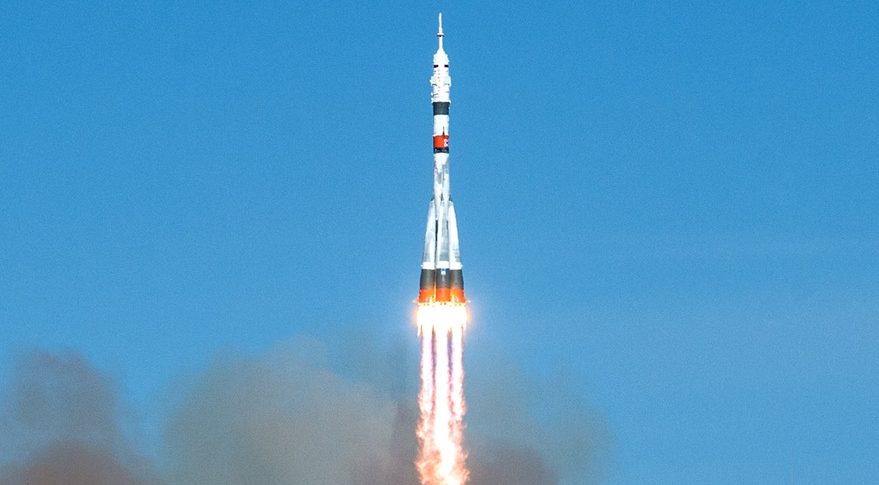
Soyuz MS-17 begins expedition 63 by carrying Roscosmos cosmonauts Sergey Ryzhikov, Sergey Kud-Sverchkov and NASA astronaut Kathleen Rubins to the International Space Station aboard the Soyuz spacecraft from the Baikonur Cosmodrome in Kazakhstan. After launching from the Baikonur Cosmodrome in Kazakhstan, they will rendezvous to the station where they will remain for their 6 month stay.
The Soyuz 2.1A converted the flight control system from analog to digital, which allowed launch from fixed platforms. It also allowed big fairings and payloads. It is currently used for crewed Soyuz and Progress flights to the ISS.
Soyuz MS-17 is a Soyuz spacecraft scheduled to launch in October 2020. It will transport three members of the Expedition 63 crew to the International Space Station.
Soyuz MS Details
Date of
Birth: Aug. 19, 1974
Age: 51
Date of
Birth: Oct. 14, 1978
Age: 47
Date of
Birth: Aug. 23, 1983
Age: 42
Progress Rocket Space Centre, formerly known as TsSKB-Progress, is a space science and aerospace research company which is known for manufacturing launch vehicles and satellites. Most notably, Progress Rocket Space Centre is the manufacturer of Soyuz launch vehicles.
INFO WIKI



QZSS (Quasi Zenith Satellite System) is a Japanese satellite navigation system operating from inclined, elliptical geosynchronous orbits to achieve o…
Chinese communication geostationary satellite for unknown purposes.
A batch of 24 satellites for the Starlink mega-constellation - SpaceX's project for space-based Internet communication system.
Synthetic aperture radar Earth observation satellite for Japanese Earth imaging company iQPS.
AST SpaceMobile’s Block 2 BlueBird satellites are designed to deliver up to 10 times the bandwidth capacity of the BlueBird Block 1 satellites, requi…
2 hyper-spectral Earth observation satellites from Chinese company STAR.VISION. Both satellites are built in corporation with foreign customers: *…
A batch of 24 satellites for the Starlink mega-constellation - SpaceX's project for space-based Internet communication system.
A batch of 9 Low Earth Orbit communication satellites for the Chinese state owned SatNet constellation operated by the China Satellite Network Group.…
A batch of 24 satellites for the Starlink mega-constellation - SpaceX's project for space-based Internet communication system.
Classified payload for the US National Reconnaissance Office.
