New Glenn | Maiden Flight
Launch Successful
L - -- : -- : -- : --
Launch Window
Jan. 16, 2025, 6 a.m. - Jan. 16, 2025, 9 a.m.


Jan. 16, 2025, 6 a.m. - Jan. 16, 2025, 9 a.m.

Watch live coverage as Jeff Bezos' Blue Origin launches its New Glenn rocket for first time from Cape Canaveral Space Force Station in Florida. Liftoff of the liquid methane and liquid hydrogen fueled...
Maiden flight of the New Glenn launch vehicle. Will carry the prototype Blue Ring payload tug and payload hoisting platform, consisting of communications array, power systems, and a flight computer affixed to a secondary payload adapter ring, remaining attached to the 2nd stage. This launch will serve as New Glenn's first National Security Space Launch certification flight. Target orbit is 2400 x 19300 km at 30° inclination.
Launch trajectory and telemetry simulations provided by Flight Club - a rocket launch simulator and orbital trajectory visualiser for all things space!

Launch success, 2nd stage and payload reached planned orbit.
Liftoff.
New T-0.
Hold at T-11:03.
New T-0.
The New Glenn is a privately funded orbital launch vehicle in development by Blue Origin. New Glenn is described as a 7-meter-diameter (23 ft), two- or three-stage rocket.
See DetailsThe New Glenn first stage booster was lost on its first flight during descent towards LPV1 Jacklyn.
Result: GS1-SN001 did not land successfully.Blue Origin is an American privately funded aerospace manufacturer and spaceflight services company set up by Amazon.com founder Jeff Bezos with its headquarters in Kent, Washington. The company is developing technologies to enable private human access to space with the goal to dramatically lower costs and increase reliability. Blue Origin currently launches its New Shepard sub-orbital vehicle from its West Texas launch site, they are currently constructing a launch pad for their orbital vehicle New Glenn at Cape Canaveral LC-36.
INFO WIKI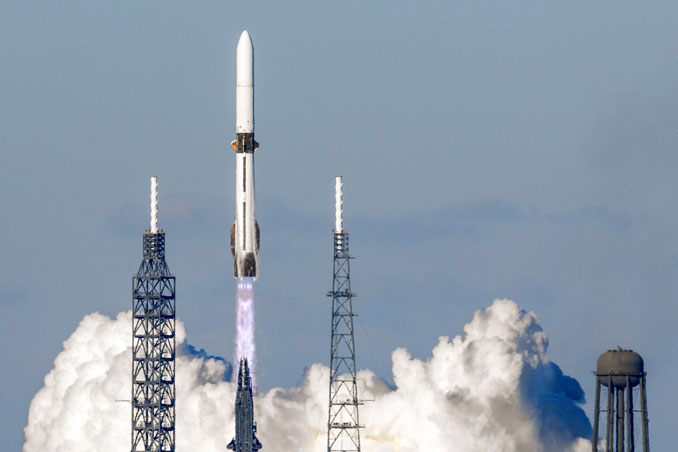
The launch company owned by billionaire Jeff Bezos launched two successful missions in 2025, including landing its first booster on its landing barge.
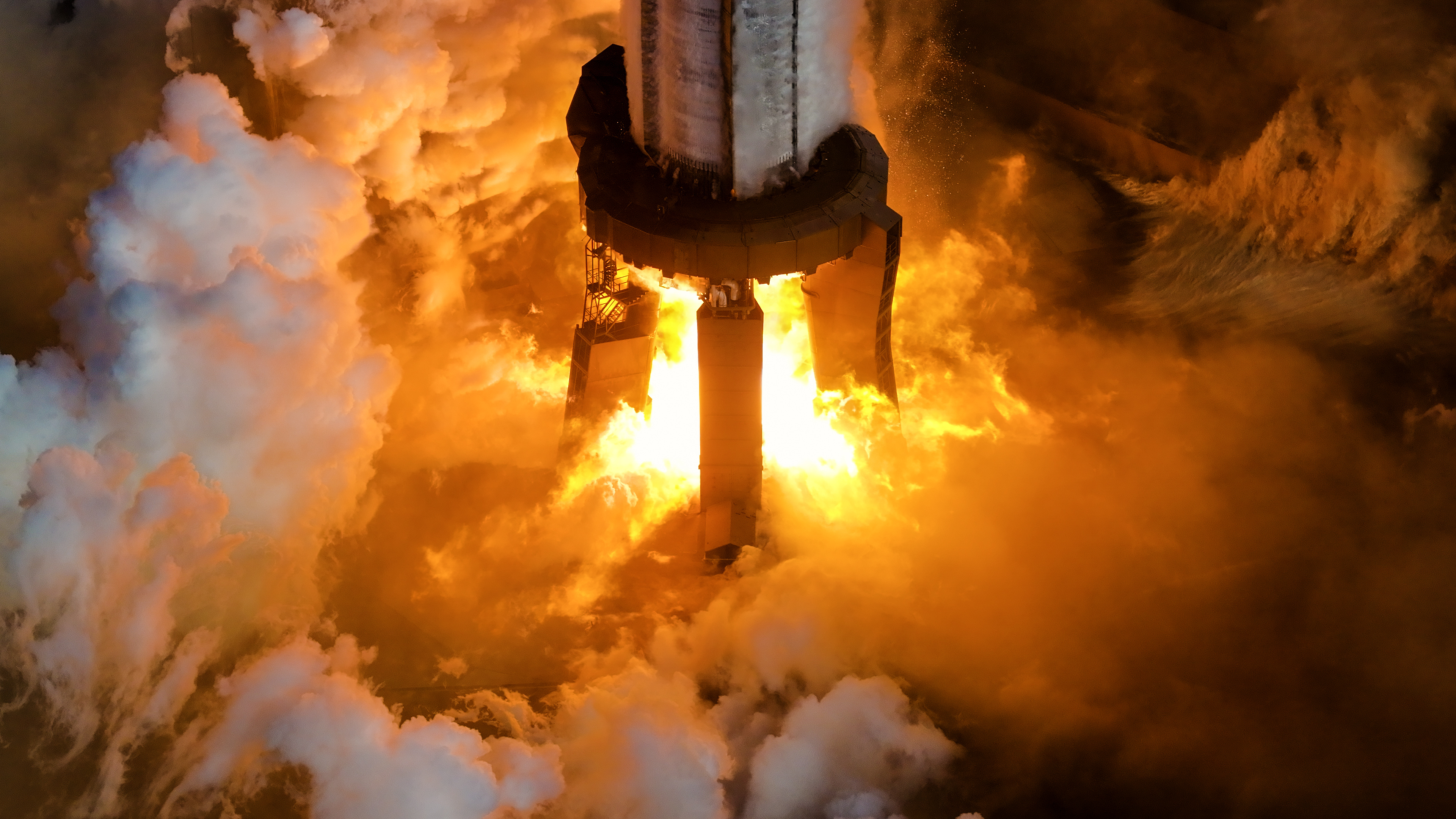
"The first Super Heavy reuse will be a step towards our goal of zero-touch reflight."

FAA Completes Investigation Into Blue Origin’s New Glenn-1 Booster Mishap; Flight 2 This Spring

Blue Origin says its next New Glenn launch will be as soon as late spring after completing an investigation into the failed booster landing on the vehicle’s first flight. The post Investigation into failed New Glenn landing completed appe…
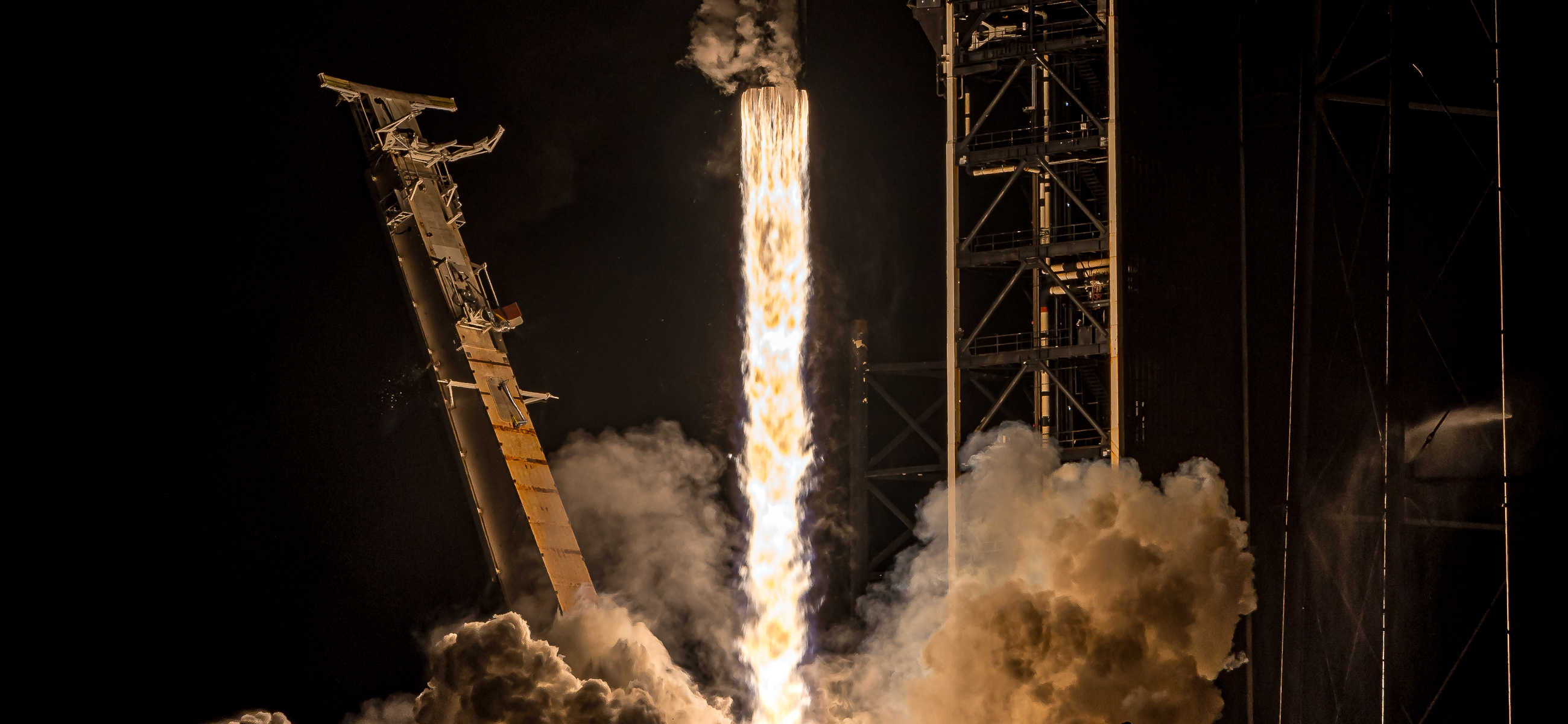
"It was the perfect partnership and the biggest softball of all the opportunities."
20 Low Earth Orbit communication satellites with Ku, Q and V band payloads for the G60 constellation operated by Shanghai Spacesail Technologies with…
A batch of 29 satellites for the Starlink mega-constellation - SpaceX's project for space-based Internet communication system. The Falcon 9 1st st…
18 Low Earth Orbit communication satellites with Ku, Q and V band payloads for the G60 constellation operated by Shanghai Spacesail Technologies with…
Contracted by NASA under the Small Business Innovation Research Phase 3 contract, Katalyst Space Technologies' LINK servicing spacecraft will rendezv…
Amazon Leo, formerly known as Project Kuiper, is a mega constellation of satellites in Low Earth Orbit that will offer broadband internet access, thi…
A batch of 24 satellites for the Starlink mega-constellation - SpaceX's project for space-based Internet communication system.
Haiyang 2E (Chinese: "Ocean"), abbreviated HY-2E, is a marine remote sensing satellite of China. The HY-2 series' primary objective is to measure oce…
SXM-11 is the 12th high-powered, digital, audio radio satellite built by Lanteris Space (ex-Maxar, Space System/Loral) for SiriusXM. The SXM-11 satel…
A batch of 24 satellites for the Starlink mega-constellation - SpaceX's project for space-based Internet communication system.
Synthetic aperture radar satellite for Japanese Earth imaging company Synspective.


 View in Flightclub