Falcon 9 Block 5 | Double Asteroid Redirection Test (DART)
Launch Successful
L - -- : -- : -- : --
Instantaneous launch window.
Launch Window
Nov. 24, 2021, 6:21 a.m. - Nov. 24, 2021, 6:21 a.m.


Instantaneous launch window.
Nov. 24, 2021, 6:21 a.m. - Nov. 24, 2021, 6:21 a.m.
Double Asteroid Redirection Test (DART) mission is the first-ever mission to demonstrate the capability to deflect an asteroid by colliding a spacecraft with it at high speed, a technique known as a kinetic impactor. DART is a planetary defense-driven test of one of the technologies for preventing the Earth impact of a hazardous asteroid: the kinetic impactor. DART's primary objective is to demonstrate a kinetic impact on a small asteroid. The binary near-Earth asteroid (65803) Didymos is the target for DART. While Didymos' primary body is approximately 800 meters across, its secondary body has a 150-meter size, which is more typical of the size of asteroids that could pose a more common hazard to Earth. The DART spacecraft will achieve the kinetic impact by deliberately crashing itself into the moonlet at a speed of approximately 6 km/s, with the aid of an onboard camera and sophisticated autonomous navigation software. The collision will change the speed of the moonlet in its orbit around the main body by a fraction of one percent, enough to be measured using telescopes on Earth.

Launch success with DART solar panels deployed.

Weather 90%
Updating launch time per NASA media invitation
Adding launch time
Falcon 9 is a two-stage rocket designed and manufactured by SpaceX for the reliable and safe transport of satellites and the Dragon spacecraft into orbit. The Block 5 variant is the fifth major interval aimed at improving upon the ability for rapid reusability.
See DetailsB1063 has successfully landed on ASDS OCISLY after its third flight.
Result: Successful Autonomous Spaceport Drone Ship landing at Of Course I Still Love You.Space Exploration Technologies Corp., known as SpaceX, is an American aerospace manufacturer and space transport services company headquartered in Hawthorne, California. It was founded in 2002 by entrepreneur Elon Musk with the goal of reducing space transportation costs and enabling the colonization of Mars. SpaceX operates from many pads, on the East Coast of the US they operate from SLC-40 at Cape Canaveral Space Force Station and historic LC-39A at Kennedy Space Center. They also operate from SLC-4E at Vandenberg Space Force Base, California, usually for polar launches. Another launch site is being developed at Boca Chica, Texas.
INFO WIKI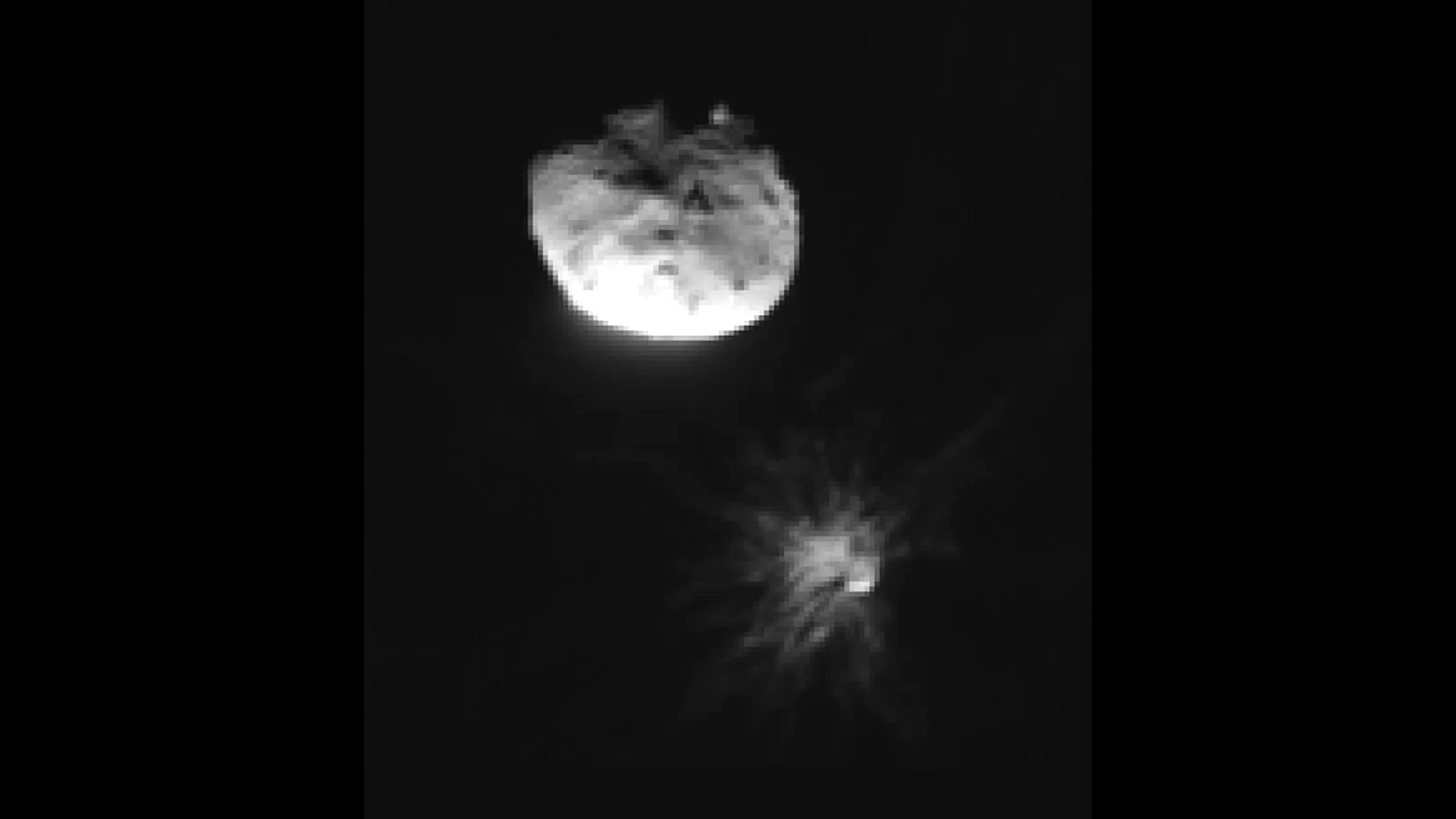
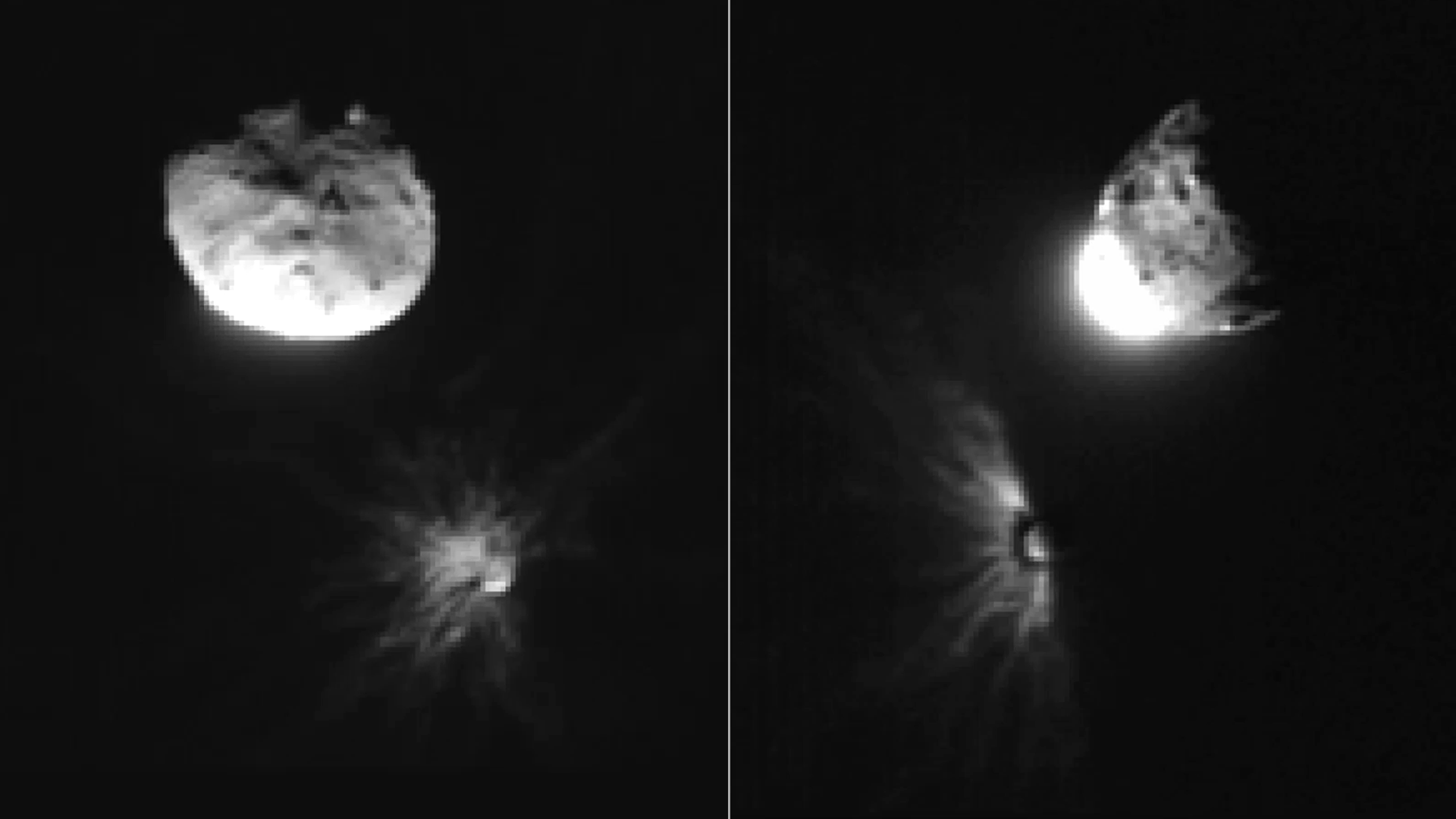
New research reveals that when NASA’s DART (Double Asteroid Redirection Test) spacecraft intentionally impacted the asteroid moonlet Dimorphos in September 2022, it didn’t just change the motion of Dimorphos around its larger companion, Di…
On Sept. 11, 2022, engineers at a flight control center in Turin, Italy, sent a radio signal into deep space. Its destination was NASA’s DART (Double Asteroid Redirection Test) spacecraft flying toward an asteroid more than 5 million miles…

Travelling through the asteroid belt, the European Space Agency’s Hera spacecraft has taken its first… The post Hera observes asteroids as DART reveals more about its destination appeared first on NASASpaceFlight.com.

In 2022 NASA’s DART spacecraft made history, and changed the Solar System forever, by impacting the Dimorphos asteroid and measurably shifting its orbit around the larger Didymos asteroid. In the process a plume of debris was thrown out in…

On Sept. 26, 2022, NASA’s Double Asteroid Redirection Test (DART) spacecraft slammed into the side of the 170-meter-wide asteroid Dimorphos to test future asteroid deflection tactics in the event an asteroid was threatening Earth. Followin…
A batch of 29 satellites for the Starlink mega-constellation - SpaceX's project for space-based Internet communication system.
QZSS (Quasi Zenith Satellite System) is a Japanese satellite navigation system operating from inclined, elliptical geosynchronous orbits to achieve o…
Chinese communication geostationary satellite for unknown purposes.
A batch of 24 satellites for the Starlink mega-constellation - SpaceX's project for space-based Internet communication system.
Synthetic aperture radar Earth observation satellite for Japanese Earth imaging company iQPS.
AST SpaceMobile’s Block 2 BlueBird satellites are designed to deliver up to 10 times the bandwidth capacity of the BlueBird Block 1 satellites, requi…
2 hyper-spectral Earth observation satellites from Chinese company STAR.VISION. Both satellites are built in corporation with foreign customers: *…
A batch of 24 satellites for the Starlink mega-constellation - SpaceX's project for space-based Internet communication system.
A batch of 9 Low Earth Orbit communication satellites for the Chinese state owned SatNet constellation operated by the China Satellite Network Group.…
A batch of 24 satellites for the Starlink mega-constellation - SpaceX's project for space-based Internet communication system.

