Electron | Running Out of Toes (BlackSky 8-9)
Launch Failure
Unspecified issue shortly after stage two ignitionL - -- : -- : -- : --
Launch Window
May 15, 2021, 10 a.m. - May 15, 2021, 12:05 p.m.


May 15, 2021, 10 a.m. - May 15, 2021, 12:05 p.m.

Scheduled for launch in May 2021 from Launch Complex 1 in New Zealand, the ‘Running Out of Toes’, mission will be Rocket Lab’s 20th Electron launch overall and the second of three planned ocean splashdown recovery missions. The mission will see Electron deploy two Earth-observation satellites for Bl...
This was the 20th launch of Electron rocket. It carried two Earth imaging microsatellites for BlackSky's constellation which were lost due to a launcher failure after second stage ignition.

Launch failure confirmed

New launch time.

Added launch time and setting GO.

NET mid May
Added launch.
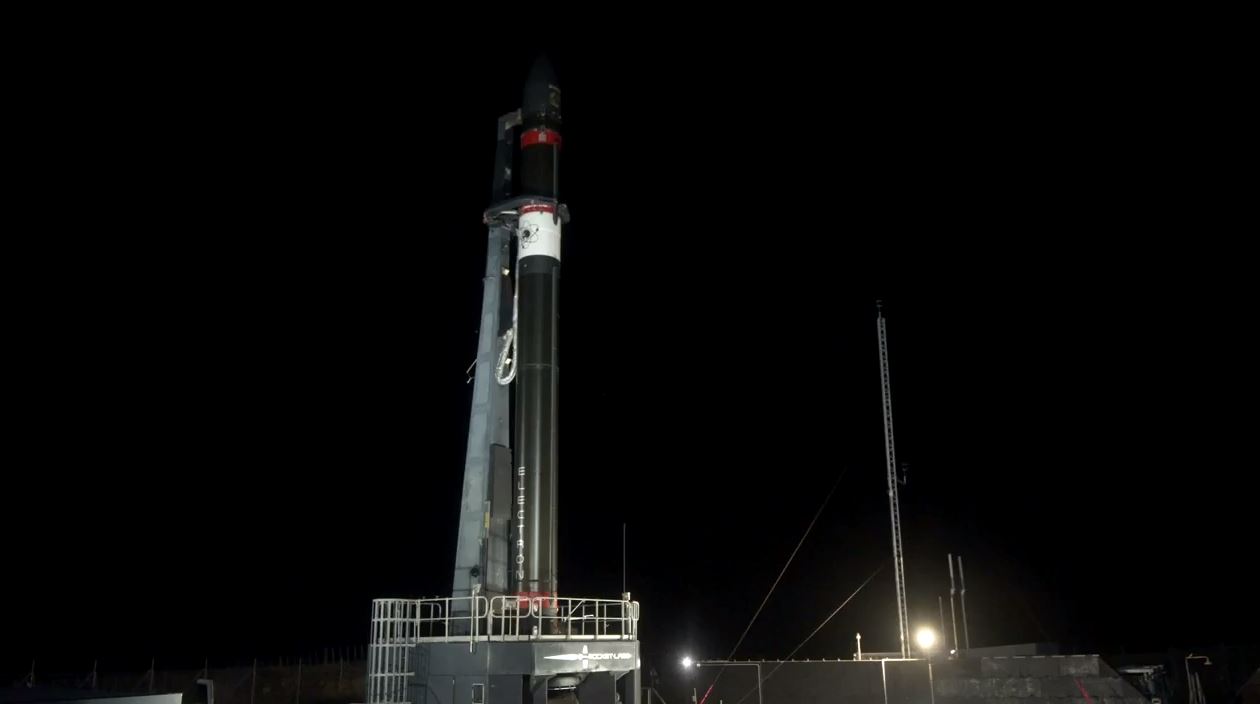
Electron is a two-stage orbital expendable launch vehicle (with an optional third stage) developed by the American aerospace company Rocket Lab. Electron is a small-lift launch vehicle designed to launch small satellites and cubesats to sun-synchronous orbit and low earth orbit. The Electron is the first orbital class rocket to use electric-pump-fed engines, powered by the 9 Rutherford engines on the first stage. It is also used as a suborbital testbed (called HASTE) for hypersonics research.
See DetailsThe Electron first stage successfully performed a soft splashdown in the Pacific Ocean using parachutes.
Result: Successful Parachute Landing landing at South Pacific.Rocket Lab is an American aerospace manufacturer with a wholly owned New Zealand subsidiary. The company develops lightweight, cost-effective commercial rocket launch services. The Electron Program was founded on the premise that small payloads such as CubeSats require dedicated small launch vehicles and flexibility not currently offered by traditional rocket systems. Its rocket, the Electron, is a light-weight rocket and is now operating commercially. The company is also producing a variety of spacecrafts and spacecrafts components.
INFO WIKI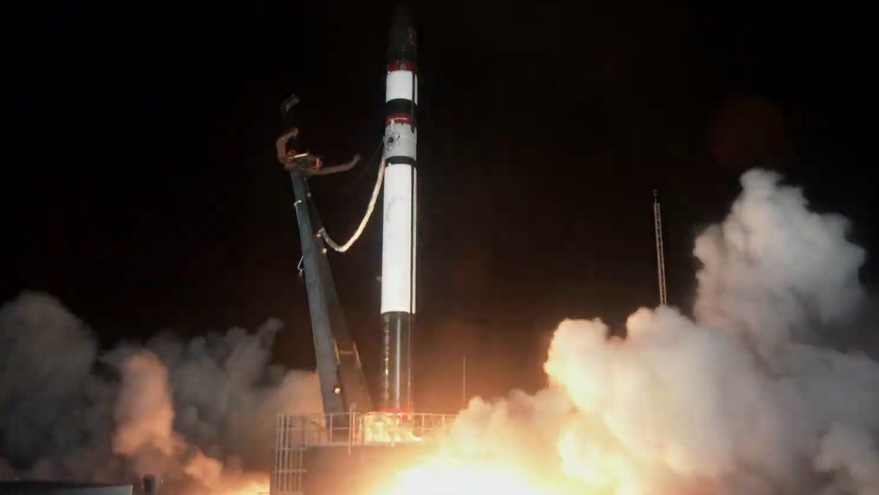
Rocket Lab said July 19 that it has identified the cause of an Electron launch failure more than two months ago and that the vehicle is ready to return to flight.
"Listen to customers, don't listen to pundits and market analysts."
Rocket Lab said June 2 that it is continuing to study the “complex failure” on its most recent Electron launch, even after receiving approval from the Federal Aviation Administration to resume launches.
Rocket Lab said an Electron rocket failed to reach orbit May 15 when the vehicle’s computer system detected a problem with the second stage engine and shut it down.
"We deeply regret the loss of BlackSky's payload."
A batch of 29 satellites for the Starlink mega-constellation - SpaceX's project for space-based Internet communication system.
A batch of 27 satellites for the Starlink mega-constellation - SpaceX's project for space-based Internet communication system.
A batch of 24 satellites for the Starlink mega-constellation - SpaceX's project for space-based Internet communication system.
First launch of the Long March 10B rocket and first ever successful rocket booster recovery of a Chinese launch vehicle. Payloads on board is TBD.
A batch of 29 satellites for the Starlink mega-constellation - SpaceX's project for space-based Internet communication system.
Dedicated rideshare flight to a sun-synchronous orbit with dozens of small microsatellites and nanosatellites for commercial and government customers.
20 Low Earth Orbit communication satellites with Ku, Q and V band payloads for the G60 constellation operated by Shanghai Spacesail Technologies with…
A batch of 29 satellites for the Starlink mega-constellation - SpaceX's project for space-based Internet communication system. The Falcon 9 1st st…
18 Low Earth Orbit communication satellites with Ku, Q and V band payloads for the G60 constellation operated by Shanghai Spacesail Technologies with…
Contracted by NASA under the Small Business Innovation Research Phase 3 contract, Katalyst Space Technologies' LINK servicing spacecraft will rendezv…
