Atlas V N22 | CST-100 Starliner Orbital Flight Test
Launch Successful
L - -- : -- : -- : --
Instantaneous launch window.
Launch Window
Dec. 20, 2019, 11:36 a.m. - Dec. 20, 2019, 11:36 a.m.


Instantaneous launch window.
Dec. 20, 2019, 11:36 a.m. - Dec. 20, 2019, 11:36 a.m.
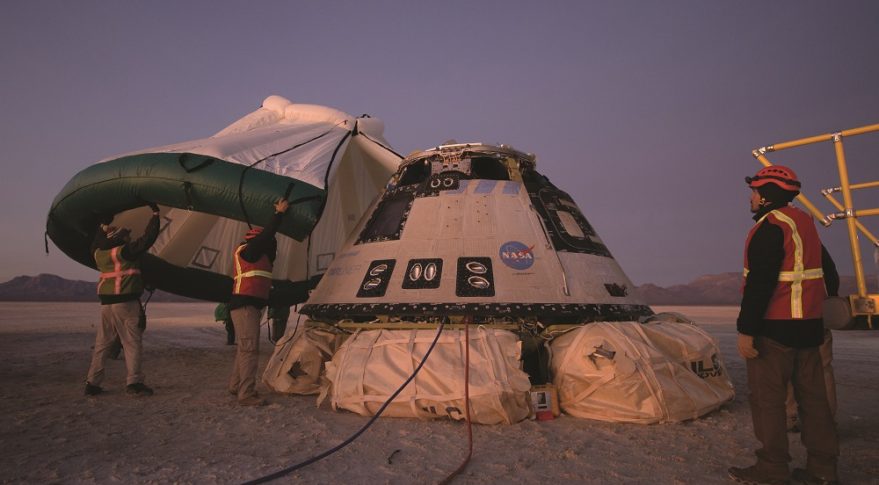
This is the first test flight of Starliner spacecraft to the International Space Station. Although Atlas V and Centaur upper stage successfully put Starliner into planned trajectory, the spacecraft was unable to perform a nominal orbital insertion. Preliminary analysis indicate that Mission Elapsed Time (MET) system error led to Starliner burning more fuel than expected. Spacecraft is healthy and in stable orbit, but won't be able to reach and dock with ISS. Landing at White Sands Facility is planned on Dec 22.
The Atlas V N22 is a crew rated variant of the Atlas V 422 - it sports two solid motor strap on boosters with two liquid fueled stages. It will be primarly used to support NASA's Commercial Crew program by taking the CST-100 to orbit.
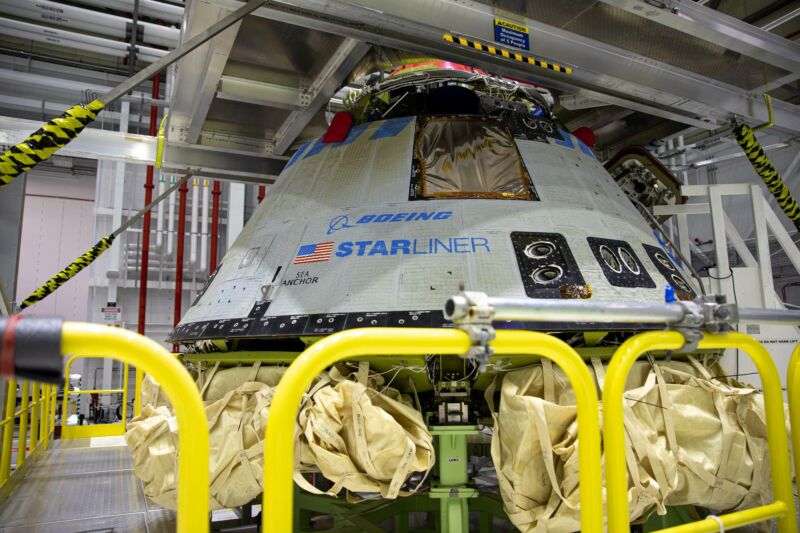
See DetailsThe first CST-100 Starliner capsule to fly.
CST-100 Starliner Details
Date of
Birth: None
Age: None
United Launch Alliance (ULA) is a joint venture of Lockheed Martin Space Systems and Boeing Defense, Space & Security. ULA was formed in December 2006 by combining the teams at these companies which provide spacecraft launch services to the government of the United States. ULA launches from both coasts of the US. They launch their Atlas V vehicle from LC-41 in Cape Canaveral and LC-3E at Vandeberg. Their Delta IV launches from LC-37 at Cape Canaveral and LC-6 at Vandenberg.
INFO WIKI
Boeing has completed all the activities recommended by an independent review of the company’s first uncrewed CST-100 Starliner mission, allowing a second uncrewed mission to proceed for launch in late July.


A batch of 24 satellites for the Starlink mega-constellation - SpaceX's project for space-based Internet communication system.
A batch of 9 Low Earth Orbit communication satellites for the Chinese state owned SatNet constellation operated by the China Satellite Network Group.…
A batch of 24 satellites for the Starlink mega-constellation - SpaceX's project for space-based Internet communication system.
Classified payload for the US National Reconnaissance Office.
2 Chinese classified satellites claimed to be for communication technology test purposes. Actual mission not known.
Tianlian is a Chinese data tracking and relay communications geostationary satellite series. The TL-3 (Tian Lian 3) satellites are the 3rd generation…
A batch of 24 satellites for the Starlink mega-constellation - SpaceX's project for space-based Internet communication system.
13th test flight of the two-stage Starship launch vehicle. Second flight of Starship V3. For the first time, Starship will carry 20 V3 Starlink sa…
Share-ride of 5 commercial Earth observation and technology demonstration satellites to SSO, including SpaceTY's TY-48. Details TBD.
Tianlian is a Chinese data tracking and relay communications geostationary satellite series. The TL 2 (Tian Lian 2) satellites represent the second g…