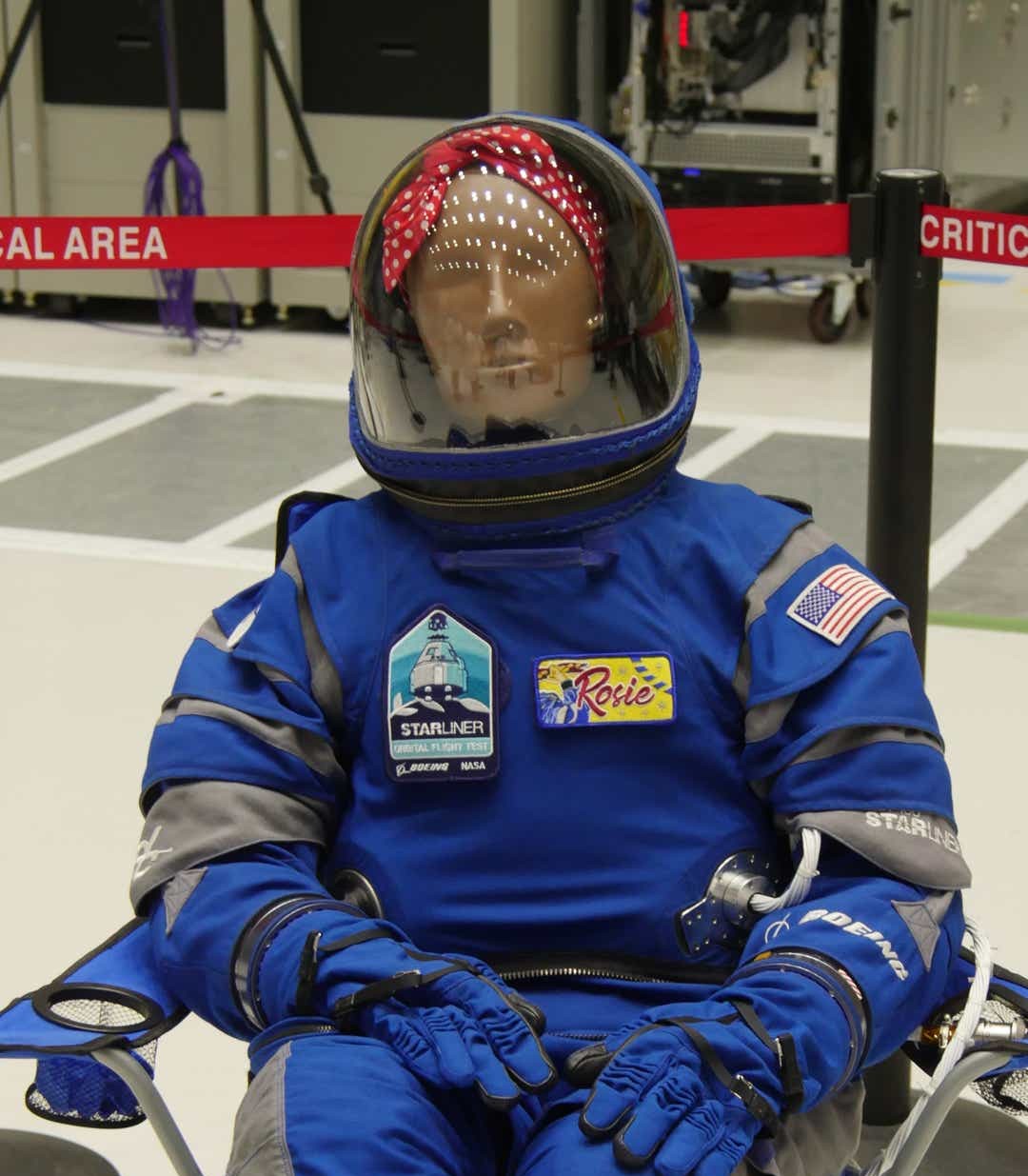
Rosie the Astronaut
Earthling - (BA)
Active
Rosie the Astronaut is an Anthropomorphic Test Device (ATD), named after the iconic WWII character, Rosie the Riveter. It will launch aboard the Boeing Starliner for its inaugural uncrewed flight to the International Space Station and back.
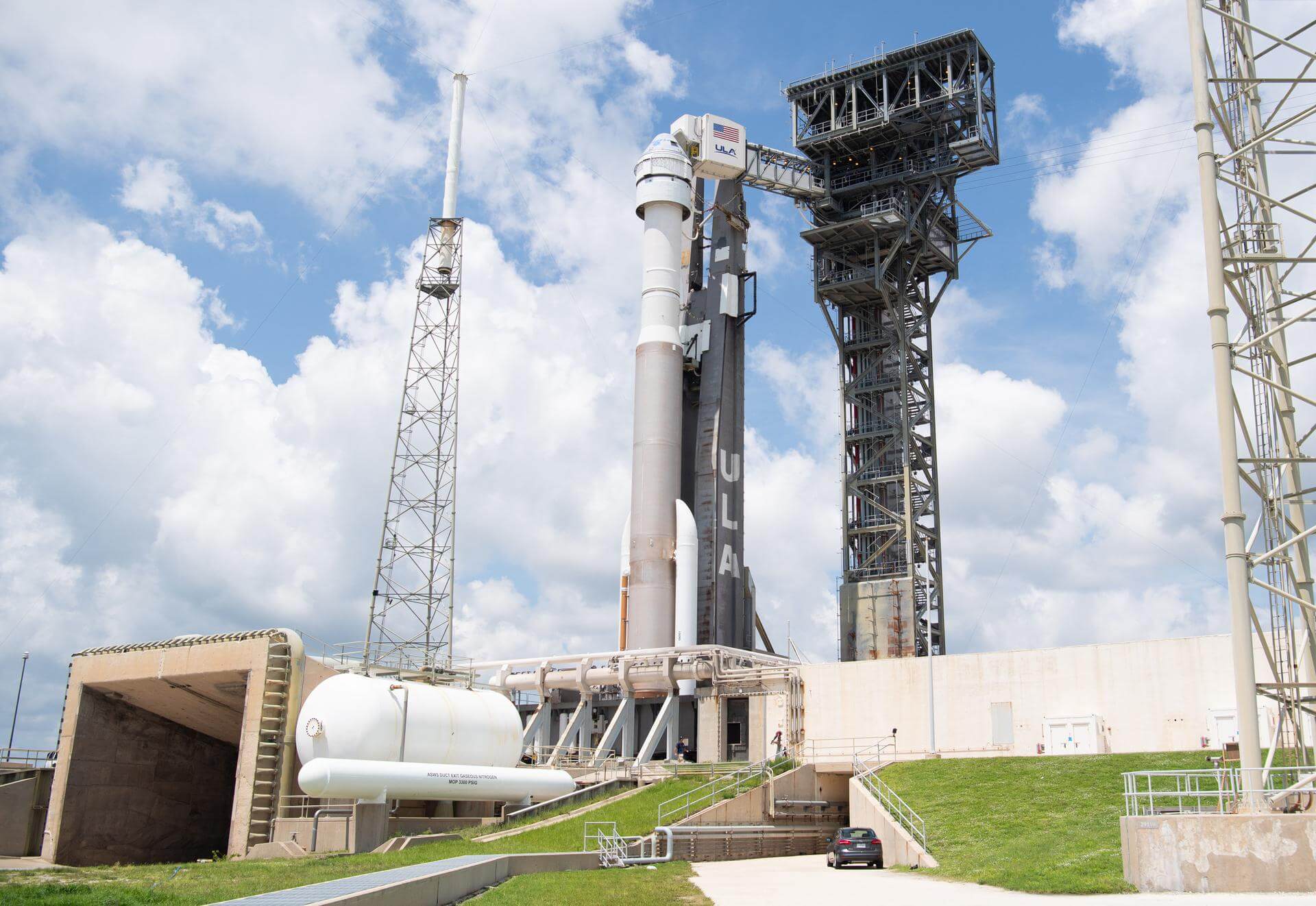
Atlas V N22 | CST-100 Starliner Orbital Flight Test
United Launch Alliance | United States of AmericaCape Canaveral SFS, FL, USA
Dec. 20, 2019, 11:36 a.m.
Status: Success
Mission:
This is the first test flight of Starliner spacecraft to the International Space Station. Although Atlas V and Centaur upper stage successfully put Starliner into planned trajectory, the spacecraft was unable to perform a nominal orbital insertion. Preliminary analysis indicate that Mission Elapsed Time (MET) system error led to Starliner burning more fuel than expected. Spacecraft is healthy and in stable orbit, but won't be able to reach and dock with ISS. Landing at White Sands Facility is planned on Dec 22.
Low Earth OrbitAtlas V N22 | CST-100 Starliner Orbital Flight Test 2 (OFT-2)
United Launch Alliance | United States of AmericaCape Canaveral SFS, FL, USA
May 19, 2022, 10:54 p.m.
Status: Success
Mission:
This is the second uncrewed test flight for the Starliner spacecraft. Reflight of the OFT mission will allow Boeing to demonstrate readiness of the spacecraft and implement corrections to the problems which were found during the first OFT flight.
Low Earth OrbitBoeing as a space agency has recently provided NASA with assistance on sending humans to the ISS from American with both their construction of the CST-100 Starliner crew capsule and their work on the SLS Avionics to return to the moon and beyond. Their ventures in GPS satellite systems and Tracking and Data Relay Satellites provide information about earth-orbiting craft to stations on the ground. They also enable research on the ISS and will be helping with the construction of the Lunar Gateway.
H3-22
Michibiki 7 (QZS-7)
Yoshinobu Launch Complex LP-2 - Tanegashima Space Center, JapanQZSS (Quasi Zenith Satellite System) is a Japanese satellite navigation system operating from inclined, elliptical geosynchronous orbits to achieve o…
Long March 7A
ChinaSat 4B
201 - Wenchang Space Launch Site, People's Republic of ChinaChinese communication geostationary satellite for unknown purposes.
Falcon 9
Starlink Group 17-38
Space Launch Complex 4E - Vandenberg SFB, CA, USAA batch of 24 satellites for the Starlink mega-constellation - SpaceX's project for space-based Internet communication system.
Electron
The Grain Goddess Provides (iQPS Launch 7)
Rocket Lab Launch Complex 1A - Rocket Lab Launch Complex 1, Mahia Peninsula, New ZealandSynthetic aperture radar Earth observation satellite for Japanese Earth imaging company iQPS.
Falcon 9
BlueBird 11-13 (Block 2 #6-8)
Space Launch Complex 40 - Cape Canaveral SFS, FL, USAAST SpaceMobile’s Block 2 BlueBird satellites are designed to deliver up to 10 times the bandwidth capacity of the BlueBird Block 1 satellites, requi…

