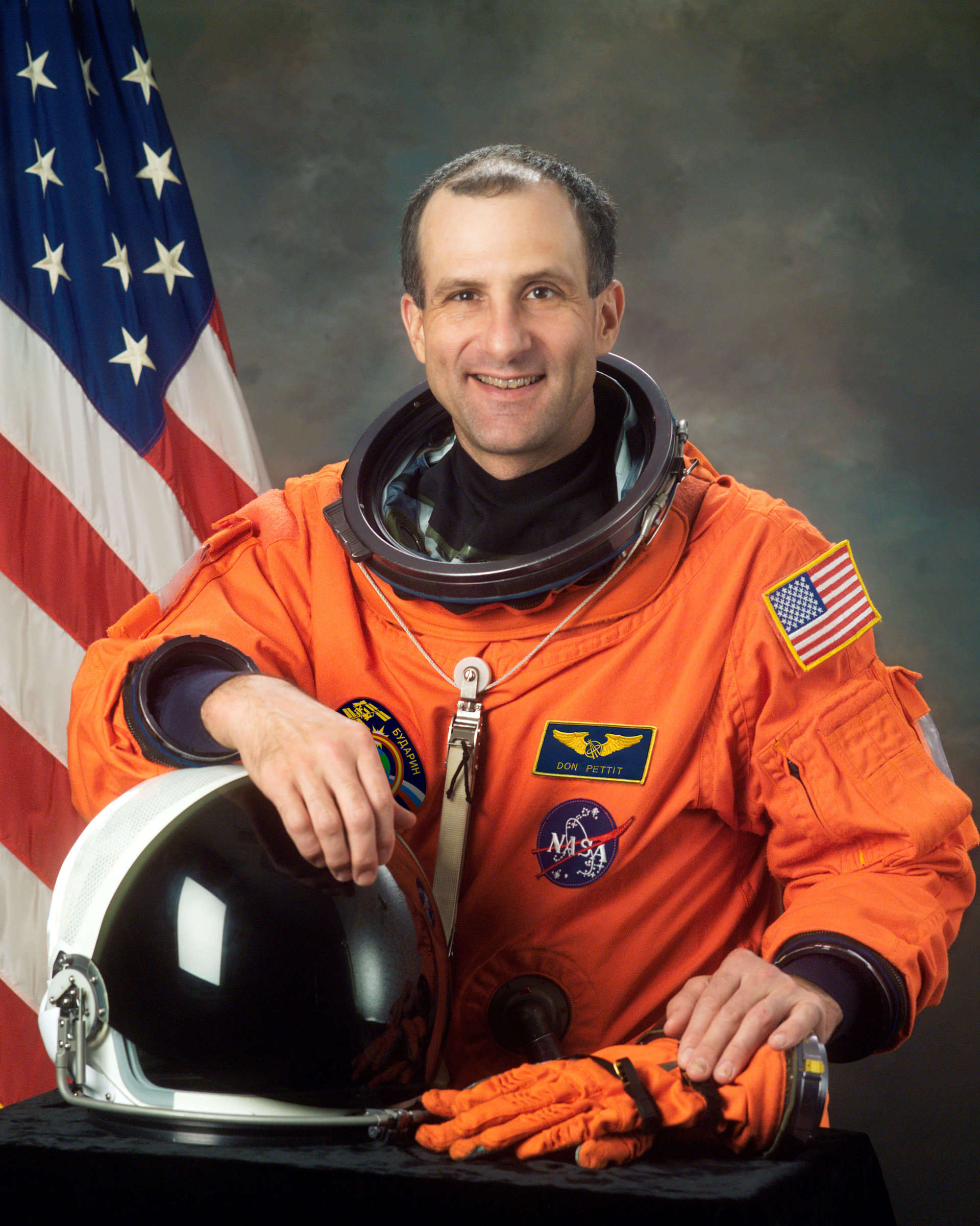
Donald Pettit
American - (NASA)
Active
Date of Birth: April 20, 1955
Age: 71
Donald Roy Pettit is an American chemical engineer and a NASA astronaut. He is a veteran of two long-duration stays aboard the International Space Station, one space shuttle mission and a six-week expedition to find meteorites in Antarctica. As of 2018, at age 63, he is NASA's oldest active astronaut.
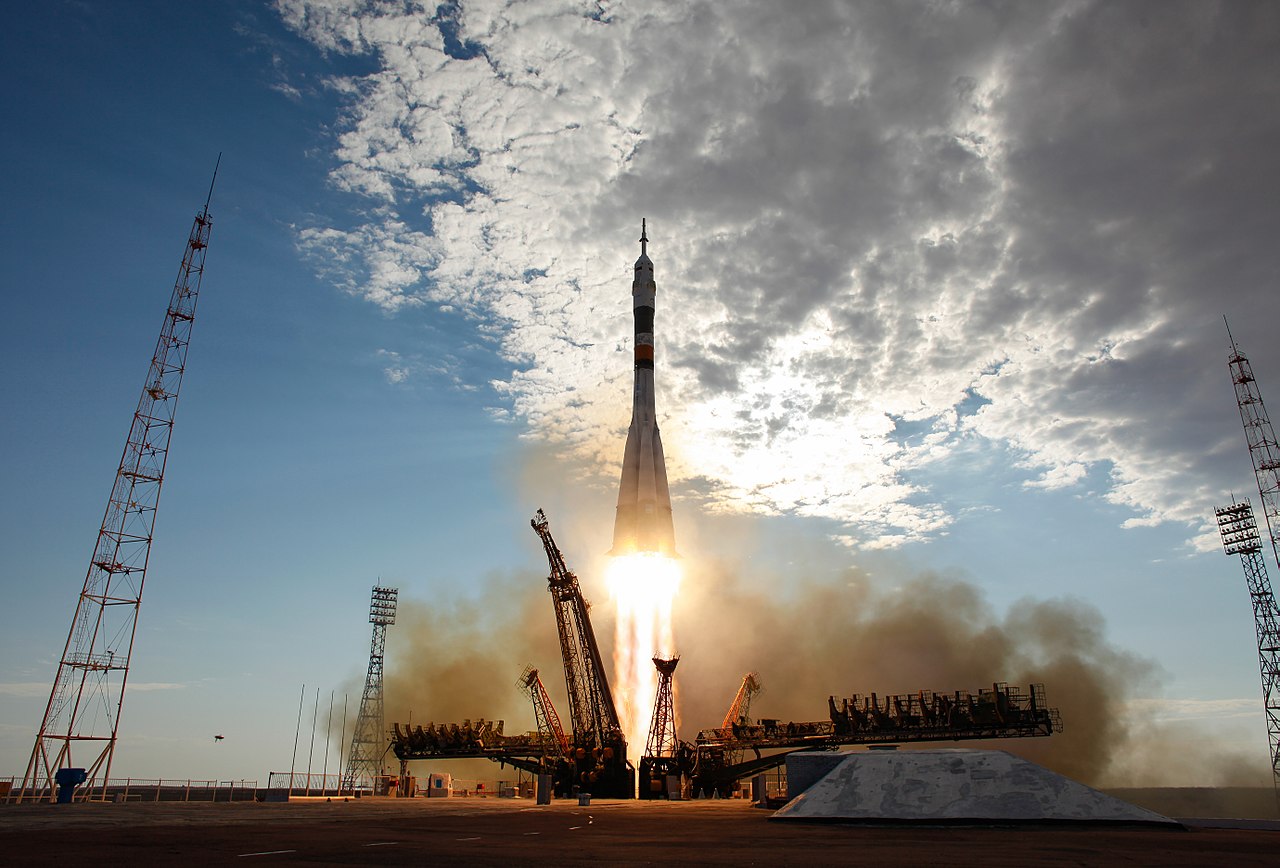
Soyuz-FG | Soyuz TMA-1
Progress Rocket Space Center | RussiaBaikonur Cosmodrome, Republic of Kazakhstan
Oct. 30, 2002, 3:11 a.m.
Status: Success
Mission:
Soyuz TMA-1 covers Expedition 5 and 6 by carrying 3 astronauts and cosmonauts to the International Space Station. Russian Commander, cosmonaut Sergei Zalyotin alongside Flight Engineers, Frank De Winne (ESA) & Yury Lonchakov (RSA) will launch aboard the Soyuz spacecraft from the Baikonur Cosmodrome in Kazakhstan and then rendezvous with the station. The landing crew on TMA-1 are Commander Nikolai Budarin (RSA) and Flight Engineers Kenneth Bowersox (ESA), Donald Pettit (NASA). It landed on May 4, 2003, 02:04:25 UTC
Low Earth Orbit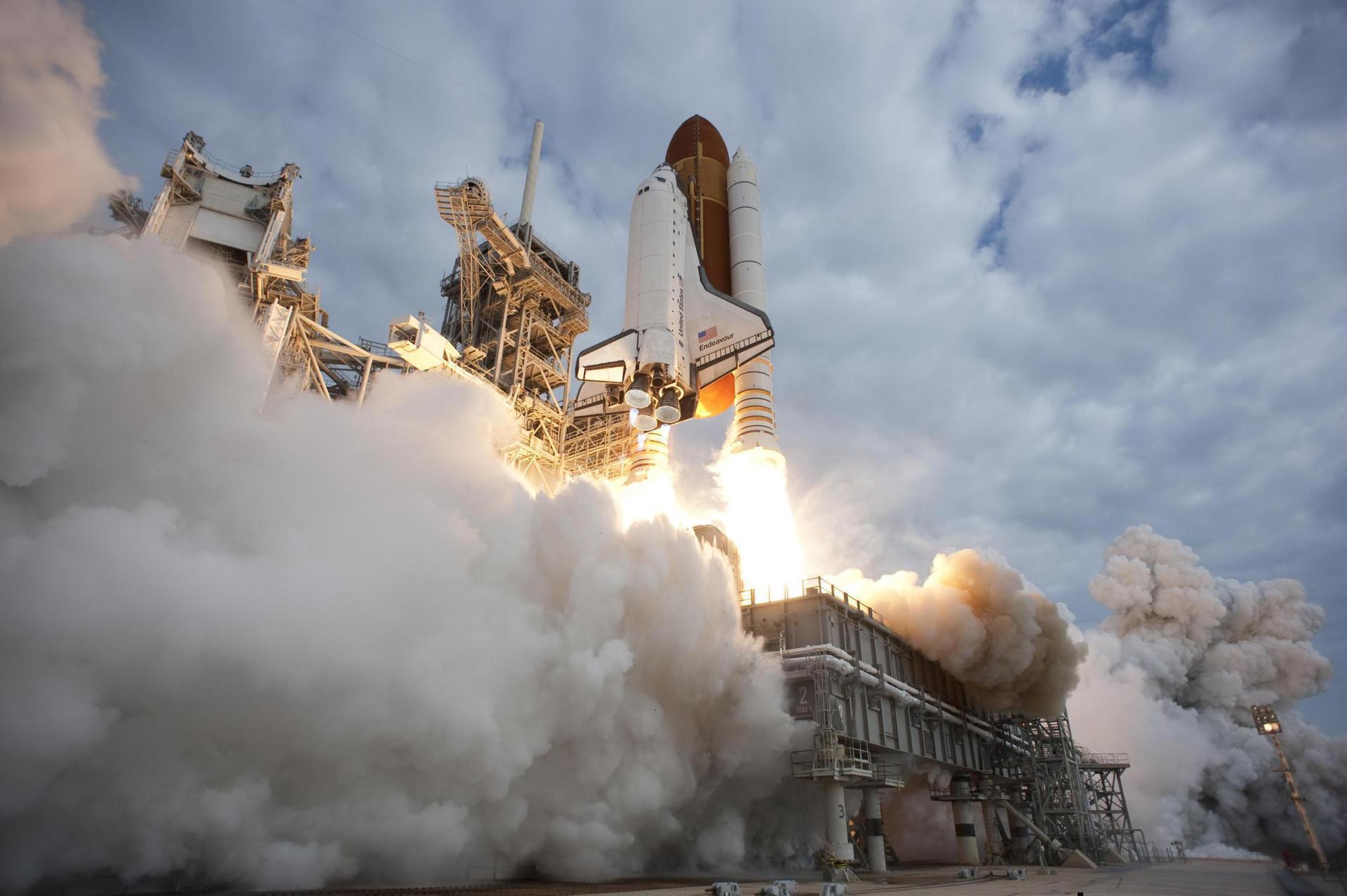
Space Shuttle Endeavour / OV-105 | STS-113
National Aeronautics and Space Administration | United States of AmericaKennedy Space Center, FL, USA
Nov. 24, 2002, 12:49 a.m.
Status: Success
Mission:
STS-113 was a Space Shuttle mission to the International Space Station (ISS) flown by Space Shuttle Endeavour. During the 14-day mission in late 2002, Endeavour and its crew extended the ISS backbone with the P1 truss and exchanged the Expedition 5 and Expedition 6 crews aboard the station. With Commander Jim Wetherbee and Pilot Paul Lockhart at the controls, Endeavour docked with the station on 25 November 2002 to begin seven days of station assembly, spacewalks and crew and equipment transfers. This was Endeavour’s last flight before entering its Orbiter Major Modification period until 2007, and also the last shuttle mission before the Columbia disaster.
Low Earth OrbitSpace Shuttle Endeavour / OV-105 | STS-126
National Aeronautics and Space Administration | United States of AmericaKennedy Space Center, FL, USA
Nov. 15, 2008, 12:55 a.m.
Status: Success
Mission:
STS-126 was a Space Shuttle mission to the International Space Station (ISS) flown by Space Shuttle Endeavour. The purpose of the mission, referred to as ULF2 by the ISS program, was to deliver equipment and supplies to the station, to service the Solar Alpha Rotary Joints (SARJ), and repair the problem in the starboard SARJ that had limited its use since STS-120.
Low Earth OrbitSoyuz FG | Soyuz TMA-03M
Progress Rocket Space Center | RussiaBaikonur Cosmodrome, Republic of Kazakhstan
Dec. 21, 2011, 1:16 p.m.
Status: Success
Mission:
Soyuz TMA-03M begins expedition 30 by carrying 3 astronauts and cosmonauts to the International Space Station. Russian Commander, cosmonaut Oleg Kononenko alongside Flight Engineers, André Kuipers (ESA) & Donald Pettit (NASA) will launch aboard the Soyuz spacecraft from the Baikonur Cosmodrome in Kazakhstan and then rendezvous with the station. It landed on 1 July 2012, 08:14 UTC
Low Earth Orbit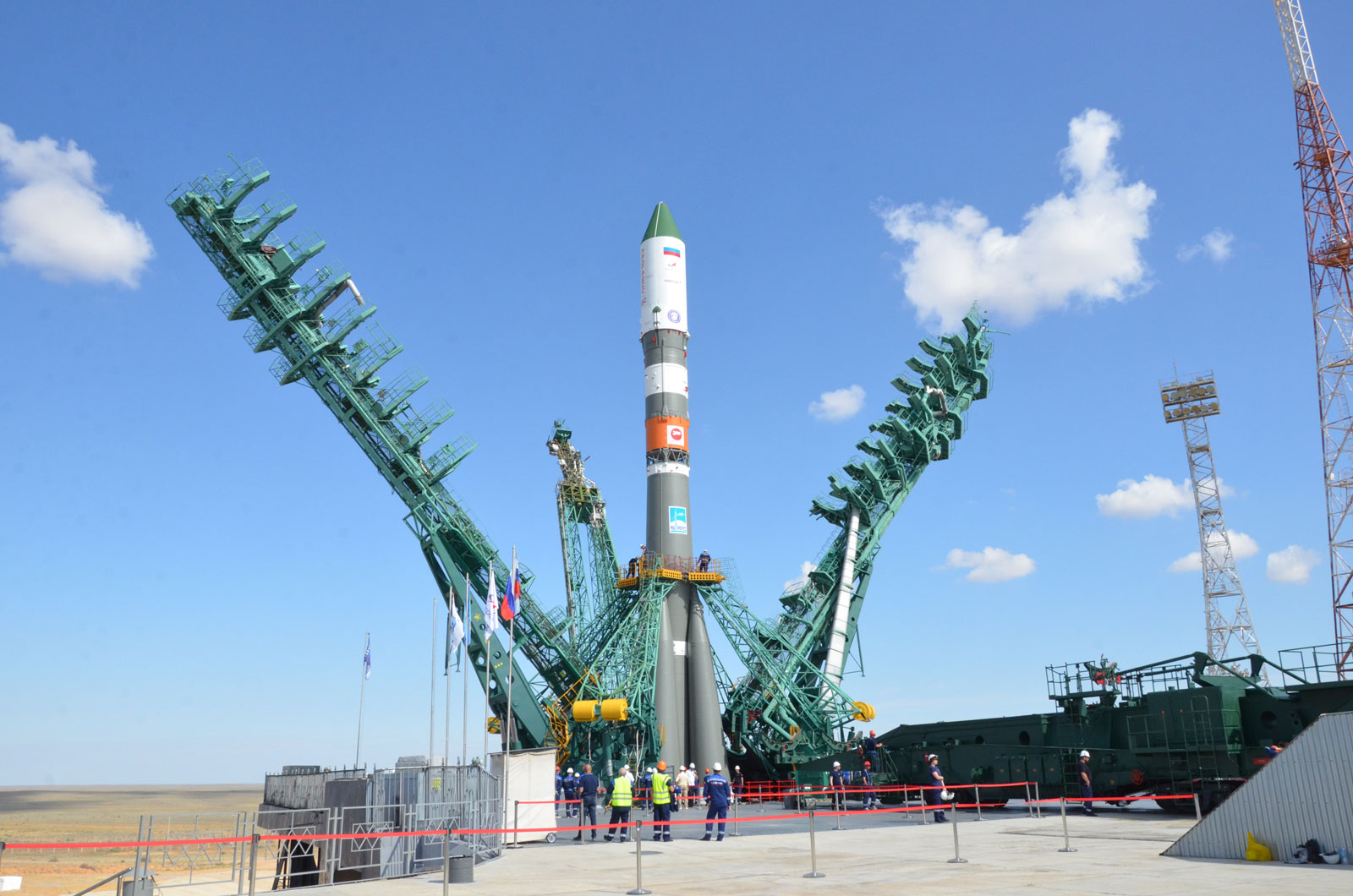
Soyuz 2.1a | Soyuz MS-26
Progress Rocket Space Center | RussiaBaikonur Cosmodrome, Republic of Kazakhstan
Sept. 11, 2024, 4:23 p.m.
The National Aeronautics and Space Administration is an independent agency of the executive branch of the United States federal government responsible for the civilian space program, as well as aeronautics and aerospace research. NASA have many launch facilities but most are inactive. The most commonly used pad will be LC-39B at Kennedy Space Center in Florida.
Falcon 9
Starlink Group 17-38
Space Launch Complex 4E - Vandenberg SFB, CA, USAA batch of 24 satellites for the Starlink mega-constellation - SpaceX's project for space-based Internet communication system.
Electron
The Grain Goddess Provides (iQPS Launch 7)
Rocket Lab Launch Complex 1A - Rocket Lab Launch Complex 1, Mahia Peninsula, New ZealandSynthetic aperture radar Earth observation satellite for Japanese Earth imaging company iQPS.
Falcon 9
BlueBird 11-13 (Block 2 #6-8)
Space Launch Complex 40 - Cape Canaveral SFS, FL, USAAST SpaceMobile’s Block 2 BlueBird satellites are designed to deliver up to 10 times the bandwidth capacity of the BlueBird Block 1 satellites, requi…
Smart Dragon 3
OSE HS-01 & 02
Haiyang offshore launch location - Haiyang Oriental Spaceport2 hyper-spectral Earth observation satellites from Chinese company STAR.VISION. Both satellites are built in corporation with foreign customers: *…
Falcon 9
Starlink Group 17-53
Space Launch Complex 4E - Vandenberg SFB, CA, USAA batch of 24 satellites for the Starlink mega-constellation - SpaceX's project for space-based Internet communication system.

