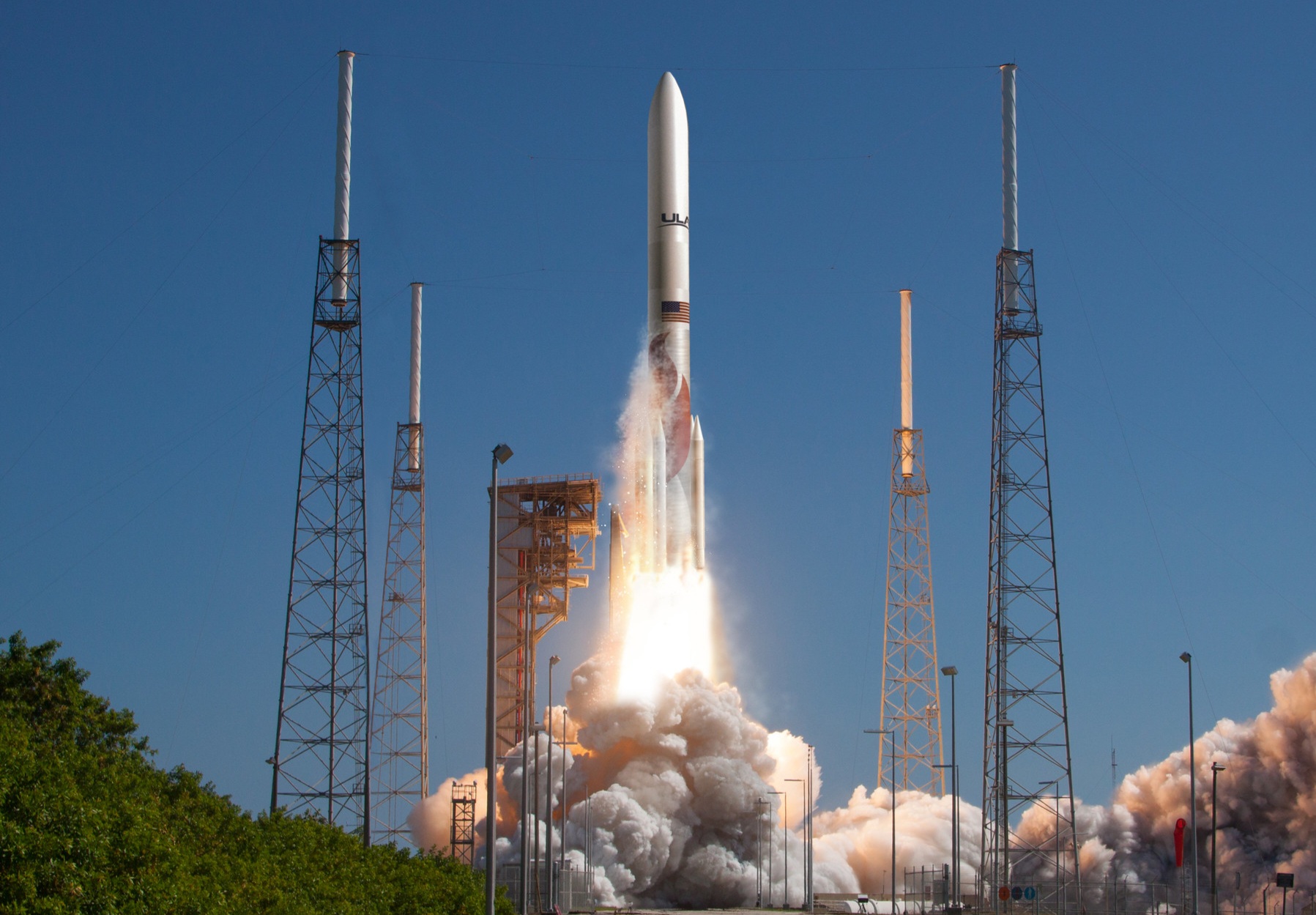
Vulcan VC6L
ActiveUnited Launch Alliance (ULA)
None
Description
Vulcan Centaur is a two-stage-to-orbit, heavy-lift launch vehicle under development by United Launch Alliance (ULA) since 2014. It is principally designed to meet launch demands for the U.S. government's National Security Space Launch (NSSL) program for use by the United States Space Force and U.S. intelligence agencies for national security satellite launches. It will replace both of ULA's existing launchers (Atlas V and Delta IV Heavy) in this role, as these launchers are retiring.
Specifications
-
Stages
2 -
Length
67.4 m -
Diameter
5.4 m -
Fairing Diameter
5.4 m -
Launch Mass
877.0 T -
Thrust
18110.0 kN
Family
-
Name
Vulcan VC6L -
Family
― -
Variant
VC6L -
Alias
― -
Full Name
Vulcan VC6L
Payload Capacity
-
Launch Cost
― -
Low Earth Orbit
27200.0 kg -
Geostationary Transfer
Orbit
15300.0 kg -
Direct Geostationary
7000.0 kg -
Sun-Synchronous Capacity
23900.0 kg
United Launch Alliance
Commercial
CEO: Tory Bruno
ULA 2006United Launch Alliance (ULA) is a joint venture of Lockheed Martin Space Systems and Boeing Defense, Space & Security. ULA was formed in December 2006 by combining the teams at these companies which provide spacecraft launch services to the government of the United States. ULA launches from both coasts of the US. They launch their Atlas V vehicle from LC-41 in Cape Canaveral and LC-3E at Vandeberg. Their Delta IV launches from LC-37 at Cape Canaveral and LC-6 at Vandenberg.
Upcoming Spaceflights
Vulcan VC6L | Project Kuiper (Vulcan #1)
United Launch Alliance | United States of AmericaCape Canaveral SFS, FL, USA
TBD September, 2025
Status: To Be Determined
Mission:
Project Kuiper is a mega constellation of satellites in Low Earth Orbit that will offer broadband internet access, this constellation will be managed by Kuiper Systems LLC, a subsidiary of Amazon. This constellation is planned to be composed of 3,276 satellites. The satellites are projected to be placed in 98 orbital planes in three orbital layers, one at 590 km, 610 km and 630 km altitude. 45 satellites will be carried on each Vulcan launch.
Low Earth OrbitFlight Record
No spaceflights found for .
Long March 7
Tianzhou-9
201 - Wenchang Space Launch Site, People's Republic of ChinaEighth cargo delivery mission to the Chinese space station.
Falcon 9
Dror-1
Space Launch Complex 40 - Cape Canaveral SFS, FL, USANote: SpaceX identifies the mission as "Commercial GTO 1". Dror-1 is a geostationary communication satellite built and developed by Israel Aerospa…
Falcon 9
Starlink Group 10-28
Space Launch Complex 40 - Cape Canaveral SFS, FL, USAA batch of 28 satellites for the Starlink mega-constellation - SpaceX's project for space-based Internet communication system.
Soyuz 2.1a
Progress MS-31 (92P)
31/6 - Baikonur Cosmodrome, Republic of KazakhstanProgress resupply mission to the International Space Station.
Long March 4C
Shiyan 28 B-01
Launch Complex 3 (LC-3/LA-1) - Xichang Satellite Launch Center, People's Republic of ChinaSatellite officially named for "space environment detection" purposes, exact details unknown.

