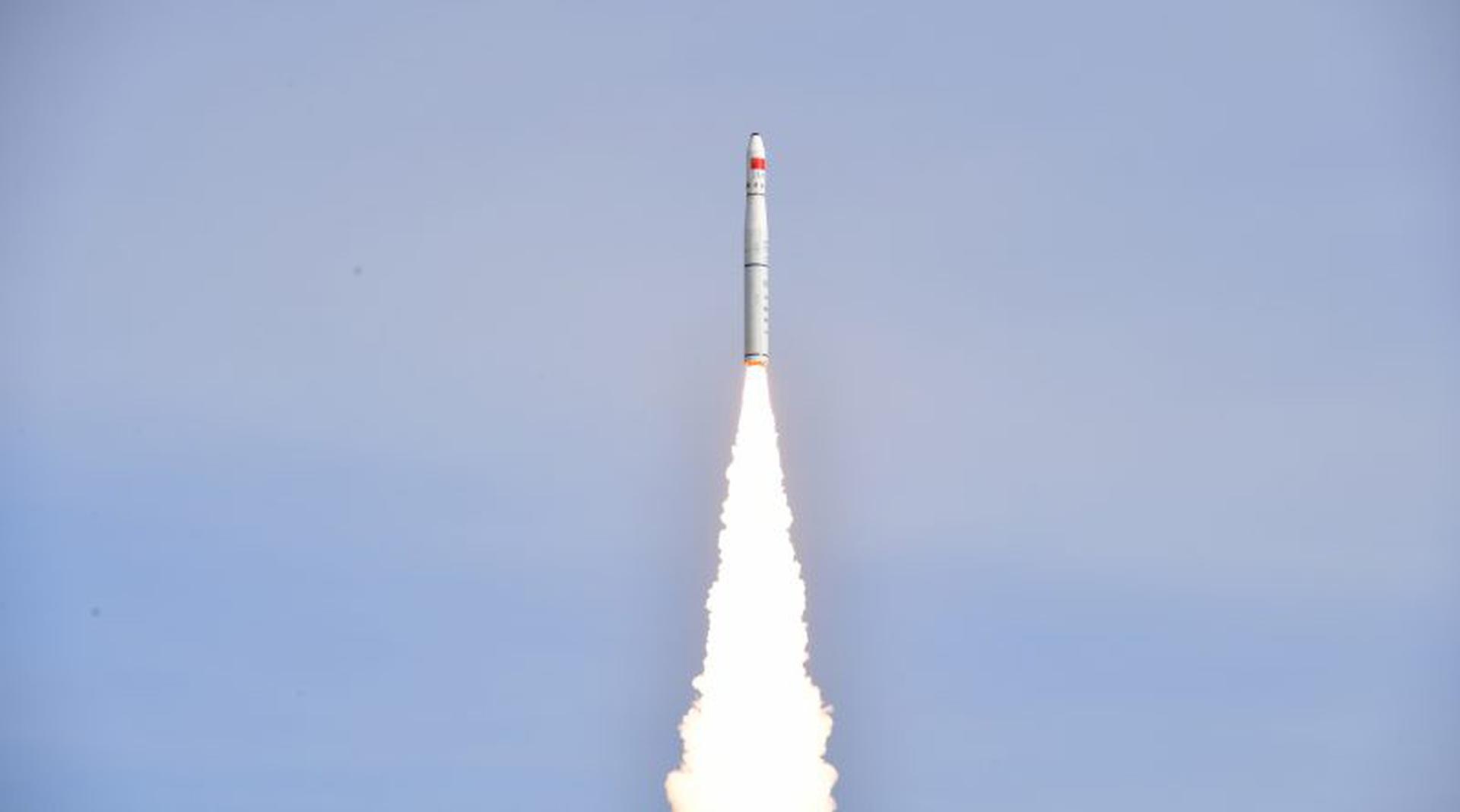
Long March 11
ActiveChina Aerospace Science and Technology Corporation (CASC)
Sept. 25, 2015
Description
Specifications
-
Minimum Stage
1 -
Max Stage
4 -
Length
20.0 m -
Diameter
2.0 m -
Fairing Diameter
― -
Launch Mass
58.0 T -
Thrust
1177.0 kN -
Apogee (Sub-Orbital)
200.0 km
Family
-
Name
Long March 11 -
Family
― -
Variant
― -
Alias
― -
Full Name
Long March 11
Payload Capacity
-
Launch Cost
― -
Low Earth Orbit
500.0 kg -
Geostationary Transfer
Orbit
― -
Direct Geostationary
― -
Sun-Synchronous Capacity
―
China Aerospace Science and Technology Corporation
Government
Chairman & President: Lei Fanpei
CASC 1999The China Aerospace Science and Technology Corporation (CASC) is the main contractor for the Chinese space program. It is state-owned and has a number of subordinate entities which design, develop and manufacture a range of spacecraft, launch vehicles, strategic and tactical missile systems, and ground equipment. It was officially established in July 1999 as part of a Chinese government reform drive, having previously been one part of the former China Aerospace Corporation. Various incarnations of the program date back to 1956.
Long March 11 | Shiyan 32 01-03
China Aerospace Science and Technology Corporation | ChinaHaiyang Oriental Spaceport
Nov. 8, 2025, 9:01 p.m.
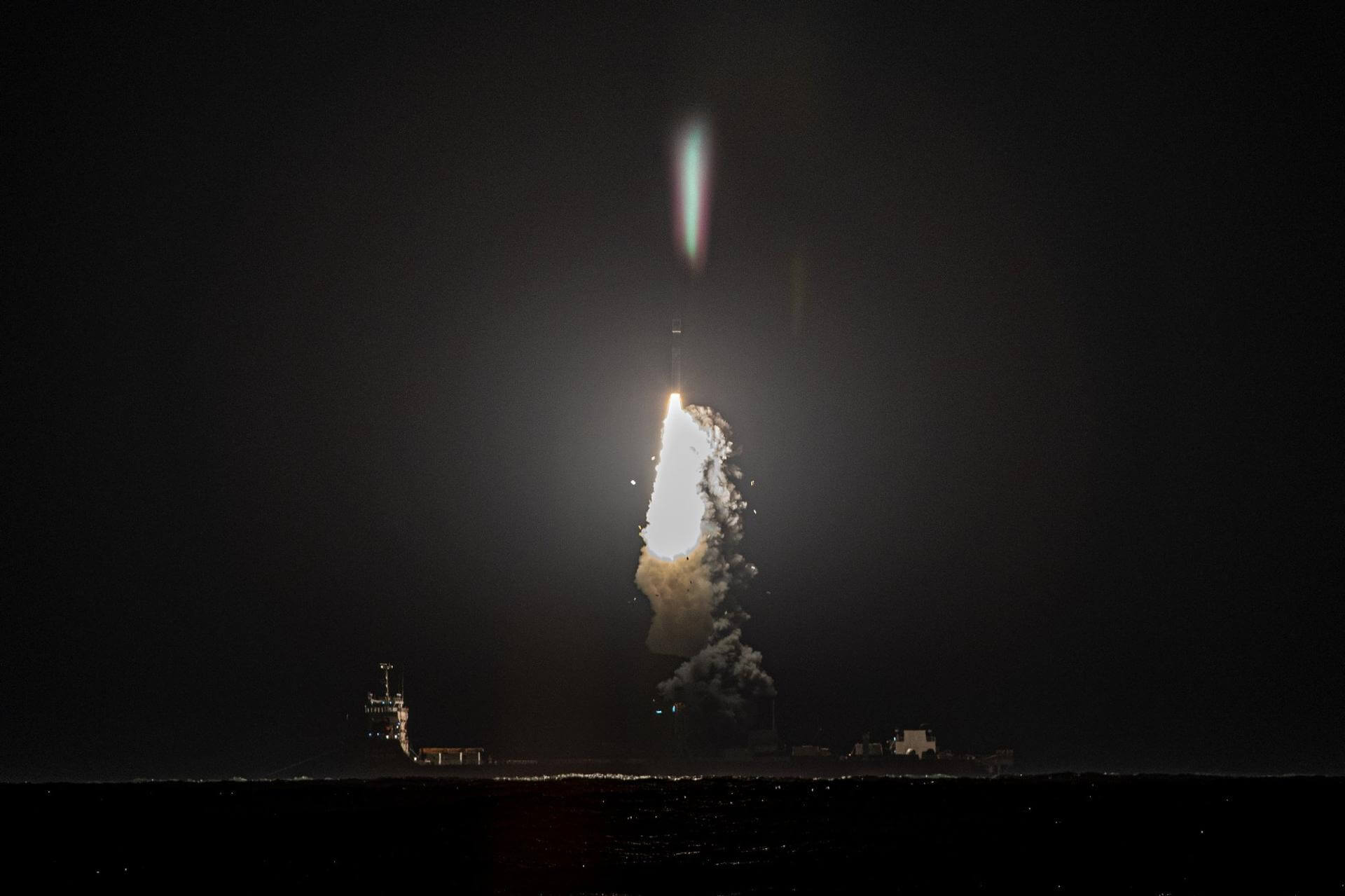
Long March 11 | Shiyan 24C
China Aerospace Science and Technology Corporation | ChinaHaiyang Oriental Spaceport
Dec. 25, 2023, 10:39 p.m.
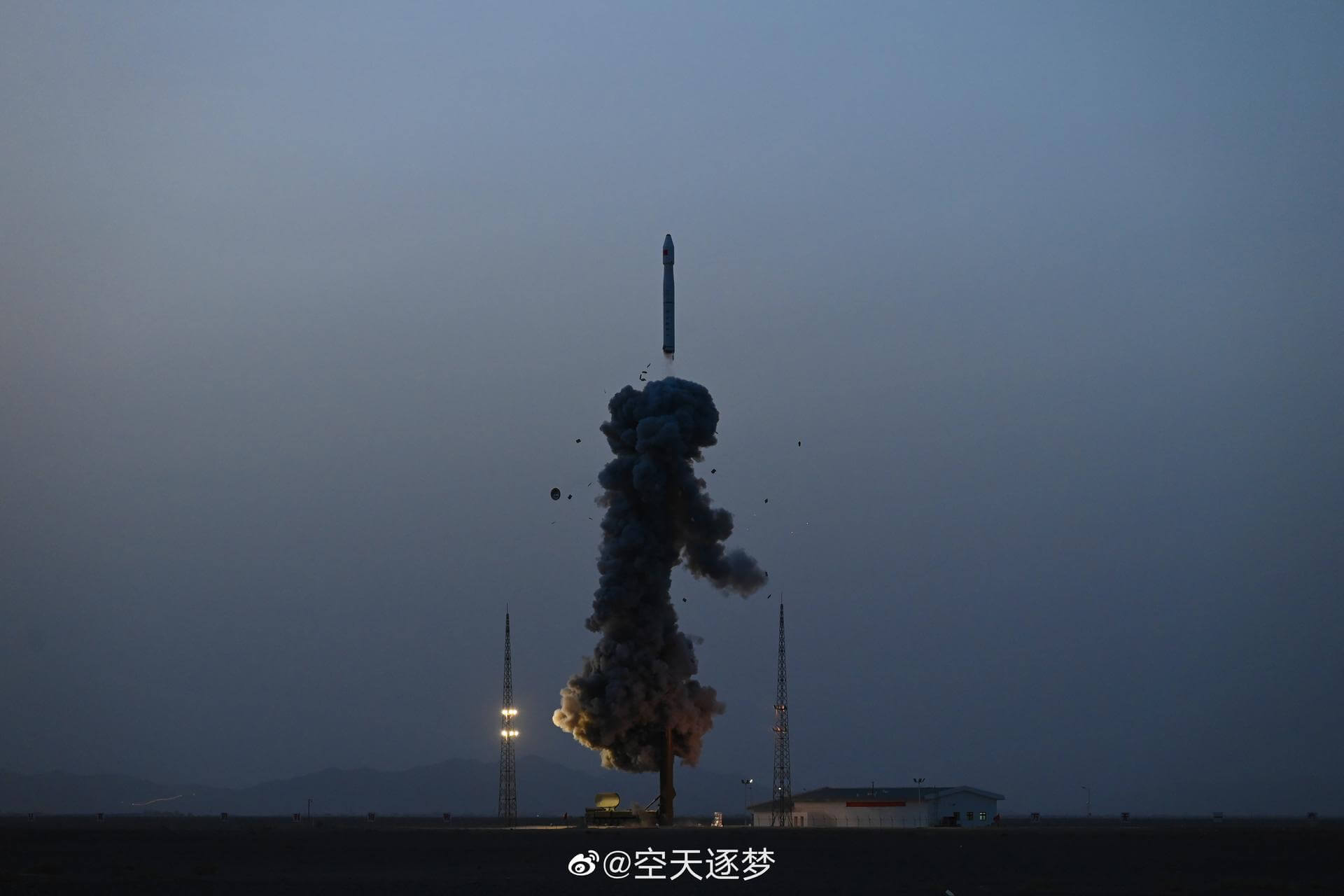
Long March 11 | Shiyan 19
China Aerospace Science and Technology Corporation | ChinaJiuquan Satellite Launch Center, People's Republic of China
March 15, 2023, 11:41 a.m.
Long March 11 | Shiyan 21
China Aerospace Science and Technology Corporation | ChinaXichang Satellite Launch Center, People's Republic of China
Dec. 16, 2022, 6:17 a.m.
Long March 11 | CentiSpace-1 S5 & S6
China Aerospace Science and Technology Corporation | ChinaHaiyang Oriental Spaceport
Oct. 7, 2022, 1:10 p.m.
Long March 11 | Jilin-1 HR-03D-04 to 07 & 04A
China Aerospace Science and Technology Corporation | ChinaHaiyang Oriental Spaceport
April 30, 2022, 3:30 a.m.
Long March 11 | Tianping-2 A/B/C
China Aerospace Science and Technology Corporation | ChinaJiuquan Satellite Launch Center, People's Republic of China
March 30, 2022, 2:29 a.m.
Status: Launch Successful
Mission:
The Tianping-2 A/B/C satellites were built by the China Aerospace Science and Industry Corporation (CASIC) and will be used as calibration targets for services such as atmospheric space environment study and orbital prediction model correction.
Sun-Synchronous OrbitLong March 11 | GECAM
China Aerospace Science and Technology Corporation | ChinaXichang Satellite Launch Center, People's Republic of China
Dec. 9, 2020, 8:14 p.m.
Status: Launch Successful
Mission:
GECAM (Gravitational Wave High-energy Electromagnetic Counterpart All-sky Monitor) is a constellation of two small X-ray and gamma-ray all-sky observatories to search for gamma-ray counterparts to gravitational wave events. Each satellite features a dome-shaped array of 25 Gamma-ray detectors (GRD) and 8 Charged particle detectors (CPD). Together the satellites will provide a FOV of 100% all-sky. The sensitivity of the detectors is ~2E-8 erg/cm2/s. They will provide a localization of ~1°. The detectors are sensible in the energy band from 6 keV to 5 MeV. Besides detecting the radiation from gravitatinal wave events, the satellites will also be contributing in detectiong Ultra-long GRBs, X-ray Flashes, X-ray-rich GRBs, Magnetars and Terrestrial Gamma-ray Flashes.
Low Earth OrbitLong March 11 | Jilin-1 High Resolution 03B 01-06 & 03C 01-03
China Aerospace Science and Technology Corporation | ChinaHaiyang Oriental Spaceport
Sept. 15, 2020, 1:23 a.m.
Long March 11 | XJS-G & XJS-H
China Aerospace Science and Technology Corporation | ChinaXichang Satellite Launch Center, People's Republic of China
May 29, 2020, 8:13 p.m.
Long March 11 | Zhuhai-1-03
China Aerospace Science and Technology Corporation | ChinaJiuquan Satellite Launch Center, People's Republic of China
Sept. 19, 2019, 6:42 a.m.
Long March 11 | Jilin-1 & others
China Aerospace Science and Technology Corporation | ChinaHaiyang Oriental Spaceport
June 5, 2019, 4:06 a.m.
Status: Launch Successful
Mission:
The first sea launch of Long March 11 rocket. It carries 7 satellites, which include a new high-resolution Earth observation satellite Jilin-1 and several test satellites, verifying such technologies as sea surface wind measuring and satellite interlink communication.
Sun-Synchronous OrbitLong March 11 | Jilin-1 Hyperspectral 01, 02, Xiaoxiang-1-03, Lingque-1A
China Aerospace Science and Technology Corporation | ChinaJiuquan Satellite Launch Center, People's Republic of China
Jan. 21, 2019, 5:42 a.m.
Long March 11 | Hongyun-1
China Aerospace Science and Technology Corporation | ChinaJiuquan Satellite Launch Center, People's Republic of China
Dec. 21, 2018, 11:51 p.m.
Long March 11 | Zhuhai-1-02
China Aerospace Science and Technology Corporation | ChinaJiuquan Satellite Launch Center, People's Republic of China
April 26, 2018, 4:42 a.m.
Long March 11 | Jilin-1-07 (Deqing-1), Jilin-1-08
China Aerospace Science and Technology Corporation | ChinaJiuquan Satellite Launch Center, People's Republic of China
Jan. 19, 2018, 4:12 a.m.
Long March 11 | Xiaoxiang-1, XPNAV-1 & 3 others.
China Aerospace Science and Technology Corporation | ChinaJiuquan Satellite Launch Center, People's Republic of China
Nov. 9, 2016, 11:42 p.m.
Status: Launch Successful
Mission:
XPNAV-1 (X-Ray Pulsar Navigation) is the first ever satellite to test the technology of spacecraft navigation by using signals from X-ray pulsars. It is launched along with the Xiaoxiang 1 cubsat and several other small satellites.
Sun-Synchronous OrbitLong March 11 | SECM-1 ( Pujiang-1, Tianwang 1A, Tianwang 1B, Tianwang 1C )
China Aerospace Science and Technology Corporation | ChinaJiuquan Satellite Launch Center, People's Republic of China
Sept. 25, 2015, 1:41 a.m.
Falcon 9
Starlink Group 17-52
Space Launch Complex 4E - Vandenberg SFB, CA, USAA batch of 24 satellites for the Starlink mega-constellation - SpaceX's project for space-based Internet communication system.
Falcon 9
NROL-95
Space Launch Complex 40 - Cape Canaveral SFS, FL, USAClassified payload for the US National Reconnaissance Office.
Long March 6A
TJSW-27A & B
Launch Complex 9A - Taiyuan Satellite Launch Center, People's Republic of China2 Chinese classified satellites claimed to be for communication technology test purposes. Actual mission not known.
Long March 7A
Tianlian 3-01
201 - Wenchang Space Launch Site, People's Republic of ChinaTianlian is a Chinese data tracking and relay communications geostationary satellite series. The TL-3 (Tian Lian 3) satellites are the 3rd generation…
Falcon 9
Starlink Group 17-51
Space Launch Complex 4E - Vandenberg SFB, CA, USAA batch of 24 satellites for the Starlink mega-constellation - SpaceX's project for space-based Internet communication system.

