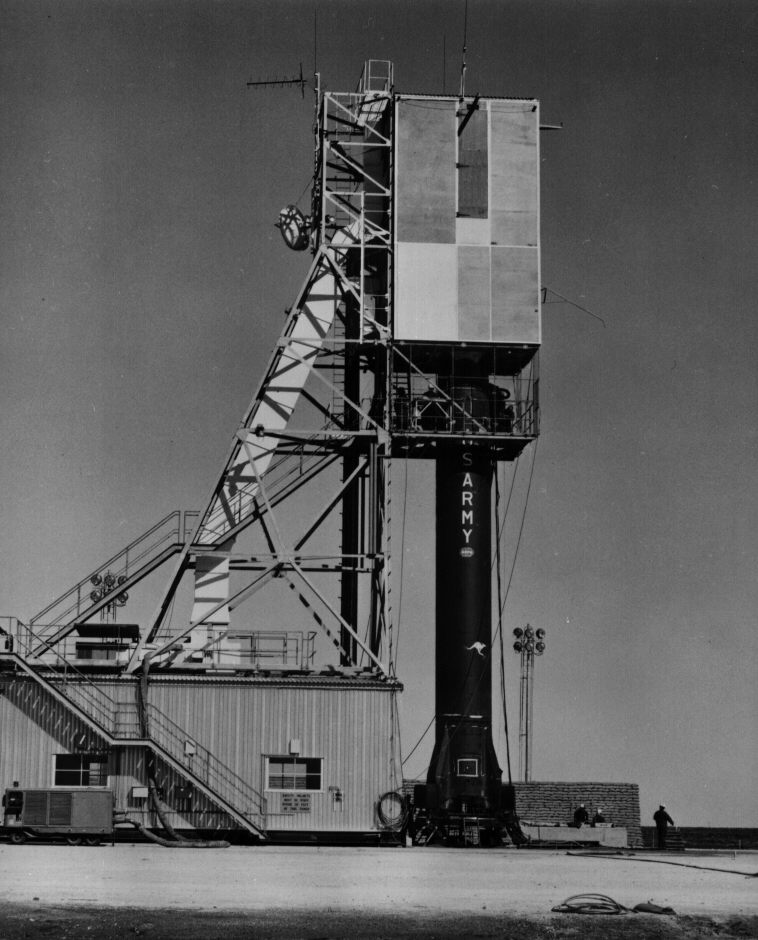
SPARTA
In-activeChrysler (CHR)
Nov. 28, 1966
Description
The Sparta was a three-stage rocket that launched Australia's first Earth satellite, WRESAT, on 29 November 1967.
Specifications
-
Stages
3 -
Length
21.8 m -
Diameter
1.78 m -
Fairing Diameter
1.78 m -
Launch Mass
30.0 T -
Thrust
416.0 kN
Family
-
Name
SPARTA -
Family
― -
Variant
― -
Alias
― -
Full Name
SPARTA
Payload Capacity
-
Launch Cost
― -
Low Earth Orbit
45.0 kg -
Geostationary Transfer
Orbit
― -
Direct Geostationary
― -
Sun-Synchronous Capacity
―
Chrysler
Commercial
None
CHR 1950In July 1959, NASA chose the Redstone missile as the basis for the Mercury-Redstone Launch Vehicle to be used for suborbital test flights of the Project Mercury spacecraft. Three unmanned MRLV launch attempts were made between November 1960 and March 1961, two of which were successful. The MRLV successfully launched the chimpanzee Ham, and astronauts Alan Shepard and Gus Grissom on three suborbital flights in January, May and July 1961, respectively.
Long March 12B
Demo Flight (SpaceSail Polar Group #10)
Long March 12 series Pad - Jiuquan Satellite Launch Center, People's Republic of ChinaFirst test launch of CASC/CACL’s Long March 12B rocket; carried a batch of 2 operational Low Earth Orbit communication satellites with Ku, Q and V ba…
Long March 2D
4 x SatNet test satellites
Launch Complex 3 (LC-3/LA-1) - Xichang Satellite Launch Center, People's Republic of ChinaOfficially described as "Satellite-Internet Technology Demonstration Satellites". Probably 4 test satellites for the Chinese state-owned LEO commu…
Falcon 9
Starlink Group 17-41
Space Launch Complex 4E - Vandenberg SFB, CA, USAA batch of 24 satellites for the Starlink mega-constellation - SpaceX's project for space-based Internet communication system.
Atlas V 551
Amazon Leo (LA-07)
Space Launch Complex 41 - Cape Canaveral SFS, FL, USAAmazon Leo, formerly known as Project Kuiper, is a mega constellation of satellites in Low Earth Orbit that will offer broadband internet access, thi…
Falcon 9
Starlink Group 10-53
Space Launch Complex 40 - Cape Canaveral SFS, FL, USAA batch of 29 satellites for the Starlink mega-constellation - SpaceX's project for space-based Internet communication system.