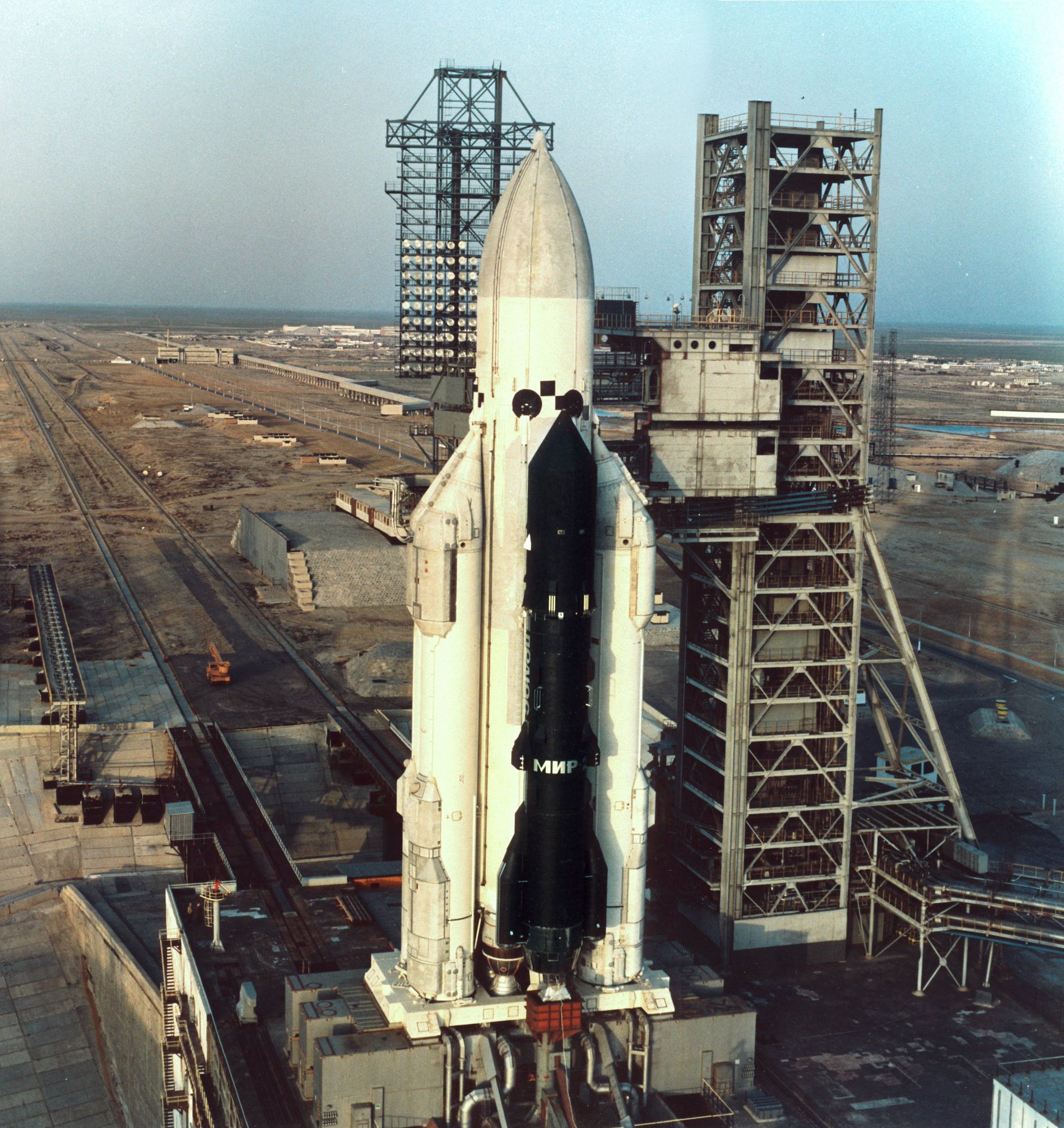
Energiya
In-activeEnergia (OKB-1)
May 15, 1987
Description
Energia (Russian: Энергия, Energiya, "Energy") (GRAU 11K25) was a Soviet rocket that was designed by NPO Energia to serve as a heavy-lift partially recoverable launch system for a variety of payloads including the Buran spacecraft.
Specifications
-
Stages
2 -
Length
97.0 m -
Diameter
17.65 m -
Fairing Diameter
7.75 m -
Launch Mass
2524.0 T -
Thrust
35129.0 kN
Family
-
Name
Energiya -
Family
― -
Variant
― -
Alias
― -
Full Name
Energiya
Payload Capacity
-
Launch Cost
― -
Low Earth Orbit
88000.0 kg -
Geostationary Transfer
Orbit
― -
Direct Geostationary
22000.0 kg -
Sun-Synchronous Capacity
―
Energia
Government
None
OKB-1 1946None
Falcon 9
Starlink Group 17-52
Space Launch Complex 4E - Vandenberg SFB, CA, USAA batch of 24 satellites for the Starlink mega-constellation - SpaceX's project for space-based Internet communication system.
Falcon 9
NROL-95
Space Launch Complex 40 - Cape Canaveral SFS, FL, USAClassified payload for the US National Reconnaissance Office.
Long March 6A
TJSW-27A & B
Launch Complex 9A - Taiyuan Satellite Launch Center, People's Republic of China2 Chinese classified satellites claimed to be for communication technology test purposes. Actual mission not known.
Long March 7A
Tianlian 3-01
201 - Wenchang Space Launch Site, People's Republic of ChinaTianlian is a Chinese data tracking and relay communications geostationary satellite series. The TL-3 (Tian Lian 3) satellites are the 3rd generation…
Falcon 9
Starlink Group 17-51
Space Launch Complex 4E - Vandenberg SFB, CA, USAA batch of 24 satellites for the Starlink mega-constellation - SpaceX's project for space-based Internet communication system.

