SpaceX Launch Schedule
Space Exploration Technologies Corp., known as SpaceX, is an American aerospace manufacturer and space transport services company headquartered in Hawthorne, California. It was founded in 2002 by entrepreneur Elon Musk with the goal of reducing space transportation costs and enabling the colonization of Mars. SpaceX operates from many pads, on the East Coast of the US they operate from SLC-40 at Cape Canaveral Space Force Station and historic LC-39A at Kennedy Space Center. They also operate from SLC-4E at Vandenberg Space Force Base, California, usually for polar launches. Another launch site is being developed at Boca Chica, Texas.

Falcon 9 Block 5 | SDA Tranche 1 Tracking Layer C
SpaceX | United States of AmericaVandenberg SFB, CA, USA
TBD September, 2026
Status: To Be Determined
Mission:
Tranche 1 Tracking Layer C is one of five missions by the United States Space Force Space Development Agency (SDA) for the Proliferated Warfighter Space Architecture (PWSA) Tranche 1 Tracking Layer constellation, which will provide global indications, warning, tracking, and targeting of advanced missile threats, including hypersonic missile systems.
Polar Orbit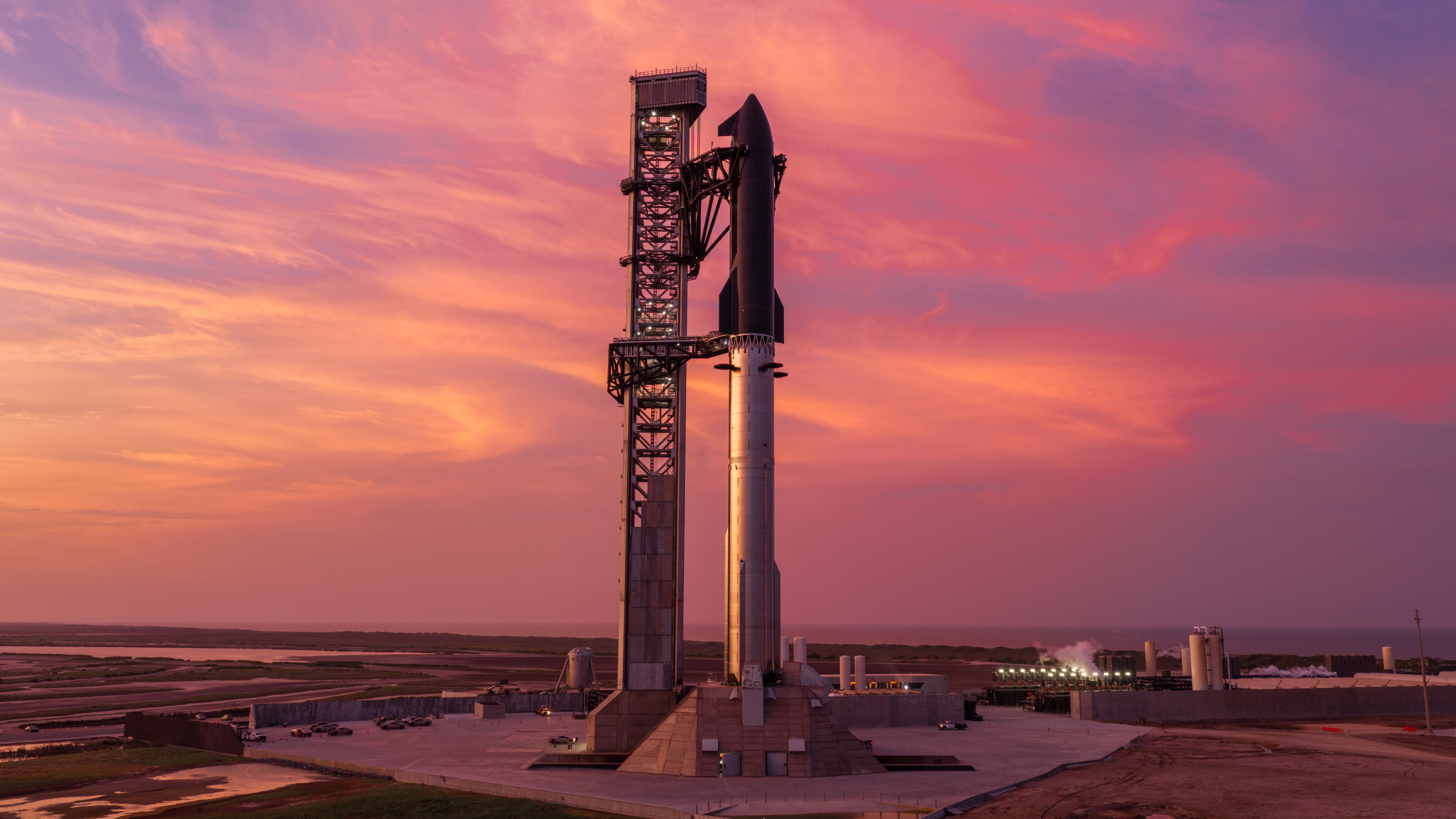
Starship | Flight 14
SpaceX | United States of AmericaSpaceX Starbase, TX, USA
TBD September, 2026
Falcon 9 Block 5 | SDA Tranche 1 Tracking Layer A
SpaceX | United States of AmericaVandenberg SFB, CA, USA
TBD September, 2026
Status: To Be Determined
Mission:
Tranche 1 Tracking Layer A is one of five missions by the United States Space Force Space Development Agency (SDA) for the Proliferated Warfighter Space Architecture (PWSA) Tranche 1 Tracking Layer constellation, which will provide global indications, warning, tracking, and targeting of advanced missile threats, including hypersonic missile systems.
Polar OrbitFalcon 9 Block 5 | SDA Tranche 1 Transport Layer F
SpaceX | United States of AmericaVandenberg SFB, CA, USA
TBD September, 2026
Status: To Be Determined
Mission:
Tranche 1 Transport Layer F is one of six missions by the United States Space Force Space Development Agency (SDA) for the Proliferated Warfighter Space Architecture (PWSA) Tranche 1 Transport Layer constellation, which will provide assured, resilient, low-latency military data and connectivity worldwide to the full range of warfighter platforms from Low Earth Orbit satellites. The constellation will be interconnected with Optical Inter-Satellite Links (OISLs) which have significantly increased performance over existing radio frequency crosslinks. It is expected to operate over Ka band, have stereo coverage and be dynamically networked for simpler hand-offs, greater bandwidth and fault tolerance.
Polar OrbitFalcon 9 Block 5 | SDA Tranche 1 Tracking Layer E
SpaceX | United States of AmericaVandenberg SFB, CA, USA
TBD September, 2026
Status: To Be Determined
Mission:
Tranche 1 Tracking Layer E is one of five missions by the United States Space Force Space Development Agency (SDA) for the Proliferated Warfighter Space Architecture (PWSA) Tranche 1 Tracking Layer constellation, which will provide global indications, warning, tracking, and targeting of advanced missile threats, including hypersonic missile systems.
Polar OrbitFalcon 9 Block 5 | Transporter 18 (Dedicated SSO Rideshare)
SpaceX | United States of AmericaVandenberg SFB, CA, USA
TBD October, 2026
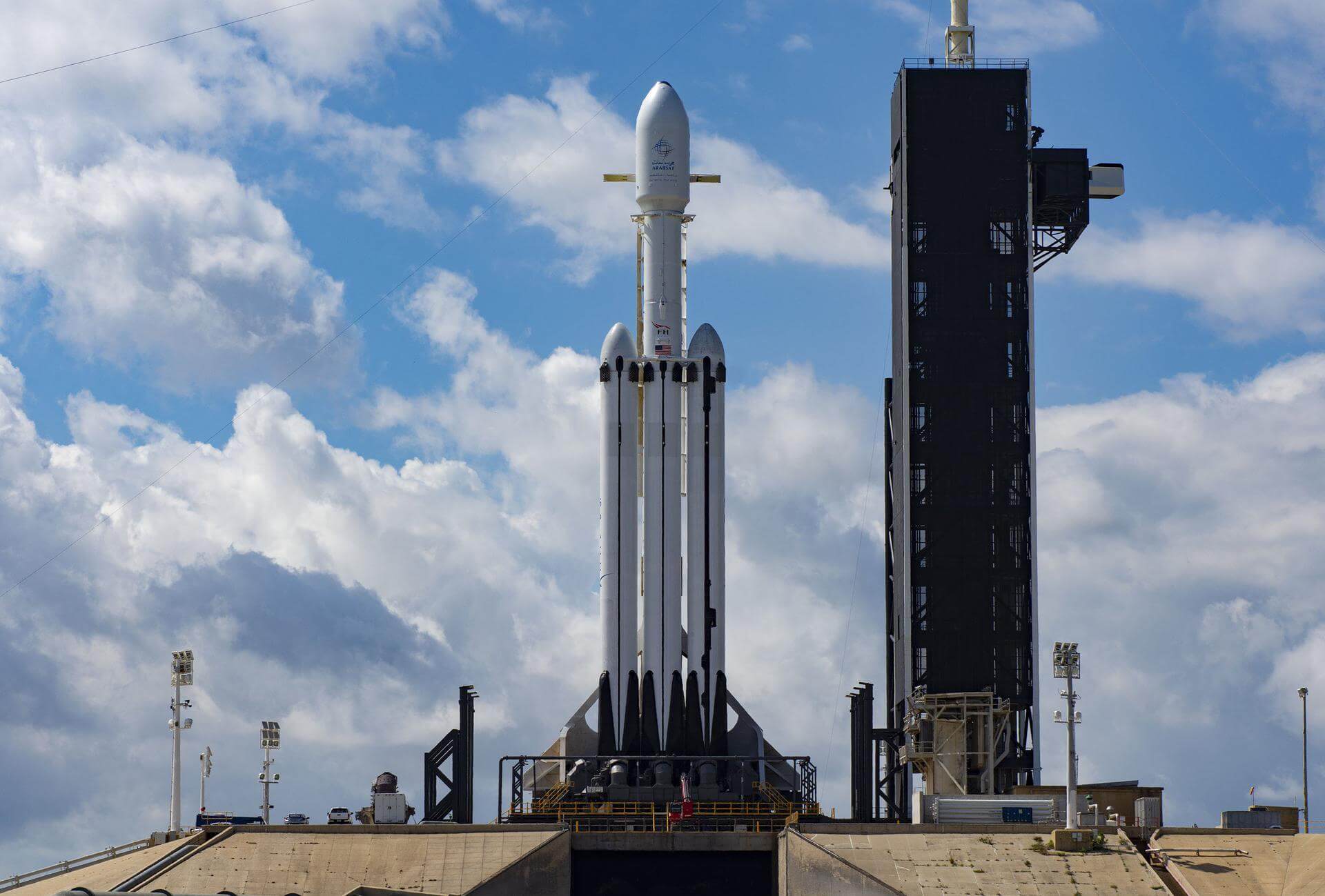
Falcon Heavy | Griffin Mission One
SpaceX | United States of AmericaKennedy Space Center, FL, USA
TBD November, 2026
Status: To Be Determined
Mission:
Demonstration flight of the Astrobotic Griffin lander and its engines, initially contracted for the cancelled NASA VIPER (Volatiles Investigating Polar Exploration Rover) mission. The vacated payload spot will now host the FLIP (FLEX Lunar Innovation Platform) lunar rover from Astrolab.
Lunar Orbit Unknown FH - Maiden Flight Unknown Unknown FH - Maiden Flight Unknown Unknown FH - Maiden Flight UnknownFalcon 9 Block 5 | Rivada 1
SpaceX | United States of AmericaVandenberg SFB, CA, USA
TBD December, 2026
Falcon 9 Block 5 | Telesat Lightspeed 3
SpaceX | United States of AmericaCape Canaveral SFS, FL, USA
TBD December, 2026
Falcon 9 Block 5 | Nova-C IM-3
SpaceX | United States of AmericaCape Canaveral SFS, FL, USA
TBD December, 2026
Status: To Be Determined
Mission:
This is the third mission to the Moon for Intuitive Machines with its Nova-C lunar lander. It is to deliver 130 kg of payloads to the lunar surface. This mission also includes a rideshare possibility due to available excess capacity on the launch vehicle.
Lunar OrbitElectron
The Grain Goddess Provides (iQPS Launch 7)
Rocket Lab Launch Complex 1A - Rocket Lab Launch Complex 1, Mahia Peninsula, New ZealandSynthetic aperture radar Earth observation satellite for Japanese Earth imaging company iQPS.
Falcon 9
BlueBird 11-13 (Block 2 #6-8)
Space Launch Complex 40 - Cape Canaveral SFS, FL, USAAST SpaceMobile’s Block 2 BlueBird satellites are designed to deliver up to 10 times the bandwidth capacity of the BlueBird Block 1 satellites, requi…
Smart Dragon 3
OSE HS-01 & 02
Haiyang offshore launch location - Haiyang Oriental Spaceport2 hyper-spectral Earth observation satellites from Chinese company STAR.VISION. Both satellites are built in corporation with foreign customers: *…
Falcon 9
Starlink Group 17-53
Space Launch Complex 4E - Vandenberg SFB, CA, USAA batch of 24 satellites for the Starlink mega-constellation - SpaceX's project for space-based Internet communication system.
Long March 8A
SatNet LEO Group 23
Commercial LC-1 - Wenchang Space Launch Site, People's Republic of ChinaA batch of 9 Low Earth Orbit communication satellites for the Chinese state owned SatNet constellation operated by the China Satellite Network Group.…
Falcon 9
Starlink Group 17-52
Space Launch Complex 4E - Vandenberg SFB, CA, USAA batch of 24 satellites for the Starlink mega-constellation - SpaceX's project for space-based Internet communication system.
Falcon 9
NROL-95
Space Launch Complex 40 - Cape Canaveral SFS, FL, USAClassified payload for the US National Reconnaissance Office.
Long March 6A
TJSW-27A & B
Launch Complex 9A - Taiyuan Satellite Launch Center, People's Republic of China2 Chinese classified satellites claimed to be for communication technology test purposes. Actual mission not known.
Long March 7A
Tianlian 3-01
201 - Wenchang Space Launch Site, People's Republic of ChinaTianlian is a Chinese data tracking and relay communications geostationary satellite series. The TL-3 (Tian Lian 3) satellites are the 3rd generation…
Falcon 9
Starlink Group 17-51
Space Launch Complex 4E - Vandenberg SFB, CA, USAA batch of 24 satellites for the Starlink mega-constellation - SpaceX's project for space-based Internet communication system.

