New Glenn | EscaPADE
Launch Successful
L - -- : -- : -- : --
Launch Window
Nov. 13, 2025, 7:57 p.m. - Nov. 13, 2025, 9:25 p.m.


Nov. 13, 2025, 7:57 p.m. - Nov. 13, 2025, 9:25 p.m.
Second flight of Blue Origin's New Glenn launch vehicle carrying the Escape and Plasma Acceleration and Dynamics Explorers (EscaPADE), a dual-spacecraft mission from University of California, Berkeley to study ion and sputtered escape from Mars. The spacecrafts' scientific goals are to understand the processes controlling the structure of Mars' hybrid magnetosphere and how it guides ion flows; understand how energy and momentum are transported from the solar wind through Mars' magnetosphere; and understand the processes controlling the flow of energy and matter into and out of the collisional atmosphere.
Launch trajectory and telemetry simulations provided by Flight Club - a rocket launch simulator and orbital trajectory visualiser for all things space!

All payloads in operation.
Spacecraft separation confirmed.
Liftoff.
New T-0.
Hold at T-17 minutes.
The New Glenn is a privately funded orbital launch vehicle in development by Blue Origin. New Glenn is described as a 7-meter-diameter (23 ft), two- or three-stage rocket.
See DetailsNew Glenn booster GS1-SN002 has landed on Jacklyn after its first flight.
Result: Successful Autonomous Spaceport Drone Ship landing at Jacklyn.Blue Origin is an American privately funded aerospace manufacturer and spaceflight services company set up by Amazon.com founder Jeff Bezos with its headquarters in Kent, Washington. The company is developing technologies to enable private human access to space with the goal to dramatically lower costs and increase reliability. Blue Origin currently launches its New Shepard sub-orbital vehicle from its West Texas launch site, they are currently constructing a launch pad for their orbital vehicle New Glenn at Cape Canaveral LC-36.
INFO WIKI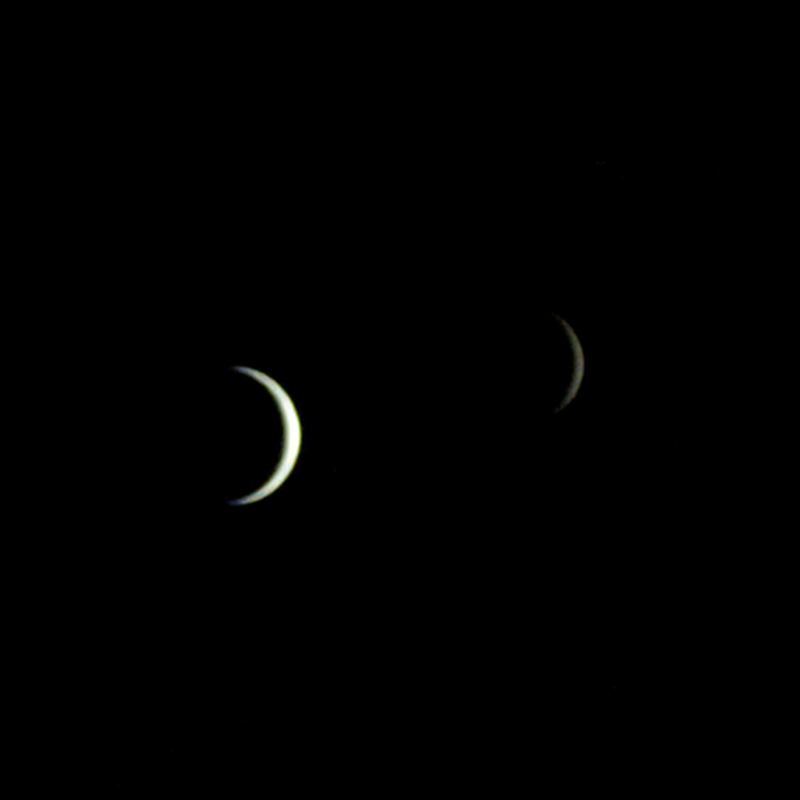
On July 3, one of NASA’s two Mars-destined ESCAPADE (Escape and Plasma Acceleration and Dynamics Explorers) spacecraft captured photos of Earth and the Moon in visible and thermal infrared light. At the time, the spacecraft was 363,250 mil…
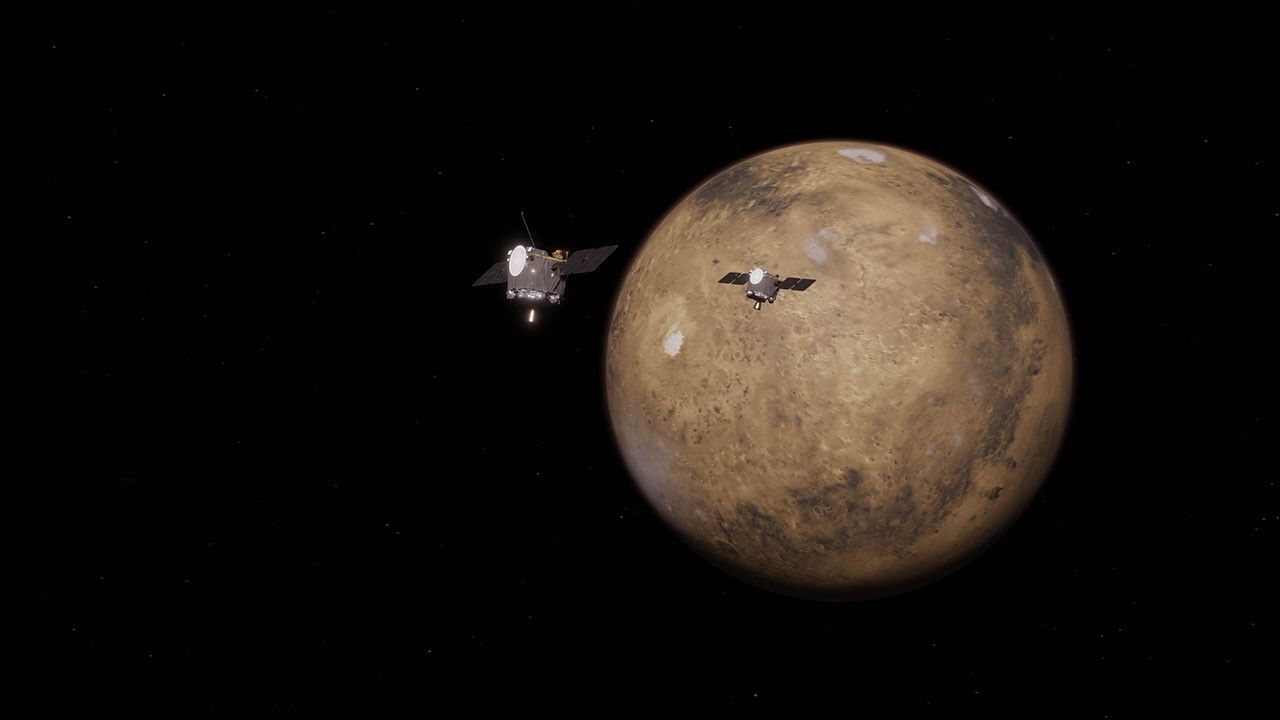
Mars is not what it used to be. Once warm, watery, and blanketed by a thick atmosphere, today the Red Planet is cold, dry, and draped by a thin atmospheric veil. The main culprit is a relentless stream of particles from the Sun, known as t…

Washington DC (SPX) Jan 07, 2026 NASA's twin ESCAPADE spacecraft are back on a fully synchronized path to Mars after mission controllers successfully carried out a critical trajectory correction maneuver for the second probe on Jan. 6…
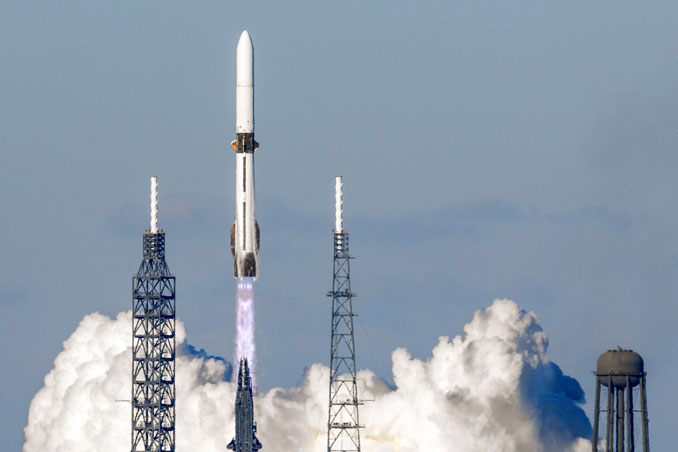
The launch company owned by billionaire Jeff Bezos launched two successful missions in 2025, including landing its first booster on its landing barge.

Washington DC (SPX) Nov 26, 2025 About a week after liftoff, the twin spacecraft of NASA's ESCAPADE mission returned their first images as they journey away from Earth. On November 21, one of the two spacecraft used its Visible and In…
Synthetic aperture radar Earth observation satellite for Japanese Earth imaging company iQPS.
AST SpaceMobile’s Block 2 BlueBird satellites are designed to deliver up to 10 times the bandwidth capacity of the BlueBird Block 1 satellites, requi…
2 hyper-spectral Earth observation satellites from Chinese company STAR.VISION. Both satellites are built in corporation with foreign customers: *…
A batch of 24 satellites for the Starlink mega-constellation - SpaceX's project for space-based Internet communication system.
A batch of 9 Low Earth Orbit communication satellites for the Chinese state owned SatNet constellation operated by the China Satellite Network Group.…
A batch of 24 satellites for the Starlink mega-constellation - SpaceX's project for space-based Internet communication system.
Classified payload for the US National Reconnaissance Office.
2 Chinese classified satellites claimed to be for communication technology test purposes. Actual mission not known.
Tianlian is a Chinese data tracking and relay communications geostationary satellite series. The TL-3 (Tian Lian 3) satellites are the 3rd generation…
A batch of 24 satellites for the Starlink mega-constellation - SpaceX's project for space-based Internet communication system.


 View in Flightclub