Long March 7 | Tianzhou-3
Launch Successful
L - -- : -- : -- : --
Launch Window
Sept. 20, 2021, 7 a.m. - Sept. 20, 2021, 7:20 a.m.


Sept. 20, 2021, 7 a.m. - Sept. 20, 2021, 7:20 a.m.
Second cargo delivery mission to the Chinese large modular space station.

Launch success.
Launch window refinement,
Confirmed launch time via marine space closure notices.
The Long March 7 is a Chinese liquid-fuelled launch vehicle of the Long March family, developed by the China Aerospace Science and Technology Corporation (CAST). It made its inaugural flight on 25 June 2016 and is used to launch Tianzhou resupply spacecraft to the Chinese Space Station.
Third operational Tianzhou spacecraft
Tianzhou DetailsThe China Aerospace Science and Technology Corporation (CASC) is the main contractor for the Chinese space program. It is state-owned and has a number of subordinate entities which design, develop and manufacture a range of spacecraft, launch vehicles, strategic and tactical missile systems, and ground equipment. It was officially established in July 1999 as part of a Chinese government reform drive, having previously been one part of the former China Aerospace Corporation. Various incarnations of the program date back to 1956.
INFO WIKI
An unpiloted Chinese cargo ship launched and docked with the Tiangong space station Monday, delivering supplies to support the next three-person crew on the complex for six months after their arrival next month.
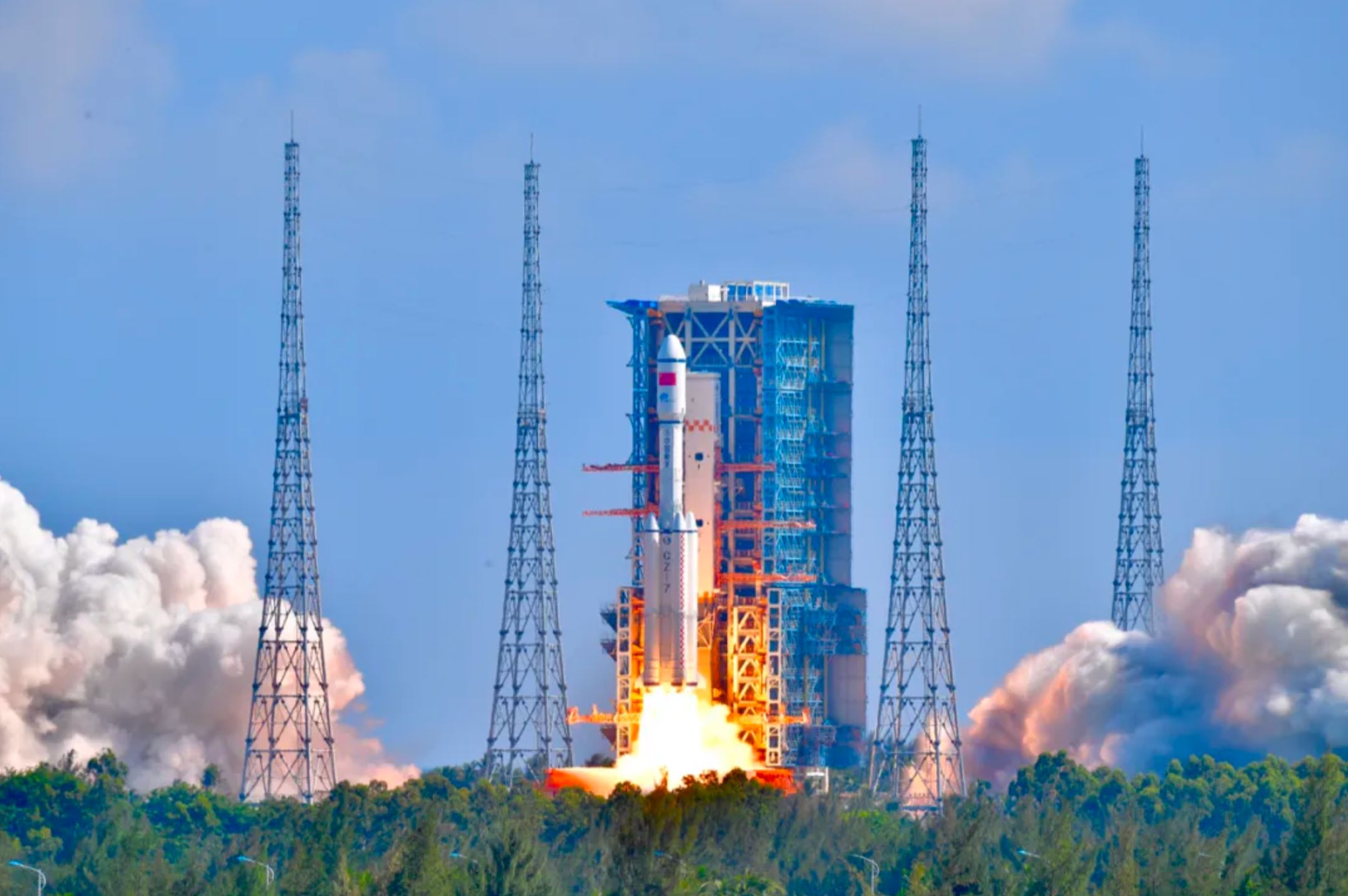
China's Tianzhou-3 cargo spacecraft docked in orbit with the Tianhe space station module Monday following launch from the coastal Wenchang launch center.

China successfully launched a Long March 7 from the Wenchang Satellite Launch Center at 07:10 UTC (3:10 PM Beijing time), beginning its journey to the Chinese Space Station. The spacecraft then docked to the station just under seven hours …
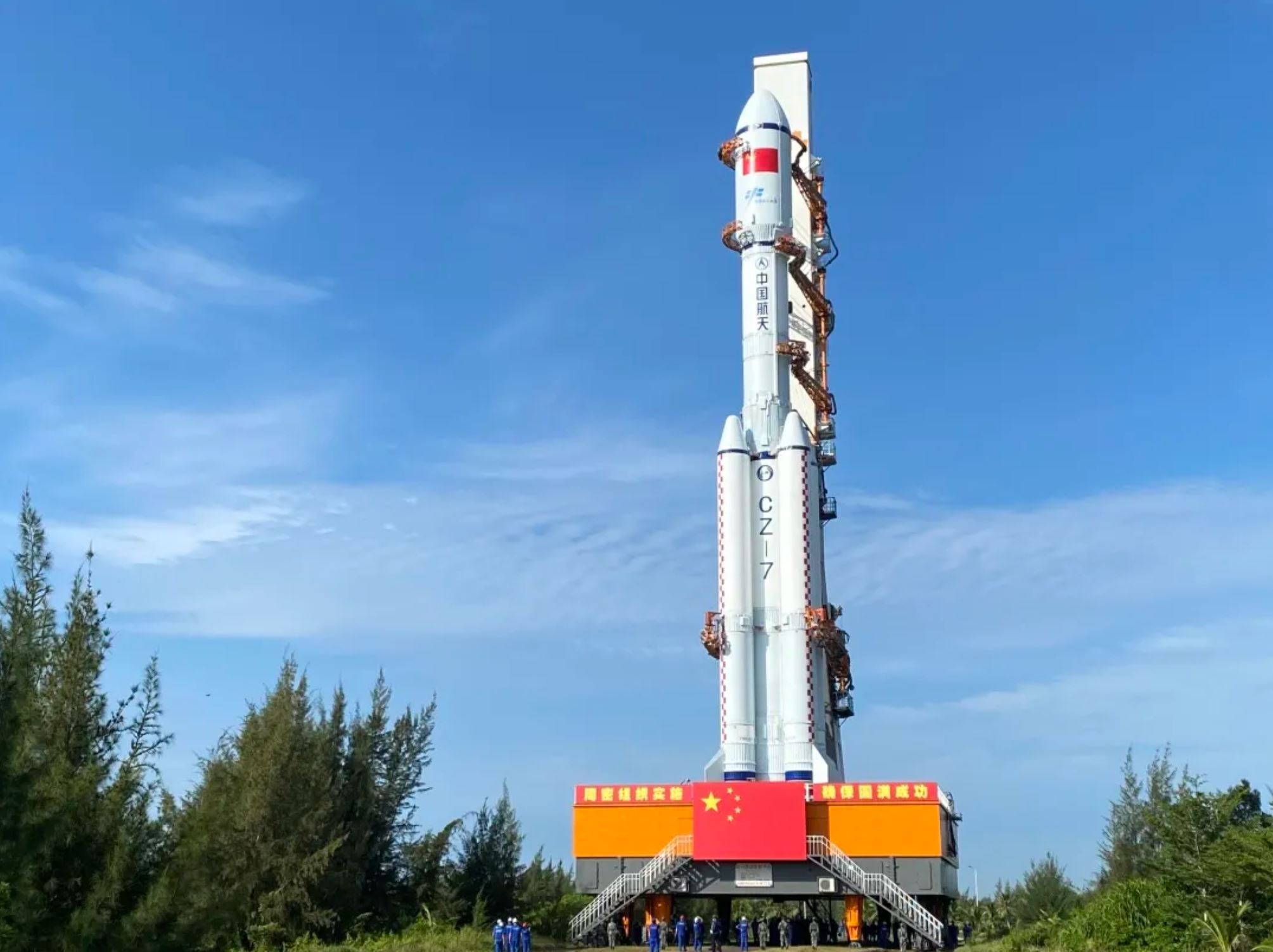
China is preparing to launch its second space station cargo mission just as its Shenzhou-12 astronauts are set to return to Earth.
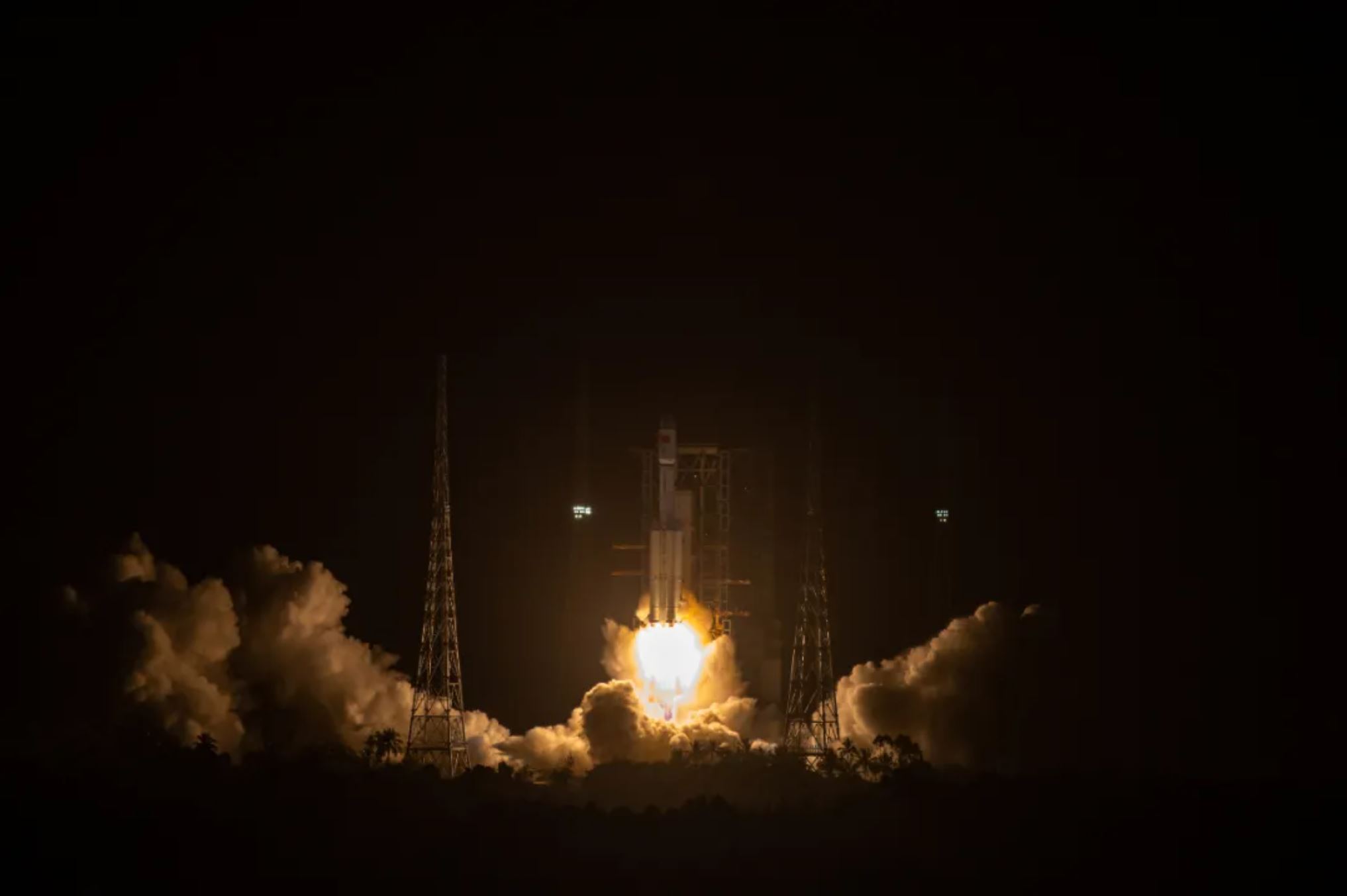
China is preparing to launch its Tianzhou-3 space station cargo supply mission in mid to late September following delivery of a Long March 7 rocket to Wenchang spaceport.
A batch of 24 satellites for the Starlink mega-constellation - SpaceX's project for space-based Internet communication system.
Synthetic aperture radar Earth observation satellite for Japanese Earth imaging company iQPS.
AST SpaceMobile’s Block 2 BlueBird satellites are designed to deliver up to 10 times the bandwidth capacity of the BlueBird Block 1 satellites, requi…
2 hyper-spectral Earth observation satellites from Chinese company STAR.VISION. Both satellites are built in corporation with foreign customers: *…
A batch of 24 satellites for the Starlink mega-constellation - SpaceX's project for space-based Internet communication system.
A batch of 9 Low Earth Orbit communication satellites for the Chinese state owned SatNet constellation operated by the China Satellite Network Group.…
A batch of 24 satellites for the Starlink mega-constellation - SpaceX's project for space-based Internet communication system.
Classified payload for the US National Reconnaissance Office.
2 Chinese classified satellites claimed to be for communication technology test purposes. Actual mission not known.
Tianlian is a Chinese data tracking and relay communications geostationary satellite series. The TL-3 (Tian Lian 3) satellites are the 3rd generation…

