Long March 6A | Demo Flight (Pujiang-2 & Tiankun-2)
Launch Successful
L - -- : -- : -- : --
Launch Window
March 29, 2022, 9:42 a.m. - March 29, 2022, 10:20 a.m.


March 29, 2022, 9:42 a.m. - March 29, 2022, 10:20 a.m.
First launch of the Long March 6A rocket. Pujiang 2 is a Chinese technology demonstration satellite. Tiankun-2 is a satellite developed by CASIC, which is a technology demonstration mission to test out their new small satellite bus.

Launch successful
Updated per official photos that launch may be of the 1st LM-6A, however launch vehicle identity is still uncertain.
Added launch per NOTAMs; Payload and launch vehicle identity not known.
The Long March 6A is a Chinese launch vehicle of the Long March family, which was developed by the China Aerospace Science and Technology Corporation (CASC) and the Shanghai Academy of Spaceflight Technology (SAST). The vehicle is a further development of the Long March 6, with 2 YF-100 engines on the first stage as opposed to 1 on the Long March 6, augmented by 4 solid rocket boosters. The Long March 6A is China's first rocket with solid rocket boosters. The maiden launch of the Long March 6A took place 29 March 2022, successfully reaching orbit. It was also the first launch from the newly built launch complex 9A in Taiyuan.
The China Aerospace Science and Technology Corporation (CASC) is the main contractor for the Chinese space program. It is state-owned and has a number of subordinate entities which design, develop and manufacture a range of spacecraft, launch vehicles, strategic and tactical missile systems, and ground equipment. It was officially established in July 1999 as part of a Chinese government reform drive, having previously been one part of the former China Aerospace Corporation. Various incarnations of the program date back to 1956.
INFO WIKI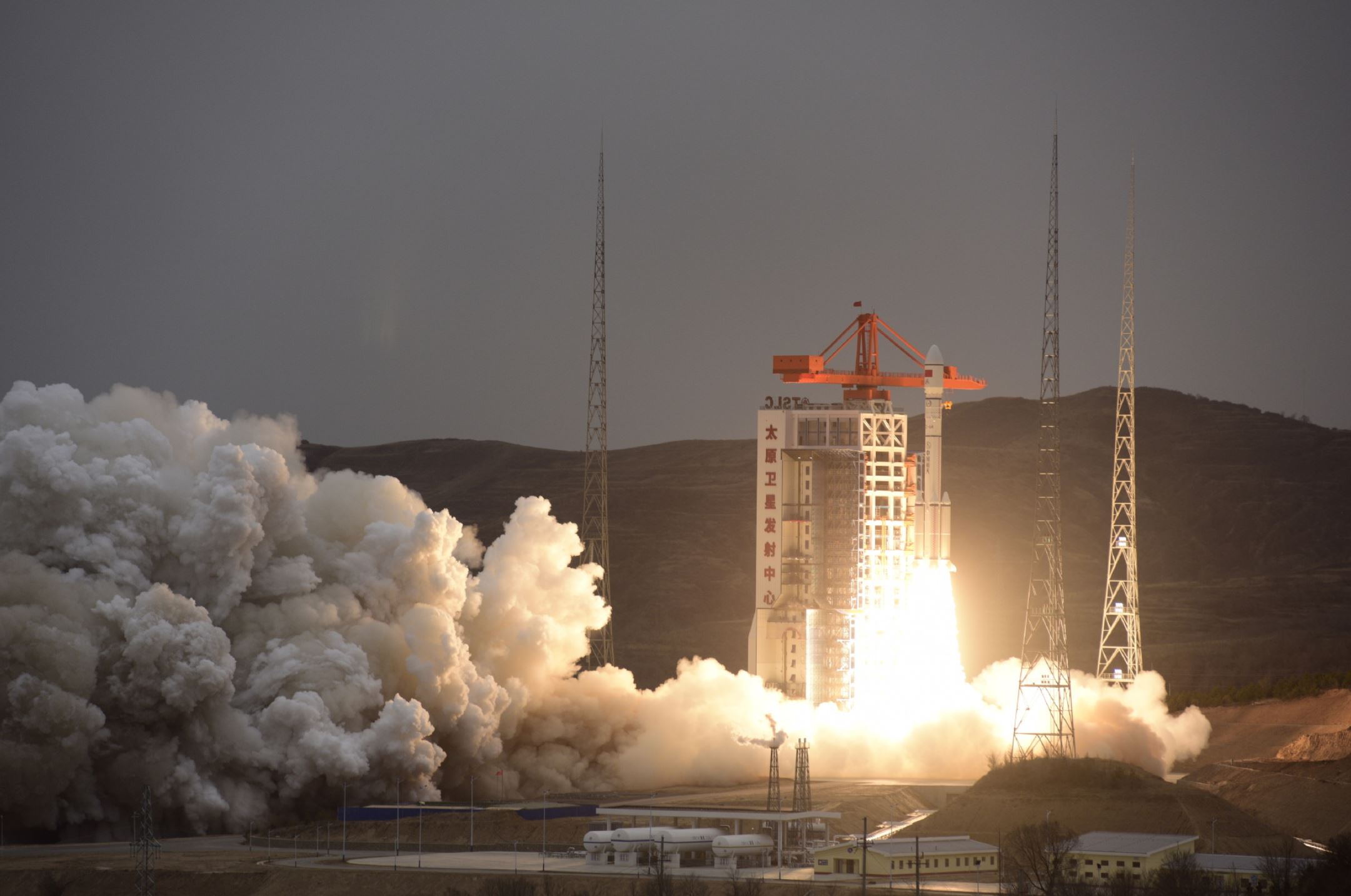
China launched its first Long March 6A from a new launch complex at Taiyuan Tuesday, successfully sending two satellites into sun-synchronous orbits.
Soyuz MS-29 will carry three cosmonauts and one astronaut to the International Space Station aboard the Soyuz spacecraft from the Baikonur Cosmodrome…
A batch of 29 satellites for the Starlink mega-constellation - SpaceX's project for space-based Internet communication system.
A batch of 27 satellites for the Starlink mega-constellation - SpaceX's project for space-based Internet communication system.
A batch of 24 satellites for the Starlink mega-constellation - SpaceX's project for space-based Internet communication system.
First launch of the Long March 10B rocket and first ever successful rocket booster recovery of a Chinese launch vehicle. Payloads on board is TBD.
A batch of 29 satellites for the Starlink mega-constellation - SpaceX's project for space-based Internet communication system.
Dedicated rideshare flight to a sun-synchronous orbit with dozens of small microsatellites and nanosatellites for commercial and government customers.
20 Low Earth Orbit communication satellites with Ku, Q and V band payloads for the G60 constellation operated by Shanghai Spacesail Technologies with…
A batch of 29 satellites for the Starlink mega-constellation - SpaceX's project for space-based Internet communication system. The Falcon 9 1st st…
18 Low Earth Orbit communication satellites with Ku, Q and V band payloads for the G60 constellation operated by Shanghai Spacesail Technologies with…