Hyperbola-1 | Unknown
Launch Failure
L - -- : -- : -- : --
Launch Window
Feb. 1, 2021, 8 a.m. - Feb. 1, 2021, 9:30 a.m.


Feb. 1, 2021, 8 a.m. - Feb. 1, 2021, 9:30 a.m.

Launch failure

Added launch.
i-Space's first orbital rocket.
See Details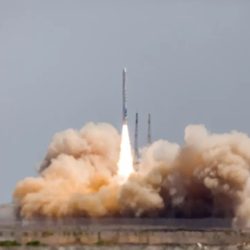
Chinese commercial launch company iSpace stated Monday that an errant piece of foam insulation caused the loss of its Hyperbola-1 rocket in February.

The second orbital launch attempt by Chinese launch company iSpace failed shortly after liftoff Feb. 1, following a successful debut flight in 2019 that made iSpace the first private firm in China to put a payload into orbit.

The Chinese private space launch company i-Space (Beijing Interstellar Glory Space Technology Ltd.) developed Hyperbola-1 (Shian Quxian-1) rocket failed in its second launch on Monday in an attempt to orbit the small Fangzhou-2 (Ark-2) sat…
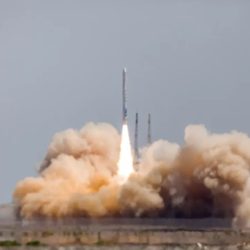
Launch of a Hyperbola-1 rocket by Chinese private firm iSpace ended in failure shortly after liftoff from Jiuquan launch center Monday.
A batch of 24 satellites for the Starlink mega-constellation - SpaceX's project for space-based Internet communication system.
Classified payload for the US National Reconnaissance Office.
2 Chinese classified satellites claimed to be for communication technology test purposes. Actual mission not known.
Tianlian is a Chinese data tracking and relay communications geostationary satellite series. The TL-3 (Tian Lian 3) satellites are the 3rd generation…
A batch of 24 satellites for the Starlink mega-constellation - SpaceX's project for space-based Internet communication system.
13th test flight of the two-stage Starship launch vehicle. Second flight of Starship V3. For the first time, Starship will carry 20 V3 Starlink sa…
Share-ride of 5 commercial Earth observation and technology demonstration satellites to SSO, including SpaceTY's TY-48. Details TBD.
Tianlian is a Chinese data tracking and relay communications geostationary satellite series. The TL 2 (Tian Lian 2) satellites represent the second g…
Carried 9 satellites on a share-ride to sun-synchronous orbit. Details TBD.
The Northrop Grumman/SpaceLogistics MRV-1 is a mission extension payload including a mission robotic vehicle (MRV) and multiple mission extension pod…