Electron | Without Mission A Beat (BlackSky 16-17)
Launch Successful
L - -- : -- : -- : --
Instantaneous launch window.
Launch Window
April 2, 2022, 12:41 p.m. - April 2, 2022, 12:41 p.m.


Instantaneous launch window.
April 2, 2022, 12:41 p.m. - April 2, 2022, 12:41 p.m.
Payload consists of two BlackSky Gen-2 high-resolution multi-spectral Earth observation satellites.
Launch trajectory and telemetry simulations provided by Flight Club - a rocket launch simulator and orbital trajectory visualiser for all things space!

Successful launch
Liftoff
Webcast live

New T-0
Adjusted T-0.
Electron is a two-stage orbital expendable launch vehicle (with an optional third stage) developed by the American aerospace company Rocket Lab. Electron is a small-lift launch vehicle designed to launch small satellites and cubesats to sun-synchronous orbit and low earth orbit. The Electron is the first orbital class rocket to use electric-pump-fed engines, powered by the 9 Rutherford engines on the first stage. It is also used as a suborbital testbed (called HASTE) for hypersonics research.
See DetailsExpended during its first flight.
Core will be expended.Rocket Lab is an American aerospace manufacturer with a wholly owned New Zealand subsidiary. The company develops lightweight, cost-effective commercial rocket launch services. The Electron Program was founded on the premise that small payloads such as CubeSats require dedicated small launch vehicles and flexibility not currently offered by traditional rocket systems. Its rocket, the Electron, is a light-weight rocket and is now operating commercially. The company is also producing a variety of spacecrafts and spacecrafts components.
INFO WIKI
Rocket Lab has launched two satellites for BlackSky on the 25th flight of its Electron rocket. The mission lifted off from Launch Complex-1A (LC-1A) at Rocket Lab’s launch site on the Mahia peninsula in New Zealand at 12:41 UTC on Saturday…
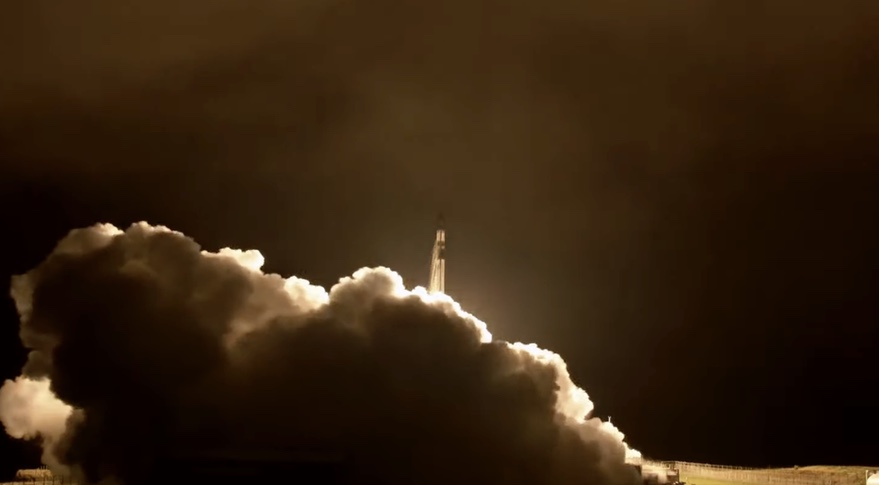
A Rocket Lab Electron launched another pair of imaging satellites for BlackSky April 2 as the company gears up to attempt recovery of the rocket’s first stage.

Two microsatellites for BlackSky launched Saturday from New Zealand, riding a Rocket Lab launch vehicle into orbit to join a fleet of commercial eyes supplying imagery to military and civilian users.
Soyuz MS-29 will carry three cosmonauts and one astronaut to the International Space Station aboard the Soyuz spacecraft from the Baikonur Cosmodrome…
A batch of 29 satellites for the Starlink mega-constellation - SpaceX's project for space-based Internet communication system.
A batch of 27 satellites for the Starlink mega-constellation - SpaceX's project for space-based Internet communication system.
A batch of 24 satellites for the Starlink mega-constellation - SpaceX's project for space-based Internet communication system.
First launch of the Long March 10B rocket and first ever successful rocket booster recovery of a Chinese launch vehicle. Payloads on board is TBD.
A batch of 29 satellites for the Starlink mega-constellation - SpaceX's project for space-based Internet communication system.
Dedicated rideshare flight to a sun-synchronous orbit with dozens of small microsatellites and nanosatellites for commercial and government customers.
20 Low Earth Orbit communication satellites with Ku, Q and V band payloads for the G60 constellation operated by Shanghai Spacesail Technologies with…
A batch of 29 satellites for the Starlink mega-constellation - SpaceX's project for space-based Internet communication system. The Falcon 9 1st st…
18 Low Earth Orbit communication satellites with Ku, Q and V band payloads for the G60 constellation operated by Shanghai Spacesail Technologies with…


 View in Flightclub