Electron | Owl New World (StriX Launch 7)
Launch Successful
L - -- : -- : -- : --
Instantaneous launch window.
Launch Window
Oct. 14, 2025, 4:33 p.m. - Oct. 14, 2025, 4:33 p.m.


Instantaneous launch window.
Oct. 14, 2025, 4:33 p.m. - Oct. 14, 2025, 4:33 p.m.
Synthetic aperture radar satellite for Japanese Earth imaging company Synspective.

Launch success.
Spacecraft separation.
Liftoff.

Official Webcast by Rocket Lab has started
New T-0.
Electron is a two-stage orbital expendable launch vehicle (with an optional third stage) developed by the American aerospace company Rocket Lab. Electron is a small-lift launch vehicle designed to launch small satellites and cubesats to sun-synchronous orbit and low earth orbit. The Electron is the first orbital class rocket to use electric-pump-fed engines, powered by the 9 Rutherford engines on the first stage. It is also used as a suborbital testbed (called HASTE) for hypersonics research.
See DetailsRocket Lab is an American aerospace manufacturer with a wholly owned New Zealand subsidiary. The company develops lightweight, cost-effective commercial rocket launch services. The Electron Program was founded on the premise that small payloads such as CubeSats require dedicated small launch vehicles and flexibility not currently offered by traditional rocket systems. Its rocket, the Electron, is a light-weight rocket and is now operating commercially. The company is also producing a variety of spacecrafts and spacecrafts components.
INFO WIKI
Following the successful flight of Starship Flight 11 on Monday, SpaceX is set to continue… The post Launch Roundup: Falcon 9 to launch six missions in one week appeared first on NASASpaceFlight.com.
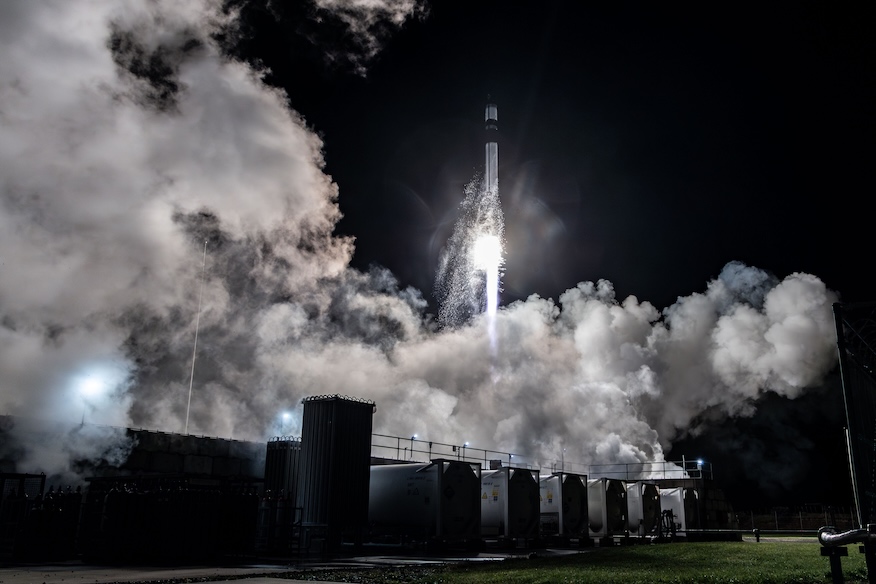
The ‘Owl New World’ mission was the 13th orbital Electron launch of 2025. The synthetic aperture radar satellite was deployed into a circular low Earth orbit roughly 50 minutes after liftoff from Mahia, New Zealand.

Rocket Lab launched a spacecraft for one Japanese radar imaging company Oct. 14, just days after signing a contract for additional launches for another. The post Rocket Lab launches seventh Synspective radar imaging satellite appeared fir…
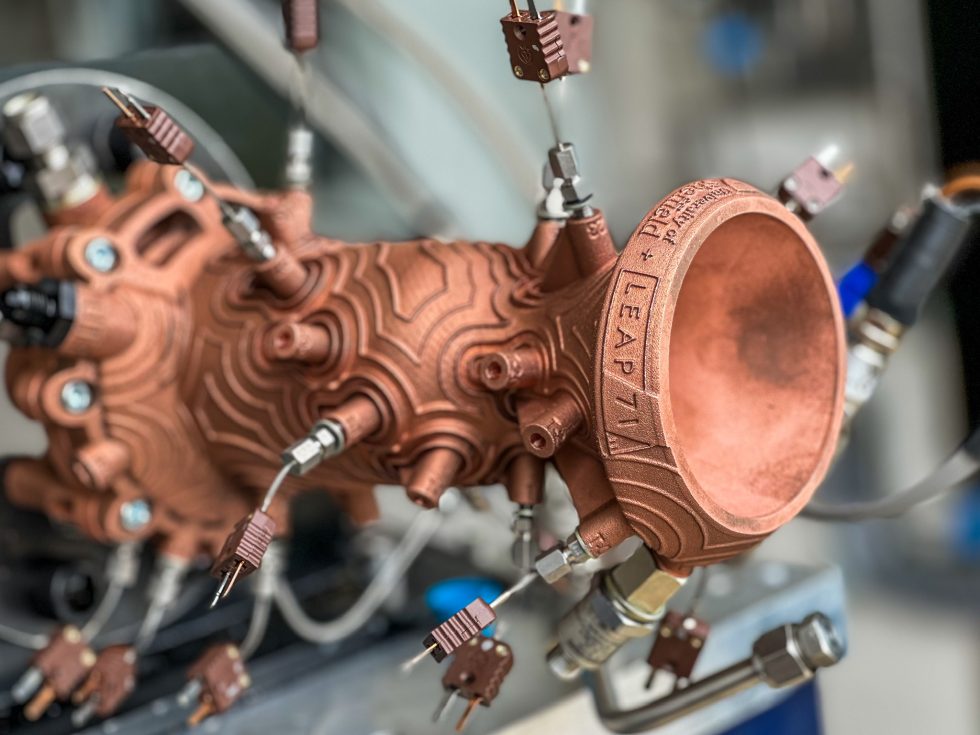
"Most rocket startups are still stuck in the long process of reengineering."

Synspective Signs Contract with Rocket Lab for 10 Electron Launches
A batch of 29 satellites for the Starlink mega-constellation - SpaceX's project for space-based Internet communication system.
Dedicated rideshare flight to a sun-synchronous orbit with dozens of small microsatellites and nanosatellites for commercial and government customers.
First test launch and mission of CAS Space’s Kinetica-2 rocket, with 3 spacecraft on board: * New March 02 (Qingzhou space station cargo resupply …
The European Space Agency (ESA)'s LEO-PNT (Low Earth Orbit Positioning, Navigation and Timing) demonstrator mission will feature a 10-satellite const…
Chinese satellite reported to be for "space environment research" purposes. Actual usage not known.
A batch of 25 satellites for the Starlink mega-constellation - SpaceX's project for space-based Internet communication system.
Commercial Synthetic-aperture radar Earth observation satellites built by CAST for China Siwei Survey and Mapping Technology Co. Ltd.
Note: Payload identities uncertain. Batch of 16 Rassvet-3 Low Earth Orbit communication satellites for the Russian Byuro-1440 (Bureau 1440) conste…
Chinese commercial small satellites by Beijing-based company Future Navigation for providing GNSS augmentation signals services from LEO. They are pa…
A batch of 29 satellites for the Starlink mega-constellation - SpaceX's project for space-based Internet communication system.