Electron | Love At First Insight (BlackSky 10-11)
Launch Successful
L - -- : -- : -- : --
Launch Window
Nov. 18, 2021, 1:20 a.m. - Nov. 18, 2021, 3:30 a.m.


Nov. 18, 2021, 1:20 a.m. - Nov. 18, 2021, 3:30 a.m.

Scheduled to lift-off from Launch Complex 1 on New Zealand’s Mahia Peninsula in late August, the ‘Love At First Insight’ mission will be Rocket Lab’s 22nd Electron launch overall and fifth mission of 2021. ‘Love At First Insight’ is the first in a rapid succession of scheduled Electron launches betw...
Payload consists of two BlackSky Gen-2 high-resolution multi-spectral Earth observation satellites.

Payload successfully deployed via rocket lab twitter.

Adjusting T-0 and setting GO

Delayed once again due to weather.
Launch delayed due to weather.

Launch scrubbed due to an out-of-family ground sensor reading and to allow more time to complete helicopter recovery preparations. Launch window for November 16 can be found in mission kit.
Electron is a two-stage orbital expendable launch vehicle (with an optional third stage) developed by the American aerospace company Rocket Lab. Electron is a small-lift launch vehicle designed to launch small satellites and cubesats to sun-synchronous orbit and low earth orbit. The Electron is the first orbital class rocket to use electric-pump-fed engines, powered by the 9 Rutherford engines on the first stage. It is also used as a suborbital testbed (called HASTE) for hypersonics research.
See DetailsElectron's first stage splashed down in the pacific ocean following main chute deployment.
Result: Successful Parachute Landing landing at South Pacific.Rocket Lab is an American aerospace manufacturer with a wholly owned New Zealand subsidiary. The company develops lightweight, cost-effective commercial rocket launch services. The Electron Program was founded on the premise that small payloads such as CubeSats require dedicated small launch vehicles and flexibility not currently offered by traditional rocket systems. Its rocket, the Electron, is a light-weight rocket and is now operating commercially. The company is also producing a variety of spacecrafts and spacecrafts components.
INFO WIKI
Rocket Lab launched two small BlackSky optical Earth-imaging satellites Wednesday from New Zealand, the first of three straight Electron rocket flights for the U.S. remote sensing company. Teams retrieved the launch vehicle’s first stage b…
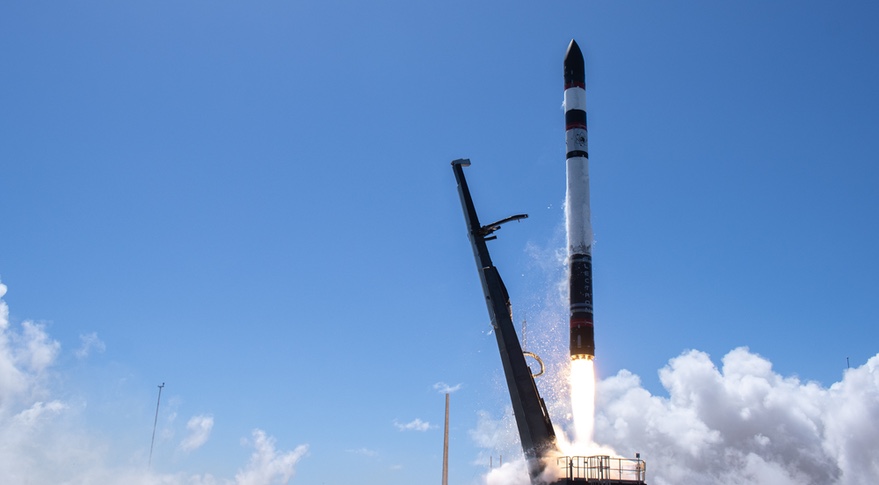
Rocket Lab’s Electron rocket placed two BlackSky imaging satellites into orbit Nov. 17 on the rocket’s first launch in three and a half months.

Following a hiatus of several months, Rocket Lab is preparing to return to launch operations with its 22nd overall mission on Thursday. An Electron rocket will lift off from the company’s Launch Complex 1 in Mahia, New Zealand at 04:25 UTC…
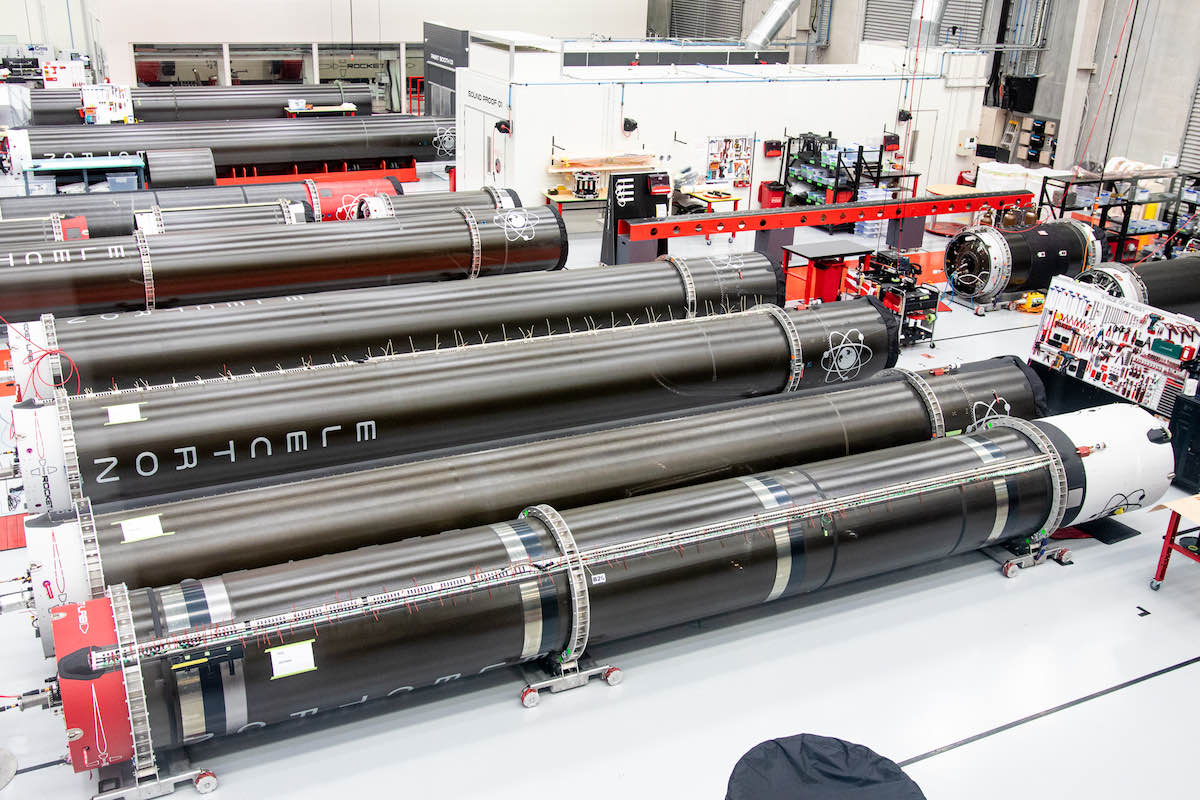
Rocket Lab said this week that its next mission, set for launch Nov. 11 after delays caused by a coronavirus lockdown in New Zealand, will include the company’s third booster recovery experiment. For the first time, Rocket Lab plans to hav…
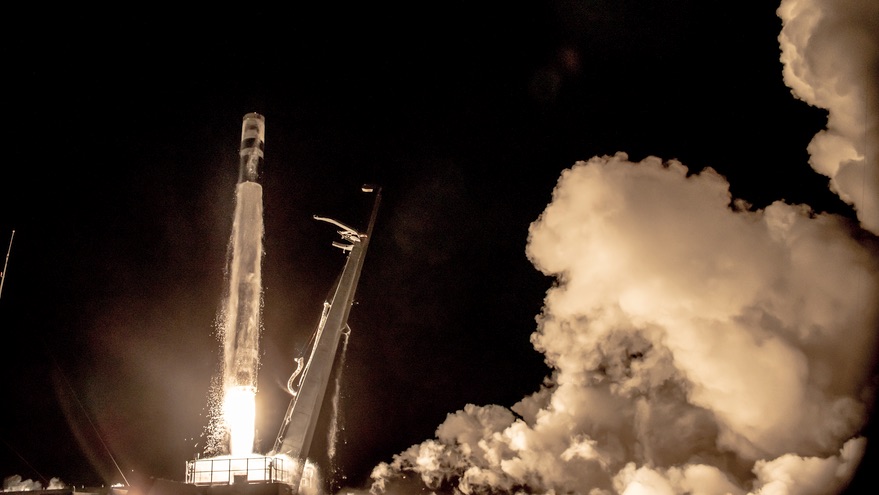
Rocket Lab says lockdowns in New Zealand caused by the latest surge of the coronavirus pandemic will postpone launches to at least October and cut its projected revenues for the year.
A batch of 24 satellites for the Starlink mega-constellation - SpaceX's project for space-based Internet communication system.
Classified payload for the US National Reconnaissance Office.
2 Chinese classified satellites claimed to be for communication technology test purposes. Actual mission not known.
Tianlian is a Chinese data tracking and relay communications geostationary satellite series. The TL-3 (Tian Lian 3) satellites are the 3rd generation…
A batch of 24 satellites for the Starlink mega-constellation - SpaceX's project for space-based Internet communication system.
13th test flight of the two-stage Starship launch vehicle. Second flight of Starship V3. For the first time, Starship will carry 20 V3 Starlink sa…
Share-ride of 5 commercial Earth observation and technology demonstration satellites to SSO, including SpaceTY's TY-48. Details TBD.
Tianlian is a Chinese data tracking and relay communications geostationary satellite series. The TL 2 (Tian Lian 2) satellites represent the second g…
Carried 9 satellites on a share-ride to sun-synchronous orbit. Details TBD.
The Northrop Grumman/SpaceLogistics MRV-1 is a mission extension payload including a mission robotic vehicle (MRV) and multiple mission extension pod…
