Electron | Baby Come Back (Rideshare)
Launch Successful
L - -- : -- : -- : --
Launch Window
July 17, 2023, 11:30 p.m. - July 18, 2023, 1:30 a.m.


July 17, 2023, 11:30 p.m. - July 18, 2023, 1:30 a.m.
The "Baby Come Back" mission includes NASA's Starling project, which consists of four CubeSats designed to test technologies for future swarm missions. Telesat contributes the LEO 3 demonstration satellite, ensuring continuity for customers and ecosystem vendor testing. Additionally, two 3U satellites carrying GNSS-RO payloads from SpinGlobal will replenish their constellation of over 100 multipurpose satellites.
Mission success confirmed
Liftoff

Livestream has started
Updating T-0
Delayed due to weather
Electron is a two-stage orbital expendable launch vehicle (with an optional third stage) developed by the American aerospace company Rocket Lab. Electron is a small-lift launch vehicle designed to launch small satellites and cubesats to sun-synchronous orbit and low earth orbit. The Electron is the first orbital class rocket to use electric-pump-fed engines, powered by the 9 Rutherford engines on the first stage. It is also used as a suborbital testbed (called HASTE) for hypersonics research.
See DetailsRocket Lab has successfully recovered the Electron booster after a soft parachute splashdown in the Pacific Ocean.
Result: Successful Parachute Landing landing at Pacific Ocean.Rocket Lab is an American aerospace manufacturer with a wholly owned New Zealand subsidiary. The company develops lightweight, cost-effective commercial rocket launch services. The Electron Program was founded on the premise that small payloads such as CubeSats require dedicated small launch vehicles and flexibility not currently offered by traditional rocket systems. Its rocket, the Electron, is a light-weight rocket and is now operating commercially. The company is also producing a variety of spacecrafts and spacecrafts components.
INFO WIKI
NASA is expanding testing of distributed autonomy for its first satellite swarm, Starling. The post NASA boosts science objectives for Starling swarm appeared first on SpaceNews.
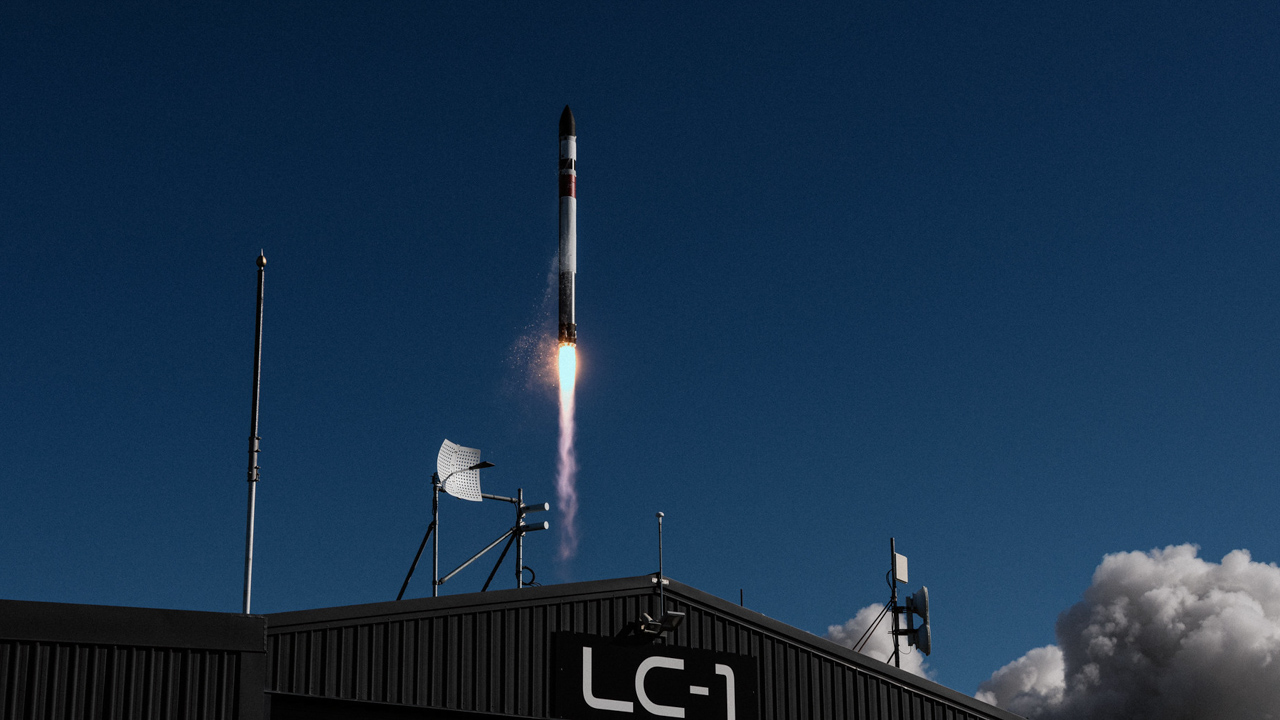
The ‘Baby Come Back’ mission successfully lifted off from Launch Complex 1B on the Mahia Peninsula in New Zealand at 01:27 UTC,...

A Rocket Lab Electron rocket placed seven smallsats for three customers into orbit July 17 on a launch that also brought the company a step closer to reusing the rocket’s booster.

The week of July 16 through July 23 will see at least four more launches take place around the world, potentially increasing the orbital launch count to 108 so far in 2023. This includes Rocket Lab’s launch of the “Baby Come Back” mission …

Rocket Lab’s next Electron launch will feature upgrades to the rocket that bring the company a step closer to being able to reuse its first stage.
A batch of 24 satellites for the Starlink mega-constellation - SpaceX's project for space-based Internet communication system.
13th test flight of the two-stage Starship launch vehicle. Second flight of Starship V3. For the first time, Starship will carry 20 V3 Starlink sa…
Share-ride of 5 commercial Earth observation and technology demonstration satellites to SSO, including SpaceTY's TY-48. Details TBD.
Tianlian is a Chinese data tracking and relay communications geostationary satellite series. The TL 2 (Tian Lian 2) satellites represent the second g…
Carried 9 satellites on a share-ride to sun-synchronous orbit. Details TBD.
The Northrop Grumman/SpaceLogistics MRV-1 is a mission extension payload including a mission robotic vehicle (MRV) and multiple mission extension pod…
A batch of 24 satellites for the Starlink mega-constellation - SpaceX's project for space-based Internet communication system.
Note: Payload identities uncertain. Batch of 16 Rassvet-3 Low Earth Orbit communication satellites for the Russian Byuro-1440 (Bureau 1440) conste…
First launch of Skyroot Aerospace's Vikram-I launch vehicle. This first launch will carry 4 payloads: - Grahaa Space's SOLARAS S3 satellite - C…
Tranche 1 Transport Layer E is one of six missions by the United States Space Force Space Development Agency (SDA) for the Proliferated Warfighter Sp…