Delta II 7925H-9.5 | Dawn
Launch Successful
L - -- : -- : -- : --
Instantaneous launch window.
Launch Window
Sept. 27, 2007, 11:34 a.m. - Sept. 27, 2007, 11:34 a.m.


Instantaneous launch window.
Sept. 27, 2007, 11:34 a.m. - Sept. 27, 2007, 11:34 a.m.
A space probe launch by NASA with the mission of studying known protoplanets of the asteroid belt, Vesta and Ceres.
Delta II is an American space launch system developed by McDonnell Douglas, now part of the Delta rocket family operated by United Launch Alliance. With more than 150 missions and a nearly perfect track record, Delta II has established itself as one of the most successful orbital launch systems.
United Launch Alliance (ULA) is a joint venture of Lockheed Martin Space Systems and Boeing Defense, Space & Security. ULA was formed in December 2006 by combining the teams at these companies which provide spacecraft launch services to the government of the United States. ULA launches from both coasts of the US. They launch their Atlas V vehicle from LC-41 in Cape Canaveral and LC-3E at Vandeberg. Their Delta IV launches from LC-37 at Cape Canaveral and LC-6 at Vandenberg.
INFO WIKI
Using data from NASA’s now-retired Dawn spacecraft, scientists have found that Ceres, a dwarf planet… The post Data from NASA’s Dawn reveals chemical energy source on Ceres appeared first on NASASpaceFlight.com.

NASA’s Dawn spacecraft took this image of Ceres’ south polar region on May 17, 2017. Launched on Sept. 27, 2007, Dawn was NASA’s first truly interplanetary spaceship. The mission featured extended stays at two extraterrestrial bodies: gia…
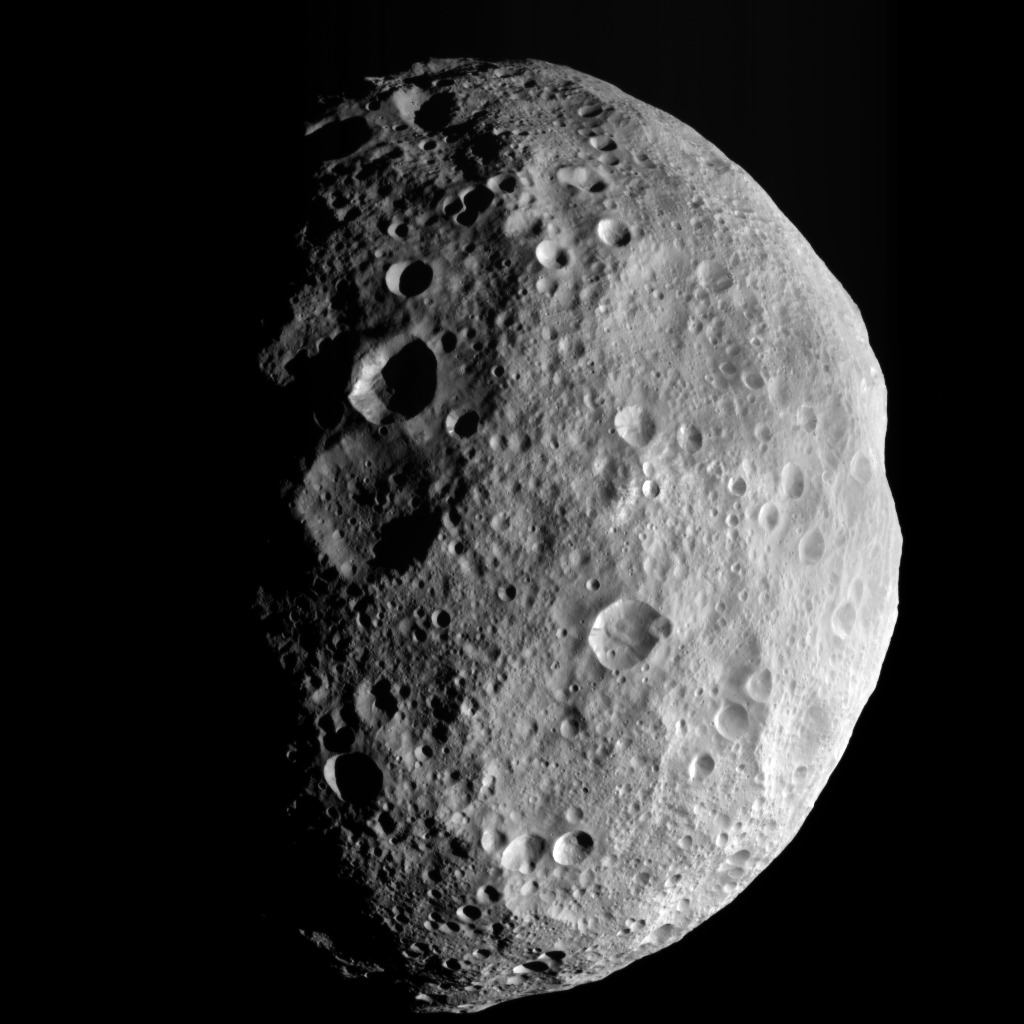
Known as flow formations, these channels could be etched on bodies that would seem inhospitable to liquid because they are exposed to the extreme vacuum conditions of space. Pocked with craters, the surfaces of many celestial bodies in our…
A batch of 24 satellites for the Starlink mega-constellation - SpaceX's project for space-based Internet communication system.
Synthetic aperture radar Earth observation satellite for Japanese Earth imaging company iQPS.
AST SpaceMobile’s Block 2 BlueBird satellites are designed to deliver up to 10 times the bandwidth capacity of the BlueBird Block 1 satellites, requi…
2 hyper-spectral Earth observation satellites from Chinese company STAR.VISION. Both satellites are built in corporation with foreign customers: *…
A batch of 24 satellites for the Starlink mega-constellation - SpaceX's project for space-based Internet communication system.
A batch of 9 Low Earth Orbit communication satellites for the Chinese state owned SatNet constellation operated by the China Satellite Network Group.…
A batch of 24 satellites for the Starlink mega-constellation - SpaceX's project for space-based Internet communication system.
Classified payload for the US National Reconnaissance Office.
2 Chinese classified satellites claimed to be for communication technology test purposes. Actual mission not known.
Tianlian is a Chinese data tracking and relay communications geostationary satellite series. The TL-3 (Tian Lian 3) satellites are the 3rd generation…