Starship | Flight 7
Launch Failure
Ship 33 lost all 6 engines gradually late in ascent and was observed to have self-destructed.L - -- : -- : -- : --
Launch Window
Jan. 16, 2025, 10 p.m. - Jan. 16, 2025, 11 p.m.


Jan. 16, 2025, 10 p.m. - Jan. 16, 2025, 11 p.m.
Seventh test flight of the two-stage Starship launch vehicle.
Launch trajectory and telemetry simulations provided by Flight Club - a rocket launch simulator and orbital trajectory visualiser for all things space!

Ship 33 failed late in ascent.
Liftoff.

Unofficial Webcast by SPACE AFFAIRS has started
New T-0.
GO for launch.
Second development version of the Starship reusable two-stage super heavy-lift launch vehicle.
See DetailsThe Superheavy booster No. 14 was successfully caught by the launch pad tower.
Result: Successful Return to Launch Site landing at Orbital Launch Mount A.Ship 33 (S33) was the 2nd stage vehicle used for the seventh Starship flight test. It was also the first "Block 2" Starship spacecraft with lengthened propellant tanks and new designed forward flaps, among other enhancements. It was lost before SECO during ascent.
Starship V2 DetailsSpace Exploration Technologies Corp., known as SpaceX, is an American aerospace manufacturer and space transport services company headquartered in Hawthorne, California. It was founded in 2002 by entrepreneur Elon Musk with the goal of reducing space transportation costs and enabling the colonization of Mars. SpaceX operates from many pads, on the East Coast of the US they operate from SLC-40 at Cape Canaveral Space Force Station and historic LC-39A at Kennedy Space Center. They also operate from SLC-4E at Vandenberg Space Force Base, California, usually for polar launches. Another launch site is being developed at Boca Chica, Texas.
INFO WIKI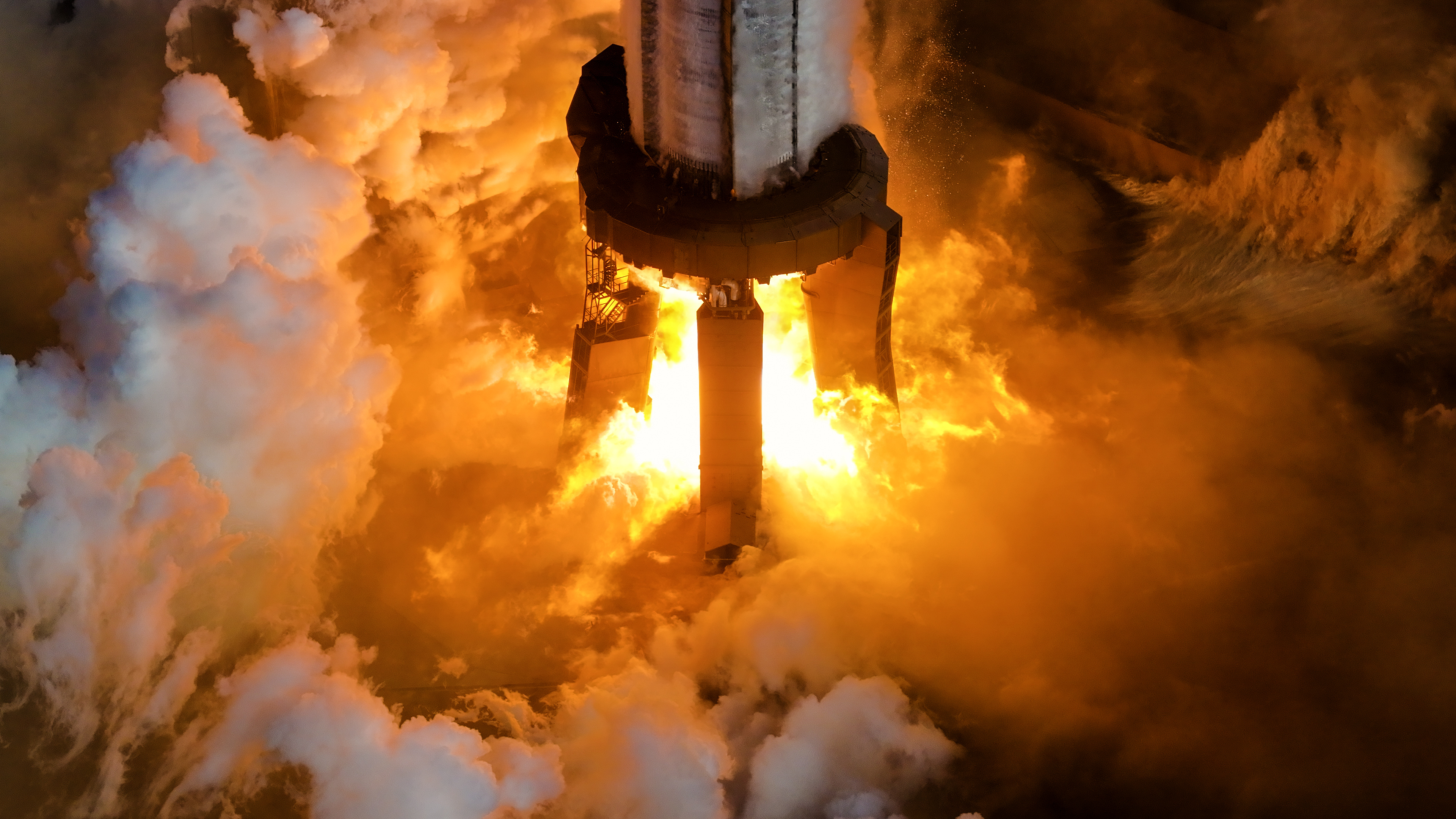
"The first Super Heavy reuse will be a step towards our goal of zero-touch reflight."

FAA Completes Investigation Into SpaceX Starship Flight 7 Mishap

SpaceX continues to press on with pre-flight testing for Flight 9, while internally looking to… The post SpaceX press on with pre-launch testing while working Ship issue mitigation appeared first on NASASpaceFlight.com.
SpaceX is set to launch its eighth test flight of the Starship rocket this Friday. Ahead of the most recent test in what could be the most revolutionary spaceflight program since NASA’s Apollo, SpaceX is clearing the air about what went wr…

Propellant leaks created by an unexpectedly strong harmonic response caused the loss of SpaceX’s Starship vehicle on a test flight last month. The post SpaceX completes investigation into Starship Flight 7 mishap appeared first on SpaceNe…
QZSS (Quasi Zenith Satellite System) is a Japanese satellite navigation system operating from inclined, elliptical geosynchronous orbits to achieve o…
Chinese communication geostationary satellite for unknown purposes.
A batch of 24 satellites for the Starlink mega-constellation - SpaceX's project for space-based Internet communication system.
Synthetic aperture radar Earth observation satellite for Japanese Earth imaging company iQPS.
AST SpaceMobile’s Block 2 BlueBird satellites are designed to deliver up to 10 times the bandwidth capacity of the BlueBird Block 1 satellites, requi…
2 hyper-spectral Earth observation satellites from Chinese company STAR.VISION. Both satellites are built in corporation with foreign customers: *…
A batch of 24 satellites for the Starlink mega-constellation - SpaceX's project for space-based Internet communication system.
A batch of 9 Low Earth Orbit communication satellites for the Chinese state owned SatNet constellation operated by the China Satellite Network Group.…
A batch of 24 satellites for the Starlink mega-constellation - SpaceX's project for space-based Internet communication system.
Classified payload for the US National Reconnaissance Office.



 View in Flightclub