Atlas V 401 | Lucy
Launch Successful
L - -- : -- : -- : --
Launch Window
Oct. 16, 2021, 9:34 a.m. - Oct. 16, 2021, 10:49 a.m.


Oct. 16, 2021, 9:34 a.m. - Oct. 16, 2021, 10:49 a.m.

Lucy will be the first space mission to study Jupiter's Trojan asteroids. The Trojans may be remnants of the primordial material that formed the outer planets, and serve as time capsules from the birth of our solar system more than 4 billion years ago.
Lucy is the first mission to explore and study Trojan asteroids. The Trojans are a type of asteroids that orbit the Sun in two groups, in front of and behind Jupiter in its orbit around our star. Since these asteroids have been in such stable orbits for billions of years, they are of great interest as remnants of early Solar System. Lucy is a NASA mission led by NASA Goddard and Southwest Research Institute in Boulder, Colorado. Over the course of 12 years, Lucy will fly by seven different Trojan asteroids and also one main belt asteroid. The complex trajectory to visit all targets will include several Earth gravity assists.

Successful launch of NASA's Lucy probe on a 12-year journey to study the Trojan asteroids.
Added launch time
Launch time confirmed by ULA
An Atlas V with a 4 meter diameter fairing, no boosters and a single centaur upper stage engine.
See DetailsUnited Launch Alliance (ULA) is a joint venture of Lockheed Martin Space Systems and Boeing Defense, Space & Security. ULA was formed in December 2006 by combining the teams at these companies which provide spacecraft launch services to the government of the United States. ULA launches from both coasts of the US. They launch their Atlas V vehicle from LC-41 in Cape Canaveral and LC-3E at Vandeberg. Their Delta IV launches from LC-37 at Cape Canaveral and LC-6 at Vandenberg.
INFO WIKI
The IAU (International Astronomical Union), a global naming authority for celestial objects, has approved official names for features on Donaldjohanson, an asteroid NASA’s Lucy spacecraft visited on April 20.
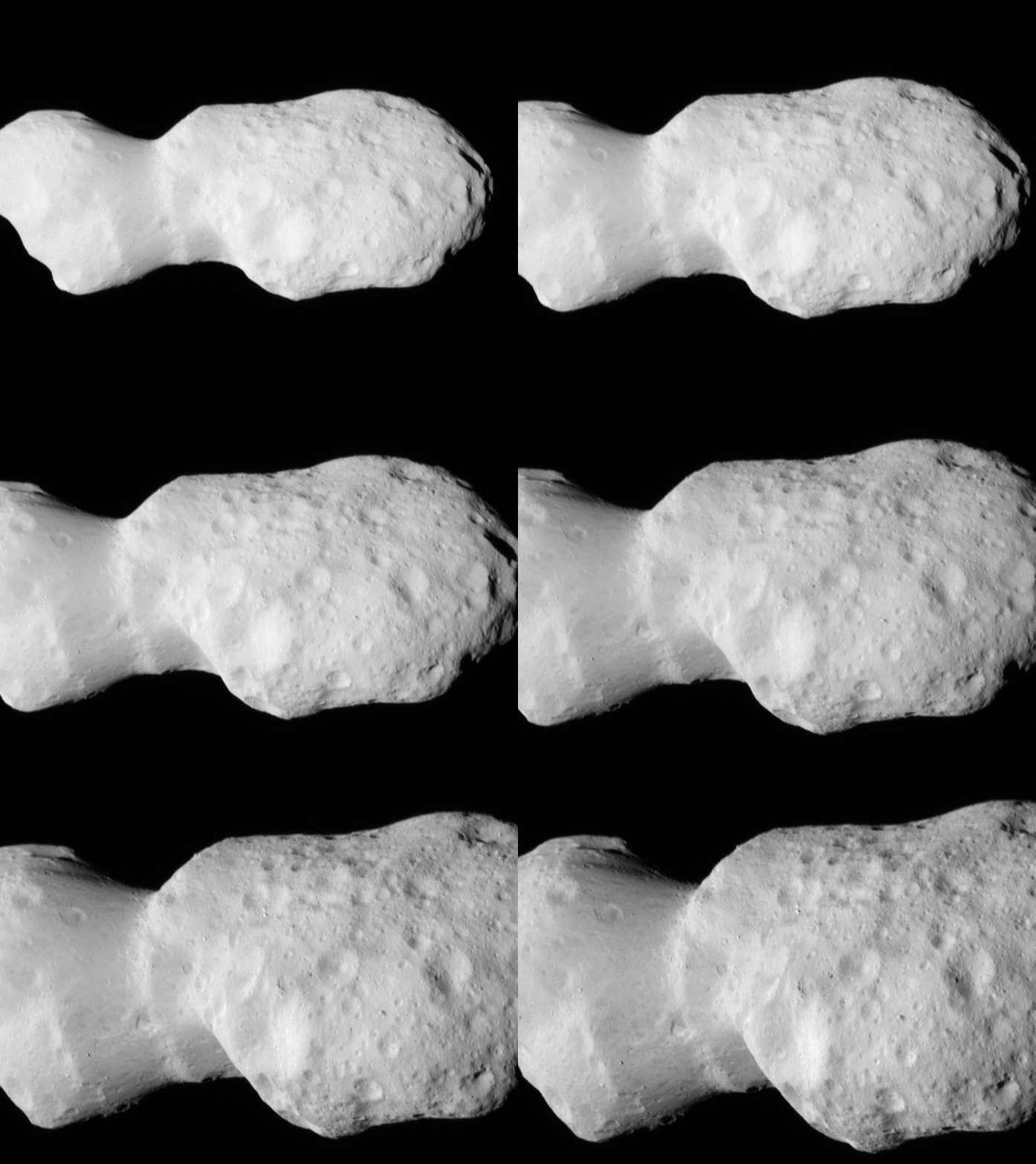
In its second asteroid encounter, NASA’s Lucy spacecraft obtained a close look at a uniquely shaped fragment of an asteroid that formed about 150 million years ago. The spacecraft has begun returning images that were collected as it flew a…
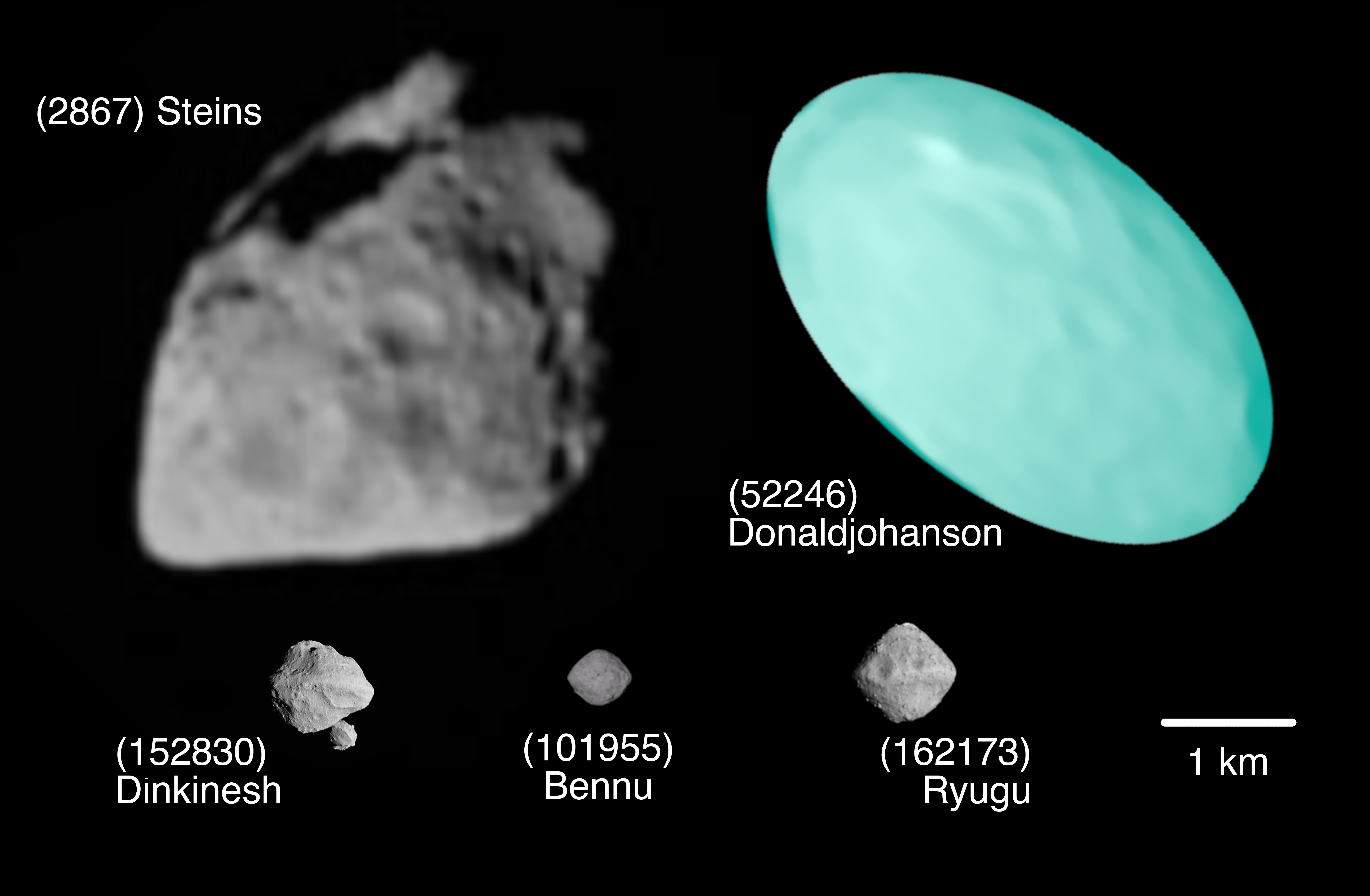
NASA’s Lucy spacecraft is 6 days and less than 50 million miles (80 million km) away from its second close encounter with an asteroid; this time, the small main belt asteroid Donaldjohanson. This upcoming event represents a comprehensive “…
Although NASA’s Lucy spacecraft’s upcoming encounter with the asteroid Donaldjohanson is primarily a mission rehearsal for later asteroid encounters, a new paper suggests that this small, main belt asteroid may have some surprises of its o…
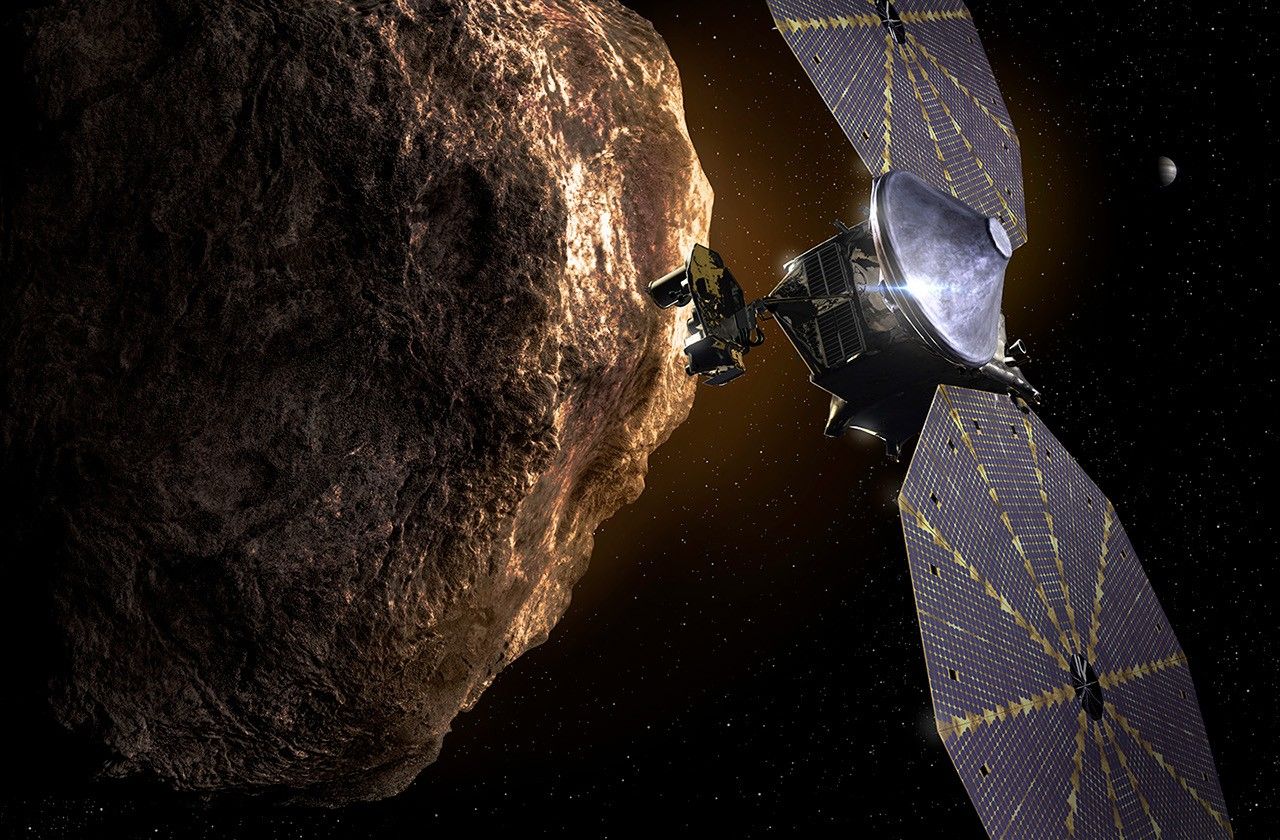
NASA has selected eight participating scientists to join its Lucy mission to the Jupiter Trojan asteroids. These asteroids are remnants of our early solar system trapped on stable orbits associated with — but not close to — the planet Jupi…
A batch of 29 satellites for the Starlink mega-constellation - SpaceX's project for space-based Internet communication system.
Test flight of the H3-30 variant of the H3 launch vehicle with 3 LE-9 engines in the first stage and no SRBs. The flight will carry a dummy main payl…
A batch of 24 satellites for the Starlink mega-constellation - SpaceX's project for space-based Internet communication system.
Sub-orbital launch under Rocket Lab’s Hypersonic Accelerator Suborbital Test Electron (HASTE) program, details TBD.
Chinese classified satellite claimed to be for communication technology test purposes. Actual mission not known.
A pair of demonstration satellites for Direct-To-Cell (DTC) communications from Low Earth Orbit for SpaceSail and China Mobile: * SpaceSail DTC 01…
A batch of 29 satellites for the Starlink mega-constellation - SpaceX's project for space-based Internet communication system.
A batch of 21 satellites for the Starlink mega-constellation - SpaceX's project for space-based Internet communication system. 2 US military Stars…
18 Low Earth Orbit communication satellites with Ku, Q and V band payloads for the G60 constellation operated by Shanghai Spacesail Technologies with…
18 Low Earth Orbit communication satellites with Ku, Q and V band payloads for the G60 constellation operated by Shanghai Spacesail Technologies with…
