Atlas V 401 | Landsat 9
Launch Successful
L - -- : -- : -- : --
Launch Window
Sept. 27, 2021, 6:12 p.m. - Sept. 27, 2021, 6:42 p.m.


Sept. 27, 2021, 6:12 p.m. - Sept. 27, 2021, 6:42 p.m.
Landsat 9 is a partnership between NASA and the U.S. Geological Survey to continue the Landsat program's critical role in monitoring, understanding and managing the land resources needed to sustain human life. Landsat 9, like Landsat 8, has a higher imaging capacity than past Landsats, allowing more valuable data to be added to the Landsat global land archive. Its operational orbit is a sun-synchronous orbit at an altitude of 705 km for a mission lifetime of at least 5 years.

Successful launch of Landsat 9.

New launch time.
Launch time confirmed by ULA
New launch date.
Delayed by a week due to liquid oxygen shortage.
An Atlas V with a 4 meter diameter fairing, no boosters and a single centaur upper stage engine.
See DetailsUnited Launch Alliance (ULA) is a joint venture of Lockheed Martin Space Systems and Boeing Defense, Space & Security. ULA was formed in December 2006 by combining the teams at these companies which provide spacecraft launch services to the government of the United States. ULA launches from both coasts of the US. They launch their Atlas V vehicle from LC-41 in Cape Canaveral and LC-3E at Vandeberg. Their Delta IV launches from LC-37 at Cape Canaveral and LC-6 at Vandenberg.
INFO WIKI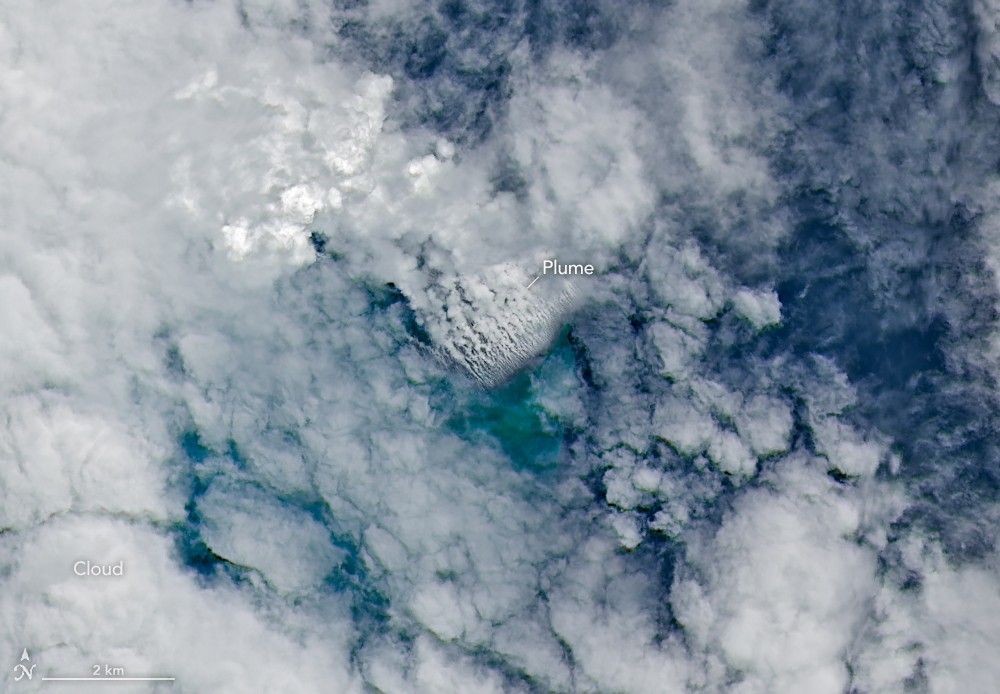
Satellite imagery shows a surge of new volcanic activity in the ocean near Papua New Guinea.
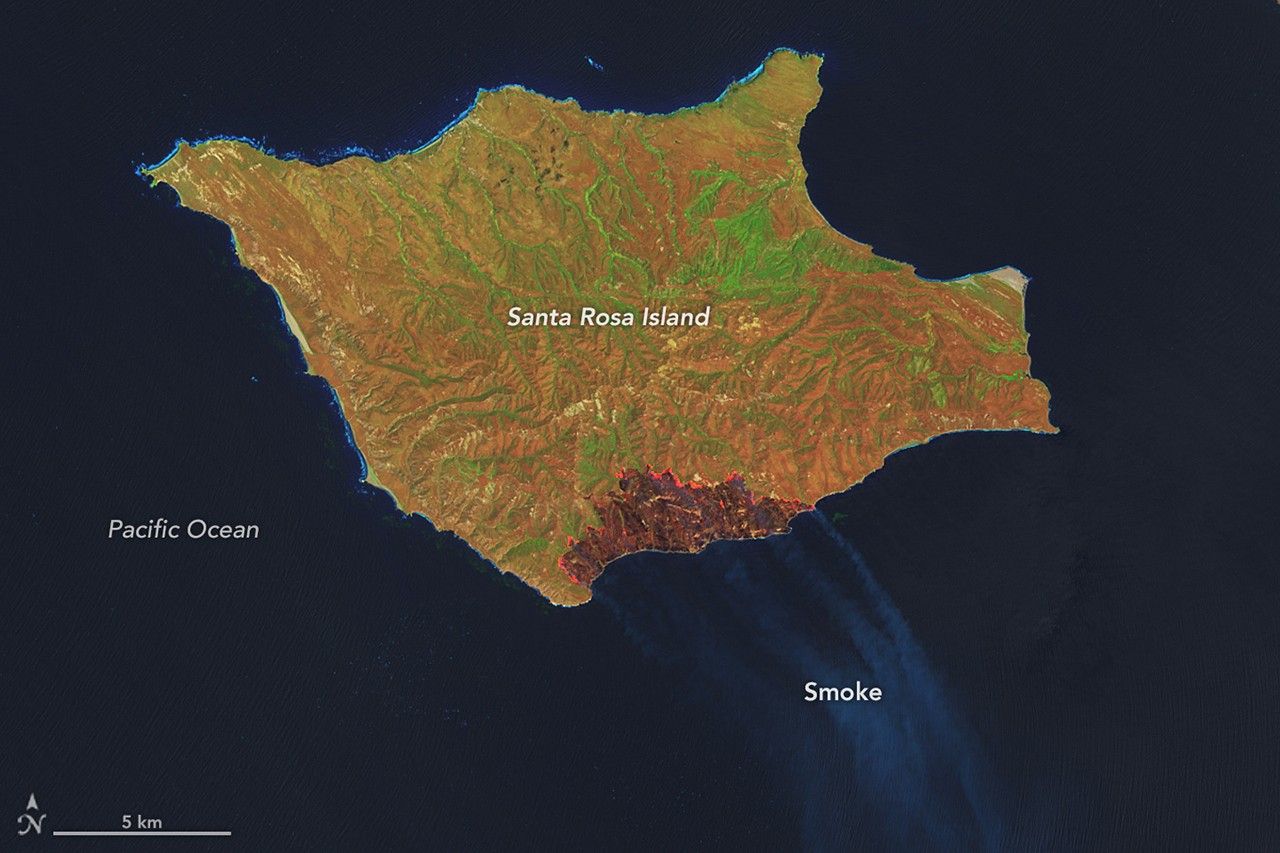
The blaze spread across the southern side of the second-largest island in California’s Channel Islands National Park.
For over 50 years, the Landsat program has provided the longest continuous satellite record of Earth’s land surface from space. Landsat 9, launched in 2021, is the latest mission in this remarkable legacy.

The Operational Land Imager on Landsat 9 captured this image of Buccaneer Archipelago on June 11, 2025. The scene encapsulates the striking interactions between land and water in the area where King Sound opens to the Indian Ocean. The pow…

NASA transferred ownership and operational control on Thursday of the Landsat 9 satellite to the U.S. Geological Survey (USGS) in a ceremony in Sioux Falls, South Dakota.
QZSS (Quasi Zenith Satellite System) is a Japanese satellite navigation system operating from inclined, elliptical geosynchronous orbits to achieve o…
Chinese communication geostationary satellite for unknown purposes.
A batch of 24 satellites for the Starlink mega-constellation - SpaceX's project for space-based Internet communication system.
Synthetic aperture radar Earth observation satellite for Japanese Earth imaging company iQPS.
AST SpaceMobile’s Block 2 BlueBird satellites are designed to deliver up to 10 times the bandwidth capacity of the BlueBird Block 1 satellites, requi…
2 hyper-spectral Earth observation satellites from Chinese company STAR.VISION. Both satellites are built in corporation with foreign customers: *…
A batch of 24 satellites for the Starlink mega-constellation - SpaceX's project for space-based Internet communication system.
A batch of 9 Low Earth Orbit communication satellites for the Chinese state owned SatNet constellation operated by the China Satellite Network Group.…
A batch of 24 satellites for the Starlink mega-constellation - SpaceX's project for space-based Internet communication system.
Classified payload for the US National Reconnaissance Office.

