Antares 230+ | Cygnus CRS-2 NG-17 (S.S. Piers Sellers)
Launch Successful
L - -- : -- : -- : --
Instantaneous launch window.
Launch Window
Feb. 19, 2022, 5:40 p.m. - Feb. 19, 2022, 5:40 p.m.


Instantaneous launch window.
Feb. 19, 2022, 5:40 p.m. - Feb. 19, 2022, 5:40 p.m.
This is the 17th flight of the Orbital ATK's uncrewed resupply spacecraft Cygnus and its 16th flight to the International Space Station under the Commercial Resupply Services contract with NASA. This Cygnus spacecraft is named after American astronaut and climate scientist Piers Sellers. Sellers was a part of three Space Shuttle missions tasked with assembly of the International Space Station.
Launch trajectory and telemetry simulations provided by Flight Club - a rocket launch simulator and orbital trajectory visualiser for all things space!
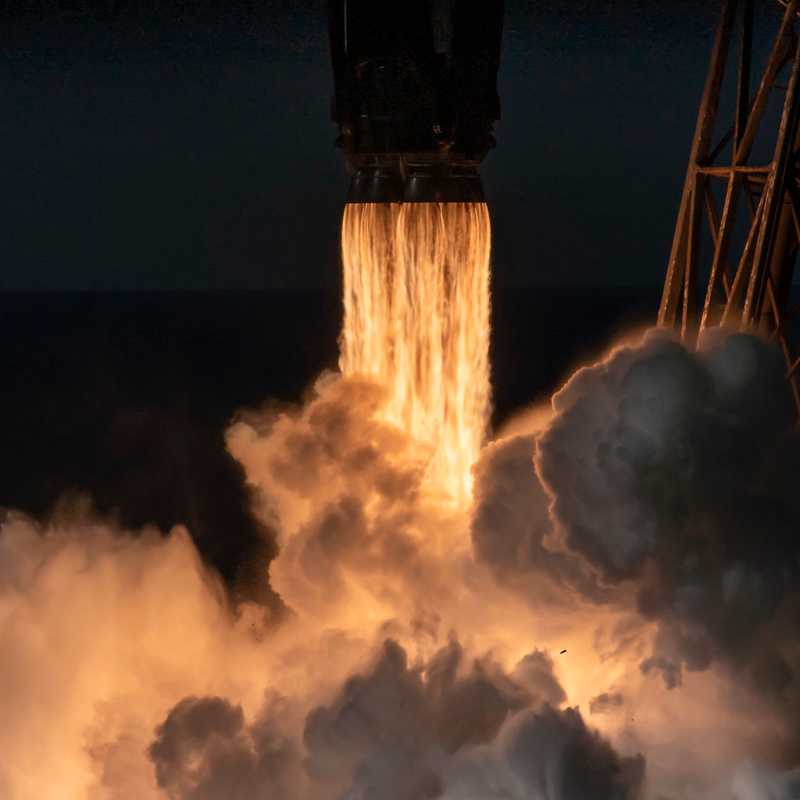
Successful launch. Cygnus will arrive at the ISS on Monday morning.
Liftoff

Adjusting T-0

Weather 75%
T-0 confirmed by NASA.
Antares known during early development as Taurus II, is an expendable launch system developed by Orbital Sciences Corporation (now part of Northrop Grumman Innovation Systems after Northrop Grumman acquired Orbital ATK) and the Yuzhnoye Design Bureau to launch the Cygnus spacecraft to the International Space Station as part of NASA's COTS and CRS programs. Able to launch payloads heavier than 5,000 kg (11,000 lb) into low-Earth orbit, Antares is the largest rocket operated by Orbital ATK. Antares launches from the Mid-Atlantic Regional Spaceport and made its inaugural flight on April 21, 2013.
See DetailsThis is the seventeenth flight to the ISS by the Cygnus spacecraft under the CRS program and their sixth under the CRS-2 program. This is also the 13th use of the enhanced size Cygnus.
Cygnus Enhanced DetailsNorthrup Grumman Space Systems designs, builds and delivers space, defence and aviation-related systems to customers around the world. They aquired Orbital ATK in 2018 along with its launchers and ongoing missions.
INFO WIKI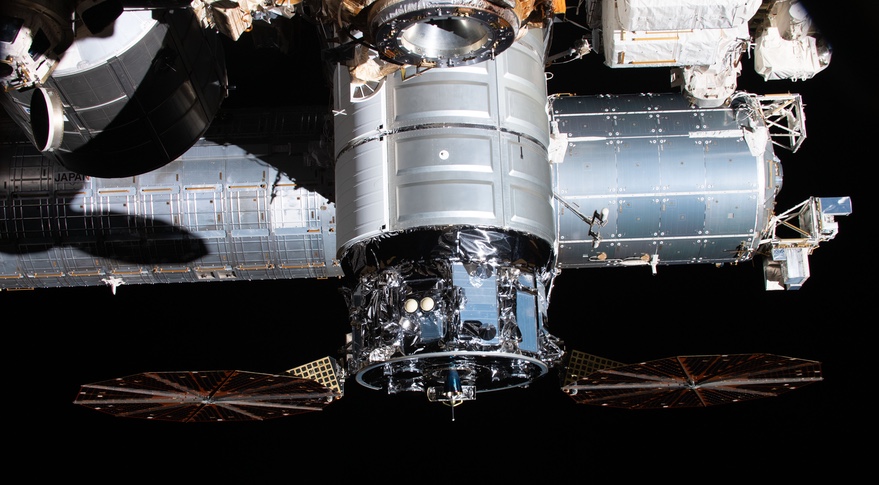
A Cygnus cargo spacecraft departed the International Space Station June 28, three days after it demonstrated its ability to raise the station’s orbit.
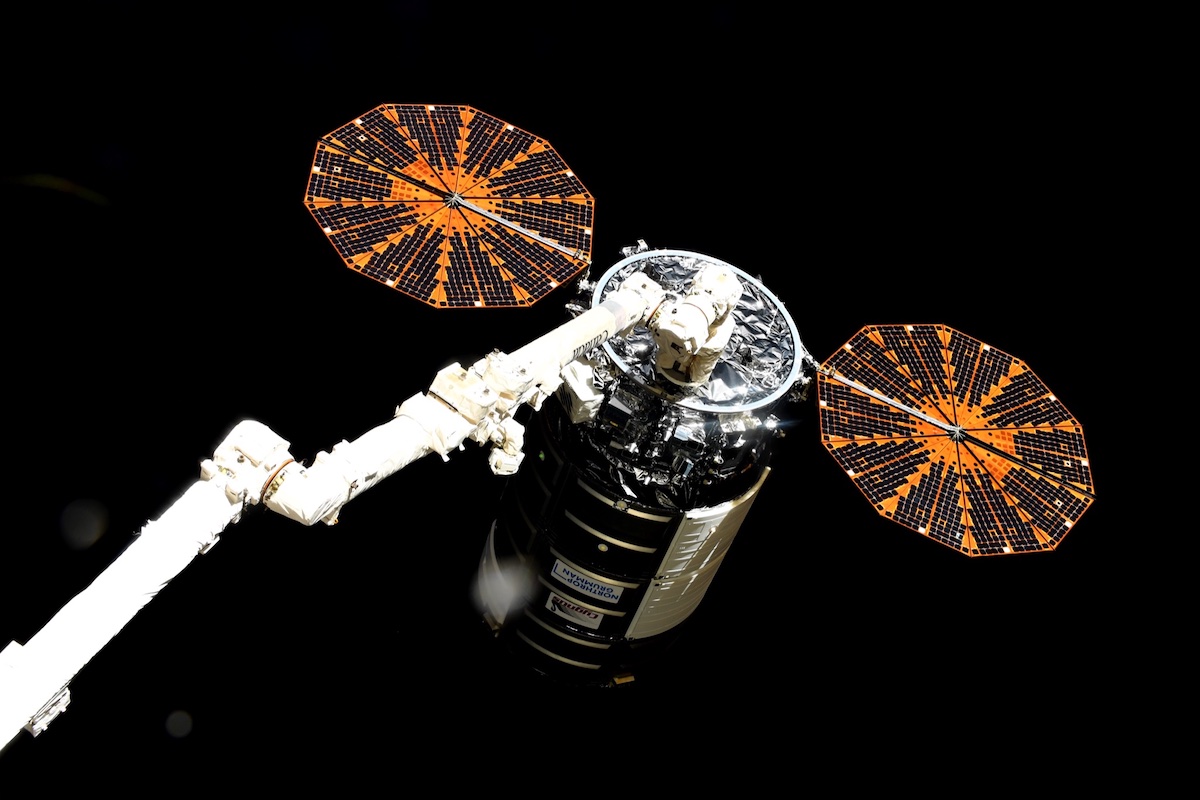
A commercial Cygnus supply ship from Northrop Grumman departed the International Space Station Tuesday, completing a four-month stay after delivering more than 8,000 pounds of cargo and boosting the research lab into a slightly higher orbi…

Northrop Grumman’s uncrewed Cygnus spacecraft is scheduled to depart the International Space Station on Tuesday, June 28, more than four months after delivering 8,300 pounds of supplies, scientific investigations, commercial products, hard…

A commercial Cygnus cargo freighter from Northrop Grumman arrived at the International Space Station Monday, delivering more than 8,000 pounds of supplies and a new U.S. capability to reboost the altitude of the complex independent of Russ…

Northrop Grumman launched a cargo flight from Virginia’s Eastern Shore Saturday using an Antares booster with a first stage designed and built in Ukraine, a successful start for a mission to deliver food, experiments, and supplies to the s…
Synthetic aperture radar Earth observation satellite for Japanese Earth imaging company iQPS.
AST SpaceMobile’s Block 2 BlueBird satellites are designed to deliver up to 10 times the bandwidth capacity of the BlueBird Block 1 satellites, requi…
2 hyper-spectral Earth observation satellites from Chinese company STAR.VISION. Both satellites are built in corporation with foreign customers: *…
A batch of 24 satellites for the Starlink mega-constellation - SpaceX's project for space-based Internet communication system.
A batch of 9 Low Earth Orbit communication satellites for the Chinese state owned SatNet constellation operated by the China Satellite Network Group.…
A batch of 24 satellites for the Starlink mega-constellation - SpaceX's project for space-based Internet communication system.
Classified payload for the US National Reconnaissance Office.
2 Chinese classified satellites claimed to be for communication technology test purposes. Actual mission not known.
Tianlian is a Chinese data tracking and relay communications geostationary satellite series. The TL-3 (Tian Lian 3) satellites are the 3rd generation…
A batch of 24 satellites for the Starlink mega-constellation - SpaceX's project for space-based Internet communication system.

 View in Flightclub