Press Event
Nova-C IM-2 Science Media Teleconference
Online Falcon 9 Block 5 | Nova-C IM-2 & Others
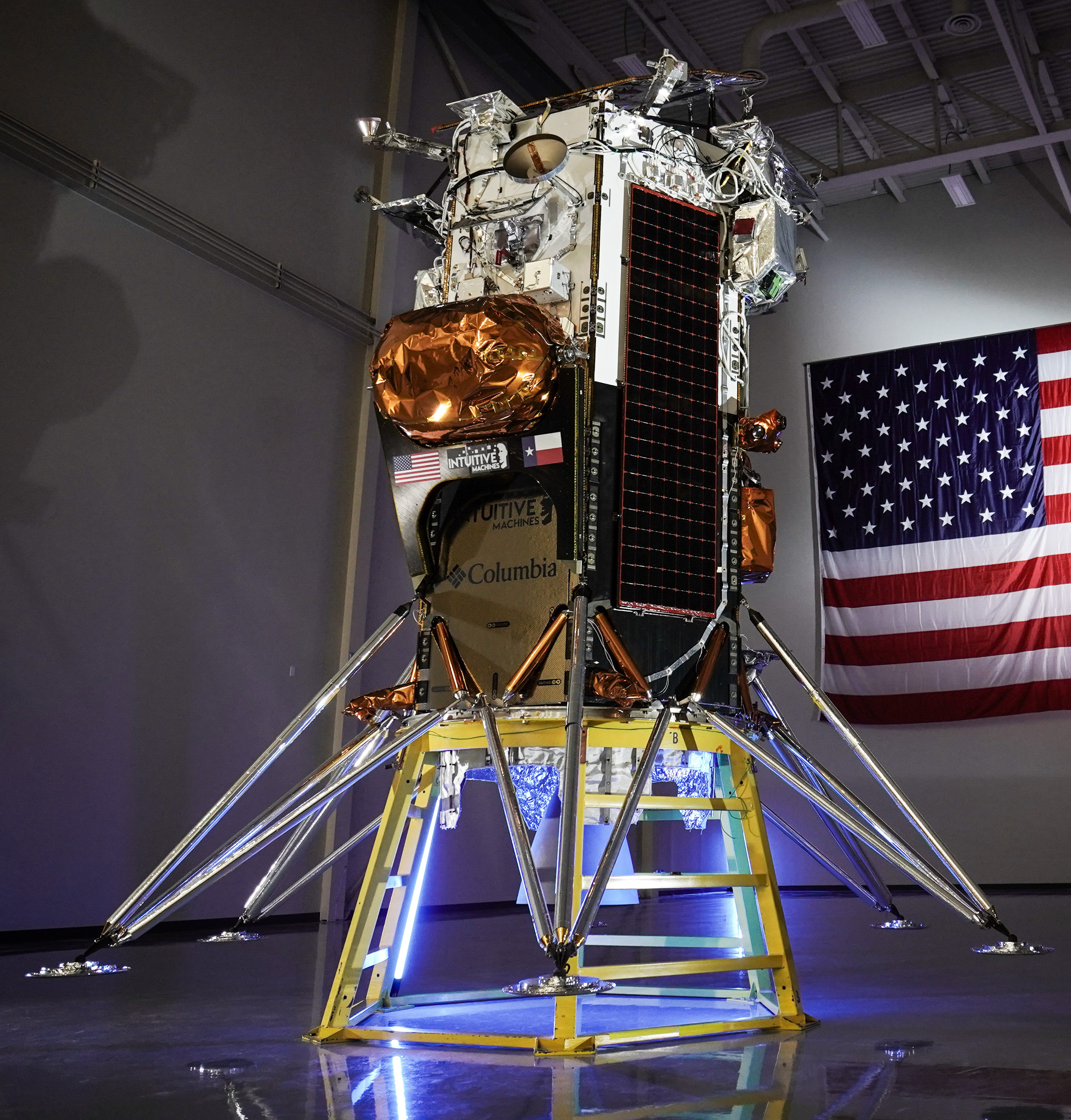
NASA will host a media teleconference to discuss the agency’s science and technology flying aboard Intuitive Machines’ second flight to the Moon. The mission is part of NASA’s CLPS (Commercial Lunar Payload Services) initiative and Artemis campaign to establish a long-term lunar presence.
Briefing participants include:
- Nicky Fox, associate administrator, Science Mission Directorate, NASA Headquarters
- Niki Werkheiser, director, technology maturation, Space Technology Mission Directorate, NASA Headquarters
- Trent Martin, senior vice president, space systems, Intuitive Machines
Updates

LL2 • Feb. 7, 2025, 5:55 p.m.
Official Webcast by NASA Video has started

Nosu • Feb. 1, 2025, 8 a.m.
Adding event
Related Information
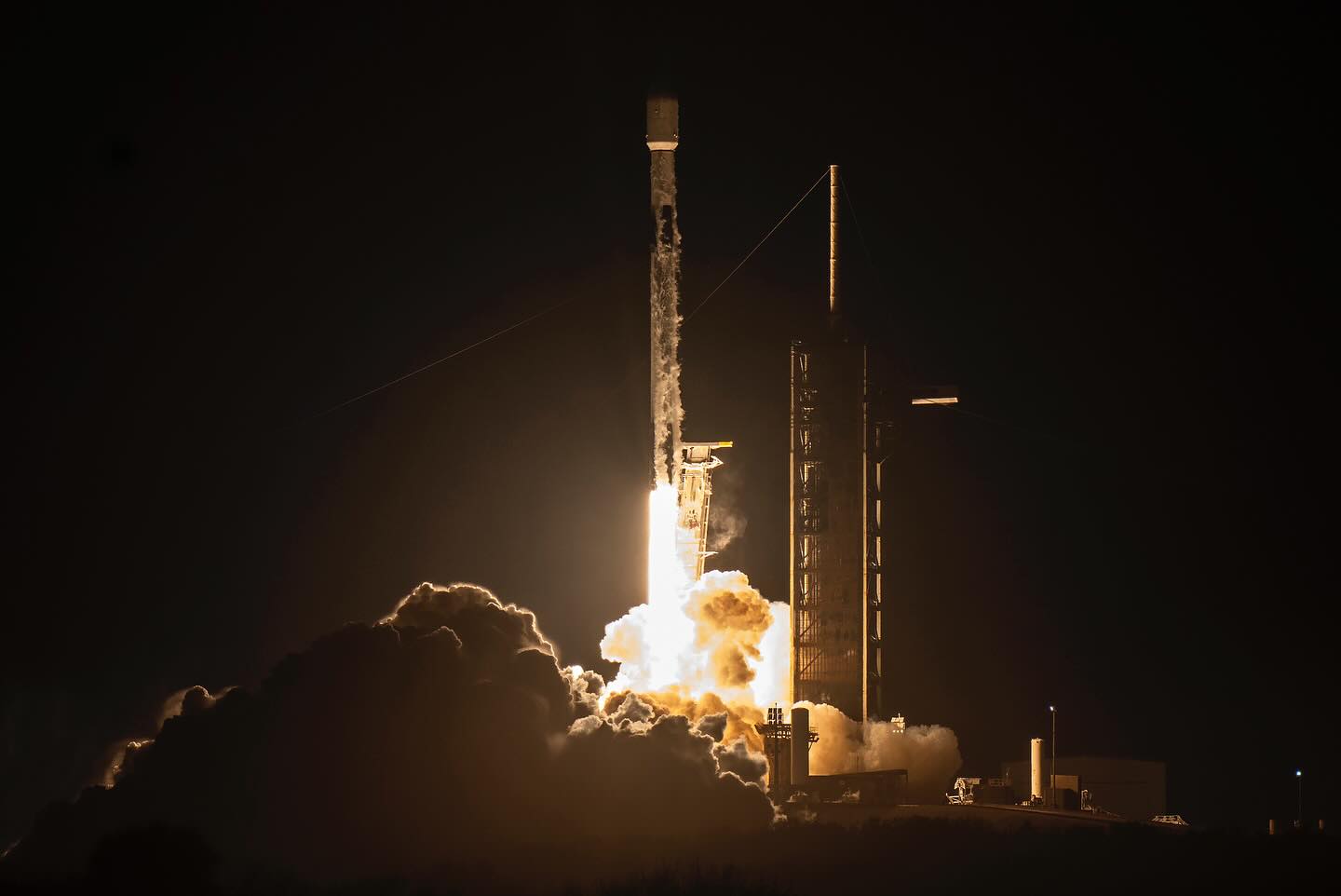
Falcon 9 Block 5 | Nova-C IM-2 & Others
SpaceX | United States of AmericaKennedy Space Center, FL, USA
Feb. 27, 2025, 12:16 a.m.
Status: Launch Successful
Mission:
This is the second mission of Nova-C lunar lander developed and built by Intuitive Machines. This time it carries a NASA payload called PRIME-1 (Polar Resources Ice Mining Experiment-1), which is to be the first demonstration of in-situ resource utilization on the Moon. PRIME-1 consists of two instruments: TRIDENT drill and Msolo mass spectrometer. Also on board are: * Lunar Trailblazer, a small (class D) lunar orbiter, part of NASA's SIMPLEx program, that will detect and map water on the lunar surface to determine how its form, abundance, and location relate to geology. Its mission is to aid in the understanding of lunar water and the Moon's water cycle. * Odin, a spacecraft for AstroForge, a company that plans to mine asteroid resources. Odin intends to head into deep space to observe near-Earth asteroid 2022 OB5 in preparation for their first retrieval mission. Odin will fly by the asteroid at a distance of about 1 kilometer, arriving 11 months after launch. * CHIMERA GEO 1, a transfer spacecraft by Epic Aerospace to a geostationary orbit, with the aim of covering an orbital position. For this launch, CHIMERA-GEO is carrying an unidentified 16U cubesat manifested by Exolaunch.
Lunar Orbit B1083 - Flight Proven ( ) A Shortfall of GravitasFalcon 9
Starlink Group 17-38
Space Launch Complex 4E - Vandenberg SFB, CA, USAA batch of 24 satellites for the Starlink mega-constellation - SpaceX's project for space-based Internet communication system.
Electron
The Grain Goddess Provides (iQPS Launch 7)
Rocket Lab Launch Complex 1A - Rocket Lab Launch Complex 1, Mahia Peninsula, New ZealandSynthetic aperture radar Earth observation satellite for Japanese Earth imaging company iQPS.
Falcon 9
BlueBird 11-13 (Block 2 #6-8)
Space Launch Complex 40 - Cape Canaveral SFS, FL, USAAST SpaceMobile’s Block 2 BlueBird satellites are designed to deliver up to 10 times the bandwidth capacity of the BlueBird Block 1 satellites, requi…
Smart Dragon 3
OSE HS-01 & 02
Haiyang offshore launch location - Haiyang Oriental Spaceport2 hyper-spectral Earth observation satellites from Chinese company STAR.VISION. Both satellites are built in corporation with foreign customers: *…
Falcon 9
Starlink Group 17-53
Space Launch Complex 4E - Vandenberg SFB, CA, USAA batch of 24 satellites for the Starlink mega-constellation - SpaceX's project for space-based Internet communication system.
Long March 8A
SatNet LEO Group 23
Commercial LC-1 - Wenchang Space Launch Site, People's Republic of ChinaA batch of 9 Low Earth Orbit communication satellites for the Chinese state owned SatNet constellation operated by the China Satellite Network Group.…
Falcon 9
Starlink Group 17-52
Space Launch Complex 4E - Vandenberg SFB, CA, USAA batch of 24 satellites for the Starlink mega-constellation - SpaceX's project for space-based Internet communication system.
Falcon 9
NROL-95
Space Launch Complex 40 - Cape Canaveral SFS, FL, USAClassified payload for the US National Reconnaissance Office.
Long March 6A
TJSW-27A & B
Launch Complex 9A - Taiyuan Satellite Launch Center, People's Republic of China2 Chinese classified satellites claimed to be for communication technology test purposes. Actual mission not known.
Long March 7A
Tianlian 3-01
201 - Wenchang Space Launch Site, People's Republic of ChinaTianlian is a Chinese data tracking and relay communications geostationary satellite series. The TL-3 (Tian Lian 3) satellites are the 3rd generation…

