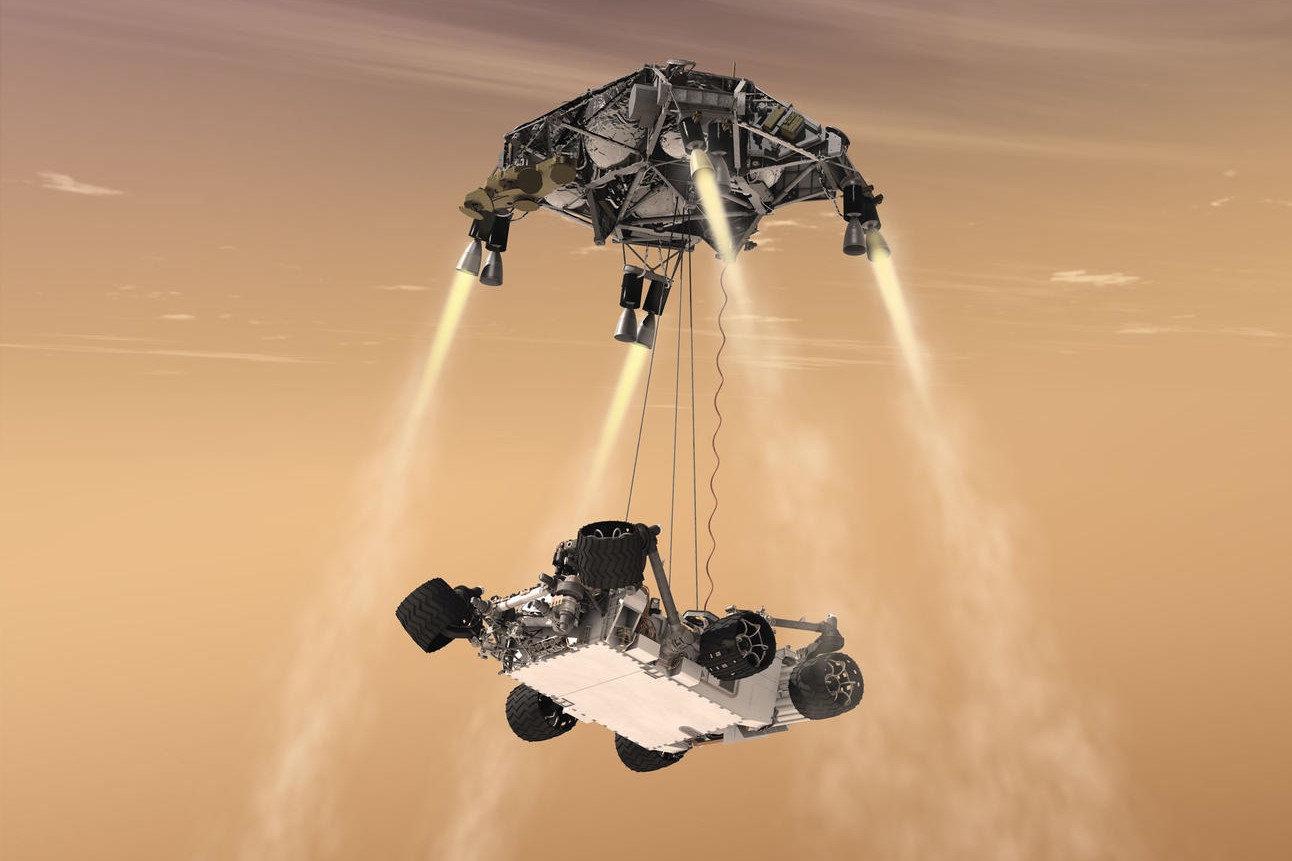
Spacecraft Landing
NASA Mars 2020 Perseverance Rover Landing
Jezero crater, Mars Atlas V 541 | Mars 2020 (Perseverance rover & Ingenuity helicopter)
NASA's Mars 2020 Perseverance rover will land in the Jezero crater using a MSL-inspired sky-crane at approximately 20:55 UTC.
It will investigate an astrobiologically relevant ancient environment on Mars and investigate its surface geological processes and history, including the assessment of its past habitability, the possibility of past life on Mars, and the potential for preservation of biosignatures within accessible geological materials. It will cache sample containers along its route for a potential future Mars sample-return mission.
Perseverance is also ferrying several cutting-edge technologies to the surface of Mars – including a helicopter named Ingenuity, the first aircraft to attempt powered, controlled flight on another planet.
Updates

Koun7erfit • Feb. 18, 2021, 8:59 p.m.
Safe touchdown confirmed! Perseverance has safely landed on the surface of Mars!
Koun7erfit • Feb. 18, 2021, 8:48 p.m.
NASA live coverage is continuing to follow the descent as Mars 2020 Perseverance is beginning its entry into the Martian atmosphere.
Koun7erfit • Feb. 18, 2021, 2:48 a.m.
"NASA's Mars Perseverance rover makes its final descent to the Red Planet. Here are some of the ways you can take part in this landing."
Check the links below for the list of NASA's coverage.
Related Information
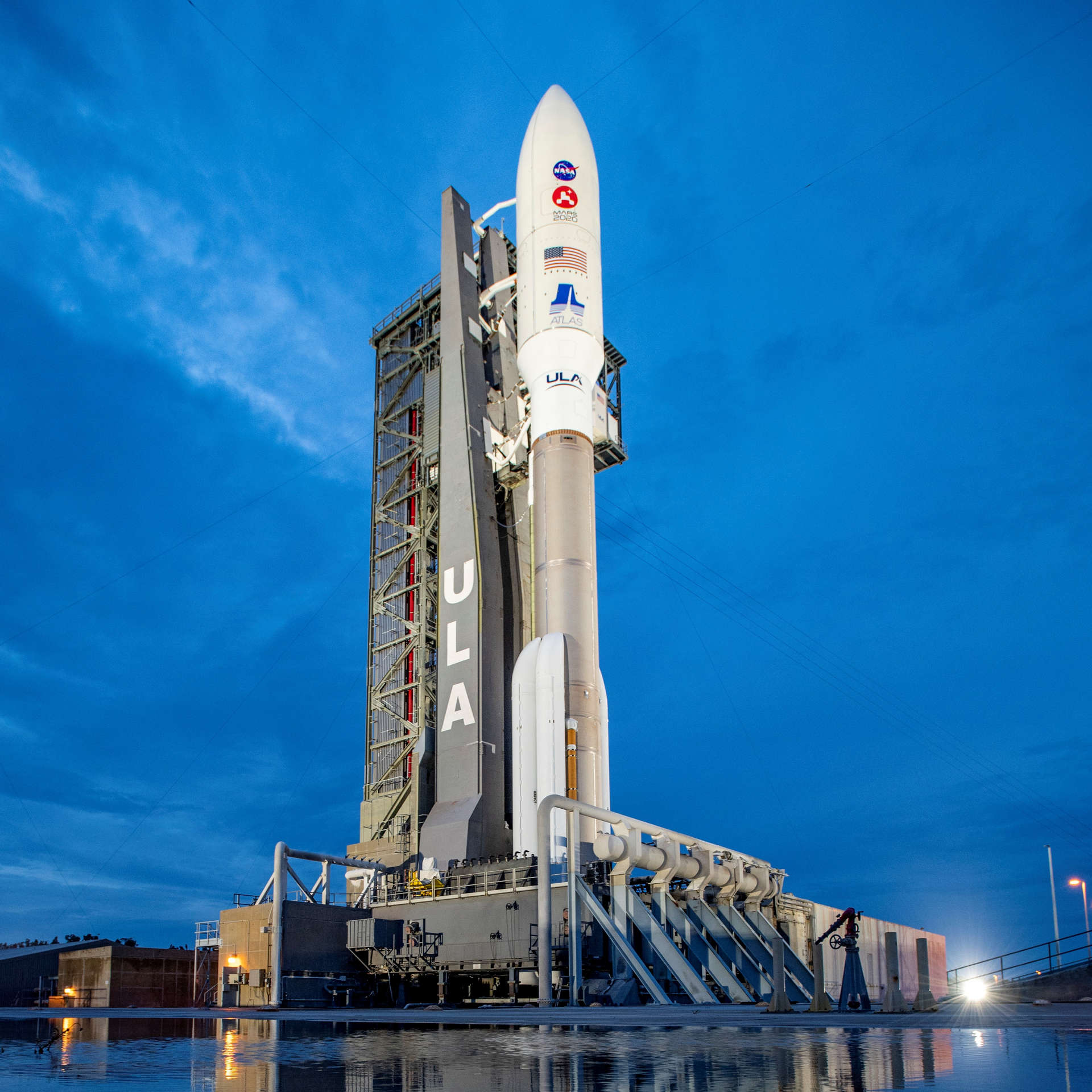
Atlas V 541 | Mars 2020 (Perseverance rover & Ingenuity helicopter)
United Launch Alliance | United States of AmericaCape Canaveral SFS, FL, USA
July 30, 2020, 11:50 a.m.
Status: Launch Successful
Mission:
Atop this ULA Atlas V rocket will be Perseverance, a car-sized rover which will explore an ancient river delta on Mars. Armed with a suite of six scientific instruments, Perseverance will primarily hunt for clues to the planet's distant past, and hopefully uncover signs of ancient life and habitability. The rover also carries an experiment that'll convert carbon dioxide into oxygen, a box-sized helicopter named Ingenuity that'll demonstrate powered flight on Mars, and a system that enables the rover to leave behind samples for later retrieval and return to Earth during NASA and ESA's ambitious sample return mission later this decade.
Heliocentric N/AFalcon 9
Starlink Group 17-38
Space Launch Complex 4E - Vandenberg SFB, CA, USAA batch of 24 satellites for the Starlink mega-constellation - SpaceX's project for space-based Internet communication system.
Electron
The Grain Goddess Provides (iQPS Launch 7)
Rocket Lab Launch Complex 1A - Rocket Lab Launch Complex 1, Mahia Peninsula, New ZealandSynthetic aperture radar Earth observation satellite for Japanese Earth imaging company iQPS.
Falcon 9
BlueBird 11-13 (Block 2 #6-8)
Space Launch Complex 40 - Cape Canaveral SFS, FL, USAAST SpaceMobile’s Block 2 BlueBird satellites are designed to deliver up to 10 times the bandwidth capacity of the BlueBird Block 1 satellites, requi…
Smart Dragon 3
OSE HS-01 & 02
Haiyang offshore launch location - Haiyang Oriental Spaceport2 hyper-spectral Earth observation satellites from Chinese company STAR.VISION. Both satellites are built in corporation with foreign customers: *…
Falcon 9
Starlink Group 17-53
Space Launch Complex 4E - Vandenberg SFB, CA, USAA batch of 24 satellites for the Starlink mega-constellation - SpaceX's project for space-based Internet communication system.
Long March 8A
SatNet LEO Group 23
Commercial LC-1 - Wenchang Space Launch Site, People's Republic of ChinaA batch of 9 Low Earth Orbit communication satellites for the Chinese state owned SatNet constellation operated by the China Satellite Network Group.…
Falcon 9
Starlink Group 17-52
Space Launch Complex 4E - Vandenberg SFB, CA, USAA batch of 24 satellites for the Starlink mega-constellation - SpaceX's project for space-based Internet communication system.
Falcon 9
NROL-95
Space Launch Complex 40 - Cape Canaveral SFS, FL, USAClassified payload for the US National Reconnaissance Office.
Long March 6A
TJSW-27A & B
Launch Complex 9A - Taiyuan Satellite Launch Center, People's Republic of China2 Chinese classified satellites claimed to be for communication technology test purposes. Actual mission not known.
Long March 7A
Tianlian 3-01
201 - Wenchang Space Launch Site, People's Republic of ChinaTianlian is a Chinese data tracking and relay communications geostationary satellite series. The TL-3 (Tian Lian 3) satellites are the 3rd generation…

