Press Event
Europa Clipper One Year From Launch Public Talk
Jet Propulsion Laboratory, Pasadena, CA, USA Falcon Heavy | Europa Clipper
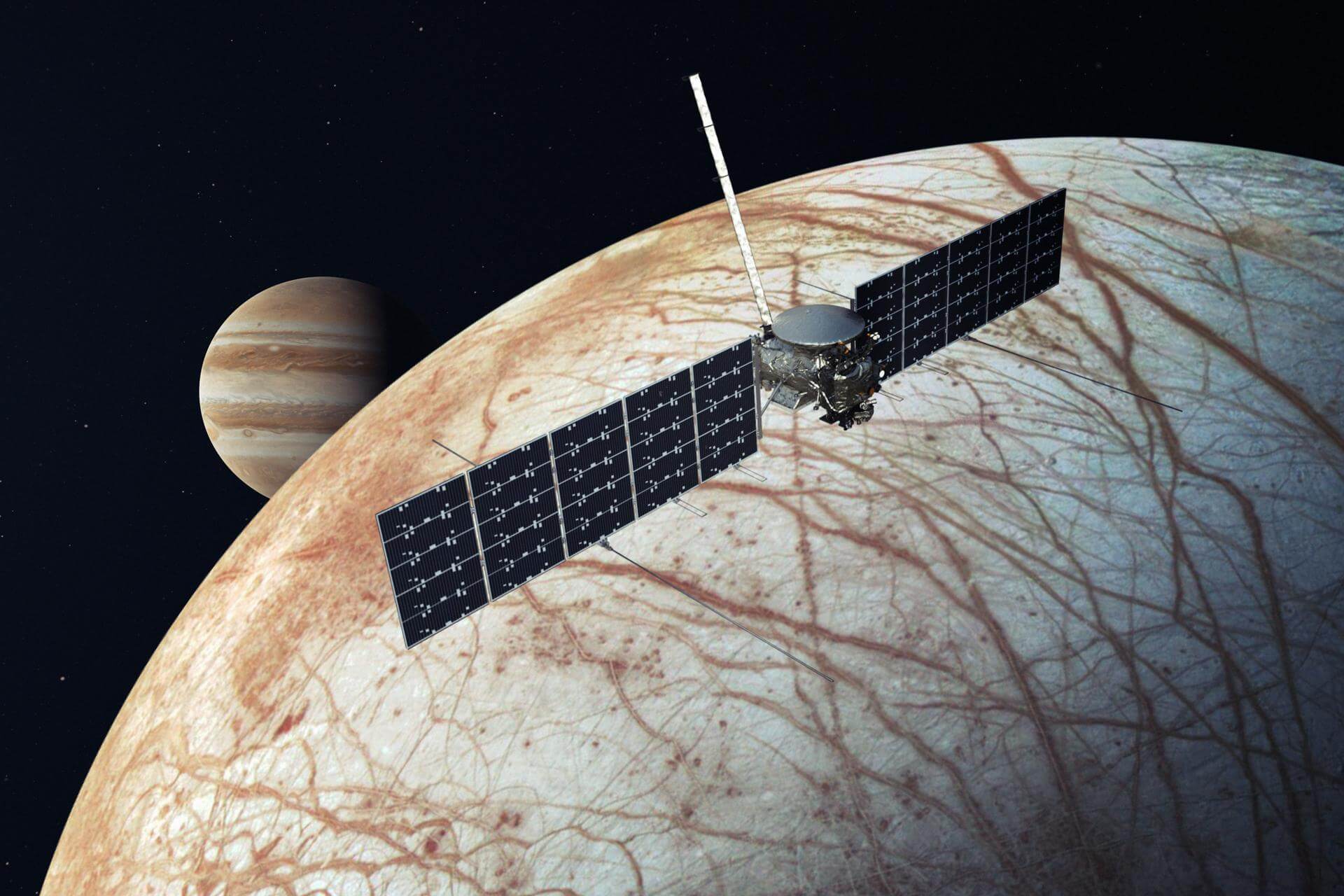
In October 2024, NASA’s Europa Clipper spacecraft will begin its 1.8-billion-mile journey to Jupiter’s icy moon Europa. It will investigate if an ocean thought to lie beneath Europa’s icy crust could support life.
Europa Clipper Mission System Manager Al Cangahula and planetary scientist Kate Craft will talk about the spacecraft’s assembly and preparations for launch, and how Europa Clipper’s detailed exploration of Europa will help scientists better understand the astrobiological potential for habitable worlds beyond our planet.
Updates

LL2 • Oct. 20, 2023, 1:57 a.m.
Livestream has started
Related Information
Falcon Heavy | Europa Clipper
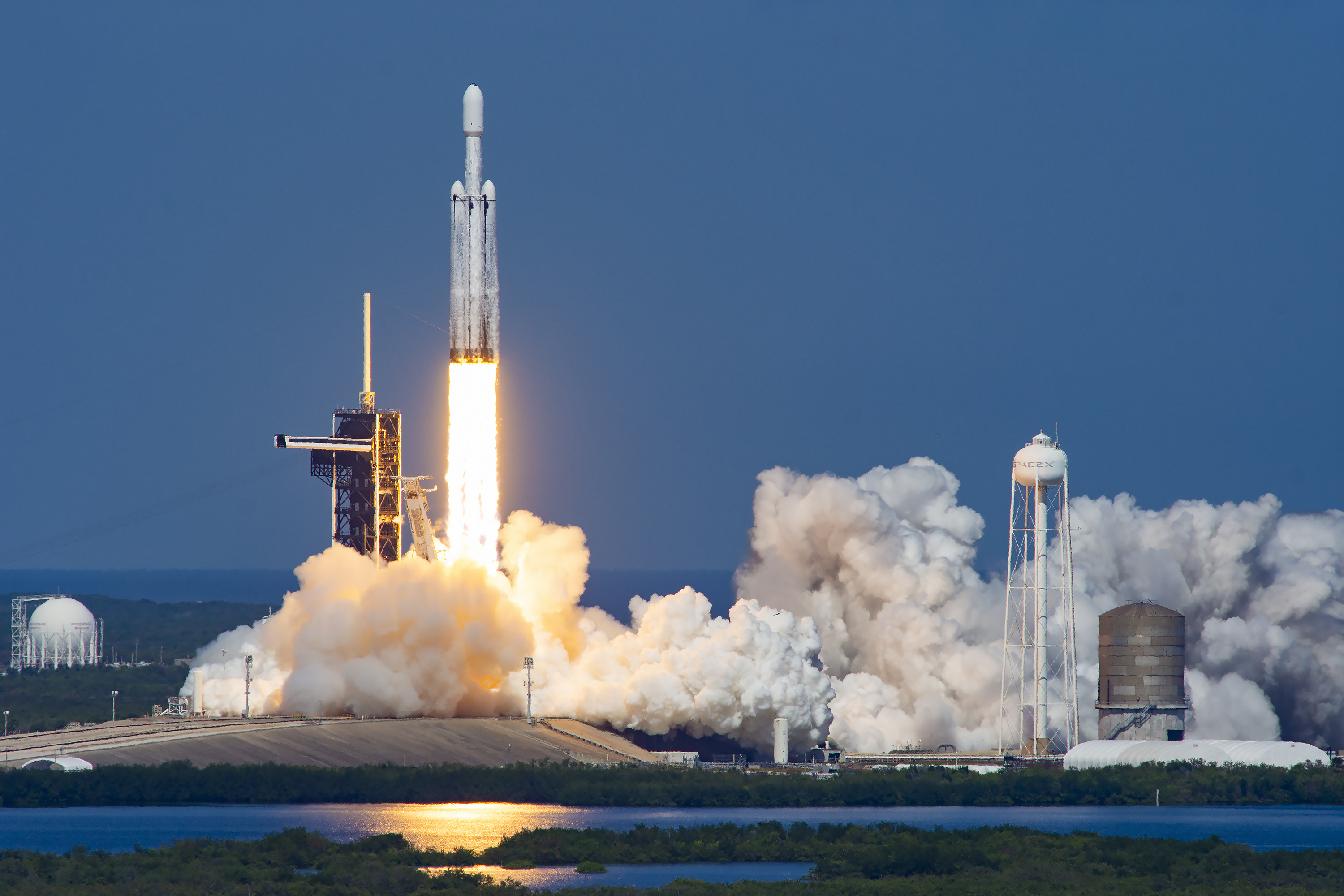
SpaceX | United States of AmericaKennedy Space Center, FL, USA
Oct. 14, 2024, 4:06 p.m.
Status: Launch Successful
Mission:
Europa Clipper is the first dedicated mission to study Jupiter's moon Europa. Mission is developed by NASA and comprises of an orbiter spacecraft, which, while in orbit around Jupiter, will perform numerous flybys over Europa. Europa Clipper payload suit included high-resolution cameras and spectrometers for imaging Europa's surface and thin atmosphere, an ice-penetrating radar to search for subsurface water, and a magnetometer and gravity measurements to measure the moon's magnetic field and unlock clues about its ocean and deep interior.
Heliocentric N/A B1064 - Flight Proven ( ) Atlantic Ocean B1065 - Flight Proven ( ) Atlantic Ocean B1089 - Maiden Flight Atlantic OceanFalcon 9
Starlink Group 10-19
Space Launch Complex 40 - Cape Canaveral SFS, FL, USAA batch of 29 satellites for the Starlink mega-constellation - SpaceX's project for space-based Internet communication system.
H3-22
Michibiki 7 (QZS-7)
Yoshinobu Launch Complex LP-2 - Tanegashima Space Center, JapanQZSS (Quasi Zenith Satellite System) is a Japanese satellite navigation system operating from inclined, elliptical geosynchronous orbits to achieve o…
Long March 7A
ChinaSat 4B
201 - Wenchang Space Launch Site, People's Republic of ChinaChinese communication geostationary satellite for unknown purposes.
Falcon 9
Starlink Group 17-38
Space Launch Complex 4E - Vandenberg SFB, CA, USAA batch of 24 satellites for the Starlink mega-constellation - SpaceX's project for space-based Internet communication system.
Electron
The Grain Goddess Provides (iQPS Launch 7)
Rocket Lab Launch Complex 1A - Rocket Lab Launch Complex 1, Mahia Peninsula, New ZealandSynthetic aperture radar Earth observation satellite for Japanese Earth imaging company iQPS.
Falcon 9
BlueBird 11-13 (Block 2 #6-8)
Space Launch Complex 40 - Cape Canaveral SFS, FL, USAAST SpaceMobile’s Block 2 BlueBird satellites are designed to deliver up to 10 times the bandwidth capacity of the BlueBird Block 1 satellites, requi…
Smart Dragon 3
OSE HS-01 & 02
Haiyang offshore launch location - Haiyang Oriental Spaceport2 hyper-spectral Earth observation satellites from Chinese company STAR.VISION. Both satellites are built in corporation with foreign customers: *…
Falcon 9
Starlink Group 17-53
Space Launch Complex 4E - Vandenberg SFB, CA, USAA batch of 24 satellites for the Starlink mega-constellation - SpaceX's project for space-based Internet communication system.
Long March 8A
SatNet LEO Group 23
Commercial LC-1 - Wenchang Space Launch Site, People's Republic of ChinaA batch of 9 Low Earth Orbit communication satellites for the Chinese state owned SatNet constellation operated by the China Satellite Network Group.…
Falcon 9
Starlink Group 17-52
Space Launch Complex 4E - Vandenberg SFB, CA, USAA batch of 24 satellites for the Starlink mega-constellation - SpaceX's project for space-based Internet communication system.

