Press Event
DART Launch Preview Briefing
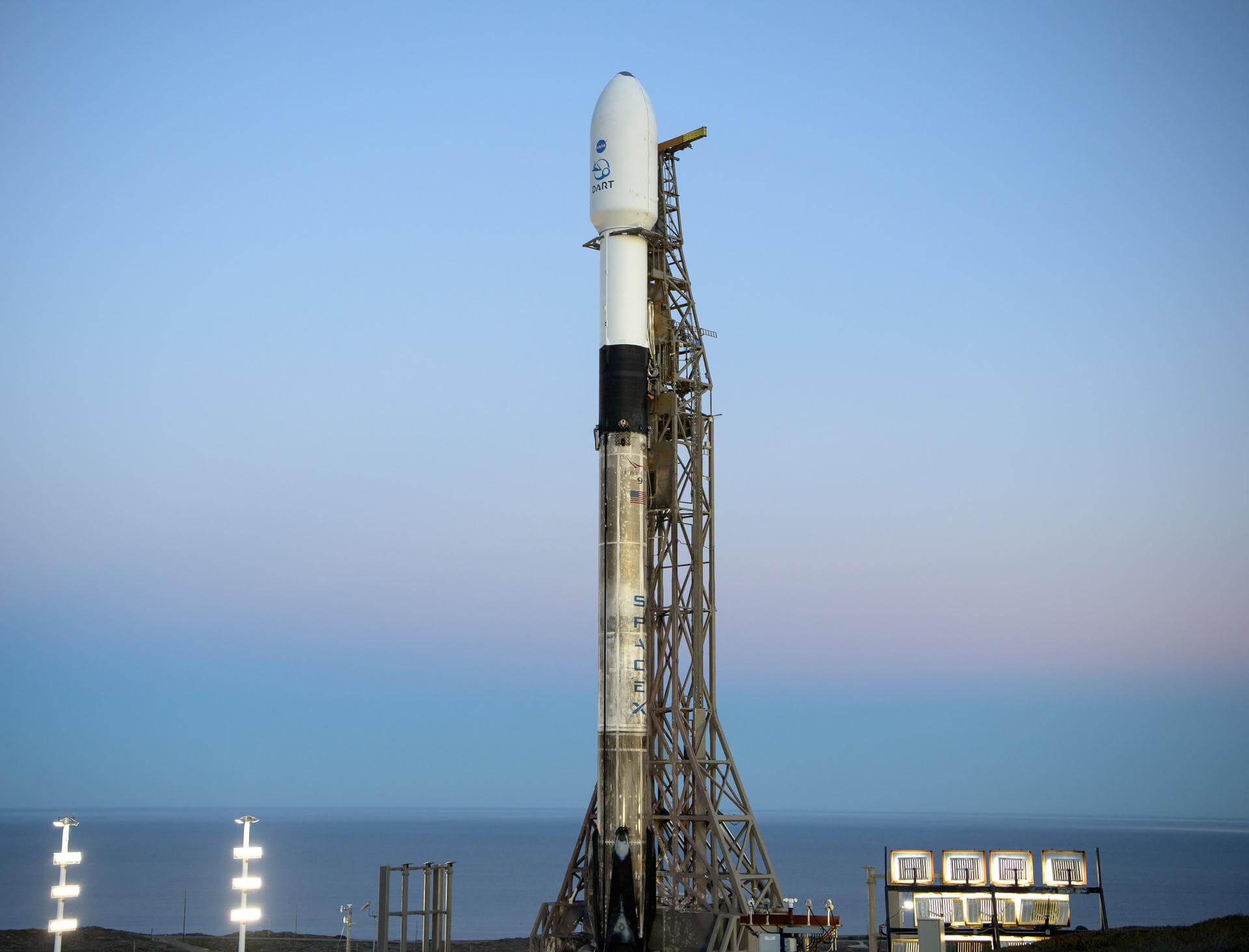
Falcon 9 Block 5 | Double Asteroid Redirection Test (DART)
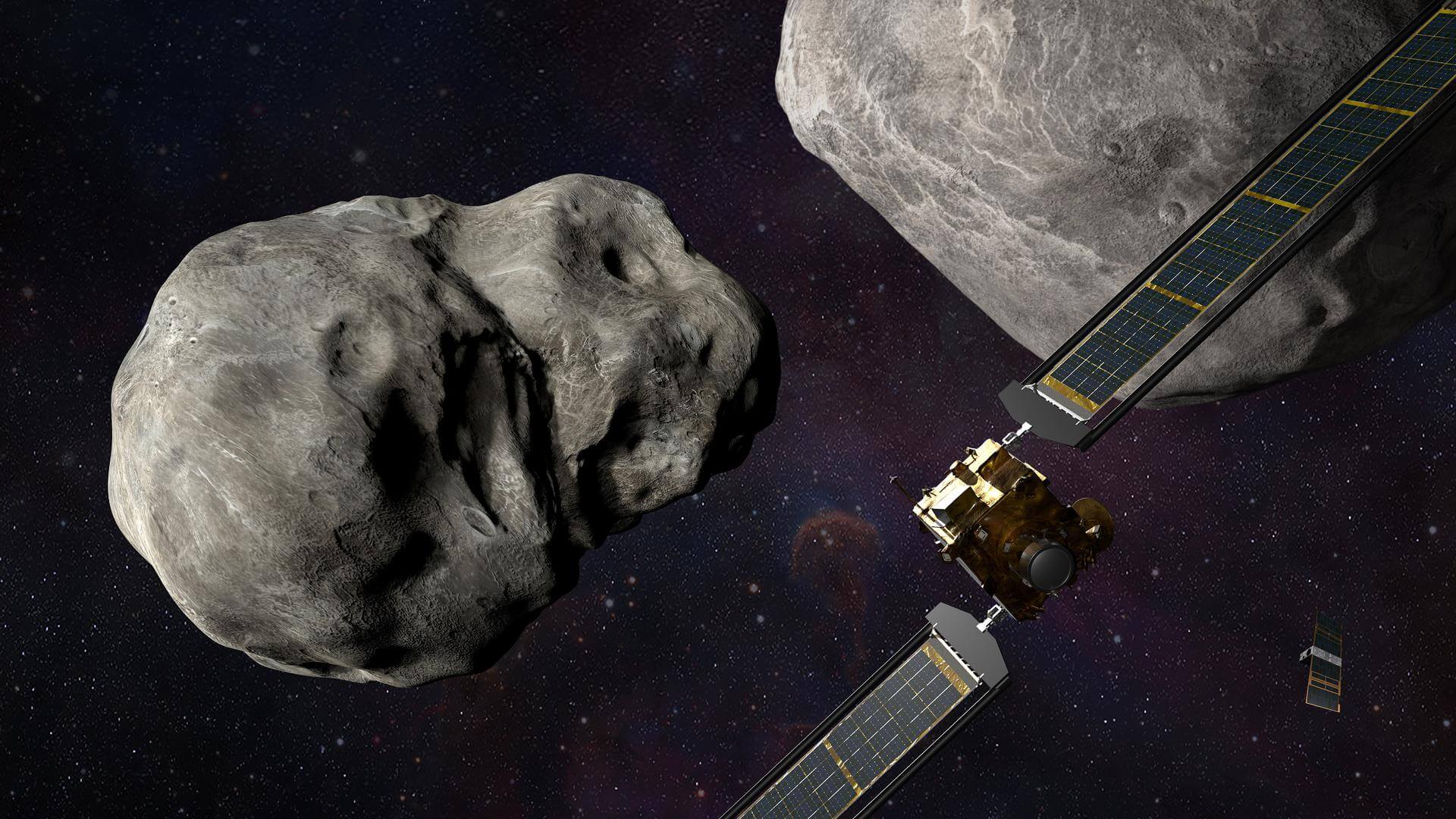
NASA will hold a media briefing about the upcoming launch of the agency’s first planetary defense test mission, the Double Asteroid Redirection Test (DART). Briefing participants include NASA's planetary defense officer Lindley Johnson and representatives from DART project.
DART is currently scheduled to launch at the end of November.
Related Information
Falcon 9 Block 5 | Double Asteroid Redirection Test (DART)
SpaceX | United States of AmericaVandenberg SFB, CA, USA
Nov. 24, 2021, 6:21 a.m.
Status: Launch Successful
Mission:
Double Asteroid Redirection Test (DART) mission is the first-ever mission to demonstrate the capability to deflect an asteroid by colliding a spacecraft with it at high speed, a technique known as a kinetic impactor. DART is a planetary defense-driven test of one of the technologies for preventing the Earth impact of a hazardous asteroid: the kinetic impactor. DART's primary objective is to demonstrate a kinetic impact on a small asteroid. The binary near-Earth asteroid (65803) Didymos is the target for DART. While Didymos' primary body is approximately 800 meters across, its secondary body has a 150-meter size, which is more typical of the size of asteroids that could pose a more common hazard to Earth. The DART spacecraft will achieve the kinetic impact by deliberately crashing itself into the moonlet at a speed of approximately 6 km/s, with the aid of an onboard camera and sophisticated autonomous navigation software. The collision will change the speed of the moonlet in its orbit around the main body by a fraction of one percent, enough to be measured using telescopes on Earth.
Heliocentric N/A B1063 - Flight Proven ( ) Of Course I Still Love YouFalcon 9
Starlink Group 17-52
Space Launch Complex 4E - Vandenberg SFB, CA, USAA batch of 24 satellites for the Starlink mega-constellation - SpaceX's project for space-based Internet communication system.
Falcon 9
NROL-95
Space Launch Complex 40 - Cape Canaveral SFS, FL, USAClassified payload for the US National Reconnaissance Office.
Long March 6A
TJSW-27A & B
Launch Complex 9A - Taiyuan Satellite Launch Center, People's Republic of China2 Chinese classified satellites claimed to be for communication technology test purposes. Actual mission not known.
Long March 7A
Tianlian 3-01
201 - Wenchang Space Launch Site, People's Republic of ChinaTianlian is a Chinese data tracking and relay communications geostationary satellite series. The TL-3 (Tian Lian 3) satellites are the 3rd generation…
Falcon 9
Starlink Group 17-51
Space Launch Complex 4E - Vandenberg SFB, CA, USAA batch of 24 satellites for the Starlink mega-constellation - SpaceX's project for space-based Internet communication system.
Starship
Flight 13
Orbital Launch Pad 2 - SpaceX Starbase, TX, USA13th test flight of the two-stage Starship launch vehicle. Second flight of Starship V3. For the first time, Starship will carry 20 V3 Starlink sa…
Kinetica 1
5 satellites
Launch Area 130 - Jiuquan Satellite Launch Center, People's Republic of ChinaShare-ride of 5 commercial Earth observation and technology demonstration satellites to SSO, including SpaceTY's TY-48. Details TBD.
Long March 3B/E
Tianlian 2-06
Launch Complex 2 (LC-2) - Xichang Satellite Launch Center, People's Republic of ChinaTianlian is a Chinese data tracking and relay communications geostationary satellite series. The TL 2 (Tian Lian 2) satellites represent the second g…
Gravity-1
9 satellites
Yellow Sea (launch location 5) - Haiyang Oriental SpaceportCarried 9 satellites on a share-ride to sun-synchronous orbit. Details TBD.
Falcon 9
MRV-1
Space Launch Complex 40 - Cape Canaveral SFS, FL, USAThe Northrop Grumman/SpaceLogistics MRV-1 is a mission extension payload including a mission robotic vehicle (MRV) and multiple mission extension pod…

