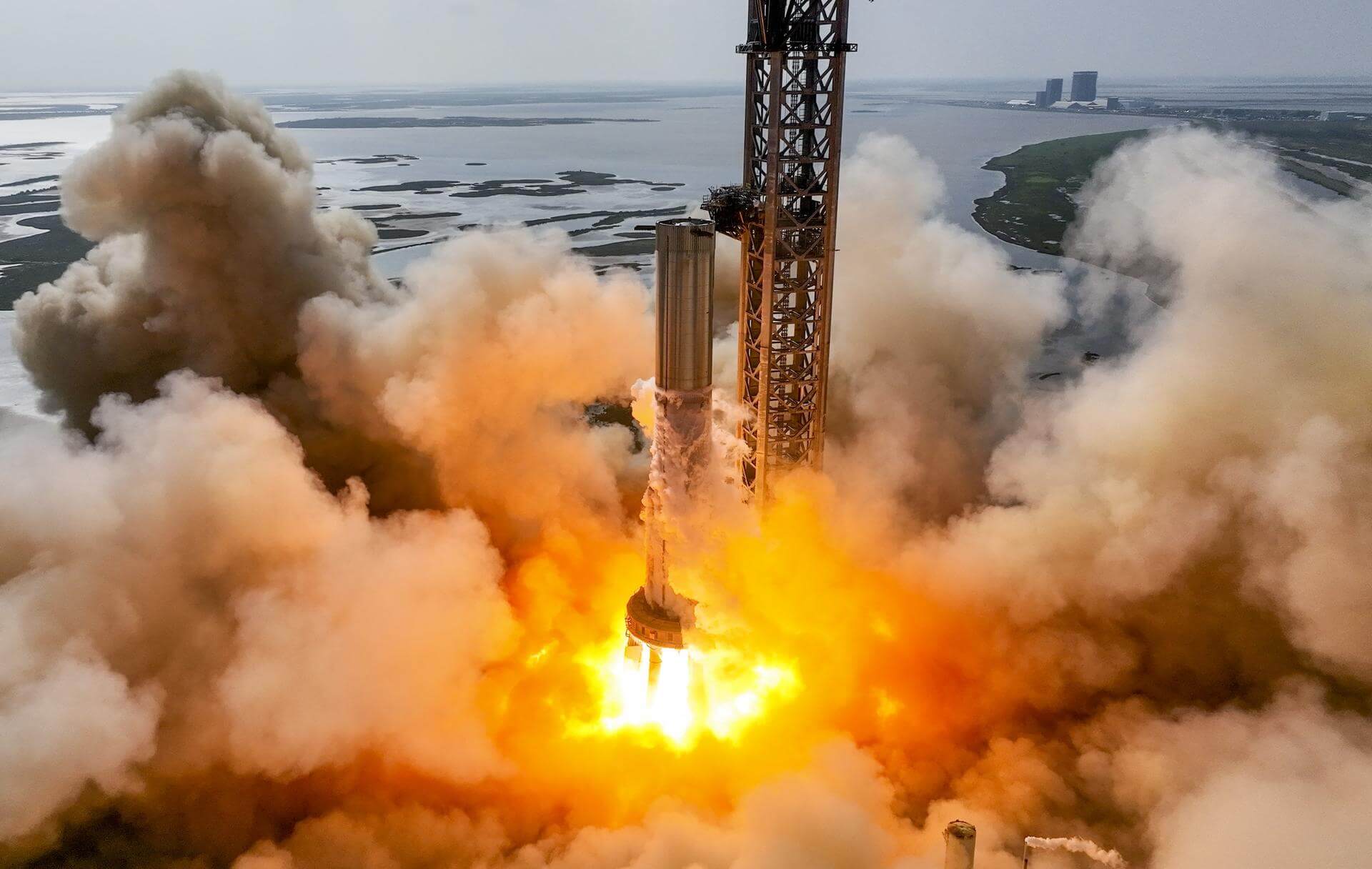
Static Fire
Booster 7 33 Engines Static Fire
Starbase, Boca Chica, TX, USA Starship | Integrated Flight Test
SpaceX performed a static fire of Super Heavy Booster 7 with 31 of its 31 Raptor engines. The test was planned to use all 33 Raptor engines, but one was shut down prior to ignition and another was shut down prematurely during the test.
Updates
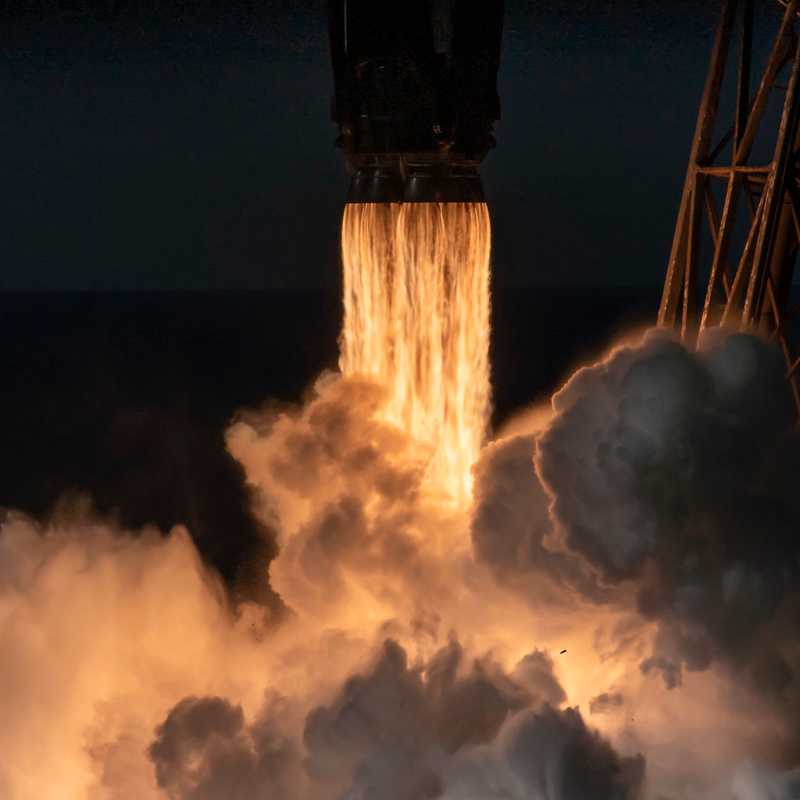
Jay • Feb. 9, 2023, 9:07 p.m.
SpaceX live. Clock holding at T-40 seconds.
Related Information
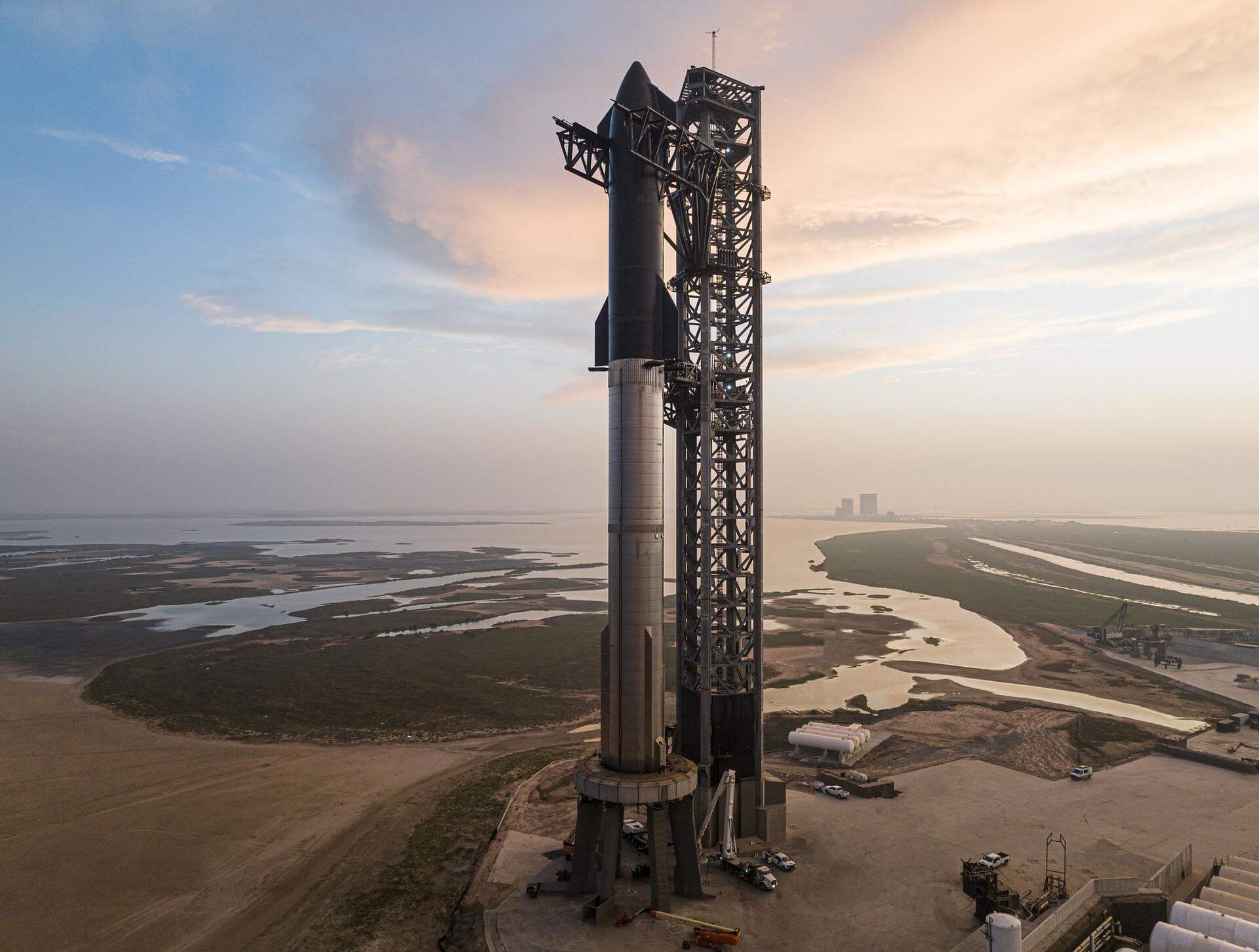
Starship | Integrated Flight Test
SpaceX | United States of AmericaSpaceX Starbase, TX, USA
April 20, 2023, 1:33 p.m.
Status: Launch Failure
Mission:
Maiden flight of the two-stage Starship launch vehicle. The booster was supposed to separate 170 seconds into flight and return to land approximately 32 km off the shore in the Gulf of Mexico. The second stage would have followed a suborbital trajectory and performed an unpowered splashdown approximately 100 km off the northwest coast of Kauai (Hawaii). A launch failure was experienced before stage separation.
Suborbital Booster 7 - Maiden Flight Gulf of MexicoFalcon 9
Starlink Group 17-52
Space Launch Complex 4E - Vandenberg SFB, CA, USAA batch of 24 satellites for the Starlink mega-constellation - SpaceX's project for space-based Internet communication system.
Falcon 9
NROL-95
Space Launch Complex 40 - Cape Canaveral SFS, FL, USAClassified payload for the US National Reconnaissance Office.
Long March 6A
TJSW-27A & B
Launch Complex 9A - Taiyuan Satellite Launch Center, People's Republic of China2 Chinese classified satellites claimed to be for communication technology test purposes. Actual mission not known.
Long March 7A
Tianlian 3-01
201 - Wenchang Space Launch Site, People's Republic of ChinaTianlian is a Chinese data tracking and relay communications geostationary satellite series. The TL-3 (Tian Lian 3) satellites are the 3rd generation…
Falcon 9
Starlink Group 17-51
Space Launch Complex 4E - Vandenberg SFB, CA, USAA batch of 24 satellites for the Starlink mega-constellation - SpaceX's project for space-based Internet communication system.
Starship
Flight 13
Orbital Launch Pad 2 - SpaceX Starbase, TX, USA13th test flight of the two-stage Starship launch vehicle. Second flight of Starship V3. For the first time, Starship will carry 20 V3 Starlink sa…
Kinetica 1
5 satellites
Launch Area 130 - Jiuquan Satellite Launch Center, People's Republic of ChinaShare-ride of 5 commercial Earth observation and technology demonstration satellites to SSO, including SpaceTY's TY-48. Details TBD.
Long March 3B/E
Tianlian 2-06
Launch Complex 2 (LC-2) - Xichang Satellite Launch Center, People's Republic of ChinaTianlian is a Chinese data tracking and relay communications geostationary satellite series. The TL 2 (Tian Lian 2) satellites represent the second g…
Gravity-1
9 satellites
Yellow Sea (launch location 5) - Haiyang Oriental SpaceportCarried 9 satellites on a share-ride to sun-synchronous orbit. Details TBD.
Falcon 9
MRV-1
Space Launch Complex 40 - Cape Canaveral SFS, FL, USAThe Northrop Grumman/SpaceLogistics MRV-1 is a mission extension payload including a mission robotic vehicle (MRV) and multiple mission extension pod…

