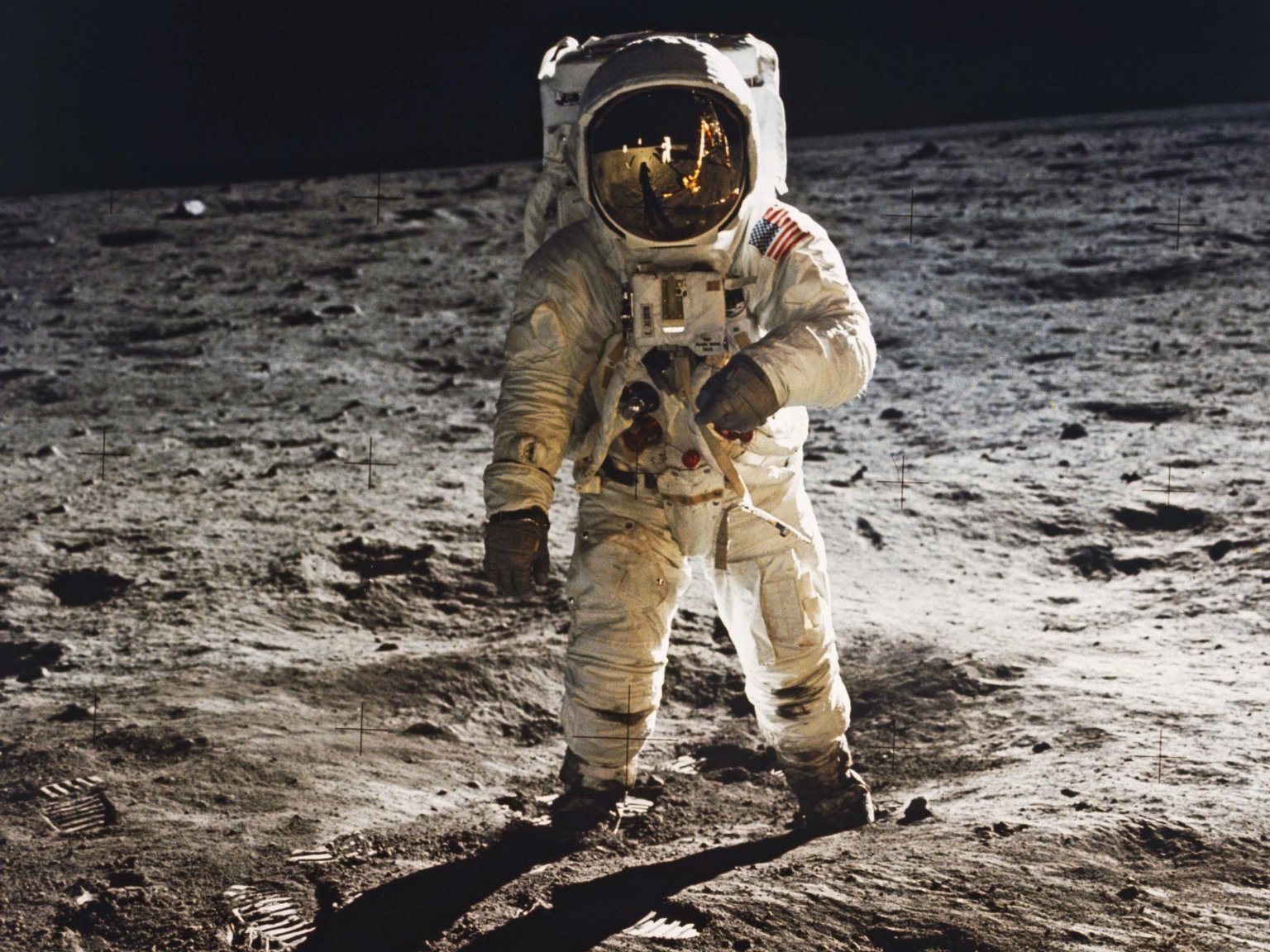
Moon Landing
Apollo 11th 50th Anniversary - Lunar Landing
Lunar Surface Saturn V | Apollo 11
The United States' Apollo 11 was the first crewed mission to land on the Moon, on 20 July 1969. To date, the United States is the only country to have successfully conducted crewed missions to the Moon, with the last departing the lunar surface in December 1972.
A total of twelve men have landed on the Moon. This was accomplished with two US pilot-astronauts flying a Lunar Module on each of six NASA missions across a 41-month period starting 20 July 1969 UTC, with Neil Armstrong and Buzz Aldrin on Apollo 11, and ending on 14 December 1972 UTC with Gene Cernan and Jack Schmitt on Apollo 17. Cernan was the last to step off the lunar surface.
Related Information
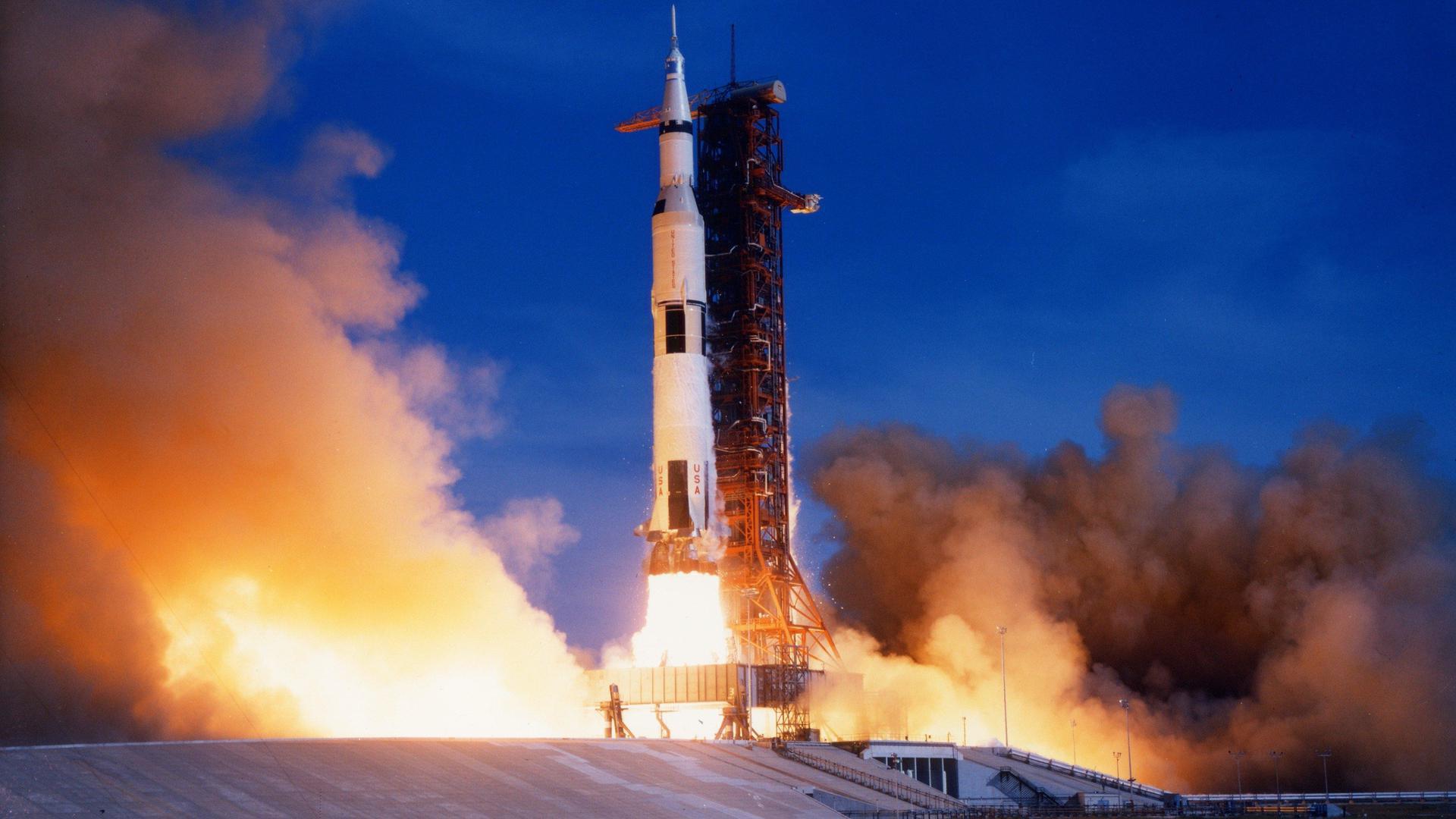
Saturn V | Apollo 11
National Aeronautics and Space Administration | United States of AmericaKennedy Space Center, FL, USA
July 16, 1969, 1:32 p.m.
Status: Launch Successful
Mission:
Apollo 11 was commanded by Neil Armstrong , Command Module Pilot Michael Collins and Lunar Module Pilot Edwin "Buzz" E. Aldrin. The Mission was to complete the goal that President John F. Kennedy set on May 25, 1961 to land a man on the moon and return the crew back to Earth. On July 20,1969 Neil Armstrong and Buzz Aldrin landed there Lunar Module on the sea of tranquility this marked the first time a human has set foot upon another celestial body.
Lunar OrbitFalcon 9
Starlink Group 17-38
Space Launch Complex 4E - Vandenberg SFB, CA, USAA batch of 24 satellites for the Starlink mega-constellation - SpaceX's project for space-based Internet communication system.
Electron
The Grain Goddess Provides (iQPS Launch 7)
Rocket Lab Launch Complex 1A - Rocket Lab Launch Complex 1, Mahia Peninsula, New ZealandSynthetic aperture radar Earth observation satellite for Japanese Earth imaging company iQPS.
Falcon 9
BlueBird 11-13 (Block 2 #6-8)
Space Launch Complex 40 - Cape Canaveral SFS, FL, USAAST SpaceMobile’s Block 2 BlueBird satellites are designed to deliver up to 10 times the bandwidth capacity of the BlueBird Block 1 satellites, requi…
Smart Dragon 3
OSE HS-01 & 02
Haiyang offshore launch location - Haiyang Oriental Spaceport2 hyper-spectral Earth observation satellites from Chinese company STAR.VISION. Both satellites are built in corporation with foreign customers: *…
Falcon 9
Starlink Group 17-53
Space Launch Complex 4E - Vandenberg SFB, CA, USAA batch of 24 satellites for the Starlink mega-constellation - SpaceX's project for space-based Internet communication system.
Long March 8A
SatNet LEO Group 23
Commercial LC-1 - Wenchang Space Launch Site, People's Republic of ChinaA batch of 9 Low Earth Orbit communication satellites for the Chinese state owned SatNet constellation operated by the China Satellite Network Group.…
Falcon 9
Starlink Group 17-52
Space Launch Complex 4E - Vandenberg SFB, CA, USAA batch of 24 satellites for the Starlink mega-constellation - SpaceX's project for space-based Internet communication system.
Falcon 9
NROL-95
Space Launch Complex 40 - Cape Canaveral SFS, FL, USAClassified payload for the US National Reconnaissance Office.
Long March 6A
TJSW-27A & B
Launch Complex 9A - Taiyuan Satellite Launch Center, People's Republic of China2 Chinese classified satellites claimed to be for communication technology test purposes. Actual mission not known.
Long March 7A
Tianlian 3-01
201 - Wenchang Space Launch Site, People's Republic of ChinaTianlian is a Chinese data tracking and relay communications geostationary satellite series. The TL-3 (Tian Lian 3) satellites are the 3rd generation…

