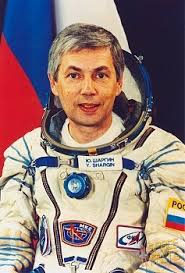
Yuri Shargin
Russian - (RFSA)
Retired
Date of Birth: March 20, 1960
Age: 66
Yuri Georgiyevich Shargin (Russian: Юрий Георгиевич Шаргин) is a retired cosmonaut of the Russian Space Forces. He was selected as a cosmonaut on February 9, 1996. He was selected in 2004, to be the flight engineer on the Soyuz TMA-5 mission to the International Space Station. Shargin was the first Russian military cosmonaut on board and had a secret mission.
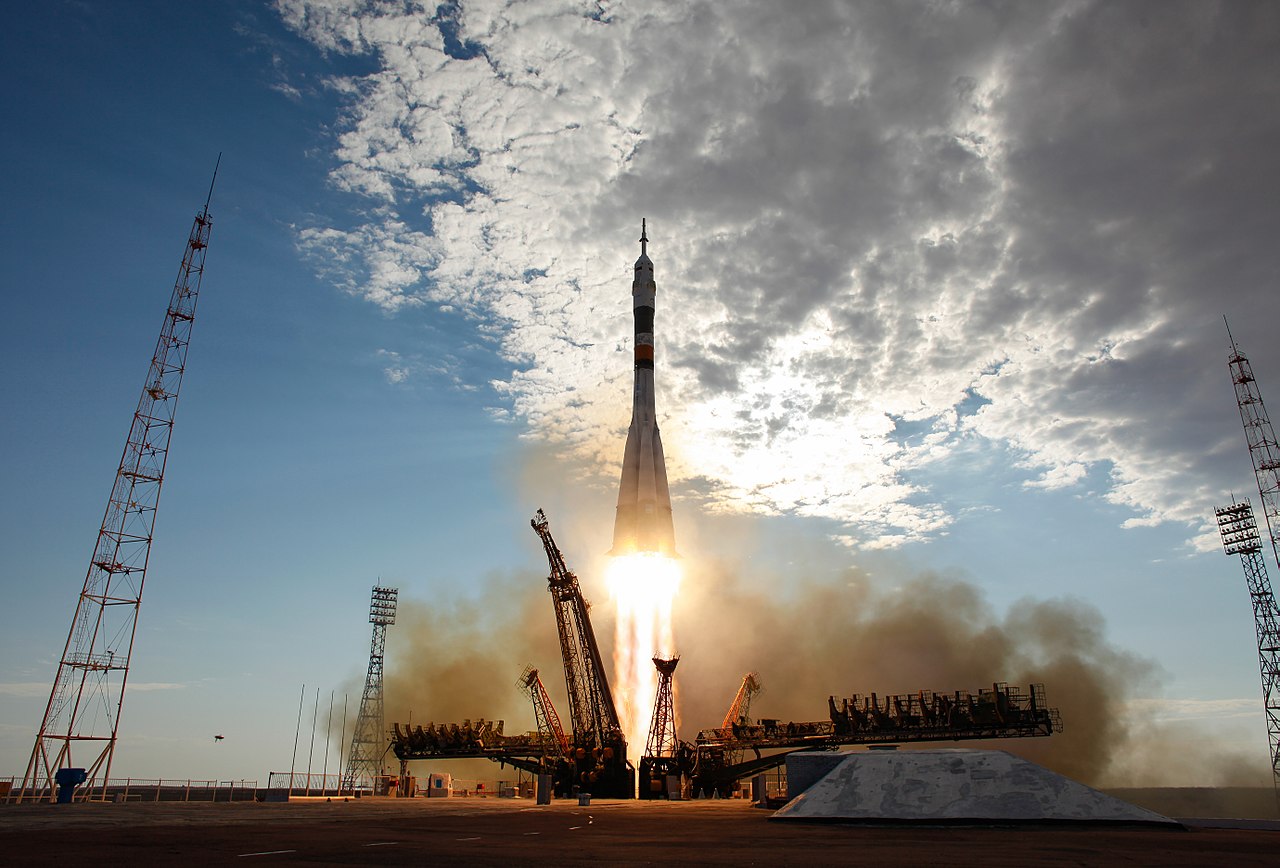
Soyuz-FG | Soyuz TMA-4
Progress Rocket Space Center | RussiaBaikonur Cosmodrome, Republic of Kazakhstan
April 19, 2004, 3:19 a.m.
Status: Success
Mission:
Soyuz TMA-4 begins Expedition 9 by carrying 3 astronauts and cosmonauts to the International Space Station. Russian Commander, cosmonaut Gennady Padalka alongside Flight Engineers, Michael Fincke (NASA) & André Kuipers (ESA) will launch aboard the Soyuz spacecraft from the Baikonur Cosmodrome in Kazakhstan and then rendezvous with the station. It landed on October 24, 2004, 00:35:00 UTC
Low Earth OrbitSoyuz-FG | Soyuz TMA-5
Progress Rocket Space Center | RussiaBaikonur Cosmodrome, Republic of Kazakhstan
Oct. 14, 2004, 3:06 a.m.
Status: Success
Mission:
Soyuz TMA-5 begins Expedition 10 by carrying 3 astronauts and cosmonauts to the International Space Station. Russian Commander, cosmonaut Salizhan Sharipov alongside Flight Engineers, Leroy Chiao (NASA) & Yuri Shargin (RSA) will launch aboard the Soyuz spacecraft from the Baikonur Cosmodrome in Kazakhstan and then rendezvous with the station. It landed on April 24, 2005, 22:08 UTC
Low Earth OrbitThe Roscosmos State Corporation for Space Activities, commonly known as Roscosmos, is the governmental body responsible for the space science program of the Russian Federation and general aerospace research. Soyuz has many launch locations the Russian sites are Baikonur, Plesetsk and Vostochny however Ariane also purchases the vehicle and launches it from French Guiana.
Starship
Flight 13
Orbital Launch Pad 2 - SpaceX Starbase, TX, USA13th test flight of the two-stage Starship launch vehicle. Second flight of Starship V3. For the first time, Starship will carry 20 V3 Starlink sa…
Kinetica 1
5 satellites
Launch Area 130 - Jiuquan Satellite Launch Center, People's Republic of ChinaShare-ride of 5 commercial Earth observation and technology demonstration satellites to SSO, including SpaceTY's TY-48. Details TBD.
Long March 3B/E
Tianlian 2-06
Launch Complex 2 (LC-2) - Xichang Satellite Launch Center, People's Republic of ChinaTianlian is a Chinese data tracking and relay communications geostationary satellite series. The TL 2 (Tian Lian 2) satellites represent the second g…
Gravity-1
9 satellites
Yellow Sea (launch location 5) - Haiyang Oriental SpaceportCarried 9 satellites on a share-ride to sun-synchronous orbit. Details TBD.
Falcon 9
MRV-1
Space Launch Complex 40 - Cape Canaveral SFS, FL, USAThe Northrop Grumman/SpaceLogistics MRV-1 is a mission extension payload including a mission robotic vehicle (MRV) and multiple mission extension pod…

