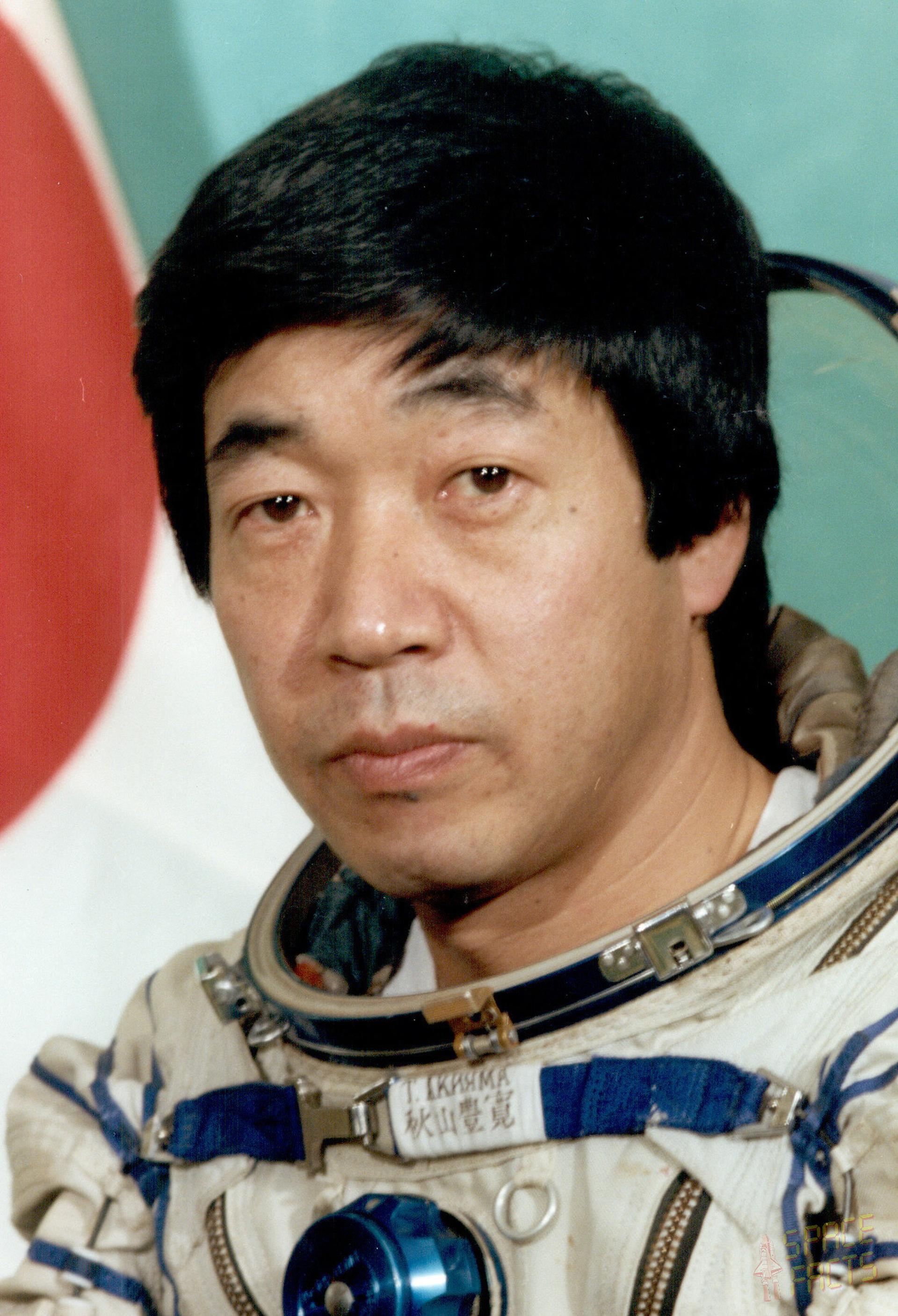
Toyohiro Akiyama
Japanese
Retired
Date of Birth: June 22, 1942
Age: 84
Toyohiro Akiyama (born July 22, 1942) is a Japanese TV journalist best known for his flight to the Mir space station aboard a Soviet Soyuz spacecraft in 1990. Akiyama is the first person of Japanese nationality to have flown in space.
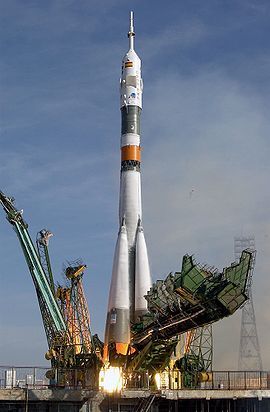
Soyuz-U2 | Soyuz TM-10
Soviet Space Program | RussiaBaikonur Cosmodrome, Republic of Kazakhstan
Aug. 1, 1990, 9:32 a.m.
Status: Success
Mission:
Soyuz TM-10 was the tenth mission and the seventh long-duration expedition to Mir space station. The mission began on August 1, 1990, 09:32:21 UTC, launching Commander Gennadi Manakov and Flight Engineer Gennadi Strekalov into orbit. They docked with Mir two days later. During their stay there, cosmonauts performed an EVA, various station repair and maintenance tasks, and carried out scientific experiments in biology, geophysics, space technology, astronomy etc. They were visited by a Progress M-5 resupply spacecraft and Soyuz TM-11 expedition. The mission concluded with a safe landing back on Earth on December 10, 1990, 06:08:12 UTC.
Low Earth OrbitSoyuz-U2 | Soyuz TM-11
Soviet Space Program | RussiaBaikonur Cosmodrome, Republic of Kazakhstan
Dec. 2, 1990, 8:13 a.m.
Status: Success
Mission:
Soyuz TM-11 was the 11th mission and the eighth long-duration expedition to Mir space station. The mission began on December 2, 1990, 08:13:32 UTC, launching Commander Viktor Afanasyev, Flight Engineer Musa Manarov and Research Cosmonaut Toyohiro Akiyama, the first space tourist, into orbit. They docked with Mir two days later. During their stay there, cosmonauts performed EVAs, various station repair and maintenance tasks, and carried out scientific experiments in biology, geophysics, space technology, astronomy etc. They were visited by several Progress resupply spacecrafts, and welcomed aboard the ninth long-duration expedition crew, which arrived in Soyuz TM-12 vehicle. Toyohiro Akiyama returned on December 10, 1990, in Soyuz TM-10 spacecraft, while the mission itself concluded with a safe landing back on Earth on May 26, 1991, 10:04:13 UTC.
Low Earth OrbitElectron
The Grain Goddess Provides (iQPS Launch 7)
Rocket Lab Launch Complex 1A - Rocket Lab Launch Complex 1, Mahia Peninsula, New ZealandSynthetic aperture radar Earth observation satellite for Japanese Earth imaging company iQPS.
Falcon 9
BlueBird 11-13 (Block 2 #6-8)
Space Launch Complex 40 - Cape Canaveral SFS, FL, USAAST SpaceMobile’s Block 2 BlueBird satellites are designed to deliver up to 10 times the bandwidth capacity of the BlueBird Block 1 satellites, requi…
Smart Dragon 3
OSE HS-01 & 02
Haiyang offshore launch location - Haiyang Oriental Spaceport2 hyper-spectral Earth observation satellites from Chinese company STAR.VISION. Both satellites are built in corporation with foreign customers: *…
Falcon 9
Starlink Group 17-53
Space Launch Complex 4E - Vandenberg SFB, CA, USAA batch of 24 satellites for the Starlink mega-constellation - SpaceX's project for space-based Internet communication system.
Long March 8A
SatNet LEO Group 23
Commercial LC-1 - Wenchang Space Launch Site, People's Republic of ChinaA batch of 9 Low Earth Orbit communication satellites for the Chinese state owned SatNet constellation operated by the China Satellite Network Group.…

