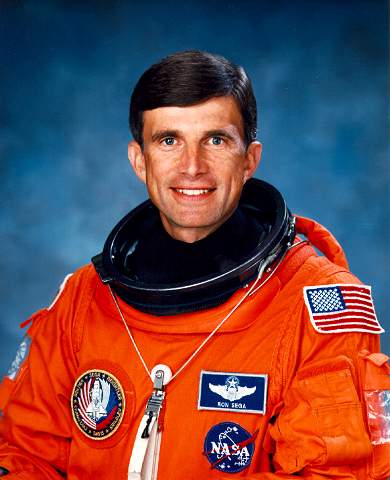
Ronald M. Sega
American - (NASA)
Retired
Date of Birth: Dec. 4, 1952
Age: 73
Ronald "Ron" Michael Sega is professor of systems engineering and Vice President for Energy and the Environment at the Colorado State University Research Foundation, a non-profit advocacy organization supporting CSU. He is also the Vice President and Enterprise Executive for Energy and Environment at The Ohio State University. From August 2005 to August 2007, he served as Under Secretary of the Air Force. He is a retired Major General in the United States Air Force and a former NASA astronaut. Sega was born in Cleveland, Ohio, he is of Slovene origin. He was married to fellow astronaut Bonnie J. Dunbar. He is now married to Ann Sega and they have two sons. He has lived in both Northfield, Ohio and Colorado Springs.
Space Shuttle Discovery / OV-103 | STS-60
National Aeronautics and Space Administration | United States of AmericaKennedy Space Center, FL, USA
Feb. 3, 1994, 12:10 p.m.
Status: Success
Mission:
STS-60 was the first mission of the US/Russian Shuttle-Mir Program, which carried Sergei K. Krikalev, the first Russian cosmonaut to fly aboard a Space Shuttle. The mission used Space Shuttle Discovery, which lifted off from Launch Pad 39A on 3 February 1994 from Kennedy Space Center, Florida. The mission carried the Wake Shield Facility experiment and a SPACEHAB module into orbit, and carried out a live bi-directional audio and downlink link-up with the cosmonauts aboard the Russian space station Mir.
Low Earth OrbitSpace Shuttle Atlantis / OV-104 | STS-76
National Aeronautics and Space Administration | United States of AmericaKennedy Space Center, FL, USA
March 22, 1996, 8:13 a.m.
Status: Success
Mission:
STS-76 was NASA's 76th Space Shuttle mission, and the 16th mission for Atlantis. STS-76 launched on 22 March 1996 at 3:13 am EST (UTC −5) from Kennedy Space Center launch pad 39B. STS-76 lasted over 9 days, traveled about 3,800,000 miles (6,100,000 km) while orbiting Earth an estimated 145 times, and landing at 5:28 am PST (UTC −8) on 31 March 1996 at Edwards Air Force Base runway 22.
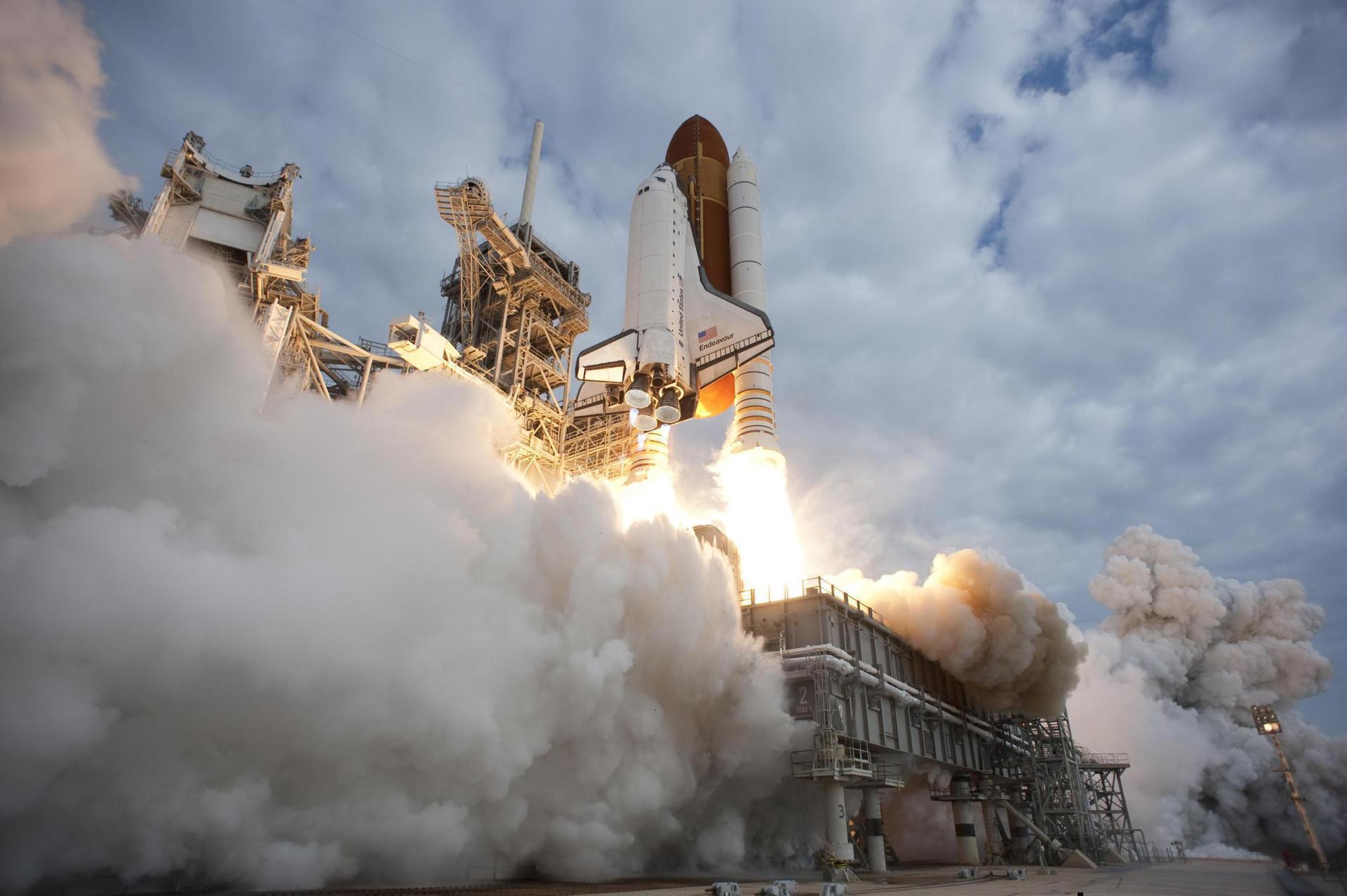
Low Earth OrbitThe National Aeronautics and Space Administration is an independent agency of the executive branch of the United States federal government responsible for the civilian space program, as well as aeronautics and aerospace research. NASA have many launch facilities but most are inactive. The most commonly used pad will be LC-39B at Kennedy Space Center in Florida.
Falcon 9
Starlink Group 17-49
Space Launch Complex 4E - Vandenberg SFB, CA, USAA batch of 24 satellites for the Starlink mega-constellation - SpaceX's project for space-based Internet communication system.
Falcon 9
Starlink Group 10-19
Space Launch Complex 40 - Cape Canaveral SFS, FL, USAA batch of 29 satellites for the Starlink mega-constellation - SpaceX's project for space-based Internet communication system.
H3-22
Michibiki 7 (QZS-7)
Yoshinobu Launch Complex LP-2 - Tanegashima Space Center, JapanQZSS (Quasi Zenith Satellite System) is a Japanese satellite navigation system operating from inclined, elliptical geosynchronous orbits to achieve o…
Long March 7A
ChinaSat 4B
201 - Wenchang Space Launch Site, People's Republic of ChinaChinese communication geostationary satellite for unknown purposes.
Falcon 9
Starlink Group 17-38
Space Launch Complex 4E - Vandenberg SFB, CA, USAA batch of 24 satellites for the Starlink mega-constellation - SpaceX's project for space-based Internet communication system.

