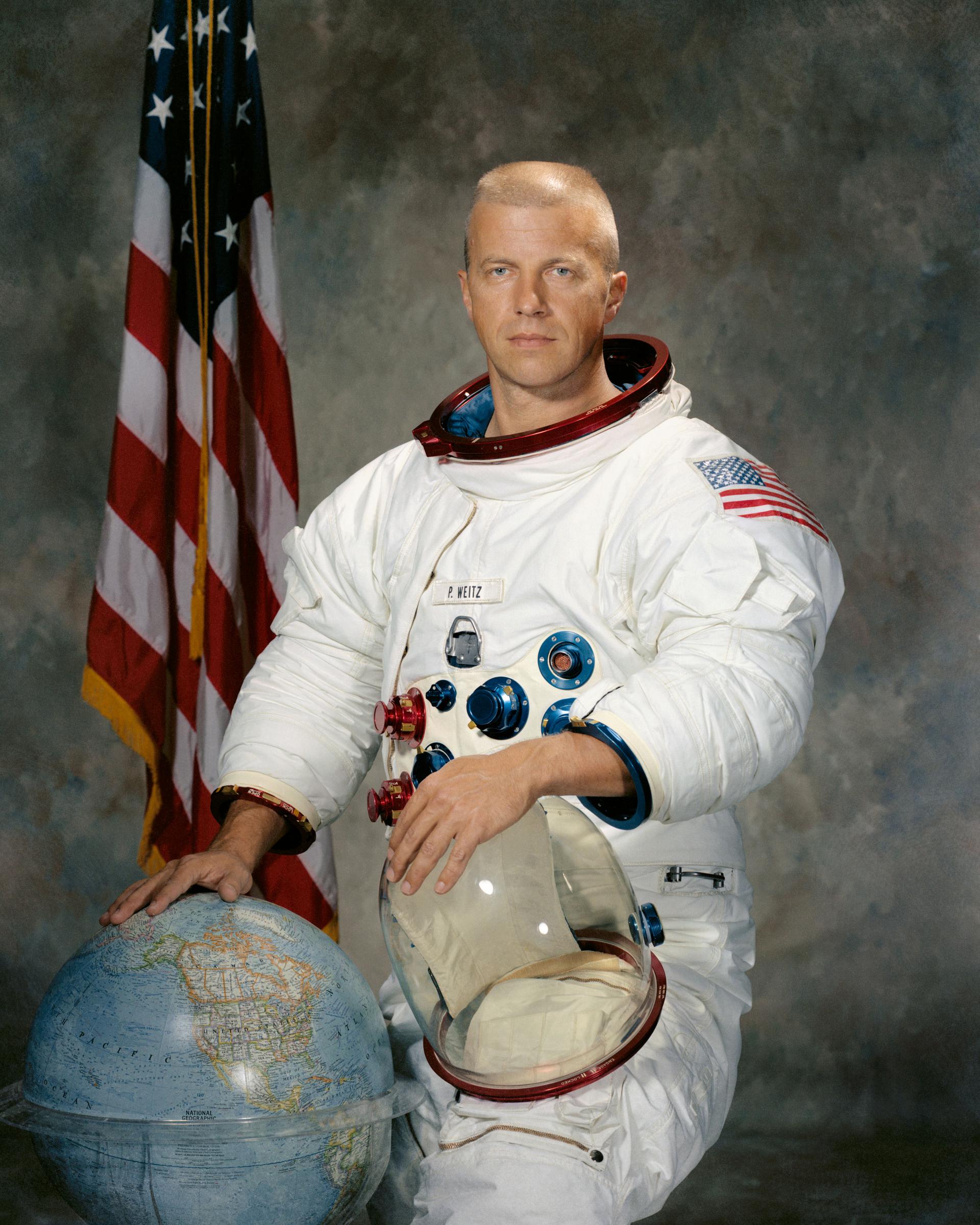
Paul J. Weitz
American - (NASA)
Deceased
Date of Birth: July 25, 1932
Date of Death: Oct. 22, 2017
Paul Joseph Weitz was an American naval officer and aviator, aeronautical engineer, test pilot, and NASA astronaut, who flew into space twice. He was a member of the three-man crew who flew on Skylab 2, the first manned Skylab mission. He was also Commander of the STS-6 mission, the first of the Space Shuttle Challenger flights.
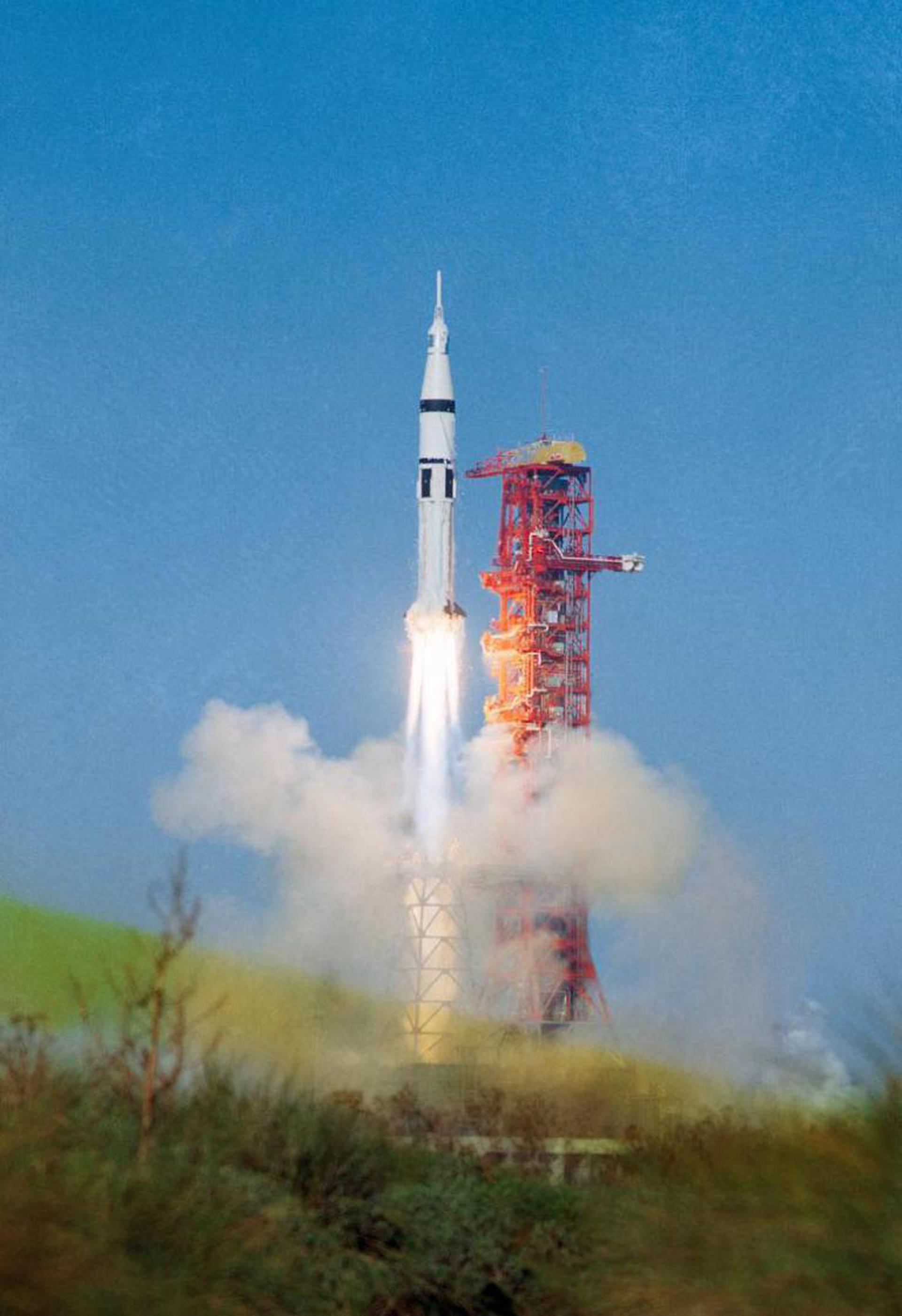
Saturn IB | Skylab 2
National Aeronautics and Space Administration | United States of AmericaKennedy Space Center, FL, USA
May 25, 1973, 1 p.m.
Status: Success
Mission:
Skylab 2 (also known as SL-2 or SLM-1) was the first crewed mission to the first US orbital space station Skylab. The mission began on May 25, 1973, 13:00:00 UTC with the launch of a three-person crew. Crew members were the Commander Charles "Pete" Conrad, Jr., Science Pilot Joseph P. Kerwin and Pilot Paul J. Weitz. During their 26-day stay on the station, crew performed station repairs and conducted scientific, medical experiments, gathered solar and Earth science data. The mission ended successfully with the splashdown in the Pacific Ocean on June 22, 1973, 13:49:48 UTC.
Low Earth Orbit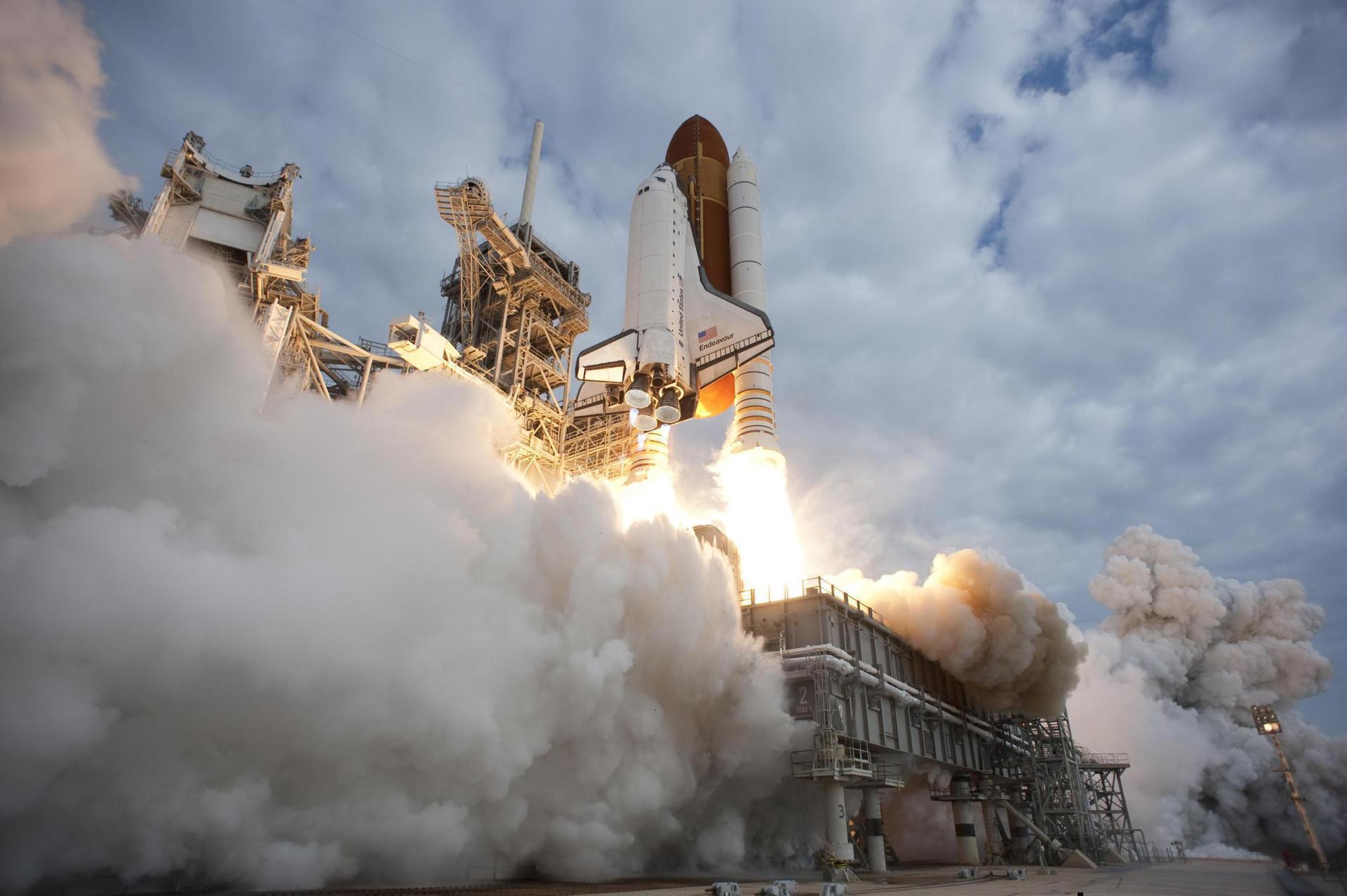
Space Shuttle Challenger / OV-099 | STS-6
National Aeronautics and Space Administration | United States of AmericaKennedy Space Center, FL, USA
April 4, 1983, 6:30 p.m.
Status: Success
Mission:
STS-6 was the maiden flight of the Space Shuttle Challenger. It deployed the first Tracking and Data Relay Satellite into orbit for NASA, forming an integral part of NASAs in-space 10. It was also the first Space Shuttle mission involving a spacewalk. It was the first mission in which the Extravehicular Mobility Unit (EMU) was used.
Low Earth OrbitThe National Aeronautics and Space Administration is an independent agency of the executive branch of the United States federal government responsible for the civilian space program, as well as aeronautics and aerospace research. NASA have many launch facilities but most are inactive. The most commonly used pad will be LC-39B at Kennedy Space Center in Florida.
H3-22
Michibiki 7 (QZS-7)
Yoshinobu Launch Complex LP-2 - Tanegashima Space Center, JapanQZSS (Quasi Zenith Satellite System) is a Japanese satellite navigation system operating from inclined, elliptical geosynchronous orbits to achieve o…
Long March 7A
ChinaSat 4B
201 - Wenchang Space Launch Site, People's Republic of ChinaChinese communication geostationary satellite for unknown purposes.
Falcon 9
Starlink Group 17-38
Space Launch Complex 4E - Vandenberg SFB, CA, USAA batch of 24 satellites for the Starlink mega-constellation - SpaceX's project for space-based Internet communication system.
Electron
The Grain Goddess Provides (iQPS Launch 7)
Rocket Lab Launch Complex 1A - Rocket Lab Launch Complex 1, Mahia Peninsula, New ZealandSynthetic aperture radar Earth observation satellite for Japanese Earth imaging company iQPS.
Falcon 9
BlueBird 11-13 (Block 2 #6-8)
Space Launch Complex 40 - Cape Canaveral SFS, FL, USAAST SpaceMobile’s Block 2 BlueBird satellites are designed to deliver up to 10 times the bandwidth capacity of the BlueBird Block 1 satellites, requi…

