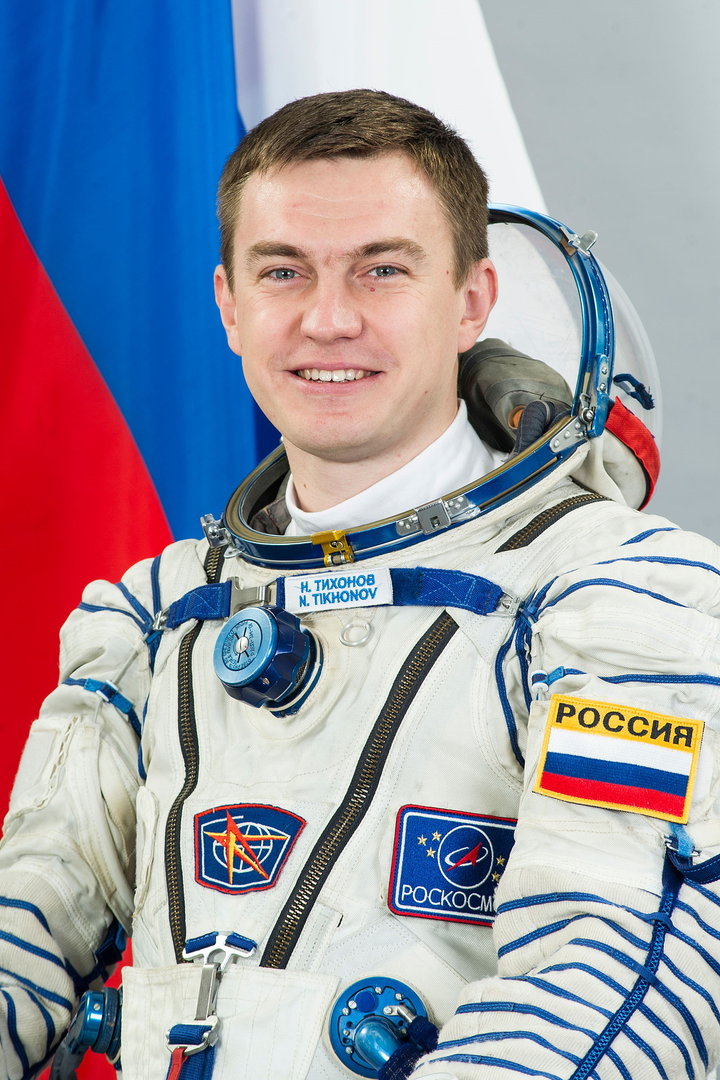
Nikolai Tikhonov
Russian - (RFSA)
Retired
Date of Birth: May 23, 1982
Age: 44
Nikolay Vladimirovich Tikhonov (Russian: Николай В. Тихонов) was born May 23, 1982. He is a former Russian cosmonaut, selected in 2006. He was selected as a backup flight engineer for Soyuz MS-02. He was made a prime crew member of Soyuz MS-04 but, due to Russian budget cuts, the crews were changed and Tikhonov was then slated to make his first spaceflight on the Soyuz MS-10 spacecraft. He was again removed from the manifest due to delays in launching the Russian Nauka module. He was scheduled to fly into space as commander of the Soyuz MS-15 mission, although he was removed for a third time following the aborted launch of Soyuz MS-10, and the subsequent crew changes that followed. He was then scheduled to finally make his first flight onboard Soyuz MS-16 in 2020. However he reportedly got an eye injury a month before the launch, was replaced on the flight, and subsequently left the cosmonaut corps due to health issues.
Spaceflight Record
No spaceflights found for Nikolai Tikhonov.
The Roscosmos State Corporation for Space Activities, commonly known as Roscosmos, is the governmental body responsible for the space science program of the Russian Federation and general aerospace research. Soyuz has many launch locations the Russian sites are Baikonur, Plesetsk and Vostochny however Ariane also purchases the vehicle and launches it from French Guiana.
Falcon 9
Starlink Group 17-51
Space Launch Complex 4E - Vandenberg SFB, CA, USAA batch of 24 satellites for the Starlink mega-constellation - SpaceX's project for space-based Internet communication system.
Starship
Flight 13
Orbital Launch Pad 2 - SpaceX Starbase, TX, USA13th test flight of the two-stage Starship launch vehicle. Second flight of Starship V3. For the first time, Starship will carry 20 V3 Starlink sa…
Kinetica 1
5 satellites
Launch Area 130 - Jiuquan Satellite Launch Center, People's Republic of ChinaShare-ride of 5 commercial Earth observation and technology demonstration satellites to SSO, including SpaceTY's TY-48. Details TBD.
Long March 3B/E
Tianlian 2-06
Launch Complex 2 (LC-2) - Xichang Satellite Launch Center, People's Republic of ChinaTianlian is a Chinese data tracking and relay communications geostationary satellite series. The TL 2 (Tian Lian 2) satellites represent the second g…
Gravity-1
9 satellites
Yellow Sea (launch location 5) - Haiyang Oriental SpaceportCarried 9 satellites on a share-ride to sun-synchronous orbit. Details TBD.

