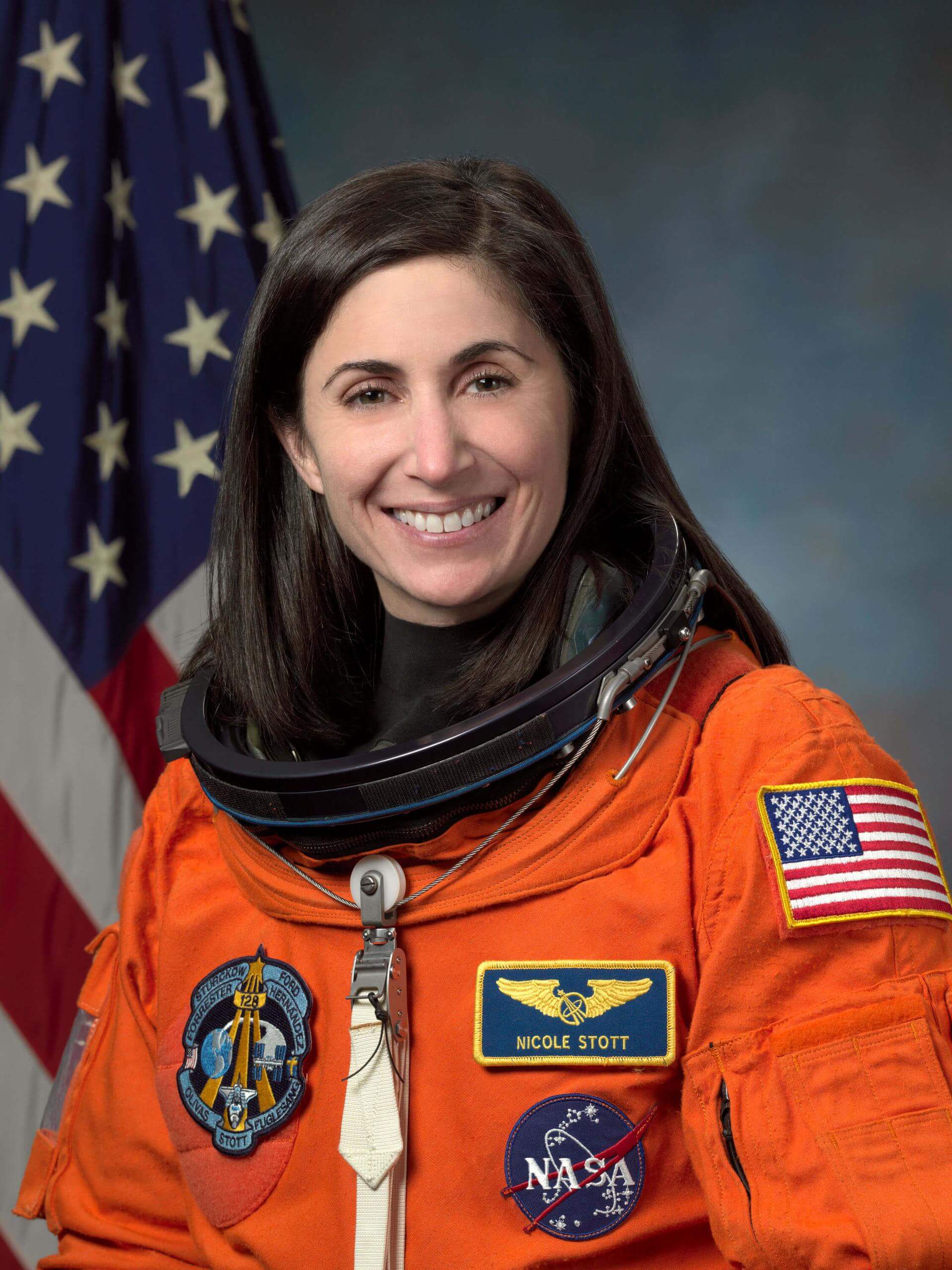
Nicole Stott
American - (NASA)
Retired
Date of Birth: Nov. 19, 1962
Age: 63
Nicole Marie Passonno Stott is an American engineer and a NASA astronaut. She served as a Flight Engineer on ISS Expedition 20 and Expedition 21 and was a Mission Specialist on STS-128 and STS-133. After 27 years of working at NASA, the space agency announced her retirement effective June 1, 2015.
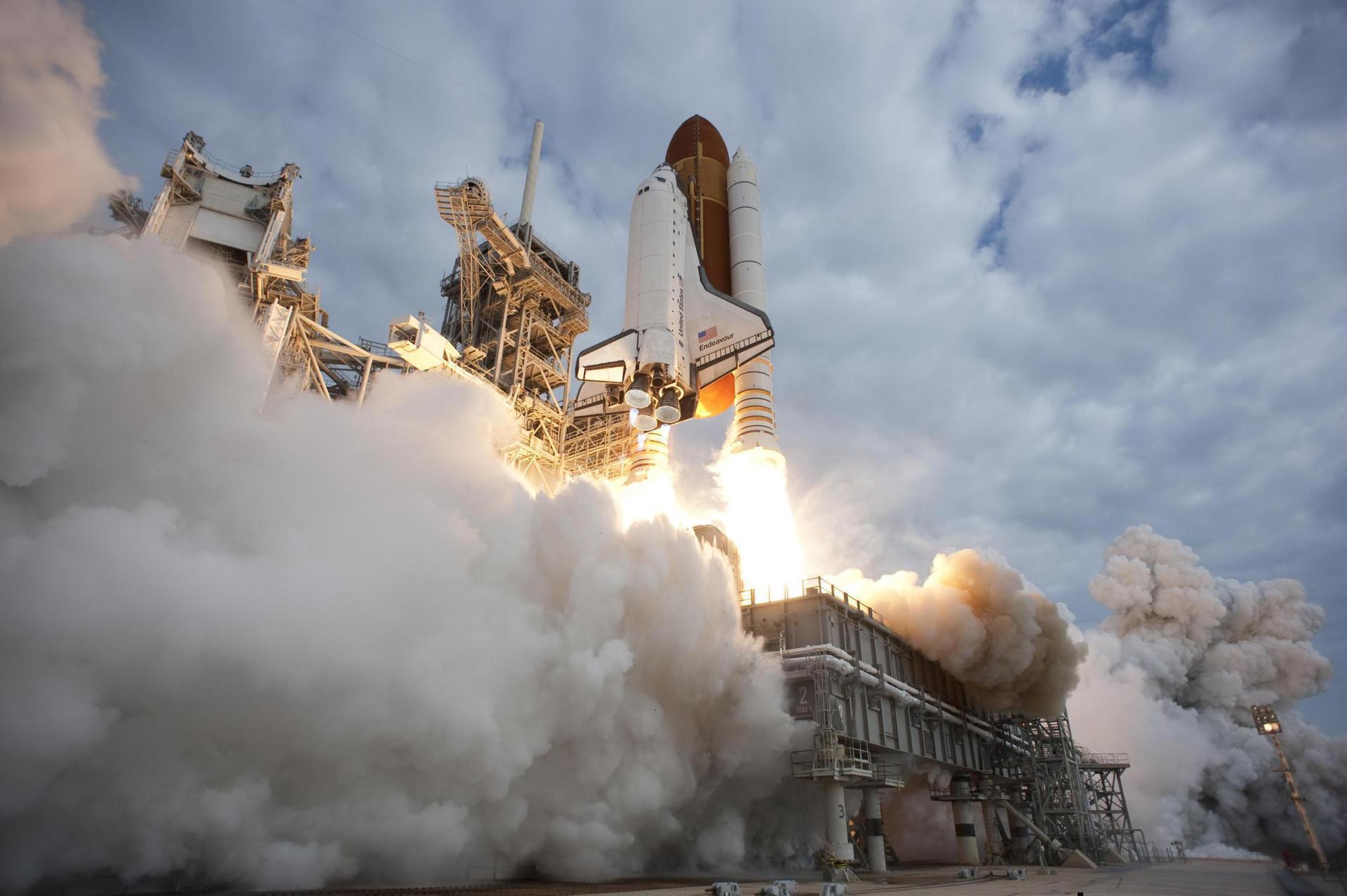
Space Shuttle Discovery / OV-103 | STS-128
National Aeronautics and Space Administration | United States of AmericaKennedy Space Center, FL, USA
Aug. 29, 2009, 3:59 a.m.
Status: Success
Mission:
STS-128 (ISS assembly flight 17A) was a NASA Space Shuttle mission to the International Space Station (ISS) that launched on 28 August 2009. Space Shuttle Discovery carried the Multi-Purpose Logistics Module Leonardo as its primary payload. Leonardo contained a collection of experiments for studying the physics and chemistry of microgravity. Three spacewalks were carried out during the mission, which removed and replaced a materials processing experiment outside ESA's Columbus module, and returned an empty ammonia tank assembly.
Low Earth OrbitSpace Shuttle Atlantis / OV-104 | STS-129
National Aeronautics and Space Administration | United States of AmericaKennedy Space Center, FL, USA
Nov. 16, 2009, 7:28 p.m.
Status: Success
Mission:
STS-129 (ISS assembly flight ULF3) was a NASA Space Shuttle mission to the International Space Station (ISS) flown by Atlantis. STS-129 focused on staging spare components outside the station. The 11-day flight included three spacewalks. The payload bay carried two large ExPRESS Logistics Carriers holding two spare gyroscopes, two nitrogen tank assemblies, two pump modules, an ammonia tank assembly, a spare latching end effector for the station's robotic arm, a spare trailing umbilical system for the Mobile Transporter, and a high-pressure gas tank. STS-129 was the first flight of an ExPRESS Logistics Carrier.
Low Earth OrbitSpace Shuttle Discovery / OV-103 | STS-133
National Aeronautics and Space Administration | United States of AmericaKennedy Space Center, FL, USA
Feb. 24, 2011, 9:53 p.m.
Status: Success
Mission:
STS-133 was an ISS assembly flight. Payload included the Permanent Multipurpose Module Leonardo, which was left permanently docked to one of the station's ports. The shuttle also carried the third of four ExPRESS Logistics Carriers to the ISS, as well as a humanoid robot called Robonaut.
Low Earth OrbitThe National Aeronautics and Space Administration is an independent agency of the executive branch of the United States federal government responsible for the civilian space program, as well as aeronautics and aerospace research. NASA have many launch facilities but most are inactive. The most commonly used pad will be LC-39B at Kennedy Space Center in Florida.
Falcon 9
Starlink Group 17-51
Space Launch Complex 4E - Vandenberg SFB, CA, USAA batch of 24 satellites for the Starlink mega-constellation - SpaceX's project for space-based Internet communication system.
Starship
Flight 13
Orbital Launch Pad 2 - SpaceX Starbase, TX, USA13th test flight of the two-stage Starship launch vehicle. Second flight of Starship V3. For the first time, Starship will carry 20 V3 Starlink sa…
Kinetica 1
5 satellites
Launch Area 130 - Jiuquan Satellite Launch Center, People's Republic of ChinaShare-ride of 5 commercial Earth observation and technology demonstration satellites to SSO, including SpaceTY's TY-48. Details TBD.
Long March 3B/E
Tianlian 2-06
Launch Complex 2 (LC-2) - Xichang Satellite Launch Center, People's Republic of ChinaTianlian is a Chinese data tracking and relay communications geostationary satellite series. The TL 2 (Tian Lian 2) satellites represent the second g…
Gravity-1
9 satellites
Yellow Sea (launch location 5) - Haiyang Oriental SpaceportCarried 9 satellites on a share-ride to sun-synchronous orbit. Details TBD.

