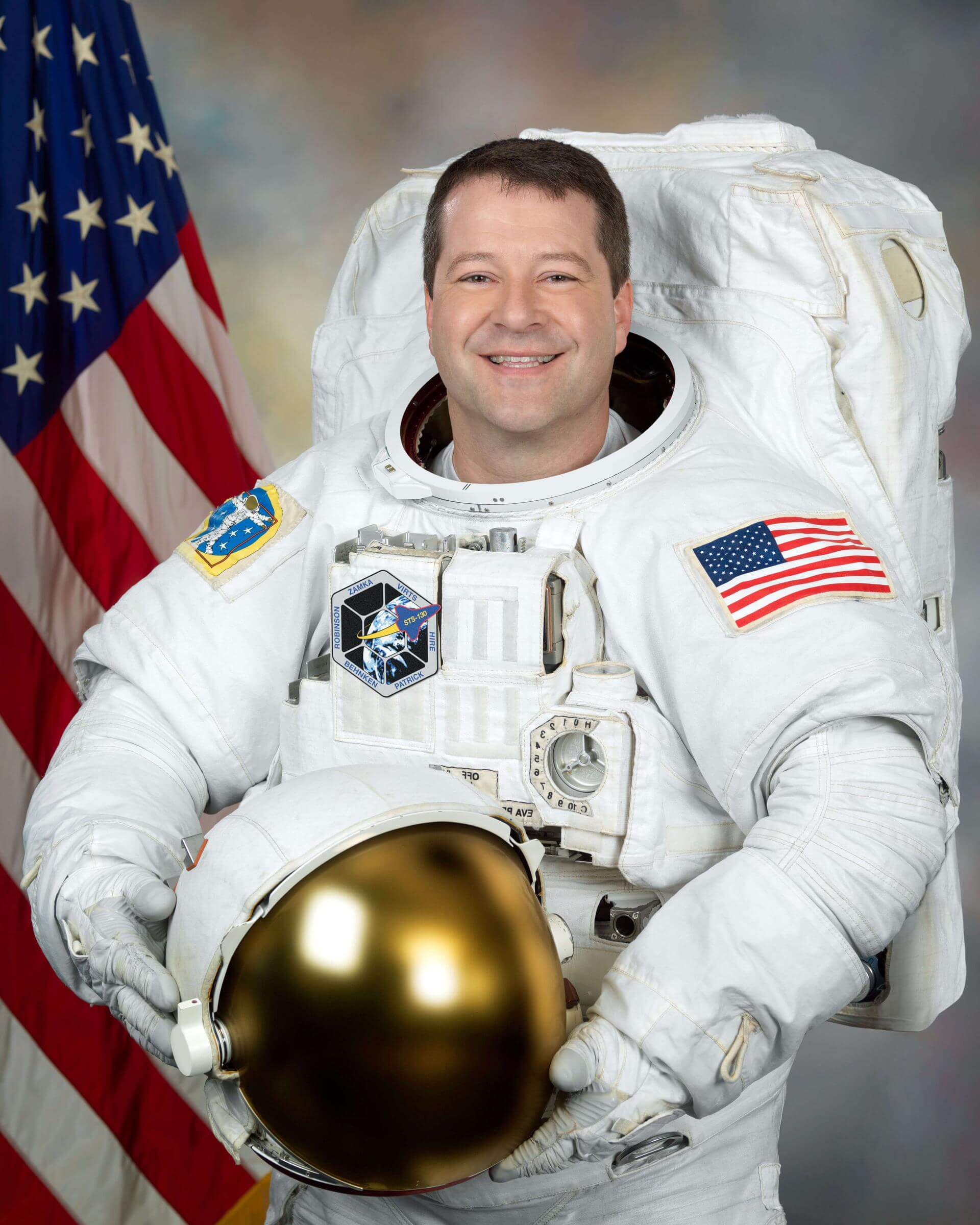
Nicholas Patrick
American - (NASA)
Retired
Date of Birth: Nov. 19, 1964
Age: 61
Nicholas James MacDonald Patrick, Ph.D. is a British-American engineer and a former NASA astronaut. His flight on the 2006 Discovery STS-116 mission made him the fourth person born in the United Kingdom to go into space.
Space Shuttle Discovery / OV-103 | STS-116
National Aeronautics and Space Administration | United States of AmericaKennedy Space Center, FL, USA
Dec. 10, 2006, 1:47 a.m.
Status: Success
Mission:
STS-116 was a Space Shuttle mission to the International Space Station (ISS) flown by Space Shuttle Discovery. Discovery lifted off on 9 December 2006 at 20:47:35 EST. A previous launch attempt on 7 December had been canceled due to cloud cover. It was the first night launch of a space shuttle since STS-113 in November 2002. The mission is also referred to as ISS-12A.1 by the ISS program. The main goals of the mission were delivery and attachment of the International Space Station's P5 truss segment, a major rewiring of the station's power system, and exchange of ISS Expedition 14 personnel.
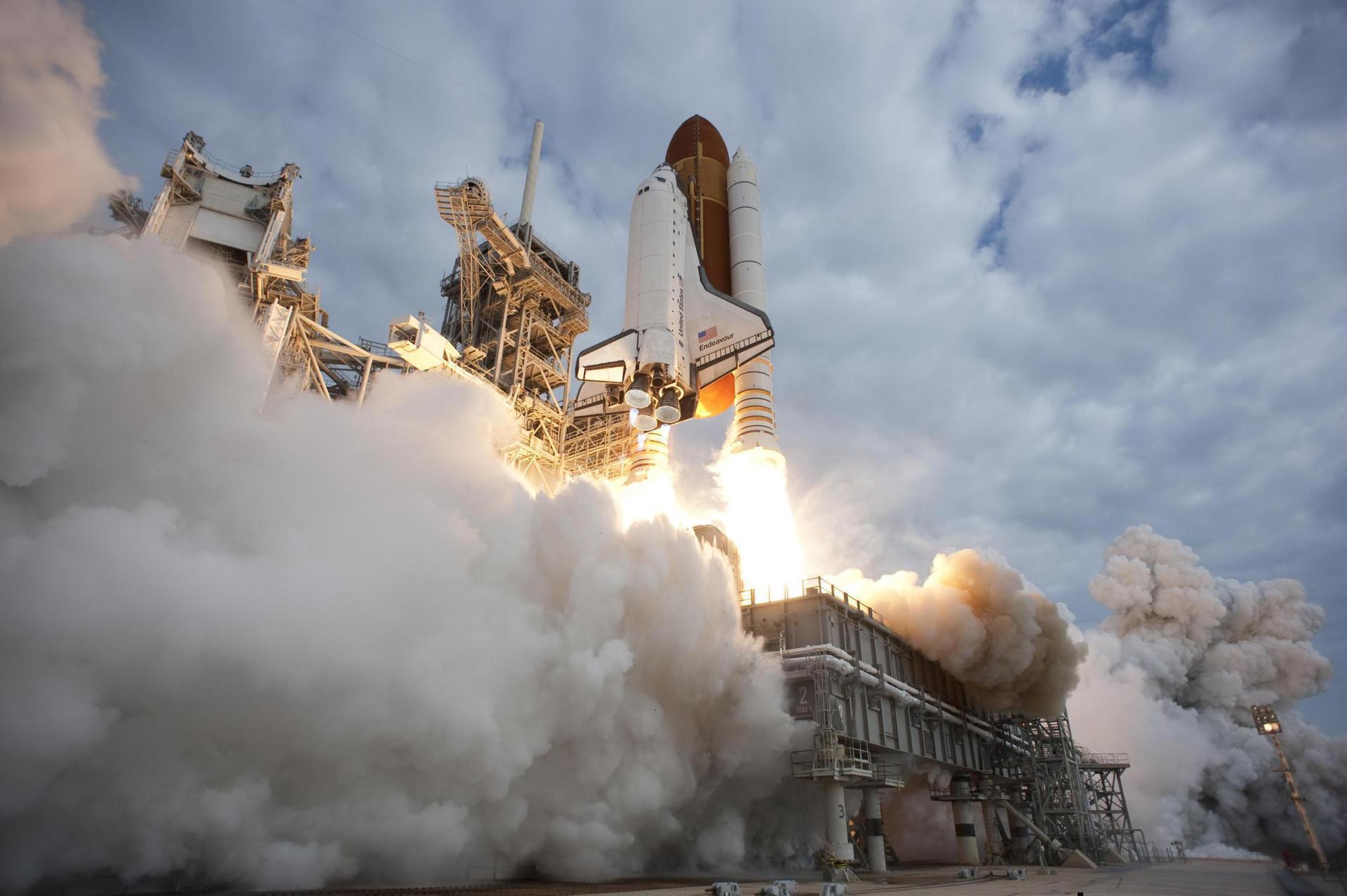
Low Earth OrbitSpace Shuttle Endeavour / OV-105 | STS-130
National Aeronautics and Space Administration | United States of AmericaKennedy Space Center, FL, USA
Feb. 8, 2010, 9:14 a.m.
Status: Success
Mission:
STS-130 was an ISS assembly flight with the primary payloads being the Tranquility module and the Cupola observatory. The mission began on February 8th 2010 at 09:14 UTC launching Commander George D. Zamka, Pilot Terry Virts, Mission Specialist 1 Kathryn P. Hire, Mission Specialist 2 Stephen K. Robinson, Mission Specialist 3 Nicholas Patrick & Mission Specialist 4 Robert L. Behnken to orbit. They docked with the ISS 2 days after launch. During the mission 3 spacewalks were conducted to install the Tranquility module. On day 6, the wake-up song played to the ISS crew was "The Ballad of Serenity" by Sonny Rhodes, the theme for science fiction show Firefly, and was played for Robert Behnken. The mission concluded after 13 days & 18 hours on February 22nd 2010 at 03:22:10 UTC.
Low Earth OrbitThe National Aeronautics and Space Administration is an independent agency of the executive branch of the United States federal government responsible for the civilian space program, as well as aeronautics and aerospace research. NASA have many launch facilities but most are inactive. The most commonly used pad will be LC-39B at Kennedy Space Center in Florida.
Falcon 9
Starlink Group 10-19
Space Launch Complex 40 - Cape Canaveral SFS, FL, USAA batch of 29 satellites for the Starlink mega-constellation - SpaceX's project for space-based Internet communication system.
H3-22
Michibiki 7 (QZS-7)
Yoshinobu Launch Complex LP-2 - Tanegashima Space Center, JapanQZSS (Quasi Zenith Satellite System) is a Japanese satellite navigation system operating from inclined, elliptical geosynchronous orbits to achieve o…
Long March 7A
ChinaSat 4B
201 - Wenchang Space Launch Site, People's Republic of ChinaChinese communication geostationary satellite for unknown purposes.
Falcon 9
Starlink Group 17-38
Space Launch Complex 4E - Vandenberg SFB, CA, USAA batch of 24 satellites for the Starlink mega-constellation - SpaceX's project for space-based Internet communication system.
Electron
The Grain Goddess Provides (iQPS Launch 7)
Rocket Lab Launch Complex 1A - Rocket Lab Launch Complex 1, Mahia Peninsula, New ZealandSynthetic aperture radar Earth observation satellite for Japanese Earth imaging company iQPS.

