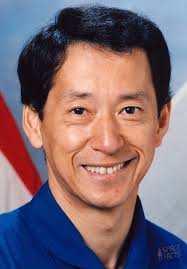
Mamoru Mohri
Japanese - (JAXA)
Retired
Date of Birth: Jan. 29, 1948
Age: 78
Mamoru “Mark” Mohri (毛利 衛 Mōri Mamoru, born 29 January 1948), AM is a Japanese scientist, a former NASDA astronaut, and a veteran of two NASA space shuttle missions. Mohri was selected by the National Space Development Agency of Japan (now JAXA) to train as a payload specialist for a Japanese materials science payload. He flew his first space mission aboard STS-47 in 1992 as chief payload specialist for Spacelab-J. Mohri subsequently made another trip into space as part of mission STS-99 in 2000.
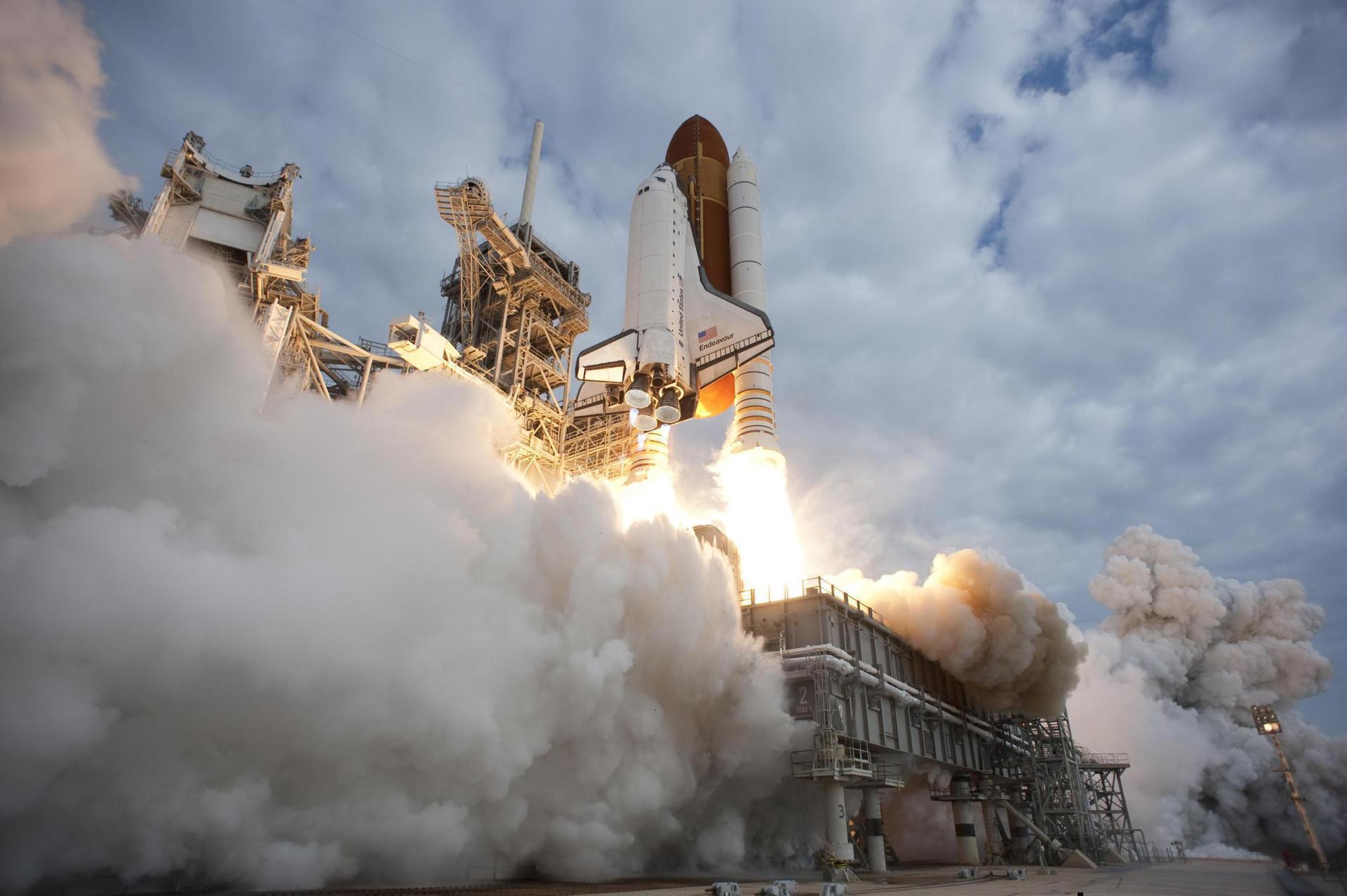
Space Shuttle Endeavour / OV-105 | STS-47
National Aeronautics and Space Administration | United States of AmericaKennedy Space Center, FL, USA
Sept. 12, 1992, 2:23 p.m.
Space Shuttle Endeavour / OV-105 | STS-99
National Aeronautics and Space Administration | United States of AmericaKennedy Space Center, FL, USA
Feb. 11, 2000, 5:43 p.m.
Status: Success
Mission:
STS-99 was a Space Shuttle mission using Endeavour, that launched on 11 February 2000 from Kennedy Space Center, Florida. The primary objective of the mission was the Shuttle Radar Topography Mission (SRTM) project. This was also the last solo flight of Endeavour; all future flights for Endeavour became devoted to the International Space Station.
Low Earth OrbitThe Japan Aerospace Exploration Agency (JAXA) is Japan's national aero-space agency. Through the merger of three previously independent organizations, JAXA was formed on 1 October 2003. JAXA is responsible for research, technology development and the launch of satellites into orbit, and is involved in many more advanced missions, such as asteroid exploration and possible manned exploration of the Moon. JAXA launch their Epsilon vehicle from the Uchinoura Space Center and their H-II vehicles from the Tanegashima Space Center.
Falcon 9
BlueBird 11-13 (Block 2 #6-8)
Space Launch Complex 40 - Cape Canaveral SFS, FL, USAAST SpaceMobile’s Block 2 BlueBird satellites are designed to deliver up to 10 times the bandwidth capacity of the BlueBird Block 1 satellites, requi…
Smart Dragon 3
OSE HS-01 & 02
Haiyang offshore launch location - Haiyang Oriental Spaceport2 hyper-spectral Earth observation satellites from Chinese company STAR.VISION. Both satellites are built in corporation with foreign customers: *…
Falcon 9
Starlink Group 17-53
Space Launch Complex 4E - Vandenberg SFB, CA, USAA batch of 24 satellites for the Starlink mega-constellation - SpaceX's project for space-based Internet communication system.
Long March 8A
SatNet LEO Group 23
Commercial LC-1 - Wenchang Space Launch Site, People's Republic of ChinaA batch of 9 Low Earth Orbit communication satellites for the Chinese state owned SatNet constellation operated by the China Satellite Network Group.…
Falcon 9
Starlink Group 17-52
Space Launch Complex 4E - Vandenberg SFB, CA, USAA batch of 24 satellites for the Starlink mega-constellation - SpaceX's project for space-based Internet communication system.

