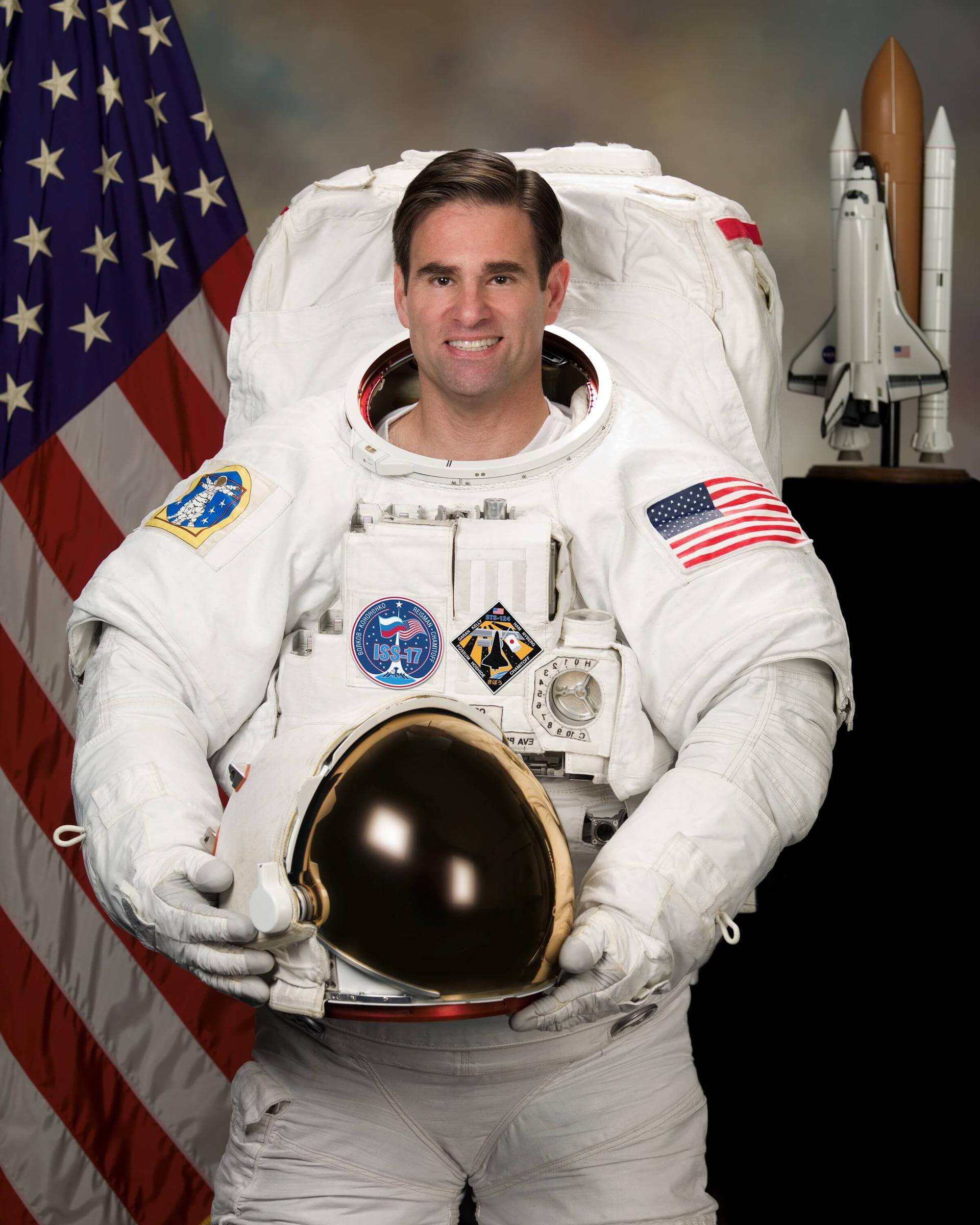
Gregory Chamitoff
American - (NASA)
Retired
Date of Birth: Aug. 6, 1962
Age: 64
Gregory Errol Chamitoff is an engineer and NASA astronaut. He was assigned to Expedition 17 and flew to the International Space Station on STS-124, launching 31 May 2008. He was in space for 6 months, joining Expedition 18 after Expedition 17 left the station. He returned to Earth on the 30th of November 2008 aboard STS-126. Chamitoff served as a mission specialist on the STS-134 mission, which was the last flight of Space Shuttle Endeavour which delivered the Alpha Magnetic Spectrometer to the ISS.
Space Shuttle Discovery / OV-103 | STS-124
National Aeronautics and Space Administration | United States of AmericaKennedy Space Center, FL, USA
May 31, 2008, 9:02 p.m.
Status: Success
Mission:
STS-124 was a Space Shuttle mission, flown by Space Shuttle Discovery to the International Space Station. Discovery launched on 31 May 2008 at 17:02 EDT, moved from an earlier scheduled launch date of 25 May 2008, and landed safely at the Kennedy Space Center's Shuttle Landing Facility, at 11:15 EDT on 14 June 2008.
Low Earth OrbitSpace Shuttle Endeavour / OV-105 | STS-126
National Aeronautics and Space Administration | United States of AmericaKennedy Space Center, FL, USA
Nov. 15, 2008, 12:55 a.m.
Status: Success
Mission:
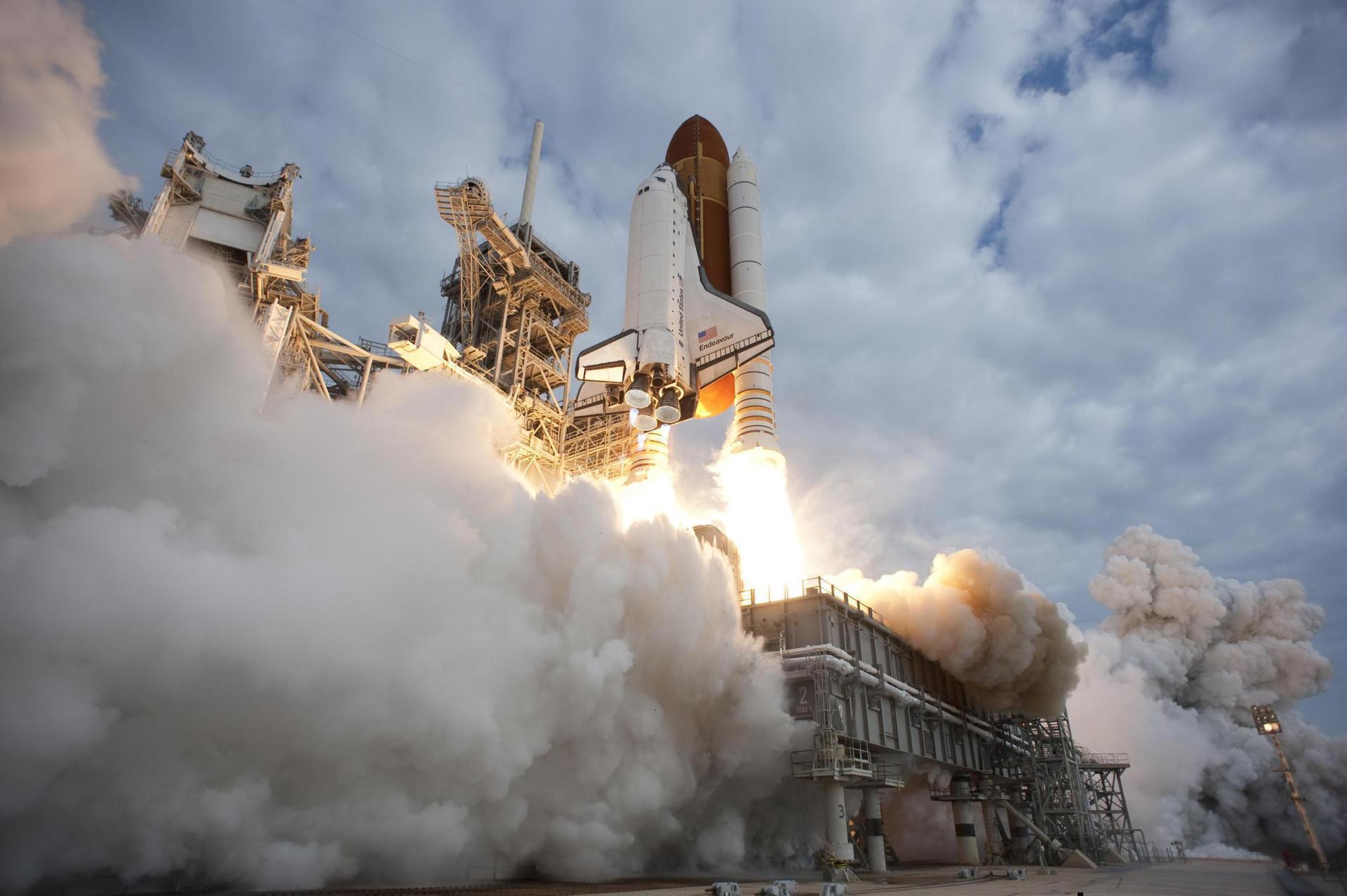
STS-126 was a Space Shuttle mission to the International Space Station (ISS) flown by Space Shuttle Endeavour. The purpose of the mission, referred to as ULF2 by the ISS program, was to deliver equipment and supplies to the station, to service the Solar Alpha Rotary Joints (SARJ), and repair the problem in the starboard SARJ that had limited its use since STS-120.
Low Earth OrbitSpace Shuttle Endeavour / OV-105 | STS-134
National Aeronautics and Space Administration | United States of AmericaKennedy Space Center, FL, USA
May 16, 2011, 12:56 p.m.
The National Aeronautics and Space Administration is an independent agency of the executive branch of the United States federal government responsible for the civilian space program, as well as aeronautics and aerospace research. NASA have many launch facilities but most are inactive. The most commonly used pad will be LC-39B at Kennedy Space Center in Florida.
Falcon 9
Starlink Group 17-38
Space Launch Complex 4E - Vandenberg SFB, CA, USAA batch of 24 satellites for the Starlink mega-constellation - SpaceX's project for space-based Internet communication system.
Electron
The Grain Goddess Provides (iQPS Launch 7)
Rocket Lab Launch Complex 1A - Rocket Lab Launch Complex 1, Mahia Peninsula, New ZealandSynthetic aperture radar Earth observation satellite for Japanese Earth imaging company iQPS.
Falcon 9
BlueBird 11-13 (Block 2 #6-8)
Space Launch Complex 40 - Cape Canaveral SFS, FL, USAAST SpaceMobile’s Block 2 BlueBird satellites are designed to deliver up to 10 times the bandwidth capacity of the BlueBird Block 1 satellites, requi…
Smart Dragon 3
OSE HS-01 & 02
Haiyang offshore launch location - Haiyang Oriental Spaceport2 hyper-spectral Earth observation satellites from Chinese company STAR.VISION. Both satellites are built in corporation with foreign customers: *…
Falcon 9
Starlink Group 17-53
Space Launch Complex 4E - Vandenberg SFB, CA, USAA batch of 24 satellites for the Starlink mega-constellation - SpaceX's project for space-based Internet communication system.

