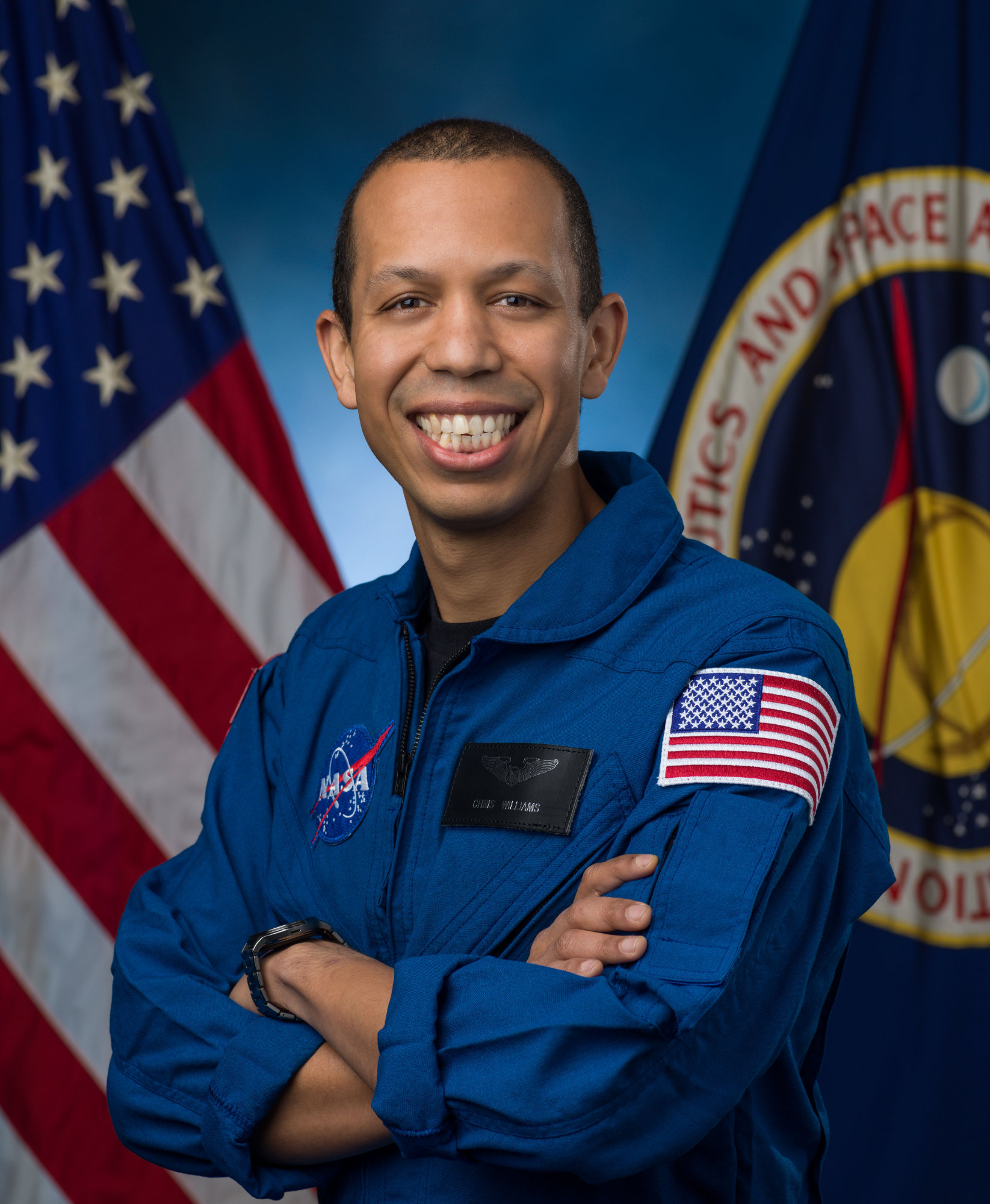
Christopher Williams
American - (NASA)
Active
Date of Birth: Jan. 1, 1983
Age: 43
Christopher Williams grw up in Potomac, Maryland and graduated from Stanford University in 2005 with a bachelor’s degree in physics and a doctorate in physics from MIT in 2012, where his research was in astrophysics. Williams is a board-certified medical physicist, completing his residency training at Harvard Medical School before joining the faculty as a clinical physicist and researcher. He most recently worked as a medical physicist in the Radiation Oncology Department at the Brigham and Women's Hospital and Dana-Farber Cancer Institute in Boston. He was the lead physicist for the Institute’s MRI-guided adaptive radiation therapy program. His research focused on developing image guidance techniques for cancer treatments. Exact date of birth unknown.
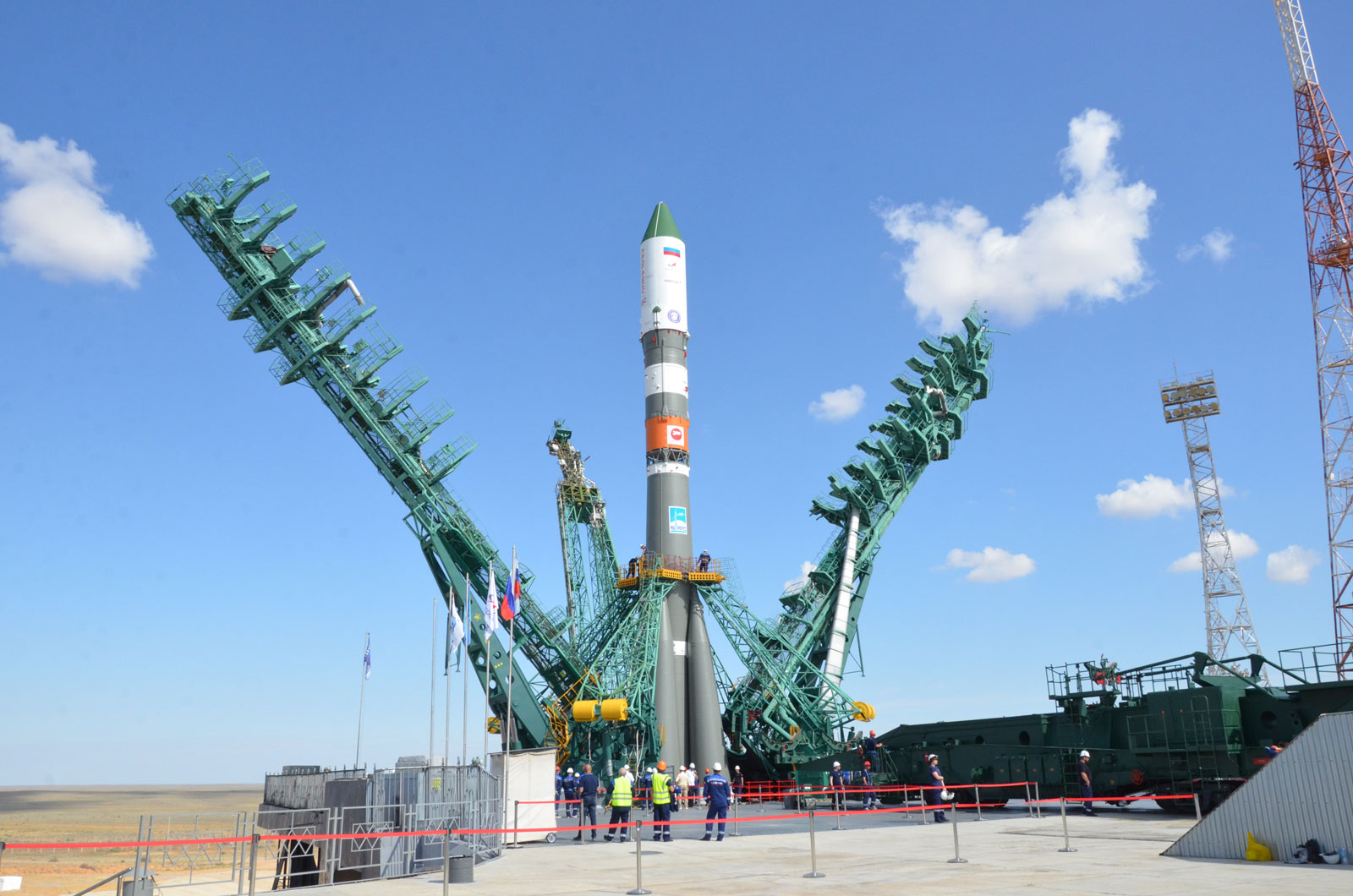
Soyuz 2.1a | Soyuz MS-28
Progress Rocket Space Center | RussiaBaikonur Cosmodrome, Republic of Kazakhstan
Nov. 27, 2025, 9:27 a.m.
Status: Success
Mission:
Soyuz MS-28 will carry three cosmonauts and one astronaut to the International Space Station aboard the Soyuz spacecraft from the Baikonur Cosmodrome in Kazakhstan. The crew consists of Roscosmos cosmonauts Sergei Kud-Sverchkov, Sergei Mikayev and Oleg Platonov.
Low Earth OrbitThe National Aeronautics and Space Administration is an independent agency of the executive branch of the United States federal government responsible for the civilian space program, as well as aeronautics and aerospace research. NASA have many launch facilities but most are inactive. The most commonly used pad will be LC-39B at Kennedy Space Center in Florida.
Falcon 9
Starlink Group 10-19
Space Launch Complex 40 - Cape Canaveral SFS, FL, USAA batch of 29 satellites for the Starlink mega-constellation - SpaceX's project for space-based Internet communication system.
H3-22
Michibiki 7 (QZS-7)
Yoshinobu Launch Complex LP-2 - Tanegashima Space Center, JapanQZSS (Quasi Zenith Satellite System) is a Japanese satellite navigation system operating from inclined, elliptical geosynchronous orbits to achieve o…
Long March 7A
ChinaSat 4B
201 - Wenchang Space Launch Site, People's Republic of ChinaChinese communication geostationary satellite for unknown purposes.
Falcon 9
Starlink Group 17-38
Space Launch Complex 4E - Vandenberg SFB, CA, USAA batch of 24 satellites for the Starlink mega-constellation - SpaceX's project for space-based Internet communication system.
Electron
The Grain Goddess Provides (iQPS Launch 7)
Rocket Lab Launch Complex 1A - Rocket Lab Launch Complex 1, Mahia Peninsula, New ZealandSynthetic aperture radar Earth observation satellite for Japanese Earth imaging company iQPS.

