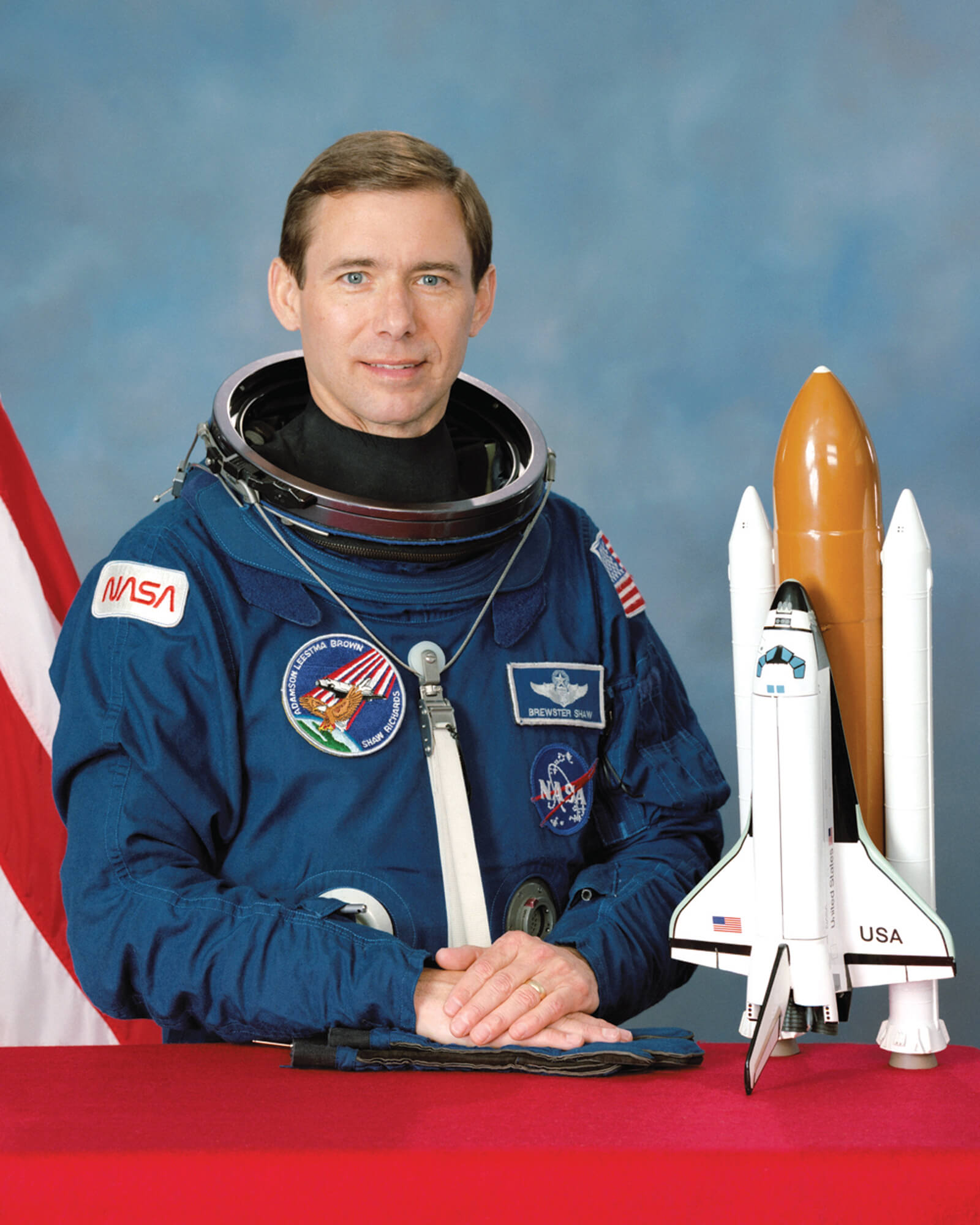
Brewster H. Shaw
American - (NASA)
Retired
Date of Birth: May 16, 1945
Age: 81
Brewster Hopkinson Shaw Jr. is a former NASA astronaut, a retired U.S. Air Force Colonel and former executive at Boeing. Shaw was inducted into the U.S. Astronaut Hall of Fame on May 6, 2006.[1] Shaw is a veteran of three Space Shuttle missions and has logged 533 hours of space flight. He was Pilot of Space Shuttle Columbia in November 1983, Commander of Space Shuttle Atlantis in November 1985 and Commander of Columbia in August 1989. Following the Space Shuttle Challenger accident in 1986, he supported the Roger’s Presidential Commission[2] investigating the accident. Shaw subsequently led the Space Shuttle Orbiter return-to-flight team chartered to enhance the safety of the vehicles’ operations. Shaw worked as a manager at NASA until 1996 when he left the agency, retired from the Air Force and went to work in the private sector as an aerospace executive.
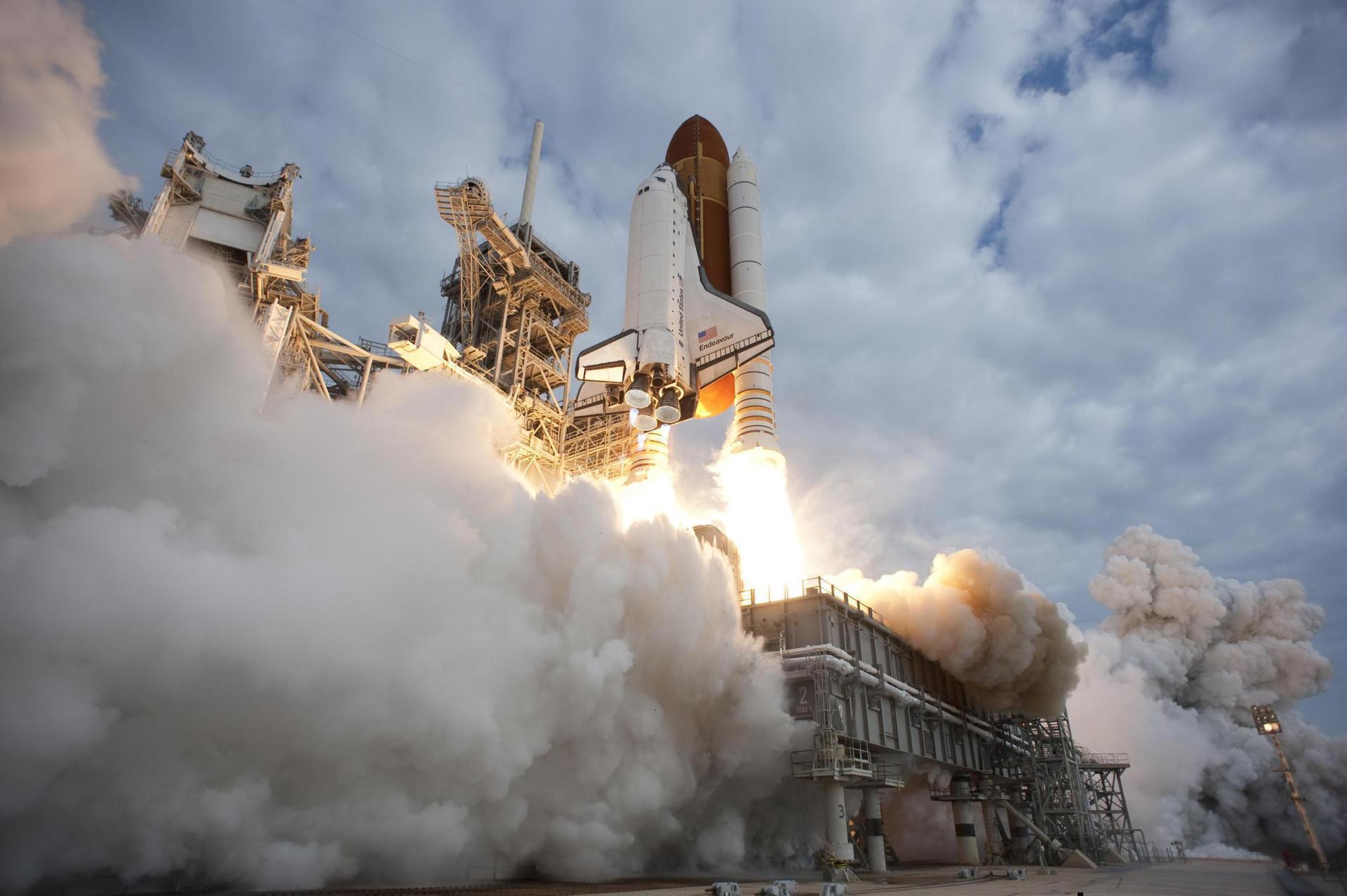
Space Shuttle Columbia / OV-102 | STS-9
National Aeronautics and Space Administration | United States of AmericaKennedy Space Center, FL, USA
Nov. 28, 1983, 4 p.m.
Space Shuttle Atlantis / OV-104 | STS-61-B
National Aeronautics and Space Administration | United States of AmericaKennedy Space Center, FL, USA
Nov. 27, 1985, 12:29 a.m.
Status: Success
Mission:
STS-61-B was the twenty-third space shuttle mission and the second for the Space Shuttle Atlantis. The shuttle was launched for Kennedy Space Center and the shuttle deployed three communicates satellites. It also tested techniques for constructing structures in orbit. This mission marked the quickest turnaround of a shuttle, just 54 days elapsed beetween this launch and Atlantis' previous mission.
Low Earth OrbitSpace Shuttle Columbia / OV-102 | STS-28
National Aeronautics and Space Administration | United States of AmericaKennedy Space Center, FL, USA
Aug. 8, 1989, 12:37 p.m.
The National Aeronautics and Space Administration is an independent agency of the executive branch of the United States federal government responsible for the civilian space program, as well as aeronautics and aerospace research. NASA have many launch facilities but most are inactive. The most commonly used pad will be LC-39B at Kennedy Space Center in Florida.
Long March 6A
TJSW-27A & B
Launch Complex 9A - Taiyuan Satellite Launch Center, People's Republic of China2 Chinese classified satellites claimed to be for communication technology test purposes. Actual mission not known.
Long March 7A
Tianlian 3-01
201 - Wenchang Space Launch Site, People's Republic of ChinaTianlian is a Chinese data tracking and relay communications geostationary satellite series. The TL-3 (Tian Lian 3) satellites are the 3rd generation…
Falcon 9
Starlink Group 17-51
Space Launch Complex 4E - Vandenberg SFB, CA, USAA batch of 24 satellites for the Starlink mega-constellation - SpaceX's project for space-based Internet communication system.
Starship
Flight 13
Orbital Launch Pad 2 - SpaceX Starbase, TX, USA13th test flight of the two-stage Starship launch vehicle. Second flight of Starship V3. For the first time, Starship will carry 20 V3 Starlink sa…
Kinetica 1
5 satellites
Launch Area 130 - Jiuquan Satellite Launch Center, People's Republic of ChinaShare-ride of 5 commercial Earth observation and technology demonstration satellites to SSO, including SpaceTY's TY-48. Details TBD.

